Are you looking for a supportive treatment that will make your hair look stronger, livelier, and denser?
Hair loss can occur due to genetic predisposition, hormonal changes, stress, nutritional issues, environmental factors, and various health problems. PRP hair treatment is a supportive hair care method performed by applying platelet-rich plasma obtained from the person's own blood to the scalp.
At Cinik Polyclinic, PRP hair treatment is personalized based on the type of hair loss, the current condition of the hair follicles, the individual's health history, and needs.
What is PRP Treatment?
PRP is an abbreviation for "Platelet Rich Plasma" and means "platelet-rich plasma."
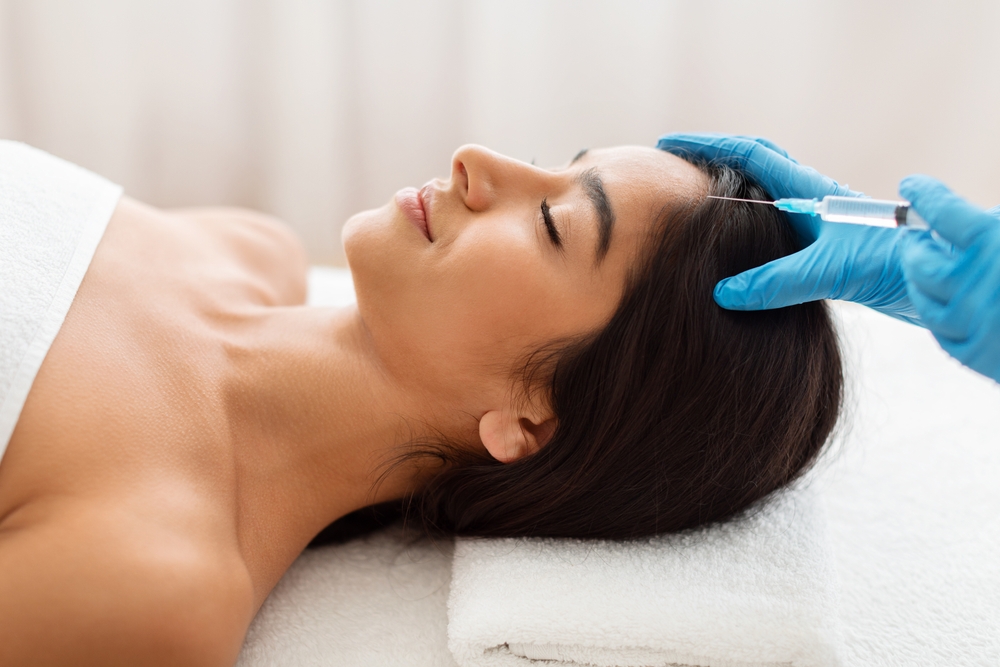
During the treatment, a small amount of blood is drawn from the individual. The collected blood is processed in a special centrifuge to separate it into its components. The plasma portion enriched with platelets is applied to the areas of the scalp that need it using fine needles.
The content used in the PRP application comes from the person's own blood. The aim of the treatment is to support hair follicles, contribute to the care of the scalp, and help existing hair achieve a stronger appearance.
How Does PRP Hair Treatment Work?
Platelets are blood components involved in the body's natural repair processes. They can contribute to supporting the tissues in the area where the application is made through the growth factors they contain.
PRP applied to the scalp;
Supports hair follicles,
Strengthens weakened hair strands,
Contributes to the care of the scalp,
Helps hair look more vibrant and dense,
Assists in supporting the treatment plan to control hair loss.
PRP treatment does not guarantee the regeneration of completely lost or long-inactive hair follicles. The results that can be obtained from the application depend on the current condition of the hair follicles and the cause of hair loss.
Who Can Undergo PRP Hair Treatment?
PRP hair treatment can be applied to;
Those experiencing thinning and weakening of their hair,
Those with seasonal or periodic hair loss,
Individuals in the early stages of male or female pattern hair loss,
Those who want to protect and support their existing hair,
Individuals looking to support their scalp before hair transplantation,
Men and women who wish to support the healing and care process after hair transplantation.
Not every type of hair loss may respond the same way to PRP treatment. Therefore, it is important to determine the cause of hair loss before the application and for the doctor to assess the individual's suitability for treatment.
How is PRP Hair Treatment Performed?
PRP hair treatment generally consists of the following stages:
Blood Collection
A small amount of blood is drawn from the individual, similar to a routine blood test.
Separation of Plasma
The collected blood is placed in special tubes and processed in a centrifuge. As a result of this process, the platelet-rich plasma portion of the blood is separated.
Application to the Scalp
The prepared PRP solution is applied to the areas where hair loss or thinning is observed using fine needles.
The duration of the procedure may vary depending on the size of the application area. PRP is generally a procedure that does not require surgical cuts or stitches, and the individual can usually return to their daily life shortly after.
How Many Sessions are Required for PRP Hair Treatment?
The number of sessions required for PRP treatment varies from person to person. The degree of hair loss, the condition of hair follicles, the person's age, and their response to treatment can affect the session plan.
In the initial period, multiple sessions may be scheduled at specific intervals. To support the effect obtained, maintenance or reminder sessions may be recommended based on the doctor's evaluation.
The number of sessions and the intervals for treatment should be determined individually after the examination.
When Does PRP Hair Treatment Show Results?
The effects of PRP hair treatment may not be immediately visible. Due to the natural growth cycle of hair follicles, it may take time for changes to appear.
In the process following the treatment;
Reduction in hair loss,
Hair strands feeling stronger,
Hair appearing more vibrant,
Support for existing hair density may be observed.
The duration for seeing results and the level of effect obtained may vary from person to person. Regular sessions and adherence to the care program recommended by the doctor are important parts of the treatment process.
What are the Advantages of PRP Hair Treatment?
Plasma obtained from the person's own blood is used.
It does not require surgical incisions or stitches.
The application time is generally short.
The return to daily life is usually quick.
It can be applied to both women and men.
It can be planned as a supportive treatment before or after hair transplantation.
It can be applied alongside other hair treatments.
A session program can be created according to the individual's needs.
Is PRP Hair Treatment Painful?
During the application, slight stinging, burning, or sensitivity may be felt due to injections made into the scalp with fine needles.
To enhance the person's comfort, local anesthetic products may be used before the application. The level of discomfort felt may vary depending on the person's pain threshold and the area being treated.
Are There Any Side Effects of PRP Treatment?
Although PRP is prepared from the person's own blood, some temporary effects may occur since the application is performed via injection.
After the application;
Mild redness,
Sensitivity,
Swelling,
Spotting bruising,
Itching,
Mild pain or a feeling of tightness may occur.
These effects usually decrease in a short time. In case of unexpected, prolonged, or worsening conditions, the healthcare institution that performed the application should be contacted.
What Should Be Considered After PRP Treatment?
Personal care recommendations given by the doctor should be followed after the treatment.
In general;
The scalp should not be washed for the recommended duration.
The application area should not be scratched or rubbed.
Heavy exercise and excessive sweating should be avoided on the first day.
Practices such as sauna, Turkish bath, and very hot showers should be postponed for a while.
The scalp should be protected from intense sunlight.
Cosmetic or chemical products should not be applied to the treatment area without the doctor's recommendation.
Post-procedure instructions may vary depending on the individual and the procedure performed.
What Should Be Considered Before PRP Treatment?
Before the procedure, the individual should share their medications, chronic illnesses, allergies, and any previous treatments with the doctor.
Blood thinners, pain relievers, or other regularly used medications should not be discontinued without the doctor's recommendation. Any medication adjustments prior to treatment should only be made based on the assessment of the relevant doctor.
It is advisable to arrive for the procedure with a clean scalp and to avoid using heavy styling products.
Who May Not Be Eligible for PRP Hair Treatment?
PRP treatment may not be suitable for some individuals, particularly those who;
Have an active infection,
Have an open wound or serious skin disease in the treatment area,
Have certain blood and clotting disorders,
Have specific health problems related to platelet levels,
Are undergoing active cancer treatment,
Are pregnant or breastfeeding,
Individuals whose overall health condition is not suitable for the procedure should be thoroughly evaluated.
Eligibility for PRP treatment can only be determined after a doctor's examination and any necessary health assessments.
Can PRP Be Applied After Hair Transplantation?
PRP treatment can be applied to support the hair transplantation process in suitable patients. Planned PRP applications during or after specific periods following the hair transplant procedure can contribute to scalp care, support existing hair, and manage the healing process.
The timing and number of PRP sessions after hair transplantation should be determined based on the hair transplant procedure performed and the individual's healing process.
Can PRP Be Combined with Other Hair Treatments?
PRP treatment can be planned in conjunction with different hair treatments based on the individual's needs.
After the doctor's assessment, PRP can be combined with;
Hair mesotherapy,
Laser hair treatment,
Hair transplantation,
Medical hair treatments recommended by the doctor, and
Personalized hair care programs.
When preparing a combined treatment plan, the cause of hair loss, existing hair density, and the individual's overall health condition are taken into account.
What Is the Difference Between PRP and Hair Mesotherapy?
In PRP treatment, platelet-rich plasma obtained from the individual's own blood is used. In hair mesotherapy, depending on the content of the application, vitamins, minerals, amino acids, or different supportive components may be applied to the scalp.
Both applications can be planned to support hair follicles and the scalp. Which method is more suitable or whether both applications can be used together will be determined after the doctor's examination.
Is PRP Hair Treatment Permanent?
PRP is not a permanent solution that completely eliminates the cause of hair loss in every case. In ongoing processes such as genetic or hormonal hair loss, supportive sessions may be needed at certain intervals to maintain the effect achieved.
The continuity of treatment results can be influenced by many factors, such as the cause of hair loss, the individual's lifestyle, hair care habits, overall health condition, and adherence to the recommended treatment plan.
Why Choose Cinik Polyclinic?
At Cinik Polyclinic, PRP hair treatment is planned by assessing the individual's hair and scalp needs rather than following a standard application program.
Before treatment, the type of hair loss and the condition of the hair follicles are examined. If the application is deemed suitable for the individual, the number of sessions, intervals between sessions, and any supportive treatments that may be needed are determined.
Our experienced team aims to provide a healthy and controlled treatment process by guiding you from the evaluation stage to the post-application follow-up.
Contact Form
To evaluate the cause of your hair loss, obtain information about your eligibility for PRP hair treatment, and learn about your personalized treatment plan, please fill out our consultation form.
Our experienced team will contact you to share detailed information about the PRP application, session plan, and post-treatment care process.
Note: The results that can be obtained from PRP application may vary from person to person. The treatment does not guarantee definitive hair growth or complete cessation of hair loss. Eligibility, number of sessions, and treatment plan should be determined after the evaluation by a specialist doctor.