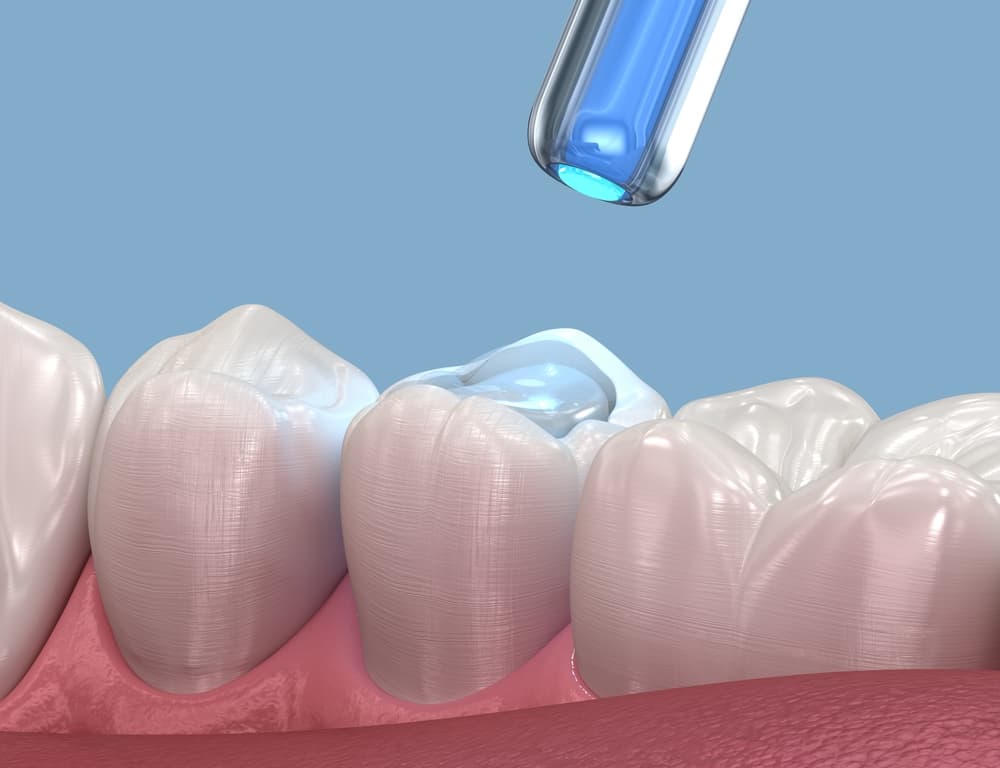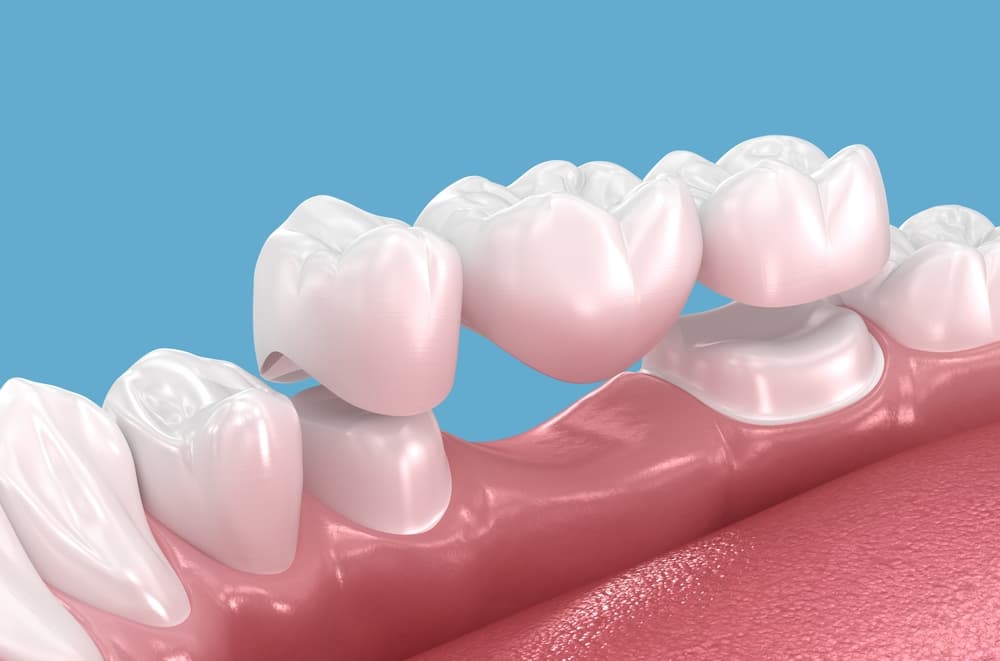
Missing teeth can affect not only the appearance of your smile but also chewing, speaking, and oral health. Implant treatment is based on the principle of placing an artificial tooth root into the jawbone to enable the placement of fixed or removable prosthetics in place of lost teeth.
At Cinik Polyclinic, implant treatment is personalized based on an evaluation of the number of missing teeth, the structure of the jawbone, gum health, the individual's overall health status, and aesthetic expectations.
What is a Dental Implant?
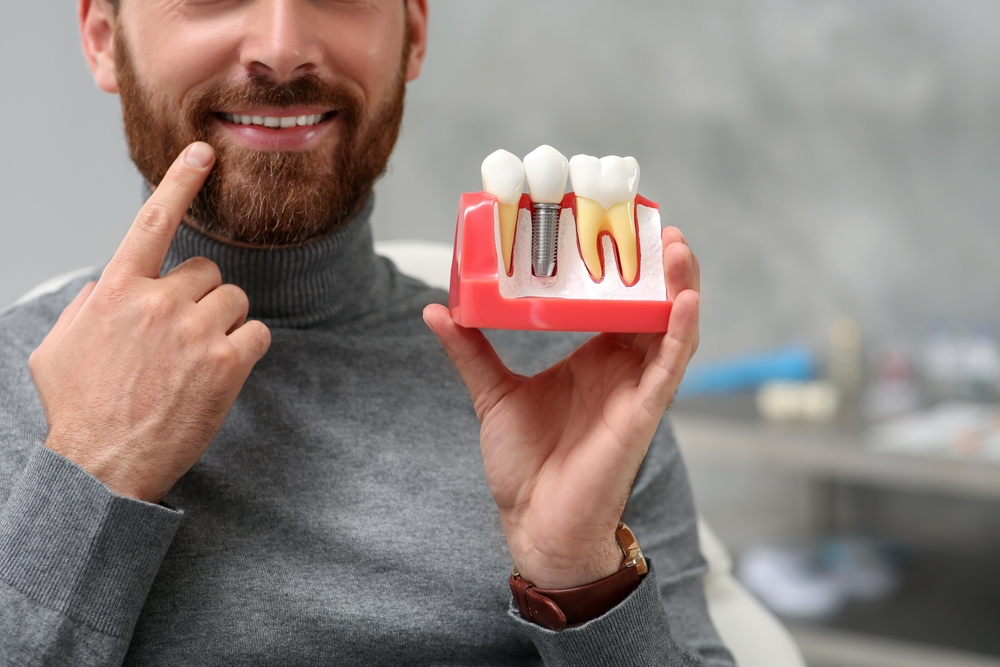
A dental implant is an artificial tooth root placed into the jawbone to serve the function of the root section of a missing tooth. Implants, usually made of titanium or titanium alloys, provide support for crowns, bridges, or removable prosthetics that will be placed on top.
Implant treatment can be applied in cases of a single missing tooth, multiple missing teeth, or complete tooth loss.
An implant is not the entire visible artificial tooth in the mouth. The treatment generally consists of three main components:
The implant placed in the jawbone,
The abutment that connects the implant to the prosthetic,
The crown or prosthetic visible in the mouth.
Who Can Undergo Implant Treatment?
Implant treatment can be applied to individuals who;
Have a single missing tooth,
Have lost multiple teeth,
Experience complete tooth loss,
Struggle with using removable prosthetics,
Do not want their healthy teeth reduced for a bridge,
Have a jawbone and overall health status suitable for treatment.
For the treatment to be applicable, the growth and development period must be largely completed, oral hygiene must be at an adequate level, and there must be suitable bone tissue to support the implant.
Not every patient may be directly suitable for implant treatment. Uncontrolled systemic diseases, active gum diseases, inadequate oral hygiene, and heavy tobacco use can negatively affect the healing process.
Why is Implant Treatment Done?
Tooth loss can cause neighboring teeth to shift into the gap, teeth in the opposing jaw to elongate, and disrupt chewing balance over time.
Implant treatment can be applied for;
Completing missing teeth,
Supporting chewing function,
Reducing some problems experienced during speech,
Creating a natural tooth-like appearance,
Increasing the retention of removable prosthetics,
Protecting healthy neighboring teeth.
In cases of a single missing tooth, applying an implant can eliminate the need to reduce neighboring healthy teeth for bridge treatment in suitable patients.
How is Implant Treatment Performed?
Implant treatment generally consists of examination, surgical application, healing, and prosthetic stages.
Examination and Treatment Planning
In the initial stage, the condition of missing teeth, existing teeth, gums, and jaw closure is evaluated. The height, width, and relationship of the jawbone with anatomical structures can be examined using panoramic X-rays or, when necessary, three-dimensional dental tomography.
The individual's overall health status, medications, chronic diseases, and tobacco use are also assessed during treatment planning.
Placement of the Implant
The implant procedure is mostly performed under local anesthesia. An appropriate area is prepared in the gum and jawbone for the implant, and then the implant is placed into the bone in a controlled manner. If necessary, the area may be closed with stitches.
Healing and Osseointegration
After the implant is placed, a biological integration process begins between the implant surface and the jawbone. This process is referred to as "osseointegration."
The healing time may vary depending on the area where the implant is placed, the structure of the bone, additional surgical procedures, and the overall health condition of the individual.
Preparation of the Prosthesis
After the implant has sufficiently integrated with the bone, measurements are taken. Considering the tooth color, shape of the teeth, jaw closure, and aesthetic expectations, a crown, bridge, or prosthesis is prepared on top of the implant.
In the final stage, the prepared restoration is placed on the implant, and a closure check is performed.
How Long Does Implant Treatment Take?
The total duration of implant treatment is not the same for every patient. The surgical procedure in which the implant is placed into the jawbone can usually be performed in a single session. However, a certain healing period may be required for the implant to integrate with the bone and for the permanent prosthesis to be prepared.
The duration of the treatment may vary based on;
The number of implants to be applied,
The quality and quantity of the jawbone,
The area where the implant is placed,
The need for bone grafting or sinus lifting,
The health of the gums,
The individual's healing capacity.
The exact treatment duration is determined after clinical and radiographic evaluation.
Can an Implant Be Done on the Same Day?
In suitable patients, the implant can be placed in the same session as the extraction of the tooth that needs to be removed. This procedure may be referred to as "immediate implant."
For an implant to be applied on the same day;
There should be no uncontrolled active infection in the area,
There must be sufficient bone support,
The implant must be able to provide the necessary initial stability,
The gum tissues must be in suitable condition.
It is not always possible to apply an implant on the same day after every tooth extraction. In some cases, it may be necessary to wait for the healing of the extraction site or to support the bone tissue.
Can a Tooth Be Placed on the Implant on the Same Day?
In suitable cases, a temporary tooth or temporary prosthesis can be prepared on the day the implant is placed. This approach can be particularly considered in cases where there is a high aesthetic need in the front tooth area.
However, the tooth placed on the same day is mostly temporary in nature. To avoid negatively affecting the integration of the implant with the bone, the chewing forces applied to the temporary restoration may be limited.
Whether a permanent or temporary tooth can be applied on the same day is determined based on the condition of the bone, the stability of the implant, and the individual's occlusal relationship.
What is a Single Tooth Implant?
A single tooth implant is the procedure of placing an implant in the area where a tooth is missing and making a single crown on it.
With this method, in suitable patients, while the missing tooth is completed, there may be no need to reduce the neighboring healthy teeth for bridge treatment. The implant taking on the role of a tooth root can also help preserve the bone in the relevant area.
Implant for Multiple Tooth Loss
In cases where multiple teeth are missing side by side, it may not always be necessary to apply a separate implant for each missing tooth.
The number of missing teeth, their location, the structure of the jawbone, and the chewing forces can be evaluated to prepare a bridge prosthesis supported by a certain number of implants.
The number of implants to be used should be planned not only based on the number of missing teeth but also according to the biomechanical structure of the entire jaw.
Implant Treatment for Complete Tooth Loss
In patients with all teeth missing in the upper or lower jaw, fixed or removable prostheses supported by implants can be applied.
Depending on the patient's bone structure and treatment needs;
Implant-supported removable prosthesis,
Fixed bridge on implants,
Complete jaw restorations placed on a certain number of implants can be planned.
Implant-supported complete jaw prostheses can provide stronger retention and chewing support compared to traditional removable prostheses. However, the number of implants to be applied and the type of prosthesis should be determined individually.
What is All-on-4 Implant Treatment?
All-on-4 is a treatment approach aimed at preparing a fixed complete jaw prosthesis on four implants placed at specific angles in the jaw of suitable patients who are completely toothless or whose remaining teeth cannot be preserved.
By angling the implants in the back region, it is aimed to utilize more of the existing bone in some patients and reduce the need for advanced bone procedures.
All-on-4 is not suitable for every patient. The structure of the jawbone, the stability that the implants will achieve, the occlusion relationship, and the individual's oral hygiene habits should be evaluated in detail.
What is All-on-6 Implant Treatment?
In All-on-6 treatment, six implants are generally used to support the complete jaw prosthesis.
Increasing the number of implants can allow for the distribution of chewing forces over a wider area in suitable patients. However, the decision to use four or six implants is not made solely based on a standard number.
The amount of bone, anatomical structures, the design of the prosthesis, and the patient's chewing habits are evaluated together to create an appropriate treatment plan.
Can Implants Be Placed in Bone Deficiency?
To place an implant, sufficient height and width of the jawbone are required. A long time passing since tooth loss, gum diseases, trauma, or infections can lead to a decrease in bone quantity.
In some patients with insufficient bone;
Bone graft,
Bone powder application,
Guided bone regeneration,
Sinus lifting,
Block bone applications can be evaluated.
The bone augmentation procedure can be performed in the same session as the implant, or in some cases, it can be carried out before the implant application to allow for healing of the area.
What is Sinus Lifting?
The loss of teeth in the back region of the upper jaw can result in insufficient bone height between the sinus cavity and the jawbone for the implant.
Sinus lifting is the procedure of controlled elevation of the sinus floor and placement of a bone graft in the created space. This aims to increase the amount of bone that can support the implant.
Whether the procedure can be performed in the same session as the implant depends on the existing bone height and the initial stability of the implant.
Is Implant Treatment Painful?
Implant surgery is generally performed under local anesthesia, so pain is not expected during the procedure. A brief sensation of prickling or pressure may occur during the anesthesia application.
After the procedure, mild to moderate pain, swelling, sensitivity, and bruising may be observed. These effects can vary depending on the extent of the procedure and the individual's healing characteristics.
Following the medications and care instructions recommended by the dentist can help make the post-procedure period more comfortable.
Is Swelling Normal After Implant?
In the first days following the implant procedure, swelling and sensitivity may occur in the treatment area. Swelling may be more pronounced, especially in procedures where multiple implants are placed or bone grafting is performed.
Swelling typically increases in the first few days and then begins to decrease. However, if symptoms such as progressively worsening pain, prolonged bleeding, fever, bad taste, or discharge occur, the dentist should be consulted.
What Should Be Considered After Implant Treatment?
Personal care instructions provided by the physician should be followed after implant surgery.
In general;
Hot foods and beverages should be avoided in the first hours.
Caution should be taken to avoid biting the cheek, lip, or tongue until numbness wears off.
Soft and warm foods should be preferred in the first days.
The treatment area should not be tampered with using the tongue or fingers.
Oral care should be maintained as recommended by the physician.
Cigarettes and tobacco products should be avoided.
Heavy exercise should not be performed in the first days.
Medications not recommended by the physician should not be used.
Follow-up appointments should not be neglected.
Additional care recommendations may be provided depending on the extent of the procedure.
When Can You Eat After Implant?
It is not recommended to eat until the effects of local anesthesia have completely worn off. During numbness, the cheek, tongue, or lip may be bitten without realizing it.
In the first days, it may be advised to avoid very hot, hard, crusty, and spicy foods. Softer foods should be preferred to avoid excessive chewing force on the implant area.
Dietary recommendations may vary depending on the area of the implant and the surgical procedures performed.
What Are the Advantages of Implant Treatment?
Implant treatment can provide the following benefits in suitable patients;
It can create a natural tooth-like appearance,
It can support chewing function,
It can help protect adjacent teeth in cases of single tooth loss,
It can allow for the placement of fixed prostheses,
It can enhance the retention of removable prostheses,
It can contribute to the preservation of the bone in the area of tooth loss,
It can support comfort in speech and daily life.
The results obtained from the treatment may vary depending on the individual's bone and gum health, the position of the implant, prosthesis planning, and oral care.
What Is the Lifespan of Implants?
It is not possible to provide a definitive usage period for implants that applies to every patient. With regular oral care and dental check-ups, implants can function for many years.
The lifespan of the implant;
Depends on oral hygiene,
Depends on gum health,
Depends on tobacco use,
Control of systemic diseases such as diabetes,
Habit of teeth grinding or clenching,
Condition of the bone surrounding the implant,
Design of the prosthesis,
Depends on regular check-ups.
The implant itself does not decay. However, inflammation may develop in the surrounding gum and bone tissues. Therefore, implants should be brushed regularly, cleaned between the teeth, and professionally checked, just like natural teeth.
What is Peri-Implant Inflammation?
Inflammation that develops in the gums surrounding the implant can be referred to as peri-implant mucositis if it is limited to soft tissue. If the inflammation progresses to the bone tissue supporting the implant, it is defined as peri-implantitis.
Signs around the implant include;
Redness,
Swelling,
Bleeding during brushing,
Sensitivity,
Bad taste or odor,
Recession around the implant,
Feeling of mobility in the implant should be evaluated.
Inadequate plaque control, smoking, history of gum disease, and uncontrolled diabetes can increase the risk of peri-implant diseases.
How is Implant Care Done?
The area around the implants should be cleaned at least twice a day with an appropriate toothbrush. Depending on the structure of the prosthesis on the implant, auxiliary products such as dental floss, interdental brushes, or oral irrigators may be recommended.
In oral care;
Care should be taken at the junction of the implant and gum,
The underside of bridges should be cleaned with appropriate products,
Accumulation of plaque and tartar should be avoided,
Regular dental check-ups should be attended.
Implants require regular home care and professional follow-up, just like natural teeth.
Can Implants Be Placed for Smokers?
Smoking does not completely prevent implant treatment in every case. However, smoking can slow down wound healing, negatively affect the integration of the implant with the bone, and increase the risk of peri-implant diseases.
Patients who smoke should share this condition with their dentist before treatment. To support the success of the treatment, quitting smoking or reducing its use may be recommended.
Can Implants Be Placed for Diabetic Patients?
The decision for implant treatment in diabetic patients should be made by evaluating blood sugar control and the individual's overall health status.
Uncontrolled diabetes can negatively affect wound healing and the risk of infection. In patients whose blood sugar is regularly controlled, implant treatment can be planned after a physician's evaluation and necessary medical consultation.
Medications used and current health status should be reported to the dentist before treatment.
Are There Risks in Implant Treatment?
As with any surgical procedure, there may be some risks associated with implant treatment.
Possible risks include;
Infection,
Bleeding,
Swelling and pain,
Insufficient integration of the implant with the bone,
Temporary or permanent changes in sensation in nerve tissues,
Complications related to the sinus in the upper jaw,
Damage to adjacent teeth and tissues,
Bone loss around the implant,
Loosening, wear, or breakage of prosthetic components may occur.
If the implant does not integrate with the bone, it may be necessary to remove the implant and plan for re-treatment after the area has healed. The risk of implant failure may be higher in certain patient groups, such as smokers.
Should You Prefer Implant or Bridge?
Implant and bridge treatments are different methods used to complete missing teeth.
In traditional bridge treatment, support is taken from the teeth on either side of the missing tooth. Therefore, the supporting teeth may need to be reduced in size to some extent. In implant treatment, an artificial root is placed in the area of the missing tooth, and in suitable cases, treatment can be performed without affecting the neighboring teeth.
Which method is more appropriate is determined by;
The position of the missing tooth,
The condition of the neighboring teeth,
The jawbone,
The health of the gums,
The duration of the treatment,
The general health status of the individual.
Should You Prefer Implant or Removable Denture?
Removable dentures can be used in cases where many or all teeth are missing. Implants can provide a stronger retention for the removable denture or offer a fixed prosthesis option in suitable patients.
Implant-supported dentures can provide more balanced chewing and retention compared to traditional removable dentures. However, the choice of treatment should be made considering the condition of the jawbone, health conditions, and the individual's expectations.
Why Cinik Polyclinic?
At Cinik Polyclinic, implant treatment is not only considered as placing an implant in the missing area. The structure of the jawbone, gum health, occlusal balance, aesthetic features of the prosthesis, and long-term oral care are all addressed together.
Before treatment, a clinical and radiographic evaluation is conducted to plan the number of implants to be placed, the positions of the implants, and any additional procedures that may be needed on a personalized basis.
Our experienced team will guide you throughout the treatment process from the examination stage to the implant application and the preparation of the permanent prosthesis.
Contact Form
To find out if you are suitable for implant treatment for your missing teeth and to receive information about personalized treatment options, please fill out our consultation form.
Our experienced team will contact you to share detailed information about the implant application, treatment stages, recovery process, and implant-supported prosthesis options.
Note: The suitability of implant treatment, the number of implants to be applied, the need for additional surgical procedures, and the duration of treatment may vary from person to person. The definitive treatment plan is created after a dental examination and necessary radiographic evaluations.