Missing teeth can directly affect chewing, speaking, facial aesthetics, and daily comfort. Dental prostheses are custom restorations prepared to replace lost teeth and, if necessary, surrounding tissues.
At Cinik Polyclinic, dental prosthesis treatment is planned by evaluating the number of missing teeth, the condition of existing teeth, jawbone, gum health, occlusion relationship, and the individual's expectations.
What is a Dental Prosthesis?
A dental prosthesis is a general term for artificial teeth and supporting structures designed to replace missing or severely damaged teeth.
Prostheses can be prepared as fixed, removable, or implant-supported. The type of prosthesis to be used is determined based on the number of missing teeth in the mouth, the integrity of remaining teeth, bone structure, and the individual's daily usage needs.
The purpose of a dental prosthesis is not only to complete the appearance of missing teeth. It also aims to support chewing function, improve speech, provide support for the lips and cheeks, and maintain balance within the mouth.
Why is a Dental Prosthesis Made?
When tooth loss is not treated, neighboring teeth may shift into the gap, opposing teeth may elongate, and chewing balance may be disrupted.
A dental prosthesis can be applied for:
Completing missing teeth,
Supporting chewing function,
Reducing certain issues experienced during speech,
Maintaining support for the face and lips,
Improving smile aesthetics,
Balancing the load on remaining teeth,
Regulating the occlusion relationship within the mouth.
The same type of prosthesis is not suitable for every patient. Treatment selection should be made after examination and radiographic evaluation.
What Types of Dental Prostheses Are There?
Dental prostheses are generally evaluated in three main groups: fixed, removable, and implant-supported prostheses.
What is a Fixed Dental Prosthesis?
Fixed prostheses are restorations that are not removed and replaced daily by the patient and are fixed in the mouth by the dentist.
Options for fixed prostheses include:
Dental crowns,
Bridge prostheses,
Implant-supported crowns,
Implant-supported fixed bridges,
Inlay and onlay restorations.
Fixed prostheses can be prepared with support from natural teeth or implants.
What is a Dental Crown?
A dental crown is a restoration that surrounds a tooth with significant material loss or that needs to be reshaped aesthetically.
Crown treatment can be evaluated for:
Teeth with large fillings,
Broken or cracked teeth,
Teeth that have undergone root canal treatment and are weakened,
Severely worn teeth,
Suitable teeth with shape or color abnormalities.
The crown material is selected based on the tooth's position, chewing forces, and aesthetic expectations.
What is a Dental Bridge?
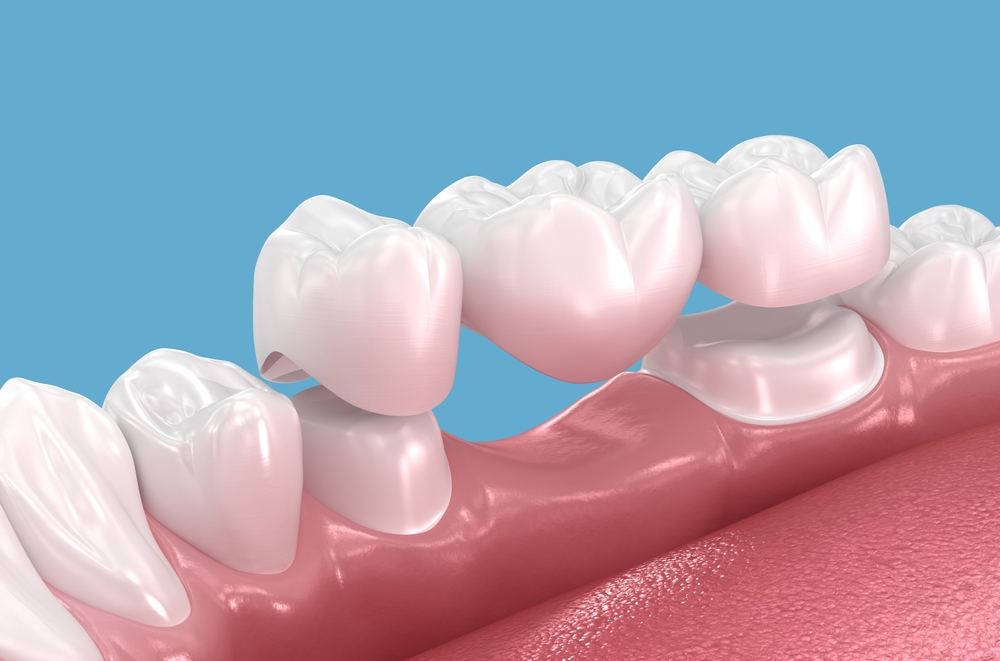
A dental bridge is a fixed prosthesis prepared by using the teeth adjacent to a gap to support the replacement of one or more missing teeth.
In traditional bridges, the supporting teeth on either side of the missing tooth are prepared to a certain extent. The artificial tooth in between completes the gap based on the crowns on the supporting teeth.
The suitability of bridge treatment is evaluated based on the strength of the supporting teeth, root structure, gum health, and the length of the edentulous area.
What is a Removable Dental Prosthesis?
Removable prostheses are dental prosthetics that can be taken out and put back in by the patient. They can be used in cases where multiple teeth or all teeth are missing.
Removable prostheses;
Partial dental prosthesis,
Complete dental prosthesis,
Precision attachment prosthesis,
Implant-supported removable prosthesis can be planned.
The type of prosthesis is determined based on the remaining teeth in the mouth and the supporting tissues.
What is a Partial Dental Prosthesis?
A partial prosthesis is a removable prosthesis used in situations where some natural teeth are present but multiple teeth are missing.
These prostheses can be supported by natural teeth and gums. Retention can be achieved through clasps or special connection systems depending on the prosthesis design.
Partial prostheses can help balance the chewing forces applied to the existing teeth, in addition to completing the edentulous areas.
What is a Complete Dental Prosthesis?
A complete dental prosthesis is a removable prosthesis used when there are no natural teeth in the upper or lower jaw. It can also be referred to as "dentures" or "palate prosthesis" in daily use.
Complete prostheses are supported by the tissues over the gums and jawbone. The retention of the prosthesis can vary depending on the structure of the jawbone, oral tissues, saliva amount, and muscle control.
Retention may be more limited in some patients, especially with lower jaw complete prostheses. In this case, implant-supported prosthesis options can be considered.
What is a Precision Attachment Prosthesis?
In precision attachment prostheses, special connection systems are utilized instead of traditional metal clasps. These connections are usually hidden within or behind the capped supporting teeth.
This method can enhance the retention and aesthetic appearance of the prosthesis in suitable patients. However, the supporting teeth and surrounding tissues must be in appropriate condition for it to be applicable.
What is an Implant-Supported Prosthesis?
Implant-supported prostheses are fixed or removable restorations that are supported by implants placed in the jawbone.
In cases of complete edentulism, implants can be used to;
Increase the retention of the removable prosthesis,
Prepare a fixed complete jaw prosthesis,
Distribute chewing forces more evenly.
The type of implant-supported prosthesis and the number of implants are determined based on the condition of the jawbone, the individual's overall health, and the prosthesis planning.
What is the Difference Between Fixed and Removable Prostheses?
Fixed prostheses are not removed by the patient and are anchored to the teeth or implants. Removable prostheses can be taken out and put back in for daily cleaning.
Fixed prostheses can provide a usage sensation closer to natural teeth. However, a sufficient number of healthy teeth or appropriate implant support is required for their application.
Removable prostheses may be preferred in cases of greater tooth loss or when there is insufficient support for fixed prostheses.
Which option is more suitable should be evaluated on an individual basis.
How is a Dental Prosthesis Made?
The dental prosthesis treatment generally consists of the following stages:
Examination and Planning
The existing teeth, gums, jawbone, bite, and edentulous areas are evaluated. If necessary, X-rays or three-dimensional imaging methods may be utilized.
Preparation of Oral Health
Before the creation of prosthetics, it may be necessary to treat cavities, gum diseases, infections, and teeth that cannot be preserved.
Taking Measurements
Precise measurements are taken from the mouth. If necessary, digital intraoral scanners may be used. Based on the obtained data, personalized models are prepared.
Closure and Aesthetic Planning
The closure relationship of the upper and lower jaws is determined. The color, size, shape, and arrangement of the teeth are planned considering the facial structure and aesthetic expectations.
Trial Stages
One or more trials may be conducted depending on the type of prosthetic. Aesthetics, speech, closure, and the compatibility of the prosthetic with the mouth are evaluated during the trials.
Delivery of the Prosthetic
The prepared prosthetic is applied to the mouth. Pressure points, closure relationship, and comfort of use are checked. Detailed information is provided to the patient regarding cleaning and maintenance.
How Long Does It Take to Make a Dental Prosthetic?
The treatment duration may vary depending on the type of prosthetic to be applied, the preparatory procedures in the mouth, and the number of trials.
While a simple fixed prosthetic can be completed in a few sessions, the treatment duration for complete prosthetics, precision-retained prosthetics, or implant-supported prosthetics may be longer.
The total duration may extend in cases requiring tooth extraction, bone healing, implant application, or gum treatment.
What is a Temporary Dental Prosthetic?
Temporary prosthetics are used to partially maintain aesthetics and function until a permanent prosthetic is prepared.
A temporary prosthetic can be applied;
After tooth extraction,
During the preparation of crowns or bridges,
During the implant healing period,
In the transitional process of complete jaw treatments.
Temporary prosthetics may not have the same durability as permanent restorations. Therefore, care and maintenance recommendations should be followed.
Is a Prosthetic Placed Immediately After Tooth Extraction?
In suitable patients, measurements can be taken before tooth extractions to prepare a temporary prosthetic referred to as "immediate prosthetic." The prosthetic can be placed in the mouth on the day the teeth are extracted.
Since changes will occur in the gums and jawbone after extraction, the prosthetic may need to adapt or be renewed over time.
The immediate prosthetic application may not be suitable for every patient. The decision should be made based on the condition of the teeth to be extracted and the oral tissues.
How Long Does It Take to Get Used to a Dental Prosthetic?
The adjustment period to a new prosthetic varies from person to person. In the first days, there may be a feeling of foreignness in the mouth, an increase in saliva production, differences in speech, and difficulty during chewing.
During the use of the prosthetic, the cheeks, tongue, and chewing muscles need to adapt to the new structure. With regular use and check-ups, these complaints may decrease over time.
If the prosthetic causes hitting, creates sores, or significantly hinders chewing, adjustments should be made by the dentist.
Does a Dental Prosthetic Cause Pain?
Newly placed removable prosthetics may cause pressure and sensitivity in some areas. Especially in the first days, small bruised areas may be observed.
If the prosthetic causes pain or sores, the patient should not file or shape the prosthetic on their own. Pressure points need to be identified and corrected by the dentist.
In fixed prosthetics, prolonged pain, a feeling of height during chewing, or gum discomfort should be evaluated.
How Should One Eat After Getting Dentures?
It is recommended that individuals who start using new dentures prefer soft foods cut into small pieces in the initial days.
When eating with removable dentures;
Foods should be cut into small bites,
They should be chewed evenly on both sides,
Very hard and sticky foods should be avoided,
Care should be taken not to tear hard foods with the front teeth.
As one gets used to wearing dentures, dietary options can gradually be increased.
How Should Denture Care Be Done?
Regular cleaning of dentures helps prevent bad breath, stain formation, fungal infections, and gum problems.
In the care of removable dentures;
The denture should be rinsed with water after every meal,
It should be cleaned at least once a day with an appropriate denture brush,
Abrasive products should be avoided during denture cleaning,
Natural teeth, tongue, and gums should also be cleaned,
To prevent the denture from falling and breaking, it should preferably be cleaned over a bowl of water or a soft towel.
The area around fixed dentures should be cleaned with products suitable for toothbrushes, dental floss, interproximal brushes, or bridge cleaning.
Should Dentures Be Removed at Night?
Removing removable dentures at night can help the oral tissues to rest. However, in some temporary or special cases, the dentist may suggest a different usage recommendation.
The removed denture should be stored appropriately according to its material. Drying out or exposure to hot water can cause deformation.
Personal recommendations regarding nighttime use should be given based on the type of denture and the condition of the oral tissues.
Is Toothpaste Used for Cleaning Dentures?
Some standard toothpastes may contain abrasive substances that can scratch the surface of removable dentures.
Cleaners specifically designed for removable dentures or products recommended by the dentist should be preferred.
Natural teeth should continue to be brushed regularly with fluoride toothpaste.
Should Denture Adhesive Be Used?
Denture adhesives can temporarily increase retention in some complete dentures. However, the only solution for a poorly fitting or constantly moving denture is not to use adhesive.
If the denture has loosened over time, changes may have occurred in the jawbone and gums. In this case, the denture may need to be relined, adjusted, or replaced.
It is recommended to consult the dentist before using denture adhesive.
Why Do Dentures Become Loose?
Changes in the structure of the jawbone can occur after tooth extractions and in the following years. These changes can cause the removable denture to lose its fit over time.
When the denture is loose;
It may move while eating,
It may come out of place while speaking,
It may cause bruising and sores on the gums,
It may reduce chewing efficiency.
A loose denture should be evaluated by a dentist. The inner surface of the denture may need to be renewed or a new denture may need to be made.
Can a Broken Denture Be Repaired?
Broken dentures can be repaired in a laboratory setting in some cases. However, not every break can be repaired in the same way.
If breakage occurs repeatedly, the fit of the prosthesis, the occlusion relationship, and changes in the jawbone should be evaluated.
Broken pieces should not be glued at home. Home adhesives can damage the prosthetic material and oral tissues.
What is the Lifespan of Dental Prosthetics?
It is not possible to provide a fixed duration that applies to everyone for the lifespan of dental prosthetics.
The lifespan of the prosthesis;
Depends on the material used,
The type of prosthesis,
Oral hygiene,
Chewing forces,
Teeth grinding or clenching habits,
The condition of supporting teeth and implants,
Changes occurring in the jawbone,
Regular check-ups.
When there is significant wear, breakage, looseness, color change, or occlusion disorder in the prosthesis, the need for renewal may be evaluated.
Do Prosthetic Teeth Look Natural?
Today’s prosthetic teeth can be selected based on the individual's natural tooth color, face shape, age, and smile characteristics.
For a natural appearance;
The color of the teeth,
The size and shape,
The fit with the gums,
Lip support,
The arrangement of the teeth,
The visibility during smiling are evaluated together.
The aesthetic result obtained may vary depending on the type of prosthesis and the existing tissues in the mouth.
Does a Dental Prosthesis Affect Speech?
New prostheses may affect the production of certain sounds in the initial period. Especially in full removable dentures, it may take time for the tongue to get used to the new prosthetic surfaces.
Reading aloud and repeating difficult words can help with the adjustment process.
If speech problems persist, the thickness, position, and fit of the prosthesis should be checked by the dentist.
Can a Dental Prosthesis Cause Bad Breath?
Food debris, bacterial plaque, and stains can accumulate on prostheses that are not regularly cleaned. This situation can contribute to bad breath.
To reduce bad breath;
The prosthesis should be cleaned regularly,
Natural teeth and tongue should be brushed,
Interdental spaces should be cleaned,
Removable prostheses should be taken out at night,
Regular dental check-ups should be performed.
Persistent bad breath may not be solely related to the prosthesis and should be evaluated in detail.
Who Can Have a Dental Prosthesis?
A dental prosthesis can be applied to;
Those missing one or more teeth,
Those who have lost all their teeth,
Those with severely damaged teeth,
Those who want to renew their removable prosthesis,
Those who need implant-supported prostheses,
Individuals experiencing chewing and aesthetic problems.
The type of prosthesis to be used is determined based on the individual's overall health, oral tissues, and treatment expectations.
Why Choose Cinik Polyclinic?
At Cinik Polyclinic, dental prosthetic treatment is not only considered as the completion of missing teeth. Chewing function, speech, facial support, aesthetic expectations, and long-term oral health are addressed together.
Before treatment, the oral structure is thoroughly evaluated to create a suitable plan among fixed, removable, or implant-supported prosthesis options.
During the trial stages, the aesthetic appearance, occlusal balance, and comfort of the prosthesis are checked. After the delivery of the prosthesis, detailed information is provided about the care and control process.
Contact Form
To learn about suitable prosthesis options for your missing teeth, evaluate issues related to your existing prosthesis, or create a personalized treatment plan, please fill out our contact form.
Our experienced team will contact you to share detailed information about fixed, removable, and implant-supported dental prosthesis options.
Note: The type of prosthesis to be applied, treatment duration, materials to be used, and achievable results may vary from person to person. The definitive treatment plan is created after a dental examination and necessary imaging.