Yükleniyor…
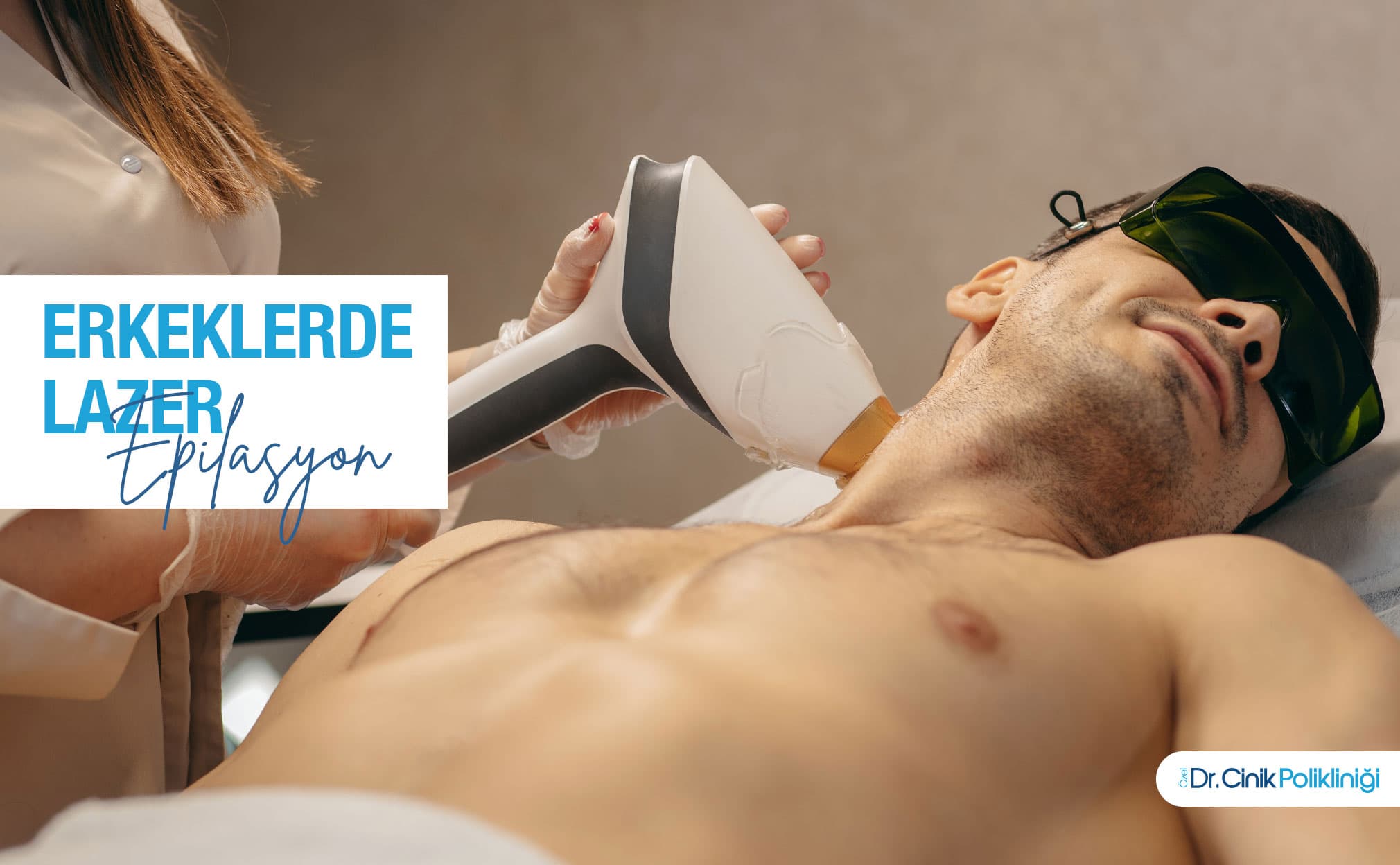
Men are showing increasing interest in laser hair removal today. Aesthetic concerns, hygiene needs, and the search for daily comfort form the basis of this interest. The hair structure in men differs significantly from that in women. In men, hair strands are thicker, denser, and located deeper. The testosterone hormone directly affects this situation. Therefore, laser hair removal procedures in men require special attention. This article examines the areas of laser hair removal in men in detail from clinical, aesthetic, and functional perspectives. It focuses on accurate information, correct area selection, and proper treatment planning.
Laser hair removal targets the melanin pigment, heating the hair follicle and stopping hair growth. Due to the thicker hair structure in men, higher energy levels and more sessions may be required.
Laser hair removal devices produce light at specific wavelengths. This light is absorbed by the melanin in the hair strand. The absorbed light energy is converted into heat, destroying the hair follicle. This mechanism is known as selective photothermolysis. Because men have greater hair density and thickness, the choice of device is critically important. Alexandrite laser provides effective results for light-skinned men. Nd:YAG laser, on the other hand, works more safely for dark-skinned men. Diode laser systems can be used across a wide range of skin types.
The number of sessions for men typically ranges from 6 to 12. For women, this number can be between 4 and 8. In areas with high hormonal activity, the risk of recurrence is more common in men. The facial area and nape are among the more resistant areas in this regard. Energy settings vary according to the area. More aggressive parameters can be used in areas with thick hair, such as the back and shoulders. In sensitive areas like the genital region, energy is kept low.
There are five main categories: face, upper body, lower body, genital area, and full body applications. Each area has its own specific needs and treatment protocols.
Areas such as above the beard, between the eyebrows, neck, nape, around the ears, and cheekbone line are among the most commonly treated facial areas with laser hair removal.
The facial area stands out as one of the most technical areas for laser hair removal in men. The area above the beard, or the cheek line, is heavily preferred by men experiencing irregular beard growth issues. Laser application in this area is also used to create an aesthetic beard line. Excessive hair growth between the eyebrows is a common condition seen in many men. Laser application in this area helps achieve a more orderly appearance of the eyebrows.
The neck and nape area is among the most frequently preferred areas for men. Especially irregular nape hair and hair that comes into contact with the collar of a shirt can be bothersome. Laser hair removal offers a permanent solution in this area. The area around the ears and the cheekbone line are also considered detail areas that complete facial aesthetics. Due to the high sensitivity in these areas, lower energy levels are preferred. Session intervals are generally planned between 4 to 6 weeks.
The back, shoulders, chest, abdomen, arms, and armpits are the most commonly treated areas for laser hair removal in the upper body.
The back and shoulders are among the areas with the densest hair structure in men. In these areas, hair strands are thick and deeply rooted. Laser hair removal is very effective in these regions because the high melanin concentration in thick hairs absorbs light better. The chest and abdomen are among the most requested areas for aesthetic concerns. Especially men who exercise and bodybuilders seek hair reduction in this area.
Arms and armpits are important for both aesthetic and hygiene reasons. Excessive hair in the armpits can lead to sweating and odor problems. Laser hair removal provides both hair reduction and sweat control in this area. The number of sessions for upper body treatments usually ranges from 6 to 10. Session intervals are planned to be between 6 to 8 weeks.
Area | Average Number of Sessions | Session Interval | Energy Level |
Back | 8-10 | 6-8 weeks | High |
Shoulder | 8-10 | 6-8 weeks | High |
Chest | 6-8 | 6-8 weeks | Medium-High |
Abdomen | 6-8 | 6-8 weeks | Medium-High |
Arm | 6-8 | 6 weeks | Medium |
Underarm | 6-8 | 6 weeks | Medium |
Legs, buttocks, and the tailbone area are among the most preferred areas for laser hair removal on the lower body.
Legs are particularly favored by athletes, cyclists, and swimmers. Laser hair removal is performed on the legs for aerodynamic advantage and to enhance muscle definition. The buttock area is in demand for both aesthetic and hygiene reasons. The tailbone area is an important application area for men experiencing ingrown hairs and folliculitis.
Reducing the risk of ingrown hairs is a significant motivation in lower body treatments. Ingrown hairs are common issues, especially in frequently shaved areas. Laser hair removal effectively resolves this problem. Lower body sessions generally take less time compared to upper body sessions because hair density may be lower in certain lower leg areas.
The groin, pubic area, around the penis, scrotum, and perineum are included in the areas covered by genital laser hair removal. Expert supervision is mandatory in this area.
The genital area stands out as one of the fastest-growing areas for laser hair removal in men for hygiene and long-term comfort. Hair reduction in the groin and pubic area provides sweat control and ease of maintenance. Laser application in extremely sensitive areas like around the penis and scrotum should be performed by specially trained professionals. The perineum area is also among the preferred areas for hygiene reasons.
Due to the skin's thinness and sensitivity in this area, Nd:YAG laser or low-energy diode systems are preferred. Energy settings are kept 50% lower compared to other body areas. Cooling systems are vital in this region. Session intervals are planned between 6 to 8 weeks. The total number of sessions usually varies between 8 to 12.
Full body laser hair removal means treating multiple areas of the body under the same protocol. It requires more comprehensive planning and longer session durations compared to regional application.
The full body concept is becoming increasingly popular among men. In this approach, the back, chest, abdomen, arms, legs, and genital area are included in the same treatment plan. The difference from regional application is that the session durations are longer and the total treatment cost is higher. However, it provides an advantage in terms of holistic results.
Personalized treatment protocols come into play at this point. Since the hair structure varies in each area, device parameters can be adjusted during the session. For example, high energy is used for the back while low energy is preferred for the genital area. Session planning is generally done through cycles of 8 to 12 weeks.
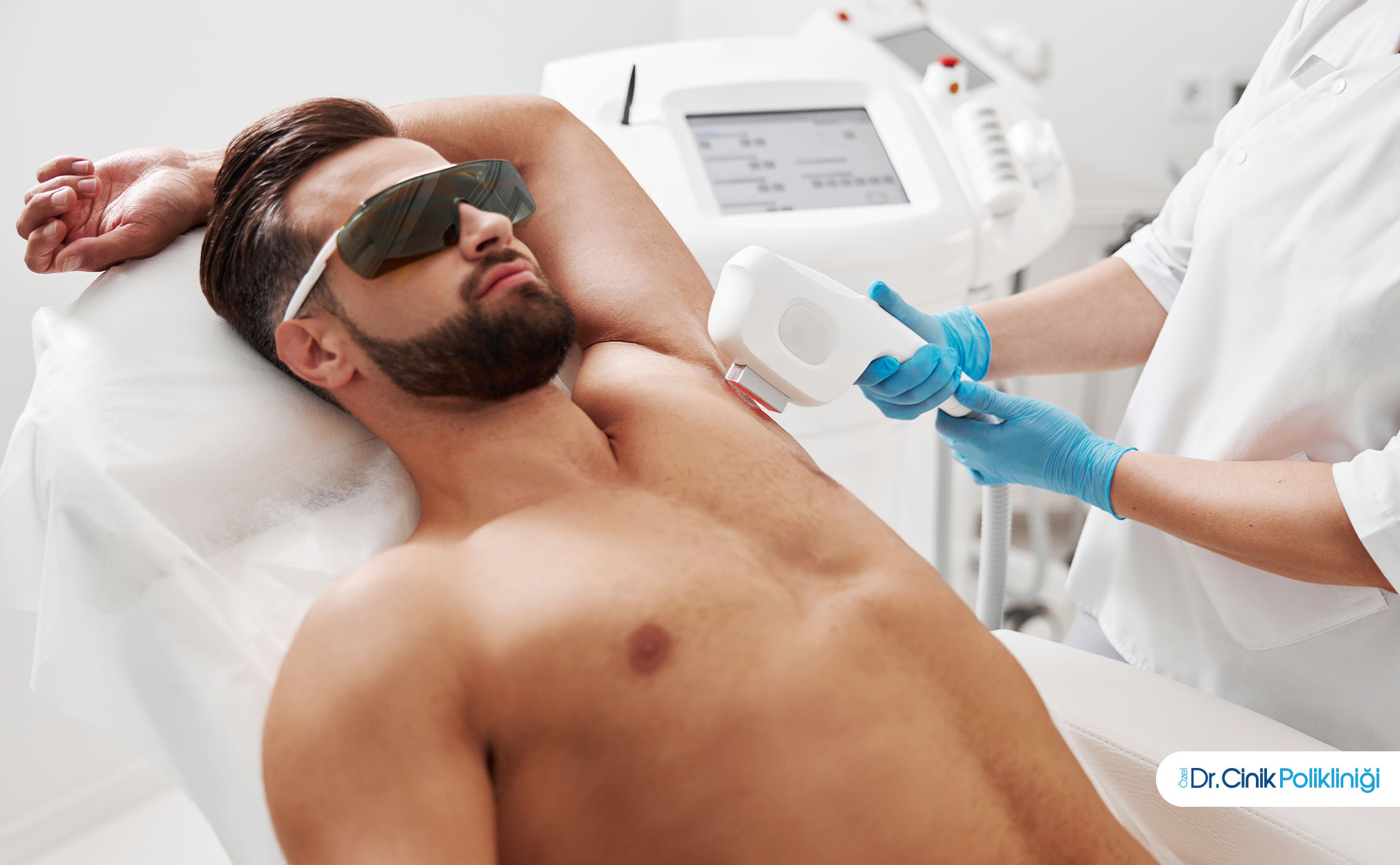
Back, shoulders, chest, abdomen, upper beard, neck, arms, armpits, and genital area are among the most requested laser hair removal areas for men.
The back and shoulders alone account for 35% of the demand for laser hair removal among men. The dense hair growth in these areas raises aesthetic concerns during the summer months. The chest and abdomen account for 25% of the demand. The popularity of gym culture is increasing the demand in this area. The upper beard and neck area receive about 20% of the demand. The difficulty of regular shaving and skin irritation triggers the preference for laser in this area.
Arms and armpits together hold a demand share of 12%. The genital area has reached an 8% share as the fastest-growing category in recent years. The reasons for the preference of these areas are grouped under three main headings: aesthetic appearance, hygiene control, and increased physical performance.
Area | Demand Rate | Main Motivation | Average Session |
Back-Shoulder | %35 | Aesthetic | 8-10 |
Chest-Abdomen | %25 | Aesthetic-Performance | 6-8 |
Beard-Neck | %20 | Comfort-Aesthetic | 8-12 |
Arm-Armpit | %12 | Hygiene-Aesthetic | 6-8 |
Genital Area | %8 | Hygiene-Comfort | 8-12 |
The success rate is higher in areas with thick hair. The risk of recurrence increases in hormonally active areas. Each area requires its own specific number of sessions and energy protocol.
Areas with thick hair structure respond better to laser hair removal. In areas such as the back, shoulders, and chest, hair strands are thick and rich in melanin. This increases light absorption and facilitates follicle damage. The success rate in these areas ranges from 80% to 90%.
The situation is more complex in hormonal areas. The face, nape, and genital area are directly affected by androgen hormones. Hair follicles in these areas are more sensitive to hormones. Therefore, the risk of recurrence can be higher. For the facial area, maintenance sessions are recommended once or twice a year.
There is a direct relationship between the number of sessions and success. Significant thinning of hair is observed in the first three sessions. From the fifth session onwards, a reduction of 50 to 70 percent in hair density occurs. After the eighth session, most of the targeted hair reduction is achieved. Regional resistance differences are related to genetic structure, age, and hormone levels.
Low energy protocols, expert supervision, and device selection specific to skin type ensure safety in sensitive areas. Side effects are usually temporary and mild.
Application protocols in sensitive areas such as the genital region, face, and neck differ from standard body areas. Energy density is started low and increased according to patient tolerance. Cooling systems are operated at maximum levels in these areas. Expert supervision requires not only technical knowledge but also anatomical knowledge.
Side effects include redness, mild sensitivity, and temporary pigmentation changes. These effects typically resolve spontaneously within 24 to 72 hours. Assessment according to skin and hair type should be repeated before each session. The risk of side effects is higher in dark-skinned men, making Nd:YAG laser necessary. In light-skinned men, alexandrite and diode systems can be used safely.

Long-term hair reduction, increased hygiene, sweat control, aesthetic appearance, and improvement in sports performance are among the main advantages of laser hair removal for men.
Laser hair removal promises long-term hair reduction in men. Most of the hair does not grow back permanently after treatment. The remaining hair becomes finer and lighter in color. Hygiene and sweat control are particularly noticeable in the armpit and genital areas. Hair reduction narrows the area for bacterial growth and reduces odor formation.
Aesthetic appearance makes body contours more defined. Its contribution to sports performance is especially emphasized by swimmers, cyclists, and bodybuilders. Aerodynamic friction decreases, and muscle definition becomes clearer. Daily maintenance time is significantly reduced. The need for shaving, waxing, and hair removal is eliminated.
Male hair removal is now seen not just as aesthetic but as part of a grooming routine. The percentage of male patients in medical aesthetics is growing by 15 percent each year.
In the last decade, men's perception of personal care has undergone a fundamental change. Laser hair removal is no longer a luxury service but has become a standard grooming practice. Social media, sports culture, and expectations for a professional appearance in business life are accelerating this change. The percentage of male patients applying to medical aesthetic centers has been steadily increasing since 2020.
Societal perception has started to view men's grooming more positively. Hair removal is now associated with personal preference and hygiene rather than gender roles. Among young men, shaping facial features and managing body hair has become a common practice. This trend seems likely to strengthen in the coming years.
Area selection should be based on personal needs, hair structure, skin type, and lifestyle. Expert consultation is a necessary step at this point.
Each man has his own unique hair structure and expectations. An athletic individual may focus on the legs and chest area. An office worker may prioritize the beard area and neck. A person concerned about hygiene may turn to the genital area and underarms. The right device selection should be determined according to skin tone. Alexandrite laser is suitable for light skin. Nd:YAG laser is safe for dark skin. Diode laser provides flexibility across a wide range of skin types.
Choosing the right specialist directly affects treatment success. An experienced practitioner accurately interprets skin reactions and keeps energy settings at an optimal level. Proper planning includes session intervals, total number of sessions, and regional prioritization. A patient and disciplined treatment plan yields the best results.
Laser hair removal provides permanent hair reduction. Initial results are seen after 2-3 sessions. Full effect occurs after 6-12 sessions. Rare maintenance sessions may be required in hormonal areas.
Laser hair removal targets the hair follicle for permanent reduction. However, the body can create new hair follicles. Therefore, 100% hair loss cannot be guaranteed for everyone. Generally, a permanent hair reduction of 70% to 90% is observed. Thinning of hair begins after the first session. Shedding increases during the second and third sessions. A noticeable difference in hair density appears from the fourth session onward.
In hormonal active areas like the face, an annual maintenance session is recommended. Maintenance sessions in body areas can be performed at less frequent intervals. The permanence of results depends on age, hormone levels, genetic structure, and the correct application of the treatment protocol.
Bouzari, N., Tabatabai, H., Abbasi, Z., Djavid, G. E., & Firooz, A. (2004). "Hair Removal with a Long-Pulsed 1064 nm Nd:YAG Laser." Archives of , 140(11), 1379-1383.
Dierickx, C. C. (2006). "Hair Removal by Lasers and Intense Pulsed Light Sources." Seminars in Cutaneous Medicine and Surgery, 25(3), 129-144.
Gan, S. D., & Graber, E. M. (2013). "Laser Hair Removal: A Review." Surgery, 39(6), 823-838.
Goldberg, D. J. (2012). "Laser Hair Removal." Journal of Cosmetic and Laser Therapy, 14(3), 109-115.
Haedersdal, M., & Wulf, H. C. (2011). "Evidence-based Review of Hair Removal Using Lasers and Light Sources." Journal of the European Academy of and Venereology, 20(1), 9-20.
Ramos-E-Silva, M., Carneiro, S. C., & Schechtman, R. C. (2013). "Hair Removal: An Overview." Cosmetic : Products and Procedures, 2nd ed., Wiley-Blackwell, 145-160.