Yükleniyor…
Yes, laser hair removal on light hair has a partial effect. However, this effect is not as strong as on black hair. Instead of complete disappearance, thinning and reduction are expected on light hair. It is largely determined by individual differences. Experts emphasize a clear truth in this regard. Laser hair removal is possible on light hair. However, expectations should not be the same as for black hair.
In recent years, laser hair removal has become one of the most preferred permanent hair reduction methods. Many people seek this treatment with the goal of smooth skin. However, individuals with light, white, or fair hair justifiably have concerns before the treatment. In this article, we examine the real effectiveness of laser hair removal on light hair in light of scientific data. We explain the role of melanin pigment, different laser technologies, and personalized expectations in detail. We also compare alternative methods for light hair. We address how hormonal factors affect the treatment. We emphasize the risks of side effects and the importance of expert evaluation. Our aim is to scientifically inform patients accurately and create realistic expectations.
Laser hair removal works on the principle of selective heat damage. The devices target the color-absorbing substance in the hair follicle. The heat energy destroys the hair bulb and slows down regrowth. This process is one of the most important discoveries in modern . However, this principle does not work with the same efficiency for every hair color.
In this section, we explain the basic scientific principles of laser hair removal. The technology directly targets the hair follicle. However, this targeting depends on certain conditions. These conditions change for light hair. Skin type, hair color, and hair thickness guide the process. Experts evaluate these factors individually. Then they create the treatment plan. The patient must understand their own situation. An informed patient achieves better results.
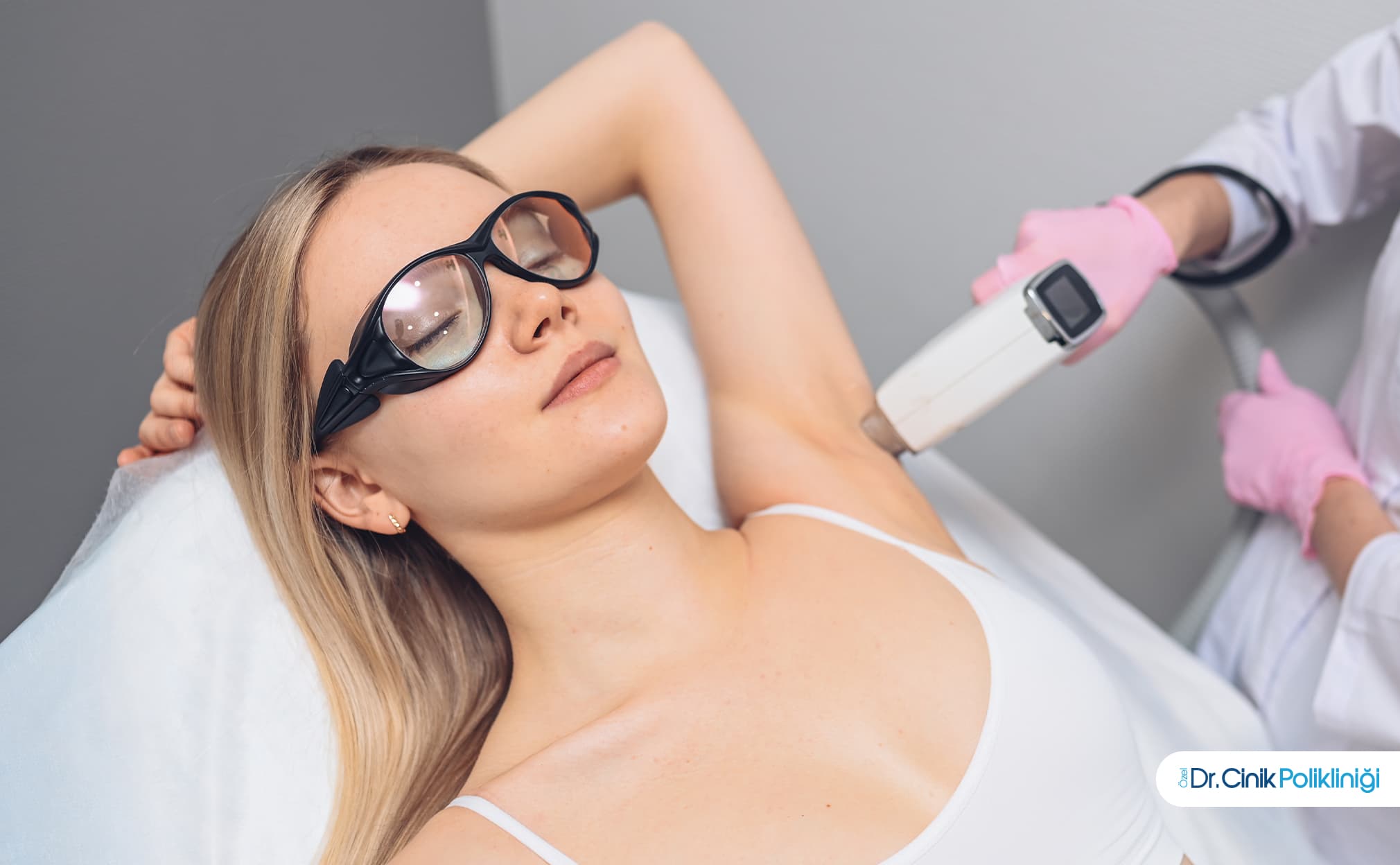
Laser devices produce light at a single wavelength. This light reaches the hair follicle. The pigment in the hair follicle absorbs the light. The pigment converts the absorbed light into heat. The heat destroys the hair follicle. Experts refer to this process as the principle of selective heat damage with light. That is, the laser only heats the target tissue. It does not harm surrounding tissues. Modern devices protect the skin with cooling systems. These systems keep the upper skin layer safe. The expert adjusts the shot power and wavelength according to the skin type. Each device has a different working depth. Some devices penetrate deeper. Others remain on the surface. The lack of pigment in light hair hinders the absorption of heat energy. This situation reduces the success of the treatment. Therefore, experts develop different strategies. The choice of device is crucial at this point.
Melanin is the natural pigment that gives color to hair. Black hair contains a high amount of melanin. Yellow hair has a significantly lower amount of melanin. Instead of dark pigment, light yellow-red toned pigment predominates. This pigment difference directly affects the absorption of laser energy. Toosi and colleagues (2006) compared the effects of different light sources on hair reduction. The study showed that all devices achieved high success rates on dark hair. However, this success rate significantly decreased for light-colored hair. Melanin serves as a target for lasers. When the target decreases, heat energy cannot reach the hair follicle. Therefore, laser hair removal is a more challenging process for yellow hair. The lighter the hair color, the lower the amount of melanin. Low melanin levels mean low heat accumulation. If the hair root cannot be heated, it will not be destroyed. Experts always keep this fundamental principle in mind. The distribution of melanin in yellow hair is also sparse. This situation prevents the homogeneous distribution of heat.
Laser hair removal is difficult for yellow hair because the amount of melanin is low. The laser light cannot be absorbed sufficiently. The hair root cannot be heated. This situation prevents complete destruction. Additionally, the structural characteristics of yellow hair also complicate the treatment. Due to their fine structure, heat dissipates.
In this section, we discuss the structural reasons for yellow hair and the challenges encountered. We also examine which yellow hairs may respond better. Scientific studies provide clear data on this issue. Patients should understand these challenges.
The structure of yellow hair is different from that of black hair. The outer layer of these hairs is thin. The inner core may sometimes be completely absent. Pigment particles are sparsely distributed. The hair shaft is fine and soft. This structure causes the laser light to reflect. Light is not transmitted sufficiently to the hair root. Heat energy dissipates before reaching the hair base. Additionally, yellow hairs often resemble peach fuzz. These hairs do not have deep hair follicles. The target that the laser needs to reach diminishes. All these factors limit the success of the treatment. Experts are well aware of these structural differences. Therefore, they do not recommend aggressive treatment for yellow hair. A slow and patient approach is more appropriate. These differences in the internal structure of the hair make the experts' job more challenging. However, an experienced practitioner can overcome this situation.
Many problems arise with light-colored hair. The first problem is the increase in the number of sessions. While 6-8 sessions are sufficient for black hair, 10-15 sessions may be needed for yellow hair. The second problem is the variability of results from person to person. Some patients report only slight thinning. Others show minimal change. The third problem is regional differences. Yellow hairs in the facial area are more resistant compared to yellow hairs on the body. Hormonal effects further complicate the results in this area. Additionally, the intervals between treatments should be extended. In each session, hairs in the active growth phase are targeted. The growth cycle of yellow hair can vary. This situation complicates planning. Experts create flexible plans in response to this variability. In some areas, hairs grow back more resistant. This is completely normal.
Not all yellow hairs are equally resistant. Dark yellow hairs contain more pigment. These hairs absorb laser light better. Thick, light-colored hairs are also advantageous. A thicker shaft provides a larger target. Dense hairs in hormonal areas can sometimes be thicker. This can facilitate treatment. However, fine and light yellow peach fuzz is the most challenging group. There is almost no target area in these hairs. Experts recommend alternative methods for this type of hair. A reduction of 40-60% is possible with dark yellow hairs. In fine light yellow hairs, this rate drops to 20-30%. Experts explain this difference during patient consultations. Thick hairs retain more heat. This increases follicle damage. Fine hairs, on the other hand, lose heat immediately.
Alexandrite, Diode, and Nd:YAG lasers show limited success with yellow hairs. However, Nd:YAG and Diode lasers provide relative advantages for fine hairs. Device selection should be based on skin type and hair thickness. Experts can use these three technologies in different combinations. A single device may not always be sufficient.
In this section, we compare the three main types of lasers. We examine the wavelength of each device, the depth of penetration, and their effectiveness on yellow hairs. Patients learn which device is suitable for their condition. Experts use this comparison every day.
The Alexandrite laser operates at a wavelength of 755 nanometers. This wavelength shows high retention for melanin. It is the gold standard for individuals with light skin and dark hair. However, the situation changes with yellow hairs. Due to the lack of pigment, heat energy cannot be absorbed sufficiently. Qeyam and colleagues (2025) revealed the risk of paradoxical hair growth in the facial area with Alexandrite laser in their study. The study showed that this risk increased in patients with Fitzpatrick skin types III and IV. The Alexandrite laser provides limited success with yellow hairs. Even if the number of sessions is increased, complete removal is difficult. Experts do not recommend this device alone for yellow hairs. It works quickly on large areas. However, its effectiveness decreases on light hairs. The device has a large spot size. This feature provides an advantage in areas like legs and back. However, this speed does not benefit yellow hairs.
The Diode laser operates in the range of 800-810 nanometers. This wavelength allows for deep penetration. The Diode laser reaches the deeper layers of the hair follicle. It transmits heat to the hair base. Deep targeting offers a relative advantage for yellow hairs. However, the lack of melanin is still a limiting factor. Toosi and colleagues (2006) noted in their comparative study that the Diode laser achieved high rates of hair reduction but that side effects were more common. The Diode laser requires more sessions for yellow hairs. Cooling systems enhance skin safety. Experts start with low energy density and gradually increase it. This device is more effective on body areas. It should be used cautiously on the facial area. Diode lasers generally use a wavelength of 808 nanometers. This wavelength has a medium depth of effect. This depth advantage is somewhat effective for yellow hairs.
Nd:YAG laser uses a wavelength of 1064 nanometers. This wavelength has the deepest penetration power. Melanin absorption is lower compared to others. However, it has the ability to target deep hair follicles. Its safety has been proven in individuals with dark skin. It finds application in fine hair in blonde individuals. A study published in PMC in 2025 addressed a rotational approach. In this study, Nd:YAG laser was initiated on dark hair. As the hair thinned, it transitioned to Diode and then Alexandrite lasers. Additionally, a case report by Desai and colleagues showed that the sub-millisecond Nd:YAG mode achieved success in fine and light hair. This mode operates below the thermal relaxation time of the hair follicle. Thus, the upper skin is protected. Nd:YAG shows promise in blonde hair, albeit limited. However, this technology may not be available in every center. Experts safely use this device in patients with dark skin. In patients with light skin, different options may be considered.
Laser Type | Wavelength | Depth of Penetration | Success in Blonde Hair | Safety Profile |
Alexandrite Laser | 755 nm | Medium | Low | Ideal for Light Skin |
Diode Laser | 808-810 nm | Deep | Medium | All Skin Types |
Nd:YAG Laser | 1064 nm | Deepest | Medium-Low | Safest for dark skin |
This table compares three main types of lasers side by side. The Alexandrite laser uses the wavelength closest to melanin. This feature makes it powerful on dark hair. However, the same advantage does not work on light hair. The diode laser operates at a medium depth. It provides balanced results on body areas. The Nd:YAG laser penetrates the deepest. It has high safety in patients with dark skin. The choice for light hair is determined by hair thickness. Specialists use this table during patient consultations. Each device has different strengths. However, none are sufficient alone for light hair.
The success rate for light hair is determined by skin color, hair thickness, device technology, and hormonal status. These factors are interconnected. A personalized assessment is essential. Specialists examine these four factors individually. Then they create a personalized plan.
In this section, we examine the four main factors that directly affect success. We explain the role of each factor in treatment planning. Patients make more informed decisions with this information. Incorrect assessment leads to disappointment.
Skin color is a critical factor for success. In light-skinned individuals, contrast is important regardless of hair color. However, in the combination of light skin and light hair, contrast is almost nonexistent. The laser cannot distinguish between skin and hair. This situation increases the risk of skin burns. Specialists have to use lower energy in this combination. Low energy, however, leaves hair follicle damage insufficient. In dark-skinned individuals, the situation is even more complex. Melanin in the upper skin layer absorbs laser light. This increases the risk of skin damage. The Nd:YAG laser offers safety in this group. However, the pigment issue still persists in light hair. The higher the skin-hair contrast, the greater the success. This contrast is at its lowest level in light hair. Therefore, specialists record skin color in the initial assessment. Patients with light skin and light hair are the most challenging group. For these patients, electrolysis is more reasonable.
Hair thickness directly affects the target volume. In thick light hairs, the hair follicle is wider. The laser light encounters more pigment molecules. This increases heat accumulation. As a result, thinning is more likely in thick light hairs. Study number PMC2840900 supports this situation. Researchers in India showed that the success rate in thick terminal hairs is 100%, while there is a 50% risk of failure in fine intermediate hairs. Peach fuzz is the thinnest group. The target area in these hairs is minimal. Specialists recommend electrolysis instead of laser for these types of hairs. Ten sessions may be sufficient for thick light hairs. In fine light hairs, this number increases to 15-20. Specialists observe hair thickness at each session. Thick hairs retain heat better. This facilitates follicle damage.
The technology of the device directly determines success. Officially health-approved devices have passed safety tests. However, the cooling system of the device is important for light hair. Good cooling allows for high energy usage. Without cooling, the risk of skin burns increases. The pulse power and the width of the pulse head are also effective. A wide pulse head reaches deeper. A narrow pulse head remains on the surface. Expert experience is also critical. An experienced practitioner sets the parameters correctly. Incorrect parameters can lead to dark spot formation. Additionally, the maintenance condition of the device is important. Old and poorly maintained devices provide unstable energy. This situation decreases effectiveness and increases risk. Experts examine the device portfolio when choosing a center. New technology offers better cooling. This cooling allows for higher energy usage on light hair.
Hormonal factors change hair structure. Polycystic ovary syndrome increases androgen levels. This leads to the formation of dark and thick hair in the facial area. However, there is also a risk of paradoxical hair growth in patients with polycystic ovary syndrome. Qeyam and colleagues (2025) reported that the prevalence of paradoxical hypertrichosis in patients diagnosed with polycystic ovary syndrome was 33.3%. This rate was 14.1% in those without polycystic ovary syndrome. Hormonal hair growth complicates treatment. Hairs remain in the active growth phase for a long time. However, hormones trigger the formation of new hairs. This increases the number of sessions required. Experts also review hormonal treatment for these patients. Laser hair removal alone may be insufficient. Collaboration with an endocrinologist is essential. Additionally, the risk is higher in patients with irregular menstruation. If there is a family history of excessive hair growth, caution increases. Experts request blood tests.
No, laser hair removal is not completely ineffective on light hair. However, complete disappearance should not be expected. Partial thinning and reduction are possible. Personal differences determine the results. Experts should be clear on this matter. Patients should not experience disappointment due to misinformation.
In this section, we examine the perception that it is completely ineffective with scientific data. We also explain the realistic goals presented by studies. Patients can make informed decisions with this information.
This perception is incorrect. It is wrong to say that laser is completely ineffective on light hair. However, expectations should be realistic. An 80-90% reduction seen in black hair is rarely observed in light hair. Instead, a thinning and reduction rate of 30-60% is targeted. Some patients report that the color of the hairs has changed. Light hairs may become even lighter. This situation is actually an indication of treatment. The hair follicle has been damaged. However, complete hair follicle death has not occurred. Experts explain this difference to patients. Expecting completely smooth skin leads to disappointment. Setting realistic goals increases treatment satisfaction. Many patients are satisfied with hairs becoming thin enough not to require shaving. This result makes daily life easier.
Scientific studies show low response rates in light-colored hair. Toosi and colleagues (2006) compared different light sources. The study revealed that all devices had limited effects on light hair. Snast and colleagues (2021) found the prevalence of paradoxical hair growth to be 3% in their systematic review. However, this condition was rarely seen outside the face and neck. The rotational study from PMC in 2025 became a new ray of hope. In this study, different wavelengths were used sequentially. Dark hairs were first treated with Nd:YAG. Then, treatments continued with Diode and Alexandrite lasers. This approach promises better results for light hairs. However, studies are still limited. More clinical research is needed. Experts use the existing data in patient consultations. Scientific advancements are promising. However, it has not yet become a standard protocol.
When laser treatment is insufficient for light hairs, alternative methods come into play. Electrolysis is the gold standard in this field. Broad-spectrum light systems offer limited benefits. Combined treatments are the smartest approach. Experts frequently use these methods together. Patients should evaluate all options.
In this section, we examine permanent hair removal options other than laser. We explain the advantages of each method and their place in light hairs. Patients should assess all options. Sometimes a combined approach is the best.
Electrolysis targets each hair follicle individually. The expert places a fine needle into the hair root. An electric current is transmitted through the needle. The current permanently destroys the hair base. This method does not require pigment. Therefore, it works on light, white, red, and gray hairs. The U.S. Food and Drug Administration has approved this method for permanent hair removal. Laser has only received approval for permanent hair reduction. Electrolysis provides excellent results in small areas. It is particularly preferred in the face, chin, and eyebrow regions. However, it is time-consuming in larger areas. Completely clearing a leg can take years. It requires pain tolerance. Modern devices have reduced pain. Each session lasts 15-30 minutes. Sessions are repeated every 2 weeks. Experts rank this method first for light hairs. The permanence rate is between 90-95%. This rate is much higher than that of lasers.
Broad-spectrum light produces wavelengths in the range of 500-1200 nanometers. This system is not a laser. The light source is less focused. Broad-spectrum light finds limited use in light hairs. Because melanin targeting is still necessary. Home-use broad-spectrum devices emit lower energy. These devices are almost ineffective on light hairs. Clinical broad-spectrum devices are stronger. However, they are still not as selective as lasers. Toosi and colleagues (2006) demonstrated that broad-spectrum light is not as effective as lasers. The risk of side effects is higher. Broad-spectrum light quickly covers large areas. However, this speed does not provide benefits for light hairs. Experts do not recommend broad-spectrum light alone for light hairs. In some centers, it is used as a preparation before laser treatment. However, scientific support is limited.
Combined treatments are the most practical approach. The specialist first provides general reduction with laser. For the remaining fine and light hairs, needle epilation is applied. This strategy is optimized in terms of time and cost. For example, Diode laser is used first on the legs. After the dark hairs are reduced, the remaining light hairs are cleaned with a needle. The situation is more sensitive in the facial area. Due to the risk of paradoxical hair growth, specialists recommend direct needle epilation on the face. This approach is particularly safer for patients diagnosed with polycystic ovary syndrome. The combined treatment plan is prepared specifically for each individual. Different strategies are applied for each area. Specialists create this plan together with the patient. This collaboration increases satisfaction. The patient actively participates in the treatment process.
Method | Effectiveness on Light Hairs | Permanence | Area Suitability | Average Number of Sessions |
Alexandrite Laser | Low | Reduction | Medium/Large Areas | 12-16 |
Diode Laser | Medium | Reduction | All Areas | 10-14 |
Nd:YAG Laser | Medium-Low | Reduction | Deep follicle required | 12-18 |
Broad Spectrum Light | Low | Reduction | Large areas | 12-16 |
Electrolysis | High | Permanent removal | Small areas | 15-25 |
This table compares all methods in terms of yellow hair. Electrolysis is ahead in terms of permanence. However, it is not practical for large areas. Laser methods are quick but offer limited effect. The number of sessions for yellow hair is higher than normal. Experts use this table in patient consultations. Patients evaluate their own situation with this data. Cost and time factors also come into play at this point.
Before starting laser hair removal for yellow hair, it is necessary to set realistic expectations. Expert evaluation is essential. Session planning should be personalized. Patients should not skip this stage. The preparation phase is half of the treatment.
In this section, we list the pre-treatment preparation stages and what should be considered. An informed patient achieves better results. We also emphasize the post-treatment care rules.
Patients should not expect completely smooth skin. The goal for yellow hair is thinning and lightening. Complete disappearance is rare. The expert explains this situation during the first consultation. Patients should aim for the hair to become softer and less visible. A 50% reduction in some areas is considered a success. Post-treatment care is important. The use of sunscreen is mandatory. Tanning increases skin risk. Additionally, hair removal methods should be carefully considered between sessions. Waxing and tweezing remove the root. Laser targets destroy it. Shaving is safe. Shaving preserves the hair root. Experts provide these rules in writing. Patients must adhere to these rules. Otherwise, sessions will be wasted.
Expert evaluation is fundamental to the treatment. A or medical aesthetician analyzes the skin type. Hair thickness and color are measured. A test shot is essential. The test shot shows the skin's reaction. It also tests the hair's response to laser. Based on this test result, the expert determines the energy level. A blood test may be requested for hormonal issues. If there is a diagnosis of polycystic ovary syndrome, an endocrinology consultation is recommended. The expert also reviews the treatment history. Previously used devices can affect the results. Medication use is also important. Photosensitive medications increase the risk of laser. Experts also inquire about pregnancy and breastfeeding. Treatment is postponed during these periods. Additionally, special evaluation is required for patients with a history of cancer. The expert examines all these factors individually.
Session planning is done according to the hair growth cycle. Hairs in the active growth phase are targeted. This phase may vary in fine hairs. Generally, sessions are planned at intervals of 4-6 weeks. However, in fine hairs, the interval may be extended to 6-8 weeks. The average number of sessions ranges from 10 to 15. Some patients continue for up to 20 sessions. Regular application is essential. Taking breaks negatively affects the results. Hairs are shaved between sessions. The expert checks the skin at each session. The energy level is adjusted according to the hair response. The first sessions start with low energy. A gradual increase is made in subsequent sessions. Experts present this plan to the patient in writing. The patient must adhere to the plan. Stopping early weakens the results.
Laser hair removal is generally safe. However, temporary side effects may occur. In rare cases, skin color changes can happen. The risk increases with high energy in light-colored hairs. Experts explain these risks in advance. An informed patient receives safer treatment.
In this section, we examine possible side effects and risks in detail. We also address special cases such as paradoxical hair growth. With this information, the patient enters the treatment more prepared.
Temporary side effects are observed after each session. Redness is the most common. The treatment area turns pink. This condition resolves within a few hours. Sensitivity is second in line. The skin may feel slightly burned. Cooling gels reduce this sensation. Mild swelling may also occur. The area around the hair follicle may swell. This condition lasts for 24-48 hours. Itching is rare. Experts prohibit the use of perfume and deodorant during this period. Hot showers should be avoided. The use of sunscreen is mandatory. The skin is sensitive to the sun during this period. Tanning increases the risk of spots. Experts repeat these recommendations after the session. If the patient adheres to these rules, side effects remain minimal.
Rare risks can be serious. Dark spot formation is more common in people with dark skin. Melanin production increases. The formation of light spots indicates a halt in melanin production. This condition is more pronounced in light-skinned individuals. Burns and irritation are serious complications. The inexperience of the expert or incorrect device selection can lead to this. The risk of scarring is low. However, the risk of infection exists with any open wound. Paradoxical excessive hair growth is one of the most concerning situations. Snast and colleagues (2021) found the prevalence of this condition to be 3% in their meta-analysis. It was observed at a rate of only 0.08% outside the face and neck. Qeyam and colleagues (2025) proved the protective effect of regular sunscreen. The paradoxical hair growth rate was 12.1% in those using sunscreen, compared to 36.1% in those not using it. Experts must discuss these risks during the consultation. The patient should accept these risks.
In light-colored hair, the practitioner sometimes tries to increase the energy. This approach is dangerous. High energy directly damages the skin. Melanin is absorbed in the skin, not in the hair follicle. This can lead to burns and scabbing. Experts should avoid aggressive parameters in yellow hair. It is safer to start slowly with low energy. A cooling system is vital at this point. If the skin surface is cooled, higher energy can be safely applied. However, limits should still not be pushed. The patient's pain threshold also signals. Excessive pain indicates that the skin is burning. An experienced expert reads these signals well. More sessions with low energy yield safe results in yellow hair. An aggressive single-session approach is risky. Experts prefer to be patient.
Many questions arise regarding laser hair removal in yellow hair. In this section, we answer the most common questions. Each answer contains brief and clear information. Experts hear these questions every day. Patients should read this section carefully.
No, complete disappearance is rare. Most patients experience thinning and lightening. Some hairs may turn a lighter color. Needle epilation is required for complete removal. However, laser makes daily maintenance easier. Hairs can become thin enough not to require shaving. Experts clarify this expectation in the first consultation. The patient must accept this reality.
The facial area is the most challenging area. Hormonal effects are strong in this region. However, partial effects are still observed. The paradoxical hair growth risk must be considered. Qeyam and colleagues (2025) showed that this risk increases in the facial area. The risk is higher in patients diagnosed with polycystic ovary syndrome. Experts start with low energy on the face. Needle epilation is a safer alternative for the face. Special care should be taken, especially in the chin and mustache areas. Results on the face are more limited compared to the body.
Nd:YAG and Diode lasers provide relative advantages for fine yellow hair. Nd:YAG penetrates deeply. Diode laser is effective at medium depth. However, no laser provides perfect results on these hairs. Sub-millisecond Nd:YAG modes offer a new option. A study by Desai and colleagues showed that this mode is successful on fine hairs. However, this technology may not be available at every center. Experts first conduct a test shot on fine hairs. If the test shot is positive, they continue. If negative, alternative methods are considered.
The number of sessions for yellow hair varies. An average of 10-15 sessions is required. For dark yellow and thick hairs, 8-10 sessions may be sufficient. For fine peach fuzz, 15-20 sessions may be necessary. Sessions are conducted every 6-8 weeks. Regular continuation is essential. Results are fully evaluated after 6 months. Experts compare photos every 3 sessions. This comparison shows the patient's progress. Those who stop early do not achieve results. Patience is critical at this point.
Yes, needle epilation is more effective on blonde hair. This method does not require pigment. Each hair follicle is targeted individually. The potential for permanent results is high. However, it is not practical for large areas. It is the gold standard for small areas. It is ideal for the face, chin, and eyebrows. Pain and time costs should be considered. Experts present this method as the first option recommended for blonde hair. It makes sense, especially for those seeking permanence.
No, home devices are almost ineffective on blonde hair. These devices have low energy output. They show no effect in cases of low pigment. They also pose a safety risk. Incorrect use can lead to skin burns. Clinical devices in professional centers are much more powerful. Home devices only provide slight reduction for dark hair. They are a waste of money and time for blonde hair. Experts absolutely do not recommend the use of home devices for blonde hair. Patients should be warned about this.
Laser hair removal on blonde hair is limited but not impossible. Success depends on hair thickness and pigment density. A personalized assessment determines the most accurate method. Experts provide a clear roadmap in this regard. Patients should adhere to this roadmap.
In this section, we summarize all findings. We emphasize expert opinions and personalized treatment approaches. Patients make informed decisions with this information. It is essential to act in light of scientific data.
Laser hair removal on blonde hair yields more challenging results. This has been scientifically proven. The lack of melanin hinders the absorption of heat energy. However, significant thinning is possible in thick and dark blonde hair. Success is low in fine peach fuzz. Experts should explain the goal of partial reduction to patients. The expectation of complete disappearance is unrealistic. The treatment plan should include regional variations. A more cautious approach should be taken in the facial area. Results may be better in body areas. Each patient should discuss their specific situation with the expert. Decisions should be made based on scientific data. Realistic optimism is needed instead of despair.
analysis is the first step of treatment. The expert determines the skin type. They conduct hair analysis. They rule out hormonal issues. Decisions are made based on trial shot results. Combined methods are the smartest strategy. Laser provides overall reduction. Needle epilation performs detailed cleaning. Choosing the right device is critically important. Alexandrite is ideal for light skin-dark hair. Nd:YAG is safe for dark skin. Diode laser offers versatile use. However, none of them are sufficient alone for blonde hair. The expert's experience determines the outcome. The patient should trust the expert and be patient. Permanent hair removal is a long-term journey. Realistic goals and regular sessions lead to success. Experts manage this process together with the patient. Collaboration is the key to achieving the best result.
Desai, S., et al. "Sub-millisecond 1064 nm Nd:YAG Laser Hair Removal on Indian Skin." Laser and Health Academy, 2010.
Fierlbeck, Gerhard, et al. "Paradoxical Hypertrichosis after Laser-Assisted Hair Removal." Journal of the German Society of , vol. 4, no. 1, 2006, pp. 34-38.
Qeyam, Hanadi, et al. "Predictors and Prevalence of Paradoxical Hypertrichosis in Alexandrite Laser-Based Facial Hair Removal: Results from a Prospective Clinical Study." Lasers in Medical Science, vol. 40, 2025, pp. 240.
Snast, Igor, et al. "Paradoxical Hypertrichosis Associated with Laser and Light Therapy for Hair Removal: A Systematic Review and Meta-analysis." American Journal of Clinical , vol. 22, no. 5, 2021, pp. 615-624.
Toosi, Parviz, et al. "A Comparison Study of the Efficacy and Side Effects of Different Light Sources in Hair Removal." Lasers in Medical Science, vol. 21, no. 1, 2006, pp. 1-4.
"Evaluation of Long-pulsed 1064 nm Nd:YAG Laser-assisted Hair Removal in Comparison to Multiple Treatment Sessions and Different Hair Types in Indian Patients." Indian Journal of , Venereology and Leprology, vol. 76, no. 6, 2010, pp. 692-697. PMC2840900.
"Medical Laser Hair Removal: A New Rotational Approach." PMC, 2025. PMC12364753.