
Yükleniyor…
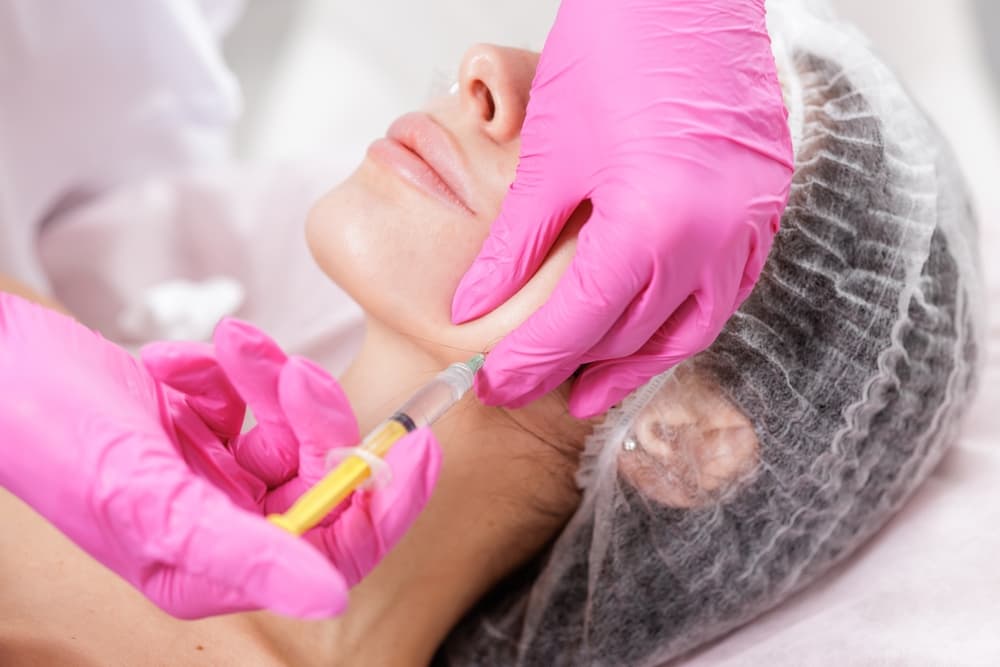
Jawline filler is one of the most popular applications in modern aesthetic medicine. People want a more defined facial contour.Jawline filler meets this demand. However, every patient has a question in mind. How long does jawline filler last? The answer to this question varies from person to person. The average duration is between 12 to 18 months. In some cases, this period can extend up to 24 months. There are many factors that determine longevity. The type of filler used is important. The injection technique is effective. The patient's age, metabolism, and lifestyle also affect the outcome. This article examines the longevity of jawline filler in light of scientific data. It explains each factor separately. Patient safety and information are our priorities. Receiving accurate information about jawline aesthetics is every patient's right.
Jawline filler is the shaping of the chin area with substances injected under the skin. This procedure is a non-surgical method. The physician places the filler material under the skin. Thus, the jawline becomes more pronounced. Facial proportions are balanced. The lower facial profile is enhanced. The procedure usually takes 30 to 60 minutes. Pain is reduced with anesthetic cream. The patient returns to daily activities on the same day. Jawline filler is a safe procedure. However, it must be performed by a qualified physician. It is one of the most effective options among non-surgical facial contouring methods. This application, also known as jawline filler, plays an important role in facial shaping.
Jawline filler accentuates the jawline. It improves facial symmetry. It optically reduces the appearance of a double chin. It provides profile balancing. It supports facial proportions. If there is sagging in the lower face, the filler conceals this issue. In individuals with weak bone structure, the filler provides support. The facial oval appears younger. The patient desires a natural result. The filler maintains this naturalness. The physician performs the injection while considering natural proportions. Excessive filling is avoided. Thus, the facial expression does not change. Only the contour is enhanced. The jawline defining procedure completes the aesthetic of the facial profile. The lower third of the face is critically important aesthetically. Jaw filler provides a strong frame to this area.
Three main types of fillers are used for the jawline. Hyaluronic acid-based fillers are the most common. They are naturally found in the body. They have a high water retention capacity. Fillers containing calcium hydroxyapatite offer a denser structure. It is a mineral similar to bone tissue. Collagen-stimulating biostimulant fillers have long-term effects. Poly-L-lactic acid is in this group. The physician selects the filler according to the patient's needs. The type of filler used directly affects longevity. Dense fillers last longer. Soft fillers dissolve more quickly. For jaw contouring, high-density products are generally preferred.
Type of Filler | Main Ingredient | Duration of Effect | Mechanism of Action |
Hyaluronic acid fillers | Hyaluronic acid | 12-18 months | Volume increase and hydration |
Calcium hydroxyapatite fillers | Calcium hydroxyapatite | 12-18 months | Immediate volume + collagen stimulation |
Biostimulant fillers | Poly-L-lactic acid | 18-24+ months | Slow collagen production |
Table 1: Comparison of filler types used in the jawline. Ouyang (2025) has validated these durations in clinical studies. Each type of filler has different advantages in jawline aesthetics. The physician makes a selection based on the patient's expectations and anatomy.
Jawline filler typically lasts between 12 to 18 months. In some patients, this duration may shorten to 9 months. In others, it may extend up to 24 months. The initial application usually provides longer-lasting results. Touch-up sessions are performed at shorter intervals. Longevity depends on the type of filler. Injection depth also affects it. Patient factors are significant. Scientific studies support these durations. Sadeghzadeh (2026) reviewed 18 studies. Data from over 1200 patients were combined. The average effectiveness duration was found to be 12.4 months. The answer to how long jaw filler lasts is hidden in this data.
In most patients, jawline filler lasts between 12 to 18 months. Hyaluronic acid fillers dissolve within this range. High cross-linked fillers can last up to 18-24 months. Calcium hydroxyapatite fillers last for 12-18 months. Poly-L-lactic acid fillers show effects for 18-24 months or longer. There is a difference between the initial application and subsequent applications. More product is used in the first session. The doctor performs a more comprehensive shaping. In later sessions, less filler is sufficient. Because some filler remnants still remain in the tissue. Sadeghzadeh (2026) highlighted this difference in his meta-analysis. Cohen and colleagues (2013) reported an average duration of 9 months in 45 patients. Kim and colleagues (2021) found an average duration of 14 months in 120 patients. The longevity of jawline fillers varies according to product characteristics.
In the early days, the volume appearance is at its maximum level. There is slight swelling. This swelling decreases in the first week. The filler settles into the tissue completely. Results stabilize between the second and fourth weeks. From the sixth month onwards, gradual volume loss begins. This loss is gradual. There is no sudden change. By the twelfth month, the definition decreases. By the eighteenth month, the patient may desire a refresh. Master (2022) has monitored this process with MRI images. Hyaluronic acid fillers have been observed for 27 months. However, the filler signal in the chin area has almost completely disappeared by 19 months. The filler dissolution process occurs gradually in this manner.
The chin area is less mobile compared to the lips and mouth. Mechanical stress in this area is lower. Muscle movements are limited. The filler experiences less pressure. Additionally, denser filler products are preferred in the chin area. Physicians inject into deeper planes. Fillers placed on the bone remain more stable. Superficial injections dissolve more quickly. Sadeghzadeh (2026) has shown that deep injections provide a durability of 14.1 months. In superficial injections, this duration drops to 9.8 months. Deep planes provide longer-lasting results in chin aesthetics.
Injection Depth | Average Durability | Number of Patients | Number of Studies |
Deep / Supraperiosteal | 14.1 months | 800 | 12 |
Superficial / Subcutaneous | 9.8 months | 420 | 6 |
Table 2: The effect of injection depth on the durability of jawline filler. Data compiled from Sadeghzadeh (2026) meta-analysis. Deep injections are more advantageous for chin contour.
The longevity of jawline fillers is determined by many factors. The type of filler material is the most important factor. The amount injected also plays a role. The patient's age and skin structure can change the outcome. Metabolism rate plays a significant role. Facial anatomy and jaw structure have an impact. Daily lifestyle habits can increase or decrease longevity. Each factor should be examined individually. This way, the patient can better understand their situation. The physician also plans the treatment accordingly. The longevity of jawline fillers depends on these variables.
Hyaluronic acid fillers are naturally found in the body. These fillers are broken down by the enzyme hyaluronidase. The cross-linking rate determines longevity. Highly cross-linked fillers last longer. The density and viscosity of the product are important. Dense fillers are more durable. Biostimulant fillers work differently. Poly-L-lactic acid fillers stimulate collagen production. These fillers are effective for 18-24 months. Ouyang (2025) reported that poly-L-lactic acid fillers provide an increase in collagen for 24 months. Calcium hydroxylapatite fillers offer both immediate volume and long-term collagen stimulation. Innocenti (2025) emphasized that these types of fillers are safely used in the jawline. During filler maintenance sessions, the physician considers these characteristics.
Higher volume applications provide longer-lasting results. The degree of deficiency in jaw structure is important. Patients with bone weakness require more filler. The physician personalizes the treatment plan. Excessive filler disrupts naturalness. Too little filler provides short-term results. The optimal dose is determined according to the patient's anatomy. Jones and colleagues (2019) noted that the appropriate dose increases longevity. The need for jaw filler renewal depends on the initial dose.
Collagen production decreases with age. Skin elasticity declines. Older skin supports the filler less. This leads to early dispersion of the filler. In younger patients, the skin is tighter. The filler may last longer in younger skin. However, younger patients have a faster metabolism. This can cause the filler to dissolve more quickly. In middle-aged patients, a better balance is established. Wang and colleagues (2020) showed that age-related changes in skin elasticity affect filler durability. Collagen production plays a critical role in keeping the filler stable.
In individuals with a fast metabolism, the filler dissolves earlier. Enzyme activity is high. The hyaluronidase enzyme breaks down the filler. This is observed in athletes and individuals with an active lifestyle. High physical activity accelerates circulation. This can speed up the dissolution of the filler. However, a healthy lifestyle also supports filler longevity. Water consumption helps keep the filler stable. Sadeghzadeh (2026) emphasized that metabolism rates vary from person to person. Each individual's enzyme level is different.
Bone support is important. A strong jawbone provides a good foundation for fillers. Soft tissue thickness affects results. In thin skin, the filler contour becomes more pronounced. In thick skin, the filler should be placed deeper. There are differences in facial anatomy between men and women. In men, the jawbone is generally wider and stronger. In women, the jawline may be finer. These differences alter the amount and placement of the filler. The physician evaluates each patient's anatomy individually. Facial profile aesthetics vary for each individual.
Smoking creates oxidative stress on the skin. Free radicals accelerate filler breakdown. Alcohol consumption leads to skin dryness. This condition disrupts the stability of the filler. Insufficient sleep hinders skin repair. Nutritional habits are important. Sugary foods increase inflammation. Sun exposure accelerates filler breakdown with UV radiation. Using sunscreen extends the lifespan of the filler. Healthy lifestyle habits support the longevity of fillers.
Lifestyle Factor | Mechanism of Action | Effect on Filler Longevity |
Smoking | Oxidative stress and vascular suppression | Shortening |
Excessive alcohol | Dehydration and inflammation | Shortening |
UV exposure | Hyaluronic acid breakdown | Shortening |
Insufficient sleep | Reduced repair capacity | Shortening |
Regular water consumption | Hydration and tissue support | Longevity |
Table 3: The effect of lifestyle factors on the longevity of jawline fillers. Patients can extend the filler lifespan by managing these factors.

Hyaluronic acid fillers are naturally broken down by the body. This process is inevitable. However, the speed can vary. Enzymatic degradation is the main mechanism. Environmental factors can also accelerate this. Oxidative stress plays a significant role. UV rays damage the filler structure. Lifestyle choices affect this process. Hyaluronic acid filler is the most commonly used type. Therefore, it is important to understand the dissolution mechanism.
The body metabolizes hyaluronic acid. The enzyme hyaluronidase initiates this process. The enzyme cuts the hyaluronic acid chains. Cross-linked fillers are more resistant. However, all fillers dissolve over the long term. The body removes the broken-down products through the lymphatic system. This process is a healthy function. A study by Master (2022) showed that hyaluronic acid fillers were monitored for 27 months but dissolved in the jaw area within 19 months. The filler dissolution process occurs biologically in this way.
UV rays produce free radicals in the skin. These radicals break down hyaluronic acid chains. Oxidative stress triggers inflammation. Inflammatory processes accelerate the dissolution of the filler. Temperature changes can also have an effect. Excessive exercise raises body temperature. This can speed up filler breakdown. Air pollution also increases oxidative stress. In patients with a weakened skin barrier, the filler dissolves more quickly. Wang and colleagues (2020) noted that environmental stress factors reduce filler durability. Environmental conditions affect the lifespan of jawline fillers.
It is possible to extend the lifespan of jawline fillers. Patients follow some simple rules. They carefully adhere to the physician's recommendations. Healthy lifestyle habits are maintained. Regular maintenance sessions are planned. These strategies prolong the results. At the same time, they also improve skin quality. Continuity is important in jawline aesthetics.
In the first days, excessive pressure should be avoided. The patient should not touch their face. The recommendations of the administering physician should be followed. Chameleon massage is not recommended. Heavy exercise should not be done in the first 48 hours. High temperatures should be avoided. Regular follow-up appointments are important. The physician evaluates in the early period. Thus, potential issues are prevented. Makeup is not recommended in the first week. The skin should be kept clean. Adherence to these rules before filler maintenance sessions is essential.
Adequate water intake keeps the skin hydrated. Fillers remain more stable. A balanced diet supports skin repair. A protein-rich diet increases collagen synthesis. Regular sleep ensures skin renewal. Avoiding smoking is essential. Smoking constricts blood vessels. The skin cannot receive nutrients. Sunscreen should be used daily. UV filters protect the structure of fillers. These habits extend the lifespan of fillers. A healthy lifestyle preserves jawline contour results.
Touch-up applications maintain the continuity of results. The physician completes any missing areas. Continuity of results is ensured. Long-term treatment planning is made. The patient comes for a check-up once or twice a year. Less product is used in these sessions. Cost advantages are provided. Facial contour remains consistently updated. Sadeghzadeh (2026) has shown that maintenance sessions reduce the total filler requirement. The renewal process for jawline filler is easier than the initial application.
The effect of jawline filler decreases over time. The patient notices this change. Visual signs appear. There are indicators that signal it’s time for renewal. Early intervention yields better results. The patient regularly examines themselves in the mirror. They compare photos. The reduction in the jawline definition effect is gradual.
A decrease in jawline definition begins. The profile appearance changes. There is softening in facial contours. The old double chin appearance may return in the lower face. Slight asymmetry is observed. Signs of skin sagging increase. The patient notices these changes. However, the process is slow and gradual. There is no sudden loss. The facial shaping effect gradually fades away.
According to initial results, volume loss can reach 50%. The formation of asymmetry draws attention. There may be changes in the patient's aesthetic expectations. The patient feels that their face looks more tired. A follow-up appointment should be planned at this stage. The physician evaluates the situation. They decide whether renewal is necessary. Early touch-ups yield results with less product. Filler maintenance sessions come into play at this point.
Jawline filler is renewed every 12 to 18 months. Personalized care plans are implemented. The initial application and maintenance sessions are different. The first session is for basic shaping. Subsequent sessions include maintenance. The patient creates a schedule with their physician. This is the practical answer to the question of how long jawline filler lasts.
A 12 to 18-month evaluation period is standard. However, each patient is different. Some patients may want renewal in 10 months. Some may wait 24 months. The physician determines the interval based on the patient's condition. Kim and colleagues (2021) reported an average duration of 14 months. After this period, the clinical effect significantly decreases. Patient satisfaction declines. Renewal is recommended at this point. These intervals apply for jawline filler.
The initial shaping process is more comprehensive. The physician reconstructs the jawline from scratch. More filler is used. Subsequent maintenance treatments require less product. This is because some filler remnants and collagen support continue. Maintenance sessions preserve the facial contour. The cost is lower. The duration is shorter. Patient comfort is high. Garcia et al. (2017) showed that volume loss is 25-30% per year after the initial application. Therefore, jaw filler renewal is less invasive.
Jawline filler is not a permanent solution. It is a temporary application. However, it has advantages. It does not carry surgical risks. The results are natural. It does not need to be renewed if the patient does not want it. The filler dissolves on its own. Surgical jaw implants are permanent. However, there are surgical risks. Filler applications are reversible. It is ideal for those who prefer non-surgical facial contouring.
Filler applications have advantages. The procedure time is short. Recovery is quick. The risk of complications is low. Surgical jaw implants provide permanent results. However, anesthesia is required. There will be swelling and pain after surgery. There is a risk of implant displacement. Filler applications have the advantage of reversibility. Hyaluronic acid fillers can be dissolved with the enzyme hyaluronidase. This is a safety advantage. Patient satisfaction is high with filler applications.
Feature | Filler Applications | Surgical Implants |
Duration | 12-24 months | Permanent |
Procedure Time | 30-60 minutes | 1-2 hours |
Recovery | Immediate | 2-4 weeks |
Reversibility | Yes | No |
Risk | Low | Medium |
Table 4: Comparison of temporary filler applications and surgical chin implants. Temporary methods in chin aesthetics are more flexible.
Fillers are ideal for individuals who do not want surgery. Those who wish to define their jawline benefit from it. Patients looking to balance their facial profile prefer it. It is suitable for those with slight sagging in the lower face. It is effective for those who want to reduce the appearance of a double chin. However, surgery may be more appropriate for those with significant bone deficiency. The physician evaluates each patient. Suitable candidates are determined. Filler is a safe starting point for jaw contouring.
Yes, some types of fillers can last up to two years. High cross-linked hyaluronic acid fillers can last 18-24 months. Poly-L-lactic acid fillers can be effective for 24 months or longer. However, this duration varies from person to person. Genetic factors are important. Lifestyle also affects it. Patients should have realistic expectations. It does not mean that the full volume will remain for two years. There will be a gradual decrease. However, the clinical effect can last up to two years. Jones et al. (2019) reported that high cross-linked fillers provide 18 months of permanence.
Exercising can slightly shorten the lifespan of the filler. High metabolism accelerates filler breakdown. However, exercise supports skin health. Regular exercise increases blood circulation. The skin receives nutrients. This can extend the lifespan of the filler. In those who exercise excessively, the filler may dissolve more quickly. However, moderate exercise does not harm. The patient can continue their exercise program. They should avoid heavy exercise for the first 48 hours. After that, they can return to normal activities.
In men, the jawbone is generally wider. Muscle structure is stronger. Skin thickness is different. This may help the filler last longer. However, metabolism rate is important. Generally, men have a faster metabolism. This can shorten the lifespan of the filler. The result varies from person to person. The physician applies different techniques for both genders. Facial anatomy varies by gender. These differences affect filler planning.
Yes, chin filler completely dissolves. Hyaluronic acid fillers are fully metabolized by the body. Calcium hydroxylapatite is also absorbed over time. Poly-L-lactic acid breaks down into carbon dioxide and water. No residue remains. This is one of the biggest advantages of filler applications. The skin returns to its original state. However, collagen stimulation may improve skin quality in the long term. Ouyang (2025) showed that poly-L-lactic acid particles completely disappeared in 28 months, but collagen increase continued.
Yes, after the filler dissolves, the face generally returns to its original state. However, this process is slow. There is a gradual loss of volume. No sudden change occurs. Biostimulant fillers provide collagen increase. This collagen may remain for a while even after the filler dissolves. Skin quality may be better than before. However, volume fully returns to its original state. If the patient does not undergo renewal, the old appearance returns. Master (2022) confirmed with MRI images that the filler completely dissolved but the skin structure was preserved.
Yes, chin filler can be applied together with botulinum toxin. This combination is often preferred. The filler provides volume. Botulinum toxin reduces muscle movements. In those with enlarged masseter muscles, botulinum toxin narrows the jawline. The filler provides contour at the same time. The two procedures complement each other. However, injections should not be made in the same area in the same session. The physician makes the planning. This combination optimizes facial shaping results.
To increase longevity, high cross-linked hyaluronic acid fillers are preferred. Calcium hydroxylapatite fillers also provide long-lasting results. Poly-L-lactic acid fillers offer the longest-lasting effect. However, these fillers do not provide immediate results. The effect becomes noticeable in 2-3 months. The patient must be patient. The physician selects the filler according to the patient's expectations. If longevity is important, biostimulant fillers may be considered. Innocenti (2025) emphasized that these types of fillers are effective in the jawline.
Jawline filler lasts on average 12 to 18 months. In some types of fillers, this period can extend up to 24 months. There are key factors that determine longevity. The type of filler material is the most important factor. Injection depth affects the result. The patient's age, metabolism, and lifestyle also change the outcome. A personalized treatment plan is essential. Choosing the right product ensures long-lasting results. Application by a specialist physician guarantees safety. The patient makes an informed decision. Thus, a natural and balanced jawline is achieved. Jawline filler is a safe and effective method. With proper planning, results are maintained in the long term. Acting based on scientific data in jawline aesthetics is the most accurate approach. Collaboration between the patient and physician is the key to success.
Cohen, et al. "Prospective Study on HA Injections in Chin and Jawline." Aesthetic Surgery Journal, 2013.
Garcia, et al. "Volumetric Assessment of Chin Filler Resorption." Aesthetic Surgery Journal, 2017.
Innocenti, A. "Injectable Poly-L-Lactic Acid (PLLA-SCA™) as a Versatile Treatment in Current Aesthetic Medicine: Expert Recommendations Based on Italian Clinical Experience." Cosmetics, vol. 12, no. 6, 2025.
Jones, et al. "Review of Clinical Trials on HA Filler Longevity." Surgery, 2019.
Kim, et al. "Multicenter Study on High-Cohesively HA in Jawline and Chin." Journal of Cosmetic , 2021.
Master, M. "Long-term MRI Follow-up of Hyaluronic Acid Dermal Filler." Plastic and Reconstructive Surgery Global Open, 2022.
Ouyang, R. "Advances in Poly-l-lactic Acid Injections for Facial and Neck Rejuvenation." PMC, 2025.
Sadeghzadeh, Aida. "Evaluating the duration of effectiveness of hyaluronic acid fillers in the jawline and chin: A Systematic Review and Meta-analysis." Journal of Aesthetic and Regenerative Medicine, 2026.
Wang, et al. "Patient-Specific Factors in Filler Degradation." Aesthetic Plastic Surgery, 2020.