
Yükleniyor…
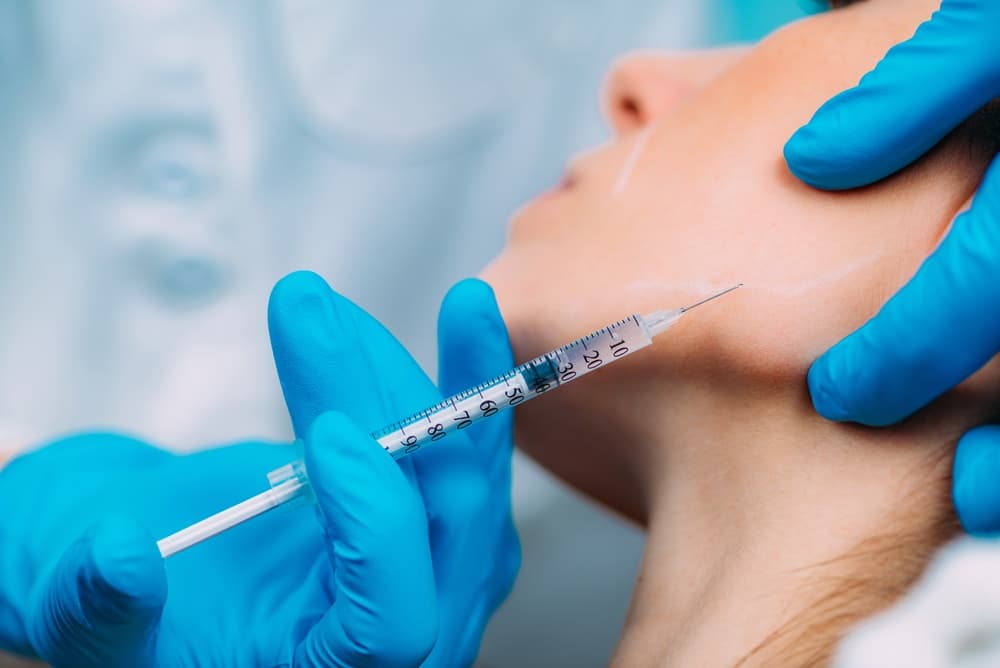
Yes, jawline filler enhances the jawline. This method shapes the jaw contour using hyaluronic acid-based fillers. It is one of the most popular options among non-surgical facial shaping methods. Many people prefer this treatment for a defined jawline aesthetic.
The jawline plays a very important role in facial aesthetics. A defined jawline appearance greatly contributes to facial symmetry. A strong jaw contour makes the face look more balanced and aesthetically pleasing. In recent years, interest in non-surgical facial shaping methods has rapidly increased. People are looking for non-surgical solutions.Jawline filler comes into play right at this point. It provides quick results. The recovery time is short. The risks are low. Therefore, jawline filler is increasing in popularity every day.
Jawline filler is an injection procedure used to shape the jawline. It injects hyaluronic acid-based fillers. This procedure aims to enhance the jawline. It holds an important place among facial shaping applications.
Jawline filler is one of the dermal filler applications. The physician injects hyaluronic acid filler into the jaw area. This filler creates volume under the skin. The jaw contour becomes sharper. Hyaluronic acid is a substance naturally found in the body. Therefore, it exhibits biocompatible properties. Bertossi and colleagues (2021) demonstrated that hyaluronic acid fillers can reshape the jaw and jawline area without surgery. Researchers confirmed the effectiveness of this application in young adults using a grid system approach (Bertossi et al. 2021). Among facial contouring applications, jawline filler holds a special position. Because it provides both safe and effective results.
Jawline filler is applied to several critical areas. The first area is the mandibular line. This line is the edge line of the jawbone. The second area is the chin tip, which is the chin area. The third area is the jaw corners, or jaw angle. The fourth area is the entire lower face region. The physician makes strategic injections in these areas. Different techniques are used for each area. For example, a deep bolus injection is made at the chin tip. A filler with a high G' value is injected into the jaw corners. Rauso and colleagues (2022) proved that multilayer injection techniques in the jaw corners and jawline yielded successful results. They emphasized that fillers with different viscoelastic properties should be applied to the deep periosteum and subcutaneous tissue (Rauso et al. 2022).
The table below summarizes the application areas and techniques for jawline filler:
Application Area | Anatomical Target | Injection Technique | Filler Feature |
Mandibular line | Jawbone edge | Deep bolus and retrograde | High G', high cohesiveness |
Chin tip | Pogonion region | Pyramid-shaped on periosteum | High lifting capacity |
Jaw angles | Gonial angle | Perpendicular deep injection | High elasticity modulus |
Lower face area | Prejowl sulcus | Retrograde with subcutaneous cannula | Medium viscosity, low G' |
Yes, jawline filler is one of the most effective ways to achieve a more defined jawline. This procedure addresses volume deficiencies. It reconstructs the contour. It balances facial proportions.
Jawline filler works through three main mechanisms. The first mechanism addresses volume deficiencies. With age, bone resorption and fat tissue atrophy occur. This leads to a loss of definition in the jawline. Hyaluronic acid filler compensates for these losses. The second mechanism is the reconstruction of contour. The filler material is placed along the mandibular line. Thus, the flat and indistinct lines become sharper. The third mechanism is balancing facial proportions. It provides harmony between the chin tip, jaw angles, and mandibular line. These three mechanisms work together. As a result, the face appears younger and more balanced. Ogilvie and colleagues (2019) demonstrated that VYC-25L hyaluronic acid filler gel is safe and effective for chin and jawline restoration. The study recorded high patient satisfaction and significant improvement in objective measurements after a 12-month follow-up (Ogilvie et al. 2019).
Jawline filler offers many aesthetic advantages. The first advantage is a sharper jawline appearance. The jawline becomes more defined immediately after injection. The second advantage is the improvement of the facial profile. The chin projection increases in the side profile. The third advantage is the definition of the transition between the chin and neck. This transition becomes clearer, thus reducing the appearance of a "double chin." The fourth advantage is a younger and more balanced facial appearance. A defined jawline makes the face look more aesthetic. Beer and colleagues (2021) reported that VYC-20L hyaluronic acid injectable filler is safe and effective for chin augmentation. The study results revealed that this type of filler is a reliable option for chin aesthetics (Beer et al. 2021).
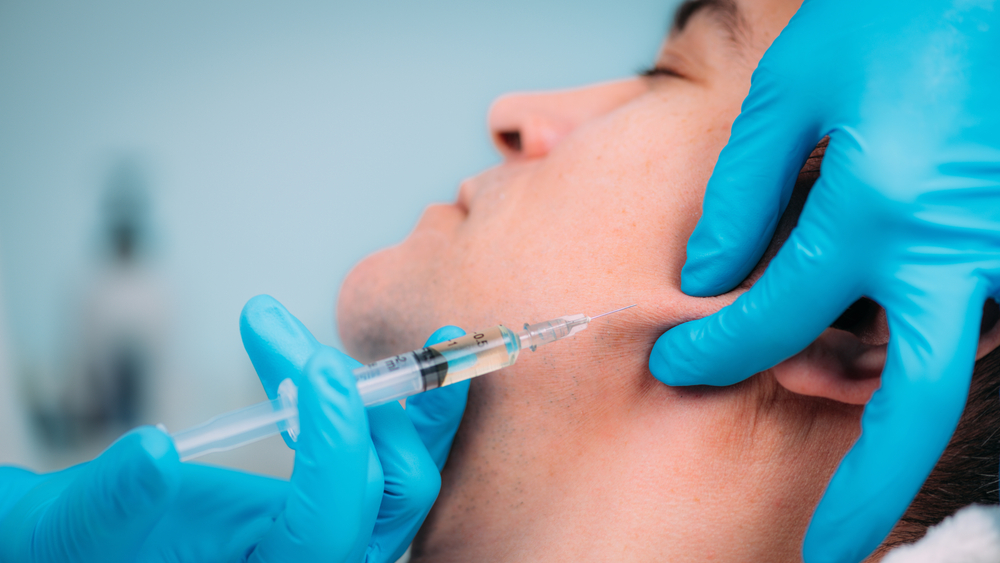
Jawline filler is a suitable option for many people. However, the ideal candidate profile has specific characteristics. The physician evaluates each patient individually.
The ideal candidate is someone with an indistinct jawline. These individuals complain about the lack of definition in their mandibular lines. The second ideal group consists of individuals experiencing mild skin laxity. Jawline filler alleviates this laxity. The third group includes patients who complain of facial asymmetry. The filler corrects asymmetries. The fourth group consists of individuals who do not want surgical procedures. These individuals seek non-surgical chin aesthetics. Moradi, Shirazi, and David (2019) demonstrated the success of non-surgical chin and jawline augmentation procedures using calcium hydroxylapatite and hyaluronic acid fillers. The researchers noted that this method is an excellent alternative for patients who do not want surgery (Moradi et al. 2019).
In some situations, jawline filler may not be suitable. Advanced skin sagging is one of these situations. In cases of excessive sagging, surgical options are more effective. The second situation involves active infections. Filler injection is not performed in infected areas. The third situation includes certain health issues and contraindications. For example, individuals taking blood thinners have an increased risk of bruising. Additionally, individuals with a hyaluronic acid allergy cannot undergo this procedure. The physician thoroughly examines each patient's medical history. This way, a safe treatment plan is created.
The table below compares suitable and unsuitable candidate profiles:
Suitable Candidate Characteristics | Unsuitable Conditions |
Undefined jawline | Severe skin sagging |
Mild skin laxity | Active skin infection |
Facial asymmetry | Use of blood thinners (risky) |
Desire to avoid surgery | Allergy to hyaluronic acid |
Healthy overall condition | Pregnancy and breastfeeding period |
Jawline filler is applied according to different aesthetic goals in men and women. Anatomical differences between genders affect the treatment plan.
Jawline contour in men aims for a more angular and strong jawline. Masculine facial proportions are emphasized. The male face has broad and angular features. The physician selects fillers with higher viscosity for male patients. Injections are made deeper onto the bone. This creates a sharp and structural contour. Nikolis and colleagues (2025) demonstrated that VYC-25L hyaluronic acid filler provides high satisfaction in jawline restoration regardless of gender, age, and skin type. Male participants in the study also achieved similarly positive results. However, less injection site reaction was observed in men (Nikolis et al. 2025). Jawline filler in men creates a masculine jaw aesthetic. The width of the jaw and the prominence of the angles are highlighted.
Jawline contour in women aims for more elegant and balanced facial features. A feminine contouring approach is applied. The female face has soft and oval features. The physician may use fillers with a lower G' value for female patients. Injections are made with more superficial and mixed techniques. This ensures a natural and soft transition. The chin tip in women may be thinner and slightly protruding. The jaw corners may not be completely angular but can remain slightly rounded. This approach makes the face appear younger and more feminine. Jawline filler in women balances facial proportions. It also softens the appearance of marionette lines.
The jawline filler procedure progresses systematically. Each stage is carefully planned and executed.
The first step is the consultation. The physician evaluates the facial anatomy in detail. The bone structure, skin quality, and fat distribution are examined. The physician takes photographs. 3D imaging may be performed. Then, a personalized treatment plan is created. This plan determines how many ml of filler will be injected into which areas. The patient shares their goals and expectations. The physician evaluates these expectations within a realistic framework. Thus, both the patient and the physician see the same outcome.
Preparation before the procedure is important. The physician cleans the area with an antiseptic solution. A cold compress or anesthetic cream is applied. Then, the filler injection begins. The physician uses a 25G needle or cannula. The filler material is injected over the mandibular line. Different fillers are placed on the deep periosteum and subcutaneous tissue. The average procedure time is between 30 to 45 minutes. Immediate results are visible after the procedure. There may be slight swelling and tenderness. This is normal. Rauso and colleagues (2022) suggested using different fillers in both deep and superficial layers with a multilayer injection technique. They demonstrated that this approach yields natural results and reduces the risk of complications (Rauso et al. 2022).
In the first 24-48 hours, mild swelling and tenderness are observed. This is part of the normal healing process. The patient applies a cold compress. They avoid heavy exercise. They do not apply pressure to the facial area. Bruising is rarely seen. In the study by Rauso and colleagues (2022), no ecchymosis or swelling was reported in the early postoperative period. Patient satisfaction varied between 85% and 100% on a visual analog scale (Rauso et al. 2022). Swelling completely subsides within the first week. Final results become clearer.
Jawline filler results are evaluated from both the physician's and the patient's perspectives. Objective and subjective measurements are used.
Changes that can be observed immediately occur. As soon as the injection is completed, the jawline becomes more defined. However, the process for the final result to emerge takes 2 to 4 weeks. During this time, the filler material settles. Swelling completely subsides. The tissues adapt around the filler. Swaminathan and colleagues (2025) showed that hyaluronic acid filler injections provided effective results in chin hollowing and jawline contour loss for up to 12 months. In the study, 19 patients were followed, and significant improvement was recorded on objective scales (Swaminathan et al. 2025).
The first factor is the amount of filler used. More volume provides a more defined contour. However, excessive filler can disrupt the natural appearance. The second factor is anatomical structure. Better results are obtained in individuals with strong bone structure. The third factor is skin quality. Elastic and thick skin better supports the filler. The fourth factor is the experience of the practitioner. An experienced physician knows anatomy better. Thus, the risk of complications is reduced. The choice of the correct technique directly affects the results.
The longevity of jawline filler depends on several factors. Generally, the results are temporary but long-lasting.
The duration of the filler depends on the type used. Fillers with a high G' value provide longevity between 12 to 18 months. Standard hyaluronic acid fillers last 9 to 12 months. Metabolism rate is also important. In individuals with a fast metabolism, the filler dissolves more quickly. Lifestyle affects longevity. Smoking shortens the lifespan of the filler. Using sunscreen increases the durability of the filler. Liang and colleagues (2025) demonstrated in a real-world evidence study conducted in China that VYC-25L filler is safe and effective for correcting chin sagging for up to 18 months. Researchers reported a 96.9% improvement rate in repeat treatments (Liang et al. 2025).
Regular check-ups are important. Patients should visit their physician every 6 months. Touch-up applications extend the results. Small additions keep the contour fresh. Healthy lifestyle habits enhance longevity. Drinking plenty of water supports hyaluronic acid fillers. A skincare routine should be maintained. Sunscreen should be used daily. Intense physical activities should be limited in the first week. These measures maximize the longevity of jawline filler.
Jawline filler is generally a safe procedure. However, as with any medical procedure, there are some side effects and risks.
Redness is the most common side effect. Mild redness occurs at the injection site. This condition resolves within a few hours. Bruising may be observed in some patients, especially those with thin skin. Swelling is a normal reaction. Mild edema lasts for 24-48 hours. Sensitivity is felt at the injection points. These symptoms are temporary and completely disappear within a few days. Swaminathan and colleagues (2025) reported that the most common adverse event was bruising, which occurred in 3 patients. Swelling was not observed (Swaminathan et al. 2025).
Infection is rarely seen. With sterile technique, this risk is minimized. Nodule formation may occur in some cases. This situation arises from improper distribution of the filler. It can be corrected with massage or hyaluronidase. Vascular complications are among the most serious risks. However, the jawline area is relatively safer in this regard. High-risk areas include the glabella, nose, and nasolabial folds. The vascular structure in the chin and jawline area is less complex. Nevertheless, the physician must have a thorough understanding of anatomy. A meta-analysis (PMC12097758 2025) systematically examined risk factors for vascular occlusion. The study showed that the use of hyaluronidase in hyaluronic acid fillers achieved partial or complete recovery with an 84.2% success rate. Therefore, hyaluronic acid fillers are preferred because they have an antidote (PMC12097758 2025).
The table below compares side effects and their frequencies:
Side Effect / Risk | Frequency | Severity | Treatment |
Redness | Very common | Mild | Resolves spontaneously |
Swelling | Common | Mild-moderate | Cold compress, 24-48 hours |
Bruising | Moderate | Mild | Resolves spontaneously, 3-7 days |
Sensitivity | Common | Mild | No pain relief needed |
Infection | Rare | Moderate-severe | Antibiotic, drainage |
Nodule formation | Rare | Mild-moderate | Massage, hyaluronidase |
Vascular occlusion | Very rare | Severe | Hyaluronidase, aspirin |
Jawline filler and jawline botox work through different mechanisms. Both methods enhance the jawline. However, they address different issues.
Jawline filler adds volume. It adds filler material to the jawline, creating contour. It is effective for individuals with weak bone structure. It restores volume lost with age. The filler provides immediate results and lasts for 12-18 months. Anyone with volume deficiency can use this method.
Jawline botox reduces the size of the masseter muscle. Botulinum toxin relaxes this muscle. The goal is to slim the lower face. It is effective for individuals with a wide and square face shape. Muscle volume decreases, making the face appear more oval. Results appear in 2-6 weeks and last for 4-6 months. This method does not add volume; it reduces muscle mass.
The choice is made according to the patient's facial structure. If there is weak bone structure and volume loss, filler is needed. If the masseter muscle is large and muscular, botox is required. In some patients, combined treatment options are the best. Filler defines the contour, while botox slims the lower face. When used together, they provide excellent results. The physician determines which method is appropriate during the consultation. Sometimes both are planned together.
The table below compares the two methods:
Feature | Jawline Filler | Jawline Botox |
Mechanism | Adds volume | Reduces muscle volume |
Target | Chin contour, bone structure | Masseter muscle, lower face width |
Result speed | Immediate | 2-6 weeks |
Longevity | 12-18 months | 4-6 months |
Ideal candidate | Volume loss, weak jawline | Wide masseter, square face |
Retreatment | Every 12-18 months | Every 4-6 months |
There are other options besides jawline filler. Each method has its own advantages and disadvantages.
Chin implants are a surgical option. Silicone or titanium implants are placed on the bone. This method provides permanent results. However, it requires surgery. The recovery time is long. The risks are higher compared to fillers. Anesthesia is required. The cost is higher. People with a fear of surgery tend to avoid it.
Fat injection is the removal of fat from one's own tissue. Fat is extracted from the abdomen or thigh through liposuction. Then this fat is injected into the chin area. A natural filler is used. However, the retention rate is variable. Between 30-70% of the fat may remain. Repeated sessions may be necessary. The procedure is more invasive. However, there is no risk of allergy.
Thread lift applications mechanically lift the skin. Biodegradable threads are placed under the skin. These threads pull the skin upwards. It is effective for individuals with mild sagging. However, it does not add volume to the jawline. It only provides a lifting effect. Its effect lasts for 12-18 months. It can be combined with fillers.
Ultrasound technologies heat deep tissues. This heat triggers collagen production. Radiofrequency applications work similarly. The skin tightens over time. However, these methods do not add volume. They only improve skin quality. They do not contribute to the definition of the jawline as much as fillers do. They are generally used as supportive treatments.
Post-procedure care directly affects the results. The patient follows simple rules.
The first 24-48 hours are critical. The patient avoids intense exercise. Overheating disrupts filler distribution. They do not apply pressure to the facial area. For example, they do not lie face down. They do not massage. They avoid makeup. They do not consume alcohol. They drink plenty of water. They apply cold compresses. These precautions keep swelling under control.
Follow-up appointments are very important. The doctor sees the patient two weeks later. In this visit, the results are evaluated. If necessary, minor touch-ups are made. Follow-up continues at 3 months and 6 months. This way, complications are detected early. Patient satisfaction is continuously measured. Long-term planning is made. Regular check-ups increase the longevity of jawline filler.
The definition of the jawline with jawline filler varies from person to person. It provides an average increase in depth of 2 to 6 mm. This change is objectively measured with 3D imaging. In a study by Nikolis and colleagues (2025), an average linear depth increase of 4.6 mm and a volume gain of 6.0 ml were measured in the prejowl sulcus. These measurements indicated a significant improvement in the definition of the jawline (Nikolis et al. 2025). More dramatic changes are seen in individuals with greater volume deficiency.
No, jawline filler is not a painful procedure. The fillers contain lidocaine. This substance numbs the area. A cold compress or anesthetic cream is applied before the procedure. The patient only feels a slight sting. There may be sensitivity after the procedure. However, this is temporary. Pain relief is not necessary.
Swelling after jawline filler typically lasts 24-48 hours. Mild edema can persist for up to a week. However, this does not hinder social life. It can be camouflaged with makeup. Cold compresses quickly reduce swelling. Keeping the head elevated also decreases edema. In the significant study by Nikolis and colleagues (2025), swelling was recorded as a rarely seen side effect (Nikolis et al. 2025).
No, jawline filler is not permanent. Hyaluronic acid fillers are temporary. Results last between 12 to 18 months. However, this feature is an advantage. Because results can be altered. Patient satisfaction increases. Complications can be reversed. It is not like permanent implants. It can be dissolved with hyaluronidase when desired by the patient.
Yes, jawline filler is very suitable for men. Jawline filler creates a masculine chin aesthetic in men. More angular and stronger features are targeted. This procedure has rapidly gained popularity among men in recent years. Between 2012 and 2017, the use of fillers in men increased by 25%. In the study by Nikolis and colleagues (2025), high satisfaction rates were also recorded among male participants (Nikolis et al. 2025). Men generally report less reaction at the injection sites.
Yes, jawline filler reduces the appearance of a double chin. The transition between the chin and neck becomes more pronounced. The filler sharpens this transition. Thus, the fat accumulation under the neck appears less prominent. However, for advanced double chin fat, liposuction may be more effective. Filler is sufficient for mild to moderate cases. Combined treatments yield the best results.
No, jawline filler and chin filler are not exactly the same. However, they are related procedures. Jawline filler shapes the entire mandibular line. Chin filler targets only the tip of the chin. Many patients treat both areas together. This makes the facial profile more balanced. The physician usually plans for both areas.
The amount required for jawline filler varies by individual. On average, 2 to 4 ml of filler is sufficient. 1-2 ml is used for minor corrections. For more pronounced changes, 4-6 ml may be needed. In the study by Rauso and colleagues (2022), patients were injected with 4 to 7 vials of hyaluronic acid filler. However, these amounts were for more extensive aging changes (Rauso et al. 2022). The physician determines the correct amount during the consultation. Less and accurate injection is always better.
Jawline filler is an extremely effective method for defining the jawline. It holds a pioneering position among non-surgical facial contouring options. Hyaluronic acid-based fillers provide safe and natural results. Personalized planning is the key to success. Every face carries different anatomical structures. Therefore, a standard plan does not work. The physician conducts a facial analysis. Then, a specific treatment plan is created.
Expert evaluation is essential for natural and balanced results. An experienced physician knows anatomy very well. Thus, the risk of complications is minimized. Aesthetic results are maximized. Different approaches are required for men and women. Masculine and feminine contour goals are different. The specialist physician understands and applies these differences.
Jawline filler has made chin line aesthetics accessible to everyone. People who are afraid of surgery confidently prefer this method. Results are visible immediately. The recovery time is short. Side effects are mild and temporary. It is an ideal option for those seeking non-surgical facial rejuvenation. With the right physician, the right plan, and the right filler material, it is possible to achieve a perfect chin contour.
Beer, Kevin, et al. "Safe and Effective Chin Augmentation With the Hyaluronic Acid Injectable Filler, VYC-20L." Surgery, vol. 47, no. 1, 2021, pp. 80-85.
Bertossi, Dario, et al. "Nonsurgical Redefinition of the Chin and Jawline of Younger Adults With a Hyaluronic Acid Filler: Results Evaluated With a Grid System Approach." Aesthetic Surgery Journal, vol. 41, no. 9, 2021, pp. 1068-1076.
Liang, Yue, et al. "Hyaluronic Acid Injectable Gel VYC-25L is Safe and Effective for Adults Seeking Chin Enhancement to Correct Chin Retrusion: Results From a Real-World Evidence Study in China." Aesthetic Plastic Surgery, vol. 49, no. 13, 2025, pp. 3545-3553.
Moradi, Amir, et al. "Nonsurgical Chin and Jawline Augmentation Using Calcium Hydroxylapatite and Hyaluronic Acid Fillers." Facial Plastic Surgery, vol. 35, no. 2, 2019, pp. 140-148.
Nikolis, Andreas, et al. "Hyaluronic Acid Filler VYC-25L for Jawline Restoration Yields High Satisfaction, Improved Jawline Measurements, and Sustained Effectiveness Across Skin Types, Age, and Gender for up to 12 Months." Aesthetic Surgery Journal, 2025.
Ogilvie, Paul, et al. "Safe, Effective Chin and Jaw Restoration With VYC-25L Hyaluronic Acid Injectable Gel." Surgery, vol. 45, no. 10, 2019, pp. 1294-1303.
PMC12097758. "Risk Factor Analysis for Vascular Occlusions After Dermal Filler Injections: A Systematic Review and Meta-Analysis." PMC, 2025.
Rauso, Raffaele, et al. "Nonsurgical Reshaping of the Lower Jaw With Hyaluronic Acid Fillers: A Retrospective Case Series." Plastic and Reconstructive Surgery Global Open, vol. 10, no. 9, 2022, e4467.
Swaminathan, V., et al. "Effectiveness, Safety, and Versatility of Hyaluronic Acid Dermal Filler in Patients With Reduced Midface Volume, Chin Retrusion, and/or Loss of Jawline Contour: A Prospective Case Series Study With 12-Month Follow-up." Journal of Plastic, Reconstructive & Aesthetic Surgery, vol. 90, 2025, pp. 119-128.