
Yükleniyor…

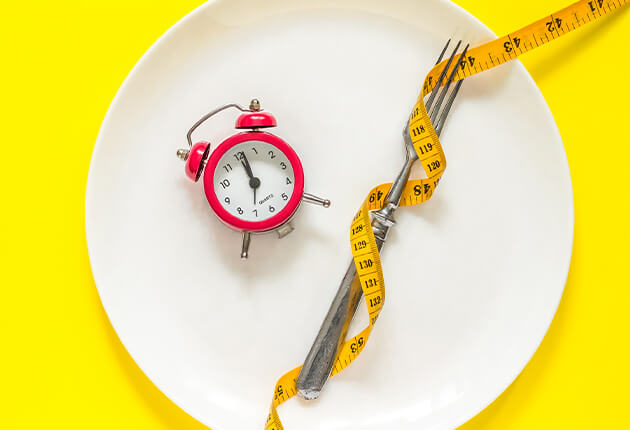
Intermittent fasting diet also known as intermittent fasting or IF, is a healthy eating regimen that can be applied for a lifetime rather than a diet program. In this eating regimen, the day is divided into "eating time" and "fasting time."

16:8 :This is a style of 16 hours of fasting and 8 hours of eating. The fasting period is aligned with the night (sleep). If a fast is to be applied in this style, the earlier the first meal time is, the earlier the last meal time will be, and weight loss will accelerate.
5:2 : Normal eating is done for 5 days of the week, and a restricted calorie diet is followed for 2 days of the week.
Eat/Stop/Eat Method:This is a method where fasting is done for 24 hours once or twice a week. A full day is spent from dinner one evening until dinner the next evening.
In this intermittent fasting model, eating occurs within an 8-hour window, and fasting lasts for 16 hours. During the fasting period, no food should be consumed. Drinks such as water, plain coffee, tea, and plain soda are allowed.
Intermittent fasting does not impose too many food restrictions, so it encourages a focus on healthy foods. To do intermittent fasting correctly and healthily, you should seek the support of a dietitian. Only then can you lose weight consciously.

To properly plan this type of diet, it is essential to work with a dietitian. The nutrition plan should consist of healthy meals, and the necessary nutrients for the body should be included in the diet.
One of the most common questions that come to the minds of those who practice intermittent fasting is about its benefits. What are the advantages of this diet, and what kind of renewal does it provide in people? Let’s discuss some of these:
-It facilitates weight loss
-It helps reduce insulin resistance in the body
-It burns fat. It supports the reduction of bad cholesterol.
-It protects against type 2 diabetes.
-It improves chronic diseases and reduces medication use.
-It protects brain health and ensures a complete state of well-being in the body.
-Cells become regulated.

People with diabetes
People with low blood pressure
People with eating disorders
Very thin individuals (those with a BMI below 18)
Intense athletes
Pregnant and breastfeeding mothers
Those who regularly take medication

This diet is not one that a person can apply on their own. It must be done with the help of a dietitian. Every diet should be personalized and implemented. Each individual's age, gender, height, and weight are different, and intermittent fasting varies based on the individual.
You can also consult our experts to get rid of your excess weight. Don't forget to visit Cinik Polyclinic for more details.