Yükleniyor…
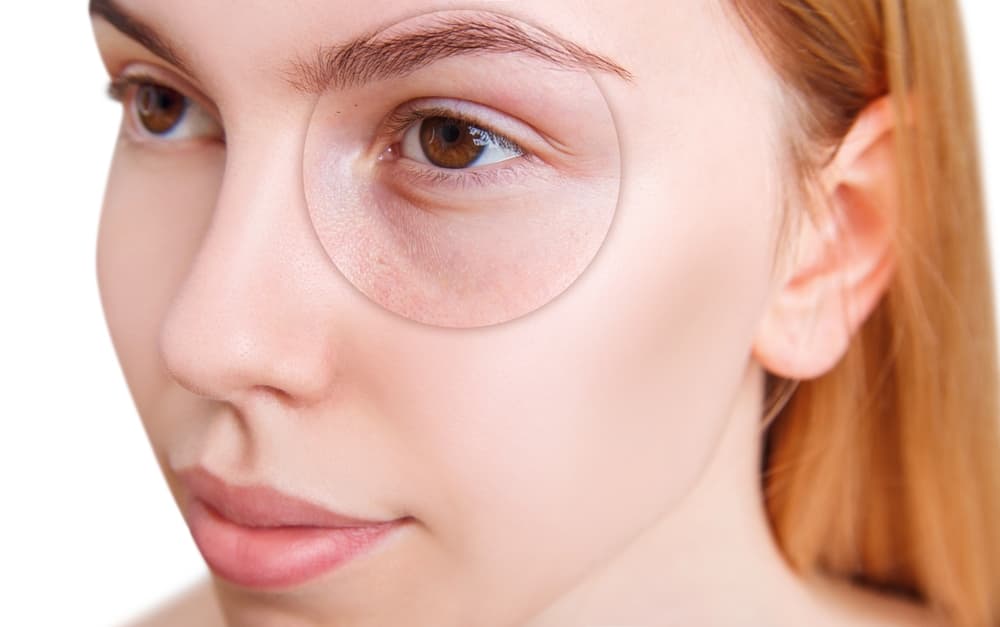
Yes. Under-eye light filler offers an effective solution for hollows due to volume loss and the resulting bruises. However, it is not sufficient alone for every type of bruise. Correct patient selection and the right technique are the keys to successful results.
The eye area is the most sensitive and noticeable part of the face. When people look at each other, they first focus on the eye area. Therefore, hollows, bruises, and a tired expression under the eyes directly affect the overall perception of the face. The aging process creates early and significant changes in this area. Nowadays, minimally invasive aesthetic solutions are rapidly becoming popular as alternatives to surgical procedures. Under-eye light filler is among these solutions. So, does this method really solve bruises and hollows? This article answers this question in detail in light of scientific data.
The eye area is the region that shows the first signs of aging. Changes in this area can make the entire facial expression appear tired and older.
The under-eye area has the thinnest skin on the face. This thinness begins to reveal the structures beneath the skin. With aging, collagen fibers weaken. The elastin tissue loosens. Fat pads shift or lose volume. All these changes create hollows under the eyes. These hollows reflect light in different ways and create shadows. People perceive this shadowing as a "tired appearance." Some studies even suggest that under-eye deformities reflect the fatigue and stress experienced by a person (Roh and Chung 2009). This aesthetic issue affects not only the external appearance but also the individual's self-confidence and social interactions. Therefore, under-eye aesthetics is an indispensable part of facial rejuvenation protocols.
The eye area has the thinnest skin and the most complex fat tissue on the face. Aging begins with the loss of collagen and elastin in this delicate structure. Anatomical knowledge forms the basis of successful treatment.
The eye area is not just made up of skin. This region is a complex system consisting of skin, muscle, connective tissue, fat pads, and bone structures. Each layer is affected differently by the aging process. Aesthetic physicians evaluate these layers one by one. Because issues in each layer require different treatment approaches. Hirmand (2010) explains the anatomical foundations of tear trough deformity in detail. This study shows why under-eye treatments need to be personalized.
The skin under the eyes is the thinnest layer of the face. This thinness reveals the blood vessels and fat tissue from the outside. Light reflection is distorted, and bruises become more pronounced.
The skin under the eyes can be as thin as 0.5 millimeters. Such thin skin easily reveals the underlying network of blood vessels. This condition creates a blue-purple tone, especially in individuals with a dense vascular structure. Additionally, thin skin reduces the skin's ability to protect itself, making it more sensitive to external factors. Sun damage accumulates more quickly in this area. Pigmentation disorders appear more pronounced due to the thin skin. Therefore, skin thickness is the first factor to be evaluated in treatment planning.
The tear trough is the indentation between the eyelid and the cheek. Fat pads are the soft tissues that cushion the area around the eyes. With aging, these structures weaken or shift.
There are several different fat pads around the eyes. These pads protect the eyeball and add softness to the facial contours. However, with aging, these fat pads undergo atrophy. Some sag downwards. This situation deepens the indentation known as the tear trough. The tear trough begins at the inner corner of the eye and extends towards the cheek area. Haddock and colleagues (2009) emphasize the anatomy of this area and its importance for surgical correction. Volume loss in the fat pads increases the hollowness under the eyes. This hollowness absorbs light and creates a shadowy appearance.
Collagen and elastin fibers provide firmness to the skin. With aging, these fibers weaken. The skin becomes loose and indentations form.
Collagen is a protein that forms the skeleton of the skin. Elastin provides the skin's elasticity. From the late twenties onwards, the body loses approximately one percent of collagen each year. Sunlight, cigarette smoke, and stress accelerate this loss. The under-eye area is one of the regions most affected by this overall loss, as the collagen density in this area is initially lower. When elastin fibers loosen, the skin cannot bounce back. Connective tissues weaken. The fat pads move downward through the loosened connective tissues. This entire process leads to under-eye hollowness and associated dark circles.
Genetic predisposition, hyperpigmentation, vascular visibility, volume loss, and lifestyle factors are the primary causes of under-eye dark circles.
Under-eye dark circles are not due to a single cause. Multiple factors come together to create this aesthetic issue. Freitag and Cestari (2007) emphasize that under-eye dark circles are a multifactorial condition. When planning treatment, each factor should be evaluated separately. Otherwise, the treatment may be inadequate or fail to deliver the expected results.
Genetic predisposition may mean thinner skin and more pronounced vascular structures in some individuals. In these individuals, dark circles can appear even at a young age. Hyperpigmentation refers to brown-dark tones due to melanin accumulation. This condition is particularly triggered by sun exposure and genetic factors. Vascular visibility means that the blood vessels under the thin skin are visible from the outside. This creates blue-purple tones. Volume loss is the most common reason. This loss, which occurs with aging, deepens the tear trough and creates shadowing. Lifestyle factors may include insufficient sleep, stress, smoking, and poor nutrition. These factors increase vascular leakage and pale the skin tone.
Under-eye light filler is a low-density filler containing hyaluronic acid. This substance fills in depressions and corrects light reflection.
Under-eye light filler is one of the most preferred minimally invasive aesthetic procedures in recent years. This filler is different from standard facial fillers. It has a much softer structure. This is because the under-eye area is one of the most mobile and sensitive areas of the face. A hard filler does not look natural in this area. It can even increase the risk of complications. Sharad (2012) publishes a comprehensive review examining the anatomy and techniques of tear trough fillers. This study highlights how critical the choice of the right filler is.
Hyaluronic acid is a sugar molecule that is naturally found in the skin. This substance, produced in laboratory settings, adds volume to the skin and increases its water retention capacity.
Hyaluronic acid is a glycosaminoglycan naturally found in the dermis layer of the skin. This molecule has the capacity to bind water molecules. A single hyaluronic acid molecule can hold up to a thousand times its weight in water. This property helps keep the skin plump and hydrated. However, with aging, the amount of hyaluronic acid in the body decreases. The skin dries out and loses volume. Hyaluronic acid used in aesthetic fillers is produced by manufacturers in laboratories through bacterial fermentation. Cross-linking technology enhances the durability of this substance. Matarasso and colleagues (2006) conduct a detailed examination of the safety profile and efficacy of hyaluronic acid fillers. Fillers used in the under-eye area are particularly soft formulations with low viscosity.
Light filler addresses under-eye hollows. It also reduces shadowing and creates a more rested appearance. The goal is volume restoration.
The primary aim of light filler is to compensate for the volume deficiency in the tear trough. The doctor injects the filler into the deeper layers beneath this hollow. The filler fills this void and pushes the skin outward. This movement allows light to spread more evenly across the skin surface. Shadowing decreases. The prominence of dark circles diminishes. Additionally, hyaluronic acid increases hydration beneath the skin. This condition provides micro-level improvement in skin quality. As a result, the patient achieves a more rested, younger, and more vibrant expression. However, the patient should remember that the filler does not treat dark circles caused by pigmentation. The filler only corrects issues related to volume loss.
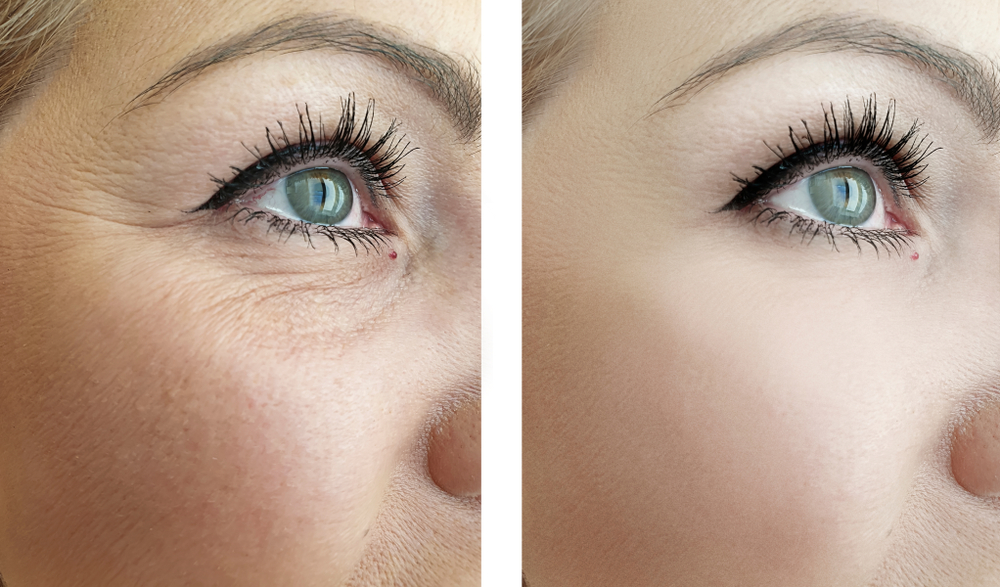
The doctor injects the filler beneath the hollow. This procedure ensures the smooth reflection of light. Hydration beneath the skin also increases. As a result, shadows decrease.
The mechanism of action of under-eye light filler is based entirely on physical and biochemical principles. In the hollowed area, light penetrates deeply and creates a dark shadow. When the filler fills this hollow, the skin surface becomes smooth. Light now reflects evenly. This optical correction instantly reduces the prominence of dark circles. At the same time, hyaluronic acid molecules retain water beneath the skin. This hydration improves skin quality. The dermis layer thickens. The thickened dermis better conceals the underlying vessels and pigmentation. Trinh and colleagues (2021) support the clinical efficacy of this mechanism with scientific data in their systematic review of tear trough fillers. The filler also creates a micro-level stretching effect beneath the skin. This stretching slightly alleviates the prominence of fine wrinkles.
This filler is effective in mild to moderate depressions, bruising due to volume loss, and early stages of loss of elasticity.
Under-eye light filler is not suitable for every patient. However, the results are quite successful in the right candidates. Patients with mild to moderate under-eye hollows are the ideal candidates. In these patients, skin sagging has not yet progressed. There is slight atrophy in the fat pads. The filler fully compensates for this volume deficiency. Bruising due to volume loss responds best to the filler. This is because the filler targets the source directly. Individuals who do not want surgical procedures prefer this minimally invasive method. Young patients with early signs of aging can also benefit from this procedure. In these patients, skin quality is still good. Loss of elasticity is limited. The filler can also create a prophylactic effect at this early stage. Because volume restoration can delay the formation of more advanced deformities.
In cases of advanced skin sagging, intense pigmentation, vascular bruising, and excessive skin excess, the filler alone is not sufficient.
Realistic expectations are the foundation of patient satisfaction. The filler cannot solve every problem. In patients with advanced skin sagging, the filler may only make the skin heavier. In this case, surgical blepharoplasty is a more appropriate option. In dark circles caused by intense pigmentation, the filler does not affect melanin accumulation. The doctor recommends laser treatments or topical agents for these patients. Allergic or vascular dark circles do not completely improve with the filler. In vascular bruising, the filler can slightly thicken the skin. However, this effect is limited. In patients with excessive skin excess, filler injection can create a "puffy appearance." Patients do not desire this condition aesthetically. Therefore, a comprehensive examination ensures the correct patient selection. The doctor evaluates each patient's anatomy individually. Then, they create an appropriate treatment plan.
The application begins with a facial analysis. After local cream anesthesia, the doctor injects the filler with a microcannula or fine needle. The procedure takes 15 to 30 minutes.
The under-eye filler application follows a standard protocol. However, the doctor personalizes this protocol for each patient. A detailed consultation before the procedure is essential. During this consultation, the doctor reviews the patient's medical history. The doctor asks about allergies, medication use, and previous aesthetic procedures. Then, the doctor conducts a facial analysis. This analysis includes both static and dynamic assessments. The depth of the hollow may change when the patient smiles and their facial expression changes. This dynamic analysis is critical for the correct injection plan.
The doctor examines facial asymmetry. They measure the depth of the hollow. The doctor listens to the patient's expectations and determines the appropriate amount of filler.
The examination phase is the most important step of the treatment. The doctor first examines the patient's under-eye area in a well-lit environment. They gently pull this area with their fingers. This maneuver shows the depth of the hollow and the quality of the skin. The doctor also evaluates the prominence of the eyeball. Because the doctor must perform the filler application more carefully in protruding eyes. The doctor listens in detail to the results expected by the patient. The doctor takes photographs. The team uses these photographs for pre- and post-procedure comparison. In the planning phase, the doctor decides on the type of filler to be used. The doctor selects a low-viscosity and soft hyaluronic acid filler. The amount typically varies between 0.2 to 0.5 milliliters for each under-eye. Excessive filler can disrupt the natural result.
The doctor injects the filler under sterile conditions. The microcannula technique reduces the risk of vascular injury. Controlled injection provides natural results.
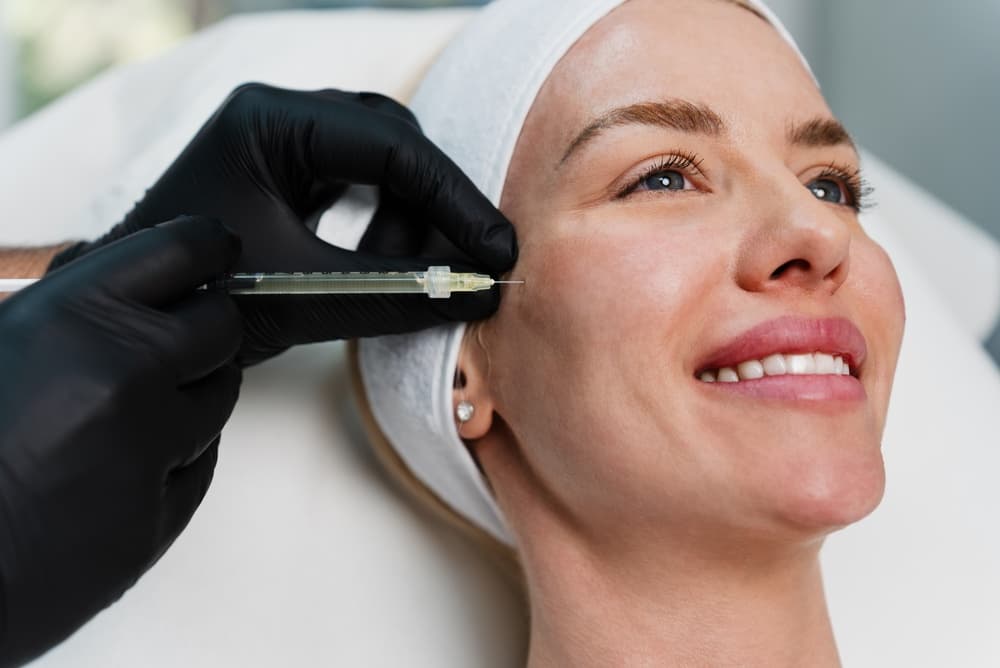
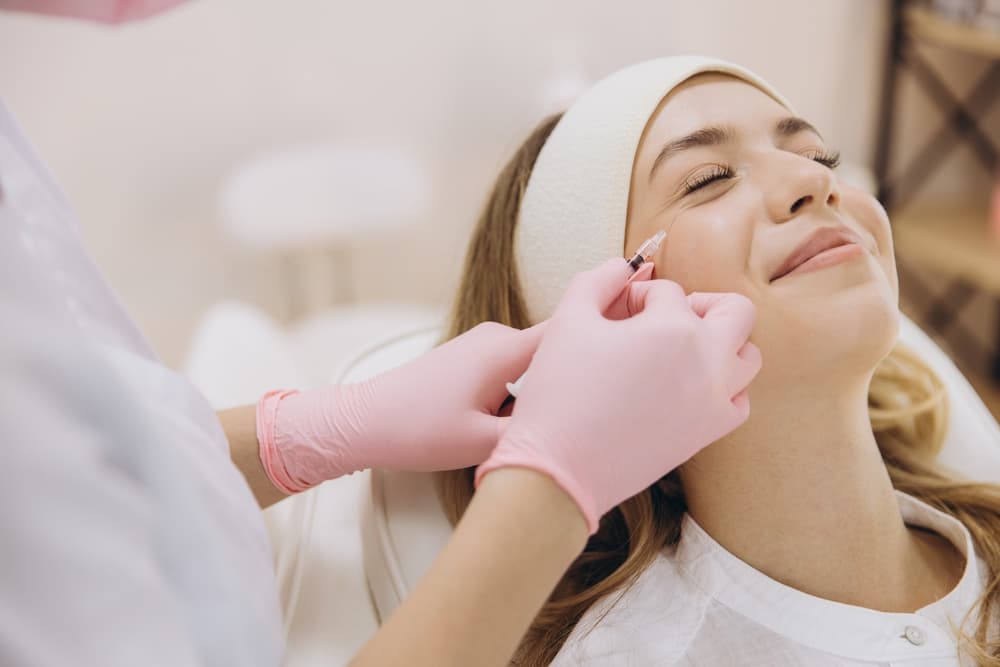
The doctor performs the procedure in a completely sterile environment. The doctor first cleans the under-eye area with an antiseptic solution. Then the doctor applies a local anesthetic cream. The doctor lets this cream sit for 15-20 minutes. Once the anesthesia takes effect, the procedure begins. The doctor may use two different techniques. The fine needle technique is suitable for precise and small injections. Physicians consider the microcannula technique to be safer because the cannula cannot damage blood vessels and delicate structures. The doctor injects the filler onto the periosteum, which is the layer just above the bone surface. This deep layer provides both safety and natural results. Superficial injections increase the risk of a bluish reflection. The doctor administers the filler in small amounts and slowly. After each injection, the doctor shapes the area.
The procedure lasts an average of 15 to 30 minutes. Recovery is completed within 1 to 2 weeks. The patient can return to daily activities immediately.
The doctor quickly applies the under-eye filler in an office setting. The duration of the procedure generally varies between 15 and 30 minutes. This time includes preparation and the subsequent evaluation. After the procedure, the patient can immediately return to normal life. However, the patient must take some precautions. The patient should not wear makeup for the first 24 hours. The patient should avoid heavy exercise. The patient should postpone alcohol consumption as it may increase swelling. For the first few days, mild swelling and bruising are normal. These temporary side effects completely disappear within 1 to 2 weeks. An ice compress helps reduce swelling. The patient partially sees the results immediately after the injection. However, it takes 1 to 2 weeks for the filler to fully settle and for the hydration effect to reach its maximum. Therefore, the doctor performs the final evaluation at least two weeks later.
Low-viscosity soft fillers are preferred. These fillers have a natural range of motion. Their durability ranges from 6 to 18 months.
There are many different hyaluronic acid filler brands on the market. However, not all of them are suitable for the under-eye area. The under-eye area is highly mobile. Blinking, smiling, and facial expressions require the filler in this area to move. Rigid and high-viscosity fillers cannot keep up with these movements. Therefore, physicians prefer low-viscosity soft fillers specifically formulated for the under-eye area. The elasticity value of these fillers is low, meaning they do not have a high capacity to stretch the skin. However, their capacity for volume enhancement and spreading is good. Some fillers further reduce pain due to the lidocaine they contain. In terms of durability, under-eye fillers generally last between 6 to 18 months. This duration varies depending on metabolism rate, lifestyle, and the type of product.
Filler Feature | Under Eye Filler | Standard Facial Filler |
Viscosity | Low | Medium-High |
Firmness | Soft | Medium-Firm |
Mobility | High | Low-Medium |
Longevity | 6-18 months | 12-24 months |
Injection Depth | Deep (periosteal) | Medium-Deep |
This table clearly shows why under eye filler requires a special product. Choosing the wrong product increases the risk of complications and detracts from the naturalness of the results.
The volumizing effect is seen immediately. Results settle within 1 to 2 weeks. Longevity varies from 6 to 18 months depending on the type of product.
Patients notice a change even when leaving the injection room. However, this initial effect is partly due to swelling. The true volume restoration of the filler becomes clear as the swelling subsides. Typically, results fully settle within 1 to 2 weeks. During this time, hyaluronic acid binds water molecules under the skin. Skin quality gradually improves. Regarding longevity, the rate of metabolism plays a significant role. In younger and more active individuals, the filler may dissolve more quickly. This is because hyaluronic acid breaks down with metabolism. Sun exposure, smoking, and stress also shorten the lifespan of the filler. On average, patients may consider a revision session after 9 to 12 months. However, some long-lasting formulations can last up to 18 months. Trinh and colleagues (2021) report in their systematic review that patient satisfaction is generally high.
Temporary swelling, bruising, and rarely a blue reflection may occur. Excessive filler can create a puffy appearance. Vascular complications are very rare.
Like any medical procedure, under-eye fillers have some risks. However, these risks are generally mild and temporary. Funt and Pavicic (2013) comprehensively examine filler side effects. This study details the classification of early and late side effects. Proper technique and appropriate patient selection minimize these risks.
The most common side effect is swelling after the injection. This swelling peaks within 2 to 3 days and then decreases rapidly. Bruising may occur due to vascular damage. This risk slightly increases, especially when using fine needles. However, bruising typically resolves within a week. A blue reflection can be seen after superficial or excessive filler injection, causing a blue-gray discoloration under the skin. The enzyme hyaluronidase corrects this complication. Excessive filler can create a "puffy appearance" under the eyes, resulting in an artificial expression contrary to the expected natural outcome. Vascular complications are the most serious but rarest risks. Therefore, choosing an experienced physician is crucial.
Fillers correct volume. Laser targets pigmentation. Surgery addresses structural sagging. Each method solves a different problem.
Under-eye bruising and hollows are not simple enough to be resolved by a single method. Each treatment modality targets a different pathology. Therefore, doctors often achieve the best results with combined treatments. The patient determines the most suitable approach for their condition in consultation with their doctor. Sometimes, fillers alone are sufficient. However, in some cases, supportive treatments are necessary.
The table below compares different treatment options:
Treatment Method | Targeted Issue | Level of Effectiveness | Invasiveness | Longevity |
Light Filler | Volume loss, hollowness | Very high | Minimal | 6-18 months |
Laser Treatments | Pigmentation, skin quality | Medium-high | Minimal | Variable |
Platelet-Rich Plasma and Mesotherapy | Skin quality, fine wrinkles | Medium | Minimal | Short-medium |
Surgical Blepharoplasty | Sagging, fat herniation | Very high | Surgical | Permanent |
This comparison shows that each method specializes in its own area. Fillers are unmatched in volume restoration. However, when it comes to pigmentation or advanced sagging, other methods come into play.
Laser breaks down melanin accumulation. It offers skin renewal effects. However, it does not fill in depressions.
Laser treatments are particularly effective for dark circles caused by pigmentation. Short-pulse lasers break down melanin granules. The body cleanses this fragmented pigment. Additionally, fractional lasers stimulate collagen production beneath the skin. This increases skin quality and thickness. Thicker skin shows veins less. However, lasers cannot restore lost volume. Therefore, in patients with volume loss, lasers alone are insufficient. Doctors recommend fillers first, followed by laser treatment for these patients. Lasers are also effective for fine wrinkles and skin roughness. However, the under-eye area is a sensitive area for lasers. Incorrect parameters can lead to pigmentation disorders or burns.
Platelet-rich plasma and mesotherapy improve skin quality. However, they do not compensate for volume loss. Therefore, they are supportive treatments.
Platelet-rich plasma is the enriched plasma obtained from the person's own blood platelets. This plasma contains growth factors. When the doctor injects this plasma under the skin, these growth factors stimulate collagen synthesis. Skin quality, brightness, and elasticity improve. Mesotherapy involves the doctor administering a mixture of vitamins, minerals, and amino acids under the skin. These mixtures nourish and revitalize the skin. Both methods are minimally invasive. However, neither provides volume. Therefore, in patients with under-eye hollows, these treatments accompany fillers. Platelet-rich plasma and mesotherapy can also extend the effect of the filler. Because hyaluronic acid remains longer in a healthy skin environment.
Surgery is required in cases of advanced skin sagging and fat herniation. Blepharoplasty provides permanent structural correction.
Blepharoplasty is eyelid surgery. Lower blepharoplasty targets the under-eye area. This procedure removes excess skin. It repositions sagging fat pads or removes excess fat. The results are permanent. However, surgery requires a longer recovery time compared to minimally invasive methods. Bruising and swelling may last from 2 to 4 weeks. The doctor usually recommends surgery for patients over 45 years old and those with significant sagging. In younger patients or those with only mild hollowness, surgery may be an excessive intervention. Therefore, the doctor evaluates the patient's age, skin quality, and degree of deformity. Then, they choose between surgery or fillers. Sometimes, the doctor may combine both methods.
Patients aged between 25 and 50, who do not want surgery, have mild to moderate deformities, and expect quick results are suitable for this procedure.
The ideal candidate profile directly affects the success of the procedure. Young adults and middle-aged individuals are the most suitable candidates. In this age group, skin elasticity is still sufficient. Collagen loss is limited. The filler shows its effect due to this structural support. Those who fear surgery or do not want the procedure prefer fillers. Because this method does not require anesthesia or incisions. Those with mild to moderate under-eye hollowness achieve the best response. In advanced deformities, managing expectations is difficult. Those seeking quick results are also satisfied with this procedure. It does not require social isolation after the procedure. However, not everyone is suitable for this procedure. Pregnant women, breastfeeding mothers, and those with active skin infections should not undergo it. Additionally, patients with insignificant expectations or suspected body dysmorphic disorder should undergo psychological evaluation.
Patients report a more rested and youthful appearance. Under-eye shadows decrease. A natural look is maintained.
Clinical studies show that patients who undergo under-eye fillers have high satisfaction rates. Patients primarily note that the "tired appearance" effect has diminished. The lightening of shadows under the eyes brightens the entire facial expression. People appear more rested and energetic. Natural results are the most important part of patient satisfaction. A good application does not give anyone the impression of having "had fillers." The person simply looks better. This naturalness stems from the capacity of hyaluronic acid to integrate with the skin. Additionally, the filler also softens fine wrinkles under the eyes. Because the increase in volume creates a tightening effect on the skin. As a result, the patient feels better both aesthetically and psychologically. However, the patient should be aware that the results are not permanent. This expectation helps maintain long-term satisfaction.
Patients ask questions about permanence, pain, naturalness, number of sessions, and contraindications. This section answers the most common curiosities.
There is a lot of misinformation circulating about under-eye fillers. This section aims to clarify the questions in patients' minds. Scientific and clear answers facilitate making the right decision.
No. The effect lasts from 6 to 18 months. The body breaks down hyaluronic acid over time. Permanence depends on metabolism.
Hyaluronic acid is a substance naturally found in the body. Therefore, the body also metabolizes the filler injected by the doctor over time. The enzyme hyaluronidase breaks down hyaluronic acid. This process varies from person to person. In younger and more active individuals, metabolism is faster. Thus, the filler may dissolve more quickly. In older and less active individuals, the filler may last a bit longer. However, generally, a duration of 6 to 18 months is expected. Those seeking a permanent solution may consider fat injections or surgery. However, fat injection does not guarantee complete permanence either, as the body absorbs some of the fat. Therefore, filler stands out as a repeatable and safe option.
No. A local anesthetic cream prevents pain. A slight pressure may be felt during the injection. Most patients tolerate the procedure comfortably.
The under-eye area is rich in nerve endings. However, modern applications almost completely eliminate pain. The anesthetic cream applied before the procedure numbs the skin. Additionally, lidocaine may be present in the filler. This provides extra pain protection during the injection. The micro-cannula technique is less painful than the needle technique because the cannula causes less damage to the skin. The patient only feels a slight pressure or pushing sensation during the injection. Post-procedure pain is very rare. There may be slight sensitivity, but this resolves within 24 hours. Pain relief medication is usually not needed.
Yes. Filler applied with the right technique looks natural. Overfilling can create a puffy appearance. Choosing the right specialist is key to achieving naturalness.
A natural result is the most important success criterion for under-eye fillers. People want to look better without showing that they have had a procedure done. There are two rules for a natural result. The first is to use the right amount of filler. Overfilling creates swelling and artificiality under the eyes. The second is to inject at the correct depth. The doctor preserves the skin's natural movements by injecting the filler into deeper layers. Superficial fillers carry the risk of blue reflection or swelling. Additionally, the doctor must ensure that the filler is evenly distributed under the skin. Clumped filler creates irregularities. An experienced doctor controls all these factors. As a result, the patient sees themselves in the mirror, just looking more refreshed.
Generally yes. However, in cases of deep hollows, the patient may need a second session. The doctor makes this decision. The second session is performed 2-4 weeks after the first session.
Most patients achieve their desired results in a single session. This is especially true for mild to moderate hollows. However, in patients with very deep tear troughs, administering too much filler in one session is risky. Excessive filler increases the likelihood of complications. Therefore, the doctor adopts a conservative approach. An average volume is given in the first session. Then, a wait of 2 to 4 weeks occurs. During this time, the swelling completely subsides. The filler settles. The doctor and patient evaluate the result together. If there is still a slight hollow, the doctor plans a second session. This staged approach maximizes both safety and naturalness. Additionally, patients usually complete the second session with a smaller amount of filler.
Pregnant women, breastfeeding mothers, those with active skin infections, and individuals with excessive skin sagging should not undergo the procedure. Additionally, those using blood thinners are at risk.
Every aesthetic procedure has contraindications. Under-eye fillers are no exception. The safety of hyaluronic acid fillers has not been proven during pregnancy and breastfeeding. Therefore, these groups should avoid the procedure. Active skin infections carry the risk of spreading the infection. Patients with a history of herpes should receive prophylactic antiviral treatment before the procedure. In patients with excessive skin sagging, the filler may not yield the desired result. In patients using blood thinners, the risk of bruising increases. However, this is not an absolute contraindication. The doctor may consider temporarily discontinuing the medication or using special techniques. The doctor should also carefully evaluate those with autoimmune diseases and those undergoing active cancer treatment.
Proper patient selection is the key to successful and natural results. Results in the wrong candidates can lead to disappointment. The doctor makes this selection through careful examination.
The golden rule of aesthetic medicine is this: The right procedure for the right patient, with the right technique. Under-eye fillers are one of the best examples of this rule. Results can be excellent in ideal candidates. However, in the wrong candidates, even the same technique can result in failure. Therefore, comprehensive consultation is more important than the procedure itself. The doctor assesses the patient's anatomy, expectations, and psychological state. Patients with unrealistic expectations are at risk of dissatisfaction. These patients should receive detailed information before the procedure. Additionally, some patients may need another method instead of filler. This is where the doctor's honesty comes into play. Proper patient selection guarantees both medical safety and aesthetic success. A multidisciplinary approach always yields the best results.
Yes. In cases of bruising and hollows due to volume loss, under-eye light filler is an effective and safe option. However, a multidisciplinary approach yields the best results.
Under-eye light filler is one of the most valuable minimally invasive solutions offered by modern aesthetic medicine. This method transforms the tired appearance that can lead to disappointment in the right patients into a rested and youthful look. Scientific studies confirm the safety and efficacy of hyaluronic acid fillers (Hirmand 2010; Sharad 2012; Trinh et al. 2021). However, this procedure is not magic. It only corrects issues related to volume loss. It may not be sufficient alone for pigmentation, vascular bruises, or advanced sagging. Therefore, open communication between the patient and the doctor is essential. The patient should understand their anatomical structure and the source of the problem. The doctor should provide an honest assessment. Sometimes, filler alone is sufficient. Other times, laser, platelet-rich plasma, or surgical support may be needed. The doctor achieves the best aesthetic results with personalized combined protocols. When the right patient selection, the right product choice, and the right technique come together, under-eye light filler becomes an effective solution for bruising and hollows. This solution positively changes both the patients' reflections in the mirror and their inner confidence.
Funt, David, and Tatjana Pavicic. "Dermal Fillers in Aesthetics: An Overview of Adverse Events and Treatment Approaches." Clinical, Cosmetic and Investigational , vol. 6, 2013, pp. 295-316.
Haddock, Nicholas T., et al. "The Tear Trough and Lid/Cheek Junction: Anatomy and Implications for Surgical Correction." Plastic and Reconstructive Surgery, vol. 123, no. 4, 2009, pp. 1332-1340.
Hirmand, Hirmand. "Anatomy and Nonsurgical Correction of the Tear Trough Deformity." Plastic and Reconstructive Surgery, vol. 125, no. 2, 2010, pp. 699-708.
Matarasso, Seth L., et al. "Consensus Recommendation for Soft-Tissue Augmentation with Nonanimal Stabilized Hyaluronic Acid (Restylane)." Plastic and Reconstructive Surgery, vol. 117, no. 3S, 2006, pp. 3S-34S.
Roh, Mi Ryung, and Kee Yang Chung. "Infraorbital Dark Circles: Definition, Causes, and Treatment Options." Surgery, vol. 35, no. 8, 2009, pp. 1163-1171.
Sharad, Jasem. "Dermal Fillers for the Treatment of Tear Trough Deformity: A Review of Anatomy, Treatment Techniques, and Their Outcomes." Journal of Cutaneous and Aesthetic Surgery, vol. 5, no. 4, 2012, pp. 229-238.
Trinh, Lana N., et al. "Dermal Fillers for Tear Trough Rejuvenation: A Systematic Review." Surgery, 2021.