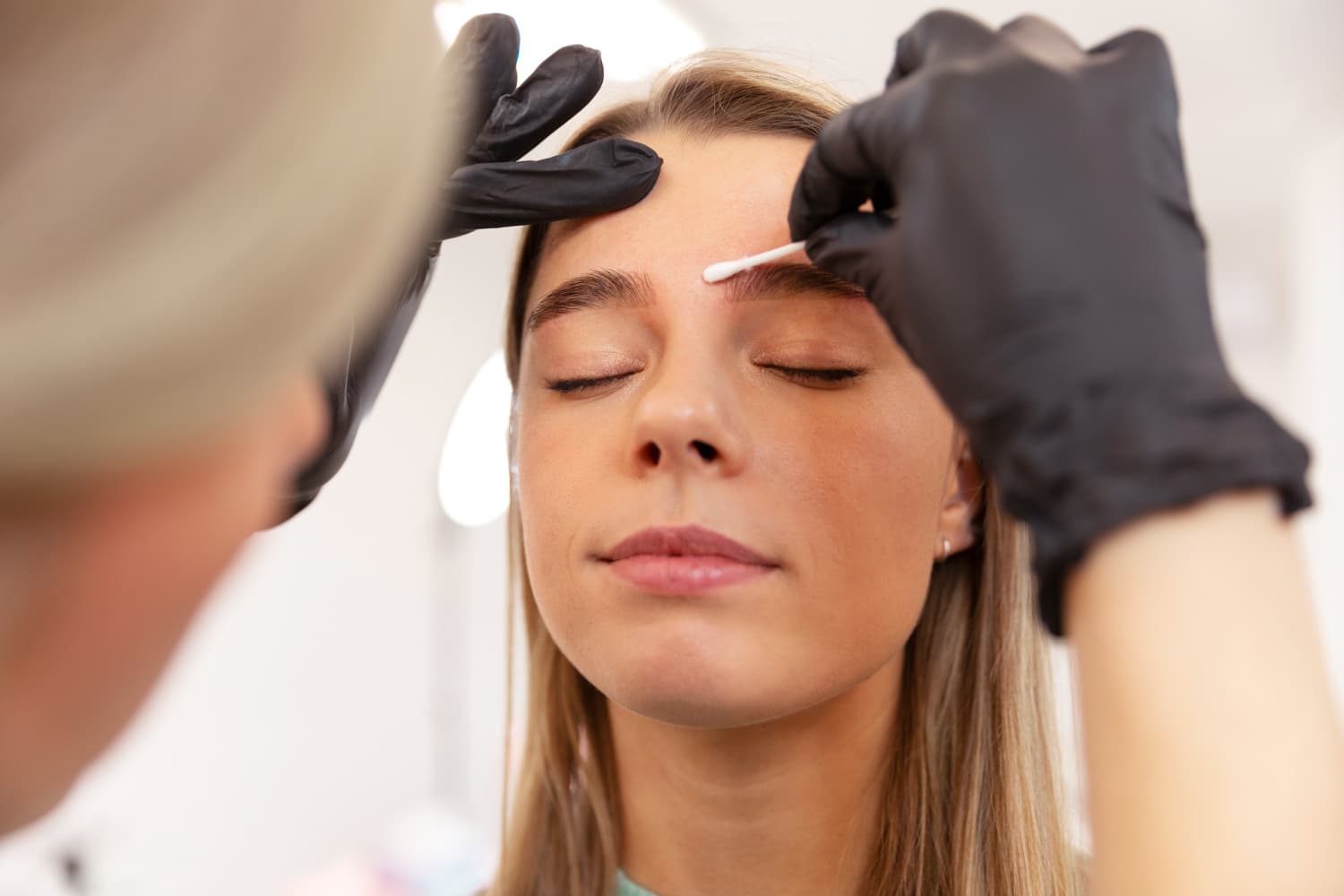
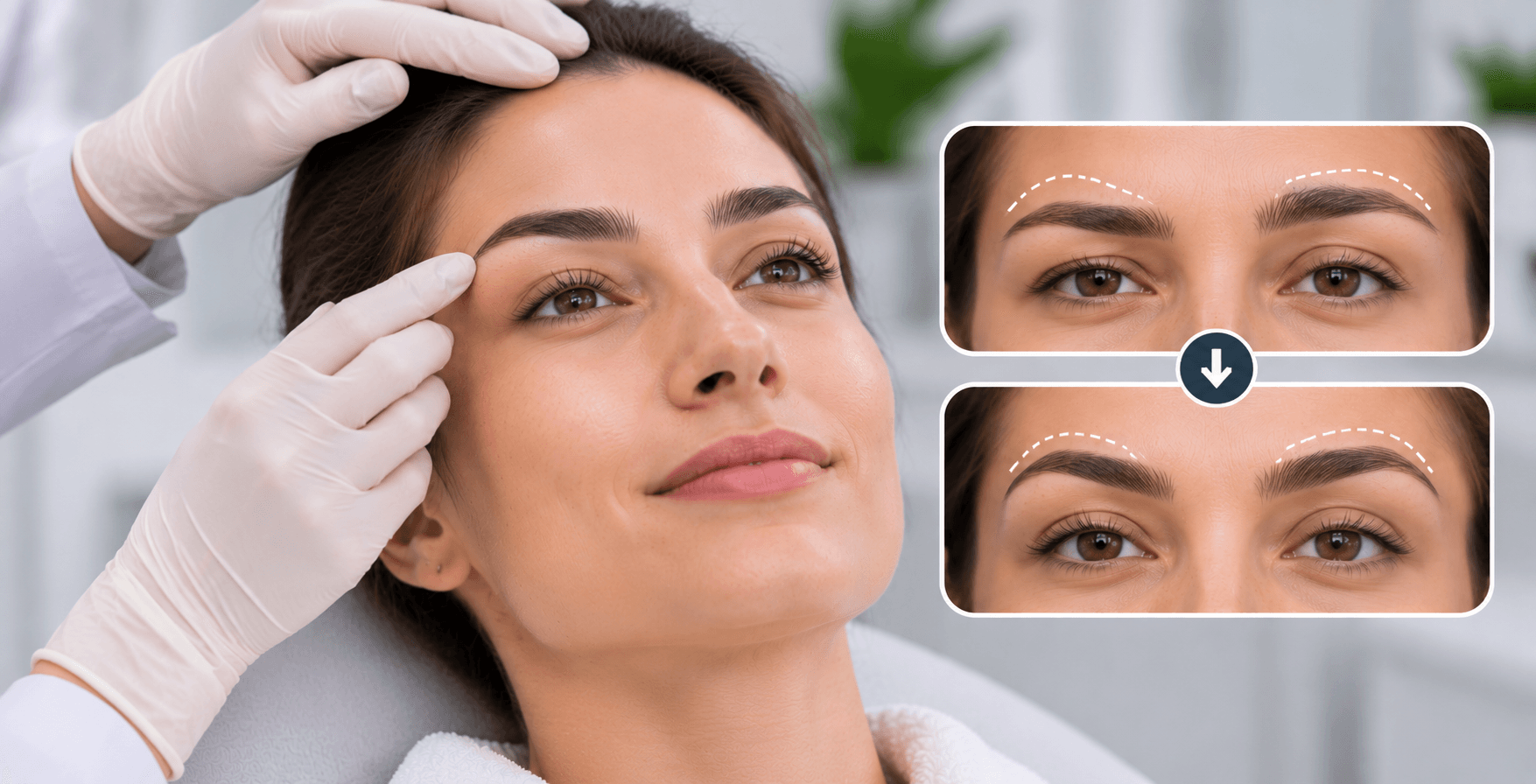
Can Laser Brow Lifting Correct Eyebrow Asymmetry?
Yes, but only under certain conditions. Laser brow lifting can reduce the difference in appearance between the two eyebrows when brow drooping is caused by mild skin laxity. In cases of pronounced asymmetry resulting from structural causes such as muscle imbalance, differences in bone structure, or eyelid ptosis, laser treatment alone does not provide a sufficient solution. In these situations, alternative methods such as Botox, dermal fillers, or surgical brow lifting may be considered.
Brow asymmetry is a condition in which the two eyebrows appear different in terms of height, shape, or arch. The eyebrows are key structures in the upper third of the face that define facial expression and the appearance of the eyes. Even a millimetric difference in height can create a tired, surprised, or unbalanced facial expression. Therefore, brow asymmetry is not merely an aesthetic concern; it is also a functional issue that affects the overall harmony of the face.
Laser brow lifting is a non-surgical approach that aims to improve the position and appearance of the eyebrow by tightening the skin around it. The method delivers controlled thermal energy beneath the skin and stimulates collagen production. Surgical brow lifting, on the other hand, directly changes the anatomical position of the eyebrow. This fundamental difference also determines the effectiveness of each method in addressing asymmetry.
The choice of treatment varies depending on the underlying cause of the asymmetry. For an accurate outcome, the cause of the asymmetry must first be identified anatomically. This article explains, in light of scientific evidence, which types of asymmetry may respond to laser brow lifting, when the treatment may be insufficient, and what alternatives are available.
Why Does Brow Asymmetry Occur?
Brow asymmetry does not result from a single cause. Bone structure, muscle imbalance, aging, nerve damage, and previous aesthetic procedures may cause asymmetry individually or in combination. Accurately identifying the cause directly determines the success of treatment.
Congenital differences in bone and facial anatomy are the most common structural cause of brow asymmetry. The human face is not perfectly symmetrical. Millimetric differences between the two sides of the frontal bone that supports the eyebrow can cause the eyebrows to sit at different heights from birth. Cheong and Lo (2011) reported that the skeletal, soft-tissue, and muscular components of facial asymmetry should be evaluated separately.
Unequal activity of the muscles around the forehead and eyebrows is the primary cause of functional asymmetry. The frontalis muscle is the only muscle that raises the eyebrow. The orbicularis oculi and corrugator supercilii muscles pull the eyebrow downward. In a cadaver study, Knize (1996) showed that the outer part of the eyebrow receives less support from deep structures and therefore descends earlier than the inner part. Weaker activity of the frontalis muscle on one side causes brow drooping on that side.
Aging reduces skin elasticity and deepens brow drooping. The loss of collagen and elastin fibers decreases the ability of the soft tissue supporting the eyebrow to resist gravity. Matros, Garcia, and Yaremchuk (2009) observed paradoxical elevation in the inner and middle portions of the eyebrow with age, along with flattening in the outer portion. When this change does not progress at the same rate in both eyebrows, asymmetry becomes more pronounced.
Upper eyelid drooping (ptosis) and soft-tissue differences also affect eyebrow position. The patient continuously raises the eyebrow on that side to compensate for the drooping eyelid. This causes the eyebrow to appear higher than normal. Finsterer (2003) classified the congenital or acquired muscle- and nerve-related causes of ptosis in detail.
Facial nerve damage, Bell’s palsy, and other neurological conditions can lead to sudden eyebrow asymmetry. The frontal branch of the facial nerve supplies the frontalis muscle. Damage to the nerve causes the eyebrow on that side to droop completely. This is not an aesthetic issue but a medical condition and primarily requires neurological evaluation.
Previous Botox treatments can also alter muscle balance. An injection administered at the wrong point or in an uneven dose may make one eyebrow appear higher or lower than the other. In addition, eyebrow plucking and shaping procedures can change the distribution of eyebrow hairs, creating visual asymmetry without an anatomical difference. Such differences do not require treatment; they can be corrected with proper eyebrow design.
How Does Laser Brow Lifting Work?
Laser brow lifting works through the controlled thermal damage created by laser energy in the skin. This heat effect contracts collagen fibers and stimulates new collagen production. As a result, the skin around the eyebrows becomes tighter, and the eyebrows are lifted slightly.
How Does Laser Energy Create a Tightening Effect in the Skin?
The laser beam is absorbed by water molecules in the dermal layer of the skin and converted into heat. This controlled heat contracts existing collagen and stimulates fibroblast cells to produce new collagen.
During laser treatment, the epidermis is either preserved or renewed in a controlled manner, depending on the technology used. The dermal layer exposed to heat initiates a wound-healing response. This response results in new collagen synthesis over the course of several weeks. Alexiades-Armenakas, Dover, and Arndt (2008) explained that nonablative lasers create a thermal effect in the dermis while preserving the epidermis, whereas fractional lasers target microscopic columns of the skin. Goldberg (2000) demonstrated histologically that dermal collagen was remodeled following treatment with a 1320 nm Nd:YAG laser. This tightening around the eyebrows may provide an elevation of several millimeters in the outer portion of the eyebrow.
What Is the Difference Between Laser Skin Resurfacing and Laser-Assisted Brow Lifting?
Laser skin resurfacing aims to improve skin quality, whereas laser-assisted brow lifting is an adjunctive surgical technique intended to alter the position of the eyebrow. These two concepts are often confused.
Laser skin resurfacing does not require incisions, and its effect on the eyebrow is indirect. Laser-assisted brow lifting, however, belongs to a different category. Keller et al. (1993) described a laser-assisted lifting technique performed through small incisions for forehead lines and glabellar furrows. In this technique, the laser is used as part of the surgical dissection.
The anatomically critical point is this: Laser treatment does not alter muscle movements, nerve function, or bone structure. Therefore, in asymmetry caused by muscle imbalance or skeletal differences, the effect of laser remains limited to the level of the skin.
Which Types of Eyebrow Asymmetry Can Laser Brow Lift Effectively Address?
Laser brow lifting may provide meaningful improvement only in cases of asymmetry caused by mild skin laxity and loss of elasticity. Its effect is limited or absent in asymmetries originating from the muscles, nerves, or bones.
Brow drooping caused by mild skin laxity is the condition most suitable for laser treatment. Slight sagging in the outer part of the eyebrow can be balanced through skin tightening. Since Knize (1996) demonstrated that the outer part of the eyebrow has structurally weaker support, early laxity in this area can be partially corrected with laser treatment.
Laser treatment can also contribute to differences in appearance caused by skin quality and loss of elasticity. Even when both eyebrows are at the same height, the eyebrow on one side may appear lower if the skin is looser. Laser treatment reduces this optical difference. However, its role is limited in pronounced height differences caused by muscle movements. In asymmetries related to skeletal structure or eyelid ptosis, different treatment approaches are required.
Type of asymmetry | Main cause | Role of laser | Suitable approach |
Mild skin laxity | Loss of elasticity | Moderately effective | Laser skin tightening |
Muscle imbalance | Difference between the frontalis and depressor muscles | Limited | Muscle balancing with Botox |
Difference in bone structure | Frontal bone asymmetry | Ineffective | Filler or surgery |
Eyelid ptosis | Levator muscle or nerve problem | Ineffective | Ophthalmological evaluation |
Nerve damage | Facial nerve dysfunction | Ineffective | Neurological treatment |
What Are the Differences Between Laser Brow Lift and Surgical Brow Lift?
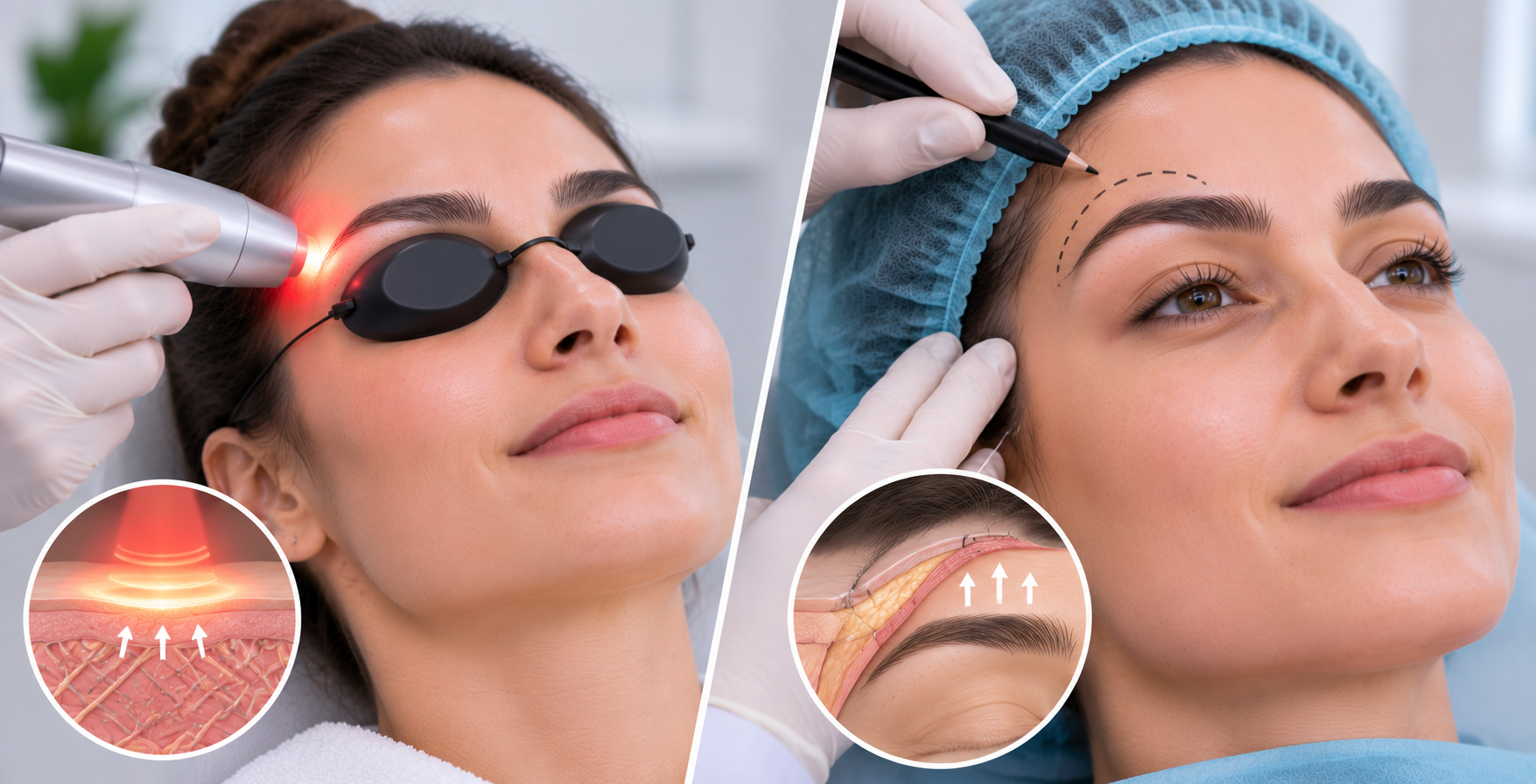
A laser brow lift tightens the skin, whereas a surgical brow lift permanently changes the anatomical position of the brow. The two methods differ fundamentally in terms of their mechanisms of action, recovery time, and the longevity of their results.
Laser treatments focus on skin rejuvenation and tightening. In a surgical brow lift, the skin, soft tissue, and supporting structures are repositioned. The surgeon releases the ligaments that hold the brow in place and secures the tissue at a higher point. Chiu and Baker (2003) examined 628 consecutive endoscopic brow lift cases and demonstrated the reliability of the technique.
Feature | Laser brow lift | Surgical brow lift |
Primary effect | Skin tightening | Repositioning of tissues |
Incision | None | Incision within the scalp or above the brow |
Amount of lift | A few millimeters | Noticeable, depending on the treatment plan |
Recovery time | A few days | A few weeks |
Duration of results | Several months to a few years | Many years |
Anesthesia | Usually not required | Local or general anesthesia |
The degree of the expected aesthetic change is the primary criterion when selecting a method. Laser treatment may be sufficient for mild laxity. In cases of pronounced brow drooping and structural asymmetry, surgery provides more predictable results.
Which Alternative Treatments Can Be Used to Correct Brow Asymmetry?
Botox, dermal fillers, thread brow lifts, and various surgical techniques can be used to treat brow asymmetry. Each method targets a different anatomical cause; therefore, the choice is made according to the source of the asymmetry.
Botox provides temporary improvement in muscle-related asymmetry by balancing the movement of the muscles around the eyebrows. Dermal fillers support areas with volume loss and improve the brow contour. A thread brow lift mechanically elevates specific areas of the brow, creating a mild lifting effect.
Surgical options are considered for pronounced and structural differences. An endoscopic brow lift repositions the brow and forehead tissues through small incisions in the scalp. A direct brow lift allows varying amounts of tissue to be removed above the brow and can precisely correct the height difference between the two eyebrows.
Method | Mechanism of action | Suitable for | Longevity |
Botox | Balances muscle activity | Muscle-related asymmetry | 3–6 months |
Dermal filler | Provides volume support | Contour and volume discrepancy | 6–18 months |
Thread brow lift | Mechanical suspension | Mild brow ptosis | 1–2 years |
Endoscopic brow lift | Repositions the tissues | Moderate to pronounced ptosis | Many years |
Direct brow lift | Correction through tissue excision | Significant height discrepancy | Permanent |
How Is Brow Asymmetry Corrected with Botox?
Botox elevates the brow by selectively reducing the activity of the muscles that pull it downward. On the side where the brow sits lower, the depressor muscles are targeted, thereby balancing the height difference between the two brows.
Two opposing forces determine brow position. The frontalis muscle lifts the brow, while the orbicularis oculi, corrugator supercilii, and procerus muscles pull it downward. Altering the balance of forces between these muscles can shift the brow position by several millimeters. Frankel and Kamer (1998) were the first to describe that chemical brow lifting could be achieved by injecting botulinum toxin into the muscles that pull the brow downward. Ahn, Catten, and Maas (2000) demonstrated that injecting the orbicularis oculi fibers surrounding the outer portion of the brow produces a temporal brow-lifting effect.
When correcting asymmetry, the specialist compares the dynamic movements of both brows. If a patient who consciously raises the brow has compensatory frontalis activity, this alters dose planning. The results are temporary and last an average of 3–6 months; repeat sessions are required. Incorrect injection technique can adversely affect brow position. In particular, administering an excessive dose to the frontalis muscle can worsen brow ptosis. Therefore, the procedure should be performed by a specialist with an in-depth understanding of brow anatomy.
Can Surgical Brow Lift Correct the Height Difference Between the Eyebrows?
Yes. A surgical brow lift is the most predictable way to correct a height difference between the eyebrows. The surgeon can bring the eyebrows to the same level by planning a different degree of lift for each side.
Surgical planning is personalized. Before the procedure, the surgeon separately measures the height of the inner, middle, and outer sections of the eyebrow. The direct brow lift technique allows an asymmetrical amount of tissue to be removed from the upper brow line, offering an advantage for millimetric corrections. Coronal and endoscopic techniques work through the scalp and do not leave visible scars. A temporal brow lift targets the outer section of the eyebrow, which is the area that tends to droop earliest with aging (Knize 1996).
In some patients, eyelid problems accompany brow asymmetry. In such cases, the procedure may need to be combined with upper eyelid surgery. A brow lift alone does not correct true eyelid ptosis; distinguishing between the two is essential before the procedure (Finsterer 2003). The surgical incision sites vary according to the technique. Incisions within the scalp are concealed, whereas incisions above the eyebrow may leave a fine scar. Recovery generally takes several weeks, and the results can be maintained for years.
What Should Be Considered Before Laser Brow Lifting?
Before the procedure, the anatomical and functional cause of the asymmetry should be determined, the skin structure should be assessed, and the patient’s expectations should be compared with the results that laser treatment can provide.
The evaluation begins by measuring eyebrow height. The specialist examines the eyelid position and the movement of the forehead muscles together. The patient is photographed with the eyebrows at rest and while raising them; these records objectively reveal the difference between the two sides. Skin type, elasticity, and existing skin problems determine the laser parameters. In darker skin types, energy settings are selected carefully due to the risk of pigmentation changes.
Any previous Botox, filler, or surgical procedures must be reviewed. A recent Botox treatment may have temporarily altered the position of the eyebrow and could mislead laser planning. As the final step, the patient’s expectations are compared with the capabilities of the method. Laser treatment may provide an improvement of a few millimeters; it cannot be expected to correct a significant structural difference. Clearly discussing this limitation before the procedure is fundamental to patient satisfaction.
What Is the Recovery Process Like After Laser Brow Lifting?
The recovery process depends on the laser technology used. Non-ablative treatments may cause redness and sensitivity for a few days, while recovery takes longer with fractional and ablative treatments.
Redness, sensitivity, and mild swelling are considered normal after the treatment. These findings are part of the skin’s wound-healing response. Skin renewal progresses over several weeks, and collagen production continues for 3–6 months. Therefore, the final appearance develops over the following months rather than immediately after the procedure. Alexiades-Armenakas, Dover, and Arndt (2008) reported that non-ablative and fractional lasers offer a shorter recovery period than traditional ablative lasers, but produce more moderate results.
Sun protection is critically important during this period. Renewed skin is sensitive to ultraviolet rays, and unprotected exposure increases the risk of pigmentation. The time required to return to daily activities varies depending on the technology; with non-ablative treatments, patients can usually resume their normal lives on the same day. Follow-up appointments are scheduled to evaluate the results, and the need for additional sessions is determined during these visits if necessary.
Are the Results of Laser Brow Lifting Permanent?
No, the results of laser brow lifting are not permanent. The skin-tightening effect is maintained for several months to a few years; aging and gravity gradually reduce this effect over time.
The collagen production stimulated by the laser does not stop the skin’s biological aging process. Gravity and repeated facial expressions cause the skin to loosen again. Therefore, repeat sessions are required depending on the technology used. While single-session ablative treatments provide a longer-lasting effect, non-ablative methods generally involve a series of sessions.
The difference is clear when compared with surgical brow lifting. Because surgery changes the anatomical position of the brow, its results are maintained for many years. Since laser treatment works at the skin level, maintenance sessions are required. This comparison is important for setting realistic patient expectations.
When Is Specialist Evaluation Necessary for Brow Asymmetry?
If brow asymmetry has appeared suddenly or is accompanied by drooping eyelids or weakness in the facial muscles, a medical evaluation must be performed before any aesthetic treatment.
A sudden change in which one brow becomes lower or higher than the other may indicate an underlying nerve or muscle problem. If brow asymmetry is accompanied by drooping eyelids, double vision, or vision problems, the situation becomes urgent. Finsterer (2003) emphasized that ptosis may be the first sign of systemic diseases such as myasthenia gravis. If weakness, numbness, or loss of movement in the facial muscles occurs, facial nerve disorders and other neurological causes should be investigated.
Once a medical cause has been ruled out, aesthetic planning can begin. At this stage, evaluation by a plastic surgeon, , or ophthalmologist helps ensure the correct method is selected. Brow asymmetry is usually a harmless and correctable condition; however, an accurate diagnosis is always the first step.
Frequently Asked Questions About Laser Brow Lifting
The questions below cover those most frequently asked by patients about brow asymmetry and laser brow lifting. Each answer provides a summary of the scientific explanations presented in the relevant section.
Does laser brow lifting bring both brows to the same height?
It may improve the appearance of differences caused by mild skin laxity; however, it should not be expected to correct significant anatomical asymmetry on its own.
Is laser brow lifting a non-surgical procedure?
It depends on the laser technology used. Treatments intended to tighten the skin do not require surgical incisions; laser-assisted surgical techniques, on the other hand, are considered a separate category.
Can a single eyebrow be lifted with a laser?
Yes, this may be considered. A unilateral treatment plan can be developed based on the targeted area and the cause of the asymmetry.
Can eyebrow asymmetry be completely corrected with Botox?
It can provide significant improvement in certain asymmetries caused by muscle activity; however, it does not eliminate differences in bone structure or tissue.
Which is more effective: laser brow lift or surgical brow lift?
The choice depends on the degree of brow ptosis, its anatomical cause, and the patient’s expectations. Laser treatment is preferred for mild laxity, while surgery is more suitable for pronounced asymmetry.
Does a brow lift also correct drooping of the eyelid?
No. Brow ptosis and true eyelid ptosis are different conditions, and the treatment approach is determined accordingly.
References
Ahn, Min S., Maureen Catten and Corey S. Maas. "Temporal Brow Lift Using Botulinum Toxin A." Plastic and Reconstructive Surgery, volume 105, issue 3, 2000, pp. 1129-1135.
Alexiades-Armenakas, Macrene R., Jeffrey S. Dover and Kenneth A. Arndt. "The Spectrum of Laser Skin Resurfacing: Nonablative, Fractional, and Ablative Laser Resurfacing." Journal of the American Academy of , volume 58, issue 5, 2008, pp. 719-737.
Cheong, Yuk-Wah and Lun-Jou Lo. "Facial Asymmetry: Etiology, Evaluation, and Management." Chang Gung Medical Journal, volume 34, issue 4, 2011, pp. 341-351.
Chiu, Ernest S. and Daniel C. Baker. "Endoscopic Brow Lift: A Retrospective Review of 628 Consecutive Cases over 5 Years." Plastic and Reconstructive Surgery, volume 112, issue 2, 2003, pp. 628-633.
Finsterer, Josef. "Ptosis: Causes, Presentation, and Management." Aesthetic Plastic Surgery, volume 27, issue 3, 2003, pp. 193-204.
Frankel, Andrew S. and Frank M. Kamer. "Chemical Browlift." Archives of Otolaryngology-Head and Neck Surgery, volume 124, issue 3, 1998, pp. 321-323.
Goldberg, David J. "Full-Face Nonablative Dermal Remodeling with a 1320 nm Nd:YAG Laser." Surgery, volume 26, issue 10, 2000, pp. 915-918.
Keller, Gregory S., N. J. Razum, S. Elliot and J. Parks. "Small Incision Laser Lift for Forehead Creases and Glabellar Furrows." Archives of Otolaryngology-Head and Neck Surgery, volume 119, issue 6, 1993, pp. 632-635.
Knize, David M. "An Anatomically Based Study of the Mechanism of Eyebrow Ptosis." Plastic and Reconstructive Surgery, volume 97, issue 7, 1996, pp. 1321-1333.
Matros, Evan, Jesus A. Garcia and Michael J. Yaremchuk. "Changes in Eyebrow Position and Shape with Aging." Plastic and Reconstructive Surgery, volume 124, issue 4, 2009, pp. 1296-1301.
Get in touch with our expert team
Related Posts