Yükleniyor…
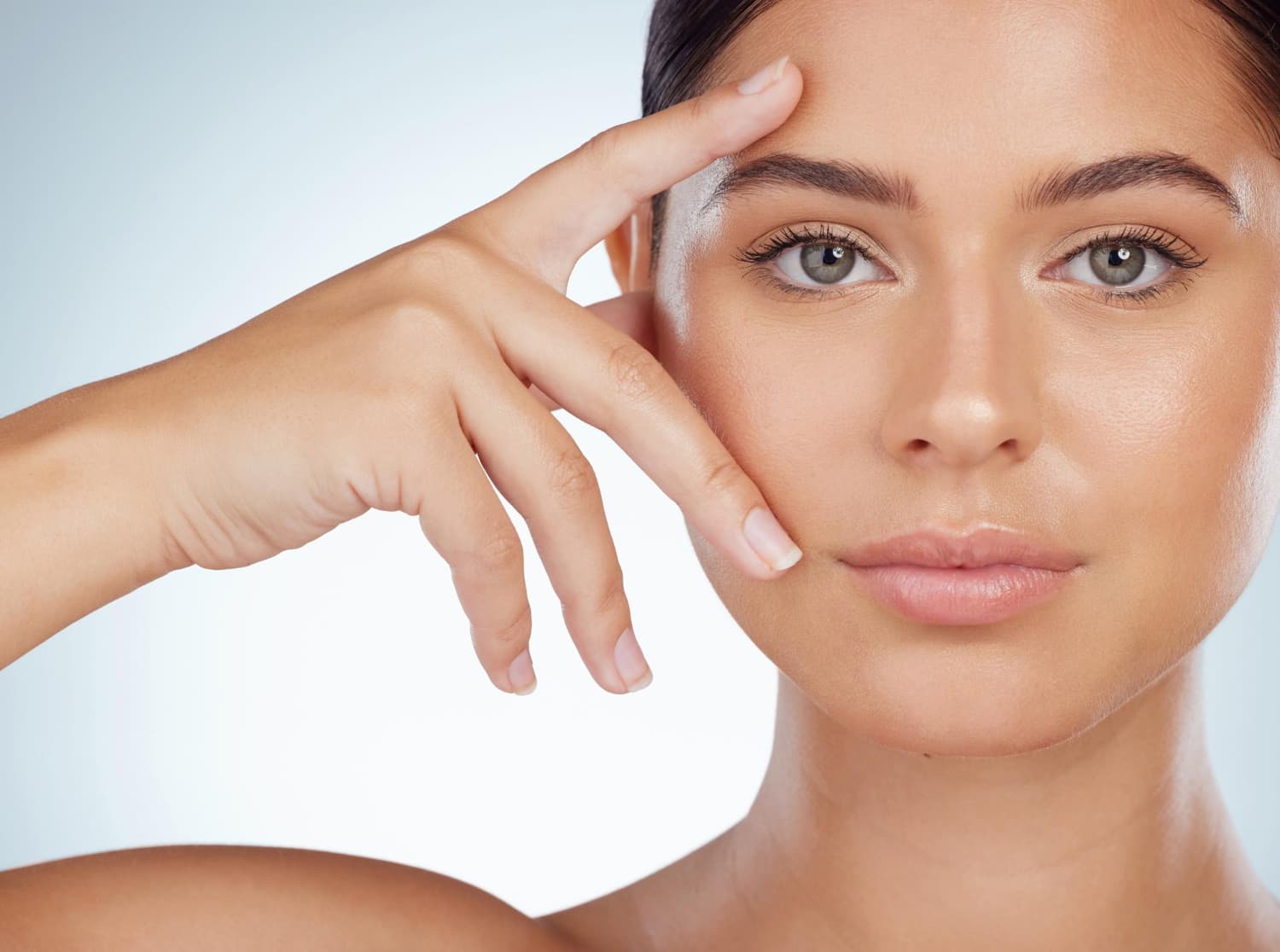
Laser treatment improves skin quality and can help with mild eyebrow drooping. However, for pronounced eyebrow drooping, surgical eyebrow lifting is more effective. Laser tightens the skin but does not physically lift the tissues.
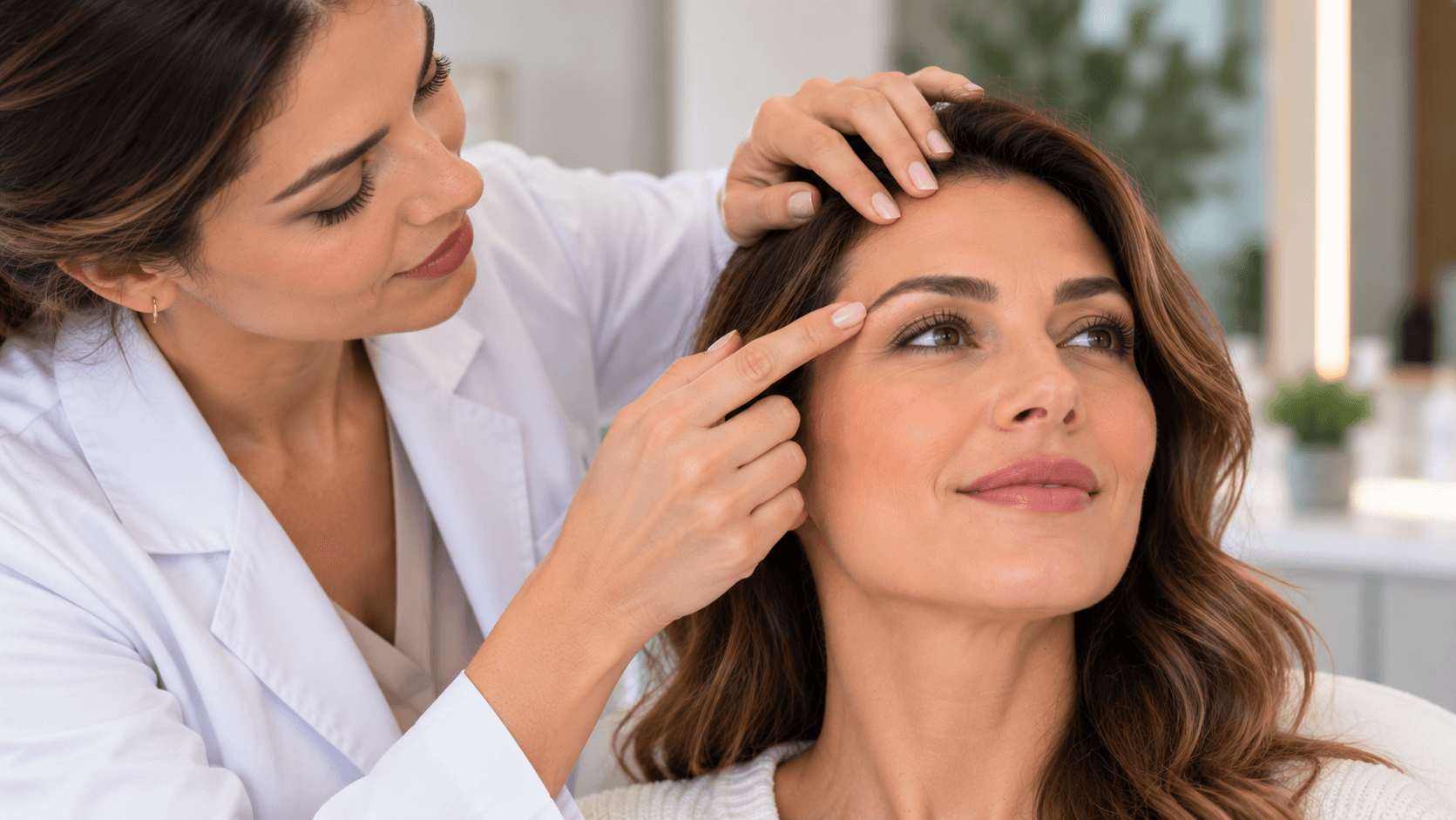
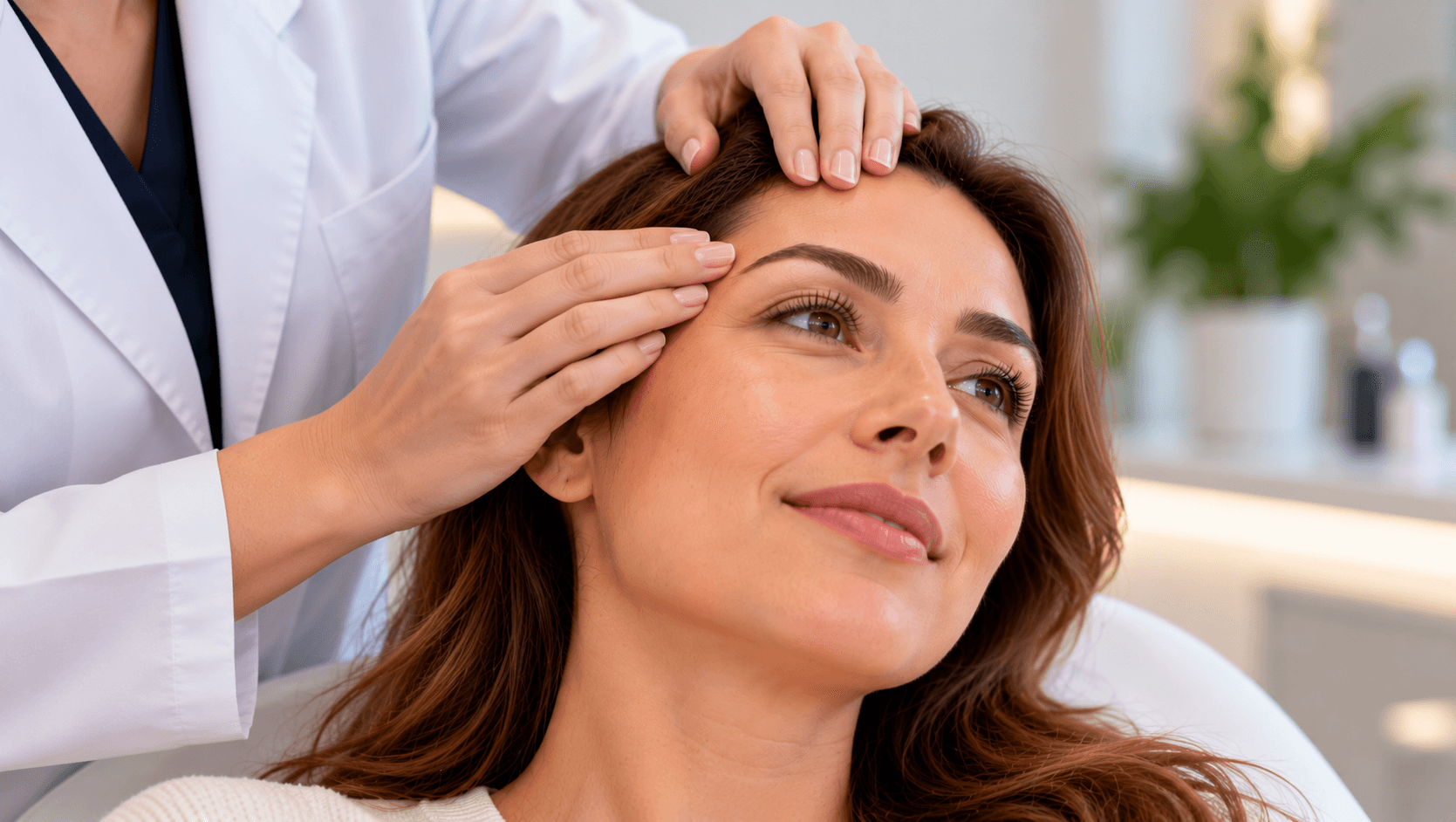
Eyebrow drooping is the movement of the eyebrows downward from their normal position. Aging, loss of collagen, and gravity contribute to this condition.
Eyebrow drooping is also defined as eyebrow sagging in medical terms. This condition arises from the loosening of the skin and soft tissues around the forehead and eyebrows over time. Eyebrows are important structures that frame the upper part of the face. As these structures age, they are affected by gravity and move downward.
The aging process causes significant changes in the skin. Collagen and elastin fibers provide the skin's firmness and elasticity. The production of these fibers begins to slow down from the thirties. In individuals over fifty, collagen production decreases by about one percent per year (Hoenig 947). This decrease weakens the skin's ability to recover. Sunlight also damages the skin. Over many years of sun exposure, elastic fibers break down. This breakdown increases the skin's tendency to sag.
Genetic traits also play an important role in eyebrow drooping. In some families, the eyebrow structure is inherently heavier. In these individuals, eyebrow drooping may begin at an earlier age. The habitual use of facial muscles also has an effect. The muscles around the eyebrows constantly pull the eyebrows downward. Over time, these muscles weaken the skin's elasticity.
Eyebrow drooping develops through the combined effects of loosening skin and soft tissues, collagen loss, and gravity.
The skin in the forehead area is one of the thinnest skins in the body. The skin in this area constantly moves based on facial expressions. Movements such as smiling, frowning, and being surprised activate the forehead muscles. These movements lead to the formation of forehead lines over the years. At the same time, they also strain the skin's elastic structure.
Collagen fibers form the skeleton of the skin. When these fibers are damaged, the skin cannot repair itself. Elastin fibers keep the skin flexible. These fibers also break down with aging. As the skin loses these supportive structures, it loses its resistance against gravity. The eyebrows also start to move downward in this process.
Sun damage is the most significant external cause of skin aging. Ultraviolet rays damage the DNA of skin cells. This damage slows down the collagen production of cells called fibroblasts. It also accelerates the breakdown of existing collagen fibers. As a result, the skin thins, pales, and sags.
Drooping eyebrows can cause a tired appearance, heavy upper eyelids, forehead lines, and in advanced cases, narrowing of the visual field.
When the eyebrows sag, the facial expression changes. People perceive those with drooping eyebrows as tired, sad, or angry. This can negatively affect social relationships. The outer parts of the eyebrows tend to droop especially downwards. This causes puffiness at the outer corners of the eyes.
A feeling of heaviness occurs in the upper eyelid. As the eyebrows droop, they rest on the skin of the upper eyelid. This pressure can make it difficult to open the eyes. Some individuals continuously use their forehead muscles to compensate for this situation. This leads to the formation of deep forehead lines. The lines between the eyebrows also become more pronounced. These lines give the impression that the person is constantly frowning.
Severe eyebrow drooping can affect vision. When the eyebrows droop to the level of the eyes, the upper visual field narrows. Meyer and colleagues have noted that this situation negatively impacts daily activities (Meyer 840). Drivers may have difficulty seeing overhead signs in traffic. This poses a safety risk.
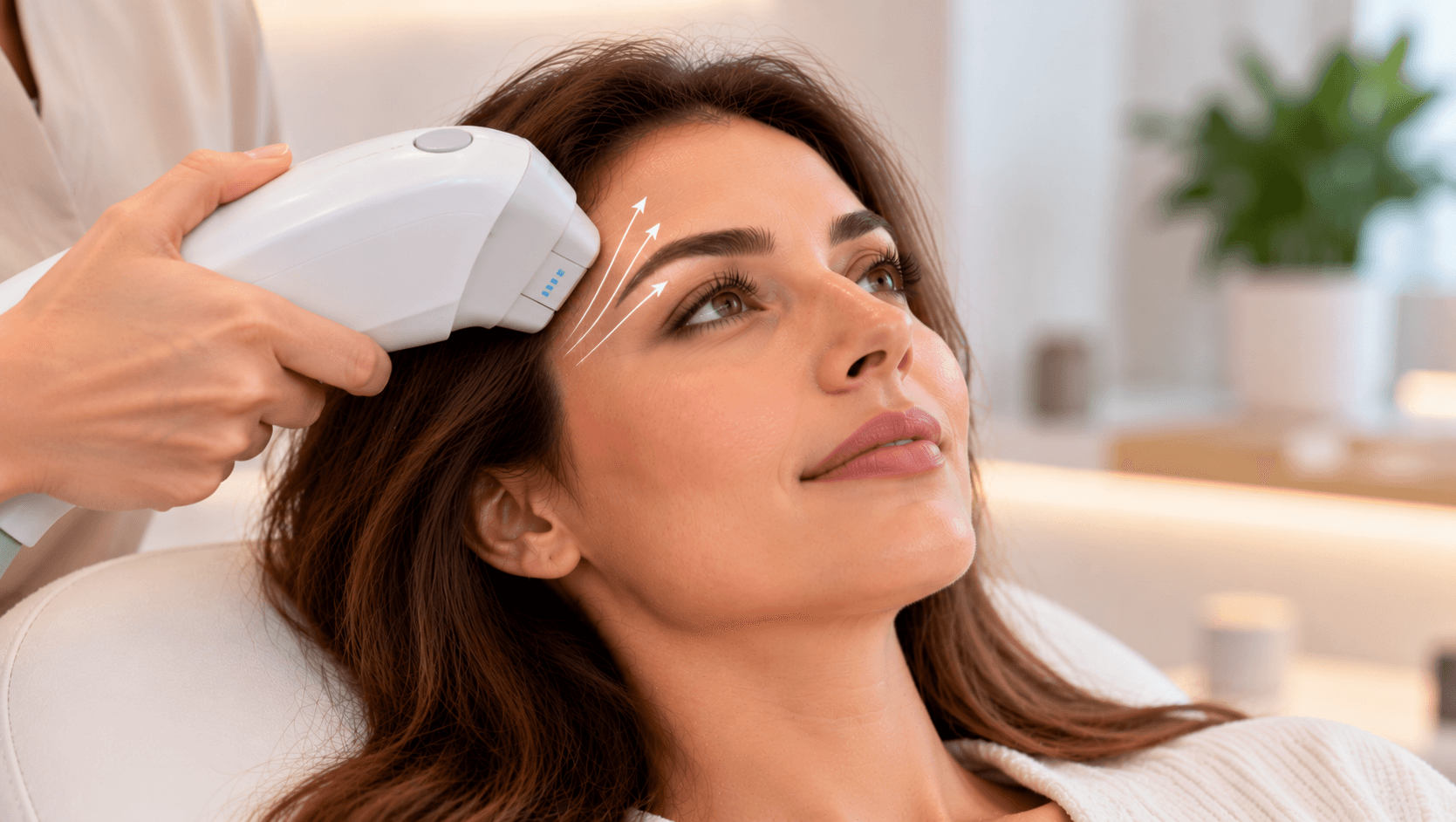
Laser eyebrow lifting is a treatment method that renews the skin surface with laser energy and supports collagen production. This method tightens the skin but does not physically lift the eyebrow.
Laser eyebrow lifting is essentially the application of laser skin renewal procedures to the eyebrow area. In this treatment, laser beams of different wavelengths are used. These beams deliver energy to the skin tissue in a controlled manner. The energy initiates the repair process in skin cells.
Laser treatment is applied in two basic ways. Ablative lasers vaporize the upper layer of the skin. This process triggers the regeneration of the skin. Non-ablative lasers deliver energy to the deeper layers of the skin. Repair begins within the skin without damaging the upper layer. Fractional lasers deliver energy only to specific points of the skin. This way, surrounding tissues are not harmed, and healing is accelerated.
Laser energy generates heat in the skin. This heat causes the collagen fibers to contract. It also stimulates fibroblast cells. These cells begin to produce new collagen. El-Domyati and the research team have shown that fractional lasers increase the production of collagen types I, III, and VII (El-Domyati 103). This new collagen makes the skin appear tighter and smoother.
This term refers to the application of laser skin renewal procedures around the eyebrow area. It is different from surgical eyebrow lifting.
In the market, the term "laser eyebrow lifting" is used in different contexts. Some centers use this term for skin tightening procedures. However, this term does not refer to physically lifting the eyebrow in a surgical sense. In surgical eyebrow lifting, the surgeon cuts the eyebrow and forehead tissues. Then, these tissues are pulled upwards and secured. There is no such mechanical lifting process in laser treatment.
Laser treatment primarily targets skin quality. It reduces fine lines. It evens out skin tone. It minimizes pores. It lightens spots on the skin. These effects help the area around the eyebrows look younger. However, the actual position of the eyebrow does not change.
Some people confuse laser treatment with surgical eyebrow lifting. This confusion can lead to unrealistic expectations. Patients may think that their eyebrows will lift after laser treatment. However, while laser tightens the skin, it cannot physically lift the eyebrow. Therefore, accurate information is very important.
Laser treatment tightens the skin around the eyebrows, reduces fine lines, and improves skin quality. However, it does not change the position of the eyebrow.
Laser beams reach the dermis layer of the skin. This layer is the middle layer of the skin. The dermis is filled with collagen and elastin fibers. Laser energy heats these fibers. The heated fibers contract. This contraction causes the skin to tighten somewhat immediately.
At the same time, the laser creates controlled damage. The body responds to repair this damage. Fibroblast cells are activated. These cells produce new collagen. New collagen strengthens the structure of the skin. However, this process takes months. Initial results are seen a few weeks after treatment. The best results appear within three to six months.
Azulay and colleagues have noted that laser skin rejuvenation initiates the wound healing cascade (Azulay 250). This process involves the reorganization of the collagen matrix. However, this reorganization ensures that the skin looks tight. It does not cause the eyebrow to physically move upward.
Laser treatment can help with mild eyebrow sagging by tightening the skin. However, it cannot correct significant eyebrow sagging like surgery can.
This question is the most important one on many people's minds. The answer depends on the degree of eyebrow sagging. In cases of mild sagging, laser treatment may be beneficial. It falls short in moderate and advanced sagging.
Laser treatment tightens the skin. When the skin tightens, the area around the eyebrows may appear more lifted. However, this appearance does not mean the eyebrow has actually moved up. Tighter skin may slightly change the position of the eyebrow. However, this change does not exceed a few millimeters.
In surgical eyebrow lifting, the situation is different. The surgeon frees the eyebrow tissues. Then, these tissues are pulled upward. Excess skin is removed. The eyebrow is anchored to the bone. This procedure can lift the eyebrow by up to one centimeter. Laser treatment cannot provide this mechanical effect.
Yes. In cases of mild skin laxity and early signs of aging, laser treatment can improve the appearance of the eyebrows by enhancing skin quality.
Individuals with mild eyebrow sagging have less skin laxity. These individuals are typically in their thirties or forties. The eyebrows have slightly drooped. Fine lines have begun to appear on the skin. However, there is no excess skin.
In this case, laser treatment may be beneficial. The laser increases collagen production in the skin. The skin becomes firmer. This firmness helps the area around the eyebrows to appear younger. Fine lines diminish. Skin tone improves. The person feels more energetic.
However, expectations should be realistic. Laser treatment does not dramatically lift the eyebrows. It is not a surgical intervention. The results are natural and subtle. After treatment, the eyebrows may appear more vibrant. However, this is due to the improvement in skin quality.
No. In cases of advanced eyebrow droop, laser treatment is insufficient for excess skin and pronounced sagging. Surgical intervention is required.
Pronounced eyebrow droop is more common in older age. In individuals over fifty, the eyebrows noticeably droop. The upper eyelid skin overlaps the eyebrow. The eyes appear half-closed. This situation creates both aesthetic and functional issues.
Laser treatment cannot correct this condition. Because the laser targets the skin surface and skin quality. However, it cannot remove excess skin. It cannot lift tissues. It cannot anchor to the bone. Therefore, surgical eyebrow lifting is a more suitable option.
Hollander and his research team have studied the functional outcomes of upper eyelid surgeries (Hollander 294). This study has shown that eyebrow droop should be evaluated along with upper eyelid issues. This means that laser treatment alone or eyelid surgery alone may be inadequate.
No. Laser treatment and surgical eyebrow lifting serve different purposes. The laser targets skin quality. Surgical lifting physically raises the eyebrow.
Comparing these two methods is like comparing apples to pears. Both methods are used for facial rejuvenation. However, their mechanisms are completely different.
Laser treatment alters the biological structure of the skin. It promotes new collagen production. It rejuvenates skin cells. These effects enhance skin quality. However, the laser has no mechanical lifting effect on tissues.
Surgical eyebrow lifting, on the other hand, is an anatomical intervention. The surgeon cuts the skin and the underlying tissues. They release these tissues. Then they pull them upwards. They remove excess parts. Finally, they secure the tissues. This process physically moves the eyebrow to a new position.
Biesman emphasized that the upper facial area should be evaluated holistically while examining blepharoplasty techniques (Biesman 129). This assessment means that the position of the eyebrows should also be considered. Laser treatment plays a limited role in this holistic evaluation.
Laser improves skin quality but is limited in lifting the eyebrow. Surgical lifting physically raises the eyebrow and provides more permanent results.
Understanding the differences between these two methods is very important for choosing the right treatment. Both methods have their advantages and limitations. Patients should make decisions knowing these differences.
Feature | Laser Brow Lift | Surgical Brow Lift |
Physically lifting the brow | Limited effect | Yes, direct lifting |
Skin tightening | Yes, effective | Yes, indirectly |
Supporting collagen production | Yes, directly | No, no direct effect |
Excess skin removal | No | Yes, surgically removed |
Correcting noticeable brow droop | Generally insufficient | More effective |
Reducing forehead lines | Slightly improves | More noticeable improvement |
Surgical incision | Generally none | Varies by technique |
Recovery time | Generally shorter | Longer |
Duration of effect | Depends on the person and method | Generally longer-lasting |
Risk level | Lower | Higher |
This table summarizes the key differences between the two methods. Laser treatment is suitable for individuals who do not want surgery and have minor issues. Surgical brow lifting is more appropriate for those with significant drooping and who desire permanent results.
Surgical brow lifting corrects brow droop by cutting and pulling up the brow and forehead tissues and securing them. Different techniques are used.
Surgical brow lifting is the most effective treatment for pronounced brow droop. In this procedure, the surgeon repositions the soft tissues in the brow and forehead area. The procedure is usually performed under general anesthesia. However, local anesthesia may be sufficient for some techniques.
Surgical techniques are selected based on the degree of brow droop and the patient's anatomical features. Each technique has its own unique advantages and disadvantages. Choosing the right technique is critical for successful outcomes.
Endoscopic brow lifting is a modern surgical technique performed with small incisions in the scalp and involves repositioning the forehead tissues with the aid of a camera.
This technique is currently the most preferred method. The surgeon makes three to five small incisions in the scalp. Each of these incisions is a few centimeters long. Then, the surgeon places a small camera called an endoscope. This camera magnifies and shows the interior of the forehead tissues.
The surgeon observes the tissues on the screen. He frees the forehead muscles and connective tissues. He lifts the tissues that support the eyebrows upwards. Then he secures these tissues to the bone with special screws. Excess skin is not removed. Because the skin retracts naturally due to small incisions.
This technique has many advantages. The incision scars remain hidden within the hair. The healing process is faster. The risk of numbness in the forehead is lower. Hair loss is rarely observed. However, this technique requires special equipment and experience. The learning curve is long. In some cases, the results may remain modest.
Forehead lifting is a surgical technique that involves making an incision from the hairline to remove excess skin in the forehead and eyebrow area and pull the tissues upwards.
Coronal forehead lifting is a traditional technique. The surgeon makes an incision that extends from ear to ear. This incision passes behind the hairline. Then the forehead skin and the underlying tissues are lifted. Excess skin is removed. The tissues are pulled upwards and secured.
This technique is suitable for individuals with advanced forehead wrinkles and drooping eyebrows. Because both the forehead and eyebrow areas are corrected simultaneously. However, the healing process is longer. There may be changes in the hairline. Permanent numbness may be observed in the forehead.
Trichophytic forehead lifting is a technique performed over the hairline. In this method, the incision passes just in front of the hairline. It is preferred for individuals with high foreheads. Because this technique pulls the forehead down slightly. The hairline is brought forward. However, the incision scar may be visible.
Eyebrow lifting from the temples is a minimally invasive surgical technique that focuses on the drooping of the outer part of the eyebrow and is performed from the temple area.
Temporal eyebrow lifting is used to correct sagging in the outer part of the eyebrow. This area is the first to be affected by aging. Because the outer eyebrow is far from the support of the forehead muscle. Gravity shows its effects here more quickly.
The surgeon makes a small incision in the temple area. Through this incision, he reaches the tissues on the outer part of the eyebrow. The tissues are lifted and secured. This technique is ideal for individuals with mild to moderate outer eyebrow drooping.
The healing process is shorter compared to the endoscopic technique. However, this technique only targets the outer eyebrow. Its effect on the inner eyebrow and forehead lines is limited. Therefore, proper patient selection is very important.
Direct lifting from above the eyebrow is a surgical technique that corrects advanced eyebrow drooping and asymmetry with an incision made just above the eyebrow.
Direct eyebrow lifting is the simplest and most predictable technique. The surgeon removes an elliptical piece of skin just above the eyebrow. The upper and lower edges are stitched together. This procedure directly lifts the eyebrow upwards.
This technique is particularly used for individuals with eyebrow drooping due to facial paralysis. It can also be preferred in men with a receding hairline. Because it is difficult to make an incision from within the hair for these individuals.
However, the biggest disadvantage of this technique is the scar from the incision. A fine scar may remain just above the eyebrow. This scar may be noticeable in some individuals. However, it fades over time. In some cases, the appearance of the scar can be improved with laser skin rejuvenation.
Eyebrow droop is the downward movement of the eyebrows. Upper eyelid sagging is the excess skin of the eyelid. These two conditions are different from each other but can be seen together.
Many people confuse eyebrow droop with upper eyelid sagging. However, these two conditions involve completely different anatomical structures. An accurate diagnosis is essential for choosing the right treatment.
Eyebrow droop is the downward movement of the eyebrows from their normal position. The eyebrows are supported by the forehead muscles and connective tissues. When these supporting structures weaken, the eyebrows droop. Eyebrow droop overlaps the eyelid. This condition causes the eyes to appear smaller and more tired.
Upper eyelid sagging, on the other hand, is the excess skin of the eyelid. In medical terminology, this condition is referred to as dermatochalasis. With aging, the eyelid skin thins and sags. This excess skin falls over the eye. The eyelid may appear closed.
Yes. The aging process affects both the eyebrows and the eyelid skin. These two conditions can occur together.
Aging affects all structures in the upper part of the face. Collagen loss is observed not only in the eyebrow area but also in the eyelid. Gravity pulls both the eyebrows and the eyelid skin downwards. Therefore, many individuals over the age of fifty have both conditions present together.
This situation complicates the treatment plan. Eyebrow droop is only concealed when eyelid surgery is performed. However, the eyebrows still remain droopy. Similarly, when only eyebrow lifting is done, the excess eyelid skin continues to be visible.
For this reason, oculoplastic surgeons evaluate these two areas together. The correct treatment plan is made according to the degree of both issues. In some patients, both procedures are planned together. This combined approach yields the most natural and effective results.
Laser treatment can slightly increase the tightness of the upper eyelid skin. However, it cannot correct significant excess skin without surgical removal.
Laser treatment improves the overall quality of the skin. This effect also reflects on the upper eyelid skin. The laser can reduce fine lines around the eyelid. It can even out the skin tone. It can provide mild tightening.
However, laser treatment cannot eliminate excess skin. The accumulated skin on the upper eyelid must be physically removed. This procedure is performed with a surgical technique called blepharoplasty. In blepharoplasty, the surgeon removes excess skin and, if necessary, fat tissue.
Prominent excess skin, severe sagging, and conditions affecting the visual field should consider eyelid surgery.
Eyelid surgery is performed for both aesthetic and functional reasons. Aesthetically, the eyes appear younger and more vibrant. Functionally, the upper visual field expands.
The situations in which surgery should be considered are as follows:
If the eyelid skin is drooping over the eyelashes
If it is necessary to constantly use the forehead muscles to open the eyes
If the upper visual field is narrowed
If eyelid heaviness causes headaches
These conditions indicate that eyelid surgery is necessary. Laser treatment cannot correct these issues.
Yes. In many patients, brow lifting and upper eyelid surgery are planned together. This combination yields more natural results.
A holistic approach in facial aesthetics is very important. Focusing on just one area can create imbalance in the face. Therefore, surgeons evaluate the brow and eyelid together.
For example, when only eyelid surgery is performed, brow droop may become more pronounced. This is because when excess eyelid skin is removed, the true position of the brow is revealed. If the brow is low, this condition becomes more noticeable after surgery.
Similarly, when only brow lifting is performed, excess eyelid skin may become apparent. This is because when the brow is lifted, the eyelid skin becomes more prominent.
Therefore, combined treatment plans are more successful. The surgeon can correct both areas in the same session. This approach not only combines the healing process but also provides more harmonious results.
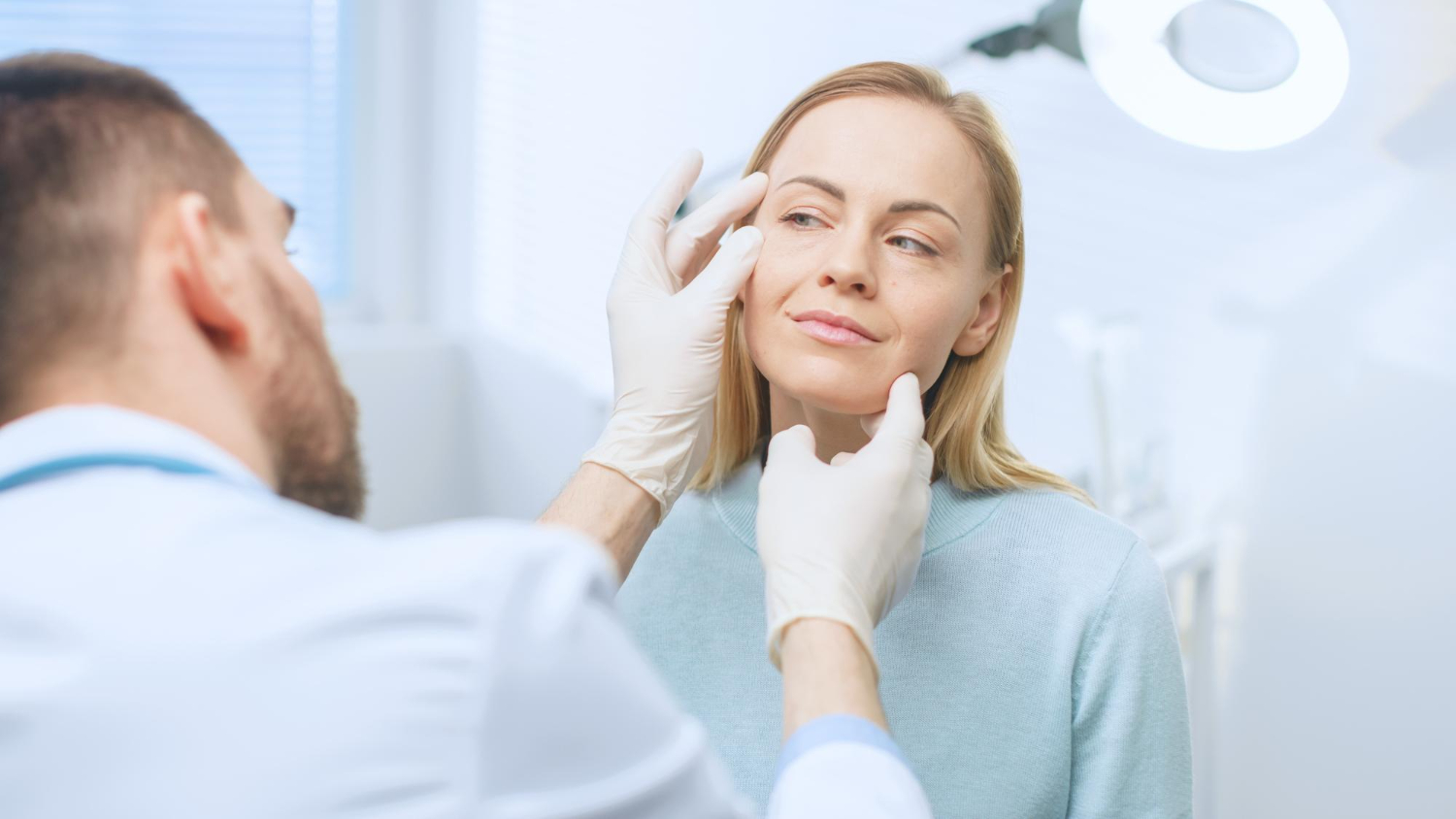
Laser treatment may be suitable for individuals with mild skin laxity, slight brow droop, and fine lines who do not want surgery.
Proper patient selection is the key to success in laser treatment, just as it is in every aesthetic procedure. Not everyone is a suitable candidate for laser treatment. Surgical evaluation should be based on the individual's anatomical features and expectations.
Ideal candidates for laser treatment include:
Individuals in their thirties and forties
Individuals with mild skin laxity
Individuals with fine lines and wrinkles
Individuals experiencing uneven skin tone
Individuals who do not want surgical intervention
Individuals with realistic expectations
Individuals with pronounced eyebrow droop have different skin structure, eyebrow position, and upper eyelid anatomy. Surgical options may be more suitable for these individuals.
The situation is more complex for individuals with pronounced eyebrow droop. In these individuals, not only skin quality but also tissue position is problematic. Laser treatment cannot correct this condition.
The following factors should be considered in the evaluation:
Age: Younger individuals have better skin elasticity. Laser results may be better. In older individuals, skin laxity is more pronounced.
Skin elasticity: The skin's ability to tighten back is important. Skin with good elasticity responds better to laser treatment.
Eyebrow position: The current height of the eyebrow is evaluated. If the eyebrow is significantly below the orbital rim, the laser may be insufficient.
Eyebrow asymmetry: Asymmetric eyebrows require surgical planning. Laser cannot correct asymmetry.
Upper eyelid skin: The amount of excess skin is measured. If there is significant excess skin, laser treatment may be insufficient.
Forehead structure: The width and shape of the forehead affect the choice of surgical technique.
Expectations: What the patient wants is very important. For those seeking dramatic changes, surgery is more suitable.
Laser treatment results vary from person to person. Generally, they are effective between six to twelve months. However, they are not permanent.
The permanence of laser treatment results depends on many factors. These factors directly affect the success and duration of the treatment. Patients should be realistic about this.
Factors affecting the results include:
Laser technology used: Ablative lasers create a deeper effect. Non-ablative lasers are more superficial. Fractional lasers may be more effective than standard lasers.
Skin type: Laser treatment is safer for individuals with fair skin. The risk of pigment changes is higher in individuals with dark skin.
Age: Younger individuals produce collagen more quickly. Therefore, results are better and last longer.
Sun exposure: Sun protection after treatment is very important. Sun damage negatively affects laser results.
Collagen production: Each person's collagen production capacity is different. This capacity determines the laser results.
Skincare routine: Regular skincare extends the results. Using moisturizers and antioxidants is beneficial.
Aging process: Laser treatment does not stop aging. The natural aging process continues.
Laser treatment targets skin quality but does not anatomically fix the tissues. As aging continues, the effect diminishes over time.
Surgical brow lifting physically moves the tissues to a new position. These tissues are anchored to the bone. This anchoring creates a long-lasting lifting effect. Results are typically permanent for five to ten years.
Laser treatment works differently. The laser alters the biological structure of the skin. It initiates new collagen production. However, this collagen breaks down over time. Because the aging process does not stop. Sun damage, smoking, and stress weaken collagen fibers again.
Fitzpatrick and colleagues have compared the collagen tightening effects of CO2 laser and erbium laser (Fitzpatrick 395). This study showed that the laser creates collagen contraction in the skin through heat. However, this effect is not as permanent as surgical anchoring.
Laser treatment is generally safe. However, side effects such as redness, swelling, sensitivity, and color changes may occur.
Like any medical procedure, laser treatment has its risks. These risks are usually mild and temporary. However, serious complications can rarely arise.
Redness, swelling, skin sensitivity, irritation, and temporary color changes are common side effects of laser treatment.
The most common side effect after laser treatment is redness. The skin appears red immediately after the treatment. This redness can last from a few hours to a few days. In non-ablative lasers, redness is milder. In ablative lasers, it may be more pronounced.
Swelling is also a common side effect. The skin develops edema in response to laser energy. This edema usually subsides within two to three days. Applying a cold compress can help reduce swelling.
Skin sensitivity is felt within a few days after treatment. Touching, washing, or applying makeup to the skin can be uncomfortable. This sensitivity is usually short-lived.
Pigment changes may occur, especially in individuals with darker skin. Light or dark spots may develop on the skin. This condition typically arises when sun protection is inadequate. Spots often fade over time. However, in some cases, they may be permanent.
In rare cases, infection and wound opening may occur. This happens when post-treatment care rules are not followed. The risk is higher with ablative lasers.
Risks associated with surgical brow lifting include bleeding, infection, scarring, numbness, nerve damage, hair loss, and brow asymmetry.
Surgical procedures are more invasive than laser treatments. Therefore, the risks are also higher. However, when performed by an experienced surgeon, these risks are minimized.
Surgical risks include:
Bleeding: Mild bleeding is normal in every surgical procedure. However, excessive bleeding is rarely seen.
Infection: The risk of infection at incision sites is low. The use of antibiotics reduces this risk.
Scarring: Surgical incisions can leave scars. However, these scars are usually hidden within the hair or skin folds.
Numbness: Temporary numbness in the forehead and scalp is common. As the nerves heal, sensation returns to normal. Permanent numbness is rarely observed.
Nerve damage: There may be temporary injury to the facial nerves. This can affect eyebrow movements. Permanent nerve damage is very rare.
Hair loss: Temporary hair loss may occur along incision lines. While permanent hair loss is rare, it is possible.
Change in hairline: In forehead lift procedures, the hairline may shift up or down.
Eyebrow asymmetry: It is difficult for both sides to be perfectly symmetrical. Mild asymmetry is normal. However, pronounced asymmetry can be corrected.
Insufficient or excessive lifting: Eyebrows may be lifted too little or too much. This may require revision surgery.
The choice of treatment should be based on the degree of eyebrow droop, skin type, and the patient's expectations. One method does not fit all.
A comprehensive assessment is required to choose the right treatment. This assessment includes both a physical examination and the patient's desires. Each person's facial anatomy is different. Therefore, personalized treatment plans yield the most successful results.
For mild skin laxity, laser treatment, skin tightening procedures, or botulinum toxin injections may be preferred.
The goal for individuals with mild skin laxity is to improve skin quality. In this case, invasive procedures are not necessary. Non-invasive methods may be sufficient.
Laser treatment increases collagen production in the skin. As a result, the skin becomes tighter. Fine lines decrease. Skin tone improves.
Botulinum toxin injections target the muscles around the eyebrows. These muscles pull the eyebrow down. The toxin relaxes these muscles. As a result, the eyebrows are lifted slightly. Ahn and colleagues have shown that these injections raise the outer eyebrow by an average of 4.8 millimeters (Ahn, web_search:1#1). However, this effect is temporary. It lasts for three to six months.
Dermal fillers can create a lifting effect by adding volume under the eyebrow. However, this procedure requires advanced training. Because the area is highly vascularized, incorrect application can lead to serious complications.
For moderate eyebrow droop, minimally invasive surgical techniques or endoscopic brow lifting may be more appropriate.
Moderate eyebrow droop may not be correctable with non-invasive methods. However, full open surgery may not be necessary. In this case, minimally invasive techniques come into play.
Endoscopic brow lifting is ideal for patients in this category. It is performed with small incisions. The recovery process is quick. The results are long-lasting.
Temporal brow lifting can also be used for patients in this group. This technique is particularly suitable if the outer eyebrow droop is pronounced.
In cases of severe eyebrow droop, open surgical brow lifting is required in the presence of significant excess skin and conditions affecting the visual field.
Severe eyebrow droop is a serious aesthetic and functional issue. In this case, merely improving skin quality is insufficient. The tissues need to be physically lifted.
Coronal forehead lifting or trichophytic forehead lifting is used for these patients. These techniques correct both forehead lines and eyebrow droop. Excess skin is removed. The results are permanent.
Direct brow lifting may be preferred for patients with severe asymmetry or facial paralysis. This technique provides the maximum lifting effect.
In cases of pronounced upper eyelid sagging, eyelid surgery known as blepharoplasty should be considered.
Upper eyelid sagging is a separate issue from eyebrow droop. In this case, there is excess skin on the eyelid. Laser treatment cannot eliminate this excess.
In blepharoplasty, the surgeon removes the excess skin from the upper eyelid. If necessary, fat tissue is also addressed. This procedure makes the eyes appear more open and youthful.
Mellington and Khooshabeh studied how eyebrow droop affects quality of life after surgery (Mellington 997). This study showed that proper treatment planning increases patient satisfaction.
In patients with multiple issues, combined treatment plans yield the best results. Brow lifting, eyelid surgery, and laser treatment can be planned together.
The aging process creates multiple issues in the upper part of the face. It may not be possible to solve these problems with a single method. Therefore, combined approaches are preferred.
For example, a patient may have both eyebrow droop and upper eyelid sagging. In this patient, endoscopic brow lifting and blepharoplasty can be performed together. Additionally, laser treatment can enhance skin quality.
This holistic approach provides the most natural and balanced results. Patients can resolve multiple issues under a single anesthesia. The recovery process is combined. It can also be cost-effective.
Here are the most frequently asked questions and their answers about laser brow lifting.
In this section, we answer the questions most commonly asked by patients. These questions help in the decision-making process before treatment.
No. Laser treatment improves skin quality but cannot completely correct significant brow drooping. It may provide partial improvement in mild cases.
Laser treatment does not physically lift the brow. There may be a slight improvement in appearance due to skin tightening. However, this change does not exceed a few millimeters.
No. The results of laser treatment are temporary. They typically last six to twelve months. After that, it needs to be repeated.
No. Laser treatment and surgical brow lifting are different procedures. Laser cannot replace surgical intervention.
Laser treatment can slightly improve the quality of the upper eyelid skin. However, it cannot correct significant excess skin. In this case, eyelid surgery is required.
The answer to this question depends on the degree of brow drooping. In mild cases, laser may be sufficient. In significant cases, surgery is more effective.
Recovery after laser treatment takes a few days. Recovery after surgical brow lifting takes one to two weeks.
Laser treatment is usually performed with a slight stinging sensation. Surgical brow lifting is done under anesthesia. There may be mild pain afterward. Pain relievers can help manage this.
Laser results last six to twelve months. The results of surgical brow lifting are permanent for five to ten years.
Laser treatment increases skin tightness and may help with mild brow drooping. However, for significant brow drooping, surgical brow lifting is more effective. The right treatment should be chosen based on individual assessment.
In this article, we thoroughly examined laser brow lifting and drooping brows. Now, let’s summarize the key points.
Laser treatment is an important tool in modern aesthetic medicine. This treatment improves skin quality. It reduces fine lines. It evens out skin tone. It enhances the appearance of mild skin laxity. It provides a younger and fresher look around the eyebrows.
However, laser treatment has its limitations. Laser tightens the skin but does not physically lift the eyebrow. It does not reposition tissues like surgical brow lifting. Therefore, it falls short in cases of significant brow droop.
For individuals with significant brow droop, surgical options are more appropriate. Techniques such as endoscopic brow lifting, forehead lifting, or direct brow lifting physically elevate the brow. These techniques provide long-lasting and noticeable results.
Upper eyelid sagging and brow droop should be distinguished from each other. These two conditions can occur together. However, their treatments are different. Laser treatment cannot correct either condition. Blepharoplasty is required for eyelid sagging.
The most suitable treatment should be determined based on the individual's anatomical features, the degree of brow droop, skin type, and expectations. A single method does not fit everyone. Therefore, a detailed consultation with an experienced physician is essential.
In conclusion, "laser brow lifting" and "surgical brow lifting" are not the same procedures. These two methods serve different purposes. Laser targets skin quality. Surgery targets tissue position. Patients should start treatment with realistic expectations by understanding this distinction.
Ahn, Bo-Ra, et al. "Techniques of Eyebrow Lifting: A Narrative Review." Journal of Cutaneous and Aesthetic Surgery, vol. 13, no. 1, 2020, pp. 58-61.
Azulay, M. M., et al. "Fractional Laser Resurfacing Treats Photoaging by Promoting Neocollagenesis and Cutaneous Edema." Anais Brasileiros de , vol. 95, no. 2, 2020, pp. 250-258.
Biesman, Brian S. "Blepharoplasty." Seminars in Cutaneous Medicine and Surgery, vol. 18, no. 2, 1999, pp. 129-138.
El-Domyati, Moetaz, et al. "Fractional versus Ablative Erbium:Yttrium-Aluminum-Garnet Laser Resurfacing for Facial Rejuvenation: An Objective Evaluation." Journal of the American Academy of , vol. 68, no. 1, 2013, pp. 103-112.
Fitzpatrick, Richard E., et al. "Collagen Tightening Induced by Carbon Dioxide Laser Versus Erbium: YAG Laser." Lasers in Surgery and Medicine, vol. 27, no. 5, 2000, pp. 395-403.
Hoenig, John A. "Comprehensive Management of Eyebrow and Forehead Ptosis." Otolaryngologic Clinics of North America, vol. 38, no. 5, 2005, pp. 947-984.
Hollander, M. H. J., et al. "Functional Outcomes of Upper Eyelid Blepharoplasty: A Systematic Review." Journal of Plastic, Reconstructive & Aesthetic Surgery, vol. 72, no. 2, 2019, pp. 294-309.
Mellington, F., and R. Khooshabeh. "Brow Ptosis: Are We Measuring the Right Thing? The Impact of Surgery and the Correlation of Objective and Subjective Measures with Postoperative Improvement in Quality-of-Life." Eye, vol. 26, no. 7, 2012, pp. 997-1003.
Meyer, David R., et al. "Quantitating the Superior Visual Field Loss Associated with Ptosis." Archives of Ophthalmology, vol. 107, no. 6, 1989, pp. 840-843.
Orringer, Jeffrey S., et al. "Molecular Mechanisms of Nonablative Fractionated Laser Resurfacing." British Journal of , vol. 163, no. 4, 2010, pp. 757-768.