Yükleniyor…

Laser brow lift typically requires a protocol of 2 to 4 sessions. Depending on the laser system used, the degree of brow drooping, and skin elasticity, 3 to 4 sessions may be recommended in certain protocols, such as Fotona VectorLift. The exact number of sessions is determined by a specialist after evaluating the skin structure and treatment goals.
In this article, we examine the factors affecting the number of laser brow lift sessions, session intervals, when results begin to appear, the laser technologies used, and the recovery process based on scientific sources.
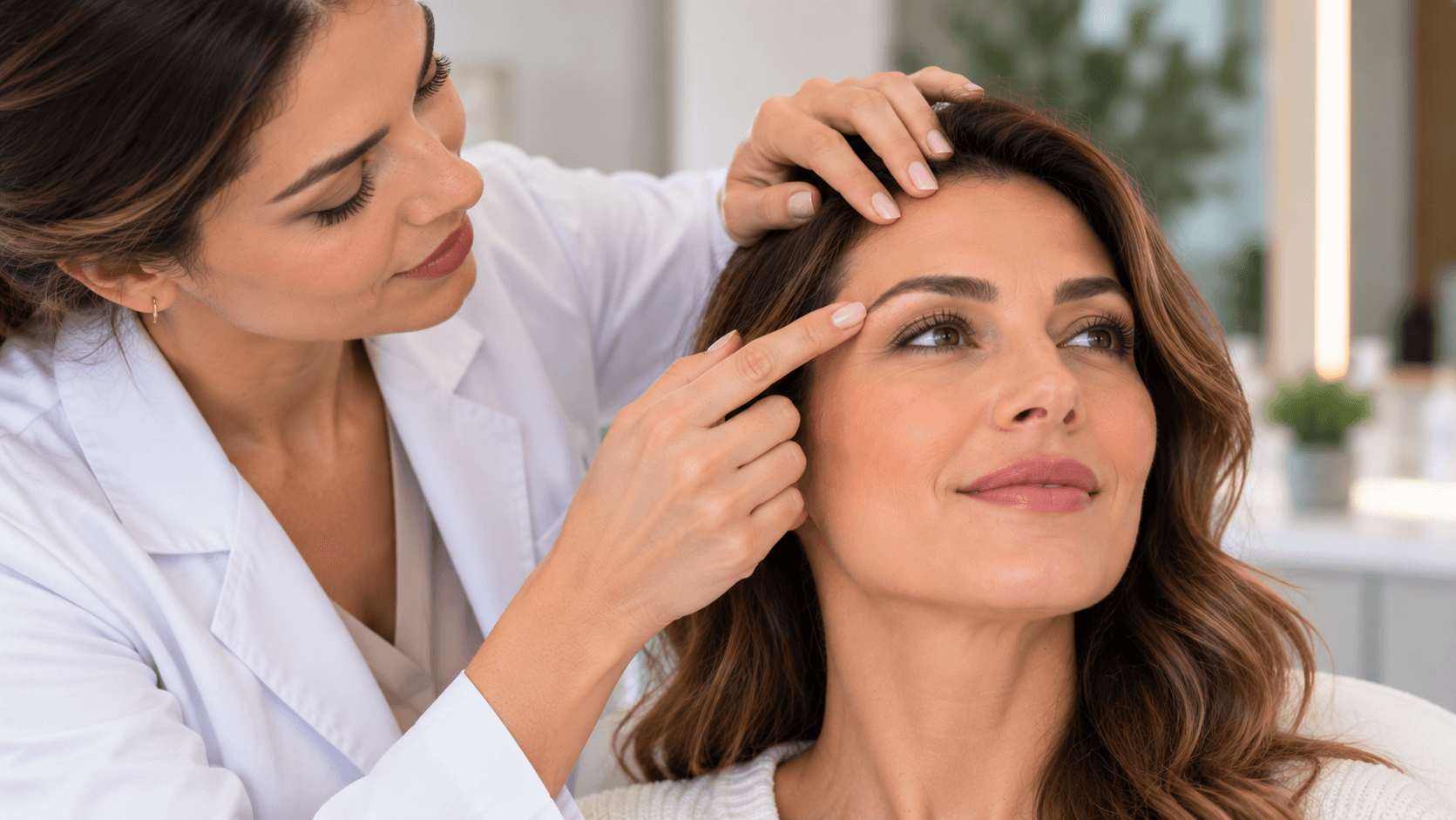
A laser brow lift is a non-surgical rejuvenation method used to reduce skin laxity around the eyebrows and create a higher brow position. Skin tightening in the upper eyelid and forehead areas may also be included in the treatment. Unlike a surgical brow lift, this method does not require incisions, sutures, or a lengthy recovery period.
Surgical brow lifting repositions tissues by cutting them, whereas the laser method works with controlled thermal energy. The laser beam reaches the dermis and creates thermal damage. This controlled damage activates fibroblasts and stimulates new collagen production (Beigvand et al. 2020). Increased collagen and elastin fibers tighten the skin over time and provide a natural lifting effect to the brow area. For this reason, laser brow lifting is suitable for people who do not want surgery and prefer gradual improvement.
This mechanism also explains why more than one session may be needed. With each application, the skin produces a cumulative remodeling response. This fundamental information directly affects the number of sessions, as explained in the next section.
Sources generally indicate a range of 2 to 4 sessions. Three to 4 sessions are recommended in Fotona VectorLift protocols. The exact session plan is created after evaluating the skin structure, degree of brow drooping, and treatment goals.
The first variable determining the number of sessions is the technology of the laser system used. Non-ablative lasers, which work without opening the skin’s surface, provide gradual improvement and require more sessions. The literature reports that non-ablative lasers may produce moderate effects even with higher treatment numbers, such as 4 to 6 sessions (Preissig and Hamilton 2012). This demonstrates that the number of laser brow lift sessions cannot be explained by a single fixed figure.
The second variable is the scope of the treatment. If only the area around the eyebrows is targeted, the number of sessions may remain low. If the forehead, eyebrows, and upper eyelids are treated together, the protocol may be extended. During the clinical evaluation, the target area is mapped, and the session plan is developed accordingly.
Therefore, the number of sessions is not a fixed rule but a personalized treatment decision. We discuss in detail in the next section how individual factors shape this decision.
Laser sessions are generally not performed consecutively. Sources indicate session intervals of 3 to 4 weeks for Fotona VectorLift. This interval is important because it gives the skin time for collagen production and remodeling.
Each laser treatment initiates a wound-healing response in the dermis. Fine collagen fibers are produced first and then transform into thicker type I collagen fibers (Schmults 2004). This biological transformation takes several weeks. A new session should not be scheduled before the effects of the previous treatment have been evaluated. Scheduling the next session too early can make it difficult to assess the skin’s response and may lead to unnecessary thermal load.
Randomized controlled studies show that fractional laser protocols are applied at intervals of 4 to 6 weeks (Hedelund et al. 2010). These findings support a 3- to 4-week waiting period as a clinically reasonable minimum interval.
Once the session interval has been established, the natural question is: what exactly determines the total number of sessions? Here is the answer.
Seven key factors determine the number of sessions: the degree of brow drooping, skin laxity around the forehead and eyebrows, skin elasticity, age-related collagen and elastin loss, the desired degree of lifting, the technology of the laser used, and whether excess skin on the upper eyelid is also present.
Each of these factors requires separate evaluation and should be considered independently:
Degree of brow drooping: Mild drooping may respond in 2 sessions. Moderate drooping may require 3 to 4 sessions.
Skin laxity: The greater the laxity, the longer tissue remodeling takes.
Level of elasticity: Skin with preserved elasticity responds more strongly to laser stimulation.
Age-related collagen loss: Fibroblast activity decreases with age, prolonging the response time.
Desired degree of lifting: Fewer sessions are needed for a natural, subtle effect, while a more noticeable effect requires additional sessions.
Laser technology and protocol: The energy level, wavelength, and scanning pattern directly affect the session plan.
Excess upper-eyelid skin: If the eyelid area is included in the treatment, the protocol becomes more extensive and the number of sessions may increase.
The combination of these factors raises the question of whether a single session is sufficient. Let’s answer that now.
Some people may experience mild tightening or a lifting effect after the first treatment. However, this early effect should not be considered the final result. Because collagen production increases over time, multi-session protocols are preferred, and additional sessions may be needed for people seeking more noticeable results.
The source of the early effect is thermal tightening. The laser beam heats the existing collagen fibers, creating immediate contraction. This effect is temporary. The actual lasting result comes from new collagen synthesis, and this process takes weeks (StatPearls 2023). Therefore, mild tightening after the first session is a sign that the treatment is working; however, it does not mean that the treatment is complete.
Clinical studies show that dermal remodeling continues until the third month after treatment (Schmults 2004). This evidence demonstrates that making a decision after a single session can be misleading. In the next section, we explain exactly when the results become visible using a timeline.
Some patients experience a mild lifting effect during the early period. The thermal tightening created by the laser contributes to this initial appearance. The primary effect develops over the following weeks and months; with some protocols, the full result becomes apparent in approximately 2 to 3 months.
The results timeline progresses in three stages:
Period | Event | Visible Change |
First few days after the procedure | Thermal collagen contraction | Mild, temporary tightening |
2 to 6 weeks | New collagen production begins | Gradual tightening |
2 to 3 months | Dermal remodeling matures | Noticeable brow-lifting effect |
Studies on Er:YAG lasers report that an increase in dermal collagen was detected histologically at 6 weeks after the procedure (StatPearls 2023). This finding is consistent with the 2- to 3-month clinical timeline.
The factor that determines the speed and strength of the results is the laser technology used. Let’s now compare these technologies.
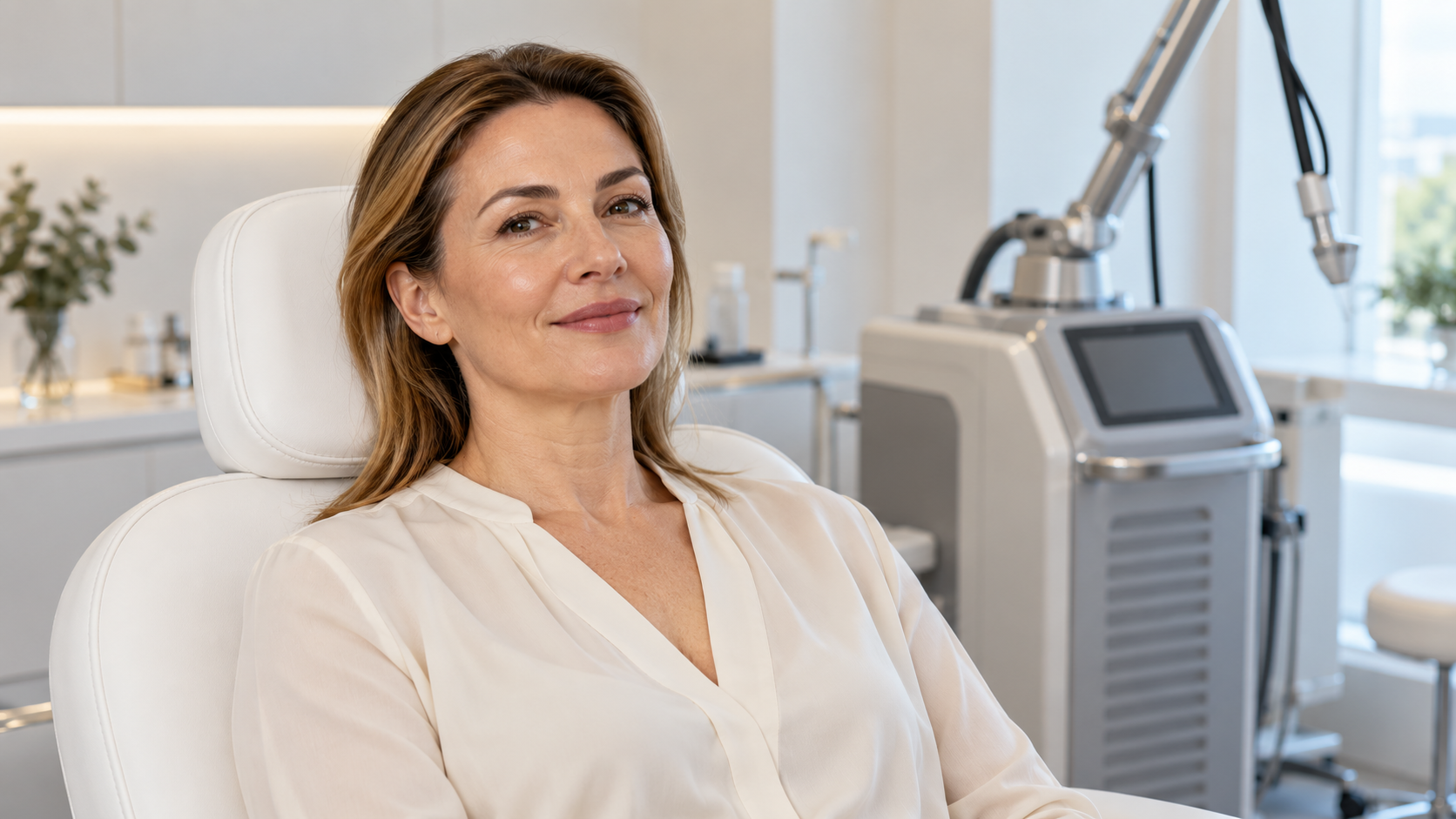
Different laser systems are used with different protocols in the brow and forehead areas. Er:YAG laser technology is preferred to support collagen production and skin tightening. The VectorLift protocol on the Fotona SP Dynamis device targets the brows, forehead, and, when necessary, the eyelid area. The SmoothEye protocol is particularly suitable for the delicate skin around the eyes.
The Er:YAG laser operates at a wavelength of 2940 nanometers. This wavelength is closest to the peak absorption point of water (StatPearls 2023). High water absorption enables precise and controlled heat transfer to the tissue. Er:YAG systems can operate in both ablative and non-ablative modes. This flexibility provides both safety and effectiveness in a delicate area such as the brow region.
The Nd:YAG laser reaches deeper dermal layers and increases collagen production (Hedelund et al. 2010). It offers a safer profile for darker skin types. The specialist selects one of these systems or a combination of them according to the skin type and target depth.
Among these technologies, Fotona VectorLift merits separate consideration due to its three-stage structure.
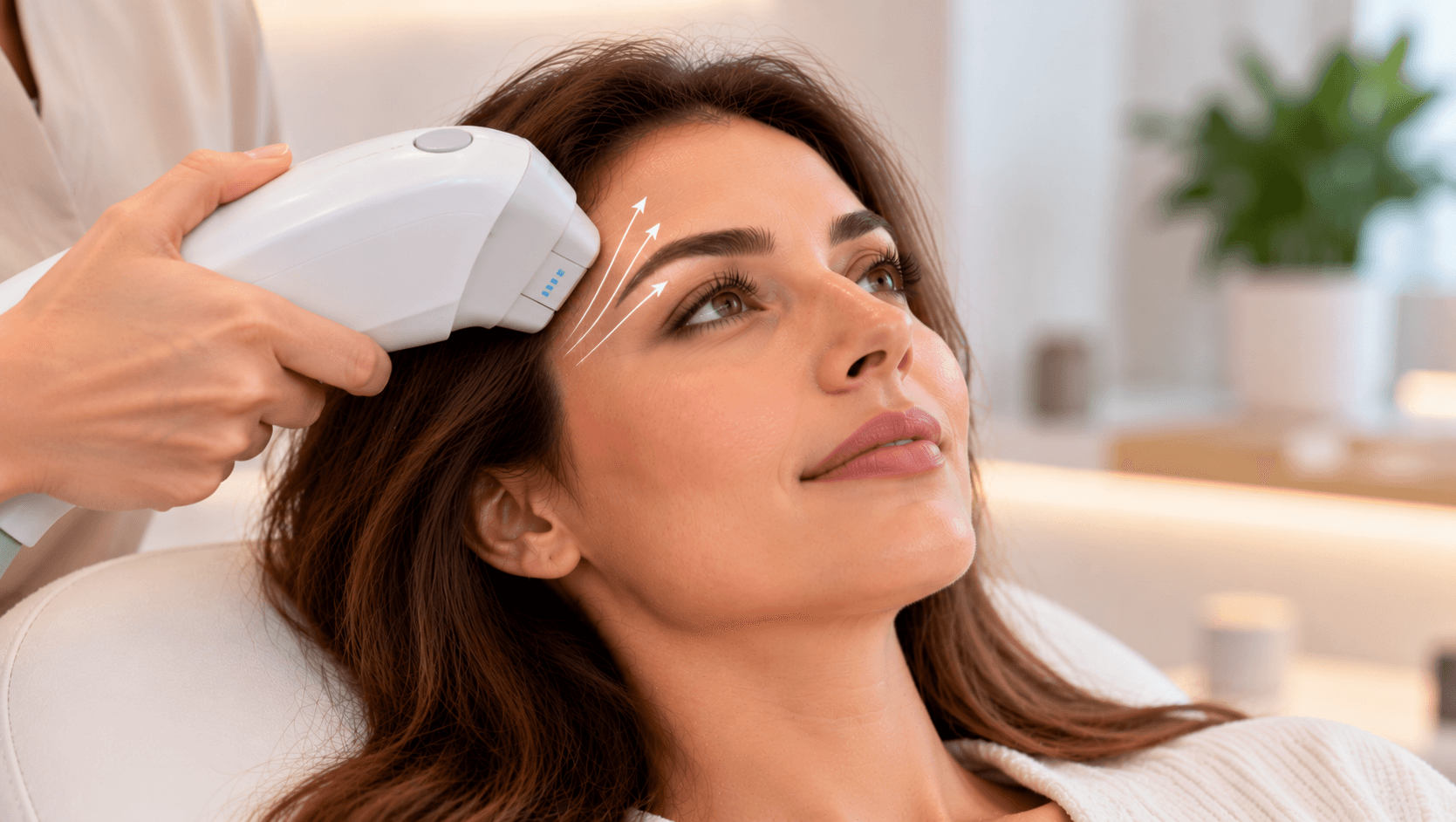
The VectorLift approach is performed as a three-stage protocol. In addition to the forehead and brow areas, the scalp is also included in the protocol. Laser energy creates controlled heat, stimulating collagen production, while superficial tissue contraction and long-term collagen formation are targeted together.
The three stages work as follows: In the first stage, low-energy, high-repetition pulses are applied to the forehead and brow areas. In the second stage, the brow tail and temporal region are tightened. In the third stage, the scalp is added to the treatment to strengthen the anatomical support of the brow. This broader treatment approach helps guide the brow position toward its natural supporting structures.
The name “vector” comes from the use of energy lines parallel to the direction of brow lifting. Gradual heat accumulation increases fibroblast activity and supports new collagen synthesis (Beigvand et al. 2020). As a result, the entire upper facial area is remodeled in a balanced manner rather than focusing on a single point.
Now that we understand the technology, let’s move on to the practical aspect of the procedure: how long does one session take?
The treatment duration varies depending on the protocol used. Fotona treatments generally involve sessions lasting approximately 20 to 40 minutes. Some VectorLift treatments are reported to take approximately 25 minutes in total. Patients can return to their daily activities on the same day after the procedure.
Factors affecting the duration include:
The size of the treatment area: Is it limited to the brows, or does it also include the forehead and eyelids?
Number of protocol stages: Multistage plans such as VectorLift take longer.
Skin preparation: Cleansing and protective measures add to the total duration.
The short treatment duration demonstrates that this procedure can be performed in an office setting. But does the patient feel pain during this brief period?
Laser brow lifting is a non-surgical and generally well-tolerated treatment. Controlled heat is applied during the procedure. Topical anesthetic cream may be used in some protocols. When treating the area around the eyes, appropriate protective measures are taken for comfort and safety.
Patients generally describe a sensation of heat and tingling. This sensation is more a perception of warmth than pain. Studies of microsecond Nd:YAG treatments have reported that all patients tolerated the treatment with minimal discomfort and that no serious adverse events were observed (Schmults 2004). Topical anesthetic cream enhances comfort in individuals with increased sensitivity.
Metal eye shields or appropriate goggles are used when treating the area around the eyes. This precaution helps manage both pain and eye safety. Since the pain is generally tolerable, the course of the recovery process becomes an important consideration.
Most protocols do not require a significant recovery period. Patients can return to their daily activities on the same day after the procedure. Temporary redness or mild swelling may occur. The skin’s response to the treatment varies from person to person.
Since non-ablative lasers do not cause surface damage, crusting is not expected. Patients rarely experience redness lasting a few hours (Preissig and Hamilton 2012). This redness can be concealed with makeup and does not interfere with the workday. In Er:YAG systems, high water absorption limits the spread of heat to surrounding tissue and accelerates recovery (StatPearls 2023).
The mild recovery period is the key advantage that distinguishes this treatment from surgery. However, no medical procedure is completely risk-free. Let us examine the potential side effects honestly.
The most common side effects are short-term reactions such as temporary redness and mild swelling. Laser safety is particularly important around the sensitive eye area. In rare cases, prolonged redness, pigment changes, or heat-related skin damage may occur. Appropriate laser settings and eye protection significantly reduce the risk of complications.
We can classify the risks according to their likelihood and duration as follows:
Side Effect | Frequency | Duration |
Redness | Common | A few hours to a few days |
Mild swelling | Common | 1 to 2 days |
Temporary darkening or lightening | Rare | Resolves within weeks |
Heat-related skin damage | Very rare | Requires specialist intervention |
The risk of post-sun pigmentation is controlled through the use of sunscreen before and after treatment. Studies on fractional photothermolysis report a low rate of serious complications, with most side effects being temporary (Hedelund et al. 2010). Since the risk of pigmentation is higher in darker skin types, the treatment parameters are adjusted with great care.
The risks are manageable. So, who are good candidates for this treatment?
Laser brow lift is suitable for individuals with mild to moderate brow drooping. The response is better in people whose skin elasticity has not been completely lost. It is also suitable for those who do not want a surgical procedure and are seeking a natural, gradual effect. For individuals with significant excess skin or advanced sagging, alternative treatment options are evaluated.
A good candidate has three characteristics: They have not experienced irreversible loss of skin elasticity, have realistic expectations, and are ready to comply with the treatment protocol. The fibroblast response may be weaker in photodamaged skin. In this case, the laser’s ability to produce new collagen is limited (Schmults 2004). Therefore, surgical evaluation offers a more appropriate approach for advanced sagging.
A surgical alternative is always considered when determining suitability. Let us compare the differences between the two methods.
Laser treatment does not require incisions or stitches. The surgical method can provide a more pronounced and long-lasting change. Surgical treatment involves anesthesia and a significant recovery period. The laser method, on the other hand, offers more gradual results for mild to moderate sagging.
The main differences between the two methods are summarized in the table:
Feature | Laser Brow Lift | Surgical Brow Lift |
Incisions and stitches | None | Required |
Anesthesia | Usually not required; topical cream is sufficient | General or local anesthesia |
Recovery | Return to normal activities the same day | Recovery lasting several weeks |
Nature of results | Gradual and natural | Immediately noticeable |
Duration | Several months to one year | Years |
Suitable for | Mild to moderate drooping | Advanced sagging and excess skin |
Risk profile | Low, temporary reactions | Risk of surgical complications |
This comparison shows that the two methods are not competitors but options that address different needs. The longevity of laser treatment is a separate consideration.
The duration of the results varies according to individual characteristics and the method used. Some sources indicate that the effect may last approximately 12 to 18 months. In Fotona laser treatments, the effect is reported to continue for approximately 1 to 2 years. The aging process and changes in skin elasticity affect the longevity of the results.
The new collagen produced by the laser represents a lasting tissue change. However, aging does not stop. Sun exposure and the natural loss of collagen gradually weaken the tightening effect over time. Therefore, the duration of the effect is not a fixed end date but a gradual curve. Good skincare and sun protection help slow this curve.
A gradual reduction in the results does not mean that the treatment is reversing. The skin does not suddenly return to its pre-laser condition. The question of longevity naturally leads to the next question: is maintenance needed to prolong the effect?
Following the initial treatment series, additional applications may occasionally be scheduled to maintain the effect. Maintenance sessions are determined according to individual results. Some sources mention annual maintenance treatments. The maintenance plan varies depending on skin aging, sun exposure, and the treatment response.
A maintenance session does not have to be as intensive as the initial series. In general, fewer applications at a lower intensity are sufficient. The goal is to support the existing collagen network and slow further loss. Clinical observations support that results remain more stable in people who undergo regular maintenance.
The decision to undergo maintenance requires the same level of care as preparation before treatment. Let us summarize the points to consider before the procedure.
There are six points to consider before the procedure: having the brow position and forehead skin evaluated by a specialist, having the upper eyelid skin examined, learning about the laser and protocol to be used, asking about the protective equipment that will be used around the eyes, and finding out whether surgical options have been evaluated for advanced excess skin.
This checklist is not merely a matter of preference; it is a safety requirement. Proper assessment prevents unrealistic expectations and inappropriate treatment selection. For example, recommending only laser treatment to someone with excess skin on the upper eyelid would mean providing a treatment that cannot achieve the desired goal. Likewise, information about the device and protocol enables the patient to provide informed consent.
The question of protective equipment is critical for procedures performed around the eyes. Metal eye shields and goggles appropriate for the wavelength protect sensitive structures of the eye, such as the retina and lens.
Proper preparation is half of the treatment. The factors that support the post-treatment period are in the patient’s own hands.
Sun exposure increases the loss of collagen and elastin in the skin. Sun protection directly contributes to maintaining results. Appropriate skincare is important during the post-treatment period. Skin aging changes the appearance of results over time.
Ultraviolet rays increase the activity of collagen-degrading enzymes. These enzymes are known as matrix metalloproteinases. While laser treatment suppresses the expression of these enzymes and supports collagen synthesis (Beigvand et al. 2020), neglecting sun protection after treatment disrupts the balance created by the treatment. The longevity of the results is reduced.
For this reason, specialists consider the use of broad-spectrum sunscreen and regular skincare after the procedure to be part of the treatment plan. Lifestyle factors determine the quality of the results just as much as the number of sessions.
Below, we have compiled the five most frequently asked questions with concise and clear answers. Each answer summarizes the information provided in the relevant section of the article.
In general, protocols consisting of 2 to 4 sessions are used. For Fotona VectorLift, 3 to 4 sessions are recommended. The exact number is determined through an individual assessment.
Intervals of 3 to 4 weeks are used for Fotona VectorLift treatments. This period allows time for collagen remodeling.
Some people may experience mild early tightening. However, the primary effect develops over weeks and months as a result of collagen production.
The procedure does not provide a permanent result like surgery. The effect generally lasts from several months to several years. Maintenance treatments may be needed to preserve the results.
It offers a non-surgical option for mild to moderate sagging. Surgical assessment is required in cases of more advanced excess skin.
Beigvand, Hamid H., et al. "Assessment of Laser Effects on Skin Rejuvenation." Journal of Lasers in Medical Sciences, vol. 11, no. 2, 2020, pp. 91-101.
Hedelund, Lene, et al. "Fractional Nonablative 1540 nm Laser Resurfacing of Atrophic Acne Scars: A Randomized Controlled Trial with Blinded Response Evaluation." Lasers in Medical Science, vol. 25, no. 5, 2010, pp. 749-754.
Orringer, Jeffrey S., et al. "Molecular Mechanisms of Nonablative Fractional Laser Resurfacing." Journal of the American Academy of , 2011.
Preissig, Jason, and Robert Hamilton. "Current Laser Resurfacing Technologies: A Review." Journal of Cutaneous and Aesthetic Surgery, 2012.
Schmults, Christopher D., et al. "Nonablative Facial Remodeling: Erythema Reduction and Histometric Analysis of the New 300 Microsecond Pulsed Nd:YAG Laser." JAMA , 2004.
"Laser Erbium-YAG Resurfacing." StatPearls, NCBI Bookshelf, 2023.