
Does Laser Brow Lift Change the Shape of the Eyebrows?
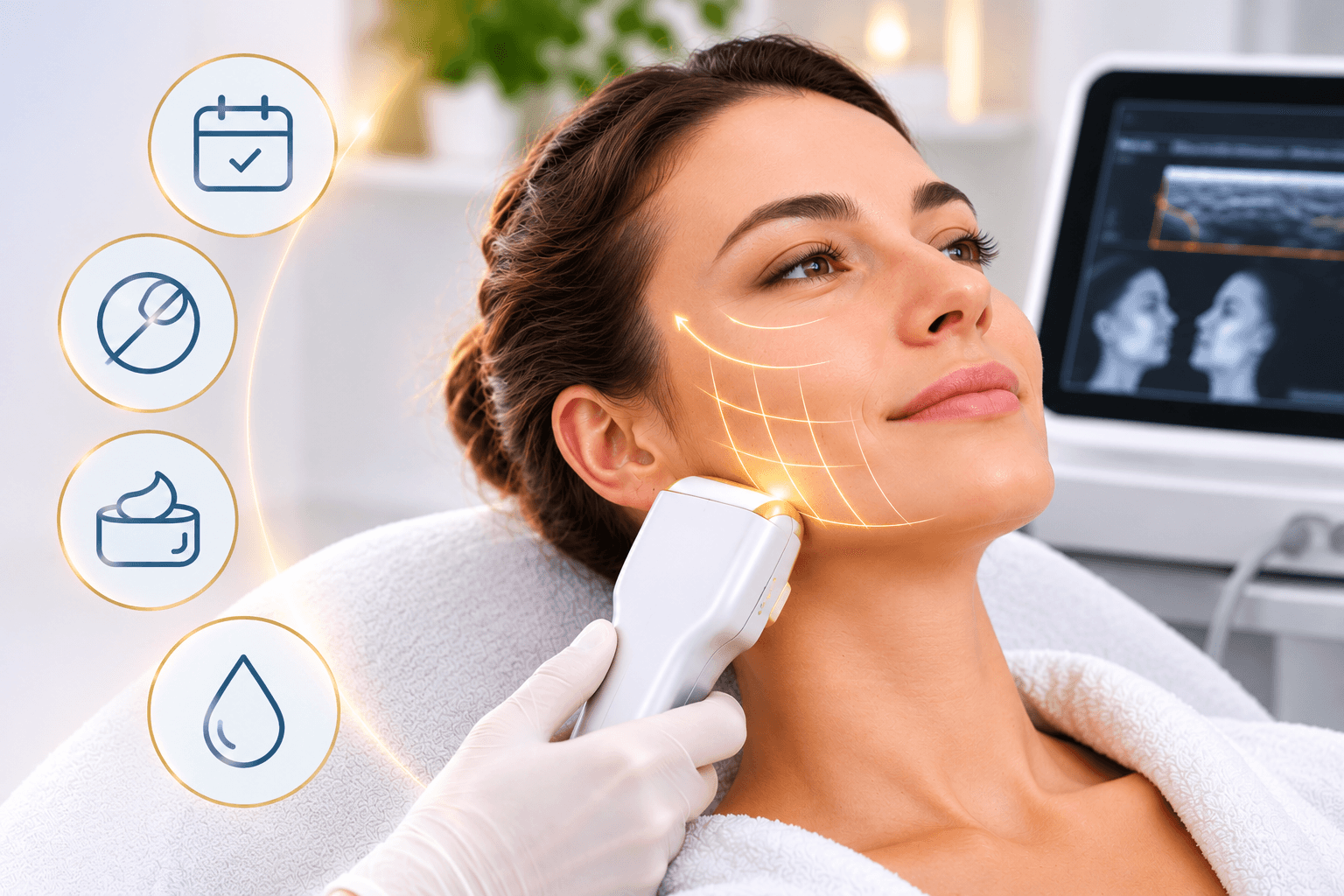
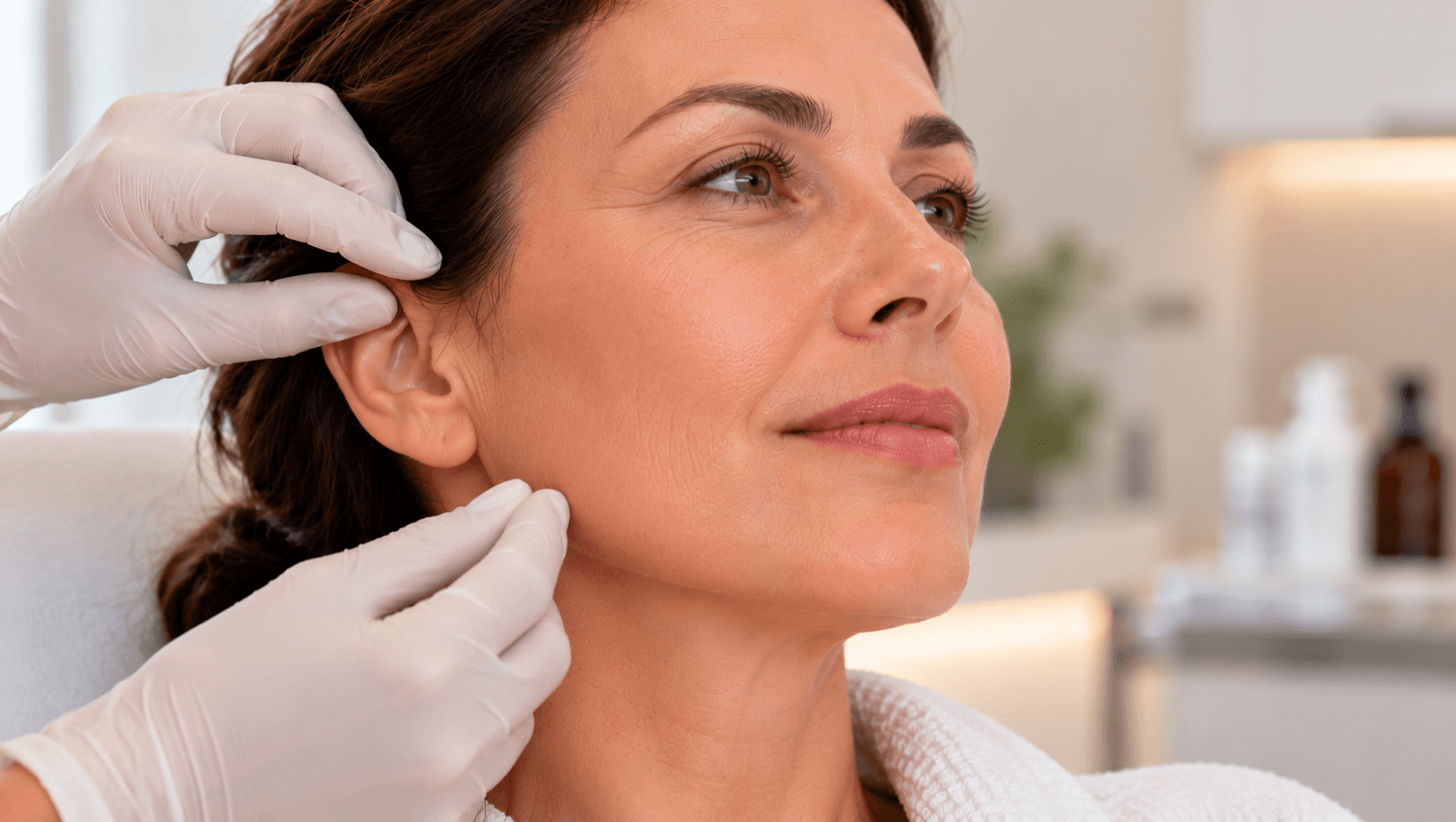
Laser brow lifting does not directly alter the shape of the eyebrows as surgery does; instead, it gently and naturally elevates their position by tightening the skin around the brows. During the procedure, laser energy creates controlled heat in the deeper layers of the skin. This heat stimulates collagen production and helps the tissue tighten over time. As a result, the visible position of the eyebrows may rise by a few millimeters, giving the eye area a more open appearance (Weiss 2017).
Many people view brow drooping as a single issue. In reality, it arises from several different components of the aging process. The skin loses elasticity, collagen levels decrease, and the tissues of the forehead shift downward under the effect of gravity. Each stage of this process affects the natural arch, tail, and starting point of the eyebrow. Therefore, to understand laser brow lifting, it is first necessary to clearly understand this anatomical foundation.
Does Laser Brow Lifting Really Change the Shape of the Eyebrows?
Yes, but only to a limited extent. Laser brow lifting does not anatomically reposition the eyebrows as a surgical procedure would; instead, it provides a slight elevation in brow position and contour refinement through skin tightening.
This distinction is critical for setting realistic expectations about the procedure. In surgical brow lifting, the surgeon physically moves and secures the tissues of the forehead and eyebrows upward. In laser treatment, the target tissues are the skin and underlying connective tissue. Laser energy creates thermal stimulation in these tissues. Cells called fibroblasts respond to this stimulation and synthesize new collagen. Over approximately three to six months, the newly accumulated collagen makes the skin around the eyebrows firmer (Alexiades 2017).
The difference between the skin-tightening effect and anatomical repositioning of the eyebrow becomes clear here. The first effect is not temporary, but its scope is limited. The second effect is permanent and pronounced, but it requires surgery. The natural arch, tail, and starting point of the eyebrow also change only within the limits of this modest effect. In particular, the slight elevation of the brow tail creates the most visible change in facial expression.
What Changes in the Brow Arch and Tail Area?
The brow tail generally rises by a few millimeters, making the arch appear more defined; this change remains within natural limits.
The brow tail is the area affected earliest by aging. Skin laxity in this region can make the eye area look tired and heavy. Laser treatment tightens this area, causing the brow tail to rise slightly. However, the inner and central portions of the eyebrow generally remain in place. For this reason, the result appears as a balanced rejuvenation rather than an exaggerated arch.
This regional effect also lays the foundation for how the facial expression will change. Because facial expression is more than the static position of the eyebrow.
How Does Facial Expression Change After a Brow Lift?
A low eyebrow position creates a tired, sad, or angry expression, while a slight elevation of the eyebrows makes the eye area appear more open and dynamic.
The human brain interprets facial expressions within milliseconds. Eyebrow position plays a central role in this interpretation. Research shows that low, inward-angled eyebrows are associated with negative emotions, whereas slightly elevated and open eyebrows convey an impression of alertness and approachability (Duan 2018). Therefore, even an eyebrow elevation of a few millimeters can create a measurable difference in how a person is perceived socially.
There is a direct relationship between forehead lines and eyebrow position. People with low eyebrows constantly contract their forehead muscles to keep their eyes open. This continuous contraction deepens horizontal lines on the forehead. When the eyebrow position is corrected, the need for this contraction decreases and forehead lines soften. In other words, a brow lift also improves forehead aesthetics indirectly.
Preserving natural facial expressions is the most important quality criterion for an aesthetic result. Overly elevated eyebrows create a permanently surprised expression and disrupt the patient's facial movements. A well-planned procedure does not restrict eyebrow movement and preserves dynamic expression.
What Are the Differences Between Laser Brow Lift and Surgical Brow Lift?
Laser treatment is a non-surgical method that provides skin rejuvenation and collagen support, whereas a surgical brow lift is a permanent intervention that directly repositions the forehead and brow tissues.
Although the two methods share the same goal, their mechanisms are completely different. Laser treatments activate the skin's own regenerative capacity. Surgical methods, on the other hand, change the physical position of the tissue. The table below summarizes the key differences.
Feature | Laser Brow Lift | Surgical Brow Lift |
Procedure type | Non-surgical | Surgical |
Mechanism of action | Collagen stimulation and skin tightening | Repositioning of tissues |
Amount of brow elevation | 1 to 3 millimeters | 5 millimeters or more |
Longevity | 12 to 24 months | 7 to 10 years |
Recovery time | 1 to 5 days | 2 to 4 weeks |
Suitable candidate | Mild brow drooping | Moderate to advanced brow drooping |
Surgical options are also divided into several categories. Endoscopic brow lift elevates the entire forehead tissue with the help of a camera inserted through small incisions. Temporal brow lift targets only the tail of the brow and offers a more limited correction. A classic brow lift provides the strongest correction through a long incision, but carries the risk of altering the hairline. The review by Codner and Ford states that the endoscopic method has become the most frequently preferred surgical technique today (Codner and Ford 2016).
The patient’s expectations are the primary factor in determining the appropriate method. A patient with pronounced brow drooping may not be satisfied with laser treatment. Conversely, surgery would be an unnecessarily aggressive option for a patient with early-stage skin laxity.
Do Laser Brow Lift Results Look Natural?

With proper patient selection and a measured approach, the results look natural; excessive energy or unrealistic expectations may create a risk of an artificial appearance.
A natural-looking result depends on three factors. The first factor is the patient’s facial anatomy. Bone structure, brow position, and the depth of the eye sockets determine the outcome. The second factor is skin quality. Skin with preserved elasticity responds more evenly to laser stimulation. The third factor is the treatment parameters. The energy level, number of pulses, and treatment area should be individually adjusted by a specialist.
Studies report that patient satisfaction with non-surgical skin-tightening methods ranges from 70 to 90 percent (Chilukuri 2018). However, this satisfaction is closely related to realistic expectations. Patients expecting a surgical-level change may find the naturally limited effect of laser treatment insufficient.
Personalized planning is essential to preserve the face’s natural symmetry. Mild asymmetries between the two eyebrows are normal, and aiming for perfect symmetry often produces artificial results. Experienced practitioners assess whether the eyebrows should appear horizontal, arched, or lifted in harmony with the patient’s facial proportions.
What Factors Determine the Results of a Brow Lift?
Age, skin elasticity, collagen reserves, genetically determined eyebrow position, and the laser technology used collectively determine the strength and duration of the result.
The aging process gradually reduces collagen production. From the mid-twenties onward, the skin loses approximately one percent of its collagen each year (Shuster 2020). As this loss increases, the skin’s response to laser stimulation also weakens. Therefore, the same procedure may provide noticeable tightening in patients in their forties, while producing a more modest result in those in their sixties.
A genetically low eyebrow position is a separate condition. In these patients, the issue is not caused by aging but by their congenital anatomical structure. Laser treatment cannot alter this structure. For patients with significant brow ptosis and excess skin resting on the upper eyelid, a surgical evaluation may be a more appropriate option.
The technology used also directly affects the result. Fractional lasers trigger the repair process by creating microscopic channels in the skin. Non-ablative lasers, on the other hand, heat the deeper layers without damaging the skin’s surface. The depth of action and recovery time differ between the two approaches (Ramos 2020). Parameters should be selected according to the skin type and the target area.
Does a Brow Lift Change the Appearance of the Eyelids?
Yes; a low eyebrow position creates a feeling of heaviness in the upper eyelid, and raising the eyebrow softens this appearance.
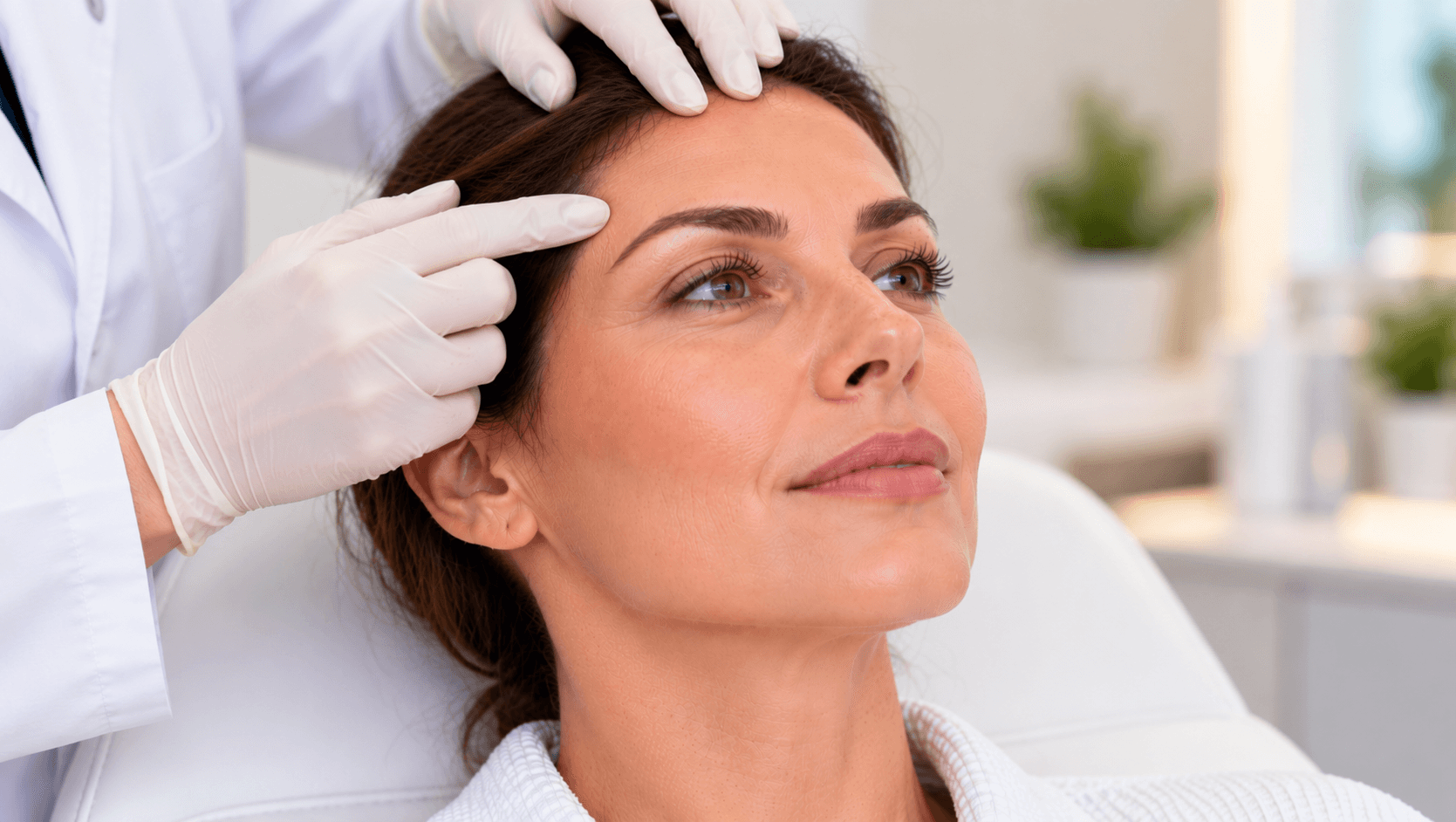
There is a functional relationship between the upper eyelid and the position of the eyebrow. As the eyebrow descends, its weight presses on the skin of the upper eyelid. This creates a folded appearance on the eyelid and may narrow the upper field of vision in some patients. When the eyebrow is raised, this pressure decreases and the eyelid appears more open.
However, an important distinction must be made here. If the excess skin on the eyelid truly originates from the eyelid tissue itself, the solution is blepharoplasty, or upper eyelid surgery. A brow lift does not eliminate excess skin on the eyelid itself; it only reduces pressure caused by the eyebrow. Some patients have both issues at the same time. In such cases, planning both procedures together provides a more balanced result (Rohrich 2019).
The effects on the field of vision should not be overlooked either. In patients with advanced brow ptosis, the upper peripheral field of vision may become narrowed. A functional assessment in these patients determines whether the procedure will provide a functional benefit in addition to an aesthetic one.
What Are the Side Effects of a Brow Lift Procedure?
Temporary redness, sensitivity, and swelling are the most common effects of laser treatments; with surgical methods, the risks of bruising, infection, and scarring are also evaluated separately.
The side-effect profile of laser treatments is generally mild. Redness lasting a few days and mild swelling after the procedure are expected reactions. More rarely, burns, pigmentation changes, and skin irritation may occur. These risks increase particularly in darker skin types and when incorrect energy settings are used. Controlled studies show that, with appropriate parameters, the rate of serious complications remains below one percent (Alexiades 2017).
Surgical brow lifting has a different risk profile. Bruising and swelling last longer. Possible complications include infection, temporary loss of sensation due to nerve damage, scarring, and changes to the hairline. Each of these risks should be discussed individually during the pre-procedure consultation.
Treatments performed near the eyes make eye safety a particular concern. Protective eye shields must be used during laser applications. Appropriate patient selection and specialist assessment significantly reduce the risk of all these complications. A safe recovery process is a continuation of this proper start.
What Is the Recovery Process After a Laser Brow Lift?
Most patients return to their daily routine within a few days; however, skin renewal and the emergence of the final result take three to six months.
Temporary skin reactions after the procedure are normal. Redness usually subsides within the first twenty-four hours. Mild swelling and a feeling of tightness may last for a few days. These symptoms indicate that the skin’s repair process is active and generally do not require intervention.
The skin renewal process varies depending on the technology used. Since non-ablative lasers do not cause surface damage, social recovery is almost immediate. With fractional ablative treatments, mild crusting may occur for several days. In both cases, sun protection and regular moisturization directly affect the quality of recovery. Since ultraviolet exposure increases the risk of pigmentation changes, the use of products with a high sun protection factor is recommended.
The situation is different after surgical brow lifting. Significant swelling and bruising occur during the first two weeks. Sutures are removed after approximately one week, and patients usually return to work within two to four weeks. It takes several months for the final surgical result to settle. The time required to evaluate the results should be planned according to the type of procedure, and the patient should be informed accordingly.
Is a Laser Brow Lift Suitable for Everyone?
No; the procedure is suitable for individuals with mild to moderate skin laxity and realistic expectations.
The ideal candidate profile is based on several criteria. People with mild skin laxity generally achieve the best response from laser treatment. Those with significant brow drooping usually require a surgical evaluation. This distinction is one of the strongest determinants of patient satisfaction.
Skin type and existing conditions directly affect the treatment plan. Laser treatment is postponed in areas with active acne, eczema, or open wounds. In darker skin types, energy settings are selected more carefully due to the risk of pigmentation changes. Patients taking blood-thinning medication should also undergo an additional evaluation before the procedure.
Realistic expectations are the cornerstone of satisfaction. Laser brow lifting offers a smaller-scale version of a surgical result. Patients who make informed decisions with this limitation in mind find the natural rejuvenation achieved to be satisfying. Alignment between expectations and results is established during a detailed preliminary consultation with the specialist.
Frequently Asked Questions About Laser Brow Lifting
Does laser brow lifting change the natural arch of the eyebrows?
It does not change the overall shape of the arch. Skin tightening slightly accentuates the eyebrow’s existing arch, but its fundamental shape remains determined by the underlying bone structure.
Do the eyebrows appear higher after the procedure?
Yes, an elevation of approximately one to three millimeters is generally observed. This change creates a noticeable rejuvenating effect around the eyes without producing an exaggerated appearance.
Does laser brow lifting make the eyes appear larger?
Indirectly, yes. As the eyebrow rises, pressure on the upper eyelid decreases and the eye opening becomes larger. This makes the eyes appear optically larger and more open.
Does brow lifting permanently change facial expression?
The effects of laser treatment last between twelve and twenty-four months. During this period, the expression appears more dynamic; however, the effect is not permanent, and maintenance sessions may be required.
Does laser treatment produce the same result as surgical brow lifting?
No. Laser treatment provides skin tightening, whereas surgery repositions the tissues. The strength and longevity of the effects differ between the two methods.
Can brow lifting correct asymmetry between the eyebrows?
Mild asymmetries may be improved. However, pronounced asymmetries caused by muscle activity or bone structure require different approaches.
How long do the results of laser brow lifting last?
The results generally last between twelve and twenty-four months. Age, skin quality, and lifestyle can affect this period.
Are natural eyebrow movements preserved after the procedure?
Yes. Since laser treatment does not target muscle tissue, facial expressions and the eyebrows’ natural range of movement are preserved.
Conclusion: Is Laser Brow Lifting the Right Option for You?
Laser brow lifting does not change the shape of the eyebrows as fundamentally as surgery; by tightening the skin around the eyebrows, it provides a natural-looking lift and rejuvenation within the existing anatomical boundaries. In individuals with mild to moderate brow drooping, it makes the eye area appear more open and reduces the tired appearance of the facial expression. In cases of pronounced anatomical drooping, surgical options should be considered. Scientific evidence demonstrates that, with appropriate patient selection and realistic expectations, this procedure provides safe and satisfactory results. The final decision should be made following an expert assessment of the facial anatomy.
References
Alexiades, Macrene. “Laser and Light-Based Treatment of Skin Laxity.” Surgery, vol. 43, no. 12, 2017, pp. 1452–1461.
Chilukuri, Suneel, and Jason Pozner. “Noninvasive Skin Tightening: Review of Current Modalities.” Journal of Drugs in , vol. 17, no. 6, 2018, pp. 641–646.
Codner, Mark A., and Robert D. Ford. “Endoscopic Brow Lift.” Plastic and Reconstructive Surgery, vol. 138, no. 3, 2016, pp. 486e–496e.
Duan, Wenyan, and Lixia Huang. “The Role of Eyebrow Position in Facial Expression Recognition.” Perception, vol. 47, no. 4, 2018, pp. 412–427.
Ramos, Paula, et al. “Fractional Laser Resurfacing and Collagen Remodeling: A Clinical and Histologic Study.” Lasers in Surgery and Medicine, vol. 52, no. 9, 2020, pp. 812–820.
Rohrich, Rod J., and Dinakar Golla. “The Lateral Brow Lift and Blepharoplasty: A Combined Approach.” Plastic and Reconstructive Surgery, vol. 144, no. 2, 2019, pp. 271–279.
Shuster, Sam. “The Nature of Collagen Loss in Aging Skin.” Journal of Cosmetic , vol. 19, no. 10, 2020, pp. 2520–2526.
Weiss, Robert A. “Nonablative Skin Tightening: Clinical Results and Mechanisms.” Seminars in Cutaneous Medicine and Surgery, vol. 36, no. 4, 2017, pp. 183–188.
Get in touch with our expert team
Related Posts