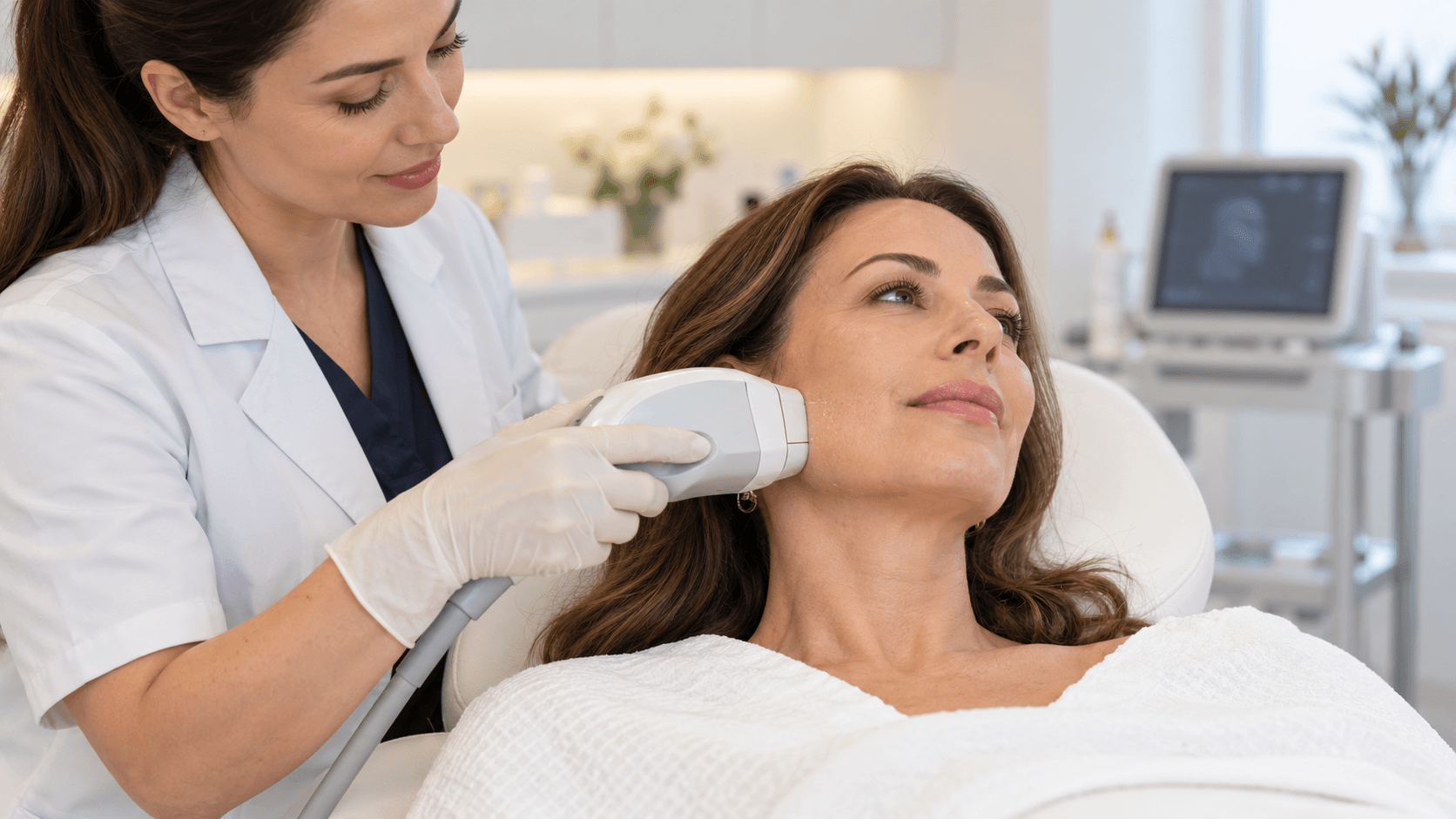
Yükleniyor…
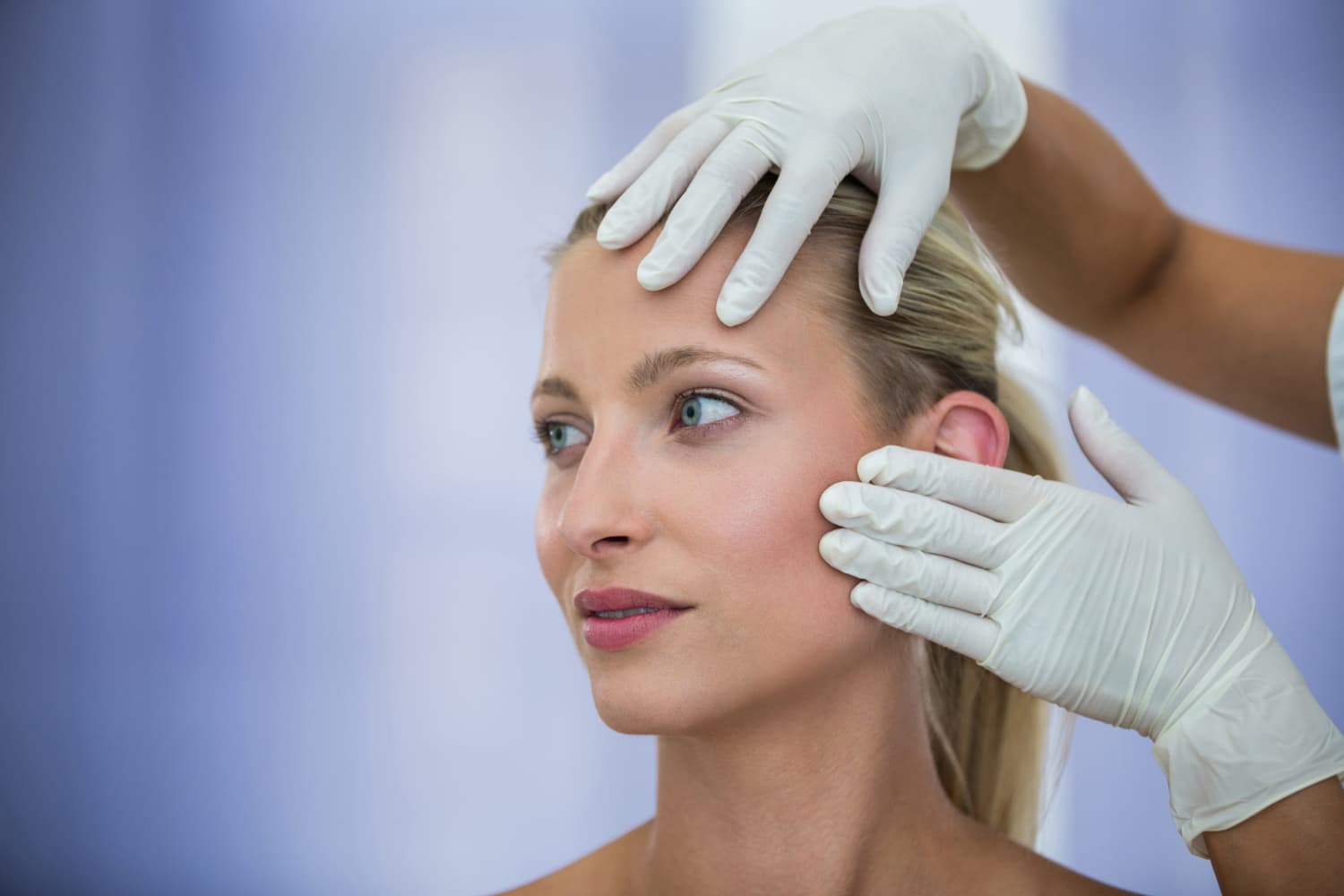
Yes, the French Thread Lift provides non-surgical facial lifting for the appropriate patient group. However, the results are not as strong and permanent as surgical facelifts.
Facial aging is a natural process that everyone experiences. The skin loses its elasticity. Collagen production slows down. Under the effect of gravity, tissues sag downwards. These changes cause sagging in the cheeks. The jawline becomes less defined. The area under the chin becomes fuller. Nasolabial lines deepen. Many people seek solutions for these symptoms. Surgical facelift is an effective method. However, surgery is not suitable for everyone. The long recovery time can be intimidating. General anesthesia carries risks. Therefore, non-surgical facelift methods are of great interest. The French Thread Lift stands out in this area. It is one of the most preferred techniques among thread lifting methods. Non-surgical facial rejuvenation options offer flexibility to patients. This article examines the French Thread Lift in light of scientific data. It seeks to answer the question of whether non-surgical facelift is really possible. Patient candidates must access accurate information. Realistic expectations should be established.
The French Thread Lift is a non-surgical facial rejuvenation method that lifts facial tissues by placing special threads under the skin and increases collagen production.
This method is one of the most popular applications in aesthetic medicine. The physician places special lifting threads under the skin. These threads lift loose tissues upwards. The facial contour is reshaped. The skin tightening effect begins immediately. Collagen production increases over time. The facial lifting procedure shows both mechanical and biological effects. Patients prefer this method for non-surgical facelift. The French Thread Lift procedure is quick. The patient returns home the same day. There are no scars. These features make the method attractive.
This technique lifts loose tissues upwards with special lifting threads placed under the skin.
The physician works under sterile conditions. First, they evaluate the facial area. Then, they place threads under the skin. These threads are made from medical materials. The structure of the threads is special. Some threads are barbed. Some threads are smooth. Barbed threads grip the tissue better. The threads support the skin from the inside. This is how the treatment of facial sagging occurs. The procedure is performed under local anesthesia. The patient does not feel pain. The physician places the threads along specific vectors. These vectors are chosen according to the facial anatomy.
In the French Thread Lift, threads made of polydioxanone or polycaprolactone, which are absorbable or provide long-term support, are generally used.
Doctors often prefer polydioxanone threads. These threads are absorbed by the body. The absorption period lasts from six to eight months. Polycaprolactone threads last longer. These threads can remain effective for up to twelve months. Both materials are biocompatible. The body does not reject these threads. The thickness of the threads varies. Thin threads are suitable for thin skin. Thick threads lift heavier tissues. The micro barbs on the threads ensure tissue grip. This structure enhances mechanical lifting. At the same time, it stimulates fibroblasts. Fibroblasts are the cells that produce collagen in the skin. Cho and colleagues (2021) proved that polycaprolactone threads increase collagen density. Ha and colleagues (2022) studied the histological effects of polydioxanone and polycaprolactone threads. Researchers observed that both materials are safe.
The French Thread works on two fundamental principles. The first is mechanical lifting. The second is collagen stimulation.
When the physician places the threads under the skin, an immediate lifting effect occurs. The threads pull up loose tissues. This mechanical effect is seen instantly. However, the true beauty emerges over time. The threads gradually dissolve in the body. This dissolution process activates the cells. Fibroblasts become active. New collagen fibers are formed. Elastin production also increases. The skin rejuvenates from within. This biological effect continues even months after the procedure. Mechanical lifting and biological renewal work together. This dual effect provides facial rejuvenation. Soen and colleagues (2025) compared polydioxanone, poly-L-lactic acid, and polycaprolactone threads in aged rats. The researchers found that polycaprolactone threads increased dermal collagen density the most.
The French Thread offers longer-lasting support than classic thread lifting and better preserves natural mobility.
Classic thread lifting generally provides a short-term effect. Absorbable threads dissolve quickly. The threads used in the French Thread are different. Their outer surface is coated with a special material. Their inner structure contains a flexible carrier. This structure adapts to facial expressions. The threads do not cause discomfort when the patient smiles or talks. Classic threads sometimes restrict facial expression. The French Thread minimizes this issue. Additionally, the threads used in the French Thread last longer. This method stands out among surgical facelift alternatives. Classic threads lose their effect in six months. The French Thread shows effects between twelve to twenty-four months. This duration varies from person to person.
Non-surgical facelift encompasses all methods that tighten the skin and reshape facial contours without surgical incisions.
This concept has become very popular in recent years. Patients want to rejuvenate their faces without lying on the operating table. Non-surgical facial rejuvenation techniques are rapidly evolving. Technology has made significant strides in this field. Laser systems renew the skin. Radiofrequency energy heats deep tissues. Ultrasound waves target the layers beneath the skin. Injection methods address volume loss. Thread lifting treatment lifts sagging tissues. These methods can be used alone or in combination. Non-surgical facelift responds to a real need. However, each method has its limitations. It is not accurate to expect dramatic results comparable to surgical facelift.
Surgical facelift cuts and repositions deep tissues. Non-surgical methods stimulate the skin from the outside or inside.
Surgical facelift requires general anesthesia. The surgeon lifts the skin. Excess skin is cut and removed. Deep facial tissues are reshaped. Non-surgical facelift does not perform this deep intervention. The physician stimulates the skin from the outside or inside. The skin renews itself. The results appear more natural. However, the effect is more limited. Surgical procedures are permanent. Non-surgical methods offer temporary effects. The French Thread holds an important place among surgical facelift alternatives. The targets of both methods are different. Surgery makes structural changes. Non-surgical methods improve skin quality.
Today, there are many non-surgical facelift methods available. Each works through a different mechanism.
French Lifting: Places special threads under the skin. Provides mechanical lifting and collagen stimulation.
Polydioxanone threads: Absorbable threads support the skin from within. Lasts for six to eight months.
Filler applications: Hyaluronic acid injections restore volume loss. Fills in hollows.
Botulinum toxin: Temporarily reduces muscle movements. Corrects dynamic wrinkles.
Focused ultrasound: High-intensity ultrasound waves heat the deeper skin layers. Stimulates collagen production.
Radiofrequency applications: Radio waves heat the dermis. Creates a skin tightening effect.
These methods complement each other. The physician plans combinations according to the patient's needs. For example, they may use French Lifting together with fillers. This combination provides both lifting and volume.
This concept sometimes creates unrealistic expectations. Because non-surgical methods cannot completely replace surgical facelifts.
Marketing language can sometimes be exaggerated. The term "non-surgical facelift" can create a misleading perception among patients. Patients may expect surgical results from non-surgical methods. This expectation is not realistic. Surgical facelifts make deep structural changes. Non-surgical methods improve skin quality and provide mild lifting. The goals of the two methods are different. Surgery alters the structure. Non-surgical methods support the skin. Therefore, proper patient selection is very important. The physician must provide realistic information to the patient. French Lifting is suitable for mild to moderate sagging. For advanced sagging, surgery is more logical.
Yes, French Lifting lifts the face in suitable patients. However, this effect is not as strong as surgical facelifts.
Scientific research provides clear results on this matter. Suh and colleagues (2015) studied the facial rejuvenation results with polydioxanone threads. Researchers proved that the procedure is safe and effective. The threads mechanically lift the skin. At the same time, it initiates biological renewal. However, there are limits to this effect. It cannot completely lift severely sagging skin. Patients with mild to moderate looseness achieve the best results. Patients aiming for facial rejuvenation will be satisfied.
Mechanical lifting is the physical upward pulling of tissues by the threads under the skin.
When the physician places the threads under the skin, an immediate lifting effect occurs. The barbed structure of the threads grips the tissue. This grip pushes loose tissues upward. The cheeks settle into place. The jawline becomes more defined. The double chin area tightens. This effect is immediately visible after the procedure. The patient notices the difference right away. However, this initial effect may sometimes appear exaggerated. Due to swelling and edema, the face may take on a slightly different shape. The swelling subsides within a few days. The natural lifting effect emerges. The mechanical effect continues as long as the threads remain in place. As the absorbable threads dissolve, this effect slows down. However, collagen production kicks in.
The threads initiate a mild inflammatory response under the skin. This response activates fibroblasts. Fibroblasts produce new collagen.
When a foreign material enters under the skin, the body exhibits a natural reaction. Macrophages come to the area. These cells perform cleaning. Then fibroblasts become active. Fibroblasts are the cells that produce collagen and elastin. New collagen fibers fill the space left by the old threads. This process continues for months. The skin thickens from within. Elasticity increases. Cho and colleagues (2021) observed this effect in a mouse model. The researchers found that the new collagen was identified with blue dye. Ha and colleagues (2022) examined the tissue response of polydioxanone and polycaprolactone threads at the molecular level. Both materials increased the production of type three collagen. This biological effect constitutes the main value of the procedure.
The natural appearance depends on the technique of the physician and the number of threads used. Excessive use of threads can create an artificial expression.
An experienced physician aims for natural results. They place the threads along anatomical vectors. These vectors follow the natural contours of the face. The threads are not noticeable when the patient smiles or talks. The skin remains soft and flexible. However, excessive use of threads can stretch the skin. This can create an artificial appearance. The physician should plan according to the patient's facial structure. Non-surgical facelift requires naturalness. The French Lift maintains this naturalness. Surgical facelifts can sometimes change facial expressions. In the French Lift, this risk is much lower. The patient rejuvenates while looking like themselves.
The initial effect is seen immediately. However, the real results shape within one to three months.
There is swelling in the first days after the procedure. This swelling exaggerates the lifting effect. Within a week, the swelling significantly decreases. The mechanical effect continues. In the second and third months, collagen production peaks. Skin quality noticeably improves. Facial contours become clearer. This process can continue for up to six months. Then the effect gradually decreases. However, the improvement in skin quality can be permanent. If the patient maintains regular care, the results last longer. The effects of thread lifting vary from person to person. Lifestyle affects this process.
The French Lift provides the most effective results in the middle and lower parts of the face. Particularly, the cheeks, jawline, and double chin area are targeted.
Facial anatomy is complex. Each area sags to different degrees. The area of effect of the French Lift is clear. The physician plans according to the patient's needs. Some patients want the entire face. Others target only specific areas. Thread lifting provides this flexibility. The advantage of regional treatment is important among non-surgical facial rejuvenation options.
Yes, the French Lift significantly tightens cheek sagging.
Cheeks show the first signs of aging. Fat tissue descends. The skin loosens. French Lift threads are placed in this area. The threads lift the cheek tissue upwards and outwards. A mid-face lifting effect occurs. The cheekbones appear more pronounced. The facial expression becomes more dynamic. This effect is seen immediately. Over time, collagen production improves skin quality. The cheeks look fuller and firmer. However, the effect may be limited in patients with excessive cheek fat. In this case, filler applications can be combined.
Yes, defining the jawline is one of the strongest aspects of the French Lift.
The jawline is one of the most important features of a youthful face. Aging softens this line. French Lift threads are placed from the jaw area towards the temple. This vector lifts the jawline. The angle between the chin and the neck becomes clearer. The face oval appears more elegant. The jawline defining procedure is popular among both male and female patients. Men prefer a sharper jawline. Women aim for a more graceful oval. The French Lift serves both goals. The results look natural. An artificial jaw appearance does not occur.
Yes, tightening the double chin area is possible with the French Lift. However, the effect is limited in patients with advanced fat accumulation.
The double chin area is one of the most bothersome signs of aging. In this area, both the skin loosens and fat accumulates. French Lift threads lift the double chin upwards. The skin tightens. However, the threads do not dissolve fat tissue. If there is too much fat, methods such as lipolysis or cold lipolysis can be added. The physician evaluates the patient first. They place as many threads as needed in the double chin area. Results become clear within one to two months. The increase in collagen beneath the skin also has an effect in this area.
Yes, nasolabial lines can be softened. However, these lines do not completely disappear.
Nasolabial lines extend from the sides of the nose to the corners of the mouth. These lines are a natural part of facial expressions. Aging deepens these lines. When the French Lift lifts the mid-face, nasolabial lines also soften. The depth of the lines decreases. However, these lines do not completely flatten. Because facial movements recreate these lines. For very deep lines, filler applications are necessary. The physician sometimes recommends a combination of French Lift and filler. This combination provides more comprehensive results.
Yes, brow and mid-face support is possible with the French Lift. However, the brow lifting effect is limited.
Brows descend over time. This makes the eye area look tired. French Lift threads are placed at the temples. These threads slightly lift the brow. However, the effect is not very dramatic. It does not provide results as strong as surgical brow lifting. Mid-face support is more pronounced. The cheekbones rise. Under-eye bags are reduced. The patient appears more rested. However, for very low brows, surgical options may be more suitable.
The French Lift is ideal for individuals with mild to moderate skin laxity, who do not want surgery, and wish to return quickly to social life.
Choosing the right patient is half the success. Not every patient is suitable for this procedure. The doctor must conduct a thorough evaluation. Skin quality, degree of sagging, and patient expectations are important. The French Lift procedure appeals to a wide age range. However, a specific group achieves better results.
Yes, this group is the most ideal candidates. Because the skin still has sufficient elasticity.
In patients with mild sagging, the skin quality is good. The threads easily lift the skin. The tissues respond well to the threads. Collagen production increases rapidly. In patients with moderate laxity, the results are also satisfactory. However, the skin is slightly looser. In this case, the doctor may use more threads. Treatment of mild sagging gives excellent results with the French Lift. The skin has not sagged too much. The threads can easily support the tissue. The patient achieves the desired appearance with non-surgical facelift.
Yes, this age range is the most suitable period. The skin still has healing capacity.
Skin aging begins in the thirties. However, the skin structure is still strong. Collagen production is rapid. The healing process is short. Skin laxity increases in the forties and fifties. However, skin quality is still adequate. Above fifty-five, the skin thins. Elasticity decreases. Results in this age group last shorter. Rezaee Khiabanloo and colleagues (2020) studied the results of facial rejuvenation with APTOS threads. Researchers observed higher satisfaction in younger patients. As age increases, the skin's healing capacity decreases. Therefore, the ideal period is between thirty and fifty-five years.
Yes, the French Lift is an excellent alternative for patients who are afraid of surgery.
Many patients do not want surgery. The risks of general anesthesia are concerning. Surgical incision scars are frightening. Long recovery times disrupt social and work life. The French Lift solves these issues. The procedure is performed under local anesthesia. There are no scars. The recovery time is short. The patient returns to normal life the same day. Among non-surgical facelift alternatives, the French Lift is one of the most popular. The patient achieves the desired vitality with non-surgical facelift. However, expectations must be realistic.
Yes, a quick return to social life is one of the biggest advantages of the French Lift.
Modern life is fast. People cannot stay away from work or social life for long. Surgical facelifts require weeks of home rest. The French Lift is different. The procedure takes thirty to sixty minutes. The patient returns home immediately. There may be slight swelling in the first twenty-four hours. However, this swelling can be concealed with makeup. The face returns to normal within a few days. The patient can return to work within one to three days. This quick return attracts those with active work lives. Those with social events also love this method.
The French Lift is not suitable for individuals with severe sagging, significant excess skin, unrealistic expectations, and those with certain systemic diseases.
Every procedure has contraindications. The French Lift is no exception. The physician must carefully evaluate each patient. Incorrect patient selection leads to dissatisfaction. Scientific studies show that appropriate patient selection is one of the most important factors for success.
No, patients with severe sagging cannot achieve satisfactory results. Surgical facelift is more suitable for this condition.
Severe sagging requires deep structural changes. There is excess skin. The threads cannot lift this excess skin. The skin cannot support the threads. The results will be disappointing. The patient will not be satisfied. Surgical facelift removes excess skin. It reshapes the deep tissues. Therefore, surgery is recommended for severe sagging. The French Lift remains ineffective in these patients. The physician should honestly explain this situation to the patient.
No, the French Lift is inadequate for patients with significant excess skin.
Excess skin is seen in the advanced stages of aging. The skin has completely lost its elasticity. The threads cannot lift this skin. The skin may sag on the threads. This creates an undesirable appearance. The patient experiences dissatisfaction. Surgical facelift removes excess skin. The skin is tightened. The French Lift cannot solve this structural problem. However, combined treatments may be considered for patients with mild excess skin. The physician evaluates each patient individually.
No, unrealistic expectations are the biggest cause of dissatisfaction.
Some patients expect surgical results from non-surgical methods. This expectation is physically impossible. The French Lift lifts the skin. However, it does not remove excess skin. It cannot completely smooth deep wrinkles. The physician should have a detailed discussion with the patient before the procedure. The patient should know what to expect. Examples should be shown with photographs. Realistic expectations increase satisfaction. Ziade and colleagues (2021) studied patient satisfaction. The researchers emphasized that expectation management is critical.
Patients with active infections, blood clotting disorders, diabetes, and immune system disorders cannot undergo this procedure.
The physician first reviews the patient's medical history. If there is an active skin infection, the procedure is postponed. Patients using blood-thinning medications are at risk of bruising. Diabetes may delay healing. Autoimmune diseases increase the risk of complications. The procedure is not recommended during pregnancy and breastfeeding. The physician considers all these factors. Safety always comes first. Correct patient selection is essential for both safety and satisfaction.
The doctor first evaluates the patient. Then, local anesthesia is applied. The threads are placed under the skin. The procedure takes thirty to sixty minutes. The patient is discharged on the same day.
The application process is based on standard protocols. However, each doctor's technique may vary slightly. An experienced practitioner increases the success rate. The patient should ask all their questions before the procedure. Anxiety should be reduced. The procedure room must be sterile.
The doctor examines the facial anatomy. Evaluates the skin quality. Determines the degree of sagging. Listens to the patient's expectations.
The evaluation is the most important stage of the procedure. The doctor touches the patient's face. Tests the skin elasticity. Identifies which areas are sagging. Takes photographs. These photographs are used for comparison after the procedure. The patient describes their goals. The doctor presents a realistic plan. Marks the areas that require threads. The number and type of threads are decided during this evaluation. The patient should learn all the details before signing the consent form.
The doctor injects anesthetic medication into the procedure area. This medication numbs the skin. The patient does not feel pain.
Local anesthesia is not as risky as general anesthesia. The patient remains fully conscious. Only the procedure area is numbed. The anesthetic medication is injected under the skin. It takes effect within a few minutes. Some doctors also use anesthetic cream. This cream prepares the skin before the procedure. The effects of anesthesia continue throughout the procedure. After the procedure, the numbness gradually fades. The patient experiences a comfortable experience.
The doctor places the threads under the skin using a sterile needle or cannula. The threads are advanced along specific vectors.
The needle entry points are usually hidden at the temple or in the hair. This way, there are no visible scars. The doctor places the threads in the subcutaneous layer under the skin. The direction of the threads is planned in advance. Barbed threads are pulled back. This pulling motion lifts the tissue. The ends of the threads are secured under the skin. The doctor checks for symmetry. Both sides of the face are treated equally. The patient does not feel discomfort during the procedure. There may only be a slight feeling of pressure and pulling.
The French Lift procedure typically takes thirty to sixty minutes. The duration increases as the number of areas treated increases.
Applying to a single area takes twenty minutes. A full face application takes fifty to sixty minutes. The doctor does not rush. Each step is performed carefully. The sterilization time is not included in the procedure time. The patient can stay at the clinic for a total of one hour. This time includes preparation and post-procedure checks. Since the procedure time is short, it is easy for the patient to plan their day.
The patient gets up immediately. Gets dressed. After resting for a few minutes, they go home.
The discharge process is very simple. The doctor provides instructions after the procedure. These instructions are written. The patient follows these instructions at home. They can drive. However, the doctor recommends having someone accompany them. There may be slight dizziness in the first few hours. This feeling passes quickly. The patient returns to their normal life immediately. However, they should avoid heavy activities.
There may be slight swelling and bruising in the first twenty-four hours. Caution is required during the first week. Sports can be resumed after a week. There is no need to restrict facial expressions. A follow-up appointment is scheduled for one week later.
The recovery process varies from person to person. Younger patients heal faster. Swelling decreases more quickly in non-smokers. If the patient follows the instructions, the risk of complications decreases. Post-procedure care ensures the continuation of success.
Mild swelling, bruising, and numbness are normal. These symptoms are not concerning.
The patient may feel tension in their face during the first hours after the procedure. This feeling is due to mechanical lifting. Swelling increases the most in the first four hours. A cold compress reduces swelling. Bruising is seen at the injection sites. This bruising will fade within a few days. The patient should keep their head elevated. They should use an extra pillow. This position reduces swelling. If necessary, the doctor will recommend pain relief medication. However, most patients do not feel pain.
The patient should avoid heavy meals, wide mouth opening, and touching their face during the first week.
The first week is the settling period for the threads. The patient should not move their face too much. Wide laughing and yawning may strain the threads. Chewing hard foods may be difficult. The patient should prefer soft foods. They should not touch their face harshly. They can wear makeup. However, cleaning should be gentle. They should use sunscreen. UV rays negatively affect healing. The patient should read the instructions every day.
Light walking can start two days later. Strenuous exercise is appropriate after a week.
The patient should rest for the first two days. Light activities like walking are allowed after two days. However, activities such as running, weight lifting, and yoga should be postponed for a week. These activities increase blood pressure. Increased blood pressure raises the risk of bruising. Additionally, bending the face down may increase swelling. The patient returns to their normal exercise routine after a week. However, the doctor must approve.
No, using facial expressions is allowed. However, it is necessary to avoid excessive expressions in the first few days.
The patient can speak normally. They can laugh. They can use facial expressions. However, very wide smiles may strain the threads. This strain can cause pain. Being careful for the first three days is sufficient. Then normal expressions return. This is one of the greatest advantages of the French Lift. The facial expression does not remain frozen. It is not like botulinum toxin. The natural expression is preserved.
The first follow-up is done one week later. Subsequent follow-ups are scheduled one month and three months later.
The doctor sees the patient one week later. In this follow-up, swelling and bruising are evaluated. The placement of the threads is checked. Patient satisfaction is inquired. The second follow-up is done one month later. In this follow-up, early results are assessed. The third follow-up is scheduled three months later. In this follow-up, collagen increase is evaluated. The doctor makes a photo comparison. If necessary, additional procedures are suggested. Regular follow-ups increase long-term satisfaction.
The French Lift does not require surgery. The recovery time is short. It leaves no scars. It preserves natural facial expressions. It can be combined with other aesthetic procedures.
These advantages make the method very attractive. Patients prefer it without fear due to these features. Among non-surgical facial rejuvenation options, the French Lift stands out. The demand for non-surgical facelifts is increasing every day.
The patient does not go under the knife. They do not receive general anesthesia. It does not carry surgical risks.
Surgery always involves risks. There can be anesthesia complications. There is a risk of bleeding. The possibility of infection exists in every surgery. The French Lift eliminates these risks. The patient remains awake. They can talk during the procedure. There are no surgical incisions. No stitches are placed. These features are reassuring for anxious patients. Non-surgical facelifts serve this purpose perfectly.
The patient returns to their normal life within one to three days. Social isolation is not required.
Surgical facelifts require weeks of home rest. The French Lift is different. The patient can go to work the next day. Light bruising can be concealed with makeup. Swelling subsides within a few days. This quick recovery is ideal for modern life. Those with active work lives prefer this method. Those with social events are also satisfied. The brevity of the recovery time is one of the main reasons for preference.
Yes, scar-free application is very important. Entry points are hidden in the scalp.
Surgical facelifts leave incision scars. These scars can sometimes remain prominent. There is no such issue with the French Lift. The needle holes are very small. These holes close within a few days. No scars remain. When entry is made from the scalp, no scars are visible. This feature is also important for male patients. Men want scars to be hidden in the scalp. Women also prefer scar-free results.
Yes, the French Lift does not make the facial expression stiff. The patient looks like themselves.
Some aesthetic procedures change facial expressions. Excessive filling creates an artificial appearance. Botulinum toxin reduces expressions. The French Lift does not cause these issues. The skin is supported from within. It is not noticeable from the outside. The patient looks natural when smiling or frowning. This naturalness is the feature patients love the most. The goal of facial rejuvenation is naturalness. The French Lift achieves this goal.
Yes, the French Thread can be used in conjunction with fillers, botulinum toxin, laser, and PRP.
Combined treatments provide comprehensive results. The French Thread provides lifting. Fillers add volume. Botulinum toxin corrects wrinkles. Laser improves skin quality. PRP accelerates healing. These combinations complement each other. The physician plans according to the patient's needs. However, not all procedures may be performed on the same day. Sometimes they are scheduled a few weeks apart. Goel and Rai (2022) studied the combination of polydioxanone threads and fillers. The researchers proved that this combination is effective.
The French Thread does not provide results as strong as surgical facelift. Results vary from person to person. The effect is not permanent. It cannot correct every sign of aging on its own.
Every method has its limitations. The French Thread is no exception. Patients should be aware of these limits. Realistic expectations increase satisfaction. The physician should clearly explain these limits before the procedure.
The French Thread lifts the skin. However, it does not remove excess skin. It does not make deep structural changes.
Surgical facelift repositions deep facial tissues. It cuts and removes excess skin. The results are dramatic and permanent. The French Thread cannot perform this deep intervention. The threads support the skin from within. However, the amount of skin remains the same. Therefore, the effect is more limited. The patient should understand this difference. Non-surgical facelift provides mild to moderate effects. Among surgical facelift alternatives, this method is less invasive. However, it is also less powerful.
Every person's skin structure is different. Lifestyle, genetics, and skincare affect the results.
In one patient, results may last twelve months. In another, they may decrease in six months. This difference is normal. Genetic factors affect collagen production. In smokers, results last for a shorter time. In patients using sunscreen, results last longer. Patients with regular skincare are more satisfied. The physician conducts an individual assessment for each patient. This assessment is important for predicting results.
The effect of the French Thread is temporary. The threads dissolve. The increase in collagen slows down. Over time, the effect decreases.
Absorbable threads dissolve within six to twelve months. After this dissolution, the mechanical lifting effect is lost. However, collagen production continues for a while longer. This period varies between twelve to twenty-four months. Then the skin returns to its previous state. However, the skin quality is slightly better. The patient can repeat the procedure. Repeating the procedure is safe. Surgical facelift, on the other hand, is a one-time and permanent solution. This difference affects patients' preferences.
Yes, the French Lift alone cannot solve everything. Volume loss, deep wrinkles, and skin spots require other methods.
Aging is a multifaceted process. The skin sags. Volume is lost. Wrinkles deepen. Skin tone changes. The French Lift only addresses sagging and looseness. Fillers are needed for volume loss. Botulinum toxin or laser is required for deep wrinkles. Peeling is necessary for skin spots. Therefore, combined treatments are important. The physician should present a comprehensive plan to the patient. The French Lift alone may be insufficient.
The French Lift and surgical facelift serve different purposes. The differences between the two methods are clearly shown in the table below.
Feature | French Lift | Surgical Facelift |
Anesthesia | Local | General |
Hospital Stay | Not required | May be required |
Recovery Time | Shorter | Longer |
Scar | None | Surgical incision scar |
Clarity of Results | Mild-Moderate | Pronounced |
Permanence | Limited | Longer |
Effectiveness in advanced sagging | Low | High |
This table summarizes the main differences between the two methods. The patient should consider these differences. A French Lift is reasonable for mild sagging. Surgical facelift is more suitable for advanced sagging. Among surgical facelift alternatives, the French Lift is the least invasive. However, the effect is correspondingly lighter. The patient's age, skin type, and expectations influence the decision. The physician recommends the most appropriate method while evaluating these factors.
French Lift results typically last between twelve to twenty-four months. However, this duration varies from person to person.
Permanence depends on many factors. The type of thread is important. Polycaprolactone threads last longer than polydioxanone threads. Skin quality affects it. Lifestyle is a determining factor. The patient must take care to maintain the results.
Age, skin quality, lifestyle, smoking habits, sun exposure, and thread technology determine the duration of the results.
Factor | Effect |
Age | Results last longer in younger patients |
Skin quality | Flexible skin responds better |
Lifestyle | Healthy living increases permanence |
Smoking habits | Reduces collagen production |
Sun exposure | UV rays accelerate skin aging |
Technology of the threads used | Polycaprolactone threads last longer |
Young patients have a rapid collagen production. Therefore, results last longer. Elastic skin holds the threads better. Healthy nutrition maintains skin quality. Smoking destroys collagen. In patients who do not use sunscreen, the skin ages rapidly. Polycaprolactone threads show effects for twelve months. Polydioxanone threads show effects for six to eight months. Patients should consider these factors. Liao and Liao (2024) studied the combination of fillers and polydioxanone threads in middle-aged and elderly patients. Researchers observed that the combined treatment increased durability.
Patients should perform regular skin care. They should use sunscreen. They should eat healthily. They should avoid smoking.
A skincare routine prolongs results. Using moisturizer protects the skin barrier. Products containing antioxidants support collagen production. Sunscreen is the most important step. UV rays are the number one cause of skin aging. Patients should apply sunscreen every day. Healthy nutrition nourishes the skin from within. A protein-rich diet increases collagen synthesis. Smoking should be completely stopped. Alcohol should be reduced. Regular sleep supports skin renewal. If patients follow these recommendations, results last longer.
The French Thread can be used alone. However, when combined with fillers, botulinum toxin, collagen stimulators, PRP, laser, and ultrasound, the results are much better.
Combined treatments form the foundation of contemporary aesthetic medicine. Each method addresses a different issue. When used together, a holistic result emerges. The physician creates a personalized plan according to the patient's needs.
Yes, fillers and the French Thread provide excellent results together. The French Thread lifts. Fillers add volume.
Volume loss is a significant part of aging. Cheeks sag. Cheekbones become indistinct. The French Thread lifts the tissue. However, it cannot restore lost volume. Filler applications fill this gap. Hyaluronic acid injections plump the skin. Liao and Liao (2024) examined the clinical effects of this combination. Researchers proved that the combined treatment yielded superior results in facial rejuvenation. Goel and Rai (2022) reported the combination of polydioxanone threads and fillers. Researchers observed natural and satisfying results in the case report.
Yes, botulinum toxin and the French Lift complement each other. Botulinum toxin reduces muscle movements. The French Lift tightens the skin.
Botulinum toxin smooths out wrinkles between the forehead and eyebrows. The French Lift lifts sagging tissues. When both methods are used together, the face appears both tight and smooth. However, they may not be performed on the same day. The physician usually applies botulinum toxin first. A few days later, the French Lift can be done. This order reduces the risk of complications. The combination is very popular among patients with early signs of aging.
Yes, substances like poly-L-lactic acid and calcium hydroxylapatite increase collagen production. When used together with the French Lift, skin quality improves significantly.
Collagen stimulators rejuvenate the skin from within. These substances dissolve slowly. As they dissolve, they stimulate fibroblasts. New collagen fibers are formed. The skin thickens. The French Lift also produces collagen. When both methods are used together, the effect multiplies. Results last longer. The skin appears both tight and of high quality. The physician recommends this combination for patients with poor skin quality.
Yes, platelet-rich plasma accelerates healing. It supports collagen production.
PRP is obtained from the patient's own blood. The blood is separated through a special process. Platelets and growth factors are collected. This mixture is injected under the skin. Growth factors initiate cell renewal. PRP application after the French Lift can reduce swelling. Healing is accelerated. Collagen production increases. This combination has become very popular in recent years. Since the patient uses their own blood, there is no risk of allergy.
Yes, laser renews the skin surface. The French Lift lifts deep tissues.
Laser treatments even out skin tone. They reduce sun spots. They tighten pores. They smooth out superficial wrinkles. The French Lift does not address these superficial issues. However, when used together with laser, the skin is renewed both deeply and superficially. The physician usually applies the laser first. After the skin heals, the French Lift is performed. This order increases safety. The combination gives excellent results for patients with poor skin quality.
Yes, focused ultrasound and radiofrequency enhance the skin tightening effect. When used together with the French Lift, lifting and tightening occur simultaneously.
Focused ultrasound targets deep skin layers. It heats the deep connective tissue layer of the face. It stimulates collagen production. Radiofrequency heats the dermis. Byun and colleagues (2023) studied the combination of focused ultrasound and radiofrequency. The researchers proved that the combined treatment increases skin elasticity more than ultrasound alone. The French Lift provides mechanical lifting. Ultrasound and radiofrequency provide biological tightening. When all three methods are used together, comprehensive facial rejuvenation occurs. The physician prefers this combination for patients with skin laxity.
The French Thread Lift is generally safe. However, temporary swelling, bruising, sensitivity, asymmetry, infection, visibility of the threads, and rare complications may occur.
According to scientific literature, the complication rate is low among experienced practitioners. However, it is not a completely risk-free procedure. Patients should be aware of these risks. The physician must explain all possible side effects before the procedure.
Yes, swelling is a normal part of the procedure. It subsides within two to five days.
Swelling is the body's natural response. The threads initiate a mild reaction under the skin. This reaction causes edema. A cold compress reduces swelling. Keeping the head elevated speeds up the reduction of edema. Swelling usually does not cause discomfort. The patient may feel tightness in their face. This sensation is normal. The swelling will completely disappear within a week.
Bruising typically disappears within three to seven days. It may be more pronounced in individuals with lighter skin tones.
There may be slight bleeding at the needle entry points. This bleeding causes bruising. Bruising is usually mild. It can be easily concealed with makeup. A cold compress shortens the duration of bruising. The use of pineapple or arnica cream may accelerate the resolution of bruising. If the patient is taking blood-thinning medications, the risk of bruising increases. Therefore, medications should be reviewed before the procedure.
Mild sensitivity lasts for one to three days. During this period, touching the face may be uncomfortable.
There may be mild pain in the areas where the threads are placed. This pain is usually very mild. Pain relief is not necessary. However, there is a sensation of sensitivity. The patient should be careful when touching their face. Washing the face should be gentle. No vigorous massage should be done. Sensitivity resolves quickly. The patient can continue their normal life.
Mild asymmetry may be temporary. However, permanent asymmetry can occur with inexperienced practitioners.
The human face is naturally asymmetric. However, pronounced asymmetry after the procedure is undesirable. If one side of the threads is pulled more, it can create asymmetry. Temporary asymmetry is caused by edema. It corrects itself as the edema subsides. Permanent asymmetry may require correction. An experienced physician minimizes this risk. The physician continuously checks for symmetry during the procedure. Bhatnagar and colleagues (2022) reported a study correcting facial symmetry with polydioxanone threads. The researchers proved that the correct technique preserves symmetry.
The risk of infection is very low. However, it can occur if sterilization rules are not followed.
The procedure is an invasive application. The needle punctures the skin. This puncture can allow germs to enter. However, in sterile conditions, this risk is almost zero. The physician uses sterile gloves and materials. After the procedure, an antibiotic cream is recommended. The patient should avoid contaminating their face in the first days after the procedure. Makeup materials should be sterile. Signs of infection include redness, increased warmth, and pain. If these symptoms occur, the physician should be contacted immediately.
Thread visibility may rarely occur in very thin skin. Thread displacement is also rare.
In patients with thin skin, threads may be slightly visible under the skin. This situation is usually temporary. As the thread dissolves, visibility decreases. However, it can be uncomfortable. Thread displacement is very rare. If the patient performs vigorous massage on the face, the threads may shift. Therefore, it is necessary to be gentle for the first few weeks. An experienced physician places the threads at the correct depth. This correct depth prevents visibility.
Thread protrusion, granuloma formation, nerve damage, and tissue necrosis are very rare complications.
These serious complications have been reported in the literature. However, their rates are very low. An experienced physician rarely sees these complications. Thread protrusion arises from placement close to the skin surface. Granuloma is the body's foreign body response. Nerve damage can result from deep placement. Tissue necrosis is due to vascular damage. The physician must have a good understanding of anatomy. The correct technique eliminates these risks. Rezaee Khiabanloo and colleagues (2020) examined a large case series with APTOS threads. The researchers observed that the rate of serious complications is very low.
Scientific studies show that the French Lift is safe and effective. However, the level of evidence is still an evolving area.
In recent years, many studies have been published on this topic. The studies were conducted in both clinical and animal models. The results are generally positive. However, there is a need for longer-term and larger-scale studies.
Current research supports the safety of the procedure and patient satisfaction. However, the number of studies is still limited.
Suh and colleagues (2015) examined the facial rejuvenation results with polydioxanone threads. The researchers proved that the procedure is safe. Rezaee Khiabanloo and colleagues (2020) evaluated the results of the face, neck, and nose with APTOS threads. The researchers observed aesthetic improvement. Ziade and colleagues (2021) studied patient satisfaction with absorbable threads. The researchers reported high satisfaction rates. Cho and colleagues (2021) tested polycaprolactone threads in a mouse model. The researchers found a significant increase in collagen density. Ha and colleagues (2022) conducted histological and molecular analyses. The researchers proved that the threads increase type three collagen production. These studies strengthen the scientific foundation.
Patient satisfaction is generally high. Appropriate patient selection determines satisfaction.
Ziade and colleagues (2021) found high satisfaction rates in their study with absorbable threads. Suh and colleagues (2015) proved that the satisfaction rate is high with polydioxanone threads. Liao and Liao (2024) examined satisfaction with combined treatment in middle-aged and elderly patients. The researchers observed that combined treatment increases satisfaction. Goel and Rai (2022) found high patient satisfaction in their case report. However, satisfaction depends on realistic expectations. If a patient expects surgical results from non-surgical methods, they will not be satisfied. The physician should manage these expectations.
The safety data indicates that the procedure is generally safe. Serious complications are rare.
Bhatnagar and colleagues (2022) performed symmetry correction in patients with facial paralysis using polydioxanone threads. The researchers proved that the procedure is safe. Rezaee Khiabanloo and colleagues (2020) found a low complication rate in a large case series. Ha and colleagues (2022) observed that both materials were biocompatible in a mouse study. Soen and colleagues (2025) tested three different types of threads in aged rats. The researchers did not observe serious side effects. This data supports safety. However, physician experience is very important. An experienced practitioner minimizes the complication rate.
The level of evidence is moderate. More randomized controlled trials are needed.
Current studies are generally observational. The number of randomized controlled trials is low. Long-term follow-up studies are limited. Most studies were conducted with small sample sizes. Large-scale multicenter studies are needed. Standard assessment scales are lacking. Patient satisfaction measurement is subjective. Objective measurement methods should be developed. These limitations do not weaken the scientific basis. However, more research is essential. More robust data is expected in this field in the coming years.
Patients ask many questions about the French Lift. This section answers the most common questions.
Candidates are curious before the procedure. Accurate information reduces fears. The physician should patiently answer these questions. Each patient should understand their own situation.
Yes, it provides a facelift without surgical incisions. However, this effect is limited.
The French Lift places threads under the skin. These threads lift the tissue. It does not require surgery. However, it is not as strong as surgical facelifts. It is effective for mild to moderate sagging. It may be insufficient for advanced sagging. Non-surgical facelifts are indeed possible. However, not for every patient. Proper patient selection is essential.
The initial effect is seen immediately. However, the true results become clear within one to three months.
There is an immediate difference once the procedure is completed. However, this difference is a swollen appearance. The swelling decreases within a week. The real lifting becomes apparent. In the second and third months, collagen increase peaks. Skin quality significantly improves. The best results are seen during this period. The patient must be patient. Early evaluation can be misleading.
No, the procedure is painless due to local anesthesia. There may only be a slight feeling of pressure.
The physician applies anesthesia before the procedure. The skin becomes completely numb. The patient does not feel pain. The needle prick may be felt. However, this sensation is very brief. Discomfort during the procedure is minimal. There may be slight tightness after the procedure. However, this tightness is not pain. The patient can relieve discomfort with a daily painkiller.
The effect usually lasts one to two years. However, this duration varies from person to person.
The type of thread affects longevity. Polycaprolactone threads last longer. Skin quality is important. Lifestyle is a determining factor. Results last longer in non-smokers. Those who use sunscreen experience prolonged effects. The patient can repeat the procedure. Repeating the procedure is safe. Regular maintenance extends the results.
Yes, the procedure can be repeated. It can be repeated six to twelve months after the initial procedure.
Repeating the procedure is safe. New threads can be placed after the initial threads dissolve. Sometimes additional threads can be added before the first threads dissolve. The physician evaluates the situation. Repeating the procedure is generally easier. The skin is already accustomed to the threads. Collagen production accelerates. If the patient repeats regularly, they can achieve a continuous youthful effect.
Yes, the two methods yield excellent results when combined. The French Thread Lift provides lifting. Fillers add volume.
This combination is very popular. The physician can perform both procedures in the same session. However, sometimes they may schedule them a few days apart. Liao and Liao (2024) demonstrated the effectiveness of this combination. Goel and Rai (2022) found similar results in their case report. The combination provides a natural and balanced appearance. Patients desire both a tight and full face.
No, the French Thread Lift does not replace surgical facelift. The two methods serve different purposes.
Surgical facelift makes deep structural changes. It removes excess skin. The French Thread Lift does not perform this function. Surgical intervention is essential for patients with significant sagging. The French Thread Lift is suitable for mild to moderate sagging. It is the most popular among surgical facelift alternatives. However, the term alternative does not mean it is a replacement. The patient should understand this difference.
Patients can typically return to work within one to three days.
There may be slight swelling on the first day after the procedure. However, it can be concealed with makeup. Most patients feel comfortable by the second day. By the third day, they can fully return to social life. However, those who perform physically demanding jobs should wait a week. Patients should assess their own condition. The physician will provide recommendations regarding returning to work.
Yes, the French Thread Lift can be safely applied to men. Men prefer it for defining the jawline.
Male aesthetics has been rapidly growing in recent years. Men prefer non-surgical methods. The French Thread Lift is also suitable for male faces. The jawline and double chin area are the most popular areas. Men desire natural results. The French Thread Lift provides this naturalness. Scarlessness is important for men. Entry points are hidden in the hairline. Patients rejuvenate without being noticed in their professional life.
The ideal age range is between thirty and fifty-five. However, it can also be done after forty.
Skin aging begins in the thirties. However, the skin structure is still strong. Collagen production is rapid. The results last long. Sagging becomes noticeable in the forties. The French Lift is very effective during this period. In the fifties, the skin thins. However, there are still suitable candidates. Results tend to last shorter for those over sixty. The physician evaluates each patient individually. Age alone does not determine the decision. Skin quality is more important.
The French Lift provides a noticeable yet limited lifting effect by supporting facial tissues in suitable patient groups without requiring surgery. One should not expect results on the same level as surgical facelift for individuals with advanced sagging. The most successful results are achieved through proper patient selection, experienced practitioners, and realistic expectations.
The French Lift holds an important place in non-surgical facelift procedures. It is one of the most preferred options among non-surgical facial rejuvenation methods. Thread lifting techniques offer flexibility to patients. Patients rejuvenate their faces without lying on the operating table. However, this method has its limitations. The French Lift procedure is suitable for mild to moderate sagging. The skin tightening effect is significant. Collagen production increases. Facial contours are reshaped. However, for advanced sagging and excess skin, surgical facelift is more logical.
Scientific studies support the safety and efficacy of this method. Suh and colleagues (2015) found safe results with polydioxanone threads. Ziade and colleagues (2021) reported high satisfaction rates. Cho and colleagues (2021) proved collagen stimulation. Byun and colleagues (2023) demonstrated the synergistic effects of combined treatments. However, more long-term studies are needed. Patients should make informed decisions.
Choosing a physician is critically important. An experienced practitioner reduces the risk of complications. The right technique provides natural results. Patients should receive detailed consultations before the procedure. Expectations should be realistic. The French Lift is an effective tool for treating facial sagging. However, it is not a magic wand. The best results come from the right patient, the right physician, and the right plan. Among surgical facelift alternatives, the French Lift stands as a safe and effective option.
Bhatnagar, Aanchal, et al. "Safety and Efficacy of Restoring Facial Symmetry Using Polydioxanone Thread Face Lift Technique in Patients with Facial Palsy." Journal of Clinical and Aesthetic , vol. 15, no. 5, 2022, pp. 26-29.
Byun, Ji Won, et al. "Efficacy of Radiofrequency Combined with Single-Dot Ultrasound Efficacy for Skin Rejuvenation: A Non-Randomized Split-Face Trial with Blinded Response Evaluation." Skin Research and Technology, vol. 29, no. 1, 2023, pp. 1-8.
Cho, Sang Wook, et al. "Efficacy Study of the New Polycaprolactone Thread Compared with Other Commercialized Threads in a Murine Model." Journal of Cosmetic , vol. 20, no. 9, 2021, pp. 2743-49.
Goel, Arun, and Kavita Rai. "Non-Surgical Facelift-by PDO Threads and Dermal Filler: A Case Report." Journal of Cosmetic , vol. 21, no. 10, 2022, pp. 4241-44.
Ha, Young In, et al. "Histological and Molecular Biological Analysis on the Reaction of Absorbable Thread; Polydioxanone and Polycaprolactone in Rat Model." Journal of Cosmetic , vol. 21, no. 8, 2022, pp. 2774-82.
Liao, K. L., and K. H. Liao. "Study and Analysis of the Clinical Effects and Maintenance Duration of Facial Rejuvenation Treatment in Middle-Aged and Elderly Individuals through the Combined Use of Facial Hyaluronic Acid Fillers and PPDO Thread Lift." Alternative Therapies in Health and Medicine, vol. 19, 2024, AT10596.
Rezaee Khiabanloo, Sara, et al. "Outcomes in Thread Lift for Face, Neck, and Nose; a Prospective Chart Review Study with APTOS." Journal of Cosmetic , vol. 19, no. 11, 2020, pp. 2867-76.
Soen, M., et al. "Enhancing Dermal Collagen Density towards Youthfulness: A Comparative Study of PCL, PLLA, and PDO Thread Implantation in Aging Rats Model." Iranian Journal of Basic Medical Sciences, vol. 28, 2025, pp. 151-57.
Suh, Dong Hye, et al. "Outcomes of Polydioxanone Knotless Thread Lifting for Facial Rejuvenation." Surgery, vol. 41, no. 6, 2015, pp. 720-25.
Ziade, Georges, et al. "Patient Satisfaction with Absorbable Anchoring Facial Threads." Facial Plastic Surgery, vol. 37, no. 3, 2021, pp. 383-89.