
Yükleniyor…
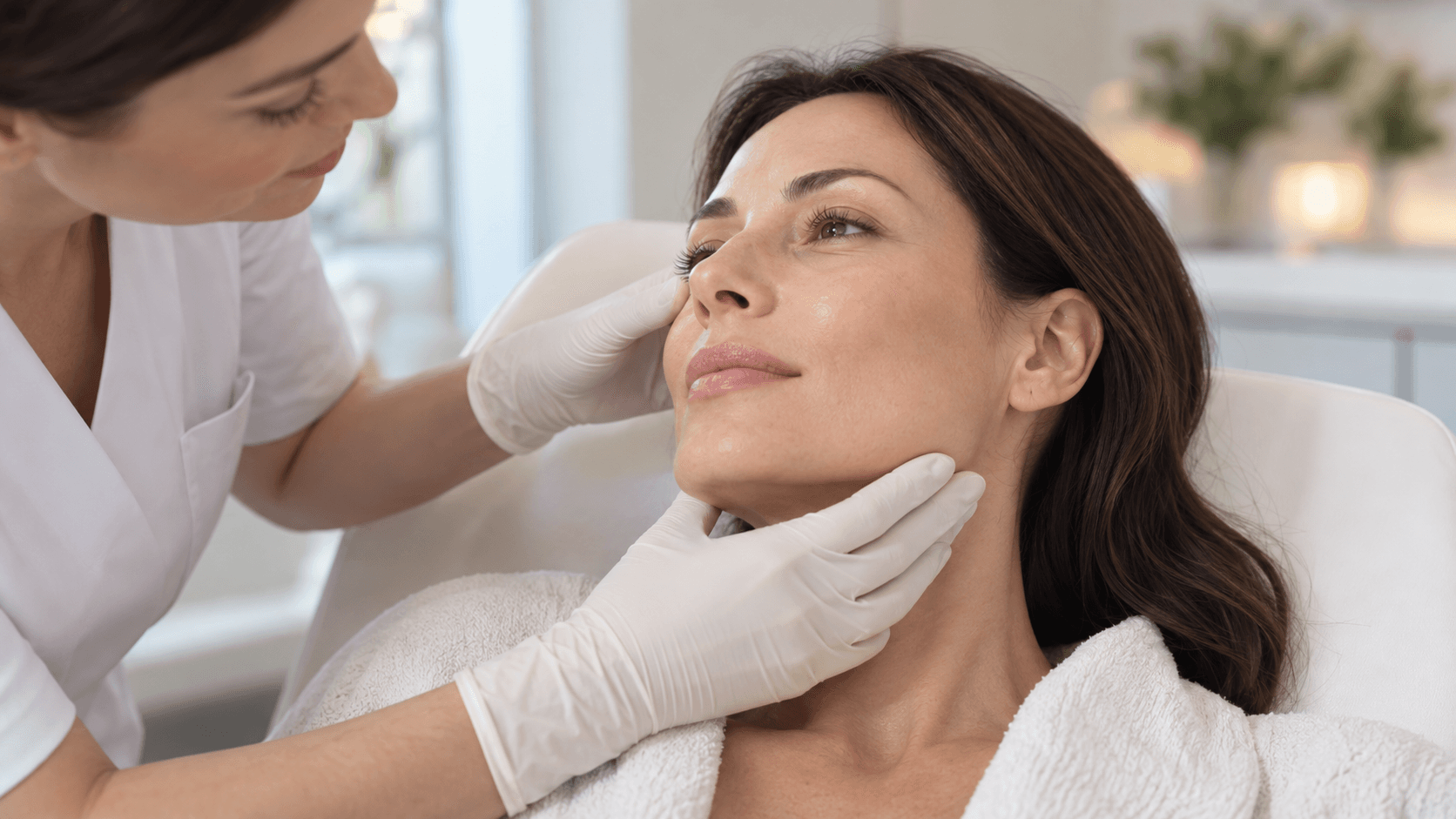
A French Thread Lift does not provide permanent rejuvenation. This non-surgical facial suspension procedure supports facial tissues with special threads placed beneath the skin and reduces the appearance of mild to moderate sagging. The duration of effect reported in the literature for thread-lift procedures generally ranges from 12 to 24 months. This range is not a definitive guarantee for every procedure. The duration of the result varies from person to person depending on skin elasticity, lifestyle habits, thread material, and the physician’s application technique. Surgical facelift surgery and a French Thread Lift are not the same procedure. The duration of effect of these two methods should not be considered equivalent.
A French Thread Lift is a minimally invasive facial suspension procedure that supports facial tissues upward and outward using special absorbable threads placed beneath the skin with a needle or cannula. The barbed structures on the threads grip the tissue and reposition sagging soft tissue in a more youthful position. The procedure is generally performed under local anesthesia and does not require incisions. For this reason, it is a popular choice among people who do not wish to undergo surgery.
The history of the method dates back to the 1990s, when barbed threads were first used to correct facial sagging. In subsequent years, the materials used evolved from polypropylene to absorbable materials such as polydioxanone. Early studies reported that the method showed promise in improving facial contours (Villa et al. 2008). However, systematic reviews conducted in later years revealed that evidence regarding the durability of the lifting effect remained limited (Gülbitti et al. 2018).
A French Thread Lift most commonly targets mild to moderate sagging in the cheeks, jawline, and facial oval. Pronounced nasolabial folds, marionette lines, and laxity beneath the chin are the primary indications for this method. The threads are placed in the opposite direction to the natural lines of gravity. This positioning suspends sagging tissue toward the stronger bony structures of the face.
In a clinical series involving polydioxanone thread applications in 31 patients, 87% of patients found the result satisfactory. The same study reported that the method produced the best results in patients with mild sagging, fine lines, and enlarged pores (Suh et al. 2015). This finding indicates that a French Thread Lift has limited effectiveness for advanced sagging.
A French Thread Lift achieves both objectives simultaneously, but through different mechanisms. The physical anchoring of the threads lifts the tissues upward and creates a lifting effect. The controlled tissue response that develops around the threads stimulates fibroblasts and supports new collagen production. Animal studies have shown that, four weeks after thread placement, myofibroblasts and the formation of a fibrous capsule around the threads supported the lifting effect (Jang et al. 2005). Therefore, the improvement in appearance does not depend solely on the mechanical support provided by the threads. Changes in skin quality, meanwhile, develop gradually over time.
The reported duration of effect for general thread-lifting methods is approximately 12 to 24 months. This range cannot be applied definitively to every French Thread Lift procedure. The duration varies depending on the rate at which the thread dissolves and the tissue response. There is no exact end date for the longevity of the results. Therefore, it is important to follow the physician’s recommendations for follow-up visits.
When we approach the subject from the perspective of evidence-based medicine, the picture is more cautious. A systematic review of facial lifting with barbed threads reported that, in nearly all of the studies examined, the duration of the lifting effect was very limited. The two studies that reported positive findings were conducted with support from the companies that manufactured the threads (Gülbitti et al. 2018). This indicates that there is a gap between marketing claims and scientific evidence.
Another long-term evaluation examined the results of facial rejuvenation with barbed threads over the long term and reported that the effect diminished over time (Abraham et al. 2009). Studies investigating the long-term effectiveness of anchored barbed threads in the face and neck similarly demonstrated that the results were not permanent (Kaminer et al. 2008).
There are significant differences among absorbable threads depending on their material. Polydioxanone threads are absorbed in approximately 24 weeks. Polycaprolactone threads remain in the tissue for more than one year and produce a stronger collagen response (Contreras et al. 2023). The table below compares three common thread groups.
Feature | Polydioxanone | Poly-L-lactic acid | Polycaprolactone |
Duration in the tissue | Approximately 6 months | 12 to 18 months | 12 to 24 months or longer |
Collagen stimulation | Moderate | High | High and long-lasting |
Lifting effect | Primarily physical suspension | Suspension and filling effect | Suspension and tightening |
Common application area | Mild sagging | Moderate sagging | Moderate sagging |
The durations in this table indicate general trends. Individual results are determined through a physician's evaluation.
Five main factors determine the longevity of the French Thread Lift: skin elasticity, age and tissue characteristics, thread material and application technique, lifestyle habits, and individual healing capacity. Together, these factors determine both the initial outcome and its duration.
Skin elasticity depends on the quality of collagen and elastin fibers. These fibers provide the skin with tensile strength and the ability to recover. As age and sun damage progress, the fibers break down, and the skin loses its ability to support the suspended tissue. Thread support loosens sooner in skin with a weakened dermis. Therefore, results generally last longer in individuals with good skin quality.
Sun exposure, smoking, and significant fluctuations in weight accelerate skin aging. Even a single exposure to ultraviolet radiation increases the production of collagen-degrading enzymes in the skin and raises type 1 collagen breakdown by 58% (Fisher et al. 1997). Smoking, meanwhile, damages the vascular structure and reduces the oxygen reaching the tissue. Skin aging accelerated by these factors places additional strain on the support provided by the French Thread Lift. As a result, the duration of the effect may be reduced.

French Thread Lift results change in three stages. Swelling and bruising are prominent in the first few days. During the first few weeks, the tissues settle and the early appearance stabilizes. From the first few months onward, the lifting effect gradually begins to diminish. The appearance varies from person to person at each stage. Rather than relying on a fixed recovery timeline, the physician’s follow-up plan should be the basis for evaluation.
Swelling, bruising, tightness, and temporary tenderness may occur during the initial period after the procedure. In a study conducted in Korea involving 31 cases, bruising was reported in 93.5% of patients and mild swelling in 90.3%. These effects resolved spontaneously within two weeks at the latest (Suh et al. 2015). Mild asymmetry may persist for the first one or two weeks and generally resolves.
Over the long term, dissolvable threads are gradually absorbed. Although the fibrous tissue that forms around the threads provides support for a period of time, this support also gradually diminishes. As a result, the lifting effect softens over the course of several months. This decline is not linear. Some people experience a noticeable reduction, while others experience gradual loosening.
the effect of a French Thread Lift does not cause the face to return to exactly the same condition it was in before the procedure. The new collagen formation and tissue remodeling that occur during the procedure can create a lasting degree of change. However, the natural aging process continues after the procedure. Therefore, the final appearance depends not only on the condition of the threads but also on natural changes in the facial tissues.
It is not scientifically accurate to claim either that the result will be exactly the same as the pre-procedure appearance or that a specific change will necessarily occur. In some people, improvements in skin quality are maintained for a long time. In others, sagging may become noticeable again within a short period. This difference can be explained by the strength of the skin’s support structure.
A French Thread Lift can be repeated when necessary. The decision to repeat the procedure is based on the results of the initial application, the current condition of the tissues, and the patient’s expectations. However, the facial anatomy and the condition of the previous threads must be carefully assessed before a new procedure. There are no definitive evidence-based intervals regarding the frequency of repeat treatments in the literature. The physician determines how often the procedure should be repeated.
Even if the previous threads have completely dissolved, residual fibrous changes in the tissue may affect the placement of new threads. For this reason, an experienced physician adjusts the plan for the new threads according to the effects of the previous procedure. Repeat procedures are not suitable for everyone. If the skin is thin, there is tissue damage, or the support structure is inadequate, the physician may recommend alternative options.
A surgical facelift provides longer-lasting results than a French thread lift. Surgery removes excess skin and repositions deeper facial tissues. Thread lifting, on the other hand, provides only a limited degree of lifting. This fundamental difference determines how long the results of the two methods last.
One of the strongest pieces of evidence demonstrating the longevity of surgical facelift results comes from secondary surgery series. In a 20-year series, the average time between the initial facelift and the second facelift was calculated as 9.0 years (Beale et al. 2013). This finding shows that surgical results last for years, although the aging process does not stop.
Comparison criterion | French thread lift | Surgical facelift |
Procedure type | Minimally invasive, incision-free | Surgical, requires incisions |
Anesthesia | Local or sedation | General anesthesia or deep sedation |
Targeted degree of sagging | Mild to moderate | Moderate to advanced |
Recovery time | A few days to two weeks | Several weeks |
Duration of results | Approximately 12 to 24 months | Years, up to an average of 9 years |
Likelihood of recurrence | Frequent | Rare |
Comparing the two methods solely in terms of longevity would be incomplete. The degree of sagging, the recovery process, and the patient’s expectations are also part of the decision. It would not be realistic to expect surgery-level results from a person with severe sagging using a French thread lift.
A French thread lift may be a suitable option for people with mild to moderate facial sagging who do not want surgical intervention and accept a limited lifting effect. The method is generally insufficient for people with advanced sagging or significant tissue laxity. Surgical options should be considered for these individuals.
No. Suitability cannot be determined solely by age. Skin quality, facial anatomy, the supporting strength of the bone structure, and overall health are evaluated together. A young patient with good skin quality and an older patient with poor skin support will not achieve the same result. Therefore, a pre-procedure examination and assessment are essential.
To maintain French thread lift results, the physician’s post-procedure care instructions should be followed. The skin should be protected from the sun’s harmful ultraviolet rays. A balanced diet and stable weight management support skin health. However, no care method can make the effects of a thread lift permanent. The need for a new procedure or complementary treatment should be determined only through specialist assessment.
Using sunscreen is scientifically the most effective step in this regard. Since ultraviolet damage triggers enzymes that break down collagen, sun protection helps extend the longevity of the support provided by a French thread lift (Fisher et al. 1997). In addition, avoiding smoking and sudden weight changes helps preserve tissue quality.
No, a French thread lift does not last a lifetime. The method provides non-surgical support, and its effects gradually diminish over time. The threads dissolve, and the mechanical support in the tissue weakens. Lasting rejuvenation continues only as long as the new collagen formed in the skin remains.
The duration varies depending on the thread material used in the technique and individual factors. In general, the effects are noticeable for 12 to 24 months. Polycaprolactone threads may remain in the tissue for a longer period (Contreras et al. 2023). However, the duration is not the same for everyone and cannot be guaranteed.
Threads dissolve at different rates depending on their material. As the thread is absorbed, the physical support in the tissue decreases. The remaining fibrous tissue provides tightening for a period of time. Eventually, this support also weakens, and the appearance of sagging gradually returns (Gülbitti et al. 2018).
Yes, the procedure can be repeated in suitable candidates. However, the decision to repeat it depends on the physician’s evaluation. Changes left in the tissue by the previous threads are taken into consideration. Repeat treatments at regular intervals are not suitable for everyone.
No, the French Lift does not provide lifting as powerful as a surgical facelift. The two methods are intended for different degrees of sagging and different expectations. Thread lifting may be satisfactory for mild sagging but is insufficient for advanced sagging (Suh et al. 2015).
Regular skincare, sun protection, and healthy lifestyle habits support the duration of the effect. However, no method can guarantee the result. There is no scientifically proven formula for definitively extending longevity. The most appropriate approach is to create a personalized maintenance plan together with a physician.
Expert evaluation is the only way to establish a realistic picture of the longevity of the French Lift. The physician examines the facial anatomy, skin elasticity, and degree of sagging. They explain the type of thread to be used, the application technique, and potential risks. Without this evaluation, longevity claims are not personalized and may be misleading.
Patient selection is a decisive factor in the success of facial rejuvenation with barbed threads. Procedures performed on unsuitable candidates may result in both dissatisfaction and a risk of complications (Garvey et al. 2009). Therefore, setting realistic expectations and preparing a personalized treatment plan are just as important as the procedure itself.
The French Lift is a temporary facial suspension method that supports facial tissues and reduces the appearance of sagging. The scientific answer to the question “Is the French Lift permanent?” is clear: the effect is not permanent and gradually diminishes over a period ranging from 12 to 24 months in most cases. The duration of the result is shaped by skin quality, thread material, the physician’s experience, and lifestyle habits. Realistic expectations, proper patient selection, and regular specialist follow-up are the key conditions for achieving the best results from this method.
Abraham, Robert F., Robert J. DeFatta, and Edmund F. Williams III. "Thread-Lift for Facial Rejuvenation: Assessment of Long-Term Results." Archives of Facial Plastic Surgery, vol. 11, no. 3, 2009, pp. 178-183.
Beale, Edward W., et al. "A 20-Year Experience with Secondary Rhytidectomy." Plastic and Reconstructive Surgery, vol. 132, no. 5, 2013, pp. 741-750.
Contreras, C., et al. "Using PDO Threads: A Scarcely Studied Rejuvenation Technique. Case Report and Systematic Review." Journal of Cosmetic , volume 22, issue 8, 2023.
Fisher, Gary J., et al. "Pathophysiology of Premature Skin Aging Induced by Ultraviolet Light." New England Journal of Medicine, volume 337, issue 20, 1997, pp. 1419-1428.
Garvey, Patrick B., Edward J. Ricciardelli, and Thomas Gampper. "Outcomes in Threadlift for Facial Rejuvenation." Annals of Plastic Surgery, volume 62, issue 5, 2009, pp. 482-485.
Gülbitti, Haydar A., et al. "Thread-Lift Sutures: Still in the Lift? A Systematic Review of the Literature." Plastic and Reconstructive Surgery, volume 141, issue 3, 2018, pp. 341e-347e.
Jang, Hee Jung, et al. "Effect of Cog Threads Under Rat Skin." Surgery, volume 31, issue 13, 2005, pp. 1639-1643.
Kaminer, Michael S., et al. "Long-Term Efficacy of Anchored Barbed Sutures in the Face and Neck." Surgery, volume 34, issue 9, 2008, pp. 1041-1047.
Suh, Dong Hye, et al. "Outcomes of Polydioxanone Knotless Thread Lifting for Facial Rejuvenation." Surgery, volume 41, issue 6, 2015, pp. 720-725.
Villa, Mark T., et al. "Barbed Sutures: A Review of the Literature." Plastic and Reconstructive Surgery, volume 121, issue 3, 2008, pp. 102e-108e.