Yükleniyor…
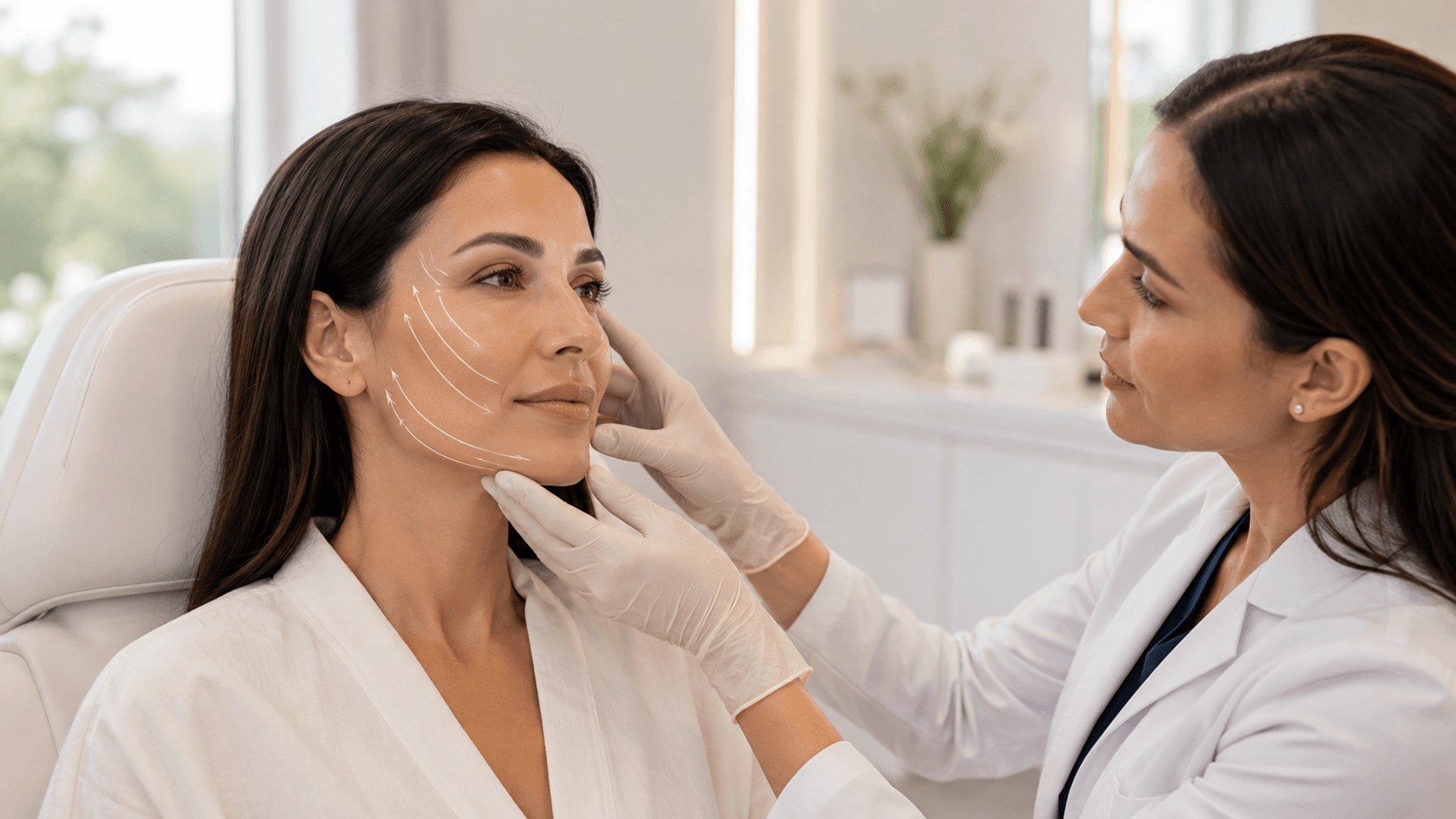
As skin ages, collagen fibers decrease. Facial tissue cannot resist gravity. This leads to sagging, wrinkles, and a tired appearance. Nowadays, many people do not want surgical intervention. These individuals seek non-surgical solutions.French thread lift stands out at this point. The French thread lift is a modern method that provides mechanical support under the skin with special threads. At the same time, the skin produces its own collagen. This article examines the French thread lift in all its aspects. The article addresses the scientific foundations of the procedure, application steps, materials used, recovery process, and risks. Cobo (2020) demonstrates that this method is a safe alternative for facial rejuvenation. Sulamanidze and Sulamanidze (2008) reveal the historical development of thread lifting techniques. Atiyeh and colleagues (2010) investigate the evidence-based effectiveness of barbed threads.
The French thread lift is a minimally invasive aesthetic procedure that creates a support network under the skin using biocompatible and absorbable threads. The physician places these threads under the skin. The threads lift sagging tissues. At the same time, the skin initiates its own repair process. During this process, fibroblast cells are activated. Fibroblasts produce new collagen. The result is both mechanical stretching and biological renewal.
This procedure has evolved from techniques developed in the 1990s. Sulamanidze and colleagues were the first to use barbed threads (Sulamanidze and Sulamanidze, 2008). The absorbable threads used today are much safer. The expulsion rate of absorbable threads is 1.6%. In permanent threads, this rate increases to 7.6% (Tong and Rieder, 2019). This difference clearly shows the safety profile.
The French thread lift helps individuals with moderate skin sagging. The procedure particularly lifts sagging cheeks. It enhances the prominence of the cheekbones. It reshapes the jawline. It reduces looseness in the double chin area. It slightly lifts the outer parts of the eyebrows. It supports nasolabial folds, which are the lines extending from the sides of the nose to the mouth. It also corrects slight sagging in the neck area.
No. The French thread lift is part of the general thread lifting family. However, the structure of the threads used in this procedure is different. In the French thread lift, systems with medical silicone-coated and flexible supporting structures are generally preferred. This structure adapts to facial movements. Other polydioxanone or poly-L-lactic acid threads work through different mechanisms. Each technique has its own advantages and limitations.
The French thread lift operates with a two-phase system. The first phase is mechanical stretching. The physician places the threads under the skin. The barbed or conical structure of the threads stretches the tissues. Sagging fat pads and connective tissue slide upwards. The second phase is biological stimulation. The threads trigger a controlled healing response in the skin. Fibroblast cells gather around the threads. These cells produce type three collagen. Over time, type three collagen transforms into type one collagen. Type one collagen is the structural framework of the skin. This process is called neocollagenesis. Shin and colleagues (2019) prove that all three thread materials induce neocollagenesis in mouse models.
The French lift is not suitable for everyone. The doctor must choose the right patient. Ideal candidates are typically between the ages of 35 and 55. These individuals have partially preserved skin elasticity. The degree of sagging is moderate. Skin thickness is normal. The bone structure is strong enough to support the threads.
The most ideal candidates are individuals with mild to moderate sagging. Their skin is still elastic. The fat tissue is not excessively thick. The cheekbones are pronounced. These bones serve as a natural anchorage for the threads. Non-smokers achieve better results. Skin with minimal sun damage is more compatible. Patients with realistic expectations increase satisfaction rates. Suh and colleagues (2015) emphasize that appropriate patient selection directly affects outcomes.
The French lift yields the best results in the age range of 35 to 55. In the thirties, the skin has not sagged significantly yet. Preventive applications are effective in this age group. In individuals over forty, noticeable changes in the skin occur. In this age group, the procedure provides both lifting and collagen stimulation. Results may be short-lived in individuals over fifty. However, a 60-year-old patient with good skin quality may still benefit.
It is not recommended for individuals with advanced skin sagging. If the skin is excessively loose, the threads cannot provide adequate support. The procedure is postponed in patients with active skin infections. Individuals with bleeding disorders are at risk. Those taking blood-thinning medications should consult a doctor. The procedure is not performed during pregnancy and breastfeeding. Individuals with autoimmune diseases require special evaluation. In these patients, the immune system may react excessively to the threads.
The doctor conducts a detailed analysis before the procedure. This analysis examines the anatomical structure of the face. Skin quality is measured. Patient expectations are listened to. The assessment is essential for the safety and effectiveness of the procedure.
Facial anatomy is critical for the safe placement of the threads. The doctor knows the location of the fat pads on the face. The course of nerves and vessels is mapped. The position of the SMAS layer is determined. This layer is the superficial muscle and aponeurosis system of the face. The threads are placed just above or below this layer. Serious complications can arise without anatomical knowledge. Tong and Rieder (2019) state that knowledge of anatomy is the foundation of safe practice.
The doctor gently pinches and releases the skin. The speed of the skin's return to its original state is measured. A quick return indicates good elasticity. A slow return signifies loss of elasticity. The doctor also evaluates skin thickness. Threads are placed more carefully in thin skin. Thick skin may require more mechanical support. Photographic analysis is also performed. This analysis helps in comparison of results.
The doctor determines the areas based on the patient's complaints. The cheeks are the most commonly treated area. The cheekbones compensate for volume loss. The jawline area benefits significantly from the procedure. The area under the chin is tightened. The outer parts of the eyebrows are slightly lifted. Mild sagging in the front of the neck is corrected. Nasolabial folds are supported.
The French Lift requires a disciplined protocol. The doctor carefully completes each step. The procedure takes an average of 30 to 60 minutes. Local anesthesia is sufficient. No hospitalization is required. The patient returns home the same day.
The doctor first conducts a detailed interview with the patient. The patient clearly expresses their expectations. The doctor evaluates these expectations. The doctor examines the symmetry of the face. The most suitable number and type of threads for the patient are determined. This planning stage determines the success of the procedure.
The doctor takes pre-procedure photos from standard angles. These photos allow for future comparisons. The doctor identifies the vectors of sagging on the face. The vectors indicate the direction of thread placement. Each half of the face is planned separately. Symmetry is targeted.
The doctor injects anesthetic medication into the entry points. This medication numbs the skin. The patient does not feel pain during the procedure. Some doctors also use anesthetic cream. The type of anesthesia shortens the duration of the procedure. The patient is fully conscious.
The doctor marks specific entry points on your skin. These points are usually hidden within the scalp, in front of the ear, or under the chin. The entry points are not noticeable afterward. The doctor explains the purpose of each point.
The doctor inserts the threads under the skin using a sterile needle or cannula. The threads progress along the pre-planned vectors. Notched threads hold the tissues back. Conical threads anchor the fat pads. The doctor carefully places each thread.
The doctor pulls the threads upwards. The sagging tissues slide back into place. The fat pads are lifted. The skin is tightened. The doctor observes the patient's expressions at this stage. Naturalness is the most important criterion.
The doctor compares both halves of the face. If necessary, adjusts the tension of the threads. Any symmetry difference should be corrected immediately. The doctor makes final checks while the patient looks in the mirror.
The doctor closes the entry points. Small strips or stitches are sufficient. The doctor applies a cold compress. This compress reduces swelling. The patient receives final instructions. They are discharged on the same day.
The thread material directly affects the result. The degradation time of each substance is different. The collagen stimulation power varies. The doctor selects the material according to the patient's profile.
Polidioxanone is a synthetic polymer. It has been safely used in surgical sutures for decades. It dissolves in the body through hydrolysis. The complete degradation time is 6 to 8 months. The mechanical stretching effect is strong. However, collagen stimulation remains limited. Results typically last between 6 to 12 months. It is suitable for first-time patients or those seeking annual maintenance. Cobo (2020) confirms the safety profile of polidioxanone threads.
Poly-L-lactic acid offers a longer-lasting effect. Complete degradation takes 12 to 18 months. Collagen production is more continuous and gradual. Results become visible between the third and sixth months. It provides a natural and gradual recovery. Results last 12 to 18 months. It is ideal for patients aged 40-55 with moderate sagging.
Polycaprolactone is the latest generation material. Its molecular structure is more complex. Complete degradation takes 18 months to 3 years. This long duration continuously stimulates fibroblasts. Cho and colleagues (2021) show in mouse studies that polycaprolactone increases collagen density to the highest extent. Results last between 18 to 36 months. It is the best option for patients aged 45-60.
Some systems contain permanent materials. The outer layer is made of medical silicone. The inner layer is a polyester carrier. These systems last for many years. However, the risk of complications is higher. The risk of tissue rejection increases. The possibility of infection rises. Nowadays, absorbable systems are preferred.
The material determines both the quality and duration of the result. Short-term dissolving material provides short-term but strong lifting. Long-term dissolving material offers long-lasting collagen support. The doctor evaluates the patient's age, skin type, and expectations. Then, they select the material.
Material | Degradation Time | Result Duration | Basic Mechanism | Ideal Patient |
Polydioxanone | 6-8 months | 6-12 months | Mechanical lifting + medium collagen stimulation | First procedure, annual maintenance, thin skin |
Poly-L-lactic acid | 12-18 months | 12-18 months | Long-term collagen stimulation | Moderate sagging, ages 40-55 |
Polycaprolactone | 18 months-3 years | 18-36 months | Maximum biostimulation | Requires maximum duration, ages 45-60 |
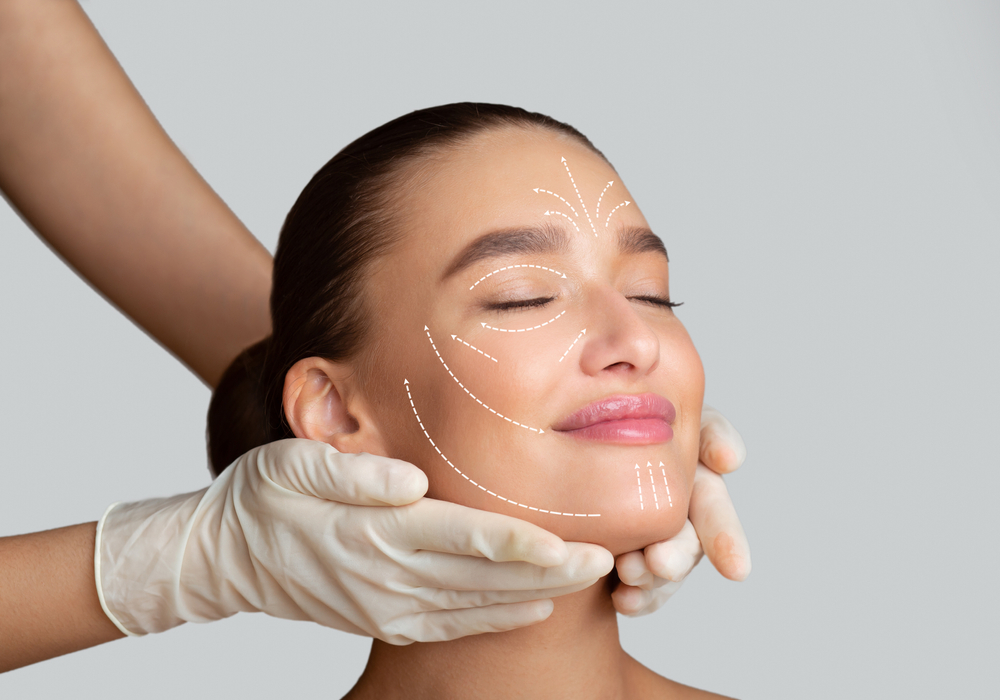
The French thread lift can be applied to many areas of the face. There are specific techniques for each area. The physician adjusts the number and placement of threads according to the area.
The physician places notched threads in the cheeks. The threads lift the fat pads upward and outward. The cheekbones become more prominent. The face looks younger and more dynamic.
The cheekbones define the middle area of the face. The physician places conical threads in this area. The cones anchor the fat tissue. Volume loss is compensated. The face appears more three-dimensional.
The jawline forms the foundation of the face. The physician places the threads towards the mandible bone in this area. The sagging neck tissue lifts upward. The jawline gains sharper contours.
The area under the chin shows the first signs of aging. The doctor places threads in this area. The threads compress the fat tissue. The skin tightens. The jawline becomes more defined.
The skin on the neck is thinner than that of the face. The doctor uses thinner and shorter threads here. The threads lift the skin upwards. Horizontal lines become less pronounced. The double chin area is tightened.
The doctor places threads at the outer parts of the eyebrows. The threads pull upwards and outwards. The area around the eyes appears brighter. The tired expression disappears.
Nasolabial folds extend from the sides of the nose to the corners of the mouth. The doctor places support threads behind these lines. The threads lift the surrounding tissue upwards. The folds lose their depth.
The recovery process varies from person to person. Generally, the process is mild and quick. The skin initiates its own renewal process.
The patient feels slight swelling immediately after the procedure. This swelling is edema and is normal. Mild bruising may occur in some areas. The patient may take pain relievers. Cold compresses reduce swelling. It is necessary to sleep with the head elevated on the first night.
The patient should gently wash their face in the first week. They should avoid harsh contacts. They should limit wide mouth opening movements. They should reduce chewing strength. They should stay away from hot foods. Bruises begin to fade within five to ten days.
In the first month, the skin texture begins to change. The tissue accepts the threads. A slight feeling of firmness is normal. The skin tone improves. The facial contour becomes more defined. The patient fully returns to their daily life.
Collagen production begins in the first week after the procedure. Fibroblasts gather around the threads. Collagen production peaks in the third month. This process continues for six months. Histological studies by Yoon and colleagues show that collagen proliferation lasts up to 48 weeks (citing Atiyeh et al., 2010).
The mechanical lifting effect is seen immediately. However, the final results become apparent two to three months later. During this period, collagen production is at its peak. The skin appears tighter and more radiant. Results last from 6 to 36 months depending on the material.
Post-procedure care preserves the results. The patient should follow simple rules. These rules reduce the risk of complications.
The patient should not wash their face for the first 24 hours. They should not wear makeup. They should not touch the skin firmly. They should not engage in heavy physical activity. They should not consume alcohol. They should not take hot showers.
The patient should sleep on their back for the first two weeks. Sleeping on the side puts pressure on the threads. Sleeping face down can cause the threads to shift. A high pillow reduces swelling.
The patient can start light walking three days later. They can begin moderate exercise after a week. They can return to heavy sports and weightlifting after two weeks. They should avoid movements that bend the face down for a month.
The patient can start using mineral makeup after 24 hours. They can use liquid foundation after 48 hours. They should keep makeup brushes clean. They should avoid direct contact with entry points.
Facial massage can cause the threads to shift. Massage is prohibited for the first month. Skin treatments at beauty salons should be postponed. Pressure applied to the face strains the threads.
Hot environments increase swelling. Blood vessels dilate. The risk of bruising rises. The patient should avoid saunas, baths, and thermal springs for the first two weeks. They should also limit hot showers.
The French thread lift offers advantages compared to many aesthetic methods. These advantages increase the popularity of the procedure.
No. The French thread lift uses entry points the size of a needle hole. The physician does not use a scalpel. There are no scars left. This feature is reassuring for anxious patients.
Yes. The patient returns to their daily life immediately after the procedure. Most patients start working the next day. Mild swelling and bruising resolve within a week. This duration is very short compared to surgical lifting.
Yes. The French thread lift does not tighten the skin. The threads lift the tissues. The facial muscles remain free. The patient looks natural when smiling, crying, or talking. Sometimes, expression changes occur with surgical lifting.
Yes. The threads initiate the skin's own repair process. Fibroblasts are activated. New collagen fibers are formed. These fibers remain even after the threads dissolve. Skin quality improves in the long term.
Yes. The procedure can even be done during lunch breaks. The patient returns to their office. They can go out into society immediately. Therefore, it is also referred to as "lunch break lifting." Atiyeh and colleagues (2010) state that this method provides a quick social return.
Every procedure has its limits. The French thread lift is no exception. The patient should have realistic expectations.
No. The French thread lift is not permanent. The threads dissolve over time. Mechanical support decreases. However, the newly formed collagen remains for a while. The patient should plan maintenance sessions.
No. Results are more limited in round and oily faces. Lifting is more pronounced in thin faces. In those with weak bone structure, anchoring power decreases. Each face requires special evaluation.
No. The French thread lift is not as powerful as surgical facelift. Surgical facelift removes excess skin. The French thread lift only lifts the tissues. In advanced sagging, surgery is more effective.
Yes. Absorbable threads require repetition. The patient plans new sessions when the effect decreases. Repeat procedures further thicken the skin. Each session increases collagen accumulation.
The French thread lift is a safe procedure. However, as with any medical procedure, there are risks. The physician explains these risks in advance.
Yes. Mild swelling is completely normal. Edema is the body's natural response. Swelling subsides within three to five days. Cold compress and keeping the head elevated speeds up the process.
Mild bruising may occur. Bruises start to fade within one to two weeks. In anemic patients, bruising may be more pronounced. Arnica creams support healing.
Yes. Mild asymmetry is normal in the first week. Edema may settle differently. However, significant asymmetry may require physician intervention. The physician can adjust the tension of the threads.
The risk of infection is very low. Sterile technique reduces this risk. Fever, redness, and pain are signs of infection. The patient should report these symptoms to the physician immediately. Antibiotic treatment may be necessary.
The patient may sometimes feel the threads. This is especially true in thin skin. The threads may create tiny bumps under the skin. This sensation fades over time. If it becomes very uncomfortable, the physician can adjust the thread.
Yes. Excessive facial movements in the early period can shift the threads. The patient should avoid straining the face for the first two weeks. Proper sleeping position reduces this risk.
Yes. If the threads are placed too superficially, wrinkles or dimpling can occur in the skin. This condition is called "dimpling." If the physician places them at the correct depth, this risk decreases.
The patient should choose an experienced physician. The physician must have strong anatomical knowledge. A sterile environment is essential. The patient should quit smoking. Blood thinners should be discontinued under the doctor's supervision. Niu and colleagues (2021) show in their meta-analysis that complication rates significantly decrease in experienced hands.
Longevity depends on many factors. The patient's lifestyle directly affects it.
The material of the threads is the most important factor. Polycaprolactone offers the longest duration. Skin quality determines the effect. Thicker and healthier skin yields better results. The physician's technique plays a role. Correct vector selection increases longevity.
In younger patients, the skin response is stronger. Fibroblasts are more active. Collagen production is rapid. In older patients, results last shorter. However, good skin care can partially bridge this gap.
Skin quality is the foundation of longevity. Sun-damaged skin responds poorly. Dry skin has lost its elasticity. Moist and protected skin receives support for a longer time. The patient should maintain regular skin care.
Smoking destroys collagen. Results are halved in smokers. Using sunscreen protects the skin. Healthy eating supports fibroblasts. Drinking plenty of water increases skin hydration. Regular sleep accelerates the repair process.
These two methods serve different purposes. The patient should choose according to their needs.
In the French lift, the physician uses a needle and cannula. In surgical lifting, the physician makes an incision with a scalpel. Surgical lifting tightens the skin and removes excess. The French lift only lifts tissues with threads.
The French lift is performed under local anesthesia. The patient is awake. Surgical lifting requires general anesthesia. The patient lies in the operating room.
Recovery from the French lift takes one to two weeks. Recovery from surgical lifting takes two to four weeks. Swelling and bruising are more pronounced in surgical lifting. In the French lift, the patient returns to social life immediately.
The French lift offers effects lasting from 6 to 36 months. Surgical lifting lasts from 5 to 10 years. Surgical lifting is more permanent. However, the French lift can be repeated.
The French lift provides more natural results. Surgical lifting can sometimes result in a stretched appearance. The French lift preserves facial expressions. Surgical lifting can sometimes change expressions.
The French lift is suitable for mild to moderate sagging. Surgical lifting is for advanced sagging. Younger and middle-aged individuals prefer the French lift. Older patients tend to opt for surgery.
Feature | French Lift | Surgical Face Lift |
Anesthesia | Local anesthesia | General anesthesia |
Incision | None | Present |
Recovery | 1-2 weeks | 2-4 weeks |
Permanence | 6-36 months | 5-10 years |
Naturalness | High | Medium |
Degree of sagging | Mild-moderate | Advanced |
Price | Lower | Higher |
There are many non-surgical methods available in the market. Each method uses a different mechanism. Sometimes, the physician combines these methods.
The French Lift generally uses more structural systems. Polydioxanone thread lifting is usually performed with uniform threads. The French Lift provides more comprehensive lifting. Polydioxanone thread lifting is more focused on skin quality. Both methods use absorbable threads.
High-intensity focused ultrasound heats deep tissue with sound waves. This heat stimulates collagen production. However, it does not provide mechanical lifting. The French Lift neither heats nor provides physical lifting. The two methods complement each other.
Dermal fillers compensate for volume loss. These substances are injected under the skin. The French Lift lifts sagging tissues. Fillers provide static volume. The lift provides dynamic tightening. The physician may use these two methods together.
Botulinum toxin relaxes the muscles. This reduces dynamic wrinkles. The French Lift lifts the tissues. Botulinum toxin restricts movement. The French Lift preserves movement. The two methods create synergy together. Gerges and colleagues (2021) show that the results of combined treatments are enhanced.
Method | Mechanism | Area of Effect | Longevity |
French Lift | Mechanical lifting + collagen stimulation | Sagging | 6-36 months |
Polydioxanone thread lift | Collagen stimulation + mild lifting | Skin quality | 6-12 months |
High-intensity focused ultrasound | Collagen stimulation with heating | Skin tightness | 12-18 months |
Dermal filler | Volume increase | Hollowness | 6-18 months |
Botulinum toxin | Muscle relaxation | Wrinkles | 3-6 months |
French lift is powerful on its own. However, when combined with other procedures, the results improve even further. The physician designs combination protocols.
Yes. Botulinum toxin reduces wrinkles around the eyes. French lift addresses sagging. Together, the two methods solve both structural and movement issues. The physician applies the lift first, followed by the toxin.
Yes. The French thread lifts the tissues. Dermal filler restores lost volume. Filler is applied to the cheekbones. Volume is added to the cheeks. The result is a younger and fuller face.
Yes. PRP is obtained from the patient's own blood. It contains growth factors. PRP further activates fibroblasts. Collagen production accelerates. Skin healing is enhanced. Ali (2018) reports that PRP combinations improve skin quality.
Yes. Mesotherapy injects vitamins and minerals into the skin. This procedure increases skin moisture. The French thread provides structural support. Mesotherapy nourishes the skin surface. The two methods work at different layers.
Yes. Laser renews the skin surface. It corrects pigmentation. It reduces pores. The French thread works in deep layers. Laser works on the surface. The physician plans the laser treatment before or after the thread lift.
Yes. Chemical peeling refreshes the skin surface. Microdermabrasion removes dead cells. The French thread strengthens the deep structure. These combinations provide holistic rejuvenation.
Patients have many questions in mind. This section answers the most common questions.
No. Local anesthesia completely prevents pain. The patient only feels a slight pressure. Post-procedure pain is very mild. Pain relievers alleviate this discomfort.
It takes an average of 30 to 60 minutes. The number of treated areas affects the duration. A single area is completed in 30 minutes. A full face application takes 60 minutes.
The patient can return immediately. Most people go back to work the next day. Mild swelling and bruising can be concealed with makeup. Social life returns to normal within one to two days.
Yes. The mechanical lifting effect is noticeable immediately. However, final results become apparent in two to three months. During this period, collagen production peaks.
The duration of effect varies by material. Polydioxanone threads last 6 to 12 months. Poly-L-lactic acid threads last 12 to 18 months. Polycaprolactone threads last 18 to 36 months.
Yes. The threads used in the French thread lift are biocompatible. The body breaks them down over time. They dissolve through a chemical process called hydrolysis. This dissolution process triggers collagen production.
Yes. The French thread lift can be repeated. In fact, repeat procedures further strengthen the skin. Each session provides new collagen accumulation. The patient books a new appointment when the effect diminishes.
Yes. The French thread lift is also applied to men. The jawline and double chin area are frequently treated in men. Natural results are also important for male patients.
Yes. However, the use of sunscreen is essential. Hot weather may slightly increase swelling. The patient must be protected from the sun. Those having the procedure done in summer should be more cautious.
No. The French thread lift preserves the natural expression. The threads only lift sagging tissues. The mimic muscles are not touched. The patient looks natural when smiling or frowning.
Yes. Rapid weight loss causes volume loss in the face. This leads to sagging. The French thread lift tightens these sagging areas. However, if the skin is very loose, the results may be limited.
The French thread lift is an important tool in modern aesthetic medicine. The procedure works through two main mechanisms. The first is mechanical tension. The threads physically lift sagging tissues. The second is biological stimulation. The threads trigger the skin's own collagen production. This dual effect provides natural and safe rejuvenation.
The French thread lift is not suitable for everyone. Ideal candidates are those with mild to moderate sagging. Skin elasticity should still be partially preserved. The age range is generally between 35 and 55. However, each patient requires a special assessment.
Patients should have realistic expectations. The French thread lift is not as powerful as surgical lifting. However, it does not present the risks and recovery time associated with surgery. Results are temporary but repeatable. Each session slightly improves skin quality.
Choosing an experienced physician is the key to success. The physician should have a good understanding of facial anatomy. Sterile technique is essential. Patient selection must be meticulous. Complications are rare in experienced hands. Niu and colleagues (2021) confirm in their meta-analysis that complication rates significantly decrease with specialist physicians.
In conclusion, the French thread lift is a safe and effective non-surgical facelift option that preserves a natural appearance. When the right patient, the right physician, and the right expectations come together, the results are quite satisfying.
Atiyeh, Bishara S., et al. "Barbed Sutures 'Lunch Time' Lifting: Evidence-Based Efficacy." Journal of Cosmetic , vol. 9, no. 2, 2010, pp. 132-41.
Cho, Seung Woo, et al. "Efficacy Study of the New Polycaprolactone Thread Compared with Other Commercialized Threads in a Murine Model." Journal of Cosmetic , vol. 20, no. 9, 2021, pp. 2743-749.
Cobo, R. "Use of Polydioxanone Threads as an Alternative in Nonsurgical Procedures in Facial Rejuvenation." Facial Plastic Surgery, vol. 36, no. 4, 2020, pp. 447-52.
Gerges, Marian W., et al. "The Efficacy of the Absorbable Polydioxanone (PDO) Thread Lift in Lower Face (Marionette Line) Rejuvenation." Journal of Advances in Medicine and Medical Research, vol. 33, no. 8, 2021, pp. 52-60.
Niu, Z., et al. "A Meta-Analysis and Systematic Review of the Incidences of Complications Following Facial Thread-Lifting." Aesthetic Plastic Surgery, vol. 45, no. 5, 2021, pp. 2148-158.
Shin, Jae Jun, et al. "Comparative Effects of Various Absorbable Threads in a Rat Model." Journal of Cosmetic and Laser Therapy, vol. 21, no. 3, 2019, pp. 158-62.
Suh, Dong Hye, et al. "Outcomes of Polydioxanone Knotless Thread Lifting for Facial Rejuvenation." Surgery, vol. 41, no. 6, 2015, pp. 720-25.
Sulamanidze, Marlen, and George Sulamanidze. "Facial Lifting with Aptos Methods." Journal of Cutaneous and Aesthetic Surgery, vol. 1, no. 1, 2008, pp. 7-11.
Tong, Lauren X., and Evan A. Rieder. "Thread-Lifts: A Double-Edged Suture? A Comprehensive Review of the Literature." Surgery, vol. 45, no. 7, 2019, pp. 931-40.