Yükleniyor…
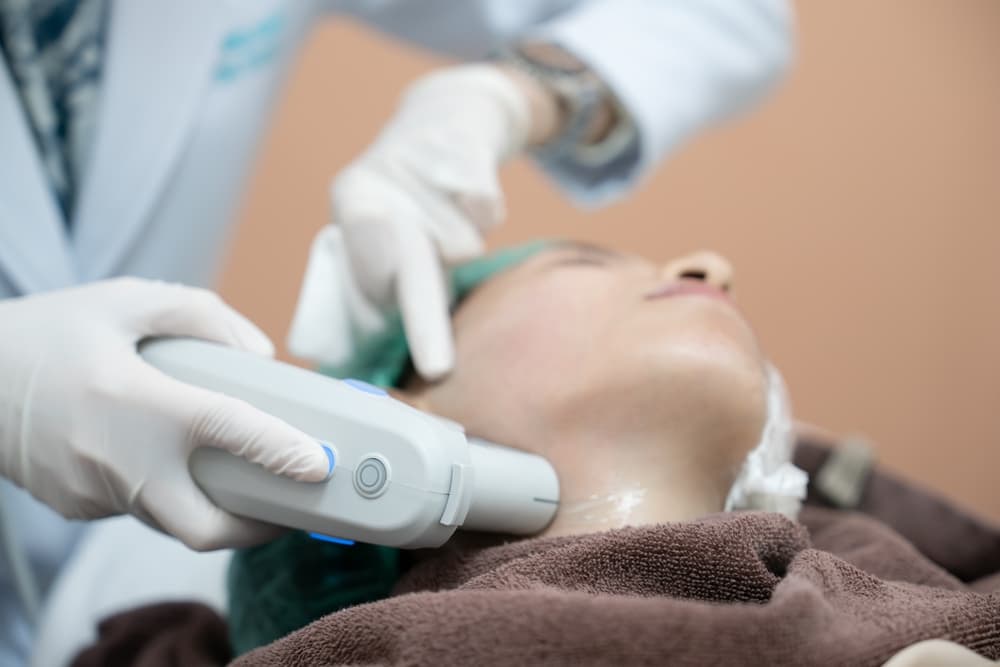
Ulthera the first temporary changes are immediately visible after treatment. However, true and lasting results typically become apparent within 2 to 3 months. Final results continue to develop over 3 to 6 months.
Ulthera, non-surgical skin tightening is a prominent treatment method in the field. This method affects the deep layers of the skin using micro-focused ultrasound energy. Many patients expect dramatic changes immediately after treatment. However, this expectation is not realistic. Because Ulthera activates the skin's natural healing process. This process takes time.
The most frequently asked question by patients is: "When are Ulthera results seen?" The answer to this question requires understanding the working principle of the treatment. Immediately after treatment, a temporary feeling of tightness occurs in the skin. However, this sensation is not the final result. The results that develop over time depend on the skin's own collagen production process.
The speed at which results appear varies from person to person. Age, skin elasticity, treatment area, and individual collagen response affect this process. In this article, we will examine the timeline of Ulthera results in detail. This way, patients can form realistic expectations.
Ulthera delivers controlled heat to the deep layers of the skin using micro-focused ultrasound energy. This heat stimulates fibroblasts and initiates new collagen production. However, the formation of new collagen and tissue remodeling takes weeks or even months. Therefore, results are not seen immediately.
The Ulthera device sends micro-focused ultrasound energy. This energy reaches the targeted depths of the skin. The supportive tissues of the skin perceive this energy. The controlled thermal effect creates micro-focus points within the tissue. These points activate the skin's natural repair mechanism.
Micro-focused ultrasound affects the deep layers without damaging the surface of the skin. This feature distinguishes the treatment from other methods. It stimulates the supportive layers of the skin with heat energy. Thus, the tissue enters a self-repair process.
The thermal effect directly impacts fibroblast cells. Fibroblasts are the primary cells that produce collagen in the skin. Heat energy activates these cells. Activated fibroblasts begin new collagen synthesis.
The formation of new collagen does not occur all at once. This process progresses in several stages. In the first stage, the body responds to damaged areas. Then it produces new collagen fibers. Finally, these fibers achieve a regular structure. This process is referred to as "collagen remodeling."
Skin firmness and elasticity increase due to these gradual changes. However, this process biologically takes time. Cells expend energy and time to produce new proteins. Therefore, results are not seen instantly.
Biological tissue renewal is a natural process. This process cannot be rushed. The production of new collagen depends on the speed at which cells work. Additionally, the collagen produced does not become functional immediately. It first goes through a maturation process. Then it integrates into the surrounding tissues.
For this reason, Ulthera results do not reach their final state immediately after a single session. Patients must understand this biological reality. The treatment sends a starting signal to the skin. The skin receives this signal and begins to work at its own pace.
Immediately after the treatment, a temporary tightness and slight firmness can be felt in the skin. However, these early effects are temporary. Real collagen-based results begin a few weeks later.
At the end of the treatment, many patients feel an immediate difference in their skin. This difference manifests as a temporary feeling of tightness. The skin tightens slightly due to the energy it receives during the treatment. Some patients notice a slight lifting appearance in their facial contours.
However, this early appearance is not the complete real result. There may be slight redness in the skin after the treatment. Some individuals may experience sensitivity or mild swelling. These symptoms generally decrease within a few hours. The appearance in the early period should not be evaluated as the final result.
No, the tightness observed in the first days is not permanent. The changes that occur in the early period are temporary tissue responses. Especially edema can temporarily alter the facial contour. Mild swelling may make the skin appear fuller. However, this condition returns to normal within a few days.
Real collagen-based results emerge over time. The feeling in the first days may be a sign that the treatment is working. However, this feeling does not indicate the final effect of the treatment. Patients must clearly understand this distinction.
In the first month, the initial signs begin to appear in the skin. However, during this period, the results are still limited. A slight tightening of the skin and initial improvements in skin quality can be noticed.
The first month is the period when the skin begins to produce new collagen. A firmer appearance may be felt in the skin. Particularly, subtle changes in skin texture begin to be noticed. A mild lifting effect may be observed in some patients.
Collagen production continues during this period. However, the amount of collagen produced has not yet reached its final level. The skin gradually renews itself. Therefore, the changes during the one-month process are generally mild.
Yes, this is completely normal. The rate of individual healing and collagen production varies from person to person. Some individuals may see noticeable changes within a month. However, for others, this process may progress more slowly.
The initial looseness of the skin affects the timing of results. Looser skin requires more collagen production. This can cause results to appear later. Evaluating results too early can be misleading. Therefore, patients should be patient.
In the second and third months, results begin to become more apparent. Skin tightness increases, and the lifting effect is more clearly visible. Tightening is observed in the jawline and neck area.
This period is a significant phase where Ulthera results accelerate. There is a noticeable increase in skin tightness. A clearer lifting effect is observed in facial contours. The contour of the jawline becomes more defined.
The loose appearance in the neck area decreases. Improvement in the appearance of fine lines begins. An increase in skin elasticity is felt upon touch. The skin gains a more youthful and vibrant appearance.
During this period, collagen synthesis reaches full speed. The newly produced collagen begins to integrate into the tissue structure. The collagen remodeling process makes significant progress during these months.
Results emerge in a natural and gradual manner. This naturalness is one of the greatest advantages of the treatment. The skin rejuvenates step by step, not suddenly. This process helps the results appear more natural.
The third month is an important evaluation point. However, final results continue to develop over 3 to 6 months. In some individuals, results become even more pronounced by the 6th month.
The third month is the first significant period to evaluate results. Many patients see noticeable changes during this time. However, it should be noted that results vary from person to person. In some individuals, results peak in the third month. However, for others, the process may take longer.
Yes, this is possible. The collagen remodeling process can continue until the 6th month. Skin tightness gradually increases during this period. Manufacturers provide result samples at 60, 90, and 180 days. This data shows that results develop over time.
Results become more natural and pronounced as time passes. Patients should patiently await the 6-month period. This duration is sufficient for the skin to completely renew itself.
During this period, new collagen formation continues. The skin tissue undergoes comprehensive remodeling. The true effects of the treatment can be more accurately assessed during this period. Early evaluations may be misleading. A waiting period of 3 to 6 months is necessary to achieve the final result.
Results develop gradually. Temporary effects are observed in the first 24 hours. These effects decrease in the first week. Initial signs appear in the first month. Results become clearer in 2-3 months. Final results are achieved in 3-6 months.
Mild redness may occur on the skin immediately after treatment. Sensitivity may be felt in the treated area. A feeling of tightness in the skin is observed in many patients. Mild swelling is a normal reaction. These symptoms usually resolve quickly. Temporary changes in appearance are most pronounced within the first 24 hours.
Early effects related to the treatment decrease during this period. The feeling of tightness in the skin may continue for a few more days. However, the results have not yet reached their final state. The skin begins to renew itself from the inside out. This process does not progress visibly.
In the first month, initial signs of tightening appear. Collagen production continues actively during this period. Gradual changes in skin quality begin. However, these changes are still at a mild level.
This period is a critical phase where results accelerate. More noticeable skin tightening is observed. The lifting effect, especially in the mid-face area, increases. Improvement in the contour of the chin and neck becomes apparent. Results related to collagen become more visible during this period.
Results become even more pronounced during this period. Significant improvements in skin elasticity are recorded. A tighter and more lifted appearance is achieved. Changes in before-and-after photos are more easily noticeable during this period.
Time Frame | Expected Changes | Level of Change |
First 24 hours | Mild redness, feeling of tightness, swelling | Temporary |
First week | Reduction of early effects, beginning of internal healing | Limited |
1st month | Initial signs of tightening, slight improvement in skin quality | Mild |
2nd–3rd month | Noticeable tightening, lifting effect, contour correction | Moderate-Good |
3rd–6th month | Final results, maximum collagen effect, complete recovery | Good-Excellent |
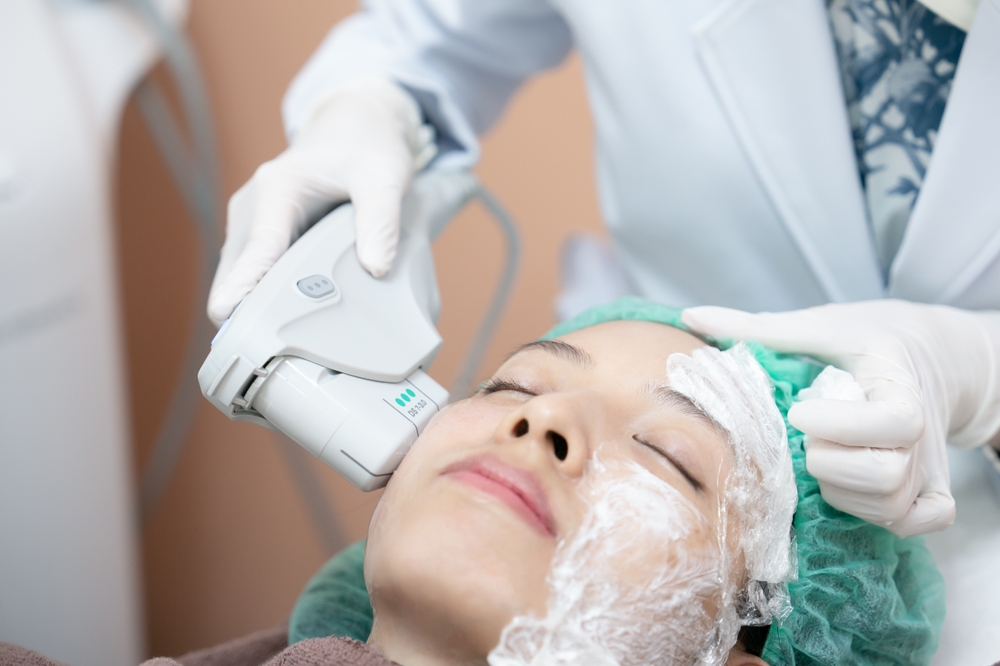
Age, skin type, degree of skin laxity, treated area, and lifestyle affect the results. Results are seen faster in younger skin. In looser skin, the process may take longer.
Yes, age is an important factor. Age-related collagen loss affects the skin's response rate. In younger skin, fibroblasts are more active. This accelerates new collagen production. Skin elasticity decreases with age. This decrease may cause results to appear later.
Individual tissue renewal capacity is related to age. However, age is not the only determinant. Overall health status and genetic factors also play a role.
The degree of skin laxity directly affects the results. Patients with mild skin laxity see results faster and more prominently. In moderate laxity, results are still positive, but the process may take a bit longer.
In more advanced sagging, it is important to set realistic expectations. Ulthera is not a surgical intervention. Therefore, it may provide limited results in cases of severe sagging. The physician should inform the patient about this in advance.
Yes, the area makes a difference. Results are generally seen faster in the facial area. The jawline may respond differently depending on the thickness of the skin. The submental area is one of the areas that responds well to treatment.
In the neck area, results may become noticeable slightly later compared to the face. Changes in the brow area are noticed more quickly due to its small size. The décolletage area is larger, and the spread of results may take time.
Area | Time to Start Seeing Results | Visibility of Results |
Brow | 2-4 weeks | High |
Face (cheek) | 4-8 weeks | High |
Jawline | 4-8 weeks | Very High |
Submental | 4-8 weeks | High |
Neck | 6-10 weeks | Medium-High |
Décolletage | 6-12 weeks | Medium |
Absolutely yes. Sun exposure accelerates skin aging. In patients who do not use sun protection, results may diminish more quickly. Smoking negatively affects collagen production. Results may appear later in smokers.
Skincare habits affect the longevity of the results. Regular use of moisturizers supports the skin barrier. Nutrition and overall lifestyle are also important. A protein-rich diet supports collagen synthesis. Adequate water intake maintains skin moisture balance.
The natural aging process continues even after treatment. Therefore, results may gradually diminish over time. However, regular care can delay this decline.
Dramatic changes in the early period occur due to edema and temporary tissue responses. Once these effects subside, the skin returns to normal. However, true collagen-derived results develop over time. Fluctuations in results do not mean the treatment was unsuccessful.
Edema occurs in the skin immediately after treatment. This edema can make the skin appear fuller and tighter. Temporary tissue tightening occurs due to the effect of energy. However, this tightening is not permanent.
Variability in tissues after treatment is a normal process. The skin swells initially. Then this swelling decreases. This decrease may concern patients. However, this situation is a expected development.
Yes, this is completely normal. Early results may differ from the final results. The appearance in the first weeks is due to edema. As the edema subsides, the skin may approach its initial state. However, this does not mean the treatment was ineffective.
Collagen production continues in the background during this period. Results may temporarily appear less pronounced. However, this situation is not permanent. Over time, new collagen integrates into the skin structure.
No, it does not mean that. The early appearance should not be evaluated in isolation. A sufficient period should be waited for a final assessment. Consultation with the treating physician should be done if necessary.
The physician evaluates the condition of the skin professionally. Ultrasound imaging or clinical examination can be used to assess subcutaneous tissues. This examination shows whether the treatment is truly effective.
The jawline, brow area, and mid-face are the areas where results are most pronounced. Positive changes are also observed in the neck and décolletage area. However, each area responds at its own pace.
A slight lifting effect around the brows can be felt a few weeks after treatment. A tighter appearance is achieved in the upper facial area. The brow area is small and targeted. Therefore, changes are noticed earlier compared to other areas.
The jawline is one of the areas where Ultherapy works most effectively. The jawline contour becomes more pronounced after treatment. For those with slight skin laxity, tightening becomes evident within 2-3 months. The skin on the jawline responds well to ultrasound energy.
Tightening of the neck skin begins within 6 to 10 weeks. Reduction in loose appearance gradually emerges. A more defined neck contour is observed by the 3rd month. The skin on the neck is slightly thinner than that on the face. This affects the timing of the results.
Skin firmness in the décolletage area increases. It reduces the appearance of fine lines. Overall improvement in skin quality is observed. The décolletage is a wide area. Therefore, the spread of results across the entire area may take time.
Area | Early Results | Final Results | Result Longevity |
Brow | 2-4 weeks | 3 months | 12-18 months |
Jawline | 4-6 weeks | 3-4 months | 12-18 months |
Face (cheek) | 4-8 weeks | 3-6 months | 12-18 months |
Neck | 6-10 weeks | 4-6 months | 12-18 months |
Décolleté | 6-12 weeks | 4-6 months | 12-18 months |
Photos should be taken with the same light, angle, and distance. The appearance in the early days should not be evaluated. An interim assessment should be made at 2-3 months. A comprehensive evaluation should be conducted at 3-6 months. Regular doctor check-ups are important.
Photography is critical for objective assessment. Shots should be taken under the same lighting conditions. The same camera should be used. Photos should be taken from the same angle. The same distance should be maintained.
Similar facial expressions facilitate comparison. Regular follow-up intervals should be established. Photos can be taken at the same time of day. This consistency accurately reflects changes.
The appearance in the early days has limited evaluative value. Swelling and temporary effects in the early period can be misleading. An interim assessment at 2-3 months is the first meaningful checkpoint. A more comprehensive evaluation should be conducted in the 3-6 month period.
Regular follow-up should be planned according to the treatment protocol. If unexpected symptoms arise, they should be evaluated immediately. Results should be compared with the patient's initial goals. The physician assesses changes in the skin with objective measurements.
Ulthera results are generally maintained for 12 to 18 months. However, this duration may vary depending on lifestyle and skincare. As the aging process continues, results may diminish over time.
The treatment supports the skin's natural collagen production. However, the aging process does not stop. Therefore, results may gradually diminish over time. The newly produced collagen deteriorates with natural aging. However, the skin will still be in better condition compared to its state before treatment.
The duration of result maintenance varies according to individual factors. Regular care is important as skin aging continues. Lifestyle directly affects the appearance of results. The use of sunscreen prolongs the lifespan of the results.
A maintenance plan can be created after evaluating individual results. Since skin aging continues, retreatment may be considered. The physician will make recommendations based on personal needs. Generally, a maintenance session can be planned after 12-18 months.
Not seeing significant results within three months may be normal for some individuals. If there are still insufficient results after six months, a consultation with the physician should be arranged. The initial skin condition, treatment parameters, and individual response should be examined.
Yes, this is normal for some individuals. The individual collagen response varies significantly from person to person. Skin structure affects the timing of results. It is more accurate to evaluate results within a 3-6 month period.
The initial skin laxity is an important determinant. In cases of severe laxity, results may be limited. The treatment area affects the level of results. The treatment parameters applied should be reviewed. Individual biological responses are not the same for everyone. Patient expectations should be realistic.
Immediate communication should be established with the physician who performed the treatment. Prolonged or severe symptoms should be evaluated professionally. The patient should not self-administer additional treatments. An appropriate intervention should be planned under the guidance of the physician.
Ulthera does not provide the same results as surgical facelift procedures. Realistic goals should be set for mild to moderate laxity. Results develop naturally and gradually. Personal anatomy and skin characteristics should be taken into account.
Ulthera is a non-surgical method. Unlike surgical procedures, skin is not removed. Therefore, it is incorrect to expect the same dramatic results as surgery. However, Ulthera provides natural rejuvenation. This naturalness is a reason for preference for many patients.
Results are best in mild laxity. Significant improvement is also achieved in moderate laxity. However, limited results should be expected in cases of severe sagging. The physician should inform the patient about this in advance.
Results do not appear overnight. This is an advantage of the treatment. Natural development allows people around to notice the changes without realizing it. No one may understand that the patient has undergone a treatment. However, the skin gradually appears younger.
Everyone's facial structure is different. Bone structure, fat distribution, and skin thickness affect the results. Therefore, before-and-after photos should be evaluated objectively. It is not correct to compare one's results with those of another person.
A detailed consultation before treatment is essential. The physician should listen to the patient's expectations. Unrealistic expectations should be corrected. This communication increases satisfaction after treatment.
Ultherapy results develop gradually. Temporary effects are observed in the initial days. The first noticeable changes begin within a few weeks. Results become clear in 2-3 months. Final results are achieved in 3-6 months. This process varies for each individual.
Results after Ultherapy do not appear immediately. Temporary tightening and a feeling of firmness may be experienced in the initial days. However, this feeling is not the final result. The first noticeable changes usually begin within a few weeks. The skin starts producing new collagen during this period.
The 2-3 month period is significant as Ultherapy results become more visible. During this time, skin firmness increases. The lifting effect becomes pronounced in facial features. Results may continue to develop over 3-6 months. This period should be waited for a final assessment.
Changes in appearance during the early period do not indicate treatment failure. It is normal for swelling to subside and temporary effects to disappear. Following this, real collagen-based results develop. In the final result assessment, the person's age, skin elasticity, treatment area, and individual collagen response should be considered.
Ultherapy is a scientifically proven treatment method. Micro-focused ultrasound technology affects the deep layers of the skin. This effect activates the skin's own repair mechanism. Results are natural, gradual, and lasting. However, this process progresses at different speeds in each patient. Patience, realistic expectations, and regular follow-up are the keys to treatment success.
The first temporary effects are seen immediately after treatment. However, real results begin within 2-4 weeks.
There may be slight changes in the skin within a week. However, these changes are not the final results yet.
Initial signs may be visible in a month. However, the results are still in the development phase.
During this period, skin firmness increases. The lifting effect becomes more pronounced. Contours become clearer.
Full results typically appear within 3-6 months.
Yes, in some individuals, results may become even more pronounced by the 6th month.
Yes, delayed results are normal due to individual differences.
A temporary decrease due to the reduction of early swelling is normal. However, true results increase over time.
Results typically last for 12-18 months.
Age, skin type, degree of laxity, area, and lifestyle affect the results.
The 6-month period should be completed. Then an evaluation should be made with the physician.
Glatt, Peter, et al. "Ultrasound Tightening of Facial and Neck Skin: A Rater-Blinded Prospective Cohort Study." Journal of Clinical and Aesthetic , vol. 10, no. 3, 2017, pp. 29-35.
Suh, David H., et al. "Intense Focused Ultrasound Tightening in Asian Skin: Clinical and Pathologic Results." Surgery, vol. 37, no. 11, 2011, pp. 1595-1602.
Oni, Georgette, et al. "Microfocused Ultrasound for Noninvasive Skin Tightening of the Face and Neck." Plastic and Reconstructive Surgery, vol. 140, no. 1, 2017, pp. 81-88.
Fabi, Sabrina G., et al. "Noninvasive Skin Tightening: Focus on New Ultrasound Techniques." Clinical, Cosmetic and Investigational , vol. 8, 2015, pp. 47-52.
Alam, Murad, et al. "Ultrasound Tightening of Facial and Neck Skin: A Rater-Blinded Prospective Cohort Study." Surgery, vol. 36, no. 3, 2010, pp. 375-382.
Gold, Michael H., et al. "Safety and Efficacy of Microfocused Ultrasound for Lifting and Tightening Lax Facial Skin." Journal of Cosmetic , vol. 15, no. 1, 2016, pp. 24-32.
Kerscher, Martina, et al. "Comparison of Different Non-Invasive Skin Tightening Modalities." Journal of the European Academy of and Venereology, vol. 29, no. 8, 2015, pp. 1487-1494.
Shono, Masaki, et al. "The Effects of Microfocused Ultrasound on Dermal Collagen Remodeling." Lasers in Surgery and Medicine, vol. 47, no. 4, 2015, pp. 315-321.
Laubach, Heinrich-Joachim, et al. "Intense Focused Ultrasound: Evaluation of a New Treatment Modality for Precise Microcoagulation Within the Skin." Surgery, vol. 34, no. 5, 2008, pp. 727-734.
Lee, Hee Ryong, et al. "Multiple Pass Therapy Using a Microfocused Ultrasound System for Skin Laxity." Journal of Cosmetic and Laser Therapy, vol. 19, no. 5, 2017, pp. 284-289.