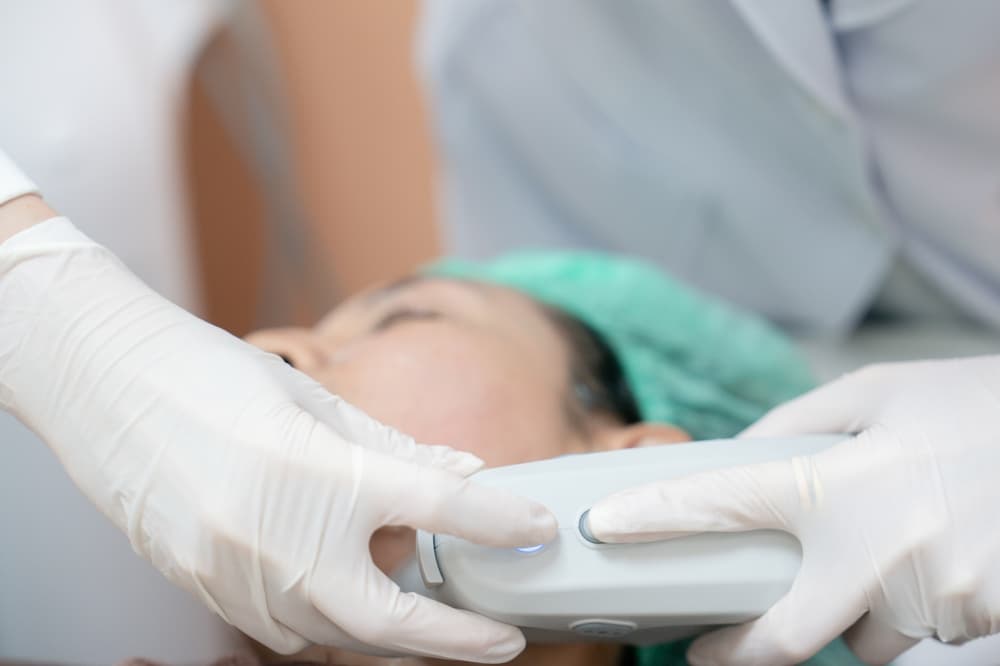

What Are the Differences Between Ulthera and HIFU?
Ulthera is a specific device platform that combines microfocused ultrasound technology with real-time imaging, whereas HIFU is the general term for high-intensity focused ultrasound technology and encompasses numerous devices. Both methods create controlled thermal points beneath the skin, stimulate collagen production, and offer a non-surgical alternative for those seeking a non-surgical facelift. However, they differ in terms of imaging support, energy control, depth options, and the level of clinical evidence. This article examines the operating principles, technological distinctions, safety profiles, and patient selection criteria of these two approaches to ultrasound skin tightening, supported by scientific sources.
What Are Ulthera and HIFU Technologies?
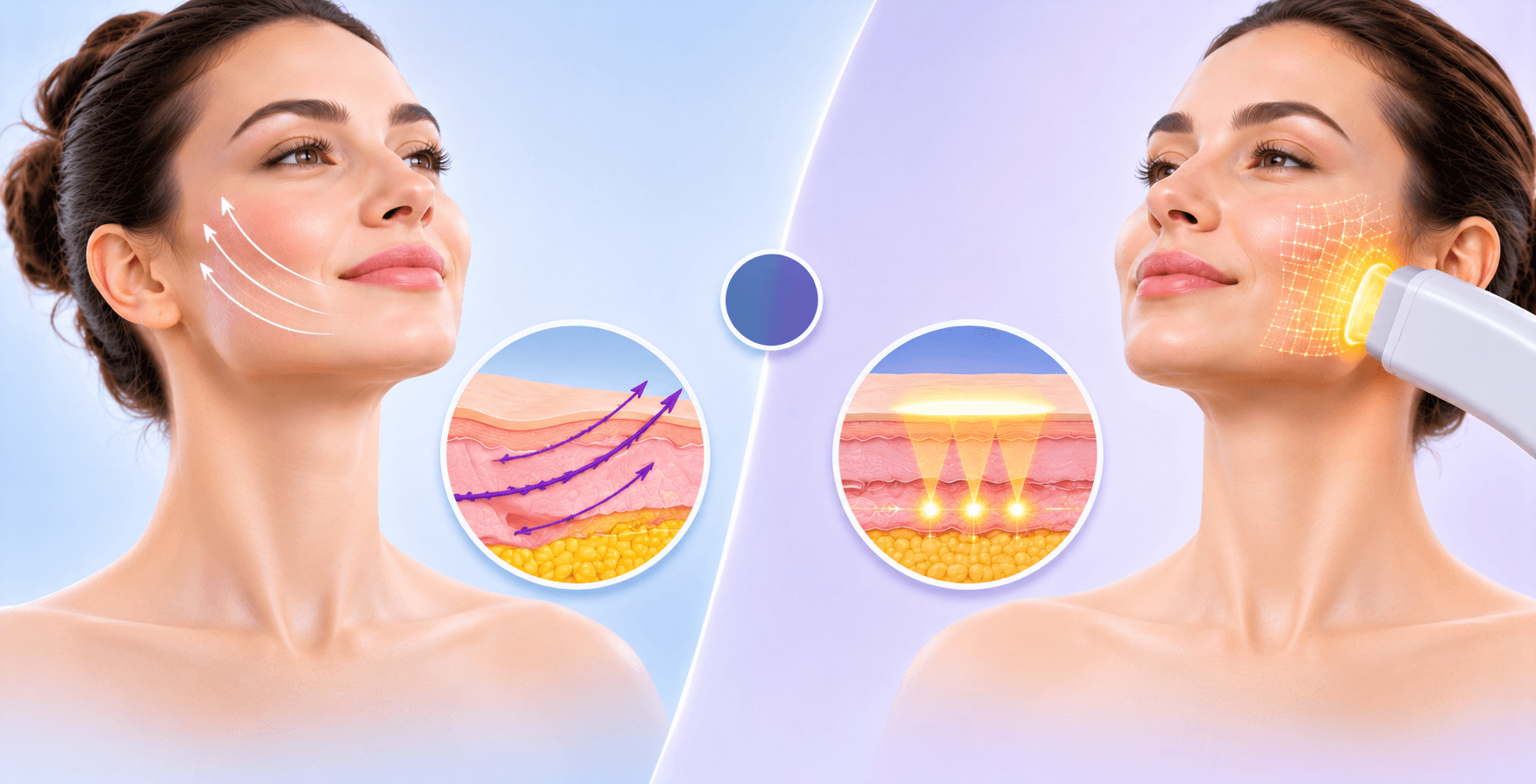
Both are non-surgical skin-tightening methods that use focused ultrasound energy to create controlled thermal coagulation points in the tissues beneath the skin and stimulate collagen production; the difference is that Ulthera refers to a specific device, while HIFU defines the entire technology class.
Focused ultrasound concentrates sound waves at a specific depth without damaging the skin's surface. The energy reaches 60 to 70 degrees Celsius in the target tissue, creating millimetric thermal coagulation points. The body perceives these points as a healing signal and directs fibroblast cells to the area. Fibroblasts synthesize new collagen and elastin fibers. This biological response reduces skin laxity and defines facial contours.
This mechanism differs from surgical facelift procedures in one fundamental way. Surgery cuts and mechanically repositions the tissues. Ultrasound treatments, on the other hand, activate the skin's natural regenerative capacity without cutting the tissue. As a result, improvements develop more gradually than with surgery, and the recovery period is significantly shorter.
Although both technologies share the same goal, the way they achieve it depends on the device's engineering. To understand this engineering difference, it is first necessary to examine how the Ulthera platform works.
How Does Ulthera Treatment Work?
Ulthera uses microfocused ultrasound (MFU) technology to create controlled thermal coagulation points at depths of 1.5 mm, 3.0 mm, and 4.5 mm beneath the skin; thanks to the DeepSEE imaging system, the physician can deliver energy precisely to the targeted tissue layer.
The device focuses ultrasound waves on a microscopic scale and converges them at a single point while bypassing the skin's surface. At the focal point, the temperature rises above 60 degrees Celsius within a short time, creating coagulation zones that denature protein structures. White et al. (2007) demonstrated in a histological study that this method can selectively target the superficial musculoaponeurotic system, or SMAS layer.
The SMAS is a fibrous tissue layer surrounding the facial muscles and is also considered a primary target in surgical facelift procedures. The ability of a non-surgical method to reach this layer is a clinically significant advantage. The thermal effect within the SMAS causes the tissue to contract and remodel gradually. Oni et al. (2014) reported that microfocused ultrasound applied to the lower face produced measurable improvement in skin laxity.
The key feature that distinguishes Ulthera from many devices is its DeepSEE technology. This system displays the subcutaneous layers on the screen as real-time ultrasound images during the procedure. Before delivering the energy, the physician measures the tissue depth, identifies critical structures such as bone and blood vessels, and plans the pulse for the correct layer. This precision enhances both the safety and predictability of the treatment.
How Is HIFU Treatment Performed?
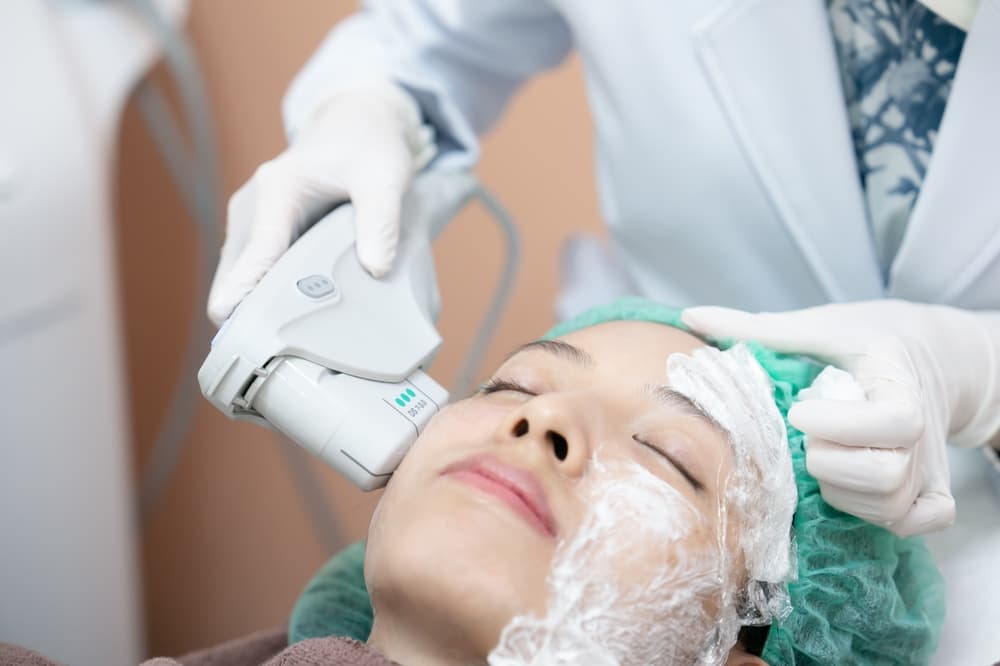
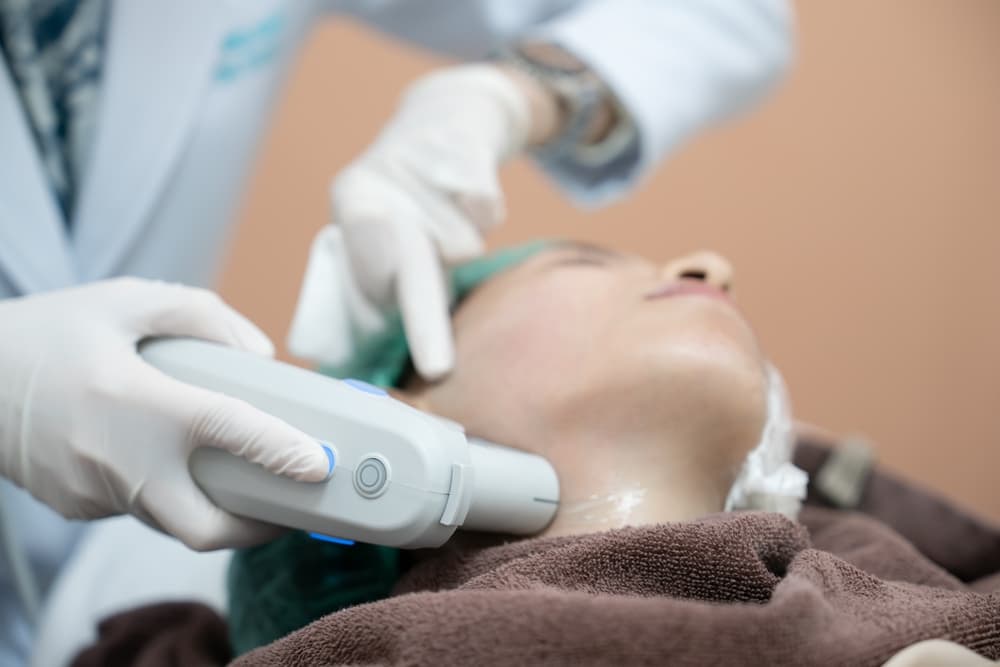
During HIFU treatment, the physician delivers high-intensity focused ultrasound energy to the target tissue through cartridges adjustable to different depths; the resulting thermal effect stimulates fibroblasts and initiates new collagen production.
HIFU, short for high-intensity focused ultrasound, describes a broad family of devices that use the same physical principle. These devices concentrate ultrasound beams at a single focal point, generating thermal energy in the target layer. Suh et al. (2011) provided pathological evidence of new collagen and elastin formation in the dermis through biopsies obtained after focused ultrasound treatment.
The treatment depth of HIFU devices varies depending on the cartridge used. Cartridges ranging from 1.5 mm to 4.5 mm are commonly used in facial treatments. Some devices offer deeper cartridges, such as 6 mm, 9 mm, and 13 mm, for body treatments. Choi et al. (2016) demonstrated in a pilot study that HIFU can achieve tightening in body skin and subcutaneous tissue. For this reason, HIFU skin-tightening treatments cover areas such as the face, submental region, and neck, as well as body areas including the abdomen, arms, and thighs.
The important point to bear in mind is that the name HIFU does not refer to a single standard. Devices from different manufacturers vary significantly in terms of energy output, focusing precision, pulse pattern, and imaging support. These differences also form the basis of the technological distinctions discussed in the next section.
What Are the Technological Differences Between Ulthera and HIFU?
The fundamental difference is that Ulthera has a standardized real-time imaging system that displays the tissue layers before each pulse; in HIFU devices, imaging capabilities vary by brand and model and are entirely absent from many models.
First, the conceptual distinction must be clarified. HIFU is the general name for a technology class. Ulthera, on the other hand, is a specific platform within this class that combines microfocused ultrasound with imaging and is referred to in the clinical literature as MFU-V. Therefore, the comparison is between a single device and an entire family of technologies. Generalizing about features that vary from one device to another can be misleading.
The difference in imaging produces two practical outcomes. First, because the physician can see the tissue layers on the screen, the risk of delivering energy at the wrong depth is reduced. Second, since each patient’s SMAS depth differs, the treatment plan can be verified according to the individual’s own anatomy. With non-imaging devices, the physician relies on standard depth assumptions and anatomical knowledge.
The second distinction concerns energy control. Ulthera operates with validated and standardized energy protocols; the size and temperature of each thermal coagulation point are consistent. In HIFU devices, energy density, focal spot size, and pulse rate vary across a broad range depending on the manufacturer. This means that clinical evidence must also be evaluated on a device-by-device basis. Results obtained with one HIFU model cannot automatically be applied to another model.
After clarifying the technological infrastructure, it is necessary to examine which layers beneath the skin these differences correspond to.
What Depths Beneath the Skin Do Ulthera and HIFU Reach?
Both technologies target layers between 1.5 mm and 4.5 mm in the facial area, including the dermis and SMAS; some HIFU devices can reach depths of up to 13 mm in body treatments.
Tissue depth determines which structure the treatment will affect. Superficial pulses improve fine lines and skin texture, while deeper pulses create a lifting effect. The table below summarizes common cartridge depths and their functions.
Cartridge depth | Target tissue layer | Primary function |
1.5 mm | Superficial dermis | Improvement in fine lines and skin texture |
3.0 mm | Deep dermis | Intensive collagen stimulation and tightening |
4.5 mm | SMAS and subcutaneous connective tissue | Lifting and contouring effect |
6.0 to 13.0 mm | Deep subcutaneous tissue and fat layer | Tightening in body areas |
SMAS depth varies from person to person and is not the same in different areas of the face. Therefore, a 4.5 mm cartridge does not automatically correspond to the SMAS in every patient. In imaging-guided systems, the physician measures the patient’s individual SMAS depth to select the appropriate cartridge. In devices without imaging, this selection is based on anatomical averages, and individual variations may affect the outcome.
Determining the correct depth is directly related to the question of which skin concern will be treated.
What Skin Concerns Are Ulthera and HIFU Used For?
Both methods are used for facial sagging, an undefined jawline, double chin, neck laxity, and wrinkles around the eyebrows and décolleté; some HIFU devices can also be applied to body areas such as the abdomen, arms, and thighs.
The most frequently assessed concern in the facial area is sagging caused by loss of elasticity. Defining the jawline and improving the appearance of a double chin are key applications of both technologies. Pak et al. (2014) reported in a retrospective study that Ulthera treatment applied to the lower face and neck provided high patient satisfaction and clinical improvement. These findings indicate that Ulthera skin rejuvenation treatments have one of the strongest evidence bases in the clinical literature.
The eyebrow area and décolleté are also among the areas assessed. Eyebrow lifting is a common treatment goal for patients who do not want surgery. Fine lines in the décolleté area are generally treated with superficial cartridges.
The situation differs for body applications. Alster and Tanzi (2012) demonstrated that focused ultrasound provided tightening in areas of skin laxity on the arms, thighs, and around the knees. However, the approved indication differs for each device; a device’s authorization for facial use may not cover body applications. The physician must plan the treatment in accordance with the device’s approved indications.
Another issue just as important as the indication is when the results will become visible.
When Do Ulthera and HIFU Results Become Visible?

Initial changes are generally noticeable within a few weeks; pronounced results appear in 2 to 3 months, and improvement may continue for up to 6 months as new collagen production continues.
The thermal effect produced by ultrasound energy creates limited tissue contraction at the time of treatment. The primary result depends on the biological renewal process that begins after this initial effect. Fibroblasts synthesize new collagen over several weeks, and this process is known as neocollagenesis. The new collagen fibers are initially disorganized; over time, they reorganize, become thicker, and provide mechanical support to the skin.
Alam et al. (2010) followed patients who underwent ultrasound tightening of the face and neck for 90 days and demonstrated that blinded evaluators identified clinical improvement in most patients. This finding supports evaluating the results over a period of months rather than days.
The speed at which results appear varies from person to person. Age, skin quality, the degree of sagging, and treatment parameters affect this timeframe. In younger skin with a higher capacity for collagen synthesis, the response generally develops more quickly and noticeably.
How long the results last is as important to patients as when they become visible.
How Long Do Ulthera and HIFU Results Last?
Ulthera treatment results generally last between 12 and 18 months, depending on the individual; the longevity of HIFU results varies according to the device used and the treatment protocol, and more frequent repeat treatments are required with most protocols.
Longevity depends on the structural lifespan of the newly formed collagen. The fibers produced through neocollagenesis are maintained for months and support skin firmness. However, the natural aging process does not stop; the body continues to lose collagen every year. Therefore, no non-surgical method can promise permanent results—it can only provide long-lasting improvement.
In the study by Pak et al. (2014), clinical improvement was reported to be maintained for many months in a significant proportion of treated patients. However, the timing of repeat treatment cannot be assigned to a single schedule. The physician determines an individualized follow-up plan based on the patient’s age, skin quality, and response to the initial treatment. An annual maintenance session is recommended for most patients; however, this recommendation cannot be generalized without a clinical examination.
After clarifying the timing and longevity of the results, it is important to address another factor influencing patients’ decisions: comfort.
Is There a Difference in Pain and Comfort Between Ulthera and HIFU Treatments?
During energy delivery in both treatments, patients may experience heat, stinging, and sensitivity; the level of discomfort depends on the treatment depth, energy intensity, and individual pain threshold. Therefore, it is not possible to claim that one device offers a universally superior level of comfort.
Pain perception is primarily related to the targeted depth. Pulses delivered to deep layers such as the SMAS are felt more distinctly than superficial pulses. Sensitivity increases in areas close to bone, such as the jawline. As energy intensity increases, the thermal effect becomes stronger and the perceived discomfort also increases.
Patient comfort depends not only on the device’s engineering but also on the physician’s treatment planning. Measures such as topical anesthetic creams before treatment, oral pain medication when necessary under physician supervision, and localized cooling can improve the experience. Most patients find the procedure tolerable, and the feeling of discomfort generally subsides once the procedure is complete.
The comfort experience is temporary; however, the safety profile should be addressed separately because it can have lasting consequences.
What Are the Side Effects of Ulthera and HIFU Treatments?
The most common side effects are temporary redness, swelling, and tenderness to touch; temporary nerve involvement or contour changes have been reported rarely, and these risks increase with incorrect depth or energy selection.
Redness and mild swelling after treatment are expected physiological responses of the tissue to the thermal effect and generally resolve spontaneously within a few hours to a few days. Tingling and tenderness to touch are similarly short-lived. Chan et al. (2011) examined the safety profile of focused ultrasound in patients of Asian descent and reported that the vast majority of side effects were temporary.
Rare complications include numbness due to temporary nerve involvement or short-term weakness in the facial muscles. In their review of the safety profile of microfocused ultrasound, Hitchcock and Dobke (2014) stated that such findings generally resolve within a few weeks. More serious risks result from incorrect depth selection or the application of excessive energy. Unintended thermal damage to fatty tissue may lead to volume loss and contour irregularities.
This overview explains the importance of choosing the right practitioner. In addition to the technical specifications of the device, the physician’s knowledge of facial anatomy and experience with the device are fundamental components of patient safety. Imaging support provides an additional layer of protection by facilitating the identification of critical structures.
Once the safety framework has been established, the question of which patient profiles are suitable for these treatments becomes relevant.
Who Is Suitable for Ulthera and HIFU?
People with mild to moderate skin laxity who do not want surgical intervention and have realistic expectations are suitable candidates for these treatments; for patients with advanced sagging, surgical options provide more appropriate results.
The ideal candidate profile generally includes individuals between 30 and 60 years of age whose skin quality is relatively preserved and whose sagging has not yet advanced. In this group, collagen synthesis capacity is adequate, and the skin responds meaningfully to thermal stimulation. Expectation management is also part of candidate selection; ultrasound treatments do not replicate the results of a surgical lift but provide natural, gradual improvement.
Non-surgical methods have limitations in patients with significant excess skin and pronounced sagging. In such cases, the physician should evaluate options with the patient, including facelift surgery. A personalized skin analysis before treatment reveals skin thickness, elasticity, fat distribution, and anatomical characteristics, forming the basis for the right decision.
Patient safety involves not only determining who is suitable but also identifying who should not undergo the treatment.
Who Is Not Recommended to Undergo Ulthera and HIFU?
These treatments are not recommended for individuals who are pregnant or breastfeeding, those with an active infection or open wound in the treatment area, those with a metal implant or electronic medical device in the treatment area, or those with a bleeding disorder.
Safety data during pregnancy and breastfeeding are insufficient; therefore, treatment planning is postponed until these periods have ended. Active infections, open wounds, or serious skin conditions in the treatment area must also be treated first.
The presence of a metal implant within or near the treatment area and the use of an electronic device such as a pacemaker require careful evaluation, as they may affect the distribution of energy. Bleeding disorders and certain systemic diseases also play a role in the decision-making process. The final determination should always be based on the contraindications listed in the device’s instructions for use and the physician’s clinical assessment.
Once the question of medical suitability has been clarified, the next practical concern patients face is cost.
What Determines the Cost of Ultherapy and HIFU Treatments?
Treatment costs are determined by the device technology, imaging system, number of shots used, size of the treatment area, and the physician’s experience, and therefore can vary significantly from one clinic to another.
Ultherapy is generally a higher-cost platform due to its original device technology and integrated imaging system. Device purchase and maintenance expenses, cartridge costs, and validated treatment protocols are reflected in this pricing structure. On the HIFU side, the wide variety of brands and models creates a broad price range; devices with limited technical features and advanced devices do not fall into the same cost category.
The second factor determining the price is the scope of the treatment. A protocol covering only a limited area, such as the jawline, does not require the same number of shots as one covering the face, neck, and décolleté. As the number of shots increases, both the treatment time and cost increase. The physician’s experience and the clinic’s standards are also reflected in the pricing; a remarkably low price may indicate an insufficient number of shots or treatment performed by an inexperienced provider.
Once the question of cost has been clarified, we can move on to whether the two technologies can be used together.
Can Ultherapy and HIFU Be Used Together in the Same Session?
In theory, they can be used within the same treatment plan; however, delivering ultrasound energy repeatedly to the same tissue carries a risk of unnecessary tissue damage, so this decision should only be made following a detailed assessment by a physician.
A conceptual reminder is necessary here. Since Ultherapy is a member of the focused ultrasound family, combining the two technologies often means applying the same physical effect twice. Although the idea of benefiting from the different depth or focusing characteristics of different devices may seem appealing, the total energy load must be calculated carefully.
If a physician plans a combination treatment, they divide the treatment areas and depths so that they do not overlap. They avoid applying a second energy treatment to the same layer and limit the total number of shots according to the tissue’s tolerance. Comparative clinical data published on such protocols are limited; therefore, combined treatment should be considered an exceptional treatment plan rather than a standard approach.
All of these topics, including the question of combination treatment, come down to one fundamental question: how should the right choice be made?
How Should the Right Choice Be Made Between Ultherapy and HIFU?
The right choice is made by evaluating the degree of skin laxity, the desired outcome, the need for imaging, the device’s clinical evidence, the physician’s experience, and the patient’s budget together.
The first step in the decision-making process is to determine the degree of laxity through skin analysis and identify which tissue layer should be targeted. The second step is to examine the device’s technical features and the evidence supported by independent clinical studies. Manufacturer marketing materials do not replace scientific publications. The table below compares the two options according to key criteria.
Criterion | Ulthera | HIFU devices |
Technology | Microfocused ultrasound (MFU-V) | High-intensity focused ultrasound |
Imaging | Standard, real-time DeepSEE | Varies by brand and model |
Facial depth options | 1.5 / 3.0 / 4.5 mm | Varies by device |
Body application | Limited indications | Up to 13 mm in some models |
Level of clinical evidence | Extensive publications in peer-reviewed journals | Varies by device |
Cost | Generally higher | Wide price range |
The differences in the table alone do not determine the decision. The treating physician’s knowledge of facial anatomy and experience with the device affect the outcome at least as much as the device itself. When the patient’s comfort expectations and budget are also taken into account, the most accurate answer always comes from an individualized clinical assessment.
What Are the Frequently Asked Questions About Ulthera and HIFU?
Below, we have compiled the most frequently asked questions about the two technologies, along with concise and clear answers based on the scientific literature and principles of clinical practice.
Is Ulthera More Effective Than HIFU?
A generalization of this kind cannot be made directly. Ulthera’s advantages include its imaging-guided precision and extensive clinical literature; however, advanced HIFU devices also produce results through the same biological mechanism. Effectiveness depends as much on proper patient selection and the physician’s experience as on the device itself.
How Do Ulthera and HIFU Support Collagen Production in the Skin?
Both methods create thermal coagulation points beneath the skin at temperatures exceeding 60 degrees Celsius. The body perceives these points as damage requiring repair and directs fibroblasts to the area. The new collagen fibers synthesized by fibroblasts strengthen the skin’s firmness and supporting structure over the course of several months (Suh et al. 2011). This mechanism gives ultrasound technologies a distinguished position among treatments that increase collagen production.
Can HIFU Reach the SMAS Layer?
Yes, cartridges operating at a depth of 4.5 mm can deliver energy to the SMAS level. However, since SMAS depth varies from person to person, with non-imaging devices it remains an assumption that the treatment pulse actually reaches the SMAS. With imaging-guided systems, the physician can verify this layer on the screen.
Can You Return to Daily Life Immediately After an Ulthera Treatment?
Yes, most patients return to their daily activities on the same day. The mild redness observed after treatment usually disappears within a few hours. Since the procedure does not involve surgical incisions, wound care or a recovery period is not required.
Does HIFU Cause the Skin to Become Looser?
When performed with the correct indication and appropriate energy settings, HIFU does not loosen the skin; its thermal effect stimulates collagen and tightens the skin. However, treatments performed at an incorrect depth or with excessive energy may lead to volume loss in the fat tissue, which can create an appearance of laxity. For this reason, the practitioner’s experience is critically important.
Is It Necessary to Use Sunscreen After Ulthera and HIFU Treatments?
Yes, physicians recommend using a broad-spectrum sunscreen daily after treatment. Although ultrasound treatment does not make the skin directly sensitive to sunlight, protecting the skin from ultraviolet damage during the period when new collagen formation continues is important for overall skin health.
Can These Treatments Be Performed Together with Dermal Fillers and Botox?
Yes, they can be performed together with proper planning. Fabi and colleagues (2016) examined the combination of microfocused ultrasound with botulinum toxin and dermal filler treatments and reported that the combination was safe when performed in the correct sequence. The physician determines whether the treatments should be combined, as well as their order and timing.
When Can Skincare Be Resumed After Ulthera or HIFU?
Most patients can resume basic skincare on the same day or the following day. For additional energy-based treatments such as peeling, laser therapy, or radiofrequency, the waiting period recommended by the physician should be observed; this period is generally several weeks.
Conclusion: Ulthera or HIFU?
The answer depends less on the device brand than on the patient’s skin structure and the physician’s treatment planning; Ulthera stands out for those seeking a platform with imaging guidance and a high level of clinical evidence, while a properly selected HIFU device may be suitable for those looking for different depth and budget options.
Throughout this article, we examined the differences between Ulthera and HIFU in terms of technology, depth, safety, longevity, and cost. The common feature of both methods is that they stimulate collagen production using focused ultrasound energy. The difference lies in how accurately, with what level of evidence, and at what cost this energy is delivered. The most appropriate decision begins with a comprehensive skin analysis performed before comparing devices and is completed with personalized planning by an experienced physician.
References
Alam, Murad, et al. "Ultrasound Tightening of Facial and Neck Skin: A Rater-Blinded Prospective Cohort Study." Journal of the American Academy of , vol. 62, no. 2, 2010, pp. 262-269.
Alster, Tina S., and Elizabeth L. Tanzi. "Noninvasive Lifting of Arm, Thigh, and Knee Skin with Transcutaneous Intense Focused Ultrasound." Surgery, vol. 38, no. 5, 2012, pp. 754-759.
Chan, Nicola P. Y., et al. "Safety Study of Transcutaneous Focused Ultrasound for Non-Invasive Skin Tightening in Asians." Lasers in Surgery and Medicine, vol. 43, no. 5, 2011, pp. 366-375.
Choi, Sun Young, et al. "Tightening Effects of High-Intensity Focused Ultrasound on Body Skin and Subcutaneous Tissue: A Pilot Study." Journal of the European Academy of and Venereology, vol. 30, no. 9, 2016, pp. 1599-1602.
Fabi, Sabrina Guillen, et al. "Combining Microfocused Ultrasound with Botulinum Toxin and Temporary and Semi-Permanent Dermal Fillers: Safety and Current Use." Surgery, vol. 42, supplement no. 2, 2016, pp. S168-S176.
Hitchcock, Theresa M., and Michael K. Dobke. "Review of the Safety Profile for Microfocused Ultrasound with Visualization and Vertical Vector Lift." Journal of Cosmetic , vol. 13, no. 4, 2014, pp. 329-335.
Oni, Georgette, et al. "Evaluation of a Microfocused Ultrasound System for Improving Skin Laxity and Tightening in the Lower Face." Aesthetic Surgery Journal, vol. 34, no. 7, 2014, pp. 1099-1110.
Pak, Chang Sik, et al. "Safety and Efficacy of Ulthera in the Rejuvenation of Aging Lower Face and Neck: A Retrospective Study." Aesthetic Plastic Surgery, vol. 38, no. 5, 2014, pp. 861-868.
Suh, Dong Hye, et al. "Intense Focused Ultrasound Tightening in Asian Skin: Clinical and Pathologic Results." Surgery, vol. 37, no. 11, 2011, pp. 1595-1602.
White, W. Matthew, et al. "Selective Creation of Thermal Injury Zones in the Superficial Musculoaponeurotic System Using Intense Ultrasound Therapy: A New Target for Noninvasive Facial Rejuvenation." Archives of Facial Plastic Surgery, vol. 9, no. 1, 2007, pp. 22-29.
Get in touch with our expert team
Related Posts