
Yükleniyor…
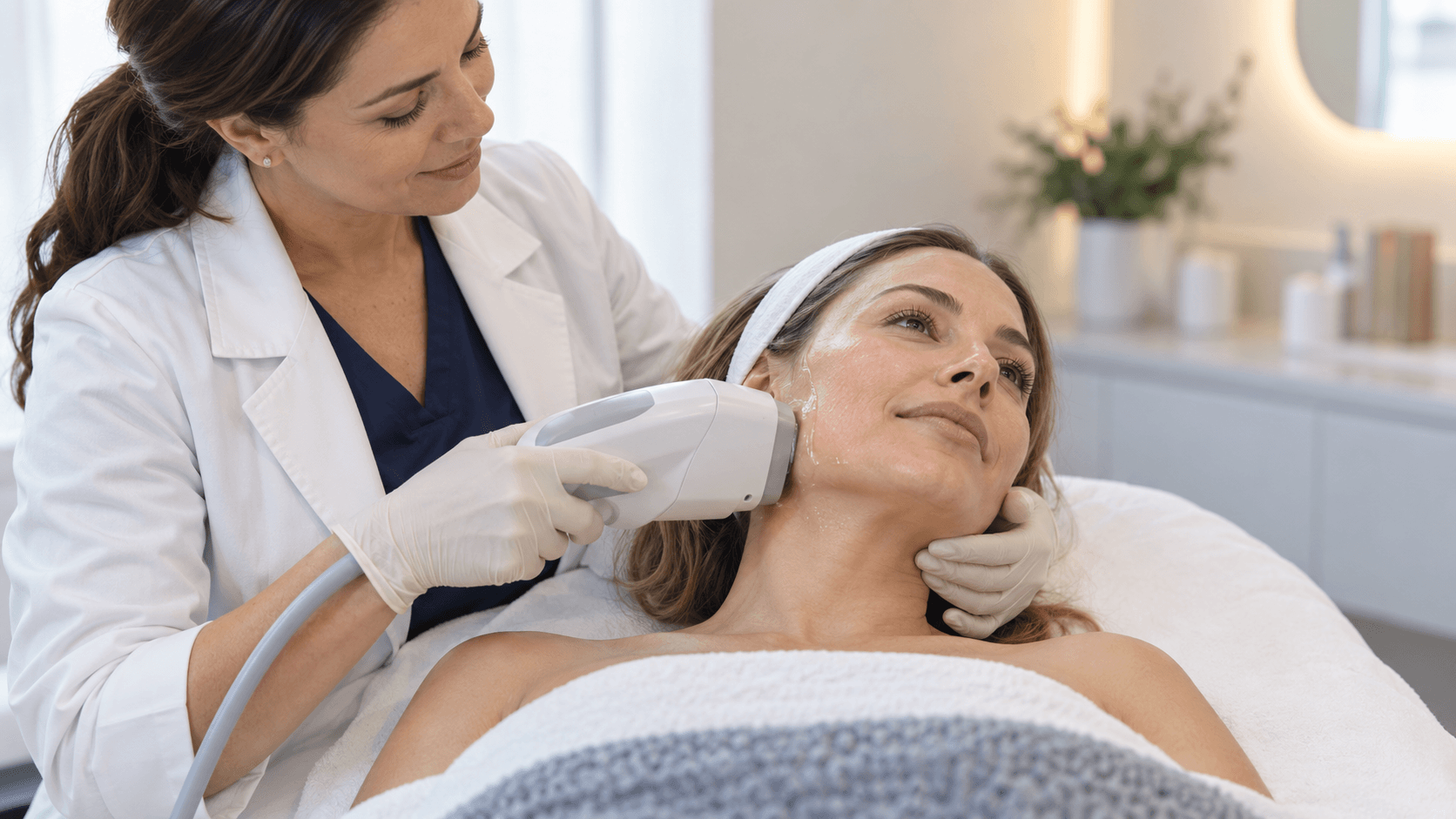
Yes, with the right patient selection and an experienced practitioner, Ulthera is considered a safe procedure according to current scientific evidence. The common side effects of the procedure are limited to mild symptoms such as redness, slight swelling, and temporary numbness. Serious complications are rare and are mostly associated with incorrect patient selection, incorrect energy depth, or inexperienced application.
Ulthera is a method that uses micro-focused ultrasound technology in the field of non-surgical skin tightening. It targets loose tissues in the face, neck, chin, and décolletage area. The recovery time is almost nonexistent compared to surgery. Therefore, the most frequently asked question by those researching the procedure is about safety. This article systematically examines the safety of Ulthera in terms of evidence, side effects, complications, and patient selection.
Ulthera sends focused ultrasound energy to predetermined depths without touching the skin's surface. The energy leads to the formation of small heating points in the target tissue. These points initiate collagen renewal. The safety of the technology relies on the independent and controlled delivery of energy away from the skin surface.
The energy passes through the skin surface and creates microscopic heat points at depths of 1.5, 3.0, and 4.5 millimeters. Each point remains below a millimeter. Surrounding tissue is not damaged. Laubach and colleagues' (2008) tissue studies have shown that these heat points form in extremely limited areas in an inverted cone shape.
This precision is the fundamental safety advantage of the procedure. In methods that affect the skin surface, such as lasers, the epidermis is at risk. Ulthera, on the other hand, delivers energy by bypassing the skin's protective outer layer. Therefore, the risk of burns and scars on the skin surface is low.
The heat points cause the existing collagen fibers to shorten and reorganize at temperatures between approximately 57 and 70 degrees. The body produces new collagen to repair this controlled damage. The process progresses over weeks, and results become apparent over months.
Suh and colleagues' (2011) histological study recorded a significant increase in collagen density and dermal thickness 90 days after treatment. This finding explains why results do not appear immediately but gradually. The same finding is also critical in terms of expectation management. The patient observes results not on the day of the procedure but in the following two to six months.
The practitioner monitors the live ultrasound image of the treated tissue during the procedure. This image ensures that energy is kept away from sensitive structures such as bones, vessels, and nerves. This aspect distinguishes it from focused ultrasound systems applied without imaging.
This feature allows the treatment depth to be adjusted according to the individual. The anatomy of each face is different. Bone structure, fat tissue thickness, and nerve pathways vary from person to person. Imaging enables the practitioner to direct energy to the correct layer. Thus, the risk of application at the wrong depth is reduced.
The safety profile is based on three main pillars. These include approval from the U.S. Food and Drug Administration, over a decade of clinical usage history, and numerous clinical studies published in peer-reviewed journals. This evidence shows that the procedure is well tolerated and serious events are rare.
Approval means that the device has been evaluated for safety and efficacy for the specified indications. The approval covers indications for brow lifting, lifting of neck and submental tissue, and improvement of décolletage wrinkles. However, approval does not mean that the procedure carries zero risk. As with any medical device, there are known and reportable side effects.
The practical implication of approval is as follows. The device has undergone standardized manufacturing and clinical testing processes. It does not carry the same assurance as a random ultrasound device. The patient should confirm that the device used prior to the procedure is an approved system.
The focused ultrasound that forms the basis of the technology has been used in medicine for decades. Its adaptation to the aesthetic field dates back to the late 2000s. During this time, millions of applications have taken place worldwide. The accumulation shows that the side effect pattern is well defined.
White et al. (2007) experimentally demonstrated that the technology could selectively deliver energy to the deep muscle and tendon tissue of the face. This early study laid the foundation for subsequent clinical series. Follow-up data exceeding a decade supports that long-term safety issues have not unexpectedly arisen.
Studies consistently report that the serious side effect rate of the procedure is low. One of the most comprehensive early evidences has a prospective design where evaluators are blinded. No serious events were reported in the study.
Alam et al. (2010) conducted a cohort study where evaluators were blinded in facial and neck tightening. Researchers reported that the treatment was well tolerated and no significant safety signals were captured. Chan et al. (2011) obtained similar results in their safety study conducted in an Asian population. Fabi et al. (2015) also reported no serious side effects in a multicenter study targeting the décolletage area. This consistency reveals a repeated safety pattern across different populations and regions.
Type of Evidence | Sample Study | Sample | Safety finding |
Experimental tissue study | Laubach et al. 2008 | Cadaver skin samples | Heat damage was limited to target depth |
Early clinical evidence | White et al. 2007 | Experimental model | Deep tissue was selectively targeted |
Prospective cohort | Alam et al. 2010 | 35 patients | No serious side effects reported |
Multicenter pilot | Fabi et al. 2015 | Multicenter series | No serious events observed |

Common side effects are mild and temporary. The most frequently observed are redness, a feeling of warmth, slight swelling, tenderness, tingling, and rarely bruising. These symptoms typically resolve on their own within a few hours to a few days.
In most cases, redness subsides within a few hours, at most within a few days. The feeling of warmth is due to the heat-based nature of the treatment and is temporary. If redness persists beyond a week, evaluation is necessary.
Yes, both are expected and considered normal reactions. Swelling is related to the tissue's heat response and usually lasts for two to four days. Sensitivity may be particularly noticeable in the jowl and jawline areas. These symptoms typically do not interfere with daily life.
Energy can temporarily stimulate small sensory nerve endings in deep tissues. This condition manifests as tingling, prickling sensations, or mild numbness. In most cases, these sensations completely disappear within a few days to a few weeks.
Yes, especially small bruises can be seen in thin and vascular skin. Bruising is associated with minimal contact with the vessel wall. Depth preference and personal tendency affect this risk. Bruises typically fade within one to two weeks.
Side effect | Typical onset | Typical duration | When is it normal |
Redness | At the time of the procedure | A few hours to a few days | If it disappears within the first week |
Swelling | Hours after the procedure | Two to four days | If it does not exceed one week |
Tingling and numbness | In the first days | A few days to a few weeks | If there is progressive improvement |
Bruising | First days | One to two weeks | If the color is regularly lightening |
Rare complications may present as temporary facial asymmetry, localized volume loss, subcutaneous nodules, and surface irregularities. The common cause of these events is often incorrect patient selection, improper depth preference, or insufficient application experience. The likelihood of occurrence is low with the correct protocol.
Rarely, temporary irritation may occur on motor nerve fibers. This condition leads to slight asymmetry in one eyebrow or at the corner of the lips. Nerve stimulation should be distinguished from actual damage. True nerve damage is extremely rare. Temporary asymmetry usually resolves within days to weeks.
If energy is applied to the fat layer at an incorrect depth, thinning of the local fat tissue may occur. This condition creates a noticeable feeling of volume loss in individuals who already have little fat tissue in their face. The risk increases with unnecessary energy applied to the facial fat cavity areas. Proper depth selection greatly mitigates this risk.
Scarring is rare because the skin surface is protected with proper use. Reported surface irregularities are mostly associated with excessive energy density or incorrect spacing of consecutive lines. An experienced practitioner adjusts line spacing and energy levels according to skin thickness.
Redness or swelling lasting more than a week, progressive numbness, changes in swallowing or speaking, noticeable sinking, and persistent pain require medical evaluation. If these symptoms occur, it is necessary to consult the center where the procedure was performed. Early evaluation facilitates the management of potential issues.
Safety is a combination of four main factors. These factors are the device itself, the training of the practitioner, the correct selection of energy and depth, and the appropriate patient selection. If any single link in this chain is weak, the overall safety level decreases.
The practitioner must understand facial anatomy, nerve pathways, and the significance of energy depths. The safety features of the device provide meaningful contributions in capable hands. Inexperienced application is the most common shared cause of rare complications. Therefore, it is preferable for the procedure to be performed by a physician or under physician supervision.
Each depth targets a different tissue layer. A depth of 4.5 millimeters reaches the deep supportive tissue of the face and neck. A depth of 3.0 millimeters targets the dermis. A depth of 1.5 millimeters works on the superficial dermis. Delivering energy to the wrong layer can result in ineffective outcomes or unwanted tissue effects.
Imaging allows the practitioner to keep structures such as bones and nerves outside the treatment plan. It also provides the opportunity to confirm that the energy reaches the expected layer. This visual feedback reduces the margin of error compared to blind application.
Original devices are inspected for calibration and safety sensors. Imitation or poorly maintained devices may show deviations in energy output. Deviations in energy output create risks of both ineffectiveness and tissue damage. Patients should inquire about the originality of the device before the procedure.
Individuals with advanced sagging, those with active skin infections, people with electronic implants such as pacemakers, pregnant and breastfeeding women, and those with unrealistic expectations may not be suitable for the procedure. Assessments for these groups must be conducted under medical supervision.
Ultherapy provides the best results for mild to moderate looseness. In advanced sagging, the volume and weight of the tissues exceed the lifting capacity of ultrasound. Surgical options offer a more realistic outcome for patients in this condition. Incorrect patient selection means both dissatisfaction and unnecessary risk.
Applying energy to an infected or damaged area increases the risk of spreading the infection. It also disrupts the healing process. The procedure should be planned only after the integrity of the skin is fully restored.
Ultrasound energy can theoretically affect the functioning of electronic devices. A preliminary assessment is essential for patients with pacemakers and implanted defibrillators. The physician establishes the balance of risk and benefit on an individual basis.
There is insufficient safety data regarding cosmetic procedures performed during these periods. Lack of evidence is a sufficient reason to postpone the procedure. Most physicians recommend planning after pregnancy and breastfeeding have concluded.
The gap between expectation and outcome is the most common reason for patient dissatisfaction. Ultherapy does not provide the effects of surgical facelift. The procedure should not be planned unless the patient accepts this limitation. Correct expectations are part of the safety assessment of the treatment.
It is normal to feel heat, pressure, and tingling during the procedure. The level of pain varies from person to person. The practitioner manages comfort through cooling, energy adjustment, and pain relief if necessary.
A deep warming sensation, localized pressure feeling, and intermittent tingling are expected parts of the treatment. These sensations indicate that the energy has reached the target tissue. Sharp pain is not expected and should be reported to the practitioner.
A sensation of heat occurs at the moment each energy line is applied and passes within seconds. Tingling is the response of nerve endings to heat. Both sensations disappear after the line application.
The practitioner adjusts the energy level according to the individual's tolerance level. Cooling heads and regional anesthesia options provide support. Oni and colleagues (2014) reported that patient comfort significantly improved with proper energy adjustment. Fabi and colleagues (2020) showed that systematic comfort protocols increased satisfaction.
The duration of treatment is related to the number of areas and line density. Typically, facial and neck applications last between 60 to 90 minutes. Longer durations do not pose a risk by themselves. However, excessive line density creates unnecessary tissue load. Planning should be done according to the needs of the area.
Since the procedure is non-surgical, there is no significant recovery process. Most patients return to their daily lives on the same day. No special precautions are needed except for sun protection and a few days of skincare restrictions.
Most patients can immediately return to their normal activities after the procedure. Intense exercise and extremely hot environments are not recommended for the first day. It is preferred not to lie face down until the swelling subsides.
Skin sensitivity temporarily increases after the procedure. Sun exposure raises the risk of pigmentation changes. The use of broad-spectrum sunscreen is especially important during the first week.
In the first few days, abrasive products, creams containing retinoids, and harsh peeling treatments should be avoided. Cleansing should be done with gentle products. The use of moisturizers supports the skin.
If numbness lasts longer than three weeks or if swelling increases, one should contact the application center. Early control initiates supportive treatment in a timely manner if necessary.
Results become gradually noticeable not on the day of treatment, but within two to six months. Results vary from person to person. The procedure is not an alternative to surgical facelift but an option for patients who do not wish to undergo surgery or want to postpone it.
New collagen synthesis is a biological process and cannot be accelerated. Werschler and Werschler (2016) demonstrated that results can take up to a year and develop gradually. This timeline is essential data for setting accurate patient expectations.
Skin thickness, collagen reserves, age, lifestyle, and the protocol applied determine the outcome. Two patients may respond differently to the same energy plan. This variability means that a precise guarantee of results cannot be provided in advance.
No. The mechanisms of action and levels of results of the two methods are different. Surgery removes excess skin and repositions tissues. Ulthera stimulates and tightens the existing tissue. This comparison is necessary to accurately adjust patient expectations.
Feature | Ulthera | Surgical facelift |
Approach | Non-surgical, skin integrity is preserved | Requires surgical incisions |
Anesthesia | Generally not required | Generally required |
Recovery | Return to daily life the same day | Recovery lasting weeks |
Level of effect | Natural tightening for mild to moderate looseness | Significant correction in advanced sagging |
Duration of results | Up to one year | May last longer |
Expectations should be set at a level of a firmer and more lifted skin appearance. Significant tissue lifting and excess skin removal should not be expected. The physician should clearly explain this limit during the pre-treatment assessment.
The concern reflects a limited risk that can occur with incorrect depth and area selection. However, this event is a rare side effect and can largely be prevented with appropriate patient selection. Dramatic examples in online shares often reflect protocol violations.
High-intensity focused ultrasound intentionally targets adipose tissue in some devices. In Ulthera protocols, however, the target is collagen-rich deep tissue layers. If the energy is not directed at the adipose layer at the correct depth, the adipose tissue is not affected.
If unnecessary depth of 4.5 millimeters is used in the areas where facial fat pads are located, thinning of the adipose tissue may occur. This situation is particularly noticeable as volume loss in weak facial structures. Proper planning excludes fat compartments from treatment.
An experienced practitioner determines the direction and depth of the treatment according to anatomical boundaries. Imaging shows the location of fat compartments during the procedure. These two protections minimize the risk.
Such shares are one-sided narratives. No conclusions can be drawn without knowing where, with which device, and by whom the procedure was performed. Local fat atrophy has been rarely reported in the literature, and most cases are associated with application errors. A single event does not define the overall safety profile of the procedure.
Redness or swelling lasting more than a week, progressive numbness, permanent changes in facial movements, noticeable sinking, and severe pain are reasons to consult a doctor. When these symptoms arise, assessment should be sought rather than waiting.
If redness lasts more than a week or swelling continues to increase, a check-up is necessary. These findings may indicate an unusual tissue response. Early examination facilitates necessary intervention.
If numbness lasts more than a month or the area of numbness is expanding, a nerve evaluation should be conducted. Most sensory complaints are temporary. However, prolonged findings may be a sign of a condition that requires treatment.
If asymmetry is noticed in the movement of the eyebrow, eyelid, or lip, the application center should be informed on the same day. Most temporary cases resolve spontaneously. Follow-up ensures proper management of the recovery process.
A physician evaluation should be requested along with photographic documentation. Early supportive treatments can accelerate the healing of certain irregularities. In late-stage cases, additional interventions may be considered.
The identity of the practitioner, the authenticity of the device used, the planning of treatment depth, and the explanation of potential side effects are fundamental questions that should be asked before the procedure. Clear answers to these questions are the first step towards a safe process.
The medical history of the practitioner and their training on the device should be inquired about. The level of experience is crucial in managing rare complications. The practitioner should clearly share their experience.
The combination of the original device and the correct transducer should be confirmed. Depth options should be compatible with the targeted area. This information forms the scientific basis of the treatment plan.
Depth is selected based on skin thickness and the targeted tissue layer. The practitioner should make this selection with imaging assistance. Non-standard depth preferences should be justified.
Information such as pacemaker, pregnancy, active infection, and medication use is fundamental for contraindication screening. Missing information poses a risk of incorrect decisions. Complete and honest information is part of the patient's own safety.
The patient should receive written information about common side effects and symptoms that require urgent attention. A follow-up appointment should be scheduled. This transparency is a condition for building a trust relationship.
No, no medical procedure is completely risk-free. The risk profile of Ulthera is low, and side effects are largely limited to mild effects. The concepts of "approved" and "safe" should be distinguished from the concept of "risk-free."
The risk of burns is very low as the skin surface is protected with proper use. Reported cases of burns in the literature are associated with improper device use or protocol violations. The original device and an experienced practitioner nearly eliminate this risk.
True nerve damage is extremely rare. Temporary irritation is more common and resolves within days to weeks. The imaging feature provides an extra layer of protection for nerve structures.
It is theoretically possible with incorrect depth and area selection. However, with appropriate patient selection and the correct protocol, this risk is minimal. Planning is done especially carefully for patients who already have little fat tissue in their face.
Yes, temporary numbness and tingling are expected side effects. This sensation usually disappears within a few days to a few weeks. If numbness persists, evaluation is necessary.
The device is considered safe for darker skin tones as it does not target melanin. Studies have reported similar safety patterns across different skin types. Nevertheless, individual assessment is essential for each patient.
There is no legal upper limit. However, the procedure yields the most sensible results in adults experiencing mild to moderate laxity. Expectations are limited in cases of significant sagging in older age. The physician considers not only age but also skin condition.
A significant recovery process is not required. Sun protection and a few days of gentle care are sufficient. Most patients return to their social life on the same day as the procedure.
Ulthera is a safe procedure when the right patient is selected and performed by an experienced practitioner, based on current evidence. Safety is a combination of device technology, practitioner competence, and patient suitability. When this trio is complete, the risk level is low, and the outcome level is satisfactory.
In summary, common side effects are limited to redness, swelling, tingling, and temporary numbness, all of which resolve spontaneously. Rare complications are primarily associated with application errors and incorrect patient selection. Approval from the U.S. Food and Drug Administration, a history of over ten years of use, and consistent clinical trial data support the safety profile of the procedure.
The final decision should be made based on a personal physician's assessment, not a standard list. This article is for informational purposes and does not constitute medical advice.
Alam, Murad, et al. "Ultrasound Tightening of Facial and Neck Skin: A Rater-Blinded Prospective Cohort Study." Journal of the American Academy of , vol. 62, no. 2, 2010, pp. 262-269.
Chan, N. P., et al. "Safety Study of Transcutaneous Focused Ultrasound for Non-Invasive Skin Tightening in Asians." Lasers in Surgery and Medicine, vol. 43, no. 5, 2011, pp. 366-375.
Fabi, S. G., et al. "A Prospective Multicenter Pilot Study of the Safety and Efficacy of Microfocused Ultrasound with Visualization for Improving Lines and Wrinkles of the Decollete." Surgery, vol. 41, no. 3, 2015, pp. 327-335.
Fabi, S. G., et al. "Practical Guidance for Optimizing Patient Comfort during Microfocused Ultrasound with Visualization and Improving Patient Satisfaction." Aesthetic Surgery Journal, vol. 40, no. 2, 2020, pp. 208-216.
Laubach, H. J., et al. "Intense Focused Ultrasound: Evaluation of a New Treatment Modality for Precise Microcoagulation within the Skin." Surgery, vol. 34, no. 5, 2008, pp. 727-734.
Oni, G., et al. "Evaluation of a Microfocused Ultrasound System for Improving Skin Laxity and Tightening in the Lower Face." Aesthetic Surgery Journal, vol. 34, no. 7, 2014, pp. 1099-1110.
Suh, D. H., et al. "Intense Focused Ultrasound Tightening in Asian Skin: Clinical and Pathologic Results." Surgery, vol. 37, no. 11, 2011, pp. 1595-1602.
Werschler, W. P., and P. S. Werschler. "Long-Term Efficacy of Micro-Focused Ultrasound with Visualization for Lifting and Tightening Lax Facial and Neck Skin Using a Customized Vectoring Treatment Method." Journal of Clinical and Aesthetic , vol. 9, no. 2, 2016, pp. 27-33.
White, W. M., et al. "Selective Creation of Thermal Injury Zones in the Superficial Musculoaponeurotic System Using Intense Ultrasound Therapy: A New Target for Noninvasive Facial Rejuvenation." Archives of Facial Plastic Surgery, vol. 9, no. 1, 2007, pp. 22-29.