Yükleniyor…
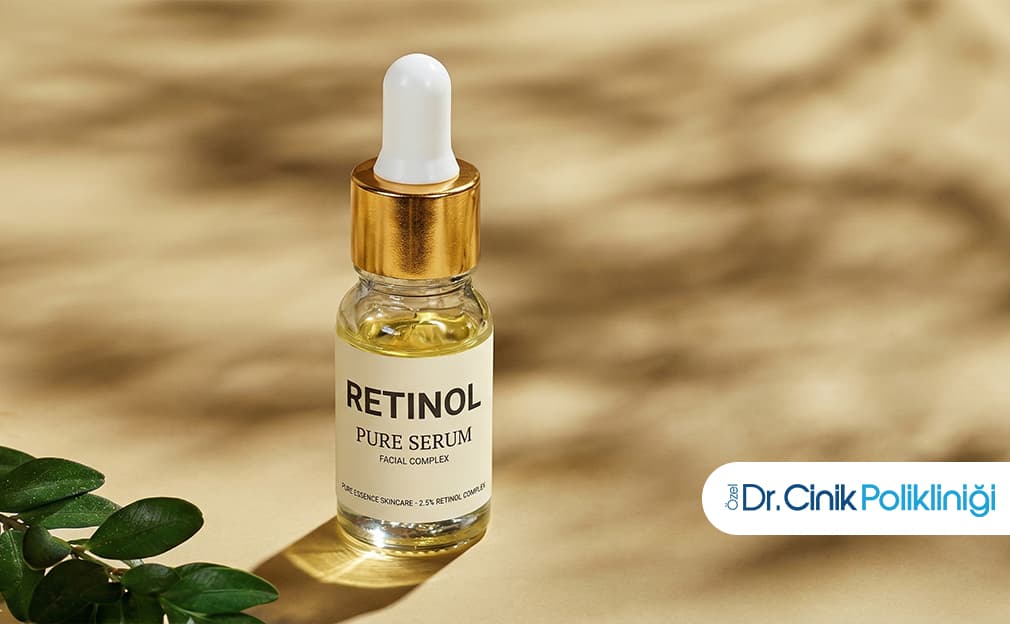
Retinol, a form of vitamin A, is an ingredient added to skin creams, lotions, and serums. It has anti-aging effects and can help clear acne. Products containing retinol are widely available over the counter; stronger concentrations of retinoids are obtained by prescription.
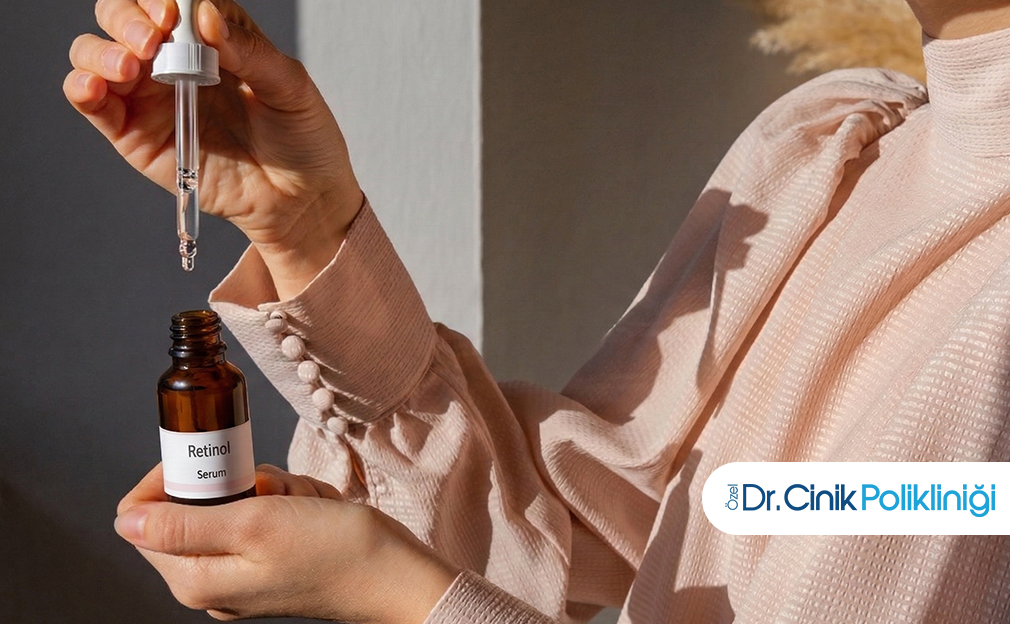
Retinol is a form of vitamin A that has many applications in skin care. It is used in acne treatment and shows anti-aging effects. You can purchase retinol over the counter or consult a healthcare professional to discuss how to best incorporate it into your skincare routine. Your specialist may prescribe medications containing higher concentrations of retinoids compared to over-the-counter products.
Retinol is a topical treatment, meaning it is applied directly to the skin. Retinol is available in many forms:
Retinol is also sometimes used in the formulation of cosmetic products.
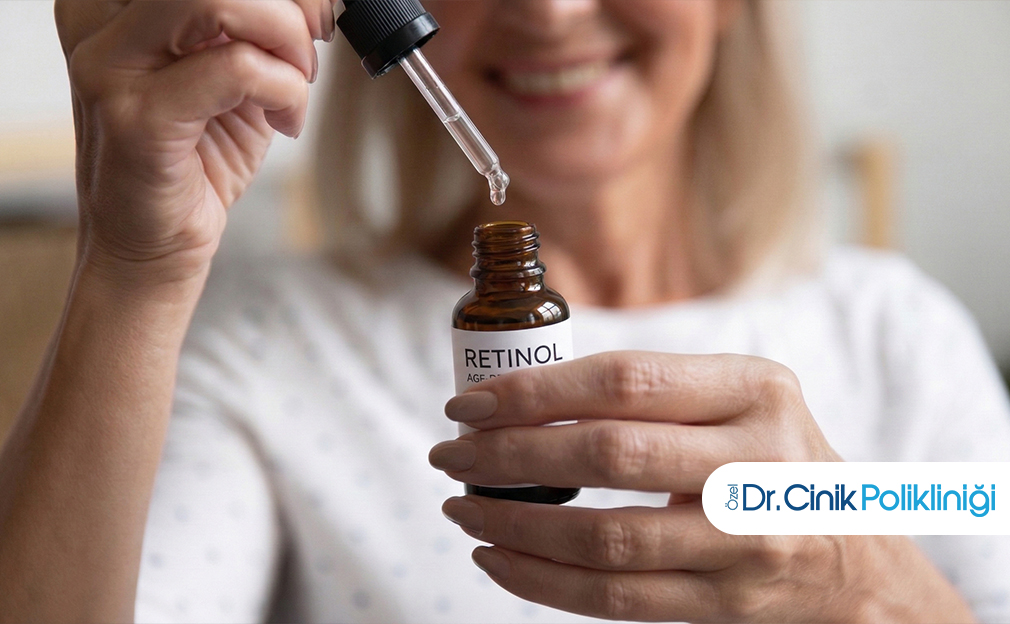
Retinol increases the production (replication) of skin cells. It helps prevent clogged pores. It also exfoliates the skin (removes dead skin) and boosts collagen production. These effects can reduce the appearance of fine lines and wrinkles, making the skin look fresher and fuller.
Retinol begins to work in your cells immediately, but it may take a few weeks to see improvement in the appearance and texture of your skin. Initially, your skin condition may look worse during the adjustment period to the new routine.
Many over-the-counter retinol products are marketed to improve the appearance of the skin. If these are not sufficient, you can consult a (a medical doctor specializing in skin diseases) for more effective prescription products. Studies show that topical retinoids can help treat acne, acne scars, and stretch marks. Retinol also has anti-aging effects. It is particularly beneficial for the following conditions:
Acne is a common skin issue. When your pores are clogged with dead skin cells and/or oil, blackheads, whiteheads, or other types of acne can form. Retinol works against acne by preventing clogged pores. You may still see breakouts during the first few months of treatment, and your skin may look worse (this is sometimes referred to as “retinol purging”). However, if you continue to use it, you will achieve clearer skin over time.
Acne scars occur as a result of damage and inflammation. While your skin heals from acne, pink, red, or dark spots may appear and can last for several weeks. Additionally, squeezing or popping pimples can cause further damage to the skin and lead to permanent scars. Topical retinol treatments help reduce swelling and inflammation associated with acne and support the prevention of new acne formation. However, topical retinol treatment may not always be effective for advanced acne scars that are indented or raised.
Dark spots (hyperpigmentation) can develop as a result of sun damage to the skin. If you have spots on your face, hands, neck, or arms that range from light brown to dark brown, what you are seeing is a buildup of melanin, which gives your skin its color (pigment). These spots, also known as sun spots, age spots, and liver spots, are painless; however, if you are not satisfied with their appearance, there are some procedures and topical treatments that can help. Some people notice that topical retinol lightens skin spots, but this can take months and may irritate the skin. If you are concerned about dark spots, it is a good idea to see a (a medical doctor specializing in skin diseases).
A pore is an opening on the skin's surface that allows body hair and oil to pass through. These pores become larger and more noticeable when clogged with dead skin cells or oil. Topical retinol reduces the appearance of enlarged pores by increasing the skin cell turnover (which thickens the skin) and preventing pore blockage.
Kaposi sarcoma is a rare type of cancer that can affect individuals with weakened immune systems. People with Kaposi sarcoma often develop dark-colored spots or patches that can be flat or raised. These lesions can be blue, black, pink, red, or purple. Alitretinoin is a retinoid that can slow the growth of Kaposi sarcoma cells. While it does not cure the cancer, your healthcare provider may recommend the application of alitretinoin gel to Kaposi sarcoma lesions to slow their progression.
Melasma is another common skin condition that leads to the formation of dark spots or patches in sun-exposed areas. Exposure to light, heat, and certain hormone levels increases the amount of melanin you produce, which can result in flat or freckle-like spots that are light brown, dark brown, or blue-gray. Melasma is most commonly seen during pregnancy. If you are pregnant, you should consult your healthcare provider before using oral or topical medications or supplements. If you are not pregnant, a topical retinoid (tretinoin) may help lighten melasma spots.
Psoriasis is a skin disease that causes new skin cells to grow very rapidly due to inflammation. These new cells accumulate to form a thick, scaly rash that is pink or red in color. Topical retinol slows down the excessive proliferation of skin cells and reduces inflammation; this can help the rash heal. However, because retinol can irritate the skin further, your healthcare provider usually recommends using retinol in conjunction with topical steroids.
Stretch marks are scars that occur as a result of the skin stretching due to pregnancy, weight gain, significant weight loss, or rapid muscle development. These scars initially appear pink, red, or purple, and over time fade to a silvery or white appearance. Topical retinol can help make stretch marks less noticeable; however, you should always consult your healthcare provider before using it during pregnancy or breastfeeding.
Many factors can cause wrinkles to form on the skin. As we age, skin cells divide more slowly. The middle layer of the skin (dermis) begins to thin, making it harder to retain moisture, and the amount of elastin and collagen in the skin decreases. Topical tretinoin and tazarotene can improve the appearance of fine lines and wrinkles by slowing down the breakdown of collagen and increasing the skin's elasticity. Regular use of topical retinol for several months is usually required to see noticeable results.
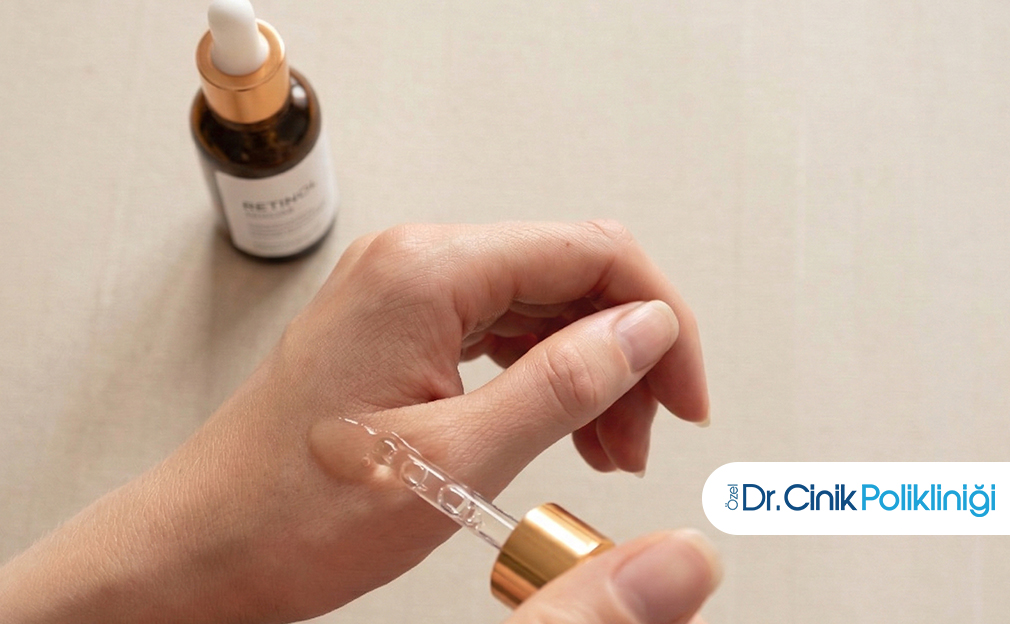
The serum form penetrates the skin faster due to its smaller molecular size.
The answer to the question of what retinol cream does is more about:
Retinol is a powerful ingredient against aging skin and acne; however, it is not suitable for everyone. If you are prone to allergies or have sensitive skin, you may want to try products with alternative anti-aging or skin-cleansing ingredients. Additionally, retinol makes your skin more sensitive to sunlight; therefore, you should always apply sunscreen when using retinol and avoid sun exposure as much as possible.
Before using a retinol product for the first time, test a small area of your skin (patch test) to see if there is any adverse reaction. If there is no significant redness or itching in the tested area after a few days, you can add retinol to your nighttime routine.
Follow the instructions on the packaging or the recommendations of your healthcare professional while using retinol. Generally, the application steps are as follows:
Since retinol can irritate the skin, it is best to start slowly. After the patch test, you can use the product every few days, then gradually increase the frequency to once or twice a day. You may experience redness, itching, or a burning sensation initially; however, these symptoms will fade as your skin adjusts to the treatment.
Retinol has many skin-clearing and anti-aging benefits. It increases skin thickness and elasticity, slows down melanin production, reduces inflammation, and prevents pore clogging.
Side effects from topical retinol treatment are usually temporary. These include:
These side effects will gradually decrease as your skin adjusts to the new treatment.
Small changes in your skincare routine can help reduce redness and irritation associated with retinol use. The following may be beneficial:
If you are using retinol, you may be more prone to sunburn, which can damage your skin. High doses of retinol have also been linked to the development of skin cancer. When using products containing retinol, you must apply sunscreen and avoid direct sunlight (with protective clothing and a hat).
Contact your healthcare professional in the following situations:
With so many different retinol products on the market, it can be difficult to distinguish between them.
Vitamin A is a fat-soluble vitamin found in many foods and supplements, serving many important functions in the body. It contributes to organ health and plays a role in the immune system, vision, and reproductive processes. Retinol is a form of vitamin A that can be applied to the skin to improve skin tone and texture.
Retinol and retinoids are derivatives of vitamin A used to improve the texture and appearance of the skin. The main difference between them is their potency. Retinol is commonly available over-the-counter in serum and cream forms and is also found in some cosmetic products. Retinoids are produced in higher concentrations and are typically only available by prescription; however, there is an important exception. Adapalene can be purchased over-the-counter at pharmacies. It is a retinoid used in acne treatment.
Prescription retinoids contain a higher percentage of active ingredients. Therefore, if you consult a healthcare professional and obtain a prescription-strength retinoid, you may see faster and more noticeable changes in your skin. Over-the-counter retinol is usually formulated with other ingredients, making it harder to understand how much active ingredient it contains. However, the other components in over-the-counter retinol products can also help to moisturize and brighten your skin.
Tretinoin is a retinoid that can only be obtained with a prescription. It has been used for decades in the treatment of acne and signs of premature aging due to sun exposure (photoaging). It is stronger than over-the-counter retinol, which is why it may show effects more quickly.
If you are pregnant or breastfeeding, be sure to consult your healthcare provider before using any new products, supplements, or medications.
When taken orally, retinoids can cause birth defects (congenital anomalies). Some studies show that when applied to the skin, the medication is absorbed less and enters the bloodstream to a lesser extent. However, there have been reports of babies born with congenital disorders after their mothers used topical retinoids. Because there are other ways to treat skin issues, healthcare providers do not recommend the use of retinoids during pregnancy. If you are planning to become pregnant, inform your doctor and consider birth control methods if you are using retinol products.
Since topical retinoids are applied to the skin, only a very small amount enters the bloodstream. Healthcare providers believe the risk to breastfeeding infants is low. Still, during breastfeeding, you should discuss all medications and supplements, including topical ones, with your healthcare provider. If you are using topical retinoids, do not apply them to the breast area and ensure that the product does not come into contact with your baby's skin.
Yes, you can use retinol in conjunction with other topical skin treatments or apply them alternately. However, since many treatments can irritate the skin, you should do this carefully.
Glycolic acid is a type of alpha hydroxy acid (AHA) that works as a chemical exfoliant. Using glycolic acid and retinol alternately can yield good results in reducing the appearance of dark spots and acne scars. However, both can irritate the skin. If you want to try both products, you might consider using them on alternate days or applying glycolic acid in the morning and retinol at night.
Hyaluronic acid is a powerful moisturizer that works by slowing down the evaporation of water from the skin. It soothes and plumps the skin, which can help balance some of the irritating effects that may be caused by retinol use.
Niacinamide is a derivative of vitamin B3 that can help reduce acne and alleviate signs of aging. It also protects the skin and may help reduce the irritating side effects of retinol.
Both retinol and salicylic acid are used in acne treatment. However, both can dry the skin and lead to irritation. Excessive drying of the skin can trigger more oil production, worsening acne. If you want to use retinol and salicylic acid together, you might consider alternating applications: use salicylic acid in the morning and retinol at night.
Vitamin C can help lighten dark spots and reduce fine lines and wrinkles. Retinol slows down collagen breakdown and increases elasticity, making the skin appear firmer and plumper. This combination can help even out skin texture and tone. Since both products can cause irritation, it's best to introduce them individually into your routine over a few weeks. The ideal method is to use a product containing Vitamin C in the morning and retinol at night.
At the beginning of retinol use, redness and burning may occur.
In this case:
Retinol is a powerful skin-renewing ingredient derived from Vitamin A. It accelerates skin cell renewal, supports collagen production, and reduces the appearance of various skin issues such as acne, spots, and wrinkles. Therefore, the question “what is retinol and what does it do?” is among the most researched topics in medical aesthetics and .
The simplest answer to the question “what does retinol mean” is that it is an active form of Vitamin A applied to the skin. It is an effective ingredient that improves skin texture, cleanses pores, and reduces signs of aging.
For those wondering what retinol does for the skin; it accelerates skin renewal, reduces tone unevenness, softens fine lines, minimizes the appearance of pores, and provides a brighter skin appearance.
What is retinol serum? The answer is a lightweight skincare product that contains a high concentration of retinol and absorbs quickly. The serum form allows active ingredients to reach the deeper layers of the skin more effectively.
The clearest answer to the question of what retinol serum does is that it reduces the appearance of spots, controls acne formation, softens fine lines, and revitalizes the skin. It is preferred by those seeking a more intense effect.
The question of what retinol cream is is particularly researched by those with sensitive skin. The cream form of retinol, supported by moisturizing ingredients, causes less irritation and allows for better tolerance to retinol treatment.
When asked what retinol cream does, it renews the skin by moisturizing, strengthens the barrier, reduces the appearance of wrinkles, and helps create a more balanced skin tone. It offers a more comfortable use for dry and sensitive skin.
The answer to the question of what pro retinol is is a form of retinol that is released more slowly and causes less irritation to the skin. It is a more suitable alternative for beginners and those with sensitive skin.
If you say retinol burned my face, you should first stop using the product and apply a rich moisturizer and skin barrier repair products. It is essential to apply sunscreen. In cases of severe redness and burning, a should be consulted.
Retinol should not be used every day at first. It should be applied every other day to allow the skin to adjust, and then the frequency of use should be increased.
Yes, it can be used. However, since retinol makes the skin more sensitive to the sun, a sunscreen with a high protection factor must be used during the day.
Retinol helps reduce the appearance of sun spots and dark spots formed after acne by regulating melanin production.