Yükleniyor…

People are now paying closer attention to the changes in their faces. Cheekbone filler and facelift surgery are the two most compared methods. This article examines both methods with scientific data, making it easier for you to make the right decision.
The aging process progresses at different rates for everyone. In some, the cheekbones thin out early on. In others, skin sagging becomes prominent. Experts define facial aging as a three-dimensional change. The reduction of collagen in the skin, loss of elasticity, and loss of volume occur together (Rohrich 2011). This is why accurate diagnosis is crucial. Choosing the wrong method will not yield satisfactory results. This guide provides step-by-step information.
These two methods work through completely different mechanisms. Cheekbone filler adds volume through injection. Facelift surgery cuts and repositions sagging tissues. One does not require a surgical procedure. The other takes place in an operating room setting.
Anatomically speaking, cheekbone filler focuses on the midface region. The doctor injects filler materials containing hyaluronic acid. This procedure supports the soft tissues over the bone structure. Facelift surgery lifts the skin and the underlying muscle-aponeurosis system upwards. The surgeon intervenes in the deep tissues. Thus, the jawline and neck area are reshaped as well (Mitz 1976).
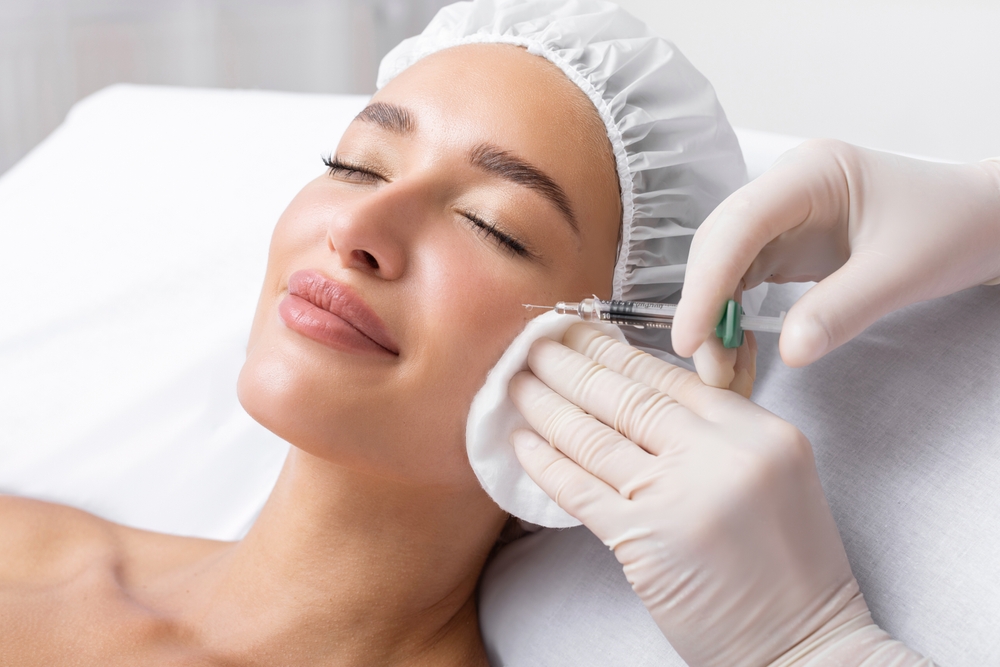
The doctor applies cheekbone filler through injection. This procedure is a non-surgical method. The doctor injects special filler materials into the cheekbone area. This procedure defines facial contours and creates a youthful and dynamic appearance.
Cheekbones provide significant structural support in the midsection of the face. During the aging process, the fat tissue in this area decreases. The bone structure also begins to dissolve over time. The doctor places fillers at strategic points to compensate for these losses. Fillers containing hyaluronic acid are the most commonly preferred, as they mimic the skin's natural moisture-retaining properties. Calcium hydroxylapatite-based fillers offer more permanent results. Fat injection is obtained from the patient's own body fat. In this method, the doctor processes the fat taken from the abdomen or hip area through special procedures, then injects it into the cheek area (Coleman 2006).
The application process usually takes thirty to sixty minutes. The doctor first disinfects the face. Then, using fine needles or cannulas, places the filler material. After the procedure, the patient can immediately return to daily activities. However, it is necessary to avoid excessive facial movements for the first twenty-four hours.
The surgeon lifts sagging skin and underlying tissues during a facelift surgery. The surgeon makes an incision. He/she repositions the sagging tissues. Excess skin is removed. This procedure defines the jawline. It also corrects looseness in the neck area.
The aging process weakens the elastic fibers in the skin. The connective tissue layer known as the superficial musculoaponeurotic system loosens over time. The surgeon accesses this layer. He/she restores the tissues to their original anatomical positions. Modern facelift techniques not only tighten the skin. They also reshape the deeper tissues. Thus, more natural and lasting results are achieved (Barton 1992).
The surgery is usually performed under general anesthesia. The duration varies between two to five hours. The surgeon follows incisions that start in front of the ears. These incisions continue within the scalp. This way, the scars are hidden within natural folds. After the operation, the patient may stay in the hospital for one night.
Doctors particularly recommend this procedure for young and middle-aged patients experiencing volume loss. Individuals with low-profile cheekbones benefit from this method. Those with a genetically flat facial structure may also prefer this procedure.
Patients showing mild signs of aging may opt for filler treatments. For example, individuals in their thirties and forties may have slight skin sagging. However, volume loss in the cheek area is pronounced. In this case, filler injections provide an excellent solution. Those who do not wish to undergo surgical procedures may also turn to this method. The recovery process after the procedure is very short. The patient can return to their social life on the same day. However, for individuals with excessive skin sagging, fillers alone may be insufficient. In this case, the doctor evaluates combined treatments (Funt 2013).
Surgeons recommend this surgery for individuals experiencing moderate to advanced skin sagging. Typically, they assess patients over the age of forty. However, age is not the only criterion. Any patient of any age with significant loss of skin elasticity may consider this surgery.
Individuals with skin accumulation in the neck and jawline benefit greatly from facelift surgery. The area under the chin, particularly the double chin region, is especially improved with this surgery. If patients desire long-lasting results, they should consider surgical options. Facelift surgery results last for ten to fifteen years. However, the aging process continues. Therefore, the surgery does not stop aging. It only provides a corrective measure for the past (Glogau 1996).
Both methods focus on different aesthetic issues. Cheekbone filler addresses volume deficiency. Facelift surgery corrects sagging and looseness. In some patients, both issues may occur together. In this case, the doctor plans combined approaches.
The aging process reduces the fat tissue in the face. The cheekbones also begin to shrink. This creates a sunken and tired appearance in the face. Cheekbone filler restores the lost volume. The doctor shapes the face three-dimensionally with strategic injections.
Facelift surgery does not directly address volume loss. However, the surgeon can add fat injection in the same session. This combined approach corrects sagging and adds volume. A facelift alone lifts sagging tissues. However, fillers may be needed for sunken areas (Coleman 2006).
Cheek hollowing is the most prominent sign of volume loss in the midface area. Cheekbone fillers directly fill this area. Thus, the cheeks appear fuller. The wrinkles known as nasolabial folds, which extend from the sides of the nose to the mouth, are also softened. This is because the filler increases support beneath these lines.
Facelift surgery partially corrects nasolabial folds. However, filler support is needed for these lines to disappear completely. The surgeon can lift the cheek tissue using a midface lifting technique. This procedure significantly reduces nasolabial folds. However, additional filler procedures are necessary for deep lines (Narins 2010).
Facelift surgery offers superior results for jawline definition and neck sagging. Cheekbone fillers do not directly affect these areas. This is because fillers work at the injection site. The surgeon removes excess skin during facelift surgery. They tighten the underlying muscles and connective tissues. Thus, the jawline becomes sharper. The loose skin in the neck area also tightens.
Mini facelift techniques focus on the jawline. Lower facelift targets the double chin area. Full facelift encompasses the entire face and neck. Therefore, patients with jaw and neck issues should consider surgical options (Barton 1992).
The answer to this question depends on the patient's specific issues. Cheekbone fillers improve facial contours in three dimensions. Facelift surgery provides overall facial rejuvenation. In terms of volume restoration capacity, fillers are superior. In terms of sagging correction success, facelift surgery stands out.
The potential to improve facial symmetry exists in both methods. However, the risk of asymmetry is higher with filler procedures. This is because the amount and placement of the injection must be precisely controlled. In facelift surgery, the surgeon adjusts symmetry by seeing it directly. In terms of overall facial rejuvenation effect, facelift surgery is more comprehensive. However, for natural results, both methods must be applied to the right patient (Rohrich 2011).
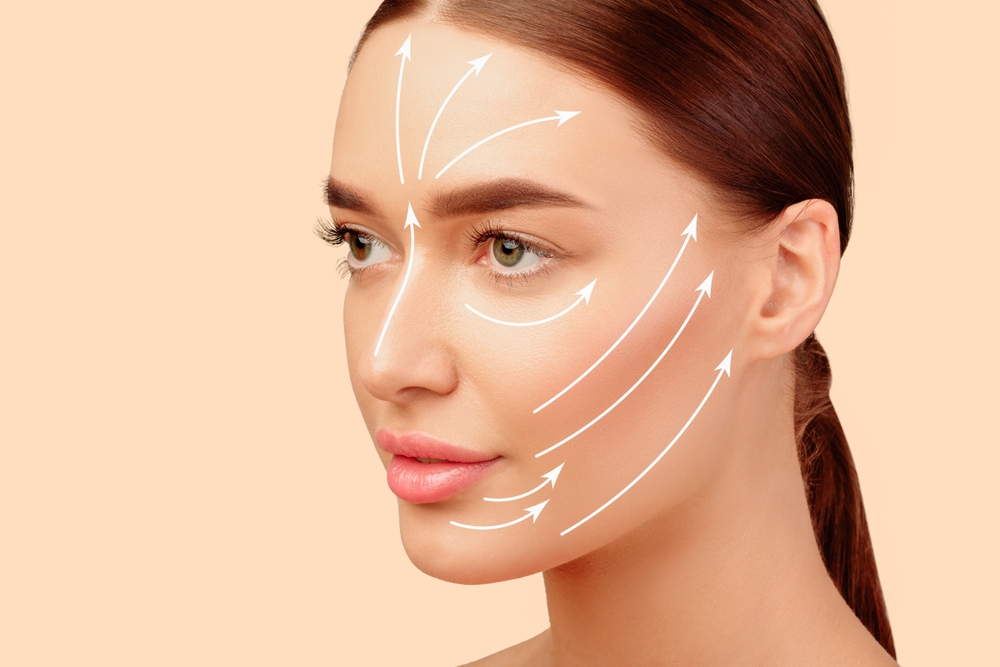
Facelift surgery is not a single standard procedure. Surgeons choose different techniques based on the patient's anatomical structure. Each technique focuses on a different area. Each technique has its advantages and limitations.
A mini facelift is a procedure where the surgeon focuses only on the jawline and the area under the cheeks. The surgeon makes a shorter incision. The procedure duration varies between one to two hours. This technique is suitable for younger patients to correct early signs of sagging. Patients, especially those aged forty to fifty, may prefer this method.
Among its advantages are a short recovery period and minimal risk of scarring. However, this technique does not cover the neck area. It also cannot correct deep midface sagging. Therefore, the surgeon must realistically assess the patient's expectations (Mitz 1976).
Midface lifting is a technique where the surgeon focuses on the cheekbone and cheek area. The surgeon makes a small incision under the eye or within the scalp. The sagging cheek tissue is lifted upward and outward. This procedure makes the cheekbones more prominent. It also alleviates under-eye hollowness.
This technique is preferred for patients who exhibit both volume loss and sagging in the midface. It is particularly effective for individuals with low-profile cheekbones. However, this technique alone does not lift the jawline and neck. Therefore, it can be combined with a full facelift (Barton 1992).
Lower face lifting is a procedure where the surgeon focuses on the jawline, double chin, and neck area. The surgeon makes an incision behind the ear. The neck muscles are tightened. Excess skin is removed. This technique is ideal for patients with advanced neck sagging.
Full face lifting, on the other hand, is a comprehensive operation that encompasses the upper face, midface, lower face, and neck. The surgeon makes a wider incision. The entire superficial muscular-aponeurotic system is repositioned. This technique is applied to patients showing signs of advanced aging. Results can be permanent for up to fifteen years. However, the recovery process may take six to eight weeks (Glogau 1996).
In the superficial muscular-aponeurotic system technique, the surgeon suspends the layer of muscle and connective tissue beneath the skin. This layer is the fundamental structure that supports the skin. When the surgeon tightens this layer, the skin naturally lifts upwards. This technique offers more permanent results because the deeper tissues reduce tension in the skin.
In the deep plane face lifting technique, the surgeon works at deeper anatomical layers. The surgeon operates just below the layer where the facial nerves and blood vessels are located. This technique preserves facial expression and provides more natural results. However, it is technically more challenging. Therefore, it should be performed by experienced surgeons (Mitz 1976).
This procedure has many practical advantages. Patients prefer a non-surgical approach because it eliminates the fear and risks associated with surgery. The doctor performs this procedure in an office setting. The application process typically takes about thirty minutes.
The recovery process is minimal. Patients can return to their daily activities immediately after the procedure. Swelling and bruising usually subside within a few days. Reversible options also provide significant advantages. In particular, hyaluronic acid fillers can be dissolved if necessary. Therefore, corrections can be made if the patient is not satisfied with the results. Additionally, fillers are applied in different concentrations, allowing for personalized results through dosage adjustments (Funt 2013).
Facelift surgery provides more comprehensive rejuvenation. The surgeon corrects multiple areas in a single session. The results are long-lasting. Patients can maintain a youthful appearance for up to ten years. It directly and precisely corrects sagging. Fillers cannot lift sagging skin. However, the surgeon physically removes excess skin.
It provides significant improvement in the jawline and neck area. There is no alternative, especially for the double chin area and sagging neck skin. Thanks to modern techniques, scars remain quite discreet. The surgeon places incision sites within natural contours. Thus, post-operative scars are nearly invisible (Barton 1992).
As with any medical procedure, there are risks associated with filler injections. Swelling and bruising are the most common temporary side effects. These symptoms usually resolve within three to seven days. The risk of asymmetry depends on the doctor's experience. If the filler is injected in varying amounts, facial symmetry may be disrupted.
Nodule formation can occur with certain types of fillers. This risk is higher, especially with permanent fillers. Vascular complications are among the most serious risks. If the doctor injects filler into blood vessels, tissue damage may occur. Therefore, it is essential for the doctor to have a thorough understanding of facial anatomy. Additionally, adhering to sterile technique rules reduces the risk of infection (DeLorenzi 2013).
Facelift surgery is a serious operation. The risk of infection exists with every surgical procedure. However, a sterile environment and the use of antibiotics minimize this risk. The risk of bleeding should also be considered. The surgeon carefully protects blood vessels during the operation.
Nerve damage is a rare but serious complication. The surgeon must be extra careful in areas where facial nerves pass. Temporary sensory loss is more common. This condition usually resolves within a few weeks. Scar formation is inevitable. However, modern techniques place scars in hidden areas. Prolonged healing processes are more common in patients who smoke. Therefore, surgeons recommend quitting smoking before the surgery (Rohrich 2011).
The recovery process is one of the most significant differences between these two methods. Recovery after cheekbone filler is very quick. Recovery after facelift surgery can take weeks or even months. Patients should definitely evaluate this difference when making their decision.
In the first twenty-four hours, the patient applies a cold compress. This reduces swelling. Swelling is usually most pronounced on the first day. Bruising begins to fade within the first week. It takes two weeks for the results to fully settle. However, the patient can return to social life with makeup after three days. The doctor recommends avoiding touching the face and massaging during the first few days. Additionally, it is necessary to avoid excessively hot environments, as heat can cause the filler to disperse (Funt 2013).
In the first days, the patient needs to rest. Bandaging and drainage systems may be present on the face. The first week is the period of most swelling and bruising. After two weeks, the patient can generally return to social activities. However, complete disappearance of bruising may take up to a month. The final results can be seen in three to six months. This is because it takes time for the tissues to settle completely. The surgeon recommends a personalized care program for the patient. This program facilitates the postoperative period (Glogau 1996).
Longevity is one of the most frequently asked questions by patients. Cheekbone fillers provide temporary results. Facelift surgery offers long-term results. However, the aging process continues with both methods.
Hyaluronic acid fillers are generally lasting between six to eighteen months. This duration depends on the metabolism rate. Calcium hydroxyapatite-based fillers can last twelve to twenty-four months. Fat injections promise permanent results. However, a portion of the injected fat is absorbed by the body. Generally, a longevity of thirty to seventy percent is achieved. Repeated applications yield longer-lasting results. This is because each session stimulates new collagen formation in the skin (Narins 2010).
The results of facelift surgery typically last ten to fifteen years. However, this duration depends on lifestyle and skincare. Patients who use sunscreen maintain their results longer. Healthy eating and regular exercise also contribute positively. Since the aging process continues, the skin may loosen again over time. However, operated patients always look younger compared to their peers who have not undergone surgery. Some patients may consider revision surgery after fifteen years. This second surgery is usually performed with lighter techniques (Rohrich 2011).
Yes, these two methods can be applied together. In fact, the combined treatment approach has become the gold standard in modern facial rejuvenation. The surgeon first lifts the sagging tissues with facelift surgery. Then, he/she restores the lost volume with cheekbone fillers. This hybrid strategy yields more natural results.
Combined applications are preferred, especially in patients with advanced signs of aging. This is because both sagging and volume loss are seen together in these patients. Facelift surgery alone can tighten the face. However, due to volume loss, the face may still appear tired. Fillers fill these gaps. Thus, the face looks both tight and full. The results are younger and more natural (Coleman 2006).
To make the right decision, several factors need to be evaluated together. Age is an important factor. In younger patients, filler procedures are prioritized. In older ages, surgical options come to the forefront. The degree of sagging is a critical criterion. In mild sagging, filler may be sufficient. In advanced sagging, surgery is essential.
The level of volume loss also affects the decision. If only the cheekbones are sunken, filler is ideal. If the jawline and neck are sagging as well, a facelift is necessary. Clarify your expectations and aesthetic goals. If you want a dramatic change, consider surgery. If you prefer a subtle and natural refresh, filler is sufficient.
Calculate the time you can dedicate to the recovery period. You need at least two weeks of rest after surgery. A few days are sufficient after filler. The expectation of permanence is also important. Opt for surgery for long-lasting results. Consider filler for temporary but quick solutions. Assess your budget. The cost of surgery is higher than filler. However, in the long run, surgery may be more economical. Finally, an expert evaluation is essential. An experienced doctor analyzes your face. They will suggest the most suitable plan for you (Rohrich 2011).
Yes, cheekbone filler makes the face look younger. Because it restores the lost volume. The sunken areas of the face become fuller. This reflects light better on the surface. The skin looks brighter and more vibrant. However, filler does not correct sagging. If there is skin sagging, filler alone is not sufficient. In this case, combined treatments may be necessary.
Facelift surgery typically provides a youthful appearance for ten to fifteen years. This duration varies from person to person. Skin type, lifestyle, and care habits affect the results. Patients who use sunscreen maintain their results longer. Non-smokers heal faster. The results are permanent. However, aging does not stop. Therefore, new signs of aging may appear over time.
No, cheekbone filler cannot correct sagging. Fillers add volume. However, they cannot lift sagging skin. If there is slight sagging, filler can slightly improve the appearance in that area. Because the increase in volume may make the skin appear a bit tighter. However, this effect is limited. Surgical intervention is required for true sag correction. Your doctor should provide you with honest information on this matter.
Yes, there will be scars after facelift surgery. However, modern techniques conceal these scars quite well. The surgeon places the incision sites in the natural folds in front of the ears. Parts that continue within the hairline remain completely hidden. Scars may be red in the first months. However, they fade to match the skin tone within a year. A good surgeon makes the scars nearly invisible. Wound care also affects the healing of the scars.
Yes, these two methods can be performed in the same session. In fact, many experts recommend this combination. The surgeon first completes the facelift surgery. Then, in the same session, they perform the filler injections. This approach addresses both sagging and volume loss in a single session. The patient undergoes only one recovery process. However, filler injections can also be done after waiting for the swelling to subside post-surgery. Your doctor will suggest the most suitable timing for you.
Both procedures yield natural results when performed correctly. However, there is a risk of overfilling in filler procedures. This can create an artificial appearance on the face. An experienced doctor maintains natural proportions. There is also a risk of excessive tightening in facelift surgery. This can create a masked expression on the face. An experienced surgeon avoids this mistake. Generally, combined treatments provide the most natural results. This is because both volume and tension are achieved simultaneously.
Yes, these methods require different approaches for men. Male facial anatomy differs from female anatomy. Cheekbones are more pronounced. Skin thickness varies. In men, less filler is used in applications. Because excessive filler can disrupt the masculine appearance of the male face.
In facelift surgery, the beard and mustache areas must be taken into account for men. The surgeon plans the incision sites according to the beard line. Additionally, a more conservative tightening is preferred for men. Because excessive tightening can disrupt the natural appearance of the male face. An experienced surgeon applies gender-specific techniques. Thus, the results rejuvenate while preserving masculine features.
Cheekbone filler and facelift surgery serve different purposes. Cheekbone filler addresses volume loss. Facelift surgery corrects sagging. If only your cheekbones are sunken, filler is the ideal option. If your jawline and neck are sagging, facelift surgery is essential. Patients showing signs of advanced aging should consider both methods together.
Personalized treatment planning is the key to successful results. Every face has a different anatomical structure. Each patient's expectations are different. Therefore, there is no standard solution. An experienced specialist thoroughly examines your face. They create a personalized plan for you. Remember that choosing the right information and the right specialist is the most important step. This way, you will achieve both safe and satisfying results.
Feature | Cheekbone Filler | Facelift Surgery |
Application Method | Injection | Surgical operation |
Anesthesia | Cream or local | General anesthesia |
Procedure Duration | 30-60 minutes | 2-5 hours |
Recovery Time | 1-3 days | 2-6 weeks |
Result Longevity | 6-24 months | 10-15 years |
Sagging Correction | Limited | Extensive |
Volume Enhancement | High | Limited (additional procedure required) |
Scarring | None | Minimal (hidden) |
Price Range | Lower | Higher |
Naturalness | High (at the right dose) | High (with the right technique) |
Technique | Target Area | Ideal Age Range | Recovery Time | Longevity |
Mini Facelift | Chin and jawline | 40-50 | 1-2 weeks | 5-8 years |
Mid Facelift | Cheek and jaw | 35-50 | 2-3 weeks | 7-10 years |
Lower Facelift | Chin and neck | 50+ | 2-4 weeks | 10-12 years |
Full Facelift | Entire face and neck | 50+ | 4-6 weeks | 10-15 years |
Deep Plane Facelift | Deep tissues | 45-60 | 3-5 weeks | 12-15 years |
Period | Cheekbone Filler | Facelift Surgery |
First 24 hours | Slight swelling, cold compress | Rest, bandage applied |
First 3 days | Bruising noticeable, makeup can be applied | Swelling and bruising at their peak |
First week | Results begin to settle | Stitches are removed |
2-4 weeks | Final results are seen | Return to social life begins |
3-6 months | The permanence continues | Final results settle completely |
Barton, Fritz E. "The SMAS and the Nasolabial Fold." Plastic and Reconstructive Surgery, vol. 89, no. 4, 1992, pp. 601-607.
Coleman, Sydney R. "Structural Fat Grafting: More Than a Permanent Filler." Plastic and Reconstructive Surgery, vol. 118, no. 3, 2006, pp. 108S-120S.
DeLorenzi, Claudia. "Complications of Injectable Fillers, Part I." Aesthetic Surgery Journal, vol. 33, no. 4, 2013, pp. 558-568.
Funt, David, and Tatjana Pavicic. "Dermal Fillers in Aesthetics: An Overview of Adverse Events and Treatment Approaches." Clinical, Cosmetic and Investigational , vol. 6, 2013, pp. 295-316.
Glogau, Richard G. "Aesthetic and Anatomic Analysis of the Aging Skin." Seminars in Cutaneous Medicine and Surgery, vol. 15, no. 3, 1996, pp. 189-193.
Mitz, Vincent, and M. Peyronie. "The Superficial Musculo-Aponeurotic System (SMAS) in the Parotid and Cheek Area." Plastic and Reconstructive Surgery, vol. 58, no. 1, 1976, pp. 80-88.
Narins, Rhoda S., et al. "A Randomized, Double-Blind, Multi-Center Comparison of the Safety and Effectiveness of Juvederm Injectable Gel and Restylane for Correction of Nasolabial Folds." Surgery, vol. 36, no. 3, 2010, pp. 312-321.
Rohrich, Rod J., et al. "The Aging Face: A Systematic Approach to Facial Rejuvenation." Plastic and Reconstructive Surgery, vol. 127, no. 2, 2011, pp. 705-716.