Yükleniyor…
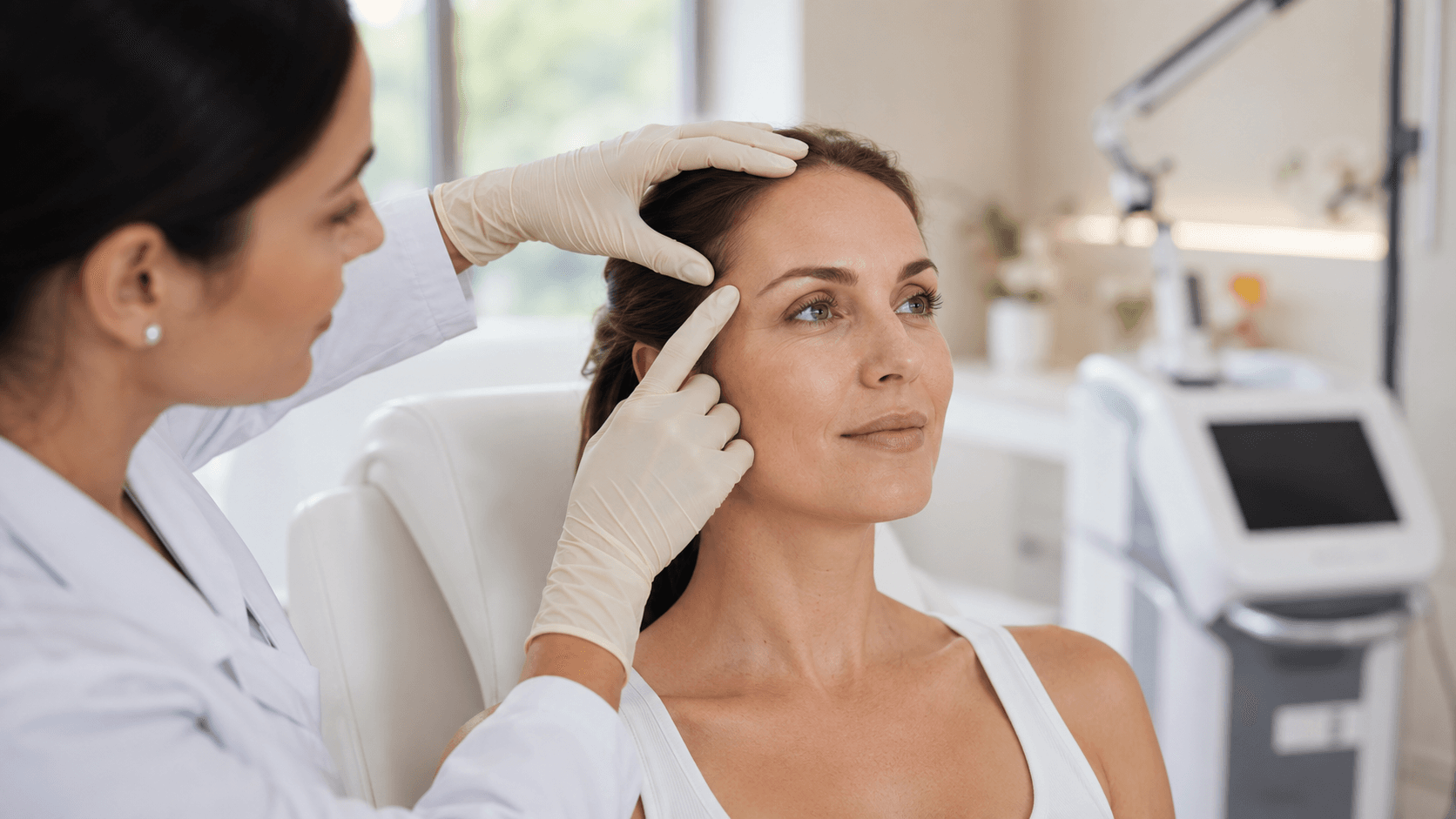
Laser eyebrow lifting is a non-surgical facial rejuvenation procedure that stimulates collagen and elastin fibers beneath the skin using controlled light energy. Sessions last an average of 30-45 minutes, and results become noticeable within 2-3 months.
Eyebrows are perhaps the most critical part of facial aesthetics. People look into each other's eyes when they talk. The position of the eyebrows determines the expression of that gaze. Low eyebrows can create a tired, sad, or aged appearance. Therefore, the position of the eyebrows is central to facial architecture.
The aging process also affects the eyebrows. In the twenties, eyebrows are generally vibrant and positioned high. From the thirties onwards, collagen production slows down. This slowdown becomes pronounced in the forties and fifties. Skin elasticity decreases. The effects of gravity become evident. Eyebrows gradually lower. This is not just an aesthetic issue; it can also narrow the field of vision and put pressure on the upper eyelid.
Surgical eyebrow lifting has been a known method for years. However, fear of surgery, recovery time, and the risk of scarring keep many people away from this method. This is where laser technology comes into play. In recent years, laser systems have shown tremendous development in and aesthetic medicine. Non-surgical methods have come to the forefront. Laser eyebrow lifting has become one of the most preferred among these methods because patients can achieve results without incisions, without the risks of general anesthesia, and quickly return to their daily lives.
Laser eyebrow lifting is a non-invasive treatment that sends light energy to the deep layers of the skin, triggering collagen and elastin synthesis, thereby creating an indirect lifting effect in the eyebrow area.
The laser eyebrow lifting procedure is a modern treatment that applies targeted light energy to the deeper layers of the skin. This procedure does not cut the skin. It does not stitch the skin. But it activates the skin's self-repair mechanism. The fundamental working principle of the procedure is based on photothermal effect. The laser device produces light at a specific wavelength. This light passes through the skin surface. It heats the water molecules and target tissues in the deeper layers of the skin. The heat is applied in a controlled manner. The target tissue does not get damaged. But the cells in that area are stimulated.
Heat energy activates the fibroblast cells beneath the skin. Fibroblasts are the cells that produce collagen, the building block of the skin. These cells respond to heat. They begin to produce new collagen. At the same time, the renewal of elastin fibers is also accelerated. Elastin is the protein that allows the skin to stretch and bounce back. Collagen and elastin work together. Collagen provides support to the skin. Elastin keeps the skin flexible. When the production of these two proteins increases, the skin tightens. Tightened skin naturally lifts the eyebrows higher.
Different laser technologies can be used in this procedure. Each technology has its own unique advantages.
Fractional CO₂ laser is one of the most commonly used systems. This laser allows the skin to be treated in microscopic columns. Healthy skin tissue remains between the treated areas. This accelerates healing. CO₂ laser provides deep dermal remodeling. In other words, it creates significant restructuring in the deeper layers of the skin.
Er:YAG laser shows a more superficial effect. This laser intervenes more precisely in the upper layer of the skin. The healing time is shorter compared to CO₂ laser. However, deep collagen stimulation may be somewhat limited. It is an ideal option for sensitive skin.
Nd:YAG laser can reach deeper layers of the skin. This laser generates heat in the lower layers without damaging the skin surface. It works non-ablatively. This means that the upper layer of the skin is preserved. As a result, the healing time is very short. The patient can return to their daily activities immediately.
The photothermal effect mechanism is the common working principle of all these lasers. Light energy is converted into heat. Heat initiates a controlled tissue reaction. This reaction triggers the skin's self-renewal. As a result, skin quality improves. The skin tightens. The brow area rejuvenates.
Before the procedure, the physician analyzes the brow anatomy and skin type. Then the area is cleaned, anesthetic cream is applied, and laser parameters are adjusted specifically for the individual to deliver controlled energy. The total session duration is 30-60 minutes.
Patient evaluation before the procedure is very important. Every face is different. Each brow structure is unique. Therefore, there is no standard protocol. The physician first analyzes the brow anatomy. The starting point, peak point, and endpoint of the brow are examined. The degree of brow droop is measured. The eye area and forehead are evaluated. Skin type is determined. The Fitzpatrick skin type classification is used. This classification is based on the skin's reaction to sunlight. Light skin and dark skin require different laser parameters.
Brow asymmetry is also examined. Many people have slight asymmetry in their faces. The physician identifies this asymmetry. The treatment is planned accordingly. A detailed medical history is taken. Previous aesthetic procedures of the patient are inquired. Any chronic diseases are checked. The medications used are recorded. Especially, blood-thinning medications and those that cause photosensitivity are important. This evaluation is essential for the safety of the procedure.
Certain preparations are required before the procedure. The patient is advised to protect themselves from the sun at least two weeks in advance. Tanned skin absorbs laser energy differently. This can increase the risk of side effects. Skin care products are adjusted. Products containing retinol, acids, and peels are discontinued for a while beforehand. These products can make the skin sensitive. Smoking habits are evaluated. Healing may be slightly slower in patients who smoke. If there are blood-thinning medications, the physician should be consulted.
The laser brow lift procedure consists of specific stages. The first stage is cleaning the area. Makeup residues, creams, and oils are completely removed. Then, a topical anesthetic cream is applied. This cream is left on for 20-30 minutes. Thus, the patient does not feel discomfort during the procedure. Laser parameters are determined by the physician. Settings such as energy level, pulse duration, and wavelength are adjusted according to skin type and the degree of brow droop. Controlled energy application begins. The physician applies the laser head to the brow area and its surroundings. A feeling of heat occurs, but this sensation is not unbearable. Cooling is done after the procedure. Cold compresses or special cooling devices are used. Finally, moisturizer and sunscreen are applied.
How long does the procedure take on average? A single session typically lasts between 30 to 60 minutes. This duration also includes assessment and preparation stages. The number of sessions required varies from person to person. Generally, 3 to 5 sessions are recommended. The interval between sessions is 3 to 4 weeks. This interval is sufficient for the skin to renew itself.
Laser energy activates fibroblast cells, triggering the production of new collagen and elastin. As the skin tightens, the brows naturally lift. This process reaches its maximum level within 8-12 weeks.
Collagen remodeling is the fundamental mechanism of this procedure. The laser heat sends signals to the fibroblast cells in the dermis layer. When these cells are stimulated, they begin to produce type 1 and type 3 collagen. The new collagen fibers replace the old and loosened fibers. This change increases the thickness and tightness of the skin. This phenomenon, known as dermal tightening, is exactly that. The supportive layer of the skin strengthens. A strengthened supportive layer better supports the brow tissue.
Changes in skin elasticity are also observed. Elastin fibers are rearranged by laser heat. New elastin synthesis increases. The skin begins to regain its former elasticity. This creates a feeling of tension in the brow area. The patient notices this feeling of tension a few weeks after the procedure.
Why do results become apparent over time? Because collagen production is not an instantaneous process. Fibroblasts begin to produce new collagen. However, the maturation and organization of this collagen takes weeks. The first changes are seen within 2-4 weeks. Maximum collagen formation occurs in 8-12 weeks. Therefore, patients must be patient. Laser treatments do not create instant miracles. But over time, they provide natural and lasting results.
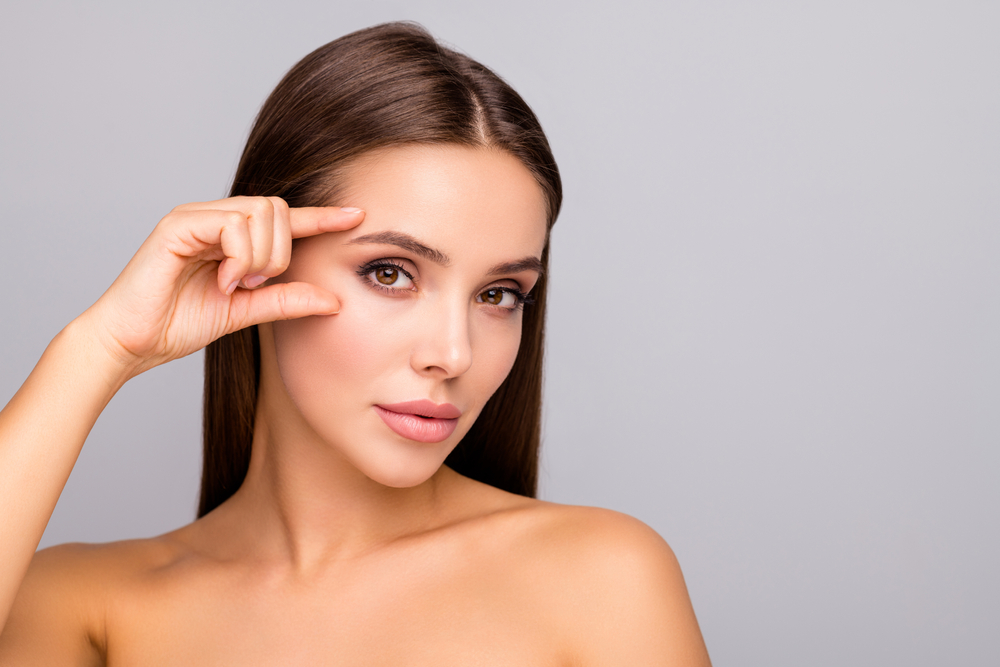
Adults with mild to moderate brow droop who do not want surgery and are in good general health are ideal candidates for this procedure. However, it is not recommended for pregnant women, those with active skin infections, and uncontrolled diabetic patients.
Who can benefit more from this procedure? Those with mild to moderate brow droop are the best candidates. In these individuals, the skin structure is still sufficiently healthy. The laser can compensate for this droop by increasing collagen production. It is an excellent alternative for individuals who do not want surgery. Those with fears of surgery, risks of anesthesia, or concerns about scarring can find a solution with laser. Patients seeking preventive treatment at a young age can also benefit from this procedure. Starting collagen stimulation in the thirties can delay signs of aging.
However, not everyone is suitable for this procedure. It is not recommended for those with active skin infections. Laser should not be applied to areas with herpes, bacterial, or fungal infections. The procedure can be considered after the infection is treated. Laser applications are generally postponed during pregnancy and breastfeeding. Hormonal changes during this period can affect the skin's response. Uncontrolled systemic diseases pose risks. There are safety concerns for patients with uncontrolled diabetes, autoimmune diseases, and coagulation disorders. Those taking medications that cause photosensitivity should also be carefully evaluated. Some antibiotics, acne medications, and psoriasis treatments can make the skin overly sensitive to light.
Laser brow lifting does not require incisions, leaves no scars, has a short recovery time, and allows for a quick return to daily life. It also rejuvenates the eye area and provides a more dynamic look.
It has many advantages over surgical methods. The first and most important advantage is that it does not require incisions. A surgical blade does not cut the skin. There is no bleeding. No stitches are needed. This significantly reduces the risk of complications. The absence of scars is a great comfort. Surgical brow lifting may leave incision marks. The risk of scarring is higher, especially in darker skin types. With laser, this risk is almost nonexistent.
The recovery time is much shorter. Swelling, bruising, and pain after surgery can last for weeks. With laser, mild redness and swelling subside within a few days. It allows for a quick return to daily activities. The patient can resume normal life on the day of the procedure or the next day. They can wear makeup. They can go to work. They can move comfortably in public.
There are also significant aesthetic gains. A more dynamic look is achieved. When the brows are lifted, the eyes appear more open. The facial expression becomes livelier and more energetic. It rejuvenates the eye area. The laser affects not only the brow area but also the surrounding tissue. Fine lines on the eyelids may show improvement. Indirect improvement may occur in forehead lines. This is because the skin generally tightens and rejuvenates. A more balanced facial expression is formed. Asymmetry between the right and left sides of the face can be corrected.
The same results cannot be achieved in every patient. In elderly patients with advanced brow droop, surgical methods may be more effective. Results vary depending on skin quality and age.
Can the same results be obtained in every patient? No. This procedure does not guarantee a standard result. Age is an important determinant. Younger patients have a much better skin response. Collagen production is still active. Results may be more limited in patients over fifty. Skin quality also affects the outcome. Individuals with sun damage, smokers, or those with poor nutrition have a low capacity for skin renewal. The degree of brow droop is critical. In cases of mild droop, laser provides excellent results. However, if the brows have drooped significantly, the lifting capacity of the laser may be insufficient.
In some cases, it may be inadequate compared to surgical brow lifting. For patients with advanced sagging, surgery is the definitive solution. Surgery removes excess skin. It repositions the muscles. The laser cannot do this. The laser tightens the skin but does not remove excess skin. Therefore, in cases of advanced sagging, surgery should be preferred. The patient should be aware of this limitation in advance. Realistic expectations are the key to success.
Mild redness and swelling are expected in the first 24 hours. Sun protection and moisturizing are very important in the first week. Initial changes can be seen in 2-4 weeks, with maximum results occurring within 3 months.
Some temporary reactions are normal in the first 24 hours. Mild redness may be observed. This redness is a normal reaction caused by the heat of the laser on the skin. It usually subsides within a few hours. Swelling is also expected. The brow area and the eye area may be slightly swollen. This swelling subsides within 24-48 hours. There may be sensitivity. A slight warmth may be felt when touching the skin. This sensation will disappear within 1-2 days.
What should be considered in the first week? Sun protection is essential. The treated area is sensitive to sunlight. SPF 50+ sunscreen should be used regularly. A hat and sunglasses are also recommended. Using moisturizer supports healing. It helps prevent the skin from drying out. Makeup application is generally allowed after 24 hours. However, heavy foundations should be avoided. There are exercise restrictions. Sports that cause excessive sweating should be postponed for 3-5 days. Sweat can cause skin irritation.
When will the results start to be seen? The first changes are noticeable within 2-4 weeks. The patient feels a tightness in their skin. The eyebrows begin to lift slightly. Maximum collagen formation occurs in 3 months. At the end of this period, the most significant results appear. The permanence of the result varies from person to person. Generally, results are maintained for a period of 12-18 months. After that, the skin continues to age again. Results can be extended with maintenance sessions.
Temporary redness, slight crusting, and temporary pigment changes are common side effects. Serious complications such as infection and burns are rare. These risks are minimized with a specialist physician.
Temporary side effects are seen in most patients. Redness is the most common condition. The skin may appear pink or red after the procedure. This can last from a few hours to a few days. There may also be slight crusting. Microscopic crusting is particularly seen in fractional laser applications. These crusts fall off on their own. They should never be pulled off. Temporary pigment changes are more frequently observed in darker skin types. There may be slight darkening or lightening of the skin. This usually resolves within a few months.
There are also rare complications. The risk of infection is very low but not zero. If hygiene rules are not followed, an infection may develop. Burns are a serious complication. Burns can occur if the laser energy is set too high or if the skin is very dark. Prolonged erythema is also rarely seen. Redness may last longer than normal. This condition is usually caused by the incorrect choice of laser type.
How can risks be reduced? Choosing a specialist physician is the most important step. An experienced or aesthetic physician correctly adjusts the laser parameters. A laser system suitable for the skin type is selected. A thorough pre-procedure assessment is conducted. The patient strictly follows the post-procedure care instructions. Adhering to sun protection rules prevents pigment problems.
Laser tightens the skin with a photothermal effect, while surgery cuts and removes excess skin. Healing with laser occurs within days, while surgery takes weeks. Surgical results are more permanent but more invasive.
Feature | Laser Eyebrow Lifting | Surgical Brow Lift |
Mechanism of Action | Photothermal collagen stimulation | Tissue excision and repositioning |
Anesthesia | Local cream or mild sedation | General anesthesia or deep sedation |
Incision | None | Present (brow line or hairline) |
Scarring | Almost none | Mild scarring may occur |
Recovery Time | 1-3 days | 2-4 weeks |
The mechanism of action is completely different. Laser triggers the skin's self-healing. Surgery physically alters the tissue. There is a significant difference in recovery time. After laser treatment, the patient goes home immediately. In surgery, swelling, bruising, and pain can last for weeks. The permanence of the results also differs. Surgery is permanent for many years. Laser results may require repetition within a few years. In terms of naturalness, laser is superior. Surgery can sometimes create a "surprised" or "stretched" appearance. The risk profile should also be considered. Every surgery carries risks of anesthesia, bleeding, and infection. These risks are minimal with laser. Patient satisfaction depends on the correct patient selection. A patient with slight drooping is very satisfied with laser. A patient with advanced sagging prefers surgery.
Each method has a different mechanism of action. Botulinum toxin relaxes the muscles, thread lifting provides mechanical lifting, HIFU and radiofrequency perform deep heating, and fillers add volume.
Botulinum toxin application is a common method for eyebrow lifting. This procedure targets the muscles around the eyebrows. The muscles that pull the eyebrows down are relaxed. Thus, the eyebrows lift up. However, the duration of effect is short. It should be repeated after 3-6 months. Botulinum toxin can be used in conjunction with laser. This combination provides both lifting and improvement in skin quality.
The thread lifting method offers mechanical lifting. Special threads are placed under the skin. These threads pull the skin upwards. The result is visible immediately. But this method is invasive. The placement of the threads requires needle entry. The risk of complications is higher than with laser. There is a risk of thread breakage, asymmetry, and infection.
Ultrasound (HIFU) uses sound waves focused on deep tissues. It generates heat in the deep layers of the skin. This heat stimulates collagen production. Unlike laser, HIFU does not touch the skin surface. It reaches deep layers. However, in delicate and thin tissues like the eyebrow area, laser offers a more controlled application.
Radiofrequency uses electromagnetic energy. It heats the skin to increase collagen production. It works on a principle similar to laser. But radiofrequency uses a different wavelength. Some devices combine laser and radiofrequency. This way, both superficial and deep effects are achieved.
Filler applications add volume to the eyebrow area. Especially fillers applied over the brow bone indirectly lift the eyebrows. However, the filler material requires injection. There is a risk of allergy. Laser is a natural method. No foreign substance is introduced into the body.
Eyelid rejuvenation can be combined with fractional laser skin renewal, botulinum toxin, PRP, and mesotherapy. These combinations create a synergistic effect.
Eyelid rejuvenation combined with laser brow lifting yields excellent results. The looseness of the upper eyelid is tightened with laser. The brows are lifted. The eyes appear more open and youthful. This combination is referred to as "eye area rejuvenation." The patient can treat both the eyelid and brow area in a single session.
It can be applied together with fractional laser skin renewal. While laser brow lifting is performed on the brow area, fractional laser can be applied to the forehead and face area. Thus, the entire face is harmoniously renewed. Skin tone is evened out. Fine lines are softened. The face generally looks fresher.
The combination with botulinum toxin is very popular. The laser tightens the skin. Botulinum toxin relaxes the muscles. When used together, the brow lifting effect becomes more pronounced. Botulinum toxin lifts the brows. The laser supports the skin. This dual approach offers both immediate and long-term results.
PRP application accelerates healing. PRP is platelet-rich plasma obtained from the patient's own blood. This plasma is injected into the skin after laser treatment. Growth factors support skin renewal. PRP increases collagen production. When laser and PRP are used together, results are faster and more pronounced.
Mesotherapy can provide skin nourishment. After laser treatment, special mixtures containing hyaluronic acid, vitamins, and minerals are applied to the skin. These mixtures enhance the skin's moisture retention. The skin looks brighter and healthier. Mesotherapy is a supportive treatment for laser results.
Laser does not physically lift the brow, does not provide permanent results in a single session, does not achieve the same success at every age, and cannot completely replace surgery.
Does the procedure physically lift the brow? No. This is a very common misconception. The laser tightens the skin. The tightening skin indirectly lifts the brow. But the laser does not hold and pull the brow. It does not perform a mechanical lift. Therefore, the results are not as dramatic as surgery. There is a natural and soft change.
Does it provide permanent results in a single session? No. Laser treatments typically require 3-5 sessions. There is a change in the skin after a single session, but this change is limited. The permanence is also limited. Results are maintained for 12-18 months. Then it needs to be repeated. It is not possible to do it once like surgery and forget about it for life.
Is the same success achieved in every age group? No. Younger skin responds much better. Results are more moderate in patients over fifty. The aging process cannot be stopped. Laser slows it down but does not stop it. Therefore, expectations should be adjusted as age increases.
Can it completely replace surgery? No. Laser does not replace surgery. It is an alternative to it. It is ideal for mild to moderate issues. But in advanced sagging, surgery may be necessary. The patient and doctor should make this decision together. The right choice should be made between laser and surgery.
The laser system to be used, the expected amount of lifting, the number of sessions required, possible risks, and what needs to be done to maintain the results should definitely be asked.
The patient should have an open discussion with the physician before the procedure. What is the laser system to be used? This question is very important. Because not every laser is suitable for every skin type. The physician should explain which device will be used. It can be asked whether the device has FDA approval or a CE certificate.
What is the expected amount of lifting? The physician should assess the patient’s current condition and provide a realistic expectation. How many millimeters of lifting is expected? This is a measurable goal. The patient will make a decision based on this information.
How many sessions will be required? The treatment plan should be clear. Is it 3 sessions or 5 sessions? How often will the sessions be held? What is the total duration of the treatment? The answers to these questions are important for the patient.
What are the possible risks? Every medical procedure has its risks. The physician should honestly explain these risks. Information should be provided about redness, swelling, pigment changes, and rare complications.
What should be done to maintain the results? The post-procedure care routine should be learned. What are the sun protection measures, skin care, and lifestyle changes? If the patient follows these instructions, the results will last longer.
Laser eyebrow lifting is minimally painful, lasts 30-60 minutes, requires 3-5 sessions, results last 12-18 months, one can return to work immediately, eyebrows can lift 2-5 mm, makeup can be applied after 24 hours, it can be performed in the summer (with sun protection), it can also be applied to men and can be repeated with maintenance sessions.
The procedure is not painful. When a topical anesthetic cream is applied, most patients only feel a slight warmth or tingling sensation. There are additional anesthesia options for patients with low pain tolerance.
A single session lasts between 30 to 60 minutes. This time includes evaluation, preparation, laser application, and post-care.
For most patients, 3 to 5 sessions are recommended. For those with good skin condition, 3 sessions may be sufficient. In cases with more sagging, it may go up to 5 sessions.
Results typically last between 12 to 18 months. As the aging process continues, results may gradually diminish. Annual maintenance sessions can extend the effect.
Yes. One can return to work immediately. However, there may be slight redness. This can be covered with foundation. Taking 1-2 days off is sufficient for heavy physical work.
This varies from person to person. Generally, a lift of 2 to 5 millimeters is expected. This amount represents a noticeable change in facial aesthetics.
Light makeup can be applied after 24 hours. However, heavy foundation and concealer should be avoided for a few days. The skin needs to breathe.
Yes, it can be applied. However, sun protection is very important. The treated area should not be exposed to the sun. A hat and sunglasses should be used. No procedures should be performed on tanned skin.
Absolutely yes. Eyebrow droop is also common in men. Laser eyebrow lifting can be safely applied to men as well. The anatomy of male eyebrows is different. The physician performs the procedure considering this difference.
Yes, it is recommended to repeat it over time. One or two maintenance sessions per year keep the results fresh. These maintenance sessions have both preventive and therapeutic effects.
Laser eyebrow lifting is an ideal non-surgical facial rejuvenation option for adults with mild to moderate eyebrow droop who do not want surgery and have realistic expectations.
Who is an ideal candidate for laser eyebrow lifting? The answer to this question is clear. It is ideal for those with mild to moderate eyebrow droop, who do not fear surgery, desire natural results, and do not want to take a break from their daily life. It can also be used preventively at a young age. Stimulating collagen starting in the thirties means less sagging in later years.
Scientific studies have proven the role of laser technology in skin tightening. The photothermal effect mechanism triggers fibroblast activation and collagen remodeling. This process relies on the skin's self-repair capacity. In other words, the laser does not force the skin. It reveals the skin's potential. It provides dermal remodeling. Skin quality improves. Elasticity is renewed.
Choosing the right patient is the key to success. Not every patient is suitable for laser treatment. The physician must make this selection carefully. Age, skin type, degree of eyebrow droop, and overall health status should be evaluated. Incorrect patient selection leads to disappointment.
The importance of realistic expectations must be emphasized. Laser is not a miracle. But it is a scientifically proven effective method. The patient should know what to expect. The physician should explain what can be offered. When these two points meet, patient satisfaction is high.
Among non-surgical facial rejuvenation procedures, laser eyebrow lifting holds a very solid position today. As technology advances, laser systems are becoming more effective and safer. Nowadays, patients prefer minimally invasive methods. Laser is the pioneer of this trend. Eyebrow aesthetics is at the center of facial aesthetics. Laser eyebrow lifting offers a non-surgical, safe, and effective touch to this central point.
Gold, Michael H. "Non-Surgical Skin Tightening with Laser and Light Sources." Journal of Clinical and Aesthetic , vol. 12, no. 3, 2019, pp. 24-30.
Ross, E. Victor, et al. "Laser-Induced Collagen Remodeling in the Treatment of Skin Laxity: A Histological Analysis." Surgery, vol. 45, no. 7, 2019, pp. 892-899.
Alexiades-Armenakas, Macrene R. "Fractional Laser Resurfacing for Periorbital Rejuvenation: A Prospective Study." Lasers in Surgery and Medicine, vol. 51, no. 4, 2019, pp. 312-318.
Fitzpatrick, Richard E., and Rostan, Elizabeth F. "Reversal of Photodamage with Topical Growth Factors: A Pilot Study." Journal of Cosmetic and Laser Therapy, vol. 15, no. 2, 2013, pp. 77-82.
El-Domyati, Moetaz, et al. "Microdermabrasion and Laser-Induced Collagen Remodeling: A Comparative Histological Study." Journal of Cosmetic , vol. 18, no. 5, 2019, pp. 1425-1431.
Brightman, Lori, et al. "Ablative and Fractional Ablative Lasers: A Review of Clinical Applications and Outcomes." Clinics, vol. 37, no. 4, 2019, pp. 479-489.
Goldman, Mitchel P., and Bacci, Paolo A. "Laser Treatment of Skin Laxity: Biological and Clinical Results." Journal of Drugs in , vol. 17, no. 11, 2018, pp. 1150-1156.
Khan, Misbah H., et al. "Laser-Assisted Skin Tightening: A Review of Mechanisms and Clinical Outcomes." American Journal of Clinical , vol. 20, no. 2, 2019, pp. 165-175.


12-18 months |
5-10 years |
Naturalness | Very natural | Sometimes appears overly stretched |
Risk Profile | Low | Moderate |
Patient Satisfaction | High (with slight drooping) | High (with advanced sagging) |