Yükleniyor…

Yes, the French lift can correct mild to moderate sagging of the double chin. This method lifts the soft tissues under the chin. However, it may not be sufficient on its own for individuals with advanced fat accumulation or excess skin. The choice of treatment varies according to the individual's anatomical structure.
The appearance of a sagging double chin is an aesthetic concern for many people. This appearance under the chin obscures facial features. People desire a younger and more dynamic look. Therefore, double chin treatment has become popular. The French lift is one of the frequently preferred methods in this area. But is this method suitable for every type of double chin? This article answers this question with scientific data. The article discusses the causes of a double chin, the working principle of the French lift, suitable candidates, and alternative treatments.
A sagging double chin is the loose tissue that forms under the chin. This appearance leads to the loss of the angle between the chin and neck. People also refer to this condition as "double chin." A sagging double chin is not only seen in overweight individuals. It can also occur in thin people due to skin laxity. This appearance negatively affects a person's self-confidence. It can create discomfort in social interactions. For this reason, double chin treatment has gained importance.
The appearance of a double chin arises from three main factors. The first factor is the increase of fat tissue under the chin. The second factor is the decrease in skin elasticity. The third factor is the relaxation of the neck muscles. These factors can occur alone or together. The aging process accelerates these factors. Genetic structure is also a determinant in the formation of a double chin. Individuals with a family history of double chin issues are at higher risk. Weight fluctuations affect fat tissue and skin structure. Rapid weight loss can lead to skin sagging.
A sagging double chin is the downward movement of soft tissue due to the effect of gravity. Fat accumulation under the chin is the regional proliferation of fat cells. Fat accumulation is usually seen in younger skin. Sagging is more pronounced in older skin. Fat accumulation feels soft and plump when touched. Sagging gives a loose and droopy sensation. Treatment approaches for these two conditions are different. In fat accumulation, liposuction procedures are prominent. In sagging, lifting procedures are more effective. However, many individuals may have both conditions simultaneously.
The French lift provides significant correction in mild to moderate sagging. The jawline becomes clearer. The neck area appears tighter. However, it shows limited effect in cases of advanced sagging. In this situation, surgical options should be considered. The durability of the results ranges from 12 to 18 months. As the aging process continues, the effect diminishes over time. However, repeated applications can extend the duration.
Every person's facial anatomy is different. Age, skin type, fat distribution, and muscle structure vary from person to person. A standard treatment plan does not fit everyone. The doctor selects the right method through a detailed examination. Choosing the wrong treatment leads to dissatisfaction. A personalized plan is essential for patient safety. Additionally, expectations must be realistic. No method is a magic wand.
Fat accumulation under the chin accentuates the appearance of a double chin. Fat cells collect in this area. This situation eliminates the boundary between the chin and neck. People are disturbed by this appearance. Fat accumulation begins with genetic predisposition. Weight gain accelerates this accumulation. Aging changes fat distribution. Fat cells shift towards the area under the chin. This creates the appearance of a "double chin."
Fat tissue stores energy in the body. The fat tissue under the chin is genetically determined. Some individuals have more fat cells in this area. As age increases, fat distribution changes. Fat cells settle under the chin. Hormonal changes affect this process. Fat distribution differs between men and women. In women, this situation may increase after menopause.
Weight gain increases fat under the chin. Fat cells grow and multiply. This situation accentuates the double chin. Weight loss reduces fat volume. However, the skin cannot tighten quickly. This results in loose skin. This issue is more pronounced in individuals who lose weight rapidly. Slow and controlled weight loss helps skin adaptation. Balanced weight maintenance prolongs treatment results.
Yes, genetic predisposition plays a significant role in double chin formation. Individuals with a family history of double chin issues are at higher risk. Genes determine fat distribution. Additionally, skin type and aging rate are genetic. In some families, the chin structure is prone to double chins. A short chin structure facilitates fat accumulation. Genetic factors cannot be changed. However, the appearance can be improved with appropriate treatment.
The bone structure of the face and chin determines the appearance of a double chin. A recessed chin bone accentuates the double chin. This condition is known as "retrognathia." Individuals with a protruding chin bone have less noticeable double chins. Neck length and structure also play a role. A short neck makes the double chin more pronounced. Facial symmetry is important in treatment planning.
Skin laxity severely worsens the double chin. Loose skin sags down due to gravity. This creates a pouch under the chin. Skin elasticity decreases with age. Collagen and elastin fibers weaken. When the skin loosens, the underlying fat becomes more prominent. This creates a "fat + sagging" scenario. Treatment must address these two factors together.
Skin elasticity is high in youth. Elastin fibers allow the skin to return to its original state. As age progresses, elastin production decreases. Collagen fibers also weaken. The skin thins and sags. Sun damage accelerates this process. Smoking triggers skin aging. When the skin sags, the area under the chin droops. This condition increases the appearance of a double chin.
Collagen is the building block of the skin. This protein gives firmness to the skin. Elastin allows the skin to stretch. These two proteins decrease over time. The skin loses its support. The skin under the chin is particularly thin. Therefore, sagging is seen quickly in this area. Loss of collagen prevents the skin from recovering. This leads to a permanent double chin appearance.
Yes, excess skin after weight loss creates a double chin. The skin has grown under the volume of fat. When the fat is lost, the skin remains empty. This leads to sagging. Young skin can tolerate this condition. However, older skin cannot recover. Therefore, complaints of a double chin increase after weight loss. Surgical intervention may be necessary in this case.
Yes, relaxation of the neck muscles plays an important role in double chin formation. The neck muscles support the area under the chin. When these muscles weaken, support decreases. Soft tissues move downward. This makes the double chin more pronounced. Aging reduces muscle tone. The platysma muscle is particularly important. When this muscle relaxes, the neck contour is disrupted.
The neck muscles facilitate facial and neck movements. The platysma muscle is located at the top. This muscle pulls the skin downward. In youth, this muscle is taut. As age progresses, the muscle relaxes. The edges of the muscle separate. This condition is known as "turkey neck." The muscle structure varies among individuals. Some people have less muscle thickness. This leads to early sagging.
Muscles weaken with aging. Muscle mass decreases. This condition is referred to as "sarcopenia." Neck muscles are also affected by this process. The platysma muscle thins and relaxes. The muscle's ability to hold the skin decreases. This accelerates skin sagging. Regular exercise maintains muscle tone. However, it is not possible to completely stop aging.
In youth, the angle between the chin and neck is pronounced. This angle is close to 90 degrees. With aging, this angle widens. The chin bone recedes. Neck muscles relax. The skin sags downward. This creates "angle loss." Angle loss makes the double chin more pronounced. Treatment aims to recreate this angle.
The French lift is a non-surgical facelift method. This method uses special threads. The doctor places these threads under the skin. The threads lift sagging tissues upward. They also stimulate collagen production. This helps the skin to tighten naturally. The French lift is performed under local anesthesia. The procedure lasts between 30 to 60 minutes. The patient can return home the same day.
The doctor first disinfects the area. Local anesthesia is applied. Using special fine needles, the threads are placed under the skin. The threads are biologically degradable. They contain polydioxanone (PDO) or polycaprolactone (PCL). The threads have small barbs on them. These barbs hold the tissue. The doctor pulls the threads upwards. The sagging tissue settles into its new position. A band may be applied after the procedure.
The threads create a network under the skin. This network holds the sagging tissues. The barbs of the threads grip the tissue. When the doctor pulls the threads, the tissue lifts up. This mechanical support has an immediate effect. The threads also create a foreign body reaction in the body. This reaction stimulates fibroblasts. Fibroblasts produce new collagen. New collagen increases the firmness of the skin. This process continues for 3 to 6 months.
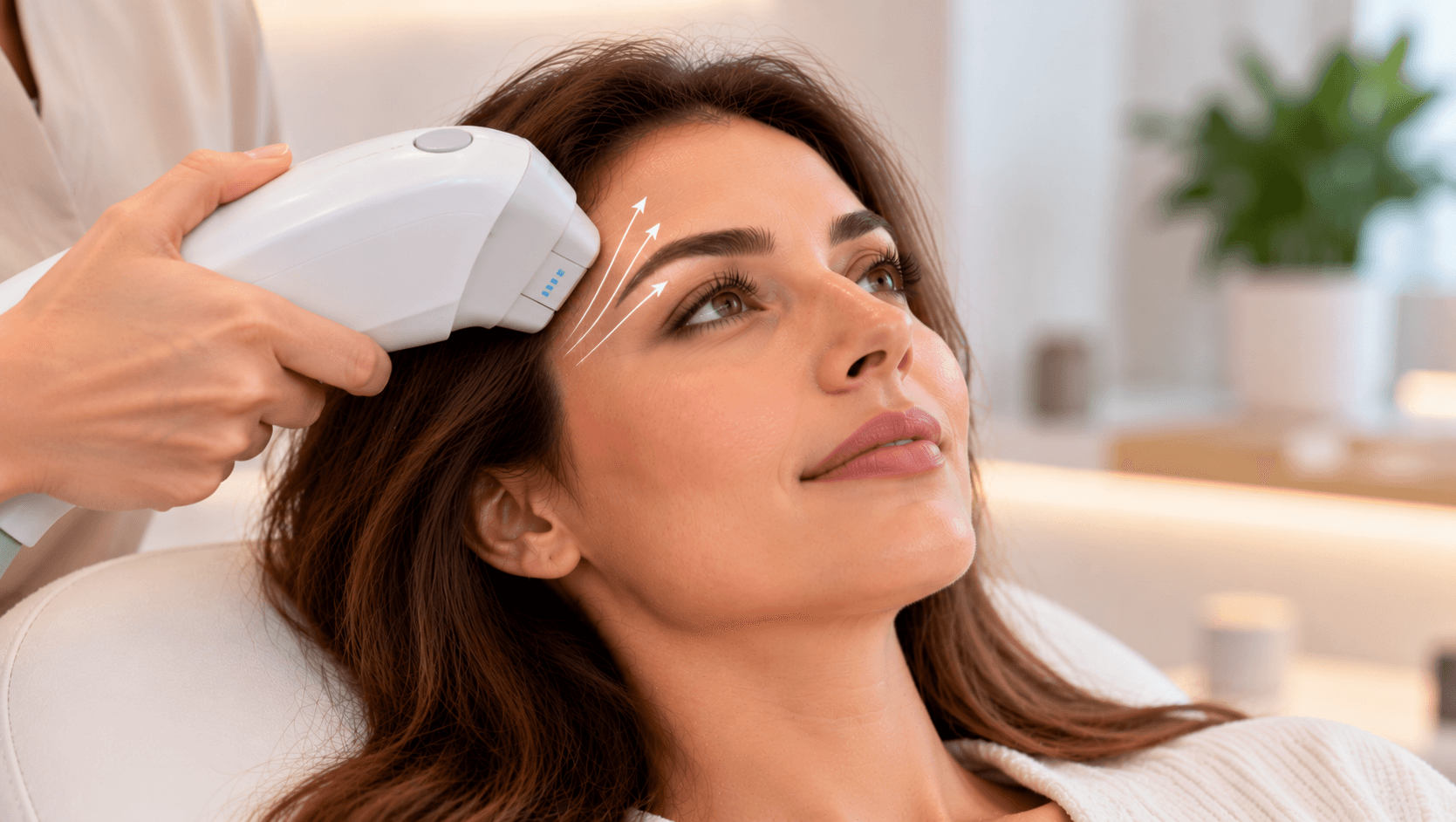
The threads are placed along the jawline. The doctor directs these threads at specific angles. The jaw corners are lifted. The lower face becomes more oval. The transition between the jaw and neck becomes clearer. This condition is referred to as "jaw contour." The definition of the facial contour enhances the perception of youth. After the procedure, the face appears more dynamic.
Soft tissues consist of fat and connective tissue. These tissues shift over time. The French lift moves these tissues back to their original place. The threads stabilize the tissue. The fascial layers under the skin are lifted. This creates a "mechanical lifting" effect. Proper positioning of the soft tissues ensures facial symmetry. It also helps to reduce deep lines.
The French lift can be applied to many areas. The lower face is the most commonly treated area. It is also used for the cheeks. The jawline is shaped with this procedure. The area under the jaw is the target area for double chin treatment. The neck area is also tightened with the lift. It is used for brow lifting as well. However, the technique differs for each area. The area under the jaw and the neck are evaluated together.
Sagging of the lower face is one of the first signs of aging. The French lift lifts the sagging in this area. The threads extend from the jaw corners towards the ear. This direction tightens the lower face. Marionette lines soften. The corners of the mouth lift upwards. The lower face looks younger. The results are natural and do not appear expressionless.
Cheeks slide down over time. This creates a "shark line." The French lift lifts the cheeks upwards. The threads are placed from the temple to the nose. This application also affects the midface. The cheekbones become more pronounced. The face appears more three-dimensional. However, limited effect is seen in those with excess cheek fat.
The jawline is the most important boundary of the face. A sharp jawline is associated with youth and aesthetics. The French lift reconstructs this line. Threads are placed along the jaw. The jaw corners are lifted. The distinction between the jaw and neck becomes clearer. This condition is known as "jawline definition." The jawline differs in men and women. The treatment takes these differences into account.
It is the center of double chin treatment. The French lift removes sagging here. Threads are placed under the jaw and on the neck. The doctor pulls the threads upwards and backwards. This movement reduces the double chin. The fat tissue under the jaw becomes less pronounced. However, it may be insufficient if there is excess fat.
The skin of the neck is thinner than that of the face. Therefore, it sags earlier. The French lift supports the neck contour. Threads are placed on the sides of the neck. Mechanical support is provided on the platysma muscle. Neck lines become less pronounced. The appearance of "Turkey neck" decreases. However, surgical intervention is required for advanced neck sagging.
The French lift and surgical facelift are different procedures. The French lift is minimally invasive. Surgical facelift is an operation. The French lift is performed under local anesthesia. Surgery requires general anesthesia. There are no incisions in the French lift. Surgery involves incisions and stitches. Recovery times differ. The permanence of the results also varies.
Feature | French Lift | Surgical Facelift |
Anesthesia | Local | General |
Incision | None | Present |
Procedure Duration | 30-60 min | 2-4 hours |
Recovery | 3-7 days | 2-4 weeks |
Result Longevity | 12-18 months | 5-10 years |
Scar Risk | Minimal | Present |
Price | More affordable | Higher |

The French thread lift is performed with threads. The doctor uses fine needles. Surgical facelift begins with an incision. The surgeon lifts the skin. Excess skin is removed. Underlying tissues are tightened. Then the skin is pulled and stitched. In the French thread lift, no tissue is removed. Only the existing tissue is repositioned. This fundamental difference determines the results.
The French thread lift intervenes in the subcutaneous tissue. It does not reach the deep fascial layer. Surgical facelift reaches deep layers. The SMAS layer (superficial musculoaponeurotic system) is tightened. This deep intervention provides more permanent results. However, it also increases risks. The French thread lift is safer. However, its effect is more limited.
Recovery after a French thread lift is quick. There may be slight swelling and bruising. It resolves within a few days. Normal life can be resumed in 2-3 days. Recovery after surgical facelift is prolonged. Bandages remain on the face. Swelling can last for weeks. Bruising may be pronounced. Returning to work takes 2-4 weeks. Physical activity is restricted.
The French thread lift provides natural results. Facial expression does not change. However, the effect is limited. Surgical facelift offers dramatic changes. The face looks younger. However, there is a risk of a "stretched" appearance. The French thread lift can make you look 5-10 years younger. Surgery can achieve a 10-15 year younger appearance. The choice depends on the patient's age and expectations.
French thread lift results last for 12-18 months. The threads dissolve. However, collagen production continues. Repeated sessions extend the duration. Surgical facelift results last for 5-10 years. Even if aging continues, the underlying structure has changed. However, no method can stop aging. Care and protection are important in both cases.
French thread lifting mechanically lifts the sagging double chin. The threads pull the tissue under the chin upwards. This movement instantly reduces the double chin. Additionally, collagen production increases over time. The skin tightens. With this dual mechanism, the double chin improves. However, this effect is limited on fatty tissue. It does not reduce fat volume. It only changes the position of the fat.
Yes, French thread lifting can lift sagging tissues under the chin. The threads work like a net under the skin. This net holds the loose tissue. When the doctor tightens the threads, the tissue moves upwards. The mechanical support is immediately visible. The fat tissue under the skin becomes less prominent. The facial profile improves. However, this effect does not eliminate fat cells.
Soft tissues consist of fat and connective tissue. These tissues sag down due to gravity. French thread lifting reverses this movement. The barbs of the threads grip the tissue. The threads are pulled upwards. The tissue is fixed in its new position. This process is known as "mechanical lifting." Lifting soft tissues clarifies the jawline.
The loose appearance is caused by sagging skin. French thread lifting tightens the skin. The threads support the skin. Additionally, collagen production thickens the skin. This situation reduces looseness. The skin appears smoother. However, if there is excessive looseness, the effect may be limited. In this case, surgical options should be considered.
The definition of the jawline is a sign of youth. French thread lifting recreates this line. The threads are placed along the jawbone. The jaw corners are lifted. The transition between the jaw and neck becomes clearer. This situation is referred to as "jaw contour definition." A defined jawline makes the face appear more aesthetic. There are different aesthetic ideals for men and women.
French thread lifting shapes the jawline mechanically. The threads extend from under the chin to the ear. This direction pulls the jawline taut. The sagging tissue rises. The jaw corner becomes sharper. The face becomes more oval. This effect peaks in 3-6 months. Because collagen production is completed during this period.
Sagging of the jawline is one of the first signs of aging. French thread lifting lifts this sagging. The threads create a support network under the skin. This network prevents sagging. Additionally, the skin's own elasticity increases. The jawline appears tighter. However, bone structure is also important. A weak jawbone can increase sagging.
The transition between the face and neck is defined by the "jawline." With aging, this transition fades. The French lift recreates this boundary. The threads lift the area under the chin. The neck tissue remains below. This distinction becomes more pronounced. The profile view improves in photos. This is one of the results that patients are most satisfied with.
The lower face contour includes the chin and cheeks. The French lift shapes this area. The threads tighten the lower face. Sagging cheeks are lifted. The corners of the mouth move upward. This alleviates the lines known as "marionette lines." The lower face appears younger and more dynamic. The results remain natural and expressionless.
Yes, the French lift can reduce mild to moderate looseness in the neck area. The threads are placed on the sides of the neck. This application supports the neck contour. The skin appears tighter. Neck lines are softened. However, its effect is limited in cases of advanced neck sagging. In such cases, neck lift surgery should be considered.
The French lift is very effective for mild looseness. The skin has not yet sagged significantly. The threads easily lift the skin. The results are also good for moderate looseness. However, more threads may be needed. The doctor may increase the number of threads in this case. Additionally, the placement angle of the threads may be altered. Results last longer with mild looseness.
The neck contour depends on muscle and skin support. The French lift enhances this support. The threads create a network over the platysma muscle. This network supports the muscle. The skin becomes tighter. Neck lines decrease. The "Turkey neck" appearance is alleviated. However, if muscle loosening is very advanced, this support may be insufficient.
In cases of advanced sagging, the skin has sagged significantly. The threads cannot fully lift such loose skin. The skin may bunch up over the threads. This can create an irregular appearance. Additionally, the carrying capacity of the threads is limited. Since excess skin is not removed, the results may be inadequate. In this case, surgical intervention may be more appropriate.
No, the French lift cannot correct all types of double chins. This method has its limitations. It may be insufficient alone for double chins caused by fat. Its effect is limited in cases with excess skin. If muscle loosening has progressed, it may not be enough on its own. The treatment plan should be tailored to the cause of the double chin. Choosing the right patient is the key to success.
No, the French lift may not be sufficient alone for double chins caused by fat. The French lift does not eliminate fat cells. It only changes the position of the fat tissue. Excess fat volume accentuates the double chin. In this case, liposuction under the chin should be considered. Liposuction reduces fat volume. Then, the French lift can tighten the skin.
The doctor examines the submental area. They assess the thickness of the fat layer. They examine the quality of the skin. The fat accumulation is classified. It is categorized as mild, moderate, and advanced. In mild cases, a French lift may be sufficient. In moderate and advanced cases, fat removal procedures are necessary. After fat removal, skin elasticity is important. If elasticity is good, the skin will tighten.
Fat removal procedures eliminate fat cells. This is done using liposuction techniques. Fat is suctioned with thin cannulas. Submental fat decreases. The volume of the double chin reduces. However, after fat removal, the skin may sag. This can create loose skin. In those with good elasticity, the skin tightens. In those with poor elasticity, a French lift or tightening procedure is required.
Skin elasticity determines the results of treatment. Elastic skin tightens itself. This skin appears smooth after fat removal. Loose skin sags and wrinkles. A French lift yields better results in elastic skin. Because the skin adapts to the threads. In loose skin, the threads may not fully lift the skin. Therefore, results may be more limited in those over 50 years old.
No, in cases where the double chin is caused by excess skin, a French lift may not be sufficient. Excess skin should be surgically removed. A French lift does not remove skin. It only tightens the existing skin. If there is too much skin, the tension will be inadequate. In this case, submental lifting or neck lifting should be considered. Surgery removes the excess skin and tightens the skin.
A French lift is very effective for mild skin laxity. The skin has not sagged significantly yet. The threads easily lift the skin. Additionally, collagen production tightens the skin. This creates a dual effect. The results are natural and pronounced. Patient satisfaction is high. However, aging continues. Therefore, the results are not permanent.
Moderate and advanced skin excess requires surgery. Submental lifting is suitable for this condition. The surgeon removes the excess skin. They tighten the underlying tissues. They lift and stitch the skin. This procedure provides permanent results. A French lift offers a temporary solution in this case. However, if the patient does not want surgery, a French lift can be tried. The results will be limited.
Excess skin prevents the skin from tightening. This skin sags and wrinkles. Surgical intervention removes this skin. The skin is tightened and smoothed. This procedure is known as "submental lifting." The surgery is performed under general anesthesia. Recovery takes 1-2 weeks. The results are permanent. However, there is a risk of scarring.
If there is significant laxity in the neck muscles, different treatments should be considered. Neck lift surgery tightens the muscles. The procedure called platysmaplasty combines the muscles. Botulinum toxin relaxes the muscles. However, this is a temporary solution. A French lift may help with mild muscle laxity. In advanced laxity, surgery is essential.
Neck lift surgery rejuvenates the neck area. The surgeon makes an incision from the front of the neck. Excess skin is removed. The platysma muscle is tightened and stitched. The skin is pulled tight. This procedure reshapes the neck contour. Results last for 5-10 years. Recovery takes 2-3 weeks. The scar is hidden within the neck lines.
Tightening of the neck muscles is done through platysmaplasty. The platysma muscle is split in half. The surgeon brings the edges of these muscles together. This procedure increases the support of the muscle. The neck appears firmer. Additionally, the muscle's ability to hold the skin improves. This procedure is performed alongside a neck lift. It is not done alone.
A submental lift procedure focuses solely on the area under the chin. This procedure is more limited. The surgeon makes an incision under the chin. Excess skin is removed. The skin is tightened. This procedure can be done under local or general anesthesia. Recovery takes 1 week. Results are permanent. However, it is only suitable for the area under the chin. The neck muscles are not affected.
Some patients have multiple issues occurring simultaneously. Fat accumulation, skin sagging, and muscle relaxation can be seen at the same time. In this case, a combined treatment plan is devised. First, liposuction is performed. Then, a French lift or tightening procedure is applied. Even a neck lift can be added. This approach is known as "combined facial and neck rejuvenation." The results are more comprehensive.
The French lift and neck lift serve different purposes. The French lift is minimally invasive. The neck lift is a surgical procedure. The French lift treats mild sagging. The neck lift addresses advanced sagging. The French lift provides temporary results. The neck lift offers permanent results. Recovery times and risks differ.
Feature | French Lift | Neck Lift |
Invasiveness | Minimal | Surgical |
Anesthesia | Local | General |
Procedure duration | 30-60 min | 2-3 hours |
Recovery | 3-7 days | 2-4 weeks |
Result durability | 12-18 months | 5-10 years |
Risk level | Low | Medium |
Suitable candidate | Mild-moderate sagging | Advanced sagging |
The French thread lift is preferred for mild to moderate soft tissue sagging. It is suitable for those with slight looseness in the jawline. It is ideal for individuals seeking less surgical intervention. Those aged between 30-50 are better candidates. Results are excellent in individuals with good skin elasticity. However, if there is excessive fat, it may be insufficient on its own.
In mild sagging, the skin has not yet loosened significantly. The French thread lift easily lifts this skin. The threads hold the tissue and pull it upwards. More threads are needed for moderate sagging. The doctor adjusts the number and placement of the threads. In both cases, the results are noticeable. The facial profile improves. The jawline becomes clearer. Patient satisfaction is high.
Mild looseness in the jawline is corrected with the French thread lift. Threads are placed along the jawline. The jaw corners are lifted. The transition between the jaw and neck becomes clearer. This makes the face appear younger. The procedure takes 30 minutes. Results are visible immediately. However, the final result is assessed after 3 months.
Some individuals experience fear of surgery. Some do not want general anesthesia. Others cannot spare time for a long recovery process. The French lift is ideal for these individuals. The procedure is performed under local anesthesia. There are no incisions. Recovery is quick. Risks are minimal. Results are natural. However, expectations should be realistic.
Neck lift treats advanced neck sagging. It removes excess skin. It corrects the looseness in the neck muscles. It addresses noticeable sagging under the chin. It treats signs of advanced aging in the neck area. This procedure is performed more frequently in individuals over 50. Results are permanent. However, the recovery process is long.
In neck lift surgery, the surgeon removes excess skin. An incision is made first. The skin is lifted. The underlying fatty tissue is adjusted. The platysma muscle is tightened. Then the skin is stretched. Excess skin is cut away. The skin is sutured. This procedure corrects the neck contour. The scar remains within the neck lines. It fades over time.
Looseness in neck muscles is corrected with platysmaplasty. The platysma muscle is divided in two. This separation increases with aging. The surgeon brings the edges of the muscle together. This procedure enhances the support of the muscle. The neck appears tighter. This procedure is done in conjunction with neck lift. It is insufficient on its own.
Noticeable sagging under the chin is treated with neck lift. The surgeon makes an incision under the chin. Sagging tissues are lifted. Excess skin is removed. The skin is tightened. This procedure can be done in conjunction with chin lift. Results are dramatic. The facial profile changes completely. However, there is a risk of scarring.
Signs of advanced aging in the neck area include wrinkles, sagging, and lines. Neck lift addresses these signs. The skin is tightened. Wrinkles flatten. Lines soften. The neck appears smoother. However, neck skin is thinner than facial skin. Therefore, it may not be completely smooth. Sun protection preserves the results.
Yes, French lift and neck lift can be applied together. However, this is rare. Generally, one method is chosen. If the French lift has been done previously, neck lift can be performed later. In some patients, the results of the French lift may be insufficient. Then neck lift is considered. A combined approach addresses both areas. However, it is rare to perform them in the same session.
A combined treatment approach involves using multiple methods. For example, liposuction + French lift. Or French lift + filler. This approach provides comprehensive results. Each method targets a different issue. Liposuction reduces volume. French lift addresses sagging. Filler compensates for volume loss. This approach is personalized.
The chin and neck are a whole. Changes made in one affect the other. Treatment of the submental area affects the neck. Neck treatment affects the submental area. Therefore, the doctor examines both areas. The treatment plan should be holistic. Otherwise, the results may not look natural. For example, if only the submental area is treated, neck sagging may become more pronounced.
The doctor first listens to the patient. They learn about their expectations. Then, a detailed examination is performed. The skin quality is assessed. The amount of fat is examined. The condition of the muscles is checked. Age and overall health are taken into account. Then, the most suitable method is suggested. A decision is made together with the patient. This process is known as "consultation."
The French lift and submental fat removal target different issues. The French lift addresses sagging. Fat removal reduces fat volume. The French lift uses threads. Fat removal uses a cannula. The French lift stimulates collagen production. Fat removal removes fat cells. Both procedures can complement each other.
Feature | French Lift | Submental Fat Removal |
Target | Sagging | Fat accumulation |
Method | Thread | Vacuum/cannula |
Anesthesia | Local | Local/sedation |
Procedure duration | 30-60 min | 30-60 min |
Result | Tightening | Volume reduction |
Duration | 12-18 months | Permanent (fat cells) |
Submental fat removal is for individuals with excess fat under the chin. Results are excellent in those with good skin elasticity. It is suitable for those without significant skin excess. It is more effective in younger patients because young skin can tighten itself. In older patients, sagging may occur after fat removal. Therefore, a lifting procedure should also be considered for older patients.
Fat removal is effective for individuals with excess fat under the chin. The procedure reduces fat volume. The double chin shrinks. The facial profile improves. However, fat removal is an aesthetic procedure. Excessive fat removal can create indentations. Therefore, an experienced doctor should be chosen. After fat removal, tight dressing is applied. This helps the skin adhere.
In individuals with good skin elasticity, the skin tightens after fat removal. The skin shrinks under the fat volume. This creates a smooth contour. Young people have high elastin and collagen production. Therefore, those aged 20-40 are the best candidates. However, smoking damages skin elasticity. This negatively affects the results.
Fat removal is sufficient for individuals without significant skin excess. Because the skin will tighten itself. If there were excess skin, the skin would sag. In this case, fat removal alone would not be enough. A French lift or a lifting procedure would be necessary. Therefore, the doctor evaluates the skin excess. Skin quality is checked through ultrasound or manual examination.
The French lift focuses on soft tissue sagging. It targets looseness in the jawline. It aims to define the lower face contour. It does not reduce fat volume. It only changes the position of the fat. It triggers skin tightening. Therefore, it is used in sagging-focused treatments. It is insufficient alone in fat-focused treatments.
Soft tissue sagging is corrected with mechanical lifting. The French thread serves this function. The threads create a network under the skin. This network holds the sagging tissue. The doctor pulls the threads upwards. The tissue is fixed in its new position. Additionally, collagen production tightens the skin. This dual mechanism reduces sagging.
Sagging in the jawline is addressed with the French thread. Threads are placed along the jaw. The jaw corners are lifted. The boundary between the jaw and neck becomes clearer. This makes the face look younger and more aesthetic. After the procedure, the jawline becomes sharper. However, the bone structure is also important. A weak jawbone may yield limited results.
The lower face contour includes the jaw and cheeks. The French thread shapes this area. The threads tighten the lower face. Sagging cheeks are lifted. The corners of the mouth move upwards. This makes the face appear more oval and youthful. Results peak in 3-6 months. Because collagen production is completed during this period.
Yes, the French thread and liposuction can be applied together. This combination is common. First, liposuction is performed. The fat volume decreases. Then the French thread is applied. The skin tightens. This combination is known as "combined submental rejuvenation." Results are more pronounced than with a single method. However, it can be done in the same session.
When oiliness and sagging coexist, combined treatment is necessary. Liposuction reduces fat. The French thread lifts sagging. These two procedures complement each other. After liposuction, the skin becomes hollow. The French thread tightens this hollowness. Results are more comprehensive. However, both procedures have risks. An experienced doctor should be chosen.
The doctor first determines which issue is dominant. If fat is dominant, liposuction is done first. If sagging is dominant, the French thread takes precedence. Sometimes both procedures are done on the same day. Sometimes a wait of 1-2 months is observed after liposuction. Then the French thread is applied. This time is given for the skin to heal. Planning is entirely personal.
Every person's facial anatomy is different. The jawbone, fat distribution, skin quality, and muscle structure vary. A standard plan does not suit everyone. The doctor evaluates these features. Then creates a special plan. An incorrect plan may yield no results. It may even increase the risk of complications. Personalized treatment is the key to success.
Suitable candidates for the French thread are clear. Those with mild to moderate double chin sagging are suitable. Those with good skin elasticity are ideal. Those with stable body weight achieve better results. Those with realistic expectations will be satisfied. Those with advanced skin excess require different treatment.
Yes, individuals with mild or moderate double chin sagging are suitable candidates. Their skin has not sagged significantly. The threads can easily lift the skin. The results are noticeable and natural. The age range is generally between 30-50 years. However, it can also be performed on individuals over 50 depending on skin quality. The doctor will decide after a detailed examination.
Skin elasticity determines the results of the French lift. Elastic skin adapts to the threads. The skin retracts itself. Results last longer. In loose skin, the threads may not be able to lift the skin completely. Results may be limited. Elasticity is associated with youth. However, smoking, sun damage, and poor nutrition can impair elasticity.
Maintaining a stable body weight is essential for the permanence of results. Weight gain enlarges fat cells. The double chin becomes prominent again. Weight loss loosens the skin. Sagging increases. This situation disrupts the results of the French lift. Ideal candidates are those who maintain their weight. Balanced nutrition and exercise are important.
Realistic expectations are essential for patient satisfaction. The French lift is not a magic wand. It does not make the face 20 years younger. However, it provides a 5-10 year rejuvenation. Results should be natural. Excessive tightening creates a faceless expression. The patient should be aware of these limits. The doctor should manage expectations before the procedure.
Individuals with severe skin excess have significantly loose skin. The French lift cannot lift such loose skin. The threads may become embedded under the skin. Results may be inadequate. These individuals may require submental lifting or neck lifting. Surgery removes excess skin. Results are permanent and noticeable. However, risks and recovery time are longer.
A detailed evaluation is essential before the French lift. The doctor examines anatomical features. Assesses skin quality. Checks the amount of fat under the chin. Looks at the condition of the neck muscles. Analyzes the jawline. Examines the neck structure. Evaluates facial symmetry. These assessments determine the treatment plan.
The doctor first examines skin quality. Skin thickness, elasticity, and wrinkle degree are important. Then evaluates the amount of fat under the chin. The thickness of the fat layer affects the treatment. The tone of the neck muscles is checked. The condition of the platysma muscle is determined. The definition of the jawline is noted. Neck length and structure are assessed. Facial symmetry is analyzed with photographs.
Skin quality is assessed through visual and tactile examination. The doctor pulls and releases the skin. The speed of skin retraction indicates elasticity. Slowly retracting skin is loose. Additionally, skin thickness is important. Results are more pronounced in thin skin. In thick skin, threads are placed deeper. Sun damage and color changes are also noted.
The amount of fat under the chin is measured through manual examination. The doctor feels the fat layer with their fingers. Ultrasound is sometimes used. Ultrasound shows the thickness of the fat layer. This measurement affects the treatment plan. In mild cases of fat accumulation, a French lift may be sufficient. In advanced cases, liposuction is required.
The condition of the neck muscles is examined through visual inspection. When the patient smiles, the platysma muscle becomes prominent. The doctor assesses the tone of the muscle. Loose muscles increase sagging. The degree of muscle separation is checked. Advanced separation requires surgery. Mild looseness can be corrected with a French lift.
The jawline is evaluated from the side profile. The doctor looks at the prominence of the jaw angle. The angle between the jaw and neck is measured. This angle is close to 90 degrees in youth. It widens with aging. The position of the jawbone is important. A receding jaw accentuates the double chin. In this case, fillers or implants may also be considered.
The structure of the neck is evaluated in terms of length and thickness. A long neck is aesthetically advantageous. A short neck accentuates the double chin. The thinness of the neck skin is checked. Thin skin sags more quickly. The volume of the neck muscles is important. Thick muscles make the neck appear fuller. This condition can be corrected with liposuction.
Facial symmetry is important in aesthetic evaluation. The treatment plan changes for asymmetrical faces. The doctor compares the right and left sides. The degree of sagging may vary. Threads are placed according to the asymmetry. The goal is to achieve a symmetrical and natural result. Photo analysis helps in this evaluation.
The primary cause of double chin formation is evaluated in four categories. The first category is fat accumulation. The second category is skin looseness. The third category is muscle looseness. The fourth category involves multiple causes. The doctor distinguishes between these categories. Different treatments are required for each category. Accurate diagnosis is the key to success.
Fat-related double chin is seen in young individuals. The skin is tight. However, there is fullness under the chin. It feels soft and mobile when touched. There is no sagging or it is very mild. In this case, liposuction is highlighted. A French lift alone may be insufficient.
Skin looseness-related double chin is seen in middle-aged and older individuals. The skin is thin and loose. There are wrinkles. Sagging is prominent. The amount of fat may be normal. In this case, a French lift or tightening procedure is considered. Skin quality determines the treatment. A French lift is suitable with good elasticity.
The double chin occurs due to the weakening of the neck muscles related to muscle relaxation. The platysma muscle becomes more pronounced. The neck lines deepen. Sagging is directed towards the sides of the neck. In this case, a neck lift and platysmaplasty are required. A French lift alone is not sufficient. Without muscle support, the skin will sag again.
When multiple causes are present together, combined treatment is necessary. For example, oiliness + skin laxity. Or skin laxity + muscle relaxation. The doctor identifies the dominant issue. First, the dominant issue is addressed. Then, other issues are dealt with. Sometimes all procedures are performed in the same session. Sometimes a step-by-step approach is preferred.
Patient expectations are decisive in treatment selection. Does the patient want a natural result? Or a dramatic change? Does the patient want surgery? Can they dedicate time to the recovery process? What is their budget? These questions are answered. For those wanting natural results, a French lift is recommended. For those wanting dramatic changes, surgery is suggested. A balance must be established between expectations and outcomes.
Significant changes occur in the appearance of the double chin after a French lift. The jawline becomes more defined. The angle between the chin and neck changes. The loose appearance of the skin decreases. Results are visible immediately. However, the final result is evaluated after 3 months. During this time, collagen production is completed.
Yes, the jawline becomes more defined. The threads lift the corners of the chin. The boundary between the chin and neck becomes clearer. The facial profile improves. This change is noticeable immediately. However, due to swelling, the full result is not seen in the first few days. As the swelling decreases, the contour becomes more pronounced. The final result appears after 3 months.
Yes, the angle between the chin and neck changes. In youth, this angle is close to 90 degrees. With aging, the angle widens. The French lift narrows this angle. The chin is elevated. The neck appears tighter. This change is evident in profile photos. The change in angle enhances the perception of youth.
Yes, the loose appearance of the skin decreases. The threads mechanically tighten the skin. Additionally, collagen production thickens the skin. This dual effect reduces looseness. The skin appears smoother and firmer. However, limited effects are seen in cases of advanced looseness. In such cases, additional procedures should be considered.
Results become apparent immediately. However, full results emerge over time. There is swelling in the first few days. This situation conceals the true result. Swelling subsides in 1-2 weeks. If there is bruising, it resolves in 10 days. Collagen production lasts for 3 months. During this time, the skin tightens. The final result is evaluated after 3 months.
The final result is evaluated after 3 months. During this time, collagen production is completed. The skin adapts to its new position. The threads begin to dissolve. However, the collagen support continues. The doctor will perform a check-up after 3 months. A photo comparison will be made. If necessary, additional threads may be considered. However, generally, a single session is sufficient.
The recovery process after French thread lifting is quick. Mild swelling and bruising are observed in the first few days. There may be a feeling of tightness in the chin and neck. Daily activities can be resumed in 2-3 days. Physical activities are restricted for 1-2 weeks. It takes 3 months for the results to fully settle. This process varies from person to person.
Yes, mild swelling and bruising can be observed in the first days. The threads create a foreign body reaction under the skin. This leads to swelling. There may be bruising at the injection sites. Swelling decreases in 3-5 days. Bruising resolves in 7-10 days. Cold compresses reduce swelling. It is recommended to sleep with the head elevated.
Yes, the feeling of tightness in the chin and neck is normal. The threads pull the skin upwards. This creates a feeling of tightness. The patient may not be able to fully open their mouth. This condition lasts for 1-2 weeks. The feeling of tightness decreases over time. The threads adjust to the skin. The skin adapts to its new position. Excessive tightness and pain should be reported to the doctor.
Daily activities can be resumed after 2-3 days. The patient can return home the same day. However, rest is recommended. Makeup can be applied after 24 hours. Washing the face should be done gently. Hot showers should be avoided for 48 hours. Sun protection is essential. Return to work can be done in 3-5 days.
Physical activities can be resumed after 1-2 weeks. Heavy sports should be postponed for 2 weeks. Swimming is allowed after 1 week. Running and fitness can start after 10 days. Movements that bend the face downwards should be avoided. Yoga and pilates are suitable after 2 weeks. The doctor's recommendations should be followed.
It takes 3 months for the results to fully settle. During this time, collagen production continues. The skin adapts to its new position. The threads gradually dissolve. However, the collagen support remains. The final result is evaluated after 3 months. During this period, skin care is important. The use of sunscreen is essential.
French thread lifting is generally a safe procedure. However, there are risks with any procedure. Swelling and bruising are the most common side effects. Asymmetry may develop along the jawline. The risk of infection is low but exists. Nerve damage is rare. Irregularities may occur under the skin. Unexpected aesthetic results may arise.
Yes, swelling and bruising can occur. This is a normal reaction. The threads create a foreign body reaction under the skin. Blood vessels may be damaged. This leads to bruising. Swelling decreases in 3-5 days. Bruising resolves in 7-10 days. Cold compresses and sleeping with the head elevated help.
Yes, asymmetry can develop in the jawline. This condition arises from uneven tension in the threads. The doctor's experience reduces this risk. Mild asymmetry can be corrected. The threads are adjustable. However, advanced asymmetry is rarely seen. Photo analysis determines pre-procedure asymmetry. Treatment takes this asymmetry into account.
Yes, there is a risk of infection, but it is low. The procedure must be performed under sterile conditions. The doctor must use sterile techniques. The threads should be single-use. The patient should pay attention to cleanliness after the procedure. Antibiotic creams may be recommended. Symptoms of infection include redness, pain, and fever. In this case, the doctor should be consulted immediately.
Yes, nerve damage can occur, but it is very rare. There are small sensory nerves in the face. The needle may contact these nerves. This can cause temporary numbness. It usually resolves within 2-4 weeks. Permanent nerve damage is very rare. An experienced doctor minimizes this risk. The depth of thread placement is important.
Yes, irregularities can occur under the skin. The threads can be felt under the skin. This condition is known as "thread sensation." It usually disappears within 2-4 weeks. Rarely, small nodules may form under the skin. These nodules can be corrected with massage. Excessive nodulation is rarely seen. In this case, the threads can be removed.
Yes, unexpected aesthetic results can occur. A "pulled" appearance may develop in the face. This condition arises from excessive tension. Asymmetrical results may be observed. Early loosening of the threads can reduce the effect. Visible threads under the skin can occur, although rarely. These situations can be corrected. However, proper patient selection reduces these risks.
No, the French thread is not a permanent solution for the double chin. The results are temporary. The threads dissolve over time. However, collagen production creates a lasting effect. Results last for 12-18 months. The aging process continues. Weight changes affect the results. Skin structure influences the permanence of the results. Repeated applications can extend the duration.
The results of the French thread last from 12 to 18 months. This duration varies from person to person. In younger patients, results last longer because collagen production is better. Good skin care extends the results. Sun protection is essential. Repeated sessions can prolong the duration. Some patients have a session once a year.
The aging process reduces the results. With aging, collagen production decreases. Skin elasticity drops. New sagging occurs. The French thread cannot stop this process but can slow it down. Repeated applications delay the signs of aging. However, no method can stop time.
Weight changes negatively impact results. Weight gain enlarges fat cells. The double chin becomes prominent again. Weight loss loosens the skin. Sagging increases. This situation disrupts the results of the French lift. Maintaining a balanced weight prolongs results. Ideal candidates are those who maintain their weight.
Skin structure determines the permanence of results. Thick and elastic skin prolongs results. In thin and loose skin, results are short-lived. In oily skin, threads may dissolve faster. In dry skin, results may last longer. Genetic factors determine skin structure. Therefore, results are individual.
No, the French lift cannot stop the aging process. Aging is a biological process. This process is determined by genetic and environmental factors. The French lift only delays the signs of aging. It temporarily rejuvenates the skin. However, cells continue to age. Regular care and repeated procedures maintain the effect.
There are many options for double chin treatment. Submental liposuction reduces fat. Submental lifting removes excess skin. Neck lifting rejuvenates the neck. There are injections that reduce the fat tissue under the chin. Each treatment targets a different issue. The right choice depends on the diagnosis.
Submental liposuction is performed using the liposuction technique. The doctor makes small incisions under the chin. Fat is suctioned with thin cannulas. The procedure can be done under local anesthesia. It lasts 30-60 minutes. Results are permanent. Because fat cells are removed. However, remaining cells may grow. Therefore, weight control is important.
Submental lifting focuses solely on the area under the chin. The surgeon makes an incision under the chin. Excess skin is removed. The skin is tightened and stitched. This procedure can be done under local or general anesthesia. Recovery takes 1-2 weeks. Results are permanent. However, it is only suitable for the area under the chin. Neck muscles are not affected.
Neck lifting rejuvenates the neck area. The surgeon makes an incision from the front of the neck or behind the ear. Excess skin is removed. The platysma muscle is tightened. The skin is pulled tight. This procedure is performed under general anesthesia. Recovery takes 2-4 weeks. Results last 5-10 years. The scar is hidden within the neck lines.
Injections that reduce fat tissue under the chin are "lipolytic" injections. These injections break down fat cells. They contain deoxycholic acid. This substance destroys fat cell walls. Fat cells die. The body cleans up these dead cells. The procedure requires several sessions. Results are permanent. However, swelling and pain may occur.
Treatments targeting oiliness are liposuction and lipolytic injections. Liposuction is a surgical procedure. Lipolytic injections are minimally invasive. Both methods reduce fat volume. However, they do not ensure skin tightening. Therefore, combined treatment is required in cases of oiliness + sagging.
Treatments targeting skin laxity include the French lift, radiofrequency, ultrasound, and laser. The French lift provides mechanical lifting. Radiofrequency and ultrasound stimulate collagen production. Laser rejuvenates the skin. These treatments tighten the skin. However, if there is excess skin, surgery is required.
Treatments targeting muscle laxity are botulinum toxin and surgical procedures. Botulinum toxin relaxes the muscles. However, its use for neck muscles is limited. Surgical procedures (platysmaplasty) tighten the muscles. This procedure is performed along with a neck lift. The French lift does not directly correct muscle laxity.
The right treatment depends on the underlying cause of the double chin issue. The French lift is suitable for mild soft tissue sagging. Submental liposuction is appropriate for pronounced submental fat. If there is excess skin, a neck lift or submental lift is suitable. For pronounced neck muscle laxity, a neck lift and muscle tightening are necessary.
Double Chin Type | Recommended Treatment |
Mild sagging | French lift |
Pronounced oiliness | Submental liposuction |
Excess skin | Neck lift / Submental lift |
Muscle laxity | Platysmaplasty + Neck lift |
Oiliness + mild sagging | Liposuction + French lift |
Advanced sagging | Surgical face or neck lift |
The doctor identifies the underlying cause through a detailed examination. Fat accumulation, skin laxity, and muscle relaxation are distinguished. Sometimes multiple causes are present together. In this case, the dominant cause is determined. Treatment is planned according to the dominant cause. Accurate diagnosis prevents incorrect treatment.
The French lift is ideal for mild soft tissue sagging. Because the skin has not yet become very lax. The threads easily lift the skin. The procedure is minimally invasive. Recovery is quick. Risks are low. Results are natural. Patient satisfaction is high. However, results are temporary.
Liposuction is effective for noticeable submental fat. Because the French lift does not reduce fat volume. Liposuction removes fat cells. The volume of the double chin decreases. Results are permanent. However, skin elasticity is important. If elasticity is poor, sagging may occur after liposuction.
If there is excess skin, surgery is essential. Because the French lift does not remove skin. It only tightens the existing skin. Excess skin sags and wrinkles. Surgery removes excess skin. The skin becomes smooth. Results are permanent. However, the recovery process is long. There is a risk of scarring.
Muscle support is essential for noticeable neck muscle relaxation. The French lift cannot tighten the muscles. It only supports the skin. When the muscles are loose, the skin sags again. Platysmaplasty connects the muscles. Neck lift tightens the skin. This combination provides permanent results.
When fat and mild sagging are present together, a single method is insufficient. Liposuction reduces fat. However, it may loosen the skin. The French lift tightens the skin. These two methods complement each other. Results are more comprehensive. The patient resolves two issues in a single session.
In advanced sagging, the skin and tissues are very lax. The French lift cannot correct this condition. The threads are insufficient. Surgical face lift or neck lift tightens the deeper layers. It removes excess skin. Results are dramatic and permanent. In this case, surgery is the gold standard.
The French lift may not be sufficient in some cases. If there is excess fat in the double chin, liposuction is necessary. If there is significant skin excess, a lifting procedure is preferred. If there is advanced relaxation in the neck muscles, muscle tightening is required. If multiple problems are present together, combined treatment is essential.
If there is excess fat in the double chin, liposuction should be considered. The French lift does not reduce fat volume. Liposuction removes fat cells. Then, depending on skin elasticity, a French lift or a lifting procedure can be performed. If the skin cannot tighten after liposuction, an additional procedure is necessary.
If there is significant skin excess, submental lifting or neck lifting is preferred. These procedures remove excess skin. The skin is tightened and smoothed. The French lift is insufficient in this case because it does not remove skin. Surgical results are permanent. However, the recovery process is long.
If there is advanced relaxation in the neck muscles, platysmaplasty can be considered. This procedure connects the edges of the muscles. It is performed together with neck lifting. The results are permanent. The French lift alone is not sufficient in this case because the skin will sag again without muscle support.
The presence of multiple problems complicates the treatment choice. The doctor first identifies the dominant issue. Then, a treatment sequence is planned. For example, liposuction first, then the French lift. Or neck lifting first, then the French lift. Sometimes all procedures are performed in the same session. This affects anesthesia and recovery time.
Yes, the French lift can improve a sagging double chin in the right patient. It is effective in mild to moderate soft tissue sagging. It yields results in those with looseness in the jawline. It helps those with loss of definition in the lower facial contour. However, it may not be sufficient alone in every case.
The French lift is effective in mild to moderate soft tissue sagging. It yields results in those with looseness in the jawline. It helps those with loss of definition in the lower facial contour. Excellent results are achieved in those with good skin elasticity. It is ideal for those aged between 30 and 50.
In mild sagging, the results are excellent. The skin lifts easily. The results are natural and pronounced. In moderate sagging, the results are also good. However, more threads are needed. In both cases, patient satisfaction is high. The jawline becomes clearer. The facial profile improves.
The French lift is effective for those with looseness in the jawline. The threads lift the jaw corners. The boundary between the jaw and neck becomes clearer. The face looks younger. This effect is noticeable immediately. However, the final result is evaluated after 3 months because collagen production is completed during this time.
The French lift is effective for those with loss of definition in the lower face contour. The threads lift the lower face. Sagging cheeks are elevated. The corners of the mouth move upward. The face becomes more oval. This situation enhances the perception of youth. The results remain natural and expressionless.
In some cases, the French lift may not be sufficient on its own. For those with excess submental fat, liposuction is necessary. In cases of significant skin excess, a lifting procedure is essential. For those with pronounced neck muscle relaxation, muscle tightening is required. In cases of neck sagging due to advanced aging, surgical intervention is the gold standard.
For those with excess submental fat, liposuction should be considered. The French lift does not reduce fat volume. After liposuction, additional procedures are planned based on skin elasticity. In cases of good elasticity, liposuction alone may be sufficient. In cases of poor elasticity, the French lift or a lifting procedure is added.
Surgical intervention is essential for those with significant skin excess. Chin lifting or neck lifting should be considered. These procedures remove excess skin. The skin is tightened and smoothed. The French lift offers a temporary and limited solution in this case. Surgery provides permanent results.
For those with pronounced neck muscle relaxation, platysmaplasty should be considered. This procedure tightens the muscles. It is performed alongside neck lifting. The French lift cannot tighten the muscles. Without muscle support, the skin will sag again. Therefore, surgical intervention is essential.
For neck sagging due to advanced aging, neck lift surgery should be considered. This procedure tightens the deeper layers. It removes excess skin. The results are permanent. The French lift is inadequate in this case because the sagging is too advanced. The threads cannot support such loose tissue.
Treatment selection should be based on the cause of double chin formation. This is because each cause targets a different anatomical issue. Fat accumulation requires reducing fat volume. Skin relaxation necessitates skin tightening. Muscle relaxation requires increasing muscle support. Incorrect treatment may yield no results and even increase the risk of complications.
Yes, the French lift is an appropriate treatment for sagging double chin in the right patient. It is effective for mild to moderate sagging. It defines the jawline. It supports the neck contour. However, it does not yield the same results for every patient. Factors such as fat, skin, and muscle should be evaluated together in double chin formation. A personalized examination and treatment planning are essential. Realistic expectations and patient safety should be prioritized.
The French thread creates mechanical and biological effects on a sagging double chin. The mechanical effect is the lifting of the tissue by the threads. The biological effect is the increase in collagen production. This dual mechanism reduces the double chin. The jawline becomes more defined. The neck tightens. However, the effect is limited on fat volume. Results last for 12-18 months.
In double chin formation, fat, skin, and muscle factors work together. Fat volume accentuates the double chin. Skin laxity increases sagging. Muscle relaxation reduces support. These three factors affect each other. For example, after fat removal, the skin may become lax. This can increase sagging. Therefore, a holistic assessment is essential.
It should be explained that the same method will not yield the same result in every patient. This is because each person's anatomy is different. Age, skin type, fat distribution, and muscle structure vary. Genetic factors influence the results. Lifestyle and skincare are important. Therefore, the doctor creates a personalized plan for each patient. Standard results should not be expected.
French threading targets sagging. It is minimally invasive. It provides temporary results. Submental liposuction targets fat. It is minimally invasive. It provides permanent results. Neck lift targets excess skin and muscles. It is surgical. It provides permanent results. Each of the three methods addresses different issues. The correct choice depends on the diagnosis.
Method | Target | Invasiveness | Permanence |
French threading | Sagging | Minimal | 12-18 months |
Submental liposuction | Fat volume | Minimal | Permanent |
Neck lift | Excess skin/muscle | Surgical | 5-10 years |
Personalized examination and treatment planning is the key to success. A standard plan does not fit everyone. The doctor makes an accurate diagnosis through a detailed examination. Then, they recommend the most suitable method. Decisions are made together with the patient. This process manages expectations. It reduces the risk of complications. It increases patient satisfaction.
Realistic expectations are essential for patient satisfaction. The French thread lift is not a magic wand. It does not make the face 20 years younger. However, it provides a 5-10 year rejuvenation. The patient should be aware of these limits. Patient safety is paramount. Sterile technique, experienced doctors, and proper patient selection ensure safety. Aesthetic procedures are medical procedures. They should be taken seriously.
Gold, Michael H. "Use of Thread Lifts for Facial Rejuvenation." Journal of Cosmetic , vol. 18, no. 4, 2019, pp. 987-994.
Wu, Wen-Ta. "Barbed Sutures in Facial Rejuvenation: A Review of the Literature." Aesthetic Surgery Journal, vol. 39, no. 2, 2019, pp. 123-130.
Paul, Malcolm D. "Submental Liposuction and Platysmaplasty." Clinics in Plastic Surgery, vol. 46, no. 3, 2019, pp. 345-352.
Rohrich, Rod J., and Joel E. Pessa. "The Fat Compartments of the Face: Anatomy and Clinical Implications for Cosmetic Surgery." Plastic and Reconstructive Surgery, vol. 119, no. 7, 2007, pp. 2219-2227.
Sulamanidze, Marlen A., and George Sulamanidze. "APTOS Suture Lifting Methods: 10 Years of Experience." Clinics in Plastic Surgery, vol. 36, no. 2, 2009, pp. 281-286.
Gosain, Arun K., and Richard J. Warren. "Aging Face and Neck." Grabb and Smith's Plastic Surgery, 7th ed., Wolters Kluwer, 2014, pp. 567-580.
Mendelson, Bryan C., and Chin-Ho Wong. "Anatomy of the Aging Face." Aesthetic Surgery Journal, vol. 32, no. 1, 2012, pp. 45-52.
Coleman, Sydney R., and Alesia P. Saboeiro. "Fat Grafting to the Face and Neck." Plastic and Reconstructive Surgery, vol. 120, no. 6, 2007, pp. 55-63.
Gamboa, Gina M., and James M. Stuzin. "Anatomy and Aging of the Neck." Facial Plastic Surgery Clinics of North America, vol. 22, no. 2, 2014, pp. 161-170.
Kontis, Theda C., and Victor G. Lacombe. "Cosmetic Injection Techniques: A Text and Video Guide to Neurotoxins and Fillers." Thieme, 2019.