When Can You Apply Makeup After Ulthera?
Most people can apply makeup immediately after an Ulthera treatment or later the same day. The skin’s surface remains intact during this treatment, without the formation of an open wound. Therefore, unlike traditional laser treatments, there is no need for a long waiting period before returning to daily life and your makeup routine.
The definitive answer depends on the individual’s skin response. If there is no significant redness, swelling, or sensitivity, makeup can be applied the same day. Those who develop mild redness or sensitivity to touch often prefer to wait until the following day. This difference is not because the treatment is risky, but because the skin temporarily becomes more sensitive. Clinical studies have shown that the most common findings after the procedure are temporary redness and mild edema, which generally resolve spontaneously within a few days (Alam 2010).
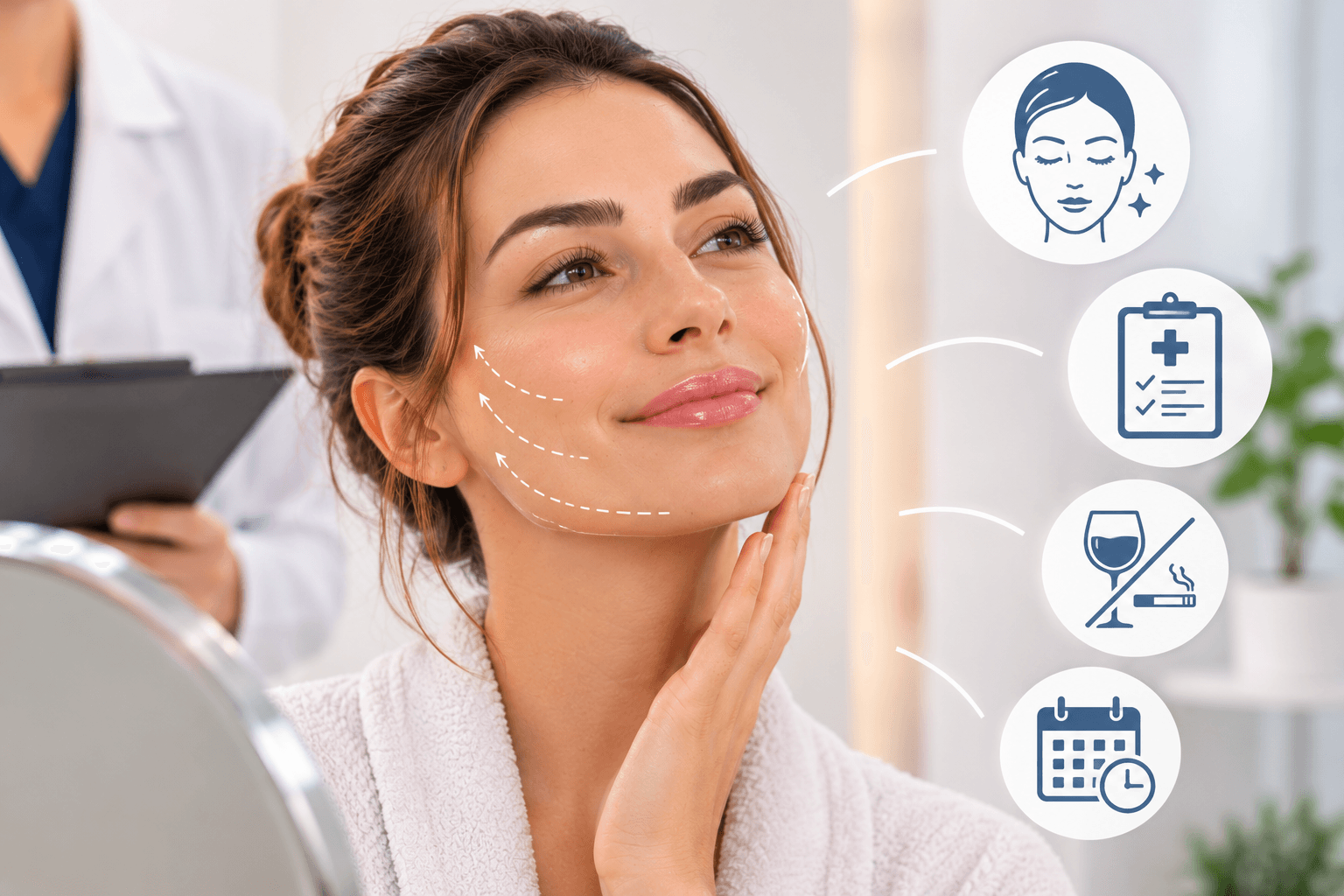
The specialist who performs the treatment makes the final decision regarding timing. Since the practitioner directly observes the energy level used, the number of shots, and your skin’s immediate response, they can provide a personalized aftercare plan. As a general rule, anyone who meets the usual criteria can apply makeup the same day; however, if your practitioner has given you different instructions, their recommendation should always take priority.
Does Applying Makeup After an Ulthera Treatment Harm the Skin?
No, under normal circumstances, applying makeup after Ulthera does not harm the skin. This is because the treatment does not target the skin’s surface layer, and the protective barrier is not structurally disrupted.
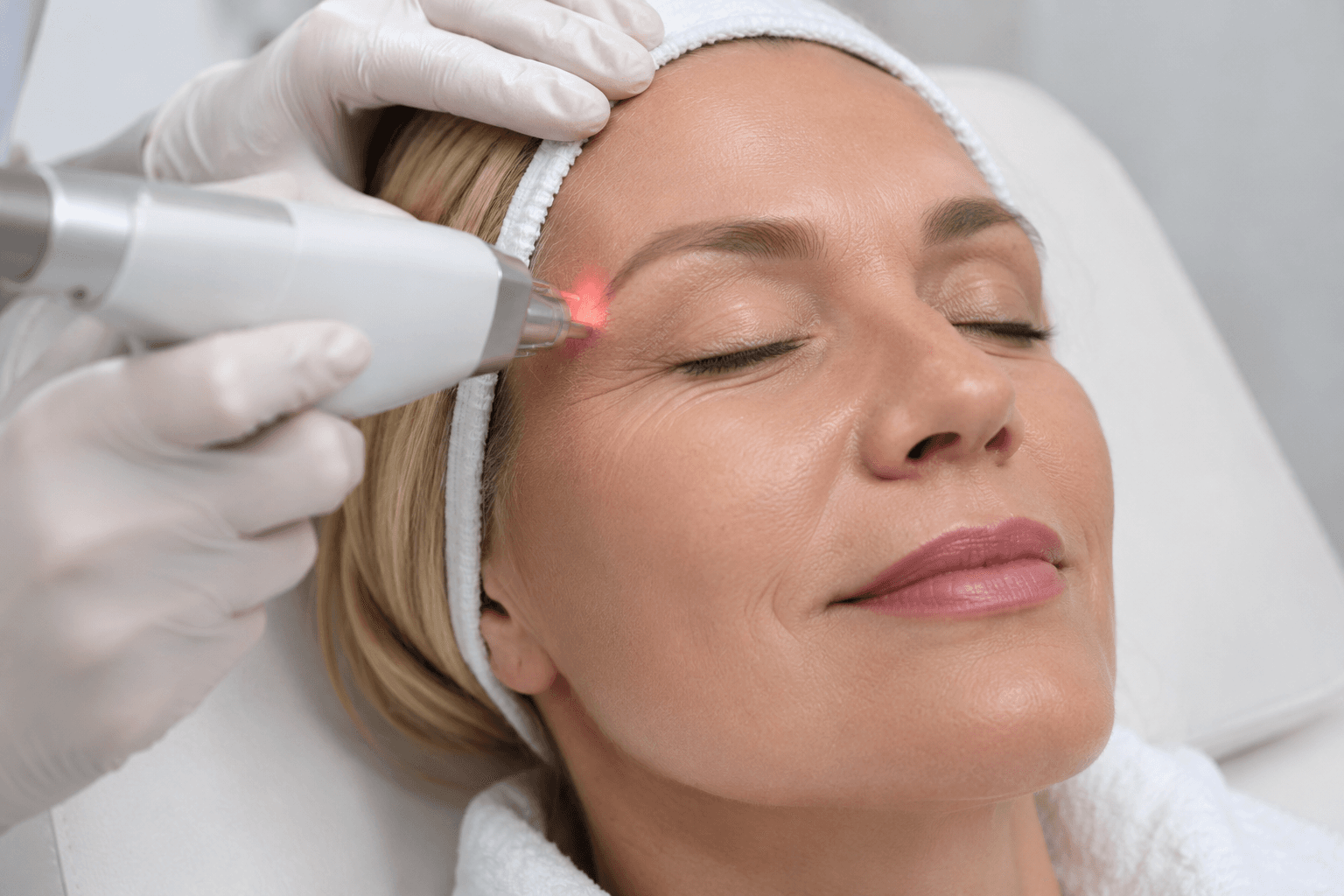
Ulthera works with microfocused ultrasound technology. The device focuses sound waves at specific depths within the skin to create small thermal coagulation points. These points are located beneath the surface, in the deeper layers of the dermis and in the superficial muscular aponeurotic system layer. Histological studies have shown that the device creates millimetric, controlled areas of heating within the skin, while the epidermis remains unaffected by this process (Laubach et al. 2008). In other words, the surface layer that comes into contact with makeup is not the layer targeted by the treatment.
The skin barrier is a critical concept in this regard. The uppermost layer, known as the stratum corneum, is an integrated protective system that regulates permeability, maintains moisture balance, and provides defense against microorganisms (Elias 2005). Because Ulthera does not damage this system, the physiological barrier between makeup products and the skin remains intact. However, during the first few hours after treatment, the skin may temporarily become more reactive. During this period, heavy, highly opaque, or irritating products may prolong redness. The risk comes not from makeup itself, but from choosing the wrong products.
Which Makeup Products Should Be Preferred After Ulthera?
Lightweight, non-comedogenic, and fragrance-free products are the safest choice during the first few days. Sensitized skin responds best to familiar, soothing formulas.
Three basic criteria can guide product selection. First, the product should not have caused problems for your skin in the past. Second, it should not contain fragrance, denatured alcohol, or concentrated essential oils. Third, it should have a lightweight texture and form a breathable layer on the skin. Mineral-based products are particularly advantageous in this regard. Mineral formulas containing zinc oxide and titanium dioxide use a limited number of ingredients and are generally well tolerated by sensitive skin. Therefore, mineral powder or mineral foundation can offer a practical solution during the first few days.
The table below summarizes product preferences for the first week after the procedure:
Product category | Preferred | Recommended to avoid |
Foundation | Lightweight, non-comedogenic, mineral-based | Heavy, mattifying, containing high levels of oil |
Tinted moisturizer | Fragrance-free, hypoallergenic | Containing alcohol and fragrance |
Concealer | Lightweight, applied locally | Heavy formulas applied over the entire face |
Powder | Mineral-based, with minimal ingredients | Pressed powders containing talc |
General guideline | A product used previously | A product tried for the first time after the procedure |
The reasoning behind this distinction is simple. If your skin reacts to a new ingredient during the post-procedure period, it becomes difficult to distinguish the reaction from the effects of the procedure itself. Continuing with familiar products helps maintain comfort and makes it easier to identify the source of any potential irritation.
Can Foundation and Concealer Be Used After Ulthera?
Yes, foundation, tinted moisturizer, and concealer can be used on the same day. Since the integrity of the skin remains intact, applying these products does not present a medical contraindication.
What matters here is not the product category but how it is applied. Foundation applied in a thin layer to clean skin using gentle movements will not burden the skin. In contrast, thick layers spread with a sponge using pressure and vigorous circular motions can cause friction and clog the pores. Concealer may be used on areas where bruising has developed; however, it is safer to apply the product only to the spots where it is needed and blend it with gentle tapping motions using your fingertip.
Clinical observations show that bruising after Ulthera is rare and, when it does occur, usually fades within a few days (Suh et al. 2011). During this temporary period, a light concealer is generally sufficient to even out the appearance. Thick formulas that promise heavy coverage are unnecessary during the first few days, as they can restrict the skin’s ability to breathe.
Can Eye and Lip Makeup Be Applied After Ulthera?
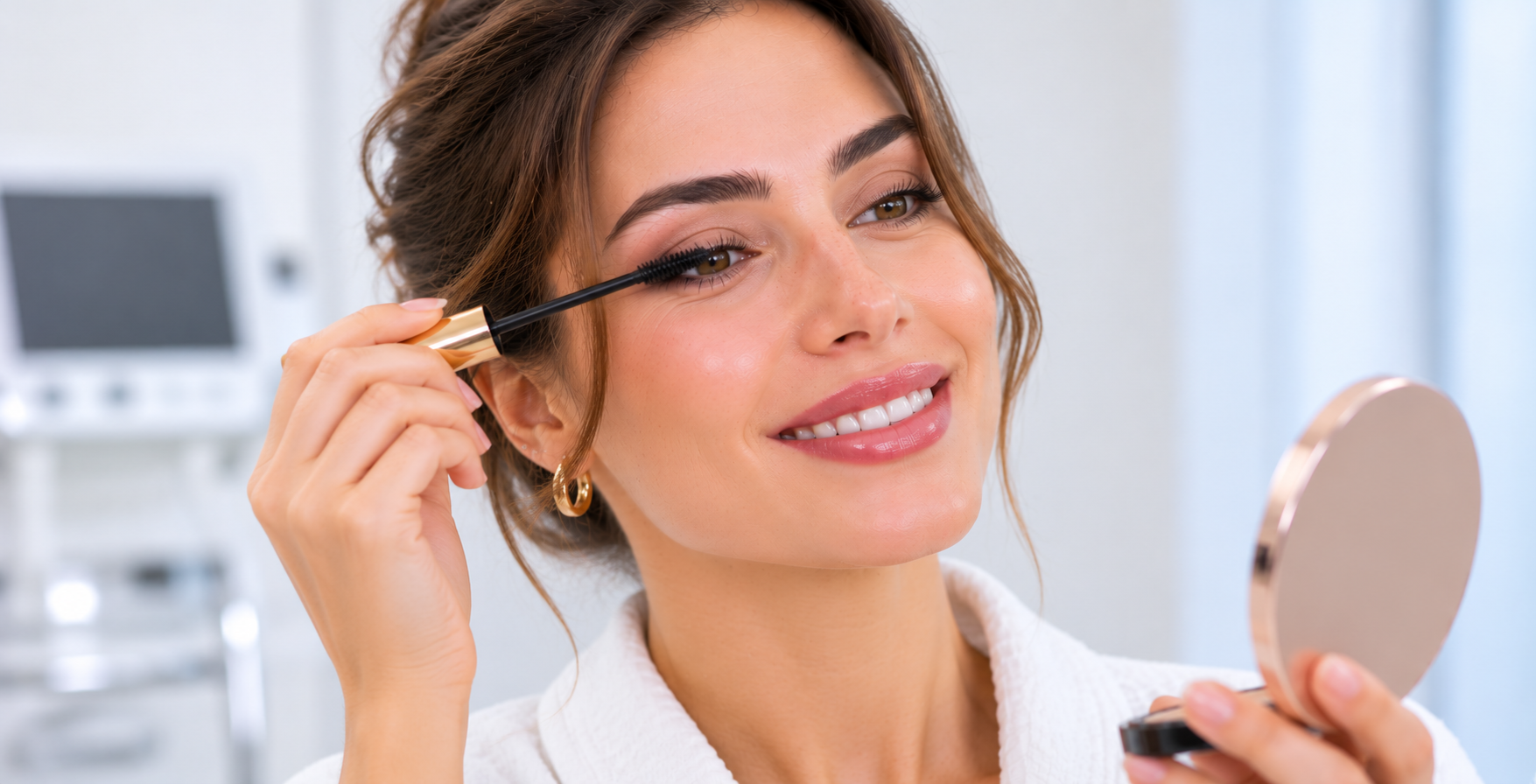
Yes, eye and lip makeup can usually be applied on the same day. However, if there is swelling or tenderness around the eyes, it is better to postpone applying makeup to this area.
Ulthera treatments often target the brow area, lower face, and neck. For this reason, the eye area may be one of the regions where post-treatment swelling is felt most noticeably. Eyeshadow, mascara, and eyeliner require mechanical contact with this sensitive area. Applying makeup while swelling is present may cause discomfort and prevent the product from being distributed evenly. Once the skin has calmed, usually the following day, returning to eye makeup should not cause any problems.
Lip makeup is generally less concerning. The lip area is not directly targeted by most Ulthera protocols. Therefore, lipstick, lip liner, and lip gloss do not require any restrictions. Hygiene is essential for both areas. Clean brushes, personal applicators, and products that have not exceeded their recommended use period minimize the risk of infection and irritation during the post-treatment period.
What Should Be Considered When Applying Makeup After Ulthera?
The most important rule is to apply products to clean skin with clean hands and without pressing. When these three conditions are met, makeup is a safe step for post-treatment skin.
Application technique is as important as product selection. Instead of rubbing the skin, place the product in small dots and blend it with gentle movements from the inside outward. Firm sponge dabbing and heavy brush pressure may cause discomfort in temporarily sensitized tissue. You should also avoid trying new cosmetic products during the first few days after treatment. If you have previously experienced an allergic reaction to a particular group of products, the safest approach during this period is to avoid that group entirely.
In practice, the following points provide sufficient guidance for the first week:
Wash your hands before applying makeup and ensure that brushes are clean
Apply products in thin layers
Leave areas with noticeable skin sensitivity free of makeup
Avoid repeatedly touching up your makeup throughout the same day
Prioritize the aftercare instructions provided by your practitioner
This list captures the essence of post-treatment care. Its purpose is not to restrict makeup use, but to support the skin’s natural calming process.
How Should Makeup Be Removed After Ulthera?
Makeup should be removed with a gentle, fragrance-free cleanser without rubbing the skin. During the post-treatment period, the cleansing step requires more care than the makeup itself.
Although the skin surface remains protected, aggressive cleansing methods can compromise this protection. Harsh scrubs, mechanical cleansers with brush heads, and products containing intensive exfoliants are not suitable during the first week. Instead, gentle, sulfate-free cleansers that are pH-compatible with the skin should be preferred. Rinse-off cleansing gels or gentle, oil-based cleansing milks dissolve makeup without leaving residue.
Double cleansing may be an option for people who wear heavy makeup. A gentle makeup-dissolving product is used in the first step, followed by a mild cleanser to purify the skin in the second step. For sensitive skin, this method should be used only if neither product contains irritating ingredients. Supporting the skin with a suitable moisturizer after cleansing helps the barrier repair itself overnight. The moisture balance of the stratum corneum is directly linked to all of the skin’s defensive functions, and preserving this balance significantly improves healing comfort (Elias 2005).
What Should a Post-Ulthera Skincare Routine Look Like?
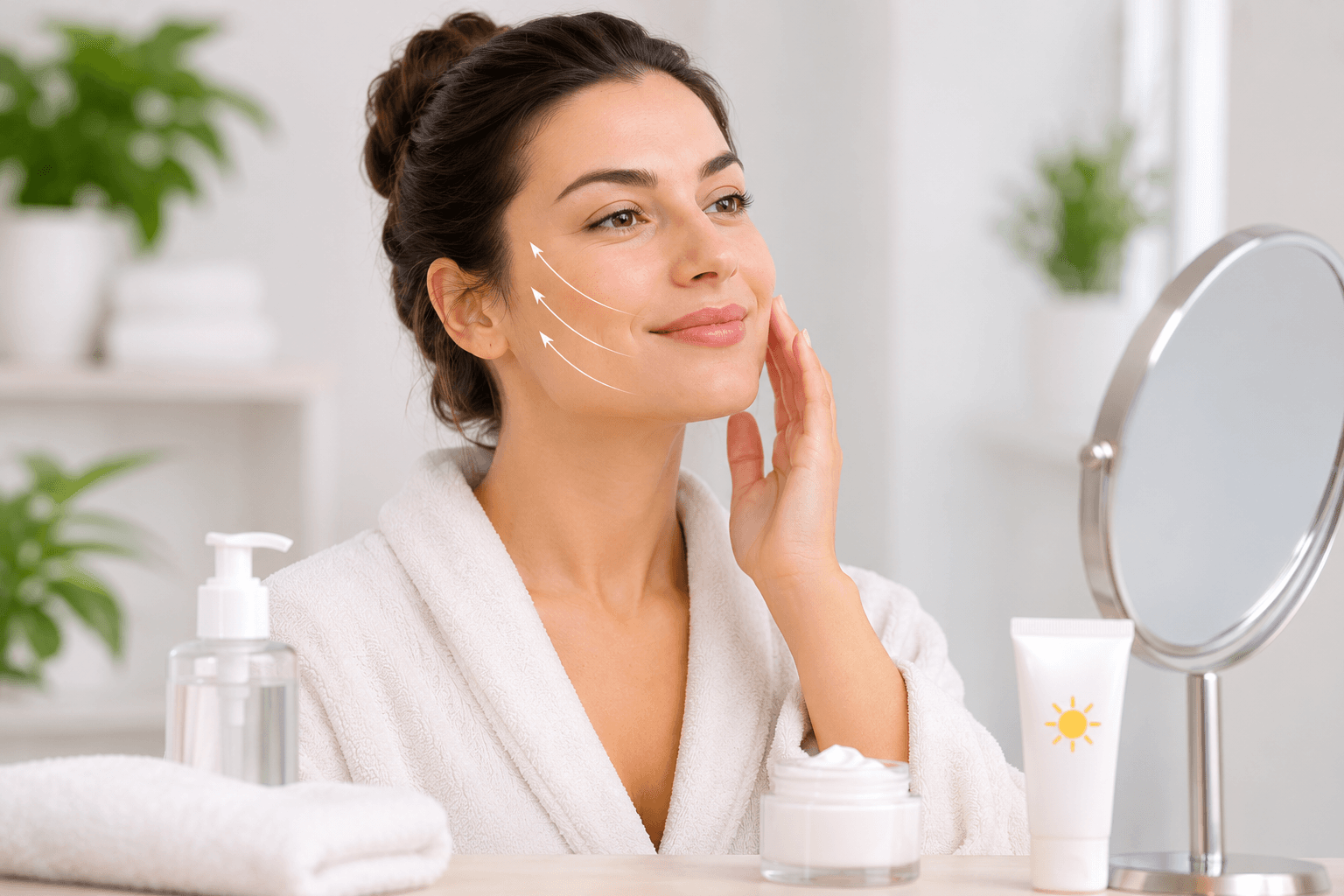
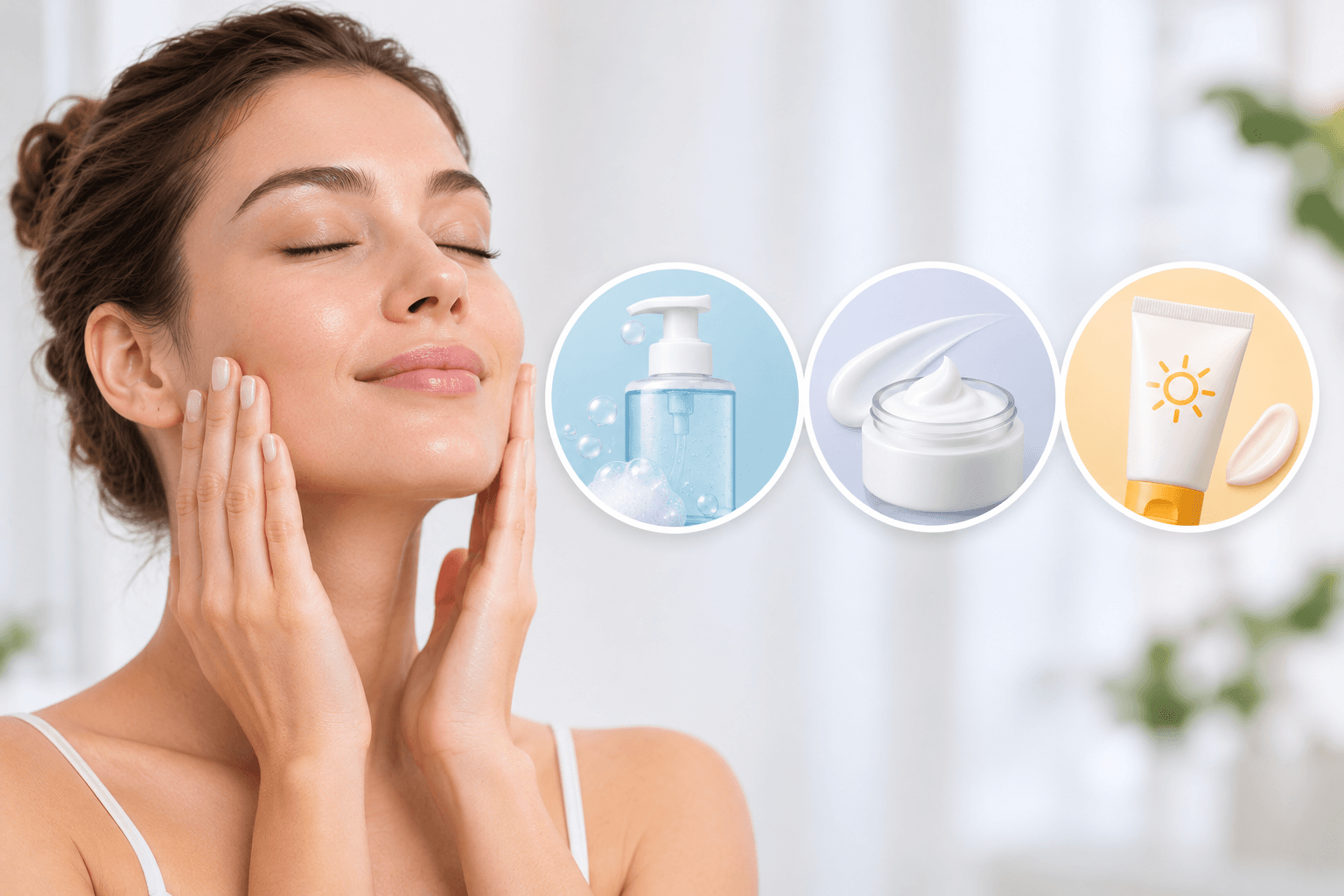
During the first few days, the routine should be limited to three steps: gentle cleansing, moisturizing, and sun protection. This simple structure provides everything the skin needs.
When choosing a moisturizer, barrier-supporting ingredients such as ceramides, glycerin, or hyaluronic acid should be prioritized. Sun protection, meanwhile, is an absolute necessity. A broad-spectrum sunscreen providing at least SPF 30 protection is essential both for daily skin health and for preserving the results achieved through aesthetic treatments. Regular sun protection supports the skin’s regenerative capacity by reducing ultraviolet-induced collagen breakdown (Lautenschlager et al. 2007).
Active ingredients require an individualized assessment. Strong exfoliants such as retinol, AHA, and BHA may be postponed until the skin has fully settled. Most people can return to these products without difficulty within a few days, but those with sensitive skin should reintroduce them gradually and consult their provider if necessary. When adding active ingredients to the routine, introducing one product at a time makes it easier to identify the source of any potential reaction.
Can You Wear Makeup While Experiencing Redness and Swelling After Ulthera?
Light makeup may be applied when mild redness and swelling are present; however, makeup should be postponed if there is significant irritation or an unusual skin reaction.
Clinical data support this distinction. In a prospective cohort study, all participants who underwent Ulthera developed mild redness and edema after treatment, and these findings completely subsided within a few days in the vast majority of cases (Alam 2010). Another study conducted on Asian skin types likewise found the side-effect profile to be temporary and mild (Suh et al. 2011). This pattern indicates that mild redness is an expected and harmless response.
The warning signs are clear. Open wounds, blistering, increasing pain, or redness that progressively spreads fall outside the expected healing process. In such cases, makeup should not be applied, and the healthcare professional who performed the treatment should be contacted. Makeup does not delay healing; however, by masking a problematic area, it can make assessment more difficult.
Which Cosmetic and Aesthetic Procedures Should Be Postponed After Ulthera?
A waiting period is required for procedures that affect the skin’s surface and injection treatments; however, these waiting periods do not apply to makeup. Since each procedure affects the tissue at a different depth, the recommended waiting times also vary.
Chemical peels, microneedling, and laser treatments directly affect the epidermis. Scheduling these procedures on the same day as Ulthera or immediately afterward increases the skin’s healing burden. For injectable treatments such as Botox and dermal fillers, timing varies depending on the material used and the treatment area. Intensive facial massage and deep skin treatments should also be postponed during the first few days, as pressure and friction can cause discomfort in swollen tissue.
The table below highlights the key difference between makeup and other procedures:
Procedure | Depth of effect | General approach after Ulthera |
Makeup | Surface contact only | Can be applied the same day |
Sunscreen and moisturizer | Protective layer on the surface | Recommended the same day |
Facial massage, intensive treatment | Pressure on superficial tissue | Wait several days |
Chemical peels, microneedling | Epidermis and upper dermis | Should be postponed according to an expert’s plan |
Laser treatments | Energy delivered to the skin layers | It should be postponed according to the specialist’s plan |
Botox and dermal fillers | Muscles and deep tissue | Timing should be discussed with the specialist |
Consulting the specialist who performed the procedure before planning a new aesthetic treatment personalizes this entire picture. General guidelines provide direction, but only a clinical evaluation can establish an individualized treatment plan.
Does Applying Makeup After Ulthera Affect the Results of the Treatment?
No, applying makeup does not negatively affect the results of Ulthera. Makeup products remain on the surface of the skin and do not reach the regeneration process taking place in the deeper tissues targeted by the treatment.
The treatment’s mechanism of action explains this distinction. Microfocused ultrasound creates millimetric thermal points within the tissue, reaching approximately 60 to 70 degrees. These points initiate a controlled wound-healing response and stimulate new collagen synthesis. Experimental studies have shown that these thermal zones can target the superficial muscular aponeurotic system and provide selective tissue tightening (White et al. 2007). Clinical studies examining the multiple-pass technique have also demonstrated that results can be enhanced safely (Lee et al. 2012).
Because collagen production takes place deep within the tissue rather than on the surface, makeup neither accelerates nor inhibits this biological process. Results generally become gradually more apparent within three to six months, depending on the natural pace of collagen renewal. During this period, it is sufficient to avoid products that irritate the skin. Completely giving up makeup provides no advantage in terms of results and would be an unnecessary restriction.
Frequently Asked Questions About Makeup After Ulthera
Can I go outside immediately after having Ulthera?
Yes, you can go outside immediately after the procedure. There is no need to interrupt your daily activities. Applying a broad-spectrum sunscreen when going outside provides sufficient protection.
Can I apply foundation on the same day after Ulthera?
Yes, you can apply foundation on the same day. Applying a lightweight, non-comedogenic product in a thin layer is the safest approach. If the skin has noticeable sensitivity, postponing application until the next day can improve comfort.
Can I use mineral makeup products after Ulthera?
Yes, mineral makeup products are suitable options for the post-treatment period. Thanks to their formulations with fewer ingredients, they are generally well tolerated by sensitive skin.
Can I apply makeup without sunscreen after Ulthera?
Technically, you can, but it is not recommended. Sun protection is an integral part of post-treatment care. Applying a broad-spectrum product with at least SPF 30 under makeup protects the skin and supports the treatment outcome.
Does wearing makeup after Ulthera inhibit collagen production?
No, it does not. Collagen synthesis takes place in the deeper layers of the skin. Makeup products that remain on the surface do not reach or interfere with this biological process.
Can foundation be used if there is redness on the skin after Ulthera?
A lightweight foundation may be used in cases of mild redness. Redness is a temporary and expected response. However, if the skin develops blistering, an open wound, or increasing pain, makeup should not be applied and a specialist should be consulted.
Is it safe to use makeup remover after Ulthera?
Yes, a gentle, fragrance-free makeup remover can be used safely. Harsh exfoliating products and mechanical scrubs should be avoided during the first week. Applying moisturizer after cleansing helps support the skin barrier.
When can I return to my normal skincare routine after Ulthera?
Most people return to their normal routine within a few days. The reintroduction of products containing retinol and acids should be gradual, depending on how quickly the skin settles. If in doubt, follow your practitioner’s advice.
References
Alam, Murad, et al. "Ultrasound Tightening of Facial and Neck Skin: A Rater-Blinded Prospective Cohort Study." Journal of the American Academy of , vol. 62, no. 2, 2010, pp. 262-269.
Elias, Peter M. "Stratum Corneum Defensive Functions: An Integrated View." Journal of Investigative , vol. 125, no. 2, 2005, pp. 183-200.
Laubach, Hans-Joachim, et al. "Intense Focused Ultrasound: Evaluation of a New Treatment Modality for Precise Microcoagulation within the Skin." Surgery, vol. 34, no. 5, 2008, pp. 727-734.
Lautenschlager, Stephan, Hans Christian Wulf, and Mark R. Pittelkow. "Photoprotection." The Lancet, vol. 370, no. 9586, 2007, pp. 528-537.
Lee, Hee Sun, et al. "Multiple Pass Ultrasound Tightening of Skin Laxity of the Lower Face and Neck." Surgery, vol. 38, no. 1, 2012, pp. 20-27.
Suh, Dong Hye, et al. "Intense Focused Ultrasound Tightening in Asian Skin: Clinical and Pathologic Results." Surgery, vol. 37, no. 11, 2011, pp. 1595-1602.
White, W. Matthew, et al. "Selective Creation of Thermal Injury Zones in the Superficial Musculoaponeurotic System Using Intense Ultrasound Therapy: A New Target for Noninvasive Facial Rejuvenation." Archives of Facial Plastic Surgery, vol. 9, no. 1, 2007, pp. 22-29.
Get in touch with our expert team
Related Posts