Can Laser Brow Lift Reduce Wrinkles Around the Eyes?
Yes, laser brow lifting can reduce wrinkles around the eyes. Laser energy stimulates collagen production beneath the skin, tightening the skin and improving the appearance of fine lines. However, the result varies depending on the type and depth of the wrinkles.
Laser brow lifting is a non-surgical approach that targets signs of aging in the upper face. The procedure works in two ways. First, skin quality improves through laser skin resurfacing. Second, tightened skin supports the brows upward. This dual effect contributes to a more open, refreshed, and youthful appearance around the eyes.
An important distinction is necessary here. Crow’s feet at the outer corners of the eyes, forehead lines, and frown lines between the brows are not the same issue. Crow’s feet result from the repeated movement of the smiling muscles, forehead lines from the activity of the muscle that raises the brows, and glabellar lines from the muscles responsible for frowning. Laser treatment improves the common foundation of these three concerns: skin quality. However, the muscle activity underlying each type of wrinkle requires different treatment approaches.
For this reason, the two effects of laser treatments should be distinguished from one another. The potential to improve skin quality is separate from the brow-lifting effect. With laser brow lifting, these two effects overlap, but understanding each through its own mechanism when evaluating the results is essential for setting realistic expectations.
Why Do Wrinkles Around the Eyes Form?
Wrinkles around the eyes result from a combination of collagen and elastin loss, sun damage, and repeated facial movements. The skin in this area is the thinnest on the face, which is why signs of aging appear here first.
The aging process directly affects the skin’s supportive tissue. From the age of thirty onward, fibroblast cells produce less collagen each year. Elastin fibers also lose their former elasticity. This weakens the skin’s ability to repair itself and causes wrinkles to become permanent (Fisher et al. 2002).
The skin around the eyes is particularly vulnerable to this process. Periorbital skin is approximately 0.5 millimeters thick, while the skin on the cheeks is more than twice as thick. There are also fewer sebaceous glands in this area. Its thin structure and limited moisture-retention capacity explain why wrinkles become prominent at an early stage.
Sunlight accelerates this process. Ultraviolet radiation activates matrix metalloproteinase enzymes in the dermis, and these enzymes break down collagen fibers. Scientists define this process as photoaging and consider it responsible for a large proportion of facial wrinkles (Yaar and Gilchrest 2007).
Finally, facial movements create dynamic wrinkles. When you squint, smile, or frown, the skin folds along the same lines. Young skin recovers from this folding. Skin that has lost its elasticity cannot recover, and temporary lines become permanent wrinkles that remain visible even when the face is at rest.
How Is Laser Brow Lift Performed?
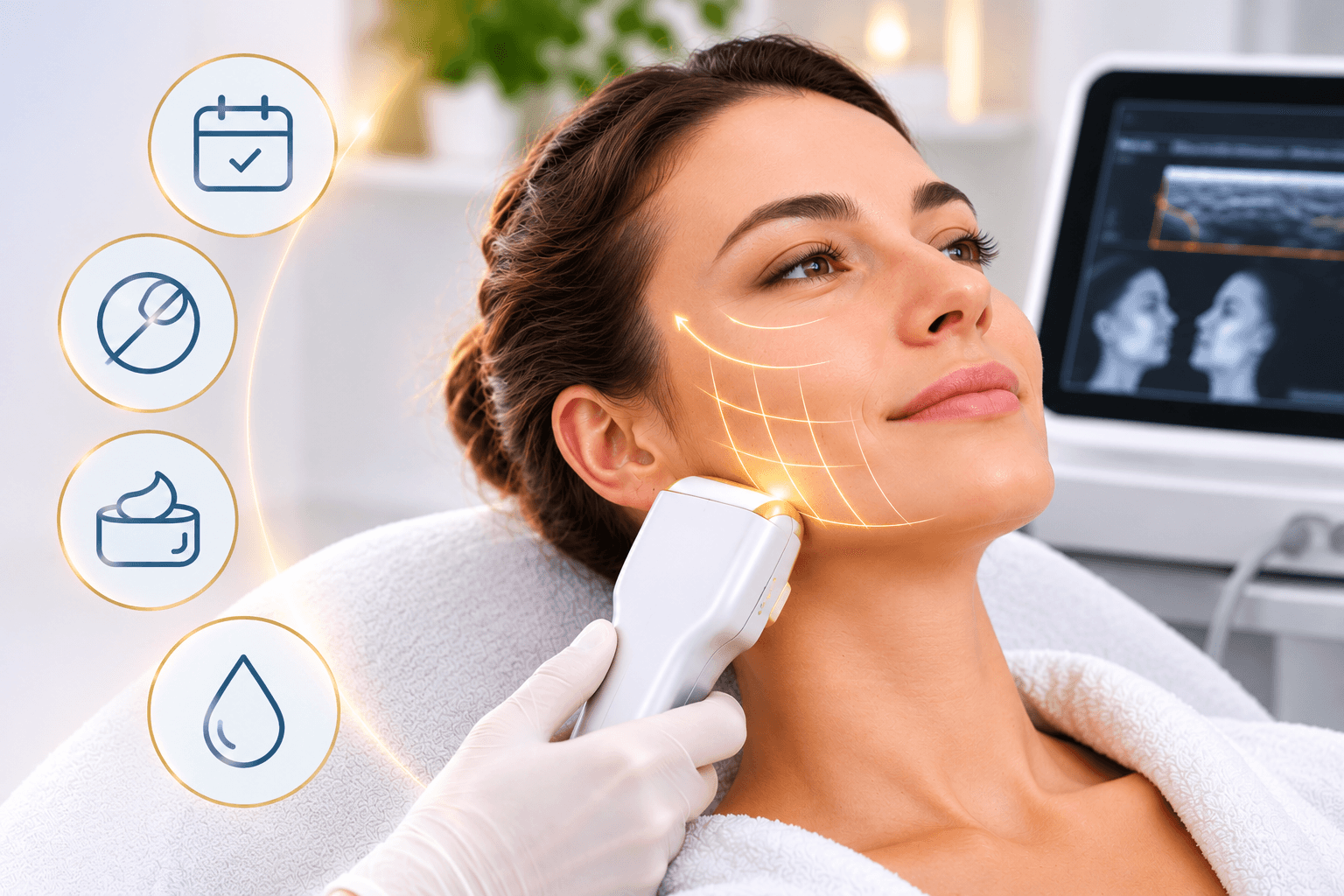
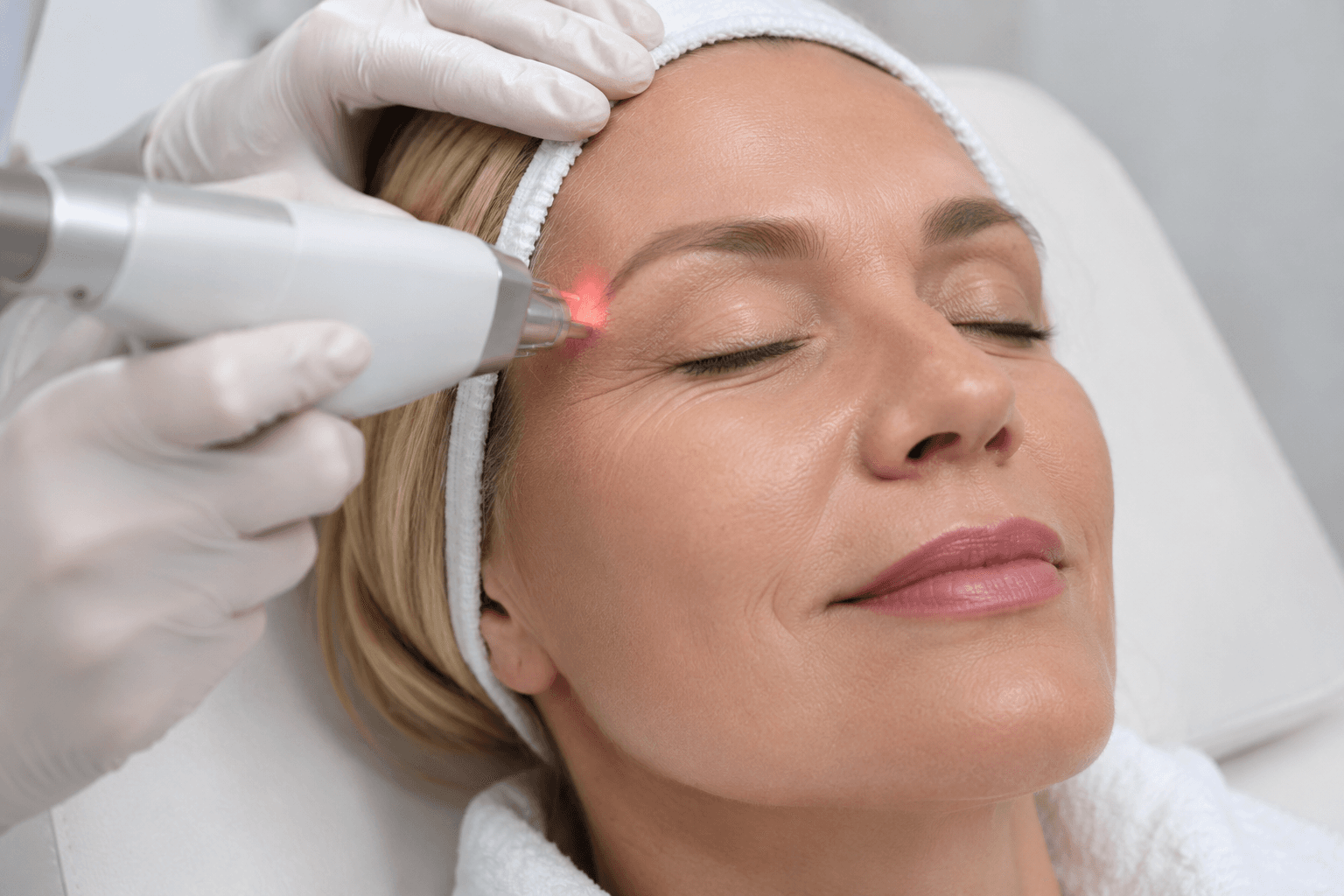
A laser brow lift activates the skin’s own repair mechanism by applying laser energy in a controlled manner to the skin around the eyebrows and eyes. Increased collagen production tightens the skin and supports the brow area.
Laser energy interacts with the skin tissue through heat. The laser beam is absorbed by water molecules in the skin, creating controlled thermal damage. The body perceives this microdamage as a repair signal. Fibroblasts become activated and synthesize new collagen and elastin. Manstein et al. (2004) demonstrated that this mechanism, known as fractional photothermolysis, safely restructures the skin.
The treatment mechanism varies depending on the type of laser. Ablative lasers also remove the outermost layer of the skin, providing deeper renewal. Non-ablative lasers preserve the surface and deliver heat directly to the deeper layers. Fractional systems affect the skin in microscopic columns, leaving the surrounding intact tissue as a repair reserve. Each technology differs in depth, recovery time, and treatment intensity (Alexiades-Armenakas et al. 2008).
Stimulating collagen production supports skin firmness. Newly formed collagen fibers thicken the dermis. This structural change improves the appearance of loose skin around the eyebrows and gently lifts the brows. Unlike surgery, the treatment does not physically reposition the tissue; it increases the skin’s own tension.
This distinction represents the key technical difference between laser skin resurfacing and surgical brow lifting. A surgical method anatomically elevates the brow and the underlying soft tissue. A laser does not change the position of the tissue; instead, it creates a more modest but natural lifting effect by improving skin quality and firmness.
Which Wrinkles Around the Eyes Can a Laser Brow Lift Reduce?
A laser brow lift delivers the best results for crow’s feet, fine lines around the upper eyelids, and superficial wrinkles around the eyebrows. However, it is not sufficient on its own for deep expression lines.
Crow’s feet are one of the areas that respond most strongly to this treatment. Fine lines at the outer corners of the eyes generally begin in the superficial layers. Laser skin resurfacing reduces the depth of these lines and smooths the surrounding skin. Clinical studies have shown that fractional laser treatments provide measurable improvement in the periorbital area (Hantash et al. 2007).
Fine lines around the upper eyelids can also benefit from laser treatment. Tightening of the skin tissue reduces a loose, creased appearance. This effect is particularly noticeable when there is mild excess skin.
For fine wrinkles around the eyebrows, laser treatment directly supports skin quality. As the dermis becomes denser, the surface texture improves and the visibility of lines decreases.
The situation is different for forehead lines. Laser skin resurfacing is effective for superficial forehead wrinkles. However, vertical lines between the eyebrows are caused by strong frowning muscles. Laser treatment alone has limited effectiveness for these expression-related lines; treatment options should be evaluated together by a specialist.
How Does Raising the Eyebrows Make the Eyes Appear Younger?
Raising the eyebrows reduces pressure on the upper eyelids, makes the eyes appear more open, and eliminates a tired facial expression. A youthful eyebrow position directly affects the perceived age of the eye area.
The position of the eyebrows determines the appearance of the upper eyelids. When the eyebrows lose their natural position, the skin of the upper eyelids folds toward the eyes. This folding is often mistakenly perceived as an eyelid problem, whereas the underlying cause is actually brow ptosis.
Low eyebrows create a tired and sad expression around the eyes. There is a close anatomical relationship between the brow arch and the shape of the eyes. The brow arch forms the upper border of the eye socket, while the eyelid is positioned beneath this roof. When the roof descends, the shadow increases, making the eyes appear smaller and more tired.
When the eyebrows are positioned higher, the upper eye area appears more open and brighter. Folding of the eyelid decreases, the lash line becomes more defined, and the upper part of the face gains a more balanced appearance. This mechanism explains the indirect yet powerful effect of laser brow lifting in reducing wrinkles.
What Are the Differences Between Laser Brow Lifting and Surgical Brow Lifting?
Surgical brow lifting anatomically repositions the tissue, whereas laser brow lifting creates a lifting effect by tightening the skin. The choice depends on the degree of brow ptosis and the patient’s expectations.
The two methods work through different mechanisms. In the surgical method, the physician lifts and secures the eyebrow and surrounding soft tissue through incisions. In laser procedures, skin renewal and tightening are the primary focus. This fundamental difference also distinguishes the effects of the two methods on wrinkles, skin laxity, and brow ptosis.
Criterion | Laser brow lifting | Surgical brow lifting |
Mechanism | Collagen stimulation and skin tightening | Repositioning of the tissue |
Brow lifting effect | Mild to moderate | Pronounced and controlled |
Wrinkle effect | Superficial and moderately deep lines | Indirect, through tissue tightening |
Recovery period | A few days to one week | Several weeks |
Need for sessions | Repeat treatment may be required depending on the technology | Usually a single procedure |
Longevity of results | Limited by the aging process | Longer-lasting |
The recovery period and scope of the procedure also distinguish the two methods. After laser treatment, patients generally return to their daily lives within a few days. Surgery, however, requires more time for swelling to subside and for healing. The appropriate method is determined according to the patient’s anatomical characteristics, the degree of brow ptosis, and the desired outcome.
Which Provides a Better Response to Signs of Aging Around the Eyes: Brow Lift or Eyelid Aesthetics?
The correct answer depends on the source of the problem. If brow ptosis is predominant, a brow lift provides a better response; if true excess skin is predominant, blepharoplasty is more appropriate. In many patients, the two procedures are planned together.
Brow ptosis is often confused with an eyelid problem. A lowered brow pushes the upper eyelid skin downward, creating the impression that there is excess skin on the eyelid. In this case, treating only the eyelid does not address the root of the problem.
Blepharoplasty, also known as eyelid aesthetics, targets excess skin and fatty tissue on the upper or lower eyelids. The procedure reshapes the eyelid’s own tissues; it does not change the position of the brow. A brow lift, on the other hand, targets the brow position and forehead area; it does not address true excess skin on the eyelid.
Some patients have both brow ptosis and excess eyelid skin. In such cases, combining the two procedures provides a more balanced result. The treatment plan should always be based on an anatomical assessment of the eye area. By gently lifting the brow to its natural position with a finger, the specialist determines the eyelid’s actual needs and develops the plan accordingly.
When Do the Results of a Laser Brow Lift Begin to Appear?
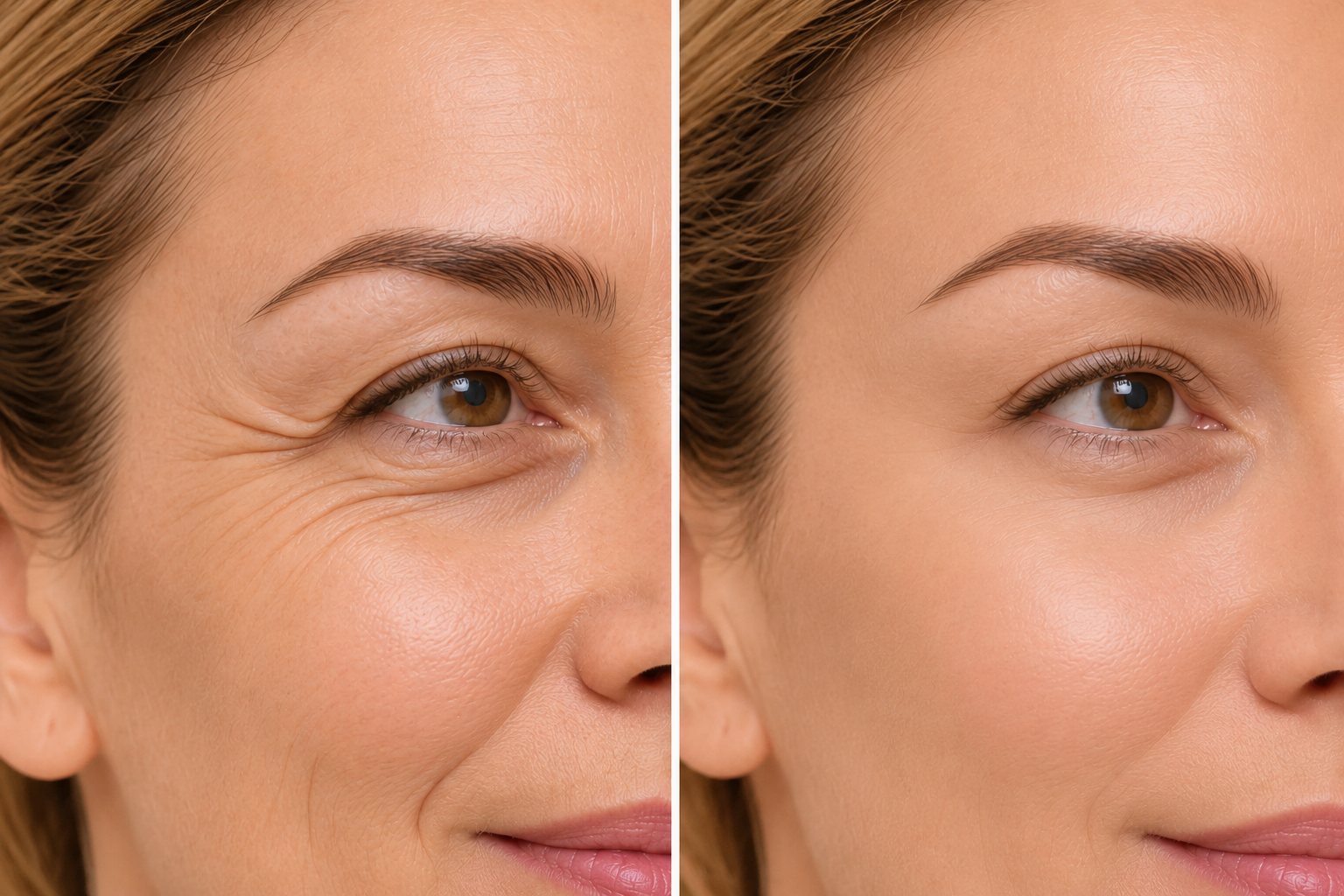
The first skin changes become visible once healing is complete, generally within one to two weeks. The primary tightening effect and reduction in wrinkles develop over two to six months as collagen remodeling takes place.
In the initial period after laser treatment, the skin becomes red and begins to renew itself. Following this early healing phase, the skin appears smoother and more radiant. However, this initial appearance reflects only the superficial aspect of the result.
The actual transformation takes place deeper within the skin. Collagen remodeling is a slow biological process. Orringer et al. (2004) demonstrated that new collagen synthesis continues for months after laser treatment and that skin thickness gradually increases. Therefore, the full results become apparent over the course of several months.
Several factors determine how long it takes for the results to appear. The laser technology used is the most important variable; ablative systems provide faster and more noticeable results, while non-ablative systems progress more gradually. Skin elasticity, age, and the existing depth of wrinkles also play a role. Results vary from person to person, and your physician will provide a timeline based on your individual skin profile.
How Long Do the Results of Laser Brow Lift Treatment Last?
Results generally last for several years, but their longevity depends on the technology used, lifestyle, and the natural rate of aging. Laser treatment does not stop aging; it turns back the biological clock of the skin.
The skin tightening achieved with laser treatment gradually diminishes over time. Newly formed collagen is genuine and structural; however, the natural aging process continues, and collagen production decreases each year. For this reason, no laser treatment can promise a permanent halt to aging.
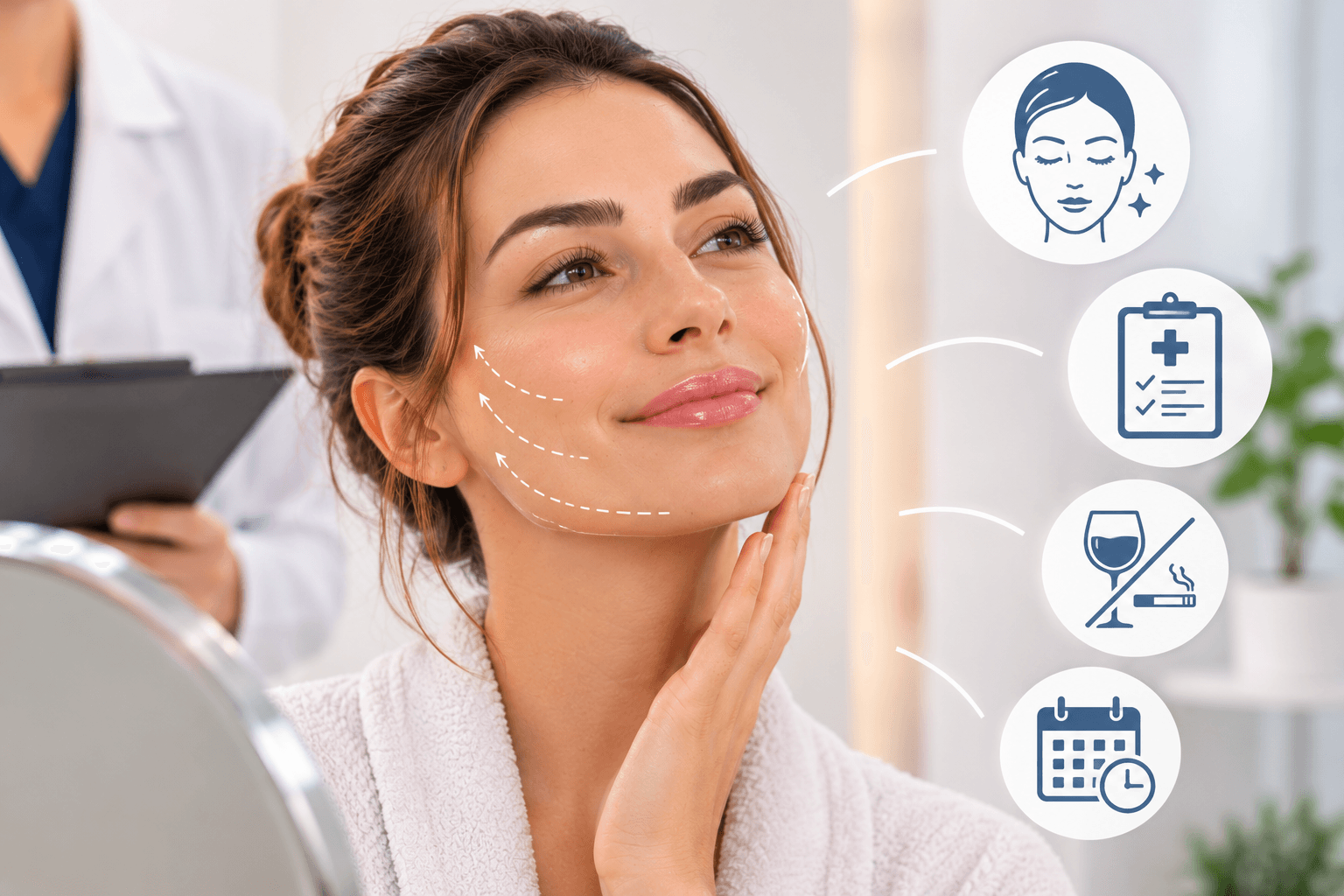
Lifestyle plays a decisive role in preserving the results. Sun exposure rapidly breaks down newly formed collagen and shortens the lifespan of the results. Smoking impairs the skin’s microcirculation. Regular sunscreen use and mindful skincare, on the other hand, can significantly extend the results.
The need for additional sessions varies depending on the technology used. With non-ablative systems, most patients require maintenance sessions at specific intervals. For long-term results, follow-up and a personalized skincare plan are the most reliable approach.
What Side Effects May Occur Around the Eyes After Laser Brow Lift Treatment?
The most common side effects are temporary redness, mild swelling, and skin dryness. These effects resolve on their own within a few days to two weeks.
Temporary redness and sensitivity are a natural part of the treatment. The controlled thermal effect created by the laser triggers a mild inflammatory response in the skin. This response is the first step in the repair process and subsides within a few days in most patients.
Mild swelling and edema may be particularly noticeable around the eyes. The loose tissue in this area retains fluid easily. Dryness and peeling are also expected signs of the skin renewal process.
The severity and duration of side effects depend on the type of laser and the depth of treatment. Healing takes longer after ablative treatments, while patients return to their social lives more quickly after non-ablative treatments. In rare cases, pigment changes may occur; this risk is higher in darker skin types. Due to the sensitive anatomy around the eyes, appropriate eye protection must be used during the procedure, and the complication rate is low when treatment is performed by experienced professionals (Ross et al. 2009).
What Should Skin Care Be Like After Laser Brow Lift?
Keep the skin moisturized during the healing period, protect it from the sun, and avoid irritating products. Proper care both reduces the risk of side effects and improves the quality of the results.
The first rule is moisturization. Use the restorative creams recommended by your physician regularly; a moist environment helps the skin repair itself more quickly. Choose simple, fragrance-free products until the skin barrier has fully recovered.
Sun protection is non-negotiable. Renewed skin is vulnerable to ultraviolet radiation, and unprotected exposure increases the risk of pigmentation changes. Use a broad-spectrum sunscreen and avoid direct sunlight.
Avoid active products containing retinoids and acids during the healing period. If peeling or crusting occurs, never pick or forcefully remove it; removing the crust increases the risk of scarring. Let your specialist determine when you can resume makeup and other cosmetic procedures. These simple rules are sufficient to preserve the benefits of the treatment.
Who Is Laser Brow Lift Suitable For?
It is an ideal option for people with mild skin laxity, fine lines, and superficial wrinkles who do not want surgery. Alternative treatments may be considered in cases of pronounced brow drooping.
The ideal candidate profile is defined by several characteristics. People with mild skin laxity around the eyebrows benefit most from the tightening effect. Those experiencing fine lines and superficial wrinkles around the eyes can also achieve significant results. This group also includes individuals who want to improve their skin texture and elasticity, as well as those considering non-surgical skin rejuvenation options.
In contrast, laser treatment alone may be insufficient for people with pronounced brow drooping or significant excess skin. For these patients, alternatives such as surgical brow lift or blepharoplasty may offer more realistic results. The final decision is always based on a specialist evaluation; skin type, current health status, and expectations are considered together.
Is Laser Brow Lift Alone Sufficient for Wrinkles Around the Eyes?
It is often sufficient for superficial wrinkles; however, deep expression lines and pronounced skin laxity require combined treatment.
Superficial wrinkles and deep expression lines form in different layers. Laser treatment renews the skin layer and produces strong results for superficial lines. However, renewing the skin alone is not sufficient for deep lines caused by muscle activity.
Skin laxity and brow drooping also require different treatment approaches. Mild laxity can be improved with laser treatment, whereas advanced brow drooping requires anatomical intervention. For dynamic wrinkles, botulinum toxin treatments work by softening muscle movement and complementing laser treatment. Fractional laser and other skin rejuvenation methods are also complementary components of this plan. When necessary, the specialist creates a personalized combined treatment plan.
Frequently Asked Questions About Laser Brow Lift
Does a laser brow lift completely eliminate crow’s feet?
No, it does not guarantee complete elimination; however, it significantly improves the appearance of fine and moderately deep crow’s feet.
The result varies depending on the depth and cause of the lines. While superficial lines may nearly disappear, deep lines that have been present for years can only be softened. Laser treatment maximizes the skin’s natural renewal capacity; however, no method can guarantee the elimination of all wrinkles.
Does a laser brow lift correct sagging of the eyelid?
For mild skin laxity, the tightening effect reduces the appearance of sagging; when there is significant excess skin, blepharoplasty may be considered.
The tissue tightening created by the laser contributes to the appearance of the eyelids in cases of mild laxity. However, if there is actual excess skin on the eyelid, it can only be removed surgically. A specialist evaluation distinguishes between these two conditions.
Does a laser brow lift change the shape of the eyes?
No, it does not change the anatomical shape of the eye; however, skin tightening and an improved brow position make the eyes appear more open.
It is important to distinguish between two concepts here. The anatomical shape of the eye is determined by the eyeball and bone structure, which are not affected by laser treatment. In contrast, tighter upper eyelid skin and a supported brow position make the eyes appear more open and refreshed. The change is perceptual rather than anatomical, and this natural appearance is preferred by many patients.
Is a laser brow lift a painful procedure?
Most patients tolerate the procedure comfortably. Depending on the technology used, a sensation of warmth or mild stinging may occur; anesthesia options help ensure comfort.
The level of sensation varies according to the laser technology. Ablative treatments may create more intense sensations, while discomfort is mild with non-ablative systems. Depending on the treatment protocol, physicians may use topical anesthetic cream or cooling systems. Post-treatment sensitivity is generally limited to a sensation similar to sunburn.
How many sessions are needed for a laser brow lift?
The number of sessions is determined by the technology used, the condition of the skin, and the desired outcome; it generally ranges from one to three sessions.
With ablative systems, a single session is often sufficient. With non-ablative systems that produce milder effects, several sessions are planned to achieve the desired tightening. Wrinkle depth and the skin’s capacity to respond also influence the treatment plan. Your physician will create a personalized session schedule during your initial evaluation.
Does a laser brow lift reduce dark circles around the eyes?
It does not treat them directly. The causes of dark circles differ from those of wrinkles, so a separate evaluation is required for this concern.
Dark circles arise from three different causes: pigmentation, the appearance of blood vessels beneath the skin, and volume loss. Laser brow lifting and skin tightening do not directly target any of these issues. However, an overall improvement in skin quality may indirectly improve the appearance of dark circles by enhancing the way light reflects off the skin. For a lasting solution, it is essential to accurately identify the underlying cause and plan an appropriate treatment accordingly.
References
Alexiades-Armenakas, Macrene R., Jeffrey S. Dover and Kenneth A. Arndt. “The Spectrum of Laser Skin Resurfacing: Nonablative, Fractional, and Ablative Laser Resurfacing.” Journal of the American Academy of , vol. 58, no. 5, 2008, pp. 719-737.
Fisher, Gary J., Sewon Kang, James Varani, Zsuzsa Bata-Csorgo, Yinsheng Wan, Subhash Datta and John J. Voorhees. “Mechanisms of Photoaging and Chronological Skin Aging.” Archives of , vol. 138, no. 11, 2002, pp. 1462-1470.
Hantash, Basil M., Vikramaditya P. Bedi, Bryan Kapadia, Zakia Rahman, Ken F. Chan and Christopher B. Zachary. “In Vivo Histological Evaluation of a Novel Ablative Fractional Resurfacing Device.” Lasers in Surgery and Medicine, vol. 39, no. 2, 2007, pp. 96-107.
Manstein, Dieter, G. Scott Herron, Robert K. Sink, Hans Tanner and R. Rox Anderson. “Fractional Photothermolysis: A New Concept for Cutaneous Remodeling Using Microscopic Patterns of Thermal Injury.” Lasers in Surgery and Medicine, vol. 34, no. 5, 2004, pp. 426-438.
Orringer, Jeffrey S., Sewon Kang, Timothy M. Johnson, Darius J. Karimipour, Ted Hamilton, Craig Hammerberg, John J. Voorhees and Gary J. Fisher. “Connective Tissue Remodeling Induced by Carbon Dioxide Laser Resurfacing of Photodamaged Human Skin.” Archives of , vol. 140, no. 11, 2004, pp. 1326-1332.
Ross, E. Victor, Nathan P. Miller, Lori Meehan, William McKinlay, Philip Sajben, Drew Trafeli, Patrick Barnette and Smilja D. Bun. “One-Pass CO2 versus Multiple-Pass Er:YAG Laser Resurfacing in the Treatment of Rhytides: A Comparison Side-by-Side Study of Pulsed CO2 and Er:YAG Lasers.” Surgery, vol. 27, no. 8, 2001, pp. 709-715.
Yaar, Mina and Barbara A. Gilchrest. “Photoageing: Mechanism, Prevention and Therapy.” British Journal of , vol. 157, no. 5, 2007, pp. 874-887.
Get in touch with our expert team
Related Posts