Yükleniyor…

Laser Eyebrow Lifting is a modern skin rejuvenation method aimed at elevating the natural position of the eyebrows without the need for surgery. Laser energy stimulates the collagen and elastin fibers beneath the skin. The tissue tightens, and over time, the eyebrows rise.
Laser eyebrow lifting is among the non-surgical procedures that have rapidly gained popularity in the field of aesthetic medicine in recent years. This method offers an effective solution against the drooping of the eyebrows over time and the appearance of aging signs around the eyes. Laser technology sends controlled heat energy to the deeper layers of the skin. This energy activates the skin's own repair mechanisms. Fibroblast cells become active, and new collagen production begins. As the skin tightens, the eyebrows naturally move upward.
Among the eye area rejuvenation procedures, laser eyebrow lifting stands out for both its safety profile and natural results. This method provides an improvement from the inside out without compromising the integrity of the skin. Patients seeking treatment for eyebrow drooping no longer have to endure surgical operations that require long recovery times. Laser facial rejuvenation progresses step by step with personalized session plans. With each session, skin quality improves, and the eyebrow lifting effect strengthens.
This method is a non-surgical aesthetic procedure that tightens the skin around the eyebrows and lifts them upward using laser beams.
Laser eyebrow lifting is an advanced technology treatment developed for problems such as wrinkles around the eyes and eyebrow drooping. This application supports the skin's self-renewal thanks to the laser energy that penetrates the deeper layers of the skin. This method, categorized as a non-surgical aesthetic procedure, is supported by strong scientific data in terms of patient satisfaction and safety.
Among eyebrow lifting methods, laser treatment has become one of the most preferred options. This method not only corrects the eyebrow position but also provides eyelid tightening. The laser skin tightening effect strengthens the internal structure of the skin. Collagen and elastin production increases. Skin elasticity is regained. Thus, the eyebrows come to a younger and more dynamic position.
This procedure is a non-invasive treatment that triggers collagen synthesis by heating subcutaneous tissues through the photothermal effect of laser beams.
Laser eyebrow lifting is defined in the medical literature as non-surgical eyebrow lifting. No incisions are made on the skin surface during the application. The laser device emits energy at specific wavelengths. This energy targets the water molecules beneath the skin. When the water molecules heat up, the surrounding tissues also warm up. Heat stimulates fibroblast cells. These cells begin to produce new collagen and elastin fibers. Berlin and colleagues (2021) reported that superficial Er:YAG laser applications histologically proved new collagen formation in photodamaged skin.
The non-surgical method provides internal tightening with laser energy. The surgical method removes excess skin by making an incision and physically lifts the brow.
Non-surgical brow lifting preserves the integrity of the skin. The laser device only sends controlled heat. Surgical brow lifting takes place in an operating room. The surgeon makes an incision within the scalp or above the brow. Excess skin and muscle tissue are removed. Then the brow is lifted upwards and secured. Although the surgical procedure provides more permanent results, the recovery process is lengthy. Laser facelift does not disrupt daily life. The patient can return to normal activities on the same day after the procedure.
Laser heat tightens the connective tissue beneath the skin. The tightening tissue supports and lifts the brows upwards.
Laser technology strengthens the structural elements of the skin to improve brow position. The brows are held by the forehead muscles and skin. With aging, these connections loosen. Laser energy heats the reticular dermis beneath the skin. The heat causes the existing collagen fibers to contract. At the same time, new collagen production begins. The newly formed fibers strengthen the structure that holds the brows. Thus, the brows naturally lift upwards. This effect is also supported by a study on periorbital anatomy conducted by Kashkouli et al. (2017).
This method targets brow droop, eyelid laxity, periorbital wrinkles, and skin pallor.
Laser brow lifting can treat multiple aesthetic issues simultaneously. Treating brow droop is the primary goal. Additionally, slight sagging of the upper eyelid is corrected. Periorbital wrinkles are reduced. Skin tone becomes more even. With the rejuvenating effect of the laser, the skin appears brighter and more vibrant. This method is ideal for individuals looking to control early signs of aging.
The laser device sends controlled heat energy beneath the skin. This heat triggers collagen and elastin production. The skin tightens and the brows lift.
Laser brow lifting works with a scientifically proven photothermal effect mechanism. The laser device produces beams of light at specific wavelengths. These beams reach the deeper layers of the skin without damaging the skin surface. Water molecules and target tissues beneath the skin absorb the laser energy. The absorbed energy is converted into heat. Controlled heat activates fibroblast cells. These cells synthesize new collagen and elastin fibers. The skin rejuvenates from the inside out. Over time, the tissue tightens and the brows return to their natural position.
Laser beams create controlled thermal damage by heating the water molecules beneath the skin. This damage initiates the skin's repair process.
Laser energy uses the principle of selective photothermolysis while affecting tissues. This principle protects surrounding tissues while heating the target tissue. Laser beams target the water molecules in the deeper layers of the skin. Water molecules absorb the laser energy and heat up. The heat sends a signal to fibroblast cells. This signal encourages the cells to proliferate and produce new collagen. A study titled "Assessment of Laser Effects on Skin Rejuvenation" (2020) showed that laser applications increase fibroblast activity and accelerate new collagen synthesis.
Collagen strengthens the structure of the skin. Elastin provides the skin's elasticity. Together, they support the skin to remain tight and youthful.
Collagen is the most important structural protein in the skin. This protein determines the skin's durability and thickness. Elastin provides the skin's elasticity and ability to bounce back. With aging, collagen and elastin production decreases. The skin thins and sags. Laser brow lifting promotes the regeneration of these fibers. New collagen fibers support the skin from the inside out. Elastin fibers restore the skin's elasticity. Thus, the brows are held up by tighter skin. Berlin and colleagues (2021) histologically demonstrated that superficial Er:YAG laser applications increase type III collagen formation.
Tightening tissue strengthens the ligaments that hold the brows. These strong ligaments keep the brows in a higher position.
The brows are supported by the forehead skin and muscle structures. With aging, these supportive structures weaken. Laser treatment strengthens the reticular dermis beneath the skin. New collagen fibers settle between existing fibers. These fibers thicken and tighten the skin. Tightened skin holds the brows better. Additionally, the heat from the laser causes existing collagen fibers to contract. This contraction creates an immediate tightening effect. Over time, new collagen production makes this effect permanent. Thus, the brows rise to a natural and youthful position.
The photothermal effect is the controlled heating of tissue through the conversion of light energy into heat energy.
The photothermal effect is the fundamental working principle of laser brow lifting. The laser device produces monochromatic light. When this light reaches the target tissue, it is absorbed as energy. The absorbed energy converts to heat with increased molecular mobility. Controlled heat protects surrounding tissues while heating the target tissue. This effect stimulates fibroblast cells. The cells secrete growth factors. These factors initiate the production of new collagen and elastin. The photothermal effect also increases microcirculation beneath the skin. Blood flow accelerates. Tissue oxygen and nutrient intake increase. This process accelerates skin rejuvenation.
Fotona laser brow lifting is a dual-wavelength system that combines Er:YAG and Nd:YAG lasers. This system treats both the surface of the skin and its deeper layers simultaneously.
Fotona laser brow lifting holds a special place among the latest laser technologies. This system combines two different types of lasers on a single platform. The Er:YAG laser acts on the superficial layers of the skin. The Nd:YAG laser penetrates deeper layers of the skin. The combination of these two lasers provides a multi-layered treatment. While the superficial layers are renewed, tightening occurs in the deeper layers. This synergistic effect optimizes brow lifting results.
This system sends different laser wavelengths to the inner and outer layers of the skin. Tightening from within and renewal from the outside occur simultaneously.
The Fotona VectorLift system is designed to maximize the brow lifting effect. The system first heats the deep layers of the skin with the Nd:YAG laser. This heat triggers collagen production. Then, the superficial layers are renewed with the Er:YAG laser. This dual-phase approach provides both immediate tightening and long-term collagen production. Patients feel immediate relief after the session. Over the months, collagen production increases, and the brows lift more noticeably.
The Er:YAG laser smooths the surface of the skin. The Nd:YAG laser stimulates deep collagen production.
The Er:YAG laser operates at a wavelength of 2940 nanometers. This wavelength has a very high affinity for water. The laser energy vaporizes the water in the superficial skin cells. This effect cleans dead cells and renews the skin surface. The Nd:YAG laser operates at a wavelength of 1064 nanometers. This wavelength penetrates the deeper layers of the skin. It heats the deep dermis and increases fibroblast activity. The combined use of both lasers provides both superficial and deep renewal. Berlin and colleagues (2021) reported that the Er:YAG laser supports collagen remodeling in photodamaged skin.
Multi-layered application provides both superficial and deep tissue renewal in a single session. The results are more comprehensive and natural.
Multi-layered laser application eliminates the limitations of a single type of laser. Superficial lasers improve skin texture but cannot provide deep tightening. Deep lasers stimulate collagen production but cannot provide superficial renewal. The Fotona system combines these two effects. Superficial layers are smoothed. Tightening occurs in the deep layers. This combination maximizes brow lifting results. The skin rejuvenates from both inside and outside. Patients achieve more natural and long-lasting results.
Classic lasers generally use a single wavelength. Fotona, on the other hand, offers two different types of lasers on the same platform. This difference broadens the scope of treatment.
Classic laser systems either have a superficial or deep effect. These systems are limited to a single wavelength. Fotona technology combines both Er:YAG and Nd:YAG lasers in a single device. This flexibility allows the physician to personalize the treatment according to the patient's needs. For example, an Er:YAG-heavy protocol may be applied for a patient with poor skin quality. An Nd:YAG-heavy protocol may be preferred for a patient with deep sagging issues. This personalization enhances treatment success.
Individuals experiencing mild to moderate eyebrow drooping, who do not wish to undergo surgery, and who show early signs of aging around the eyes are candidates for this treatment.
Laser eyebrow lifting appeals to a wide patient demographic. However, like any method, there are ideal candidates for this treatment. The physician evaluates the patient's skin type, age, expectations, and overall health status. Selecting suitable candidates directly affects the success of the treatment. In the right patient profile, laser eyebrow lifting yields excellent results.
People whose eyebrows have sagged over time and who exhibit a tired expression are the group that benefits the most from this treatment.
Eyebrow drooping is one of the most noticeable signs of aging. Over time, the forehead muscles relax. The skin loses its elasticity. Eyebrows move downward and inward. This condition causes the person to appear tired, angry, or sad. Laser eyebrow lifting corrects this drooping. The eyebrows return to their natural position. The facial expression becomes more vibrant and dynamic. Results are particularly successful in patients with mild to moderate eyebrow drooping.
Individuals with slight sagging of the upper eyelids can improve the position of their eyelids with the tightening effect of laser treatment.
Upper eyelid laxity is a common issue associated with aging. The skin of the eyelids is the thinnest skin in the body. Chopra et al. (2015) demonstrated in their studies examining skin thickness on the face that the eyelid skin is the thinnest area. This thinness makes the eyelids more susceptible to aging. Laser treatment tightens this delicate skin. Collagen production increases. The eyelids gain a younger and more open appearance. However, surgical options may be more suitable for patients with advanced eyelid sagging.
Individuals who fear surgery, do not want to take the risk of anesthesia, or prefer natural methods may turn to laser eyebrow lifting.
Surgical operations are not a suitable option for everyone. Some patients wish to avoid the risks associated with surgery. Others cannot tolerate long recovery times. Laser eyebrow lifting offers an excellent alternative for these patients. The procedure is painless and comfortable. Anesthesia is not required. The recovery process is very short. Patients can return to their daily lives immediately after the procedure. These advantages make laser treatment popular among non-surgical aesthetic applications.
Individuals in their thirties and forties who wish to prevent signs of aging can activate collagen production with laser treatment.
Early intervention is the most effective way to control signs of aging. Collagen production begins to slow down in the thirties. This decrease becomes more pronounced in the forties. Laser treatment slows down this process. With regular sessions, the collagen bank strengthens. The skin remains youthful for a longer time. Patients who start early achieve better results with fewer sessions because the skin's repair capacity is still high.
Individuals with advanced skin sagging, active skin infections, pregnant or breastfeeding women, and those with certain chronic diseases are not suitable for this treatment.
Like every aesthetic treatment, laser brow lifting also has contraindications. The physician thoroughly reviews the patient's medical history before the procedure. In some cases, the treatment may be postponed. In other cases, it may be completely contraindicated. Patients should share all their health information with the physician before the procedure.
In cases of excessive skin excess and advanced sagging, laser treatment may be insufficient. Surgical options are more appropriate for these patients.
Laser brow lifting helps to tighten the skin. However, this tightening is limited. In patients with advanced skin sagging, laser energy may not achieve the desired result. This is because excess skin cannot be retracted with laser heat. In this case, surgical brow lifting allows for the removal of excess skin. The surgical procedure offers more dramatic and lasting results. The physician recommends the most suitable method by evaluating the degree of sagging in the patient.
Active infection increases the risk of complications from laser treatment. The procedure should not be performed until the infection is completely healed.
Active skin infection is a temporary contraindication for laser treatment. Conditions such as herpes simplex, bacterial infections, or fungal infections carry a risk of spreading with laser energy. Additionally, the infected area may respond abnormally to laser heat. This can delay healing or lead to scar formation. The physician plans the treatment after the infection has completely healed.
Laser treatments are not recommended during pregnancy and breastfeeding. Hormonal changes during this period increase skin sensitivity.
During pregnancy and breastfeeding, significant hormonal changes occur in the body. These changes make it difficult to predict the skin's response to laser energy. Furthermore, the effects of laser treatments on the fetus or baby have not been sufficiently studied. Therefore, laser brow lifting is not performed on pregnant and breastfeeding individuals. Treatment can be planned after the breastfeeding period is completed.
Severe heart disease, immune system disorders, active cancer, and certain autoimmune diseases may prevent laser treatment.
Certain systemic diseases affect the safety of laser treatment. In patients with suppressed immune systems, wound healing may be delayed. In patients with blood clotting disorders, the risk of bleeding may increase. In patients undergoing active cancer treatment, laser energy may lead to unwanted effects. The physician evaluates all the patient's health information. If deemed necessary, consultations with other specialist physicians are conducted.

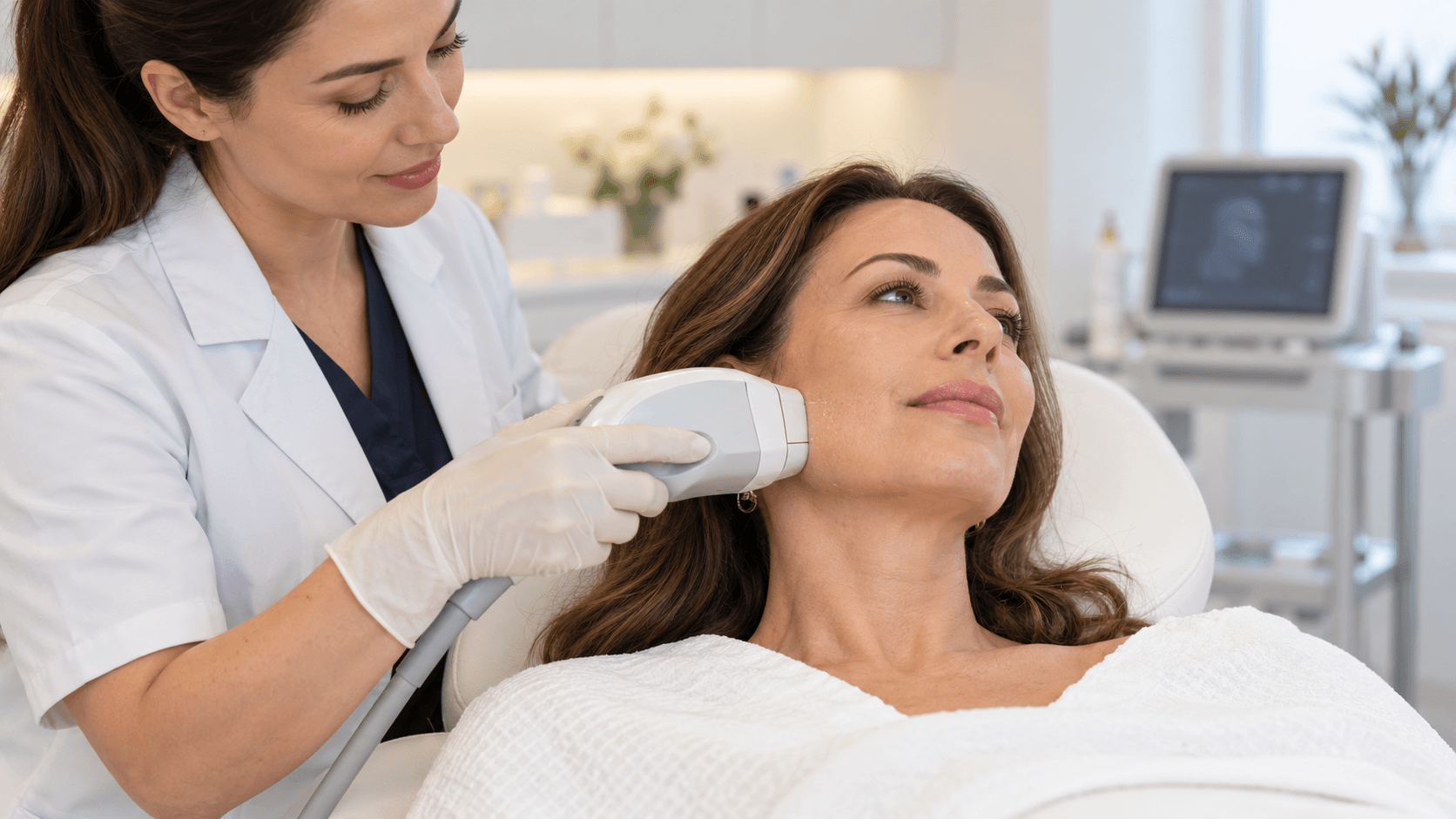
The doctor first evaluates the skin. Then, controlled energy is sent to the area around the eyebrows using a laser device. The procedure takes approximately 30-45 minutes. Pain is minimal.
The laser eyebrow lifting procedure follows a standard protocol. The doctor prioritizes the patient's comfort and safety at every stage. The procedure takes place in a polyclinic setting. The patient can return home on the same day after the procedure. This comfort makes laser treatment much more attractive compared to surgical operations.
The doctor examines the skin type, eyebrow position, eyelid condition, and overall health history. Photographs are taken.
The evaluation stage forms the basis of treatment success. The doctor thoroughly examines the patient's face. The degree of eyebrow droop is determined. Eyelid sagging is assessed. Skin type is classified according to the Fitzpatrick scale. This classification is important for determining the dose of laser energy. The doctor also listens to the patient's expectations. A realistic treatment plan is created. Photographs are taken before and after the procedure. These photographs allow for objective evaluation of the results.
The skin is cleaned. Protective glasses are worn. Energy is sent to the area around the eyebrows using the laser device. Then, a cooling gel is applied.
The session consists of a few simple stages. First, the skin is cleansed of makeup and dirt. Both the patient and the doctor wear special protective glasses. These glasses prevent laser beams from damaging the eyes. The doctor applies the laser device to the area around the eyebrows. The device sends controlled beams of light. These beams penetrate the deeper layers of the skin. Throughout the session, the skin temperature is monitored. At the end of the procedure, a cooling and moisturizing gel is applied. This gel soothes the skin and reduces redness.
A single session typically lasts between 30 to 45 minutes. The duration may vary depending on the size of the treatment area.
The laser eyebrow lifting session is a relatively quick procedure. If only the eyebrow area is to be treated, the duration is shorter. If the cheek and forehead areas are also included, the duration may be extended. Most patients can complete their treatment in a short time, like during a lunch break. This speed is one of the greatest advantages of laser treatment. The patient does not have to spend long hours in the clinic.
A mild sensation of warmth or tingling may occur during the procedure. Pain is generally at a tolerable level.
Laser eyebrow lifting is considered a painless procedure. However, each person's pain threshold is different. Most patients report only a slight sensation of warmth. This feeling is similar to that of a warm stone being placed on the skin. Huang and colleagues (2025) reported that the average pain scores in laser applications around the eyes were 5.5. This value indicates a moderate level of sensitivity. However, modern laser devices have cooling systems. These systems keep the skin surface continuously cool. Thus, pain and discomfort are minimized.
Generally, anesthesia is not necessary. In patients with high sensitivity, a topical anesthetic cream may be applied.
Laser brow lifting is a procedure that does not require anesthesia. The device's cooling system ensures patient comfort. However, some patients may request a slight numbness before the procedure. In this case, the physician applies a topical anesthetic cream. The cream is applied approximately 30 minutes in advance. The skin becomes less sensitive during the procedure. General anesthesia or sedation is never required for this treatment.
Er:YAG, Nd:YAG, fractional lasers, and collagen-stimulating laser systems are the most commonly used technologies.
Laser brow lifting allows the use of different types of lasers. Each laser technology has a different depth of effect and mechanism. The physician selects the most suitable laser technology based on the patient's skin type and the severity of the issue. Sometimes a single laser is sufficient. Other times, a combination of multiple lasers yields better results.
This laser operates at a wavelength of 2940 nanometers. It targets the superficial layers of the skin and renews the skin tissue.
Er:YAG laser is the abbreviation for erbium-yttrium-aluminum-garnet laser. This laser has a very high affinity for water. The laser energy vaporizes the water molecules on the skin surface. This vaporization cleanses dead cells. The skin surface becomes smoother. At the same time, this controlled damage initiates the skin's repair process. New cells are produced. Superficial collagen renewal occurs. Berlin and colleagues (2021) demonstrated that superficial Er:YAG laser applications renew the skin barrier and improve epidermal pigmentation.
This laser operates at a wavelength of 1064 nanometers. It penetrates the deep layers of the skin and stimulates collagen production.
Nd:YAG laser is the abbreviation for neodymium-yttrium-aluminum-garnet laser. The wavelength of this laser can reach the deep layers of the skin. Melanin absorption is low. This feature allows it to be safely used even in patients with dark skin. The laser energy stimulates fibroblast cells in the deep dermis. This stimulation leads to intense collagen production. Milante and colleagues (2020) published a study showing that the 1064 nm Nd:YAG laser is effective for wrinkles around the eyes.
Fractional lasers target microscopic areas of the skin. Untreated areas allow for rapid healing.
Fractional laser technology treats only specific microscopic columns of the skin. The healthy tissue between these columns accelerates the healing process. Fractional lasers are divided into two categories: ablative and non-ablative. Ablative fractional lasers vaporize the skin surface. Non-ablative fractional lasers heat the deeper layers while preserving the skin surface. Both types stimulate collagen production. Fractional lasers can be safely used in sensitive areas such as around the eyes.
These technologies directly target fibroblast cells. The cells produce a significant amount of new collagen.
Collagen stimulating lasers are designed to strengthen the structural elements of the skin. These lasers can operate in low energy high frequency modes. Laser beams transfer energy to fibroblast cells. This energy accelerates the metabolism of the cells. The cells produce type I and type III collagen. Additionally, the production of elastin and hyaluronic acid also increases. These biological processes ensure skin rejuvenation. The study titled "Fractional Laser Resurfacing Treats Photoaging by Promoting Neocollagenesis and Cutaneous Edema" (2020) demonstrated that laser treatments support the remodeling of type I and type III collagen.
Laser brow lifting does not require incisions, provides natural results, does not disrupt daily life, and improves skin quality.
Laser brow lifting is one of the most valuable treatments offered by modern aesthetic medicine. This method eliminates the risks and difficulties associated with surgical operations. It also provides natural and aesthetic results. Patients can return to their social lives immediately after the procedure. These advantages make laser treatment one of the most preferred methods today.
The laser device sends energy without touching the skin surface. There are no incisions, stitches, or scars.
Surgical operations require incisions and stitches. These procedures carry a risk of scar formation. There is also a risk of infection. Laser brow lifting completely eliminates these risks. Skin integrity is preserved. Laser beams only penetrate the deeper layers of the skin. No wounds occur on the surface. The patient can immediately return to their normal life after the procedure.
The laser utilizes the skin's own repair mechanism. The results emerge naturally.
Laser brow lifting does not force the skin from the outside. The skin rejuvenates with its own internal dynamics. The production of new collagen is a natural process. Therefore, the results do not appear artificial or surgical. The brows gradually lift to their natural positions. The skin rejuvenates from the inside out. Those around notice that the patient looks younger and more dynamic. However, they do not see any signs of surgery on their face.
Post-procedure redness and swelling are mild. The patient can return to work the same day or the next day.
Laser brow lifting is a minimally invasive treatment. The recovery process after the procedure is very quick. Mild redness and swelling decrease within a few hours. Most patients can participate in social activities on the same day after the procedure. This quick return is ideal for those with a busy work schedule. In surgical operations, recovery can take weeks.
Laser treatment not only lifts the eyebrows. It also improves wrinkles, puffiness, and dullness around the eyes.
Eye area rejuvenation is an additional benefit of laser eyebrow lifting. Laser energy affects all the tissues around the eyebrows. Fine wrinkles are corrected. Dark circles under the eyes are lightened. Skin tone is evened out. This comprehensive effect enhances the overall appearance of the face. The patient feels that not only their eyebrows but their entire face has been rejuvenated.
Laser energy activates fibroblast cells. These cells produce new collagen for months.
Collagen production is the most significant long-term effect of laser treatment. The heat from the laser sends signals to fibroblast cells. This signal promotes cell proliferation and activation. Active fibroblasts synthesize large amounts of collagen. This production process continues for months. Thus, the treatment results become more pronounced over time. The skin is strengthened permanently.
Laser treatment reduces skin pores. The skin texture becomes smoother. Skin tone is evened out.
Laser eyebrow lifting not only corrects eyebrow position but also enhances skin quality. Laser energy cleanses dead cells from the skin surface. Pores tighten. The skin gains a smoother and brighter appearance. Additionally, the laser breaks down melanin accumulations. This effect helps lighten spots on the skin. Skin tone becomes more even and vibrant.
Laser treatment may not yield the same results for every patient. Its effectiveness may decrease in older age. It cannot completely replace surgical operations.
Like every treatment method, laser eyebrow lifting has its limitations. These limitations are important in terms of patient selection and expectation management. The physician provides a realistic assessment to the patient. Thus, the patient maximizes the benefits from the treatment.
No. Results vary depending on skin type, degree of aging, and lifestyle.
Laser eyebrow lifting is a biological process. Each person's biology is different. Some patients respond very well to laser energy. Their skin quickly produces collagen. The eyebrows lift noticeably. However, in some patients, the response may be slower and more limited. This situation is related to genetic factors, age, skin type, and lifestyle. Smoking, sun damage, and poor nutrition can negatively affect the results.
In older age, skin elasticity decreases. This can limit the effectiveness of laser treatment.
With aging, the skin loses its repair capacity. Fibroblast cells begin to work more slowly. Collagen production naturally decreases. Therefore, in older patients, laser treatment may yield more limited results. However, this does not mean that the treatment will not work at all. With regular and intensive sessions, significant improvement can still be achieved. However, surgical options may offer more dramatic results in this group.
No. Laser treatment cannot completely replace surgical procedures. However, it is an excellent alternative for mild to moderate issues.
Surgical brow lifting removes excess skin and physically lifts the brow. This procedure offers permanent and dramatic results. Laser treatment, on the other hand, tightens the skin. This tightening creates a limited lifting effect. In patients with advanced brow drooping and excess skin, surgical intervention is still the most effective method. Laser treatment can also be used as preparation for surgery or post-operative care in these patients.
Laser treatment provides internal tightening without the need for incisions. Surgical procedures involve physical lifting with incisions and stitches. Recovery from laser treatment is quick. Results from surgery are more permanent.
Laser brow lifting and surgical brow lifting are two different methods that work through different mechanisms. Each method has its own unique advantages and disadvantages. The patient, together with the physician, determines the most suitable option. The table below compares these two methods.
Feature | Laser Brow Lifting | Surgical Brow Lifting |
Anesthesia | Generally not required | May be required |
Incision | None | Present |
Recovery Time | Short | Longer |
Naturalness | High | Dependent on surgical technique |
Duration of Results | Temporary | Longer-lasting |
Return to Social Life | Same day or next day | A few weeks |
Laser brow lifting, as seen in this table, is the method that least affects daily life. Surgical brow lifting promises more permanent results. However, this permanence requires a long recovery process and operational risks. The physician recommends the right method by evaluating the patient's age, skin type, expectations, and lifestyle.
Laser lifts the brows by tightening the skin. Botox changes the brow position by relaxing the muscles. The effect of laser is structural, while the effect of Botox is muscle-based.
Laser brow lifting and Botox are two popular methods with different mechanisms of action. Both methods fall under the category of non-surgical brow lifting. However, their working principles are completely different. These differences make each method suitable for different patient groups.
Laser stimulates collagen production beneath the skin. Botox prevents the contraction of the muscles around the brows.
Laser brow lifting strengthens the skin's structure through photothermal effect. Laser beams activate fibroblast cells. These cells produce new collagen and elastin fibers. As the skin tightens, the brows lift upwards. Botox, on the other hand, is an injection containing botulinum toxin. This substance temporarily blocks the nerve connections to the muscles. The muscles around the brows relax. This relaxation allows the brows to move upwards. However, Botox does not change the skin structure. It only modulates muscle activity.
Laser results can last for months or even years. The effect of Botox typically fades within 3-6 months.
Laser brow lifting relies on the structural renewal of the skin. The newly formed collagen fibers provide a lasting strengthening of the skin. Therefore, laser results are long-term. Botox, on the other hand, offers a temporary effect. Botulinum toxin is broken down by the body over time. The muscles return to their old functions. The brows descend to their previous positions. The effect of Botox generally lasts for 3 to 6 months. Re-injection is required.
Laser is more suitable for patients with skin laxity, while Botox is more appropriate for patients with brow drooping due to muscle activity.
Patient selection is the key to treatment success. In patients with loose and thin skin, laser treatment yields more effective results. This is because laser tightens the skin. The brows are lifted by the tightening skin. In cases of drooping caused by excessive activity of the muscles around the brows, Botox is more effective. Botox relaxes these muscles, thus raising the brows to a higher position. The physician determines the correct method by examining the patient's anatomy.
Yes. The combination of laser and Botox provides both skin tightening and muscle relaxation. The results are more comprehensive.
The combination of laser and Botox creates a synergistic effect. Laser strengthens the structural elements of the skin. Botox regulates muscle activity. When these two effects combine, brow lifting results are maximized. For example, while Botox lifts the brows, laser tightens the skin. Thus, the result is both more pronounced and longer-lasting. However, combination treatments should be planned by an experienced physician. A certain period must be left between the two procedures.
Laser affects the superficial and mid-layers of the skin. Ultrasound reaches deep fascial layers. Radiofrequency provides wide-area heating. All three methods work at different depths.
Laser brow lifting, ultrasound, and radiofrequency treatments are the three most preferred non-surgical aesthetic applications. All three stimulate collagen production. However, each has a different mechanism of action and depth. These differences cause each method to offer different advantages.
Ultrasound devices emit high-intensity sound waves. These waves reach deep fascial layers and generate heat there.
Ultrasound technology targets the deep layers of the skin. The device produces micro-focused ultrasound waves. These waves reach deep tissues without damaging the skin surface. Heat is generated in the deep fascial layers. This heat triggers collagen production and causes existing collagen fibers to contract. Ultrasound treatment is applied in a single session. However, it may take 2-3 months for the results to become apparent. Ultrasound should be used carefully in sensitive areas such as around the eyes.
Radiofrequency devices emit electromagnetic waves. These waves heat the dermis over a wide area.
Radiofrequency technology uses electromagnetic energy. The device sends radiofrequency waves to the skin. These waves mobilize water molecules in the dermis. This mobility is converted into heat. Wide-area heating stimulates collagen production and causes existing collagen fibers to contract. Radiofrequency can be safely used in sensitive areas such as around the eyes. Milante and colleagues (2020) published a study comparing radiofrequency and Nd:YAG laser for wrinkles around the eyes. It was concluded that both methods are effective but work through different mechanisms.
Laser provides advantages in enhancing skin quality and preserving the sensitivity around the eyes. Additionally, laser corrects skin tone and texture.
Laser brow lifting not only tightens the skin but also improves skin quality. Laser energy cleanses dead cells from the skin surface. Pores shrink. Skin tone becomes even. This advantage is limited in ultrasound and radiofrequency treatments because these methods do not focus on the skin surface. Moreover, laser can be adjusted more precisely in areas with thin skin, such as around the eyes. The physician can control the laser energy with millimeter precision. This precision provides extra safety in critical areas like around the eyes.
The recovery process is quick and comfortable. Mild redness and swelling disappear within a few hours to a few days. The patient can return to their daily life immediately.
Recovery after laser brow lifting is one of the greatest advantages of the treatment. Unlike surgical operations, laser treatment does not disrupt the integrity of the skin. Therefore, the recovery process is very fast. Patients can accelerate healing by taking certain simple precautions after the procedure.
In the first 24 hours, mild redness, a feeling of warmth, and swelling may occur. These symptoms are normal and temporary.
In the first hours after the procedure, there may be a slight feeling of warmth in the skin. This sensation is similar to being in the sun. Redness may be pronounced in the treated area. Especially around the eyes, which is a sensitive area, mild swelling may be observed. This swelling can cause slight puffiness of the eyelids. However, all these symptoms are not at a level to be concerned about. Applying a cold compress quickly reduces these symptoms.
Yes, mild redness and swelling are completely normal. These symptoms indicate that the skin's repair process has begun.
Redness and swelling are expected side effects of laser treatment. Laser energy creates controlled heat beneath the skin. This heat dilates the blood vessels. Dilation of the vessels causes redness. Additionally, the heat may cause mild swelling in the tissues. These symptoms indicate that the skin's repair process has been activated. Huang and colleagues (2025) reported that redness and swelling in laser applications around the eyes mostly disappear within 7 days. These findings prove that laser treatment exhibits a safe profile.
The patient can return to their daily life immediately after the procedure. However, intense physical activity should be avoided for the first 24-48 hours.
Laser brow lifting does not disrupt social life. Most patients can return to work on the same day after the procedure. However, certain precautions should be taken for the skin to heal. For the first 24 hours, excessive physical activity should be avoided. Heavy exercise should not be performed. Hot showers should not be taken. These precautions reduce swelling and redness. The patient can immediately resume normal office work and light activities.
Gentle skin care can be started within 24 hours after the procedure. Products with active ingredients should be used after 3-5 days.
On the first day after the procedure, the skin is in a sensitive condition. Therefore, only cleansing and moisturizing should be done. The skin can be washed with a gentle cleanser. A moisturizer that is free of perfume and alcohol can be applied. However, products containing acids, retinol, and similar active ingredients should be postponed for 3 to 5 days. These products can irritate sensitized skin. The physician will recommend a personalized skin care routine for the patient.
It is necessary to protect from the sun, use gentle skin care products, postpone makeup, and avoid hot environments.
Post-laser brow lifting care is critical for the durability of results and the speed of healing. The patient must strictly adhere to the physician's recommendations. Proper care reduces the risk of complications and optimizes treatment results.
After laser treatment, the skin becomes more sensitive to sunlight. Sun damage can cause dark spots and premature aging.
Laser energy creates controlled damage to the skin. This damage can temporarily activate melanocyte cells. Sunlight further stimulates these cells. This situation can lead to hyperpigmentation, which means the formation of dark spots. Additionally, sun damage can also disrupt newly formed collagen fibers. Therefore, it is necessary to protect from the sun for at least 2 weeks after the procedure. A high SPF sunscreen should be used. A hat and sunglasses should be worn.
In the first week after the procedure, products that are free of perfume and alcohol and have gentle formulas should be preferred.
Skin care products can accelerate or slow down the healing process. In the first week after the procedure, the skin barrier has been temporarily weakened. Therefore, aggressive products should be avoided. Products containing perfume, alcohol, acids, and retinol should be postponed. Instead, moisturizers containing hyaluronic acid and ceramides should be used. These ingredients repair the skin barrier and increase moisture retention capacity. The physician can recommend suitable products for the patient.
Mineral makeup can be applied 24 hours after the procedure. Liquid foundation and heavy products should be preferred after 48-72 hours.
Makeup can prevent the skin from breathing after the procedure. Additionally, makeup brushes and sponges carry a risk of bacteria. Therefore, makeup should not be applied on the first day after the procedure. Mineral makeup products have gentler formulas. These products can be lightly applied after 24 hours. However, liquid foundation, concealer, and heavy powders should be postponed for at least 48 hours. Makeup removal should also be done with a gentle cleanser.
Heavy exercise and hot environments should be postponed for at least 48-72 hours after the procedure.
Exercising increases body temperature and blood circulation. This can increase swelling and redness after the procedure. Additionally, sweat can cause skin irritation. Therefore, heavy exercise activities should be postponed for 48 to 72 hours. Hot environments have a similar effect. Sauna, Turkish bath, hot showers, and steam baths should be avoided during the first week. These precautions speed up the healing process and reduce the risk of complications.
Some patients feel a slight tightening immediately after the session. However, the real results become noticeable within 2-4 weeks.
The results of laser brow lifting are evaluated in two phases: immediate and gradual. The first phase is the instant collagen contraction caused by laser heat. This effect is felt immediately after the session. However, this effect is temporary. The second phase is the production of new collagen. This process continues over weeks and months. True and lasting results appear in this second phase.
The first changes are noticed within 1-2 weeks after the session. A slight tightness and brightness appear in the skin.
Within the first week, a noticeable change in the skin is felt. The skin looks smoother and brighter. This change is due to the superficial effect of the laser. Dead cells are cleared away. Skin tone becomes more even. However, the brow lifting effect is not yet fully felt. This is because deep collagen production has just begun. Patients should be patient during this period.
Collagen production continues for 3 to 6 months. This duration is sufficient for the structural renewal of the skin.
Collagen production is a biological process. Fibroblast cells are activated after laser stimulation. These cells begin to produce type I and type III collagen. The production process continues for 3 to 6 months. During this process, the skin thickens and tightens. The study titled "Fractional Laser Resurfacing Treats Photoaging by Promoting Neocollagenesis and Cutaneous Edema" (2020) demonstrated that laser treatments provide active collagen production even after 3 months. This finding proves the long-term effectiveness of laser treatment.
Maximum results typically appear after 3 to 6 months. During this period, collagen production peaks.
Maximum results are seen during the peak of collagen production. This period is usually 3 to 6 months after treatment. The skin reaches its tightest and brightest state. The brows reach their maximum height. These results may vary depending on the patient's skin type and lifestyle. Regular skincare and sun protection enhance the longevity of these results.
The results of laser brow lifting typically last between 1 to 2 years. However, this duration can be extended with regular maintenance sessions.
The permanence of laser eyebrow lifting results depends on many factors. The aging process continues. Therefore, laser results cannot last forever. However, with proper care and follow-up sessions, results can be maintained for many years.
Age, skin type, sun damage, smoking habits, dietary habits, and skincare routines affect permanence.
There are many factors that affect permanence. In younger patients, collagen production is faster. Therefore, results last longer. Fair-skinned and less damaged skin responds better to laser energy. Sun damage disrupts new collagen fibers. Smoking creates free radicals in the skin. These radicals weaken the collagen structure. Healthy eating and regular skincare increase the permanence of results.
Younger patients have a higher skin repair capacity. In older ages, skin elasticity decreases and results may be more limited.
Age is one of the most influential factors on laser results. Young skin can quickly multiply fibroblast cells. Collagen production is more efficient. Therefore, results are more pronounced and permanent in younger patients. In older ages, the skin's repair capacity naturally decreases. However, this does not mean that the treatment will not work. With more intensive sessions and combination therapies, successful results can also be achieved in older ages.
Yes. Follow-up sessions increase the permanence of results. Generally, 1-2 maintenance sessions per year are recommended.
Although laser eyebrow lifting provides excellent results in a single session, maintenance sessions are important. The aging process continues. Collagen production decreases over time. One or two maintenance sessions per year keep collagen production active. These sessions may not be as intense as the initial treatment. Low-energy maintenance sessions preserve results for many years. The physician creates a care plan based on the patient's skin condition.
The side effects of laser eyebrow lifting are generally mild and temporary. Redness, swelling, and sensitivity are the most common symptoms.
Laser eyebrow lifting is considered a safe treatment. However, like any medical procedure, this treatment may have some side effects. These side effects are mostly mild and short-lived. Serious complications are rare when an experienced physician makes the correct patient selection.
Redness is the most common side effect observed after the procedure. It usually disappears within a few hours to a few days.
Redness is caused by the laser heat dilating the skin's blood vessels. This effect is completely normal. The severity of redness depends on the laser energy used and the skin type. Redness may be more pronounced in fair-skinned patients. Applying a cold compress quickly reduces redness. Redness usually completely disappears within 24 to 48 hours.
Swelling can be particularly noticeable around the eyes. This symptom subsides within 1-3 days.
Swelling is a natural response of the body. Laser energy induces a mild inflammatory response in the tissues. This response manifests as swelling. The area around the eyes may show more pronounced swelling due to the thin skin present there. Keeping the head elevated, applying a cold compress, and reducing salt intake can help decrease swelling. Swelling typically disappears completely within 1 to 3 days.
The skin may develop mild sensitivity after the procedure. This condition usually resolves within 1-2 days.
Sensitivity is a response of the skin to laser energy. The skin may become more sensitive to touch and temperature. This sensitivity is generally mild. Using gentle skincare products can help reduce sensitivity. Products containing perfume and alcohol should be avoided. Sensitivity typically resolves on its own within 1 to 2 days.
In rare cases, hyperpigmentation, hypopigmentation, or mild burn marks may occur. These complications can be prevented by an experienced physician.
Serious complications are very rare in laser brow lifting. However, it is important to be aware. Hyperpigmentation refers to the formation of dark spots on the skin. This condition is usually associated with sun exposure. Hypopigmentation refers to the formation of light spots on the skin. This condition results from suppressed melanin production. Mild burn marks can occur due to the use of very high energy. All these complications can be prevented with proper patient selection and correct energy settings by an experienced physician.
Yes. Laser brow lifting is very safe when performed with FDA-approved devices and by experienced physicians.
Laser brow lifting is a treatment that has been used for years and has a proven safety profile. Modern laser devices include advanced safety systems. Cooling systems protect the skin surface. Energy control systems prevent incorrect dosage applications. However, the most important factor for safety is the experience of the physician.
FDA-approved devices undergo comprehensive safety testing. These devices ensure the highest level of patient safety.
FDA approval indicates that a medical device has been evaluated for safety and effectiveness. FDA-approved laser devices are tested in clinical studies. These studies assess the safety profile of the device and treatment outcomes. Approved devices go through standard manufacturing processes. Quality controls are conducted regularly. Patients should ask whether the device used before treatment is FDA-approved.
An experienced physician selects the correct energy settings. The physician prevents complications and achieves the best results.
The laser device is a tool. The physician using this tool determines the results. An experienced physician accurately assesses the patient's skin type. They select the correct laser parameters. They optimize energy, wavelength, number of pulses, and cooling settings. Additionally, an experienced physician recognizes signs of complications early and takes necessary action. The patient should ask about the physician's certifications and experience before treatment.
Scientific studies prove that laser treatments increase collagen production, provide skin tightening, and exhibit a safe profile.
The scientific literature contains numerous studies supporting the efficacy and safety of laser brow lifting. Augustyniak and Rotsztejn (2016) demonstrated that a 1410 nm non-ablative fractional laser is effective for periorbital wrinkles. Alster and Bellew (2004) reported significant improvement in eyelid laxity and periorbital wrinkles with a high-energy CO2 laser. Brauer and colleagues (2015) proved that a low-energy non-ablative fractional 1927 nm laser is safe and effective for facial rejuvenation. These studies show that laser technology is scientifically supported.
The price is influenced by the technology used, the number of sessions, the physician's experience, and combination treatments.
The price of laser brow lifting varies depending on many factors. Patients should obtain detailed information about the price before treatment. However, price should not be the only selection criterion. Quality service, an experienced physician, and a safe device are more important than price.
Advanced technology devices are more expensive. However, these devices offer better results and a safer treatment.
Different laser technologies have different costs. Single-wavelength classic lasers are generally more economical. Dual-wavelength systems and fractional lasers are more expensive. However, these devices provide more comprehensive results. The patient should gather information about the device technology and make decisions accordingly.
A single session is usually not sufficient. A protocol of 3 to 5 sessions is standard. As the number of sessions increases, the total cost rises.
Laser brow lifting typically requires multiple sessions. For minor issues, 2-3 sessions may be sufficient. For moderate issues, 3-5 sessions are recommended. Each session has a cost. Therefore, the total treatment cost depends on the number of sessions. The physician indicates the estimated number of sessions during the initial assessment. The patient plans their budget accordingly.
Experienced physicians and quality clinics may charge higher fees. However, this fee is justified in terms of safety and quality of results.
An experienced physician provides better results. The physician selects the correct energy settings. They prevent complications. They create a personalized treatment plan. This expertise requires a cost. Additionally, a quality clinic offers hygiene standards, modern devices, and professional service. These factors affect the treatment cost. The patient should consider the physician's experience while conducting price research.
Laser treatment can be combined with Botox, fillers, or skincare. Combination treatments increase the total cost.
Some patients may not achieve the desired results with a single method. In this case, the physician may suggest combined treatments. For example, the combination of laser and Botox provides both skin tightening and muscle relaxation. This combination yields more comprehensive results. However, each additional treatment incurs extra costs. The patient should discuss the benefits and costs of combination treatments with the physician.
Laser eyebrow lifting is a painless, quick, and safe procedure. The results are natural and long-lasting. Both women and men can undergo the treatment.
Patients often have many questions about laser eyebrow lifting. These questions are important for understanding the treatment and setting the right expectations. Below are the most frequently asked questions and their answers.
No. The procedure is generally painless or causes slight discomfort. Cooling systems enhance comfort.
Laser eyebrow lifting is considered a painless procedure. Most patients report only a slight sensation of warmth or tingling. Modern laser devices have integrated cooling systems. These systems keep the skin surface continuously cool. For patients with a low pain threshold, a topical anesthetic cream may be applied. This cream is applied 30 minutes before the procedure. Thus, the procedure is completed comfortably.
A single session typically lasts between 30 to 45 minutes. This duration may vary depending on the size of the treatment area.
Laser eyebrow lifting is a quick procedure. If only the eyebrow area is treated, the time is shorter. If the forehead and temples are included, the duration may extend. Most patients complete their treatment in a short time, such as during a lunch break. This speed is a significant advantage for those with busy work lives.
Typically, 3 to 5 sessions are recommended. Sessions are spaced 2-4 weeks apart.
Laser eyebrow lifting is usually performed with a multi-session protocol. For mild eyebrow droop, 2-3 sessions may be sufficient. For moderate issues, 3-5 sessions are recommended. Sessions are spaced 2 to 4 weeks apart. This interval is necessary for the skin's repair process to complete. Huang et al. (2025) showed that 4-week intervals yielded better results than 2-week intervals because 4 weeks is sufficient time for collagen production to develop.
The results are permanent, but aging continues. With 1-2 maintenance sessions per year, results can be preserved for many years.
Laser eyebrow lifting alters the structure of the skin. The newly formed collagen fibers provide a lasting strengthening effect on the skin. Therefore, the results are permanent. However, the aging process does not stop. Over time, new collagen production may decrease. To prevent this, it is recommended to have one or two maintenance sessions per year. These maintenance sessions keep the results fresh.
Yes. The patient can return to work immediately after the procedure. However, makeup should not be applied.
Laser brow lifting does not interfere with social and work life. The patient can return to work on the same day after the procedure. However, there may be slight redness on the face. This redness usually disappears within 24 hours. Before returning to work, the skin should be clean and moisturized. Makeup should be postponed for at least 24 hours.
It is effective for mild drooping of the eyelids. However, for advanced sagging, surgical options may be more suitable.
Laser brow lifting corrects mild looseness of the upper eyelid. Laser energy tightens the skin of the eyelid. However, this effect is limited. In patients with advanced eyelid sagging, laser treatment may be insufficient. In this case, blepharoplasty, known as eyelid aesthetics, may be more appropriate. The physician will recommend the correct method by evaluating the condition of the eyelids.
Yes. Laser brow lifting can be safely applied to both women and men.
Laser brow lifting is a gender-independent treatment. Drooping of the brows and aging around the eyes can also be seen in men. Laser energy stimulates collagen production in male skin as well. However, male skin can be thicker and oilier than female skin. Therefore, energy settings can be modified for male patients. Results are natural and effective in men as well.
It can be done in the summer months, but sun protection is very important. Sun damage can increase the risk of complications.
Laser treatment can be applied in the summer months. However, sun protection is vital during this period. Exposure to the sun increases the risk of hyperpigmentation. Therefore, if treatment is planned for the summer months, the patient should completely avoid the sun. High SPF sunscreen, hats, and sunglasses should be used. The physician will create a treatment plan by evaluating seasonal factors.
Yes. The combination of laser and Botox creates a synergistic effect. However, there should be a gap of 1-2 weeks between the two procedures.
The combination of laser and Botox is a very popular treatment protocol. Laser tightens the skin. Botox relaxes the muscles. When these two effects combine, brow lifting results are maximized. However, the two procedures should not be done on the same day. There should be a gap of 1 to 2 weeks in between. This period allows the skin to respond separately to each procedure.
Generally, it can be applied from the age of 25-30. However, the main factor is the condition of the skin and signs of aging.
There is no specific age limit for laser brow lifting. However, it is generally applied from the age of 25-30. At these ages, collagen production begins to slow down. Early intervention controls signs of aging. At younger ages, skincare and preventive treatments may be sufficient. At older ages, intensive sessions may be required. The physician will determine the most appropriate age range by evaluating the patient's skin condition.
Laser brow lifting is a non-surgical, safe, and effective method for brow elevation. It offers natural results, quick recovery, and long-term collagen production.
Laser brow lifting is one of the most valuable advancements in modern aesthetic medicine. This method eliminates the risks and challenges of surgical operations. It also provides natural and aesthetic results. Laser energy activates the skin's own repair mechanisms. Fibroblast cells become active. New collagen and elastin fibers are produced. The skin tightens. The brows lift to their natural positions.
As an alternative to surgery, laser brow lifting offers many advantages. The patient does not take on the risk of anesthesia. There are no cuts or stitch marks left. Daily life is not interrupted. They can immediately return to their social and professional life after the procedure. These advantages make laser treatment one of the most preferred methods for brow lifting today.
Patient selection is the key to treatment success. In the right patient profile, laser brow lifting yields excellent results. Patients with mild to moderate brow drooping benefit the most from this treatment. In cases of advanced sagging, surgical options may be more appropriate. The physician should thoroughly evaluate the patient's anatomy, skin type, and expectations.
Personalized treatment planning is another important element of success. Each patient's skin structure is different. Each patient's level of aging is different. Therefore, there is no standard protocol. The physician should determine the type of laser, energy, and number of sessions according to the patient's needs. Multi-layered systems like Fotona facilitate this personalization.
Scientific data strongly supports the safety and efficacy of laser brow lifting. Berlin and colleagues (2021) proved that Er:YAG laser facilitates collagen remodeling. Huang and associates (2025) demonstrated that non-ablative fractional laser is safe and effective for periorbital rejuvenation. Augustyniak and Rotsztejn (2016) reported significant improvement in periorbital wrinkles with fractional laser. Alster and Bellew (2004) proved that laser treatments are effective for eyelid laxity. These scientific studies show that laser brow lifting holds a solid place in medical literature.
In conclusion, laser brow lifting is a safe, effective, natural, and comfortable treatment option. When combined with the right patient selection, appropriate device technology, and an experienced physician, this method offers a permanent and aesthetic solution to brow drooping issues. Patients should have a detailed consultation with their physicians before treatment and establish realistic expectations.
Alster, Tina S., and Steven G. Bellew. "Improvement of Dermatochalasis and Periorbital Rhytides With a High-Energy Pulsed CO2 Laser: A Retrospective Study." Surgery, vol. 30, no. 4, 2004, pp. 483-487.
Augustyniak, Anna, and Honorata Rotsztejn. "Fractional Non-Ablative Laser Treatment at 1410 nm Wavelength for Periorbital Wrinkles - Reviscometrical and Clinical Evaluation." Journal of Cosmetic and Laser Therapy, vol. 18, no. 5, 2016, pp. 275-279.
Berlin, Alexander L., et al. "Treatment of Photoaging with a Very Superficial Er:YAG Laser in Combination with a Broadband Light Source." Journal of Drugs in , 2021.
Brauer, Jeremy A., et al. "Evaluation of a Low Energy, Low Density, Non-Ablative Fractional 1927 nm Wavelength Laser for Facial Skin Resurfacing." Journal of Drugs in , vol. 14, no. 11, 2015, pp. 1262-1267.
Chopra, K., et al. "A Comprehensive Examination of Topographic Thickness of Skin in the Human Face." Aesthetic Surgery Journal, vol. 35, no. 8, 2015, pp. 1007-1013.
"Efficacy of Fractional Laser, Radiofrequency and IPL Rejuvenation of Periorbital Region." Lasers in Medical Science, Springer, 2021.
"Fractional Laser Resurfacing Treats Photoaging by Promoting Neocollagenesis and Cutaneous Edema." PMC, National Center for Biotechnology Information, 2020.
Friedman, Paul M., et al. "The 1440 nm and 1927 nm Nonablative Fractional Diode Laser: Current Trends and Future Directions." Journal of Drugs in , vol. 19, no. 8, 2020, pp. 3-11.
Huang, Chih-Ming, et al. "Nonablative Fractional 1927-nm Laser for Periorbital Rejuvenation: A Prospective Randomized Clinical Trial." Lasers in Surgery and Medicine, 2025.
Kashkouli, M. B., et al. "Periorbital Facial Rejuvenation; Applied Anatomy and Pre-Operative Assessment." Journal of Current Ophthalmology, vol. 29, no. 3, 2017, pp. 154-168.
Milante, R. R., et al. "Split-Face Comparison of Grid Fractional Radiofrequency vs 1064-nm Nd-YAG Laser Treatment of Periorbital Rhytides Among Filipino Patients." Therapy, vol. 33, no. 6, 2020, e14031.
"Prospective, Split-Face Randomized Clinical Trial Comparing Non-ablative Fractional Laser for Periorbital Photoaging in Different Age Groups." Aesthetic Plastic Surgery, Springer, 2025.