Yükleniyor…
Yes, rejuvenation is possible with non-surgical laser brow lifting. Laser energy heats the deeper layers of the skin, triggering collagen production. This way, the brows are lifted naturally. The eye area gains a brighter and more vibrant appearance. The procedure is performed without the use of a knife. The recovery time is very short.
The brows are one of the most important parts of facial expression. They reflect emotions while speaking. They determine the symmetry of the face. They play a significant role in making the eye area look young or old. With aging, the brows gradually move downwards. The upper eyelid becomes loose. The eye area takes on a closed and tired expression. These changes are not just an aesthetic issue. Advanced brow drooping can narrow the field of vision. It can put pressure on the eyelid.
In the past, surgical brow lifting techniques were used to solve this problem. These methods required cuts and stitches. The recovery process was long. Today, technology has made significant advancements. Non-surgical laser brow lifting has become one of the safest and most effective methods in modern aesthetic medicine. Laser energy rejuvenates the skin. It strengthens collagen fibers. The brows return to their natural position. In this article, you will find everything you need to know about rejuvenation with non-surgical laser brow lifting. How does the procedure work? Who is it suitable for? When are the results visible? We answer all these questions with scientific data.
Non-surgical laser brow lifting is a treatment method that tightens and lifts the skin in the brow area using laser energy. It does not involve surgical intervention. No knives are used. No stitches are applied. The laser delivers controlled heat to the deeper layers of the skin. This heat reorganizes the collagen fibers. The skin repairs itself. The brows are lifted upwards.
The laser device produces energy at a specific wavelength. This energy targets the water molecules in the skin. It transmits heat to the deeper layers without damaging the upper layer of the skin. The heat stimulates fibroblast cells. Fibroblasts produce collagen and elastin. New collagen fibers tighten the skin from the inside out. The brow area lifts. The eye area rejuvenates. This mechanism is based on the principle of controlled thermal damage. Skin damage triggers the body to work intensively to repair it. During this process, new and healthy tissue forms (Laubach et al. 2006).
Laser energy affects the skin in two ways. The first effect is immediate tightening. The heat shortens the collagen fibers. The fibers contract instantly. The skin tightens. The second effect is long-term renewal. The heat stimulates fibroblasts. Fibroblasts produce new collagen for 3 to 6 months. The skin thickens. Elasticity increases. Fitzpatrick, Rostan, and Marchell (2000) compared carbon dioxide laser and erbium laser. Both lasers triggered collagen tightening. Researchers showed that the laser created deep remodeling in the skin.
Collagen is the skeleton of the skin. It provides durability to the skin. Elastin allows the skin to stretch and return to its original shape. With aging, these proteins decrease. The skin becomes loose. Wrinkles form. The brows droop. Laser treatment compensates for this loss. New collagen thickens the skin. Elastin restores the skin's elasticity. El-Domyati and colleagues (2013) observed an increase in collagen types I, III, and VII in a fractional erbium laser study. This increase provided clinically significant improvement.
Surgical brow lift involves making an incision under the skin. The surgeon repositions the muscles and tissues. Stitches are applied. There is a risk of scarring. Non-surgical laser brow lift, on the other hand, is performed from the outer surface of the skin. The skin's integrity remains intact. There is no bleeding. No stitch marks are left. The patient returns home immediately after the procedure. The surgical method is more permanent. However, it carries higher risks. The laser method is safer. It provides natural results.
The brow area sags over time due to aging, collagen loss, gravity, sun damage, facial movements, and genetic factors. These factors work alone or together. As a result, the brows move downward. The facial expression takes on a tired and closed appearance.
Aging creates noticeable anatomical changes in the brow area. The epidermis thins. The collagen and elastin fibers in the dermis decrease. Subcutaneous fat tissue melts away. The frontalis muscle that lifts the brow weakens. The orbicularis oculi muscle that pulls the brow down becomes dominant. Resorption is observed in the frontal and orbital bones. This bone loss narrows the base where the brows sit. Tao and colleagues (2025) detailed these anatomical changes in their review on periorbital aging.
Collagen is a protein produced by fibroblast cells. It provides tension and durability to the skin. After the age of twenty-five, the body begins to lose collagen at a rate of one percent each year. This loss accelerates during menopause. As collagen decreases, the skin thins. The dermis layer weakens. The skin can no longer hold the tissues in the brow area in place. First, the tail of the brow drops. Then the middle part of the brow is affected. This process progresses gradually.
Gravity exerts a constant pulling force on the body. Young skin resists this force. Aging skin loses its resistance. Skin elasticity decreases. Gravity pulls the skin and the underlying tissues downward. Over time, the brows descend towards the orbital bone line. This situation becomes particularly pronounced with the sagging of fat tissue in the cheeks.
Ultraviolet rays are the skin's biggest enemy. UV rays produce free radicals. Free radicals break down collagen fibers. They weaken elastin fibers. The skin ages prematurely. Sun-damaged skin shows pigmentation disorders. The skin structure deteriorates. The brow area also suffers from this damage. Those who use sunscreen significantly reduce this damage.
Facial muscles are constantly in motion. Frowning, blinking, and smiling activate the muscles. Over the years, these repetitive movements create wrinkles in the skin. The muscles that lift the brow weaken. The muscles that pull the brow down strengthen. This imbalance increases brow droop. The area between the brows and the forehead particularly feels this effect intensely.
Genetic structure determines the shape and position of the eyebrows. In some families, eyebrow drooping can be observed at an early age. Skin type is inherited. Thick skin sags later than thin skin. Bone structure is also determined genetically. Individuals with prominent orbital bones have eyebrows that stay in place longer.
Non-surgical laser eyebrow lifting is suitable for individuals experiencing mild to moderate eyebrow drooping, those who do not want surgery, those seeking a short recovery period, and those showing signs of early aging. Proper patient selection directly affects the success of the treatment.
Laser energy effectively tightens mildly to moderately sagging skin. Results are excellent in patients without significant excess skin. Individuals with slightly drooping eyebrow tails are ideal candidates. The laser lifts the skin in this area. The natural arch of the eyebrow is preserved. Results appear natural.
Some individuals are afraid of surgery. Anesthesia risks cause concern. They do not want any scars after surgery. For these individuals, laser is an excellent alternative. No blades are used during the procedure. There is no bleeding. No stitches are placed. The patient returns to their normal life immediately after treatment. It is psychologically more comfortable.
Individuals with a busy work schedule cannot afford long recovery times. Surgical eyebrow lifting brings weeks of bruising and swelling. After laser treatment, only mild redness occurs. This redness subsides within a few hours. The patient can return to work the same day. They can attend meetings. Their social life is not interrupted.
Fine wrinkles appear on the skin starting from the thirties. Eyebrows begin to droop slightly. These early signs are a perfect opportunity for laser intervention. Treatment done in the early stage slows down aging. Collagen production is supported. The skin remains youthful. It can also be used as a preventive treatment.
Non-surgical laser eyebrow lifting may not be suitable for everyone. For individuals with significant excess skin, advanced eyebrow ptosis, active skin infections, and certain chronic diseases, this procedure may be risky. A doctor's evaluation is crucial at this point.
Laser tightens the skin. However, it cannot remove excess skin. In individuals with significant sagging of the upper eyelid, laser may be insufficient. In this case, surgical intervention would be more appropriate. The surgeon removes the excess skin. The muscles are repositioned. Laser can be used as a complementary treatment for these patients.
Eyebrow ptosis is the significant drooping of the eyebrow from its normal position. In patients with advanced ptosis, laser energy may not provide the desired lifting effect. In these patients, endoscopic eyebrow lifting or classical surgical methods should be considered. Laser only improves skin quality in these patients.
Procedures should be postponed for individuals with active herpes, acne, or bacterial infections in the treatment area. Laser can spread the infection. The skin barrier has been weakened. The healing process may be disrupted. Treatment should be planned after the infection has completely resolved. Antibiotic creams may be used beforehand.
Caution is advised for individuals with diabetes, immune system disorders, and chronic skin diseases. Laser applications are generally not recommended during pregnancy and breastfeeding. The risk of side effects increases for individuals taking photosensitive medications. Aggressive parameters should be avoided in patients using isotretinoin.
Every patient is unique. Skin type varies. The level of aging changes. An experienced physician examines the patient in detail. A skin analysis is performed. The treatment plan is personalized. The procedure is not performed on unsuitable patients. Alternative methods are suggested. This evaluation is essential for both safety and satisfaction.
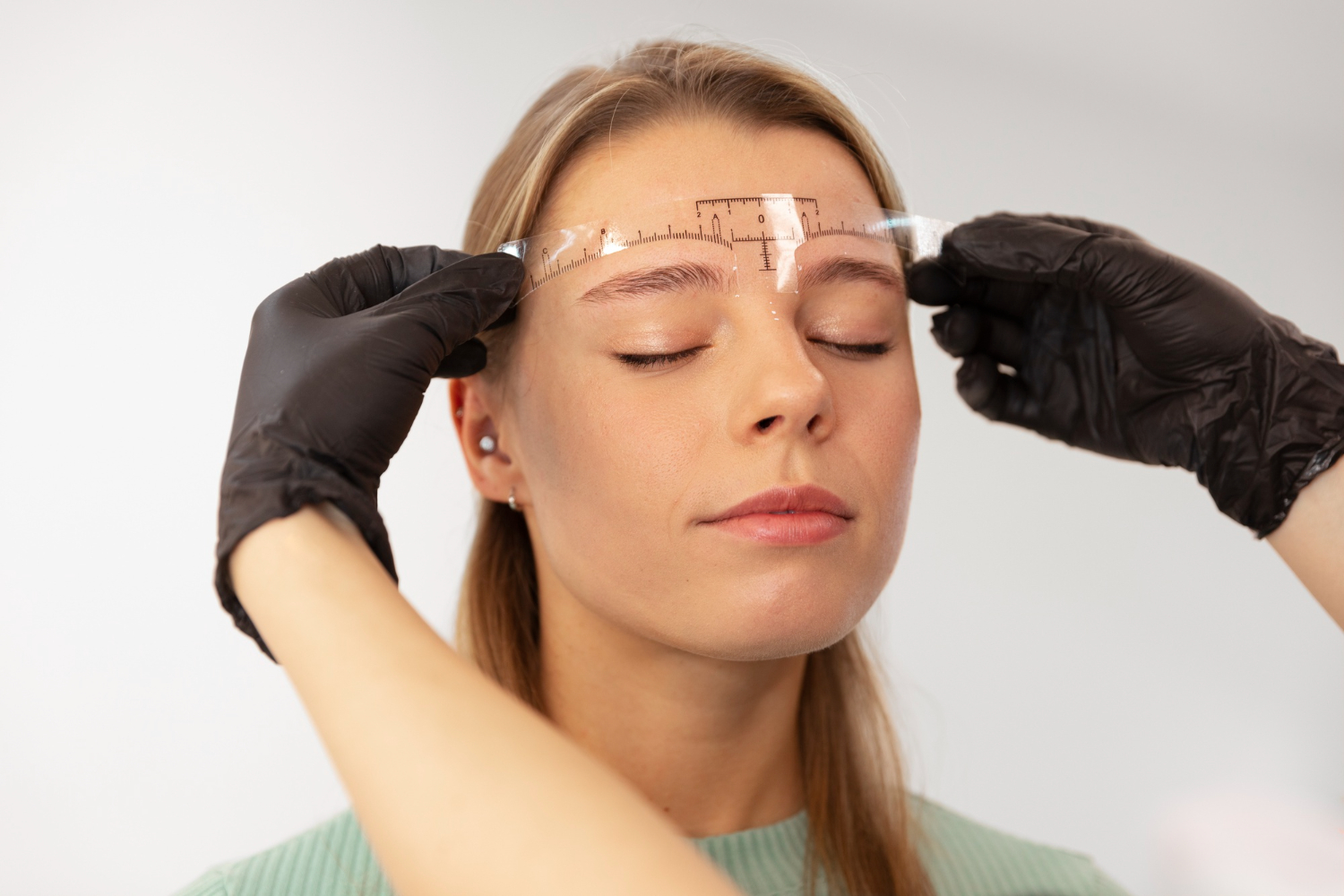
Laser brow lifting occurs within a systematic process. The initial examination, skin analysis, treatment planning, procedure stages, and session duration progress as a whole. Each stage is carried out meticulously.
The physician listens to the patient's medical history. Medications are noted. Allergies are inquired about. The brow area is examined. Skin type is determined. The patient's expectations are learned. Realistic goals are set. This initial meeting forms the basis of the treatment plan. The patient asks questions. The physician provides answers.
Skin analysis devices visualize the deeper layers of the skin. Collagen density is measured. Skin thickness is evaluated. The level of pigmentation is determined. The fat ratio is analyzed. This data defines the laser parameters. Different energy levels are used for each skin type. Fitzpatrick skin type classification is important at this point.
The physician decides how many sessions will be needed. Session intervals are determined. The type of laser to be used is selected. The energy level is adjusted. The patient is informed about the need to protect from the sun before treatment. Creams containing retinol are discontinued for a period beforehand. The treatment plan is documented in writing.
The treatment room is entered. The skin is cleaned. An anesthetic cream is applied. The eyes are covered with special protective caps. The laser device is brought to the brow area. The physician moves it over the skin. Energy pulses are delivered. Each pulse transmits heat to the deeper layers of the skin. When the procedure is finished, a soothing serum is applied. A cold compress is made.
A single session lasts thirty to forty-five minutes. The duration varies based on the size of the area to be treated. If both brows and the eye area are treated, the time may extend. Sessions are short and comfortable. The patient sits comfortably in the chair.
The patient feels warmth and a slight tingling sensation. Pain is usually at a tolerable level. An anesthetic cream reduces this sensation. Laser devices with cooling systems provide extra comfort. At the end of the procedure, there may be a slight feeling of warmth on the skin. This sensation fades within a few hours.
Fractional laser systems, carbon dioxide laser, erbium laser, and other energy-based skin tightening technologies are used for non-surgical brow lifting. Each technology has its unique advantages. The physician selects the appropriate device according to the patient's needs.
Fractional laser treats small spots on the skin. Surrounding healthy tissue is preserved. This accelerates healing. The skin barrier repairs more quickly. Fractional methods can be applied in both ablative and non-ablative ways. Ablative fractional lasers cause microscopic damage to the upper layer of the skin. Non-ablative fractional lasers only heat the lower layers. Both methods stimulate collagen production.
The carbon dioxide laser operates at a wavelength of ten thousand six hundred nanometers. Water molecules absorb this radiation strongly. The upper layer of the skin evaporates. Intense heat is generated in the lower layers. This heat instantly contracts collagen fibers. The skin is visibly tightened. Ross and colleagues showed in their carbon dioxide laser studies that fibroplasia thickness continued even three to six months later. The Lemperle score dropped four points from the baseline. Improvement lasted for twelve months.
The erbium laser operates at a wavelength of two thousand nine hundred forty nanometers. This wavelength is absorbed more intensely by water. It provides more precise control compared to the carbon dioxide laser. It causes less thermal damage to the skin. The healing process is shorter. Badawi, Sobeih, and Vesel (2021) achieved statistically significant improvement in the periorbital area in thirty patients with non-ablative long-pulse erbium laser studies. The Lemperle score dropped four points from the baseline. Improvement continued for twelve months.
Radiofrequency devices heat the skin with electromagnetic energy. Ultrasound devices focus on deep tissues with sound waves. Microneedling radiofrequency systems penetrate the skin with needles and deliver radiofrequency energy. These technologies can be used in conjunction with or as an alternative to lasers. Each addresses different patient profiles.
Erbium laser is preferred for patients with thin skin and slight wrinkles. Carbon dioxide laser is more effective for patients with thick skin and significant damage. Non-ablative fractional systems enhance safety for individuals with dark skin types. The physician decides by evaluating the skin type, level of aging, and patient expectations.
Non-surgical laser eyebrow lifting provides many benefits such as a more lifted eyebrow appearance, brighter eye area, reduction in fine wrinkles, increased skin firmness, natural results, no need for incisions, and a quick return to daily life.
Laser energy lifts the skin in the eyebrow area from the inside out. The tail of the eyebrow moves upward. The arch of the eyebrow becomes more pronounced. The facial expression appears more vibrant. This lifting effect develops gradually. It looks natural. There is no excessively surprising change.
As the eyebrows are lifted, the upper eyelid opens. The eyes appear larger and more vibrant. The tired expression disappears. The eye area starts to receive light. Applying makeup becomes easier. Eyeshadow appears more defined. Eyelashes become more visible.
Crow's feet wrinkles around the eyes significantly reduce with laser treatment. The laser rejuvenates the skin's outer layer. It thickens the dermis. Wrinkles are filled. Machado and colleagues (2021) demonstrated the effectiveness of laser-assisted treatments for wrinkles around the eyes. The skin texture becomes smoother.
New collagen thickens the skin. The skin feels tighter. Elasticity increases. Skin texture improves. Pores shrink. Skin tone evens out. This effect continues for weeks after treatment. It peaks after six months.
The laser utilizes the skin's own repair mechanism. No external material is injected. The skin renews itself. Results are consistent with facial expressions. There is no excessively swollen or masked appearance. The patient looks younger but still resembles themselves.
No blades are used during the procedure. There is no bleeding. No stitch marks are left. The risk of infection is minimal. Skin integrity is preserved. This feature provides great comfort for patients. It is especially ideal for those prone to keloids.
After treatment, the patient immediately returns to their normal life. There may be slight redness. This redness can be covered with makeup. There is no need to take a break from work. Exercise can be done. The face can be washed. Social plans are not canceled.
The results of non-surgical laser eyebrow lifting begin immediately. The first changes are seen after the procedure. Collagen production continues for months. Final results appear within three to six months. The effect lasts for twelve to eighteen months.
At the end of the procedure, there is an instant feeling of tightness in the skin. This sensation is due to the contraction of collagen fibers. In the first week, a slight tightening is observed in the skin. After the redness fades, the skin appears brighter. A slight lifting effect is felt within the first month.
Fibroblast cells begin to work with laser stimulation. These cells produce intense collagen for three months. Production slows down in the sixth month but continues. The skin thickens. Firmness increases. This process is natural and gradual. The patient notices improvement each month.
Final results usually become apparent in the third month. They peak in the sixth month. The skin is completely renewed. The eyebrows have taken their new position. The area around the eyes has rejuvenated. These results are documented with photographs. Patient satisfaction is at the highest level.
Laser eyebrow lifting results last from twelve to eighteen months. The duration depends on skin type, rate of aging, and lifestyle. Those who use sunscreen experience longer-lasting effects. Maintenance sessions can extend the results. Annual treatments help maintain a youthful appearance.
Non-surgical laser eyebrow lifting typically requires two to four sessions. Skin structure, age, level of expectation, and technology used determine the number of sessions. One session may be sufficient for some patients. Maintenance applications strengthen long-term results.
Thick and resistant skin may require more sessions. Thin and sensitive skin responds more quickly. Lower collagen density skin requires more sessions to be planned. The physician creates a personalized protocol based on skin analysis results. A wait of four to six weeks is expected between each session.
Young patients typically require only two sessions. Three sessions are recommended for middle-aged patients. Older patients may require four or more sessions. As age increases, the rate of collagen production slows down. Therefore, more stimulation is needed. Starting treatment at a younger age yields results with fewer sessions.
In young patients with slight eyebrow drooping, even one session can make a noticeable difference. However, multiple session protocols are preferred for optimal results. One session initiates collagen production. The second and third sessions reinforce this production. The goal is to maintain the long-term remodeling process of the skin.
Maintenance sessions extend the results. Light laser applications repeated once or twice a year keep the skin youthful. These applications also work as a preventive strategy. The skin remains in continuous collagen production. Signs of aging are delayed. The patient always maintains a vibrant appearance.
The recovery process after non-surgical laser eyebrow lifting is quick and comfortable. The first twenty-four hours, the first week, sun protection, skin care, and makeup use should be managed carefully. Proper care optimizes results.
In the first hours after the procedure, there may be slight redness and a feeling of warmth in the skin. This is completely normal. A cold compress can be applied. The patient's skin should be left untouched. Avoid washing with hot water. Aspirin and blood-thinning medications are not recommended for a few days. The skin begins to heal itself.
The skin is sensitive in the first week. Gentle cleansers should be used. Toners containing alcohol should be avoided. Exfoliating products that may irritate the skin should be postponed. The use of moisturizers should be increased. Serums that support the skin barrier can be applied. Plenty of water should be consumed. A healthy diet accelerates healing.
The use of sunscreen is mandatory. After the treatment, the skin becomes more sensitive to the sun. Sunscreens with SPF 50 and above should be preferred. Direct exposure to the sun should be avoided. Hats and sunglasses should be worn. Sun damage can lead to hyperpigmentation. Protection also preserves results.
Moisturizers containing hyaluronic acid support the skin. Vitamin C serums increase collagen production. Products containing retinol can only be started after two weeks. Soothing mask applications provide comfort. Avoid rubbing the skin with harsh motions. Gentle touches protect the skin.
Mineral makeup products can be used within twenty-four hours after the procedure. Liquid foundations can be held off for a few days. Makeup brushes should be clean. Products that increase the risk of infection should be avoided. Eye makeup should be applied gently. Makeup removers should be alcohol-free.
Non-surgical laser brow lifting is a safe procedure. Mild side effects such as temporary redness, slight swelling, and sensitivity may occur. Rare complications have also been reported in the literature. It is possible to reduce risks.
Redness after the procedure is the most common side effect. It is a normal response of the skin to heat. It usually resolves within a few hours to two days. It may last a bit longer in darker skin types. Cold compresses and soothing creams provide relief. Redness is completely temporary.
There may be slight swelling in the skin. It can be particularly noticeable in the eyelid area. This swelling is part of the body's inflammatory response. It resolves on its own within two to three days. Sleeping with the head elevated reduces swelling. Limiting salt intake is beneficial.
The skin may feel more sensitive for a few days. Hot water, steam baths, and saunas are not recommended during this period. Cosmetics that may irritate the skin should be avoided. Sensitivity is temporary. As the skin barrier heals, it returns to normal.
Hyperpigmentation, hypopigmentation, infection, and scarring are rare complications. The risk of pigmentation is slightly higher in darker skin types. Proper energy selection and cooling minimize this risk. An experienced physician keeps the complication rate low. Badawi, Sobeih, and Vesel (2021) reported no long-term side effects in their studies.
Proper patient selection is the most important factor. Appropriate laser parameters should be used. Skin preparation should be done before treatment. Post-treatment care instructions must be followed. An experienced and certified physician should be preferred. Sunscreen should be used regularly.
In non-surgical brow rejuvenation, botulinum toxin applications, dermal fillers, thread lifting methods, radiofrequency applications, micro-focused ultrasound, and combined treatments are used. Each method has a different mechanism of action. Combinations are preferred according to the patients' needs.
Botulinum toxin relaxes the muscles that pull the brow down. The muscles that lift the brow become dominant. As a result, the brows are slightly lifted. The effect lasts for three to four months. The procedure is performed via injection. There is no recovery time. Results are quick. However, it does not change skin quality. It only regulates muscle balance.
Fillers containing hyaluronic acid are injected over the brow bone. This volume supports the brows. The brows move upward. The eye area appears fuller. The effect lasts for twelve to eighteen months. The filler also hydrates the skin. However, it does not directly trigger collagen production.
Special threads are placed under the skin. The threads mechanically lift the skin. This method is effective for patients with moderate sagging. The effect lasts for one to two years. The procedure is minimally invasive. However, there is a risk of complications related to the threads. Asymmetry and needle marks may be visible.
Radiofrequency heats the skin in a controlled manner. The heat reorganizes collagen fibers. The skin tightens. Ukoha, Malone, and Munavalli (2021) achieved an increase in brow height of two to two and a half millimeters in brow lifting studies using fractional radiofrequency microneedling devices. When used in conjunction with radiofrequency laser, results are enhanced.
Micro-focused ultrasound targets sound waves to deep tissues. It triggers collagen production by generating heat. It can reach the SMAS layer. This deep effect lifts the skin strongly. Alam and colleagues (2010) demonstrated the brow lifting effect in ultrasound tightening studies. The procedure can be applied as a single session.
A single method may not always be sufficient. Laser improves skin quality. Botulinum toxin regulates muscle balance. Filler adds volume. This triple combination provides complete rejuvenation. The physician determines the combination based on the patient's needs. Results are more pronounced and longer-lasting.
Laser brow lifting and microfocused ultrasound use different types of energy. Laser works with light energy. Ultrasound works with sound waves. Both methods trigger collagen production. However, their mechanisms of action, targeted layers, duration of results, and advantages differ.
Laser targets the water molecules in the skin. It works on the principle of photothermolysis. Heat constricts and renews collagen. Ultrasound focuses sound waves on deep tissues. It creates thermal coagulation areas. Collagen is renewed in these areas. Laser primarily affects the mid-layers of the skin. Ultrasound reaches deeper layers.
Laser generally targets the epidermis and dermis layers. Fractional lasers create microscopic treatment areas. Ultrasound can penetrate to subcutaneous tissue and the SMAS layer. This deep reach provides a strong lifting effect. Laser renews the skin surface more. Ultrasound affects deeper structures more.
Laser results peak within three to six months. The effect lasts between twelve to eighteen months. Ultrasound results also develop within three months. The effect varies between twelve to twenty-four months. Maintenance sessions are recommended for both methods. The single session effect of ultrasound generally lasts longer.
Laser corrects skin tone and texture. It reduces fine wrinkles. However, it may be limited in deep sagging. Ultrasound provides deep lifting. However, it does not improve skin surface quality as well as laser. Laser may require multiple sessions. Ultrasound can provide noticeable results with a single session.
Laser stands out in patients with poor skin quality and many fine wrinkles. Ultrasound is more effective in patients with deep tissue sagging and thick skin. Many patients benefit from a combination of both methods. The physician makes the right choice through physical examination and skin analysis.
There are significant differences between surgical brow lifting and non-surgical laser brow lifting. Each method has its own unique advantages and disadvantages. The choice should be made according to the patient profile.
Comparison Criteria | Surgical Brow Lift | Non-Surgical Laser Brow Lift |
Longevity | Five to ten years | Twelve to eighteen months |
Result Duration | Immediately noticeable | Develops in three to six months |
Recovery Process | Two to four weeks | One to three days |
Return to Daily Life | After weeks | On the same day |
Anesthesia Requirement | General or sedation | Local cream |
Comfort | Post-operative pain may occur | Minimal discomfort |
Naturalness | There is a risk | Very natural |
Suitable Patient | Advanced sagging, excess skin | Mild to moderate sagging |
Risk profile | Scarring, infection, asymmetry | Redness, edema, rare pigmentation |
Repeatability | Limited | Unlimited sessions |
Surgical methods provide noticeable and permanent results. However, the risks are higher. The recovery process is long. Non-surgical laser methods are safer. They provide natural results. However, the duration of effect is shorter. Patient expectations and anatomical needs determine the right method.
For the best results, it is essential to choose an experienced physician, select the right patient, have realistic expectations, provide post-treatment care, and use sunscreen regularly. Each factor contributes directly to the success of the treatment.
Laser devices are powerful tools. However, the experience of the physician using these tools determines the outcome. A certified or aesthetic surgeon should be preferred. The physician should analyze the skin type. They must adjust the correct energy level. They should know how to manage complications. Patients should review the physician's previous procedures.
Not every patient is suitable for every procedure. Candidates should be evaluated in detail. Skin type, level of aging, expectations, and medical history should be analyzed. Procedures should not be performed on unsuitable patients. Alternative methods should be offered. This choice is essential for both safety and satisfaction.
Laser is not a magic wand. It rejuvenates the skin. It lifts the brows. However, it does not completely change the face. Patients should be informed about this. Photos should be shown. What can be achieved should be clearly explained. Realistic expectations increase satisfaction. They prevent disappointment.
Post-treatment care directly affects the results. Patients must strictly follow the physician's recommendations. They should use moisturizer. They should not irritate the skin. They should eat healthily. They should drink plenty of water. Regular sleep speeds up skin repair. Adhering to the care protocol optimizes results.
Sunscreen is the most important product after laser treatment. UV rays can break down newly formed collagen. It can lead to hyperpigmentation. SPF 50 sunscreen should be used daily. Reapplication should not be forgotten. Sunscreen preserves youth. It protects your laser investment.
Scientific studies show that non-surgical eyebrow rejuvenation methods using lasers are safe and effective. Current clinical studies, safety data, efficacy results, patient satisfaction, and evidence-based recommendations are rapidly growing in this field.
In recent years, many clinical studies have proven the role of lasers in periorbital rejuvenation. Heidari Beigvand and colleagues (2020) compiled the effects of lasers. Researchers provided strong evidence for the skin rejuvenation effects of lasers. Fitzpatrick, Rostan, and Marchell (2000) compared carbon dioxide and erbium lasers. Both lasers successfully triggered collagen tightening. El-Domyati and colleagues (2013) demonstrated that fractional erbium laser increased collagen types I, III, and VII.
Laser treatments are generally considered safe. Badawi, Sobeih, and Vesel (2021) reported no serious side effects in non-ablative erbium laser studies. Mild redness and edema were temporary. Lee and colleagues (2024) supported the safety of light-based therapies. Tao and colleagues (2025) emphasized that the complication rate of energy-based devices in the periorbital area is low.
Laser treatments provide clinically significant improvement. Machado and colleagues (2021) proved the effectiveness of laser-assisted treatments for periorbital wrinkles. Laubach and colleagues (2006) thoroughly examined the skin responses to fractional photothermolysis. The skin barrier improved. The collagen arrangement normalized. Ukoha, Malone, and Munavalli (2021) achieved a significant increase in elevation with radiofrequency microneedling for eyebrow lifting.
Patient satisfaction is high with these treatments. Badawi, Sobeih, and Vesel (2021) noted that forty-six percent of patients reported excellent healing. Alam and colleagues (2010) observed that patients were satisfied with the results after ultrasound treatment. Natural results and a short recovery time are factors that increase satisfaction.
Scientific data supports the following recommendations. For patients with mild to moderate eyebrow droop, laser may be the first option. In darker skin types, low energy and high intensity parameters should be preferred. Multiple session protocols are superior to single sessions. Sun protection after treatment is mandatory. Choosing an experienced physician minimizes complications.
Here we answer the most frequently asked questions about non-surgical laser eyebrow lifting. Pain, duration, permanence, age limits, return to work, makeup, eyelid effects, being a surgical alternative, number of sessions, and the choice between laser and ultrasound are among the most curious topics.
No, the procedure is not painful. A slight warmth and tingling sensation may occur. An anesthetic cream significantly reduces this sensation. Devices with cooling systems provide extra comfort. Patients tolerate the procedure comfortably. Additional anesthesia options are available for those with a low pain threshold.
A single session lasts thirty to forty-five minutes. If the eye area and brow area are treated together, the duration may extend to one hour. Sessions are short and practical. A patient can even have the procedure done during their lunch break and return to work.
The results are not permanent. However, they are long-lasting. The effect lasts from twelve to eighteen months. As aging continues, the skin may gradually loosen. Maintenance sessions can extend the results. Annual treatments help maintain a youthful appearance.
It can be applied from the age of twenty-five. It is used for preventive purposes at a young age. People in their thirties and forties are the most commonly treated group. It can also be applied to those over seventy. However, skin type and overall health status should be evaluated. There is no age limit. There are suitability criteria.
Yes, one can return to work the same day. Mild redness can be covered with makeup. Swelling is rarely pronounced. The patient can attend meetings. Social life is not interrupted. This feature is a significant advantage for busy individuals.
Mineral makeup can be started twenty-four hours later. Liquid foundation can be applied after two to three days. Makeup brushes should be clean. The eye area should be gently made up. Makeup removers should be alcohol-free and gentle.
Yes, it also affects the eyelids. As the brows lift, the upper eyelid opens. The skin of the eyelid tightens. Fine wrinkles decrease. The eyes look younger. However, the effect may be limited in eyelids with significant excess skin.
Yes, it can be an alternative for patients with mild to moderate brow droop. For patients with significant excess skin and advanced ptosis, surgery may be more appropriate. Laser can be used as a complementary treatment for these patients. The physician's assessment will determine the decision.
Generally, two to four sessions are needed. Skin type, age, and the technology used determine the number of sessions. In mild cases, a single session may be sufficient. Multiple sessions are recommended for optimal results. Sessions are performed four to six weeks apart.
If skin quality is a priority and there are fine wrinkles, laser is preferred. If there is deep tissue sagging and thick skin, micro-focused ultrasound is more effective. Many patients benefit from a combination of both methods. The physician makes the correct choice through physical examination and skin analysis.
Non-surgical laser brow lifting is one of the safest and most effective methods in modern aesthetic medicine. Laser energy activates the skin's natural repair mechanism. It stimulates collagen production. The skin tightens. The brows lift naturally. The eye area rejuvenates. The procedure is performed without the use of a scalpel. The recovery process is very short.
Choosing the right patient is the key to treatment success. Individuals with mild to moderate brow sagging are ideal candidates. Surgical methods should be considered for patients with significant excess skin. Choosing an experienced physician minimizes complications. Realistic expectations increase satisfaction.
Scientific data strongly supports the safety and effectiveness of this method. Clinical studies have demonstrated an increase in collagen, a reduction in wrinkles, and significant improvement in brow height. Patient satisfaction is high. Natural results and a short recovery time make this treatment attractive.
Personalized treatment planning with an expert physician is essential. Every skin is unique. Every face is different. The physician should analyze the patient's anatomical structure, skin type, and expectations. With the right energy, the correct number of sessions, and the appropriate care protocol, natural and balanced facial rejuvenation is possible. Achieving a fresher, brighter, and younger look with non-surgical laser brow lifting is not a dream, but a scientific reality.
Alam, Murad, et al. "Ultrasound Tightening of Facial and Neck Skin: A Rater-Blinded Prospective Cohort Study." Journal of the American Academy of , vol. 62, no. 2, 2010, pp. 262-269.
Badawi, Ashraf, Tarek Sobeih, and Jasmina Vesel. "Periocular Rejuvenation Using a Unique Non-Ablative Long-Pulse 2940 nm Er:YAG Laser." Lasers in Medical Science, vol. 37, 2021, pp. 1111-1118.
El-Domyati, Moetaz, et al. "Fractional versus Ablative Erbium:Yttrium-Aluminum-Garnet Laser Resurfacing for Facial Rejuvenation: An Objective Evaluation." Journal of the American Academy of , vol. 68, no. 1, 2013, pp. 103-112.
Fitzpatrick, Richard E., et al. "Collagen Tightening Induced by Carbon Dioxide Laser versus Erbium: YAG Laser." Lasers in Surgery and Medicine, vol. 27, no. 5, 2000, pp. 395-403.
Heidari Beigvand, H., et al. "Assessment of Laser Effects on Skin Rejuvenation." Journal of Lasers in Medical Sciences, vol. 11, 2020, pp. 212-219.
Laubach, Hans-Joachim, et al. "Skin Responses to Fractional Photothermolysis." Lasers in Surgery and Medicine, vol. 38, no. 2, 2006, pp. 142-149.
Lee, Young In, et al. "Exploring the Safety and Efficacy of Organic Light-Emitting Diode in Skin Rejuvenation and Wound Healing." Yonsei Medical Journal, vol. 65, 2024, pp. 98-107.
Machado, Beatriz H., et al. "Comparative Study on the Outcome of Periorbital Wrinkles Treated with Laser-Assisted Delivery of Vitamin C or Vitamin C Plus Growth Factors." Aesthetic Plastic Surgery, vol. 45, 2021, pp. 1020-1032.
Tao, B. K., et al. "Periocular Aging across Populations and Esthetic Considerations: A Narrative Review." Journal of Clinical Medicine, vol. 14, 2025.
Ukoha, Ukpoma, Christine H. Malone, and Girish Munavalli. "Nonsurgical Brow Lift with a Temperature-Controlled, Fractionated Radiofrequency Needle Device." Surgery, vol. 47, 2021, pp. 296-298.