What Is the Difference Between a French Thread Lift and a Standard Thread Lift?
French Thread Lift and the standard thread lift are both minimally invasive facial rejuvenation treatments developed as alternatives to surgical facelift surgery. Both methods lift sagging facial tissues upward using medical threads placed beneath the skin. The main difference between them lies in the structure, flexibility, longevity, and tissue-lifting mechanism of the threads used.
The most accurate way to understand these two methods is to first examine how each one works separately. The material and design of the threads directly determine the longevity, lifting power, and natural appearance of the treatment. For this reason, in the following sections, we comparatively examine the technical foundations, lifting mechanisms, duration of results, suitable patient profiles, and risks of both methods.
What Is a French Thread Lift and How Does It Work?
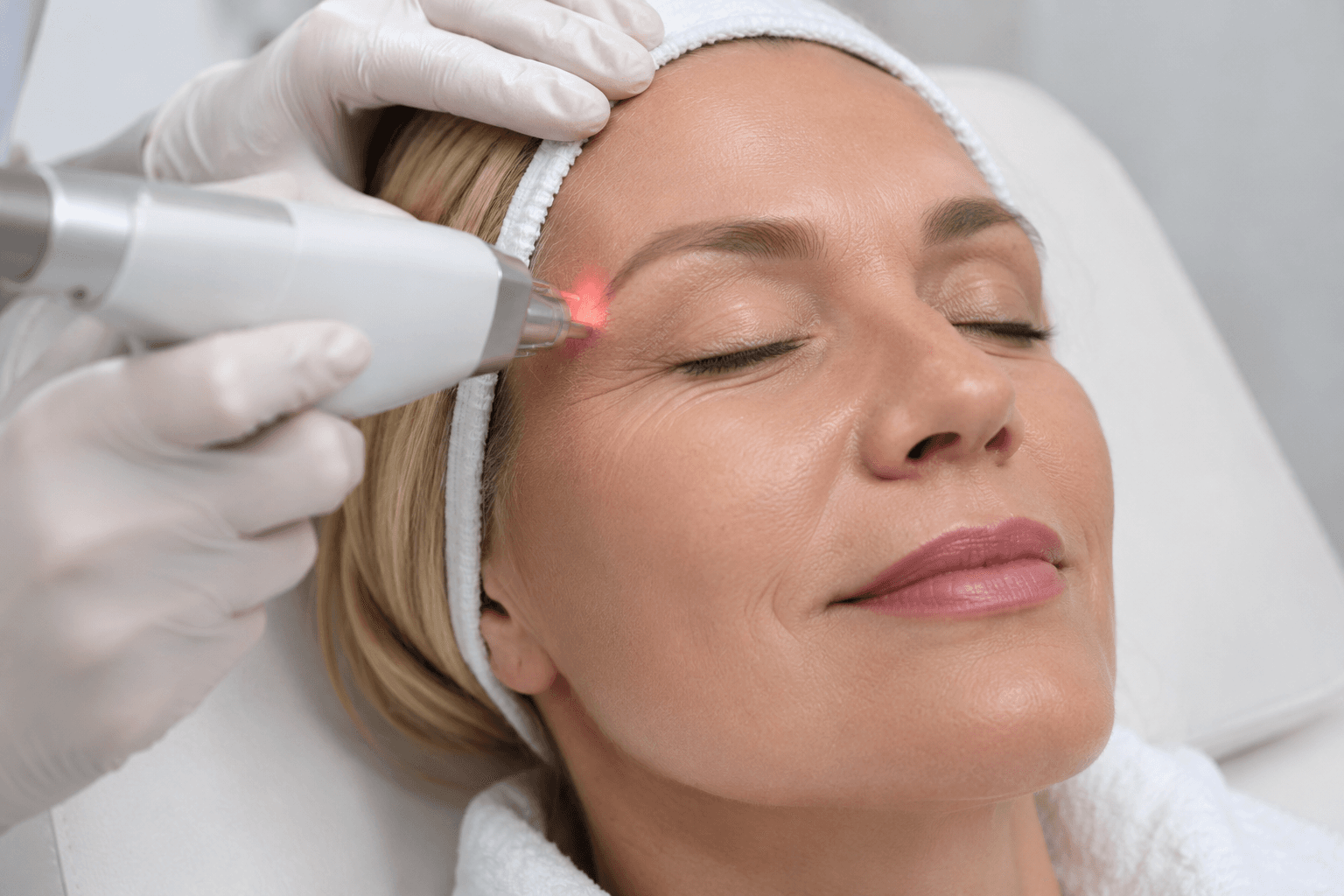
A French Thread Lift is a non-surgical facelift and tissue suspension method that lifts sagging facial tissues upward using specially designed flexible threads. The distinguishing feature of this method is the two-layer design of the thread it uses.
These threads have a supporting core on the inside and a silicone coating on the outside. Thanks to their internal supporting structure, silicone-coated suspension threads lift tissue upward while retaining their flexibility. This flexibility allows the thread to move in harmony with facial expressions. When a person smiles, talks, or makes facial expressions, the thread flexes together with the tissue and does not create a sensation of constant tightness. The concept of dynamic facial suspension refers precisely to this feature.
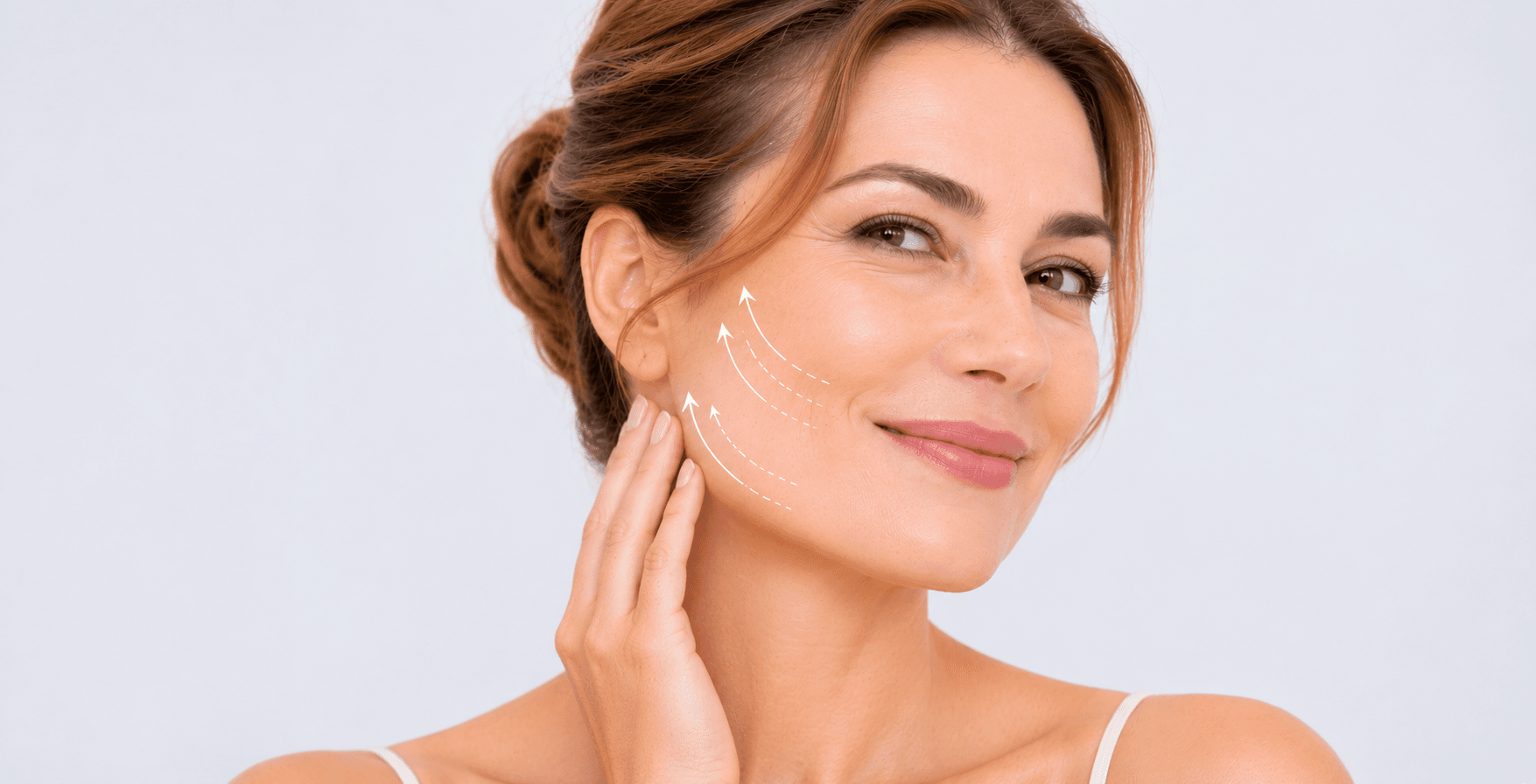
The method is based on the tissue suspension technique. The physician places the thread beneath the skin in the targeted area and lifts the sagging soft tissue upward. This repositioning restores the facial oval and provides noticeable tightening in areas affected by sagging. A French Thread Lift can be performed on the cheeks, jawline, brow area, and neck. In the following sections, we compare these application areas with those of the standard thread lift.
What Is the Standard Thread Lift Method?
A standard thread lift is a minimally invasive aesthetic procedure that supports and lifts facial tissues using specialized medical threads placed beneath the skin. It is not possible to refer to a single thread design in this method; numerous types of threads made from different materials are used in clinical practice.
The primary materials include polydioxanone (PDO), poly-L-lactic acid (PLLA), and polycaprolactone (PCL) compounds. Threads used in PDO thread lift procedures are generally absorbed by the body within six to nine months. PLLA and PCL threads have longer absorption times. Depending on the thread structure, both absorbable and permanent options are available. This variety allows the physician to choose from different products according to the patient’s needs.
The conical structures, barbs, or anchoring projections on the threads keep the tissue in its lifted position. Barbed threads attach to the tissue mechanically, while cone designs gather the tissue between the cone structures. This mechanical lifting effect is the first component of the procedure. The second component is biological: As absorbable threads dissolve, they stimulate collagen production around them. Thus, while mechanical lifting provides immediate tightening, collagen stimulation supports skin quality over time. This dual effect will reappear when we examine the lifting mechanism.
What Are the Technical Differences Between French Thread Lift and Standard Thread Lift?
The most fundamental technical difference between the two methods lies in the thread material and design. French Thread Lift uses a flexible, durable thread with a silicone coating, whereas standard thread lifts use materials with different absorbability properties, such as PDO, PLLA, or PCL.
The two thread families behave differently in terms of flexibility. French Thread Lift threads provide a support system that stretches along with facial expressions. This allows the tissue to be lifted in harmony with movement rather than being suspended from a fixed point. Standard threads, on the other hand, vary in rigidity and tissue-gripping properties depending on their type. Tissue engagement and lifting capacity depend on the number and angle of the barbs or cones on the thread.
The choice of material also determines the biological response. As PDO threads dissolve, they support the formation of a fibrotic sheath and new collagen around them (Suh 2015). Permanent threads, because they remain in the body for a long time, produce a different tissue response. Systematic reviews of the thread lift literature confirm that thread material and design are decisive factors in treatment outcomes (Gülbitti 2018).
It is important to emphasize that the results of both methods depend on the application technique, the patient’s facial anatomy, and the quality of the product used. The name of the thread alone does not guarantee the quality of the outcome. The practical significance of these technical differences becomes clearer when we compare their lifting effects.
What Kind of Lifting Effect Do French Thread Lift and Standard Thread Lift Create on the Face?
Both methods create a lifting effect through two mechanisms: mechanical support and collagen stimulation. The difference lies in the thread design through which these two mechanisms work and the length of time they remain effective.
With French Thread Lift, lifting occurs when the flexible thread suspends the tissue using its gripping projections. The thread carries sagging tissue upward and, thanks to its flexible structure, maintains this position in harmony with facial movements. In standard thread lifts, barbed or conical structures engage with the tissue and provide lifting through tissue gripping. Early studies on barbed threads showed that these gripping structures create a lifting effect by gathering soft tissue (Sulamanidze 2005).
Collagen stimulation is a second benefit that extends beyond the mechanical effect. As absorbable threads dissolve, new collagen fibers form around them; this process supports skin quality and firmness. Studies conducted on animal models have histologically confirmed increased fibrosis and collagen in tissues where PDO threads were placed (Villa 2008). However, the resulting lifting effect varies from person to person. Skin elasticity, tissue thickness, and the degree of sagging produce different responses in each patient. The duration of the lifting effect also depends on these same variables; we examine this topic under a separate heading.
How Long Do the Results of French Thread Lift and Standard Thread Lift Last?
Clinical sources refer to claims of approximately four to six years of durability for French Thread Lift, while stating that results from standard thread lift procedures generally last between one and three years. These figures are not definitive scientific results, but clinical estimates based on different thread systems.
The primary reason for the difference in duration is the behavior of the material. Dissolvable threads are gradually absorbed by the body, and their mechanical lifting effect weakens over time; afterward, only the newly formed collagen tissue provides support. Threads made of permanent materials, on the other hand, retain their supportive function for longer. However, the scientific literature presents a cautious picture on this subject. A systematic review examining facial rejuvenation with barbed sutures reported that, in most of the studies reviewed, the longevity of the lifting effect was limited (Gülbitti 2018). Long-term follow-up studies have similarly shown that the effect diminishes over time (Kaminer 2008; Garvey 2009).
The duration of results is not determined by the thread alone. Factors such as age, skin elasticity, tissue characteristics, smoking, and lifestyle directly affect longevity. Therefore, the durations stated by manufacturers or clinics should not be interpreted as guaranteed results for every patient. Just as important as expectations regarding longevity is the question of which areas can be treated with each method.
Which Areas of the Face and Neck Can Be Treated?
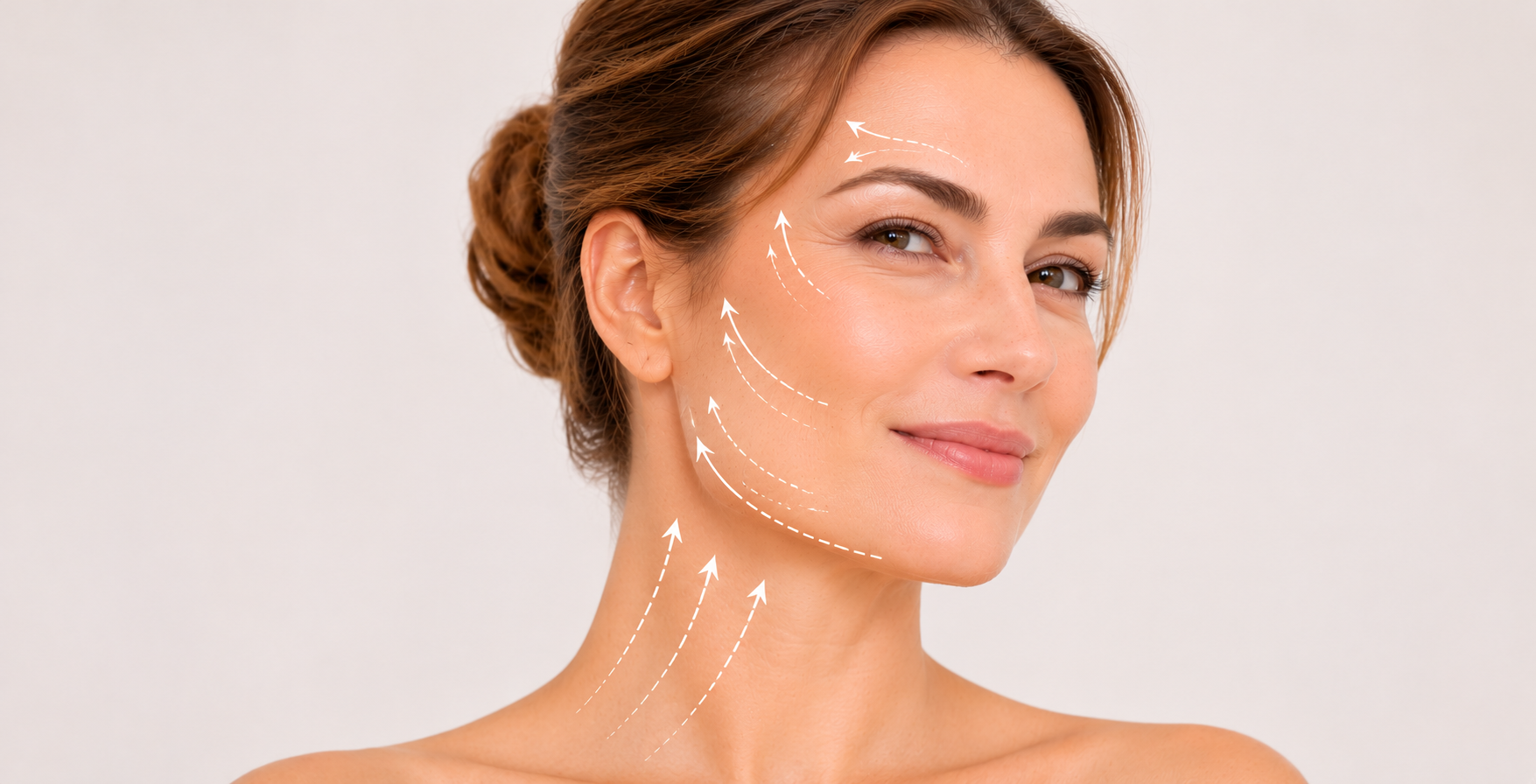
The French Thread Lift can be performed on the cheeks, facial contour, jawline, eyebrows, and neck. Standard thread lifting can be used in various anatomical areas, including the mid-face, cheeks, eyebrows, temples, jawline, and neck.
The treatment maps of the two methods largely overlap, but thread selection varies according to the area. Designs that provide strong anchoring are preferred for defining the facial contour and jawline, while finer threads that are compatible with the more mobile tissues of the eyebrow area are favored. Aesthetic procedures aimed at lifting the outer ends of the eyebrows upward can also be performed using thread-lifting techniques; the goal is to give the eye area a more upturned and dynamic appearance.
The anatomical characteristics of each area directly influence thread selection and treatment planning. Different strategies are required for areas with loose, thin skin, such as the neck, and for fuller areas, such as the cheeks. For this reason, area-specific planning is a natural continuation of assessing patient suitability.
Who Is Suitable for a French Thread Lift and Standard Thread Lift?
Both methods are suitable for people with mild to moderate skin laxity who do not want to undergo surgical facelift surgery. In determining suitability, the current condition of the skin—not age—plays the decisive role.
Skin elasticity and facial anatomy are the two primary criteria for patient selection. Thread-lifting methods tend to produce more successful results in people whose skin still has the capacity to tighten. By contrast, in individuals with significant excess skin or advanced facial sagging, the lifting power of thread-lifting procedures remains limited. In such cases, surgical options should be considered.
Although many people in their forties and fifties are candidates for these methods, age alone does not determine the choice of treatment. Two people of the same age may have very different skin quality and degrees of sagging. Once suitability has been established, the next question is how the procedure is performed.
How Do the Application Processes of the Two Methods Differ?
With both methods, the procedure begins with an assessment of the facial anatomy and the preparation of a personalized treatment plan. Local anesthesia is routinely administered with both techniques to ensure patient comfort during the procedure.
During the assessment, the physician determines the degree of sagging, skin thickness, and target areas. The threads are then inserted beneath the skin through the entry points, and the tissues are repositioned as planned. The number of threads used and their placement plan in the French Thread Lift vary from person to person; the physician creates a suspension route extending from the jawline to the temple area. With a standard thread lift, the technique varies depending on the thread material and the target area; in some cases, a mesh-like network is created using smooth threads, while in others, direct lifting is performed with barbed threads.
The duration of the procedure depends on its scope. While treatment of a limited area takes less time, plans involving multiple areas require longer. The recovery period begins once the procedure is complete.
What Is the Recovery Process Like After a French Thread Lift and Standard Thread Lift?
Both methods generally involve a short recovery period. Swelling, bruising, tenderness, and mild pain may occur after the procedure; these symptoms usually subside within a few days.
During the first few days, a feeling of tightness may be noticeable when moving the face or making facial expressions. This sensation is a natural result of the threads settling into the tissue and gradually decreases over time. During this period, it is important to pay attention to your sleeping position, avoid facial massage, postpone strenuous physical activity, and avoid applying pressure to the face. Following the physician’s recommendations is essential for maintaining the position of the threads.
The time required to return to social life varies depending on the scope of the treatment and the individual’s healing rate. Most people return to their daily activities within a few days. Scheduled follow-up appointments during the recovery period are essential both for evaluating the results and for the early detection of possible complications. We discuss these potential complications in the next section.
What Are the Risks of a French Thread Lift and Standard Thread Lift?
Temporary side effects such as bruising, swelling, pain, and tenderness may occur with both methods. More rarely, complications such as indentations beneath the skin, asymmetry, and the threads being palpable may develop.
Infection, displacement of the threads, or their becoming visible on the skin’s surface are among the other risks reported in the literature. Comprehensive reviews indicate that most of these complications can be corrected, although thread removal may be required in some cases (Tong 2019). Studies reporting long-term outcomes have also highlighted issues such as asymmetry and early recurrence (Garvey 2009).
The risk profile is determined jointly by the thread material and the application technique. A thread placed in the wrong plane or pulled too tightly can cause problems regardless of the method used. Therefore, having the procedure performed by an experienced and qualified physician is the most important condition for safety. The reward for managing the risks correctly is a natural appearance.
Which Looks More Natural: French Thread Lift or Standard Thread Lift?
The type of thread is not the only factor determining a natural appearance; thread flexibility, proper placement, and the physician’s anatomical assessment all contribute to the outcome. Nevertheless, the design of the French Thread Lift offers a structural advantage in terms of harmony with facial expressions.
Thread flexibility plays a critical role in preserving natural facial expression. Because the flexible thread structure of the French Thread Lift lengthens and shortens along with facial movements, it reduces the risk of a stiff or expressionless appearance. Natural results with a standard thread lift, on the other hand, depend on the number of threads, the degree of tension applied, and the technique used. Threads placed in the correct number and at the correct tissue plane can provide lifting without restricting facial expressions.
Excessive tension and incorrect thread placement can distort facial expression with either method. An excessively lifted eyebrow or a cheek positioned higher than necessary can create an artificial appearance. Therefore, a natural result depends not only on product selection but also on the physician’s knowledge of facial anatomy. Viewing all the features of both methods side by side makes comparison easier.
What Are the Key Differences Between a French Thread Lift and a Standard Thread Lift?
For readers who want to compare the two methods at a glance, we summarize the key differences in the table below.
Comparison Criterion | French Thread Lift | Standard Thread Lift |
Thread structure | Silicone-coated, flexible support structure | Different materials such as PDO, PLLA, and PCL |
Thread characteristics | Flexible design that moves harmoniously with facial expressions | Structural characteristics that vary according to the thread type |
Tissue anchoring | Lifting with specialized anchoring projections | Hooks, cones, or similar anchoring structures |
Longevity | Indicated in the literature as 4 to 6 years | Generally 1 to 3 years |
Collagen stimulation | May be supported through the tissue response | May be supported depending on the thread material |
Application areas | Facial contour, cheeks, eyebrows, and neck | Face, eyebrows, jawline, and neck |
Recovery | Generally a short recovery period | Generally a short recovery period |
Repeat application | Depends on the thread structure and clinical evaluation | Depends on the thread material and the duration of the results |
There are three key points to keep in mind when reading this table. First, the duration of the results does not constitute a guarantee of a definitive outcome; these are estimates based on different thread systems and clinical sources. Second, it cannot be generalized that the French Thread Lift will provide better results for every patient. Third, the manufacturer specifications and clinical evidence for the threads used vary. Within this framework, determining which method should be preferred requires an individual assessment.
Should You Choose a French Thread Lift or a Standard Thread Lift?
There is no single answer to this question that applies to everyone. The choice should be based on the individual’s skin elasticity, degree of sagging, and facial anatomy.
Those seeking a longer-lasting lifting effect may consider the durable and flexible thread structure of a French Thread Lift. Individuals who prefer flexible planning among different thread materials and treatment options may explore standard thread lift alternatives. In people with advanced skin laxity, neither method may be sufficient; in such cases, options such as a surgical facelift may be considered.
The final decision should be made following an examination by a plastic surgeon or a physician qualified in the relevant field. The examination evaluates skin quality, tissue volume, and the realism of the patient’s expectations together. Frequently asked questions can also provide guidance during the decision-making process.
Frequently Asked Questions About French Threads and Standard Thread Lifts
The questions below cover the topics most frequently asked about by people comparing the two methods. Each answer is based on the technical principles explained in the sections above.
Are French threads more long-lasting than standard thread lifts?
Sources indicate a duration of four to six years for French threads and one to three years for standard thread lifts. However, these figures are not definitive and vary from person to person.
The main reason for the difference lies in how the materials behave. As absorbable threads dissolve, their mechanical effect weakens, while permanent threads maintain their supportive function for a longer period. The scientific literature takes a cautious approach to the overall longevity of thread lift procedures (Gülbitti 2018). Therefore, the duration of results varies for each patient depending on factors such as age, skin elasticity, and lifestyle.
Can French threads and standard thread lifts be performed at the same time?
Yes, in some cases the two methods can be used together, but this is not necessary for every patient. The decision to combine treatments depends on the anatomical needs and the physician’s assessment.
For example, in people with different tissue characteristics in different areas, a plan focused on flexible lifting may be applied to one area, while a collagen-stimulating approach may be used in another. Such combinations require more complex planning than either method alone. The decision should be based on the examination findings.
Do French threads and standard thread lifts change facial expressions?
Choosing the right thread and placing it correctly helps preserve natural facial expressions. The goal is not to change the expression, but to bring sagging tissue closer to its position in younger years.
However, excessive tension or improper application can lead to aesthetic problems. Preserving facial expressions depends on the physician’s knowledge of facial anatomy and measured technique. For this reason, experience plays a decisive role in achieving a natural result.
Are French threads and standard thread lifts painful procedures?
Pain is controlled during the procedure with the help of local anesthesia. Most patients report feeling only mild pressure or pulling during treatment.
Mild pain, tenderness, and a feeling of tightness may be experienced after the procedure. These symptoms generally subside within a few days and can be managed with simple measures recommended by the physician.
Does the skin return to its previous state after thread lift procedures?
As the threads dissolve over time or their supportive effect decreases, the skin may gradually move toward its pre-treatment position. However, this process does not occur suddenly; the change progresses gradually.
The aging process continues under all circumstances, and no thread lift method can permanently stop aging. The procedure supports the appearance for a certain period; repeat treatments, scheduled according to the individual, can help maintain this support.
Can the French Thread Lift be performed again after the initial procedure?
Yes, the procedure can be repeated. However, this decision depends on the condition of the existing threads, the characteristics of the tissue, and the results of the initial procedure.
During the follow-up examination, the physician evaluates the current condition of the tissue and determines whether additional lifting is needed. The timing of a repeat procedure is planned individually for each patient.
Can people with advanced facial sagging undergo a French Thread Lift?
When there is a significant excess of skin, the lifting effect of thread-lift methods remains limited. In such cases, the procedure may not meet expectations.
For individuals with pronounced sagging, alternatives such as surgical facelift should be considered. The appropriate method can only be determined after an in-person examination.
References
de Benito, Javier, et al. "Facial Rejuvenation and Improvement of Malar Projection Using Sutures with Absorbable Cones: Surgical Technique and Case Series." Aesthetic Plastic Surgery, vol. 35, no. 2, 2011, pp. 248-253.
Garvey, Patrick B., et al. "Outcomes in Threadlift for Facial Rejuvenation." Annals of Plastic Surgery, vol. 62, no. 5, 2009, pp. 482-485.
Gülbitti, Haydar Aslan, et al. "Thread-Lift Sutures: Still in the Lift? A Systematic Review of the Literature." Plastic and Reconstructive Surgery, vol. 141, no. 3, 2018, pp. 341e-347e.
Kaminer, Michael S., et al. "Long-Term Efficacy of Anchored Barbed Sutures in the Face and Neck." Surgery, vol. 34, no. 8, 2008, pp. 1041-1047.
Suh, Dong Hye, et al. "Outcomes of Polydioxanone Knotless Thread Lifting for Facial Rejuvenation." Surgery, vol. 41, no. 6, 2015, pp. 720-725.
Sulamanidze, Marlen A., et al. "Facial Lifting with APTOS Threads: Featherlift." Otolaryngologic Clinics of North America, vol. 38, no. 5, 2005, pp. 1109-1117.
Sulamanidze, Marlen A., et al. "Removal of Facial Soft Tissue Ptosis with Special Threads." Surgery, vol. 28, no. 5, 2002, pp. 367-371.
Tong, Lucy X. and Emily A. Rieder. "Thread-Lifts: A Double-Edged Suture? A Comprehensive Review of the Literature." Surgery, vol. 45, no. 7, 2019, pp. 921-940.
Villa, Mark T., et al. "Barbed Sutures: A Review of the Literature." Plastic and Reconstructive Surgery, vol. 121, no. 3, 2008, pp. 102e-108e.
Get in touch with our expert team
Related Posts