Yükleniyor…

The effect of laser brow lifting is not permanent. In most people, results are maintained for an average of 6 to 24 months. The duration of the effect varies depending on the rate of skin aging, collagen production capacity, sun exposure, smoking, and the laser protocol used.
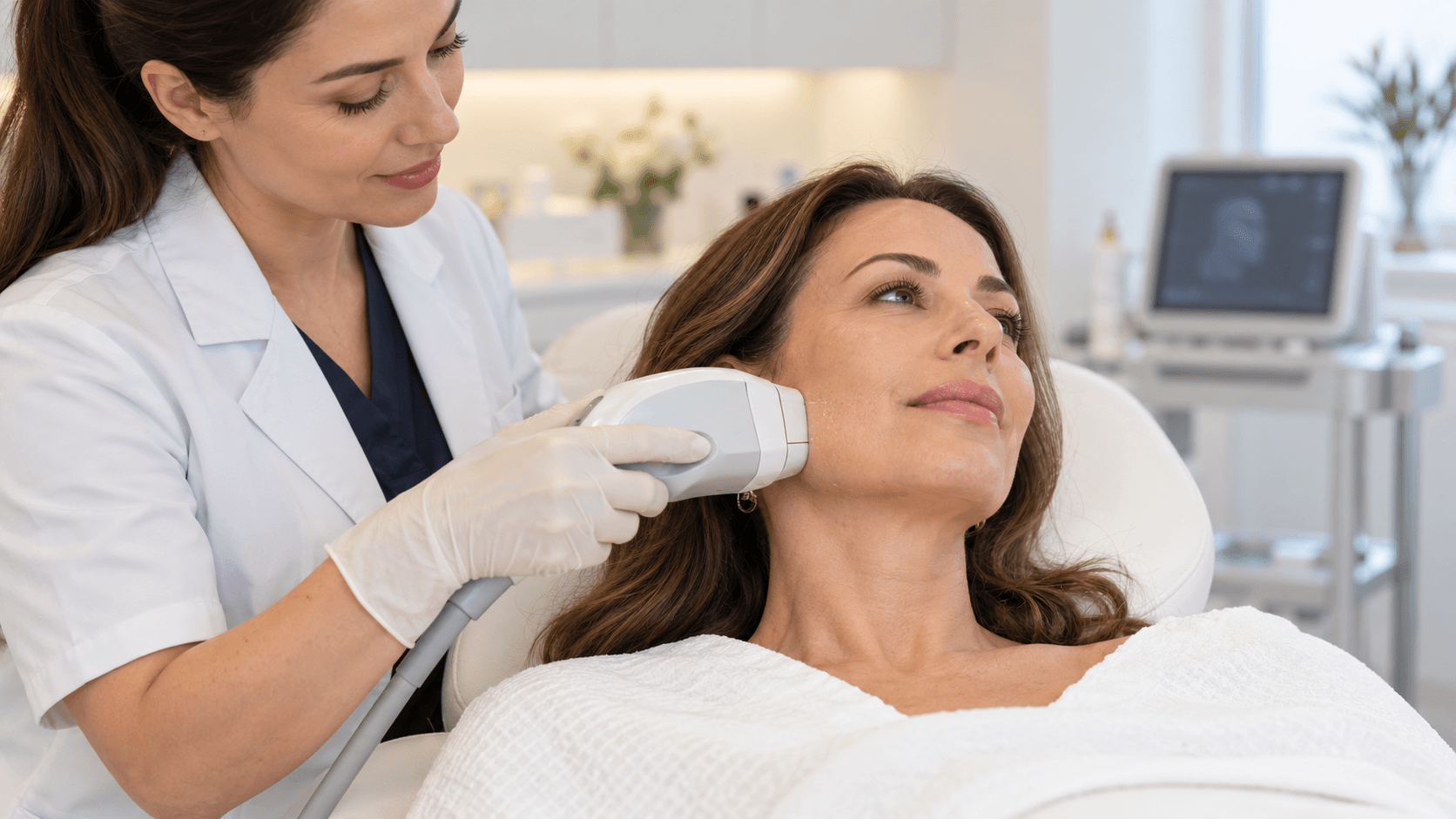
Laser brow lifting is a non-surgical method that stimulates collagen production through controlled heat energy applied to the tissues beneath the skin. The procedure aims to raise the natural position of the brow by a few millimeters and create a more dynamic appearance around the eyes. However, this effect is based on a different mechanism from that of surgical brow lifting, which mechanically repositions deeper tissues. Therefore, the longevity of the effect also follows different principles.
This guide explains the scientific mechanisms that determine the duration of the effect of laser brow lifting, when results begin to appear, the factors that influence longevity, and how results can be maintained. Our goal is to help people searching for information develop realistic expectations.
The laser delivers controlled heat damage to collagen fibers in the dermis. This damage initiates the body's wound-healing response. Fibroblast cells produce new collagen and elastin. The skin tightens, creating a mild lifting effect around the brows.
Nonablative laser systems deliver energy to the dermis while protecting the epidermis with cooling technology. The controlled heat generated in the dermis causes existing collagen fibers to contract immediately and be regenerated over time. Beigvand et al. (2020) documented that nonablative lasers induce new collagen synthesis by creating thermal changes in dermal proteins and tightening the skin structure.
This process is gradual at the molecular level. Orringer et al. (2010) demonstrated that following fractional nonablative laser treatment, inflammatory signals increased first, followed by matrix metalloproteinases and finally a marked increase in type I collagen. This finding supports the conclusion that laser brow lifting is not a process completed in a single session, but rather a biological remodeling process that develops over several weeks.
The aesthetic changes targeted by laser brow lifting can be grouped into three categories. First, the brow is expected to rise by a few millimeters. Second, fine lines around the forehead and eyelids become softer. Third, skin firmness and quality improve. The procedure does not alter tissue volume. Instead, it activates the skin's own repair capacity.
An initial sensation of tightening can be noticed immediately after the treatment. Genuine, lasting results gradually become more apparent within 4 to 12 weeks. The final appearance is generally assessed after waiting 3 to 6 months.
Laser energy causes immediate contraction in collagen fibers exposed to heat. During the first few days, this effect is perceived as a feeling of tightness and mild lifting in the skin. However, this early effect is temporary. The process responsible for lasting results is the production of new collagen by fibroblasts. Orringer (2010) demonstrated that type I collagen induction increases in the weeks following treatment. Therefore, it is expected that results will strengthen over time.
Swelling and redness seen in the first few days make it difficult to assess the results. Edema may temporarily make the brow area appear swollen. Once the redness subsides, approximately 1 to 2 weeks later, the skin’s true response can be seen more clearly. Clinical measurements confirm this gradual progression. Oh et al. (2021) reported that focused ultrasound energy applied to the forehead produced a progressive increase in brow height of 1.14 millimeters at week 4 and 1.56 millimeters at week 12. A similar timeline applies to laser treatments.
An overly hasty assessment can be misleading when judging the final results. The skin completes most of its remodeling process after at least 3 months have passed since the final session. At this point, collagen density approaches its maximum, allowing a realistic estimate of the durability of the effect.
The strongest factors determining the duration of the effect are age, skin elasticity, sun exposure, smoking, and the laser technology used. These factors directly affect the rate of collagen production and collagen breakdown.
Factor | Effect on the outcome | Scientific basis |
Age | New collagen production decreases with age, shortening the duration of the effect | Goldberg (2004) |
Skin elasticity | High elasticity provides longer-lasting tightening | Beigvand (2020) |
Sun exposure | Ultraviolet rays break down collagen, diminishing the effect | Flament (2013) |
Smoking | Increases matrix metalloproteinases and breaks down collagen | Morita (2007) |
Skin care | Hydration and protection support tissue quality | Clinical consensus |
Laser type and protocol | Fractional systems provide deep dermal remodeling | Orringer (2010) |
The effect of age is particularly noteworthy. Goldberg (2004) found that individuals over the age of 58 showed no significant decrease in collagen fiber diameter following microsecond neodymium laser treatments, indicating that older skin responds to treatment by producing less collagen. This finding explains why the duration of the effects of laser eyebrow lifting decreases with age.
Sun exposure is the most significant external threat to longevity. In a study conducted on 298 women, Flament et al. (2013) found that exposure to ultraviolet radiation was responsible for approximately 80% of visible signs of facial aging. Collagen regenerated through laser treatment breaks down more quickly in skin that is not protected from the sun.
Smoking, meanwhile, silently reduces longevity. Morita (2007) demonstrated that tobacco smoke accelerates the breakdown of collagen, elastin fibers, and proteoglycans by increasing matrix metalloproteinase levels, while also suppressing new collagen synthesis. The benefits achieved with laser treatment fade more quickly in smokers' skin.
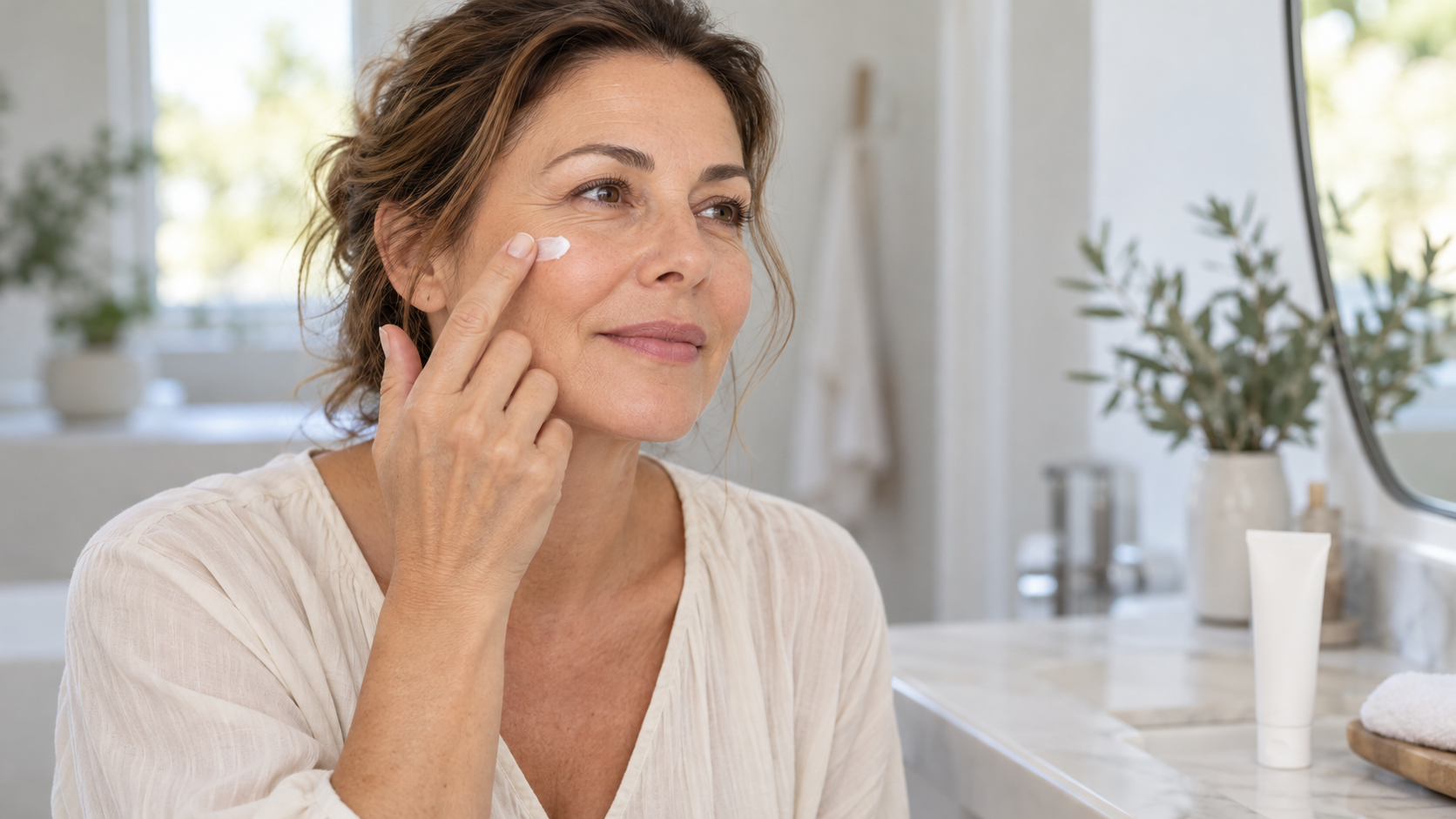
Maintaining the results depends on habits that support collagen production and slow collagen breakdown. Sun protection, regular moisturizing, following specialist recommendations, and avoiding smoking are the most effective protective strategies.
Each of the breakdown factors listed in the previous section can be managed through everyday lifestyle habits. Sun protection is the foundation of this strategy. Broad-spectrum sunscreens prevent ultraviolet rays from reaching the dermis. This protects the collagen remodeled through laser treatment from sun-induced breakdown. Flament (2013) emphasizes that most photoaging is caused by external factors and that these factors can be managed through behavioral changes.
Maintaining the skin’s moisture balance is also important. A well-hydrated skin barrier supports the epidermis’s repair functions. Moisturizing and restorative care products recommended by the specialist help sensitive skin recover and complete the remodeling process after laser treatment. In addition, regularly continuing the care sessions planned by the specialist helps build on the results.
When it comes to lifestyle, two habits are particularly critical. Smoking disrupts collagen metabolism in two ways, as demonstrated by Morita (2007). Excessive sun exposure and the use of tanning beds have a similar effect, diminishing the results. In people who avoid these two habits, laser brow lift results tend to be maintained for longer.
The effect does not disappear suddenly. The brow position and skin firmness gradually approach their pre-treatment levels over the course of several months. The natural aging process continues from where it left off.
Collagen is continuously produced and broken down in the skin. Matrix metalloproteinase enzymes are a natural part of this breakdown. Laser treatment temporarily increases the rate of production above the rate of breakdown. Over time, this balance reverses again as a result of aging. Skin laxity and brow drooping gradually return in steps so subtle that they may go unnoticed.
The speed of this return is largely related to protective habits. The effect lasts longer in skin that is protected from the sun, moisturized, and not exposed to smoking. When protective measures are neglected, the results may fade more quickly than expected. In either case, the process is gradual rather than sudden, and most people notice the change over a period of several months.
Yes, a laser brow lift can be repeated when necessary. However, the skin must heal completely before a new session. The specialist determines the treatment interval. Performing treatments more frequently than necessary does not provide additional benefits; on the contrary, it increases the risk of skin irritation.
Nonablative and fractional laser treatments work on the principle of controlled thermal injury. Each treatment initiates a new wound-healing cycle. Orringer (2010) demonstrated that even gradual, low-energy parameters can provide significant dermal remodeling. This finding supports the biological significance of repeated sessions. Nevertheless, each injury uses some of the skin’s repair capacity. For this reason, session intervals should be planned according to the skin’s recovery rate.
Individual factors determine whether treatment should be repeated. Age, skin type, the response to previous treatments, and the skin’s current condition are taken into consideration. Before planning a new treatment, the skin must have healed completely and any sensitivity must have subsided. Otherwise, overlapping thermal damage increases the risk of unwanted effects such as temporary discoloration and irritation.
Yes, there is a significant difference. A surgical brow lift mechanically repositions the deeper tissues, and its effects generally last for years. A laser brow lift improves skin quality and firmness, but its effects are shorter-lasting and more moderate.
Comparison factor | Laser brow lift | Surgical brow lift |
Mechanism of action | Controlled heat damage that stimulates collagen production | Incision and repositioning of tissue and muscles |
Target | Skin quality, firmness, and mild positional correction | Pronounced brow drooping and tissue sagging |
Duration of effect | An average of 6 to 24 months | Generally, several years |
Recovery process | From a few days to several weeks | May take several weeks |
Who it is suitable for | Those who do not want surgery and have mild drooping | Those experiencing advanced sagging |
The recovery processes for the two methods are also fundamentally different. With laser treatment, returning to social activities generally begins within a few days. With surgery, swelling and the healing of incision marks take several weeks. Expectations for the results also differ. Laser treatment is expected to provide subtle improvements, a revitalized appearance, and enhanced firmness. Surgery, on the other hand, is expected to produce a pronounced and lasting change in position.
This difference means that the two methods are not competitors but complementary options. Laser brow lift is a powerful option for people experiencing mild brow drooping and skin laxity who do not wish to undergo surgery. For those with advanced tissue sagging, surgical evaluation is more likely to provide realistic results.
The most common side effects are temporary. Redness, swelling, and a feeling of tightness in the skin diminish within a few days. Serious complications are rare. If unexpected symptoms occur, it is important to consult a healthcare professional.
Time frame | Possible effects |
First 1 to 3 days | Redness, mild swelling, a sensation of warmth |
First week | Mild skin peeling, dryness, tightness |
First 2 to 4 weeks | Rarely, temporary changes in skin color |
Temporary redness and sensitivity are natural responses to thermal energy. Swelling and a feeling of tightness also fall into the same category. These symptoms are managed with cooling applications and the care recommended by the specialist. Rare complications may include infection, blister formation, and permanent changes in skin color. If such symptoms occur, the treating specialist should be consulted without delay.
A natural appearance is maintained by planning the brow position in harmony with the overall anatomy of the face. Excessive lifting may weaken the muscles responsible for facial expressions and create an unnatural appearance. Personalized planning is the most effective way to minimize this risk.
The brow is not merely a superficial line. It is a dynamic structure shaped by the movement of the forehead muscles and forms the framework of the aesthetics of the eye area. When planning a laser brow lift, the brow's starting point, highest point, and tail position should be assessed in proportion to the distance between the eyes and the width of the forehead. When these proportions are taken into account, the result appears harmonious with the individual's own facial architecture.
An excessively lifted brow appearance is one of the most common aesthetic mistakes. A rise that exceeds the natural curve of the brows can create a surprised and tired expression. Existing literature emphasizes that the periorbital region is extremely sensitive even to millimetric changes (Kumar 2026). Therefore, the aim of treatment is not maximum lifting, but the right amount of lifting.
Laser brow lifting is suitable for individuals with mild brow drooping, moderate skin laxity, and those who do not want a surgical procedure. For individuals experiencing significant tissue sagging, different treatment options should be evaluated.
The ideal candidate profile is based on three conditions. The first is that the brow drooping is mild or moderate. The second is the expectation of a more refreshed, dynamic appearance around the eyes. The third is the individual's preference for non-surgical methods. When these three conditions are present together, laser brow lifting provides a strong balance between expectations and results.
Laser treatment alone may be insufficient for individuals with significant tissue sagging, advanced eyelid drooping, or deep forehead wrinkles. In such cases, surgical options or combined protocols should be considered. The decision is determined by a personalized examination.
The following questions cover the topics most frequently asked by people searching for information. The answers are provided in a direct and realistic framework.
No, it is not permanent. Since the effect is based on new collagen production, it gradually decreases as production slows down. Results are maintained for an average of 6 to 24 months.
Although it varies from person to person, the most frequently observed range is 6 to 24 months. Skincare, sun protection, and smoking habits determine this range.
Yes. Regular sun protection, moisturizing, following expert recommendations, and avoiding smoking extend the duration of the effect.
Yes. A new session can be planned after the skin has fully healed. The specialist determines the interval between sessions.
Aging reduces the rate of collagen production and increases the rate of breakdown. Goldberg (2004) showed that the response to treatment decreases with advanced age. Therefore, age is the strongest determinant of the duration of the effect.
No, it cannot replace it. The two methods address different needs. Laser treatment is more suitable for mild drooping, while surgery is more appropriate for advanced sagging.
The duration of the effect of laser brow lifting depends on the technology used, skin characteristics, the rate of aging, and lifestyle. No standard duration applies to everyone. Realistic expectations are essential for satisfaction.
Scientific evidence reveals three clear conclusions. First, the mechanism of action is based on collagen remodeling, a process that develops over several weeks. Second, the effect is not permanent and gradually diminishes over time. Third, personal factors such as sun protection and avoiding smoking are the strongest variables determining how long the results last.
Laser eyebrow lifting can deliver a strong result in the right candidate with realistic expectations. However, generalizations made without an individualized assessment can be misleading. The treatment decision should be made based on the opinion of a specialist who evaluates the anatomy of the face.
Beigvand, Hossein Homaei, et al. "Assessment of Laser Effects on Skin Rejuvenation." Journal of Lasers in Medical Sciences, volume 11, 2020.
Flament, Frederic, et al. "Effect of the Sun on Visible Clinical Signs of Aging in Caucasian Skin." Clinical, Cosmetic and Investigational , volume 6, 2013, pages 221-232.
Goldberg, David J. "Nonablative Facial Remodeling: Erythema Reduction and Skin Tightening." Archives of , volume 140, number 11, 2004.
Kumar, Niketa, et al. "Use of High-Intensity Focused Ultrasound in the Periorbital Rejuvenation: A Systematic Review." Surgery, 2026.
Morita, Akimichi. "Tobacco Smoke Causes Premature Skin Aging." Journal of Science, volume 48, number 3, 2007, pages 169-175.
Oh, Won Jong, et al. "Effect of High-Intensity Focused Ultrasound on Eyebrow Lifting in Asians." Photobiomodulation, Photomedicine, and Laser Surgery, volume 39, number 4, 2021.
Orringer, Jeffrey S., et al. "Molecular Mechanisms of Nonablative Fractionated Laser Resurfacing." Journal of the American Academy of , volume 63, number 5, 2010.