Yükleniyor…

Yes, Ulthera can tighten the skin and define the contour in cases of jawline loss caused by mild to moderate skin laxity. However, this method does not alter the bone structure and cannot resolve advanced sagging on its own. Results vary depending on individual skin structure, the aging process, and lifestyle (Alam et al. 2010).
The jawline is the most important contour separating the lower and lateral regions of the face. As aging progresses, collagen and elastin fibers in the skin decrease. This causes the skin to become thinner and lose its firmness. Laxity in the lower face leads to sagging along the jawline and a blurred transition in the neck area. At this point, Ulthera is one of the notable non-surgical options. Using microfocused ultrasound energy, it targets the tissues beneath the skin and supports the body's natural collagen production (Laubach et al. 2008).
Ulthera increases firmness through focused ultrasound energy that reaches the deeper layers of the skin. This effect makes the jawline appear sharper and more defined. It strengthens the skin's supportive tissue without affecting the bone structure (White et al. 2007).
Surgical facelifting involves incising the skin, removing excess tissue, and suspending the tissues. Ulthera, by contrast, activates the skin's own repair mechanism without incisions. This fundamental difference also distinguishes the target groups for the two methods. Surgical procedures provide powerful results for advanced sagging. Ulthera gradually increases skin firmness in cases of mild to moderate laxity (Alam et al. 2010). If a person wants a non-surgical process and accepts that the improvement will progress gradually over several months, this method may be a more suitable option. Expectations should focus on supporting the face's natural contours, not on promising a definitive anatomical transformation.
The device focuses ultrasound waves at specific depths beneath the skin. This focusing creates controlled points of heat. The heat activates fibroblasts and triggers the synthesis of new collagen (Kennedy 2005).
Microfocused ultrasound delivers energy to deep tissues without damaging the skin's surface. The energy creates small points of coagulation in the skin's supportive layers. These points generate a targeted tissue response. The body initiates its natural healing process to repair these micro-regions. During this process, new collagen fibers are produced and the existing collagen network is reorganized (Laubach et al. 2008). Real-time ultrasound imaging enables the practitioner to see the target tissue on the screen. This allows the energy to be delivered accurately to the depth and layer required by the skin. This precision supports the safety profile of the procedure (Gliklich et al. 2007).
Mild to moderate skin laxity, early-stage sagging along the jawline, and soft-tissue laxity in the area beneath the chin are the concerns that respond best to this treatment. Fat accumulation and advanced sagging require a different evaluation (Suh et al. 2011).
Concern | Effect on Appearance | Treatment Response |
Lower-face skin laxity | Contour becomes less defined | Generally good |
Submental laxity | Transition between the neck and face becomes blurred | Generally good |
Early jawline sagging | Bulky appearance beneath the cheeks | Moderate |
Advanced sagging and significant fat accumulation | Pronounced double-chin appearance | Limited |
Loss of firmness in the lower face reduces the definition of the jawline. Sagging skin beneath the chin softens the transition between the neck and jawline. The neck and jawline should be assessed together. Focusing on a single area may cause the overall contour to be overlooked. Not every concern responds to treatment in the same way. Therefore, clinical examination should be the basis for treatment planning.
It is suitable for individuals with mild to moderate skin laxity who do not want surgery and expect gradual results. Age alone is not a determining criterion. Skin quality and the degree of sagging are the decisive factors (Fabi 2015).
During skin assessment, suitable candidates typically show mild sagging and good elasticity. The skin has not yet developed significant excess. This group achieves the best results from the skin-tightening effect. Individuals who prefer a non-surgical process should have realistic expectations. The change does not happen overnight; it appears gradually over several months. As age advances, the skin’s capacity for repair decreases. However, age alone does not determine the difference between a younger and an older patient. Individual tissue characteristics and the physician’s clinical assessment are the primary considerations.
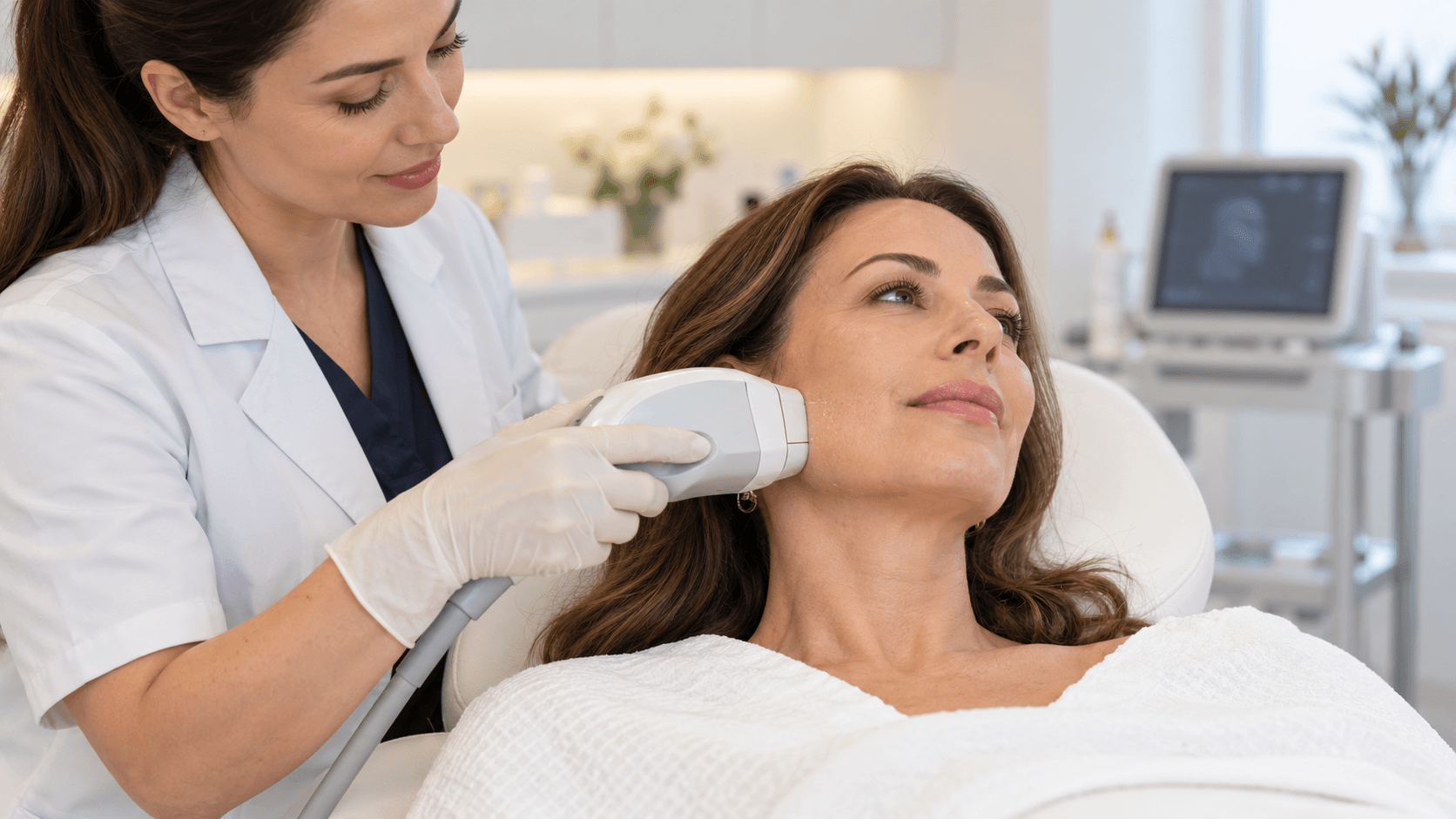
Before the treatment, the skin is cleansed and ultrasound gel is applied. The practitioner visualizes the target tissues and then delivers the energy in a controlled manner. Mild redness and tenderness may occur after the treatment, and most people return to their daily routine shortly afterward (Suh et al. 2011).
During the initial assessment, skin laxity, facial contours, and the patient’s expectations are evaluated. The physician assesses the layers of the skin and develops the treatment plan accordingly. During the procedure, the patient may experience warmth, tingling, or a feeling of deep pressure. These sensations vary depending on the treatment area and energy level. Mild redness, swelling, or tenderness to the touch may occur after the procedure. These symptoms generally resolve quickly and vary from person to person.
The first noticeable changes may appear early after the treatment. Visible results become more pronounced after approximately 2–3 months as collagen remodeling takes place. The effect may generally last 1–2 years (Alam et al. 2010).
Period | Possible Development |
First few days | Mild tightening sensation, temporary redness |
2–6 weeks | First visible signs of tightening |
2–3 months | Period when results become more pronounced |
6 months and beyond | The effect may continue to develop in some patients |
Collagen production begins within a few weeks, but new fibers take time to form and mature. Therefore, patience is a natural part of the treatment. The longevity of the effect is determined by skin structure, age, sun exposure, and lifestyle. Healthy habits may help support the duration of the results.
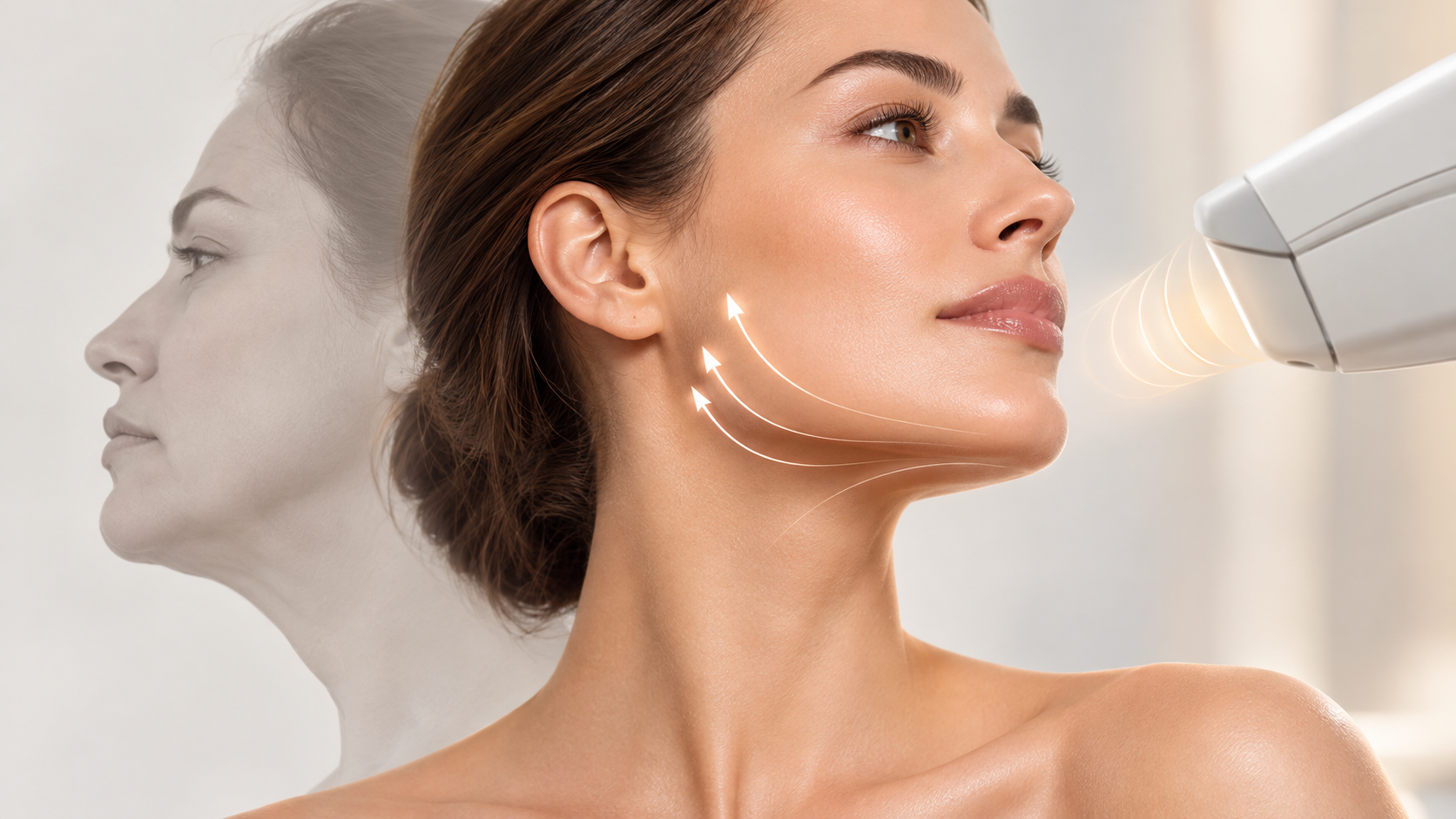
In the profile view, assess the definition of the jawline, the reduction in laxity beneath the chin, and the transition between the neck and face. Taking photographs in the same lighting and from the same angle is essential for reliable comparison.
In a proper before-and-after assessment, lighting, angle, and facial position are kept consistent. Comparisons made without ensuring this consistency may be misleading. Improvement in skin firmness occurs as the supporting tissue becomes stronger. This does not represent a change in the bone structure of the face. These two conditions should not be confused in photographs. In addition, a single photograph does not prove the overall effectiveness of the treatment. Results vary from person to person, and this is completely natural.
No, a pronounced double chin is primarily associated with fat accumulation, and Ulthera does not eliminate this fat. In cases of advanced skin laxity, the effects of non-surgical methods may be limited (Fabi 2015).
Skin laxity and the accumulation of fatty tissue are different problems. The skin-tightening effect does not mean a reduction in fat volume. This distinction is critically important for setting realistic treatment expectations. In cases of advanced sagging, a facelift, neck lift, or other treatments targeting fatty tissue may be considered. An expert examination determines which option is appropriate. The same treatment combination is not suitable for every patient.
Each method targets a different concern. Ulthera supports collagen production beneath the skin. Fillers compensate for volume loss. Fat-reduction treatments target fat beneath the chin. Surgical lifting provides comprehensive correction in cases of advanced sagging.
Method | Target | Does It Require Surgery? | Duration of Results |
Ulthera | Skin firmness and contour | No | Approximately 1–2 years |
Dermal filler | Volume loss and support | No | Several months to several years |
Fat-reducing treatments | Submental fat accumulation | No | Permanent fat reduction is intended |
Surgical face and neck lift | Advanced sagging and excess tissue | Yes | Long-lasting |
The choice should be based on the primary aesthetic concern. If the issue is skin laxity, a tightening approach takes priority. If the issue is volume loss, supportive options may be considered. If the issue is fat accumulation, a different plan is required. Therefore, an accurate diagnosis is the first step toward the right result.
Sun protection, regular skin care, and avoiding smoking directly contribute to maintaining results. The timing of follow-up examinations and any potential repeat treatments is determined through individual assessment (Flament et al. 2013).
Ultraviolet radiation causes breaks in collagen fibers and accelerates skin aging. Sun protection is therefore both a preventive and protective habit. A skin care routine suited to your skin type supports the skin barrier. Smoking, on the other hand, impairs skin oxygenation and damages the elastin structure (Koh et al. 2002). These habits directly affect the longevity of results during the post-treatment period. Follow-up appointments planned according to the physician’s recommendations help determine whether repeat treatment is needed.
The most frequently asked questions concern the definition of the results, their effect on the appearance of a double chin, the time needed to return to daily life, the number of sessions, and comparison with surgery. The answers below are based on findings from the scientific literature.
It may improve contour loss caused by skin laxity. However, it cannot create a sharply defined jawline for everyone. The individual’s initial tissue structure limits the result (Alam et al. 2010).
Improved skin firmness may help enhance the appearance beneath the chin. However, the underlying fat accumulation contributing to a prominent double chin should be evaluated separately. The treatment does not dissolve fat tissue.
Most people can return to their normal activities shortly after the procedure. Temporary symptoms such as mild redness or sensitivity may occur. These symptoms generally subside within a few days (Suh et al. 2011).
The number of sessions is determined according to the device protocol, the size of the treatment area, and individual needs. While some people achieve a sufficient response after a single session, additional sessions may be planned for others. This decision is made after the examination.
No. Ulthera provides nonsurgical and more limited tightening. Surgical methods may produce more comprehensive results in cases of advanced sagging. The target groups and scale of results differ between the two methods.
No. The degree of skin laxity, age, tissue characteristics, and individual healing response affect the results. Therefore, two people should not be expected to benefit to the same extent from the same treatment (Fabi 2015).
Alam, Murad, et al. "Ultrasound tightening of facial and neck skin: a rater-blinded prospective cohort study." Journal of the American Academy of , 2010.
Fabi, Sabrina G. "Noninvasive skin tightening: focus on new ultrasound techniques." Clinical, Cosmetic and Investigational , 2015.
Flament, Frederic, et al. "Effect of the sun on visible clinical signs of aging in the skin." Clinical, Cosmetic and Investigational , 2013.
Gliklich, Richard E., et al. "Clinical pilot study of intense ultrasound therapy to deep dermal facial skin and subcutaneous tissues." Archives of Facial Plastic Surgery, 2007.
Kennedy, James E. "High-intensity focused ultrasound in the treatment of solid tumours." Nature Reviews Cancer, 2005.
Koh, James S., et al. "Cigarette smoking-associated elastotic changes in the skin." Journal of the American Academy of , 2002.
Laubach, Hey-Kyoung, et al. "Intense focused ultrasound: evaluation of a new treatment modality for precise microcoagulation within the skin." Lasers in Surgery and Medicine, 2008.
Suh, Dong-Hye, et al. "Intense focused ultrasound tightening of the face and neck: a prospective, open-label, multicenter trial." Lasers in Surgery and Medicine, 2011.
White, William M., et al. "Selective creation of thermal injury zones in the superficial musculoaponeurotic system using intense ultrasound therapy." Lasers in Surgery and Medicine, 2007.