Yükleniyor…

The effect of the French Thread Lift generally lasts between 12 and 24 months. This duration varies depending on the suspension material used, the application technique, the effects of age on the skin, and the individual’s lifestyle. The procedure does not stop aging; it preserves the mechanical lifting effect and the collagen response it triggers for a certain period. Scientifically, it is not possible to provide an exact date, as the duration of the results is unique to each individual (Kaminer et al., 2008).
French Thread Lift is an increasingly researched topic in the field of medical aesthetics. This article examines the duration of the method’s effects, how the results change over time, and the scientific factors that determine longevity in light of current evidence.
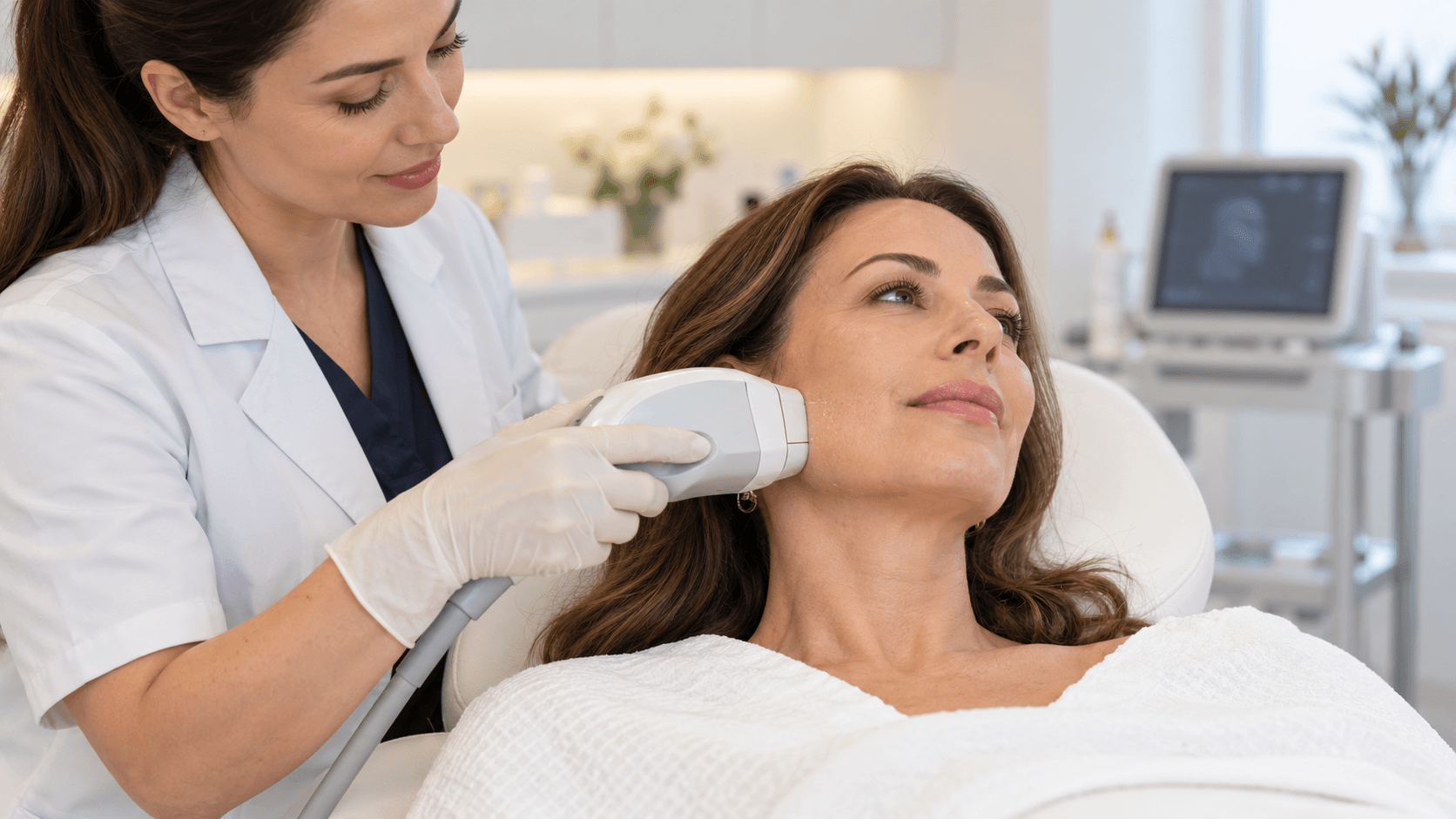
A French Thread Lift is a non-surgical facelift method that supports facial tissues upward by placing specialized threads beneath the skin. Its effect is achieved through the mechanical lifting of the threads and the collagen production they stimulate in the surrounding tissue.
The French Thread Lift is one of the best-known procedures among thread lift methods. During the procedure, thin, mostly absorbable threads are placed beneath the skin. These threads support sagging soft tissue upward. A tighter appearance is targeted in areas such as the cheeks, jawline, and facial oval.
The method’s basic mechanism consists of two stages. In the first stage, the threads provide physical support. In the second stage, the healing response that begins around the threads stimulates the formation of new connective tissue within the tissue (Wu et al., 2019). This second effect supports the duration and quality of the results.
Compared with a traditional surgical facelift, the French Thread Lift is minimally invasive. It does not require incisions. General anesthesia is usually not necessary. The recovery process is also much shorter than that of surgery. However, these advantages come with a limitation in terms of lifting capacity. A French Thread Lift cannot reposition as much tissue as surgery can.
Understanding this fundamental difference is essential before evaluating the duration of the effect. This is because the limits of the result the method can provide also determine how long it can last.
The literature reports that the results of a French Thread Lift can last between 12 and 24 months. In some cases, the effect may last for a shorter period, while in others it may persist longer. The longevity of the results depends on the type of suspension material, the application technique, and the individual’s tissue characteristics (Suh et al., 2015).
Scientific studies show that the duration of effect of thread lift procedures varies widely. Kaminer et al. reported that the effects of lifting procedures performed with barbed threads lasted for several years (Kaminer et al., 2008). Suh et al. reported similar durations of results for knotless procedures performed with polydioxanone (PDO) threads (Suh et al., 2015).
It is important to distinguish between two concepts here:
Concept | Meaning |
Permanent result | The effect never fading; this is not scientifically possible for this method |
Long-lasting result | The effect being maintained for 12 to 24 months or longer; this is possible and depends on the individual |
The procedure does not stop the aging process. Skin elasticity continues to decrease over time. In addition, the effects of gravity persist. Therefore, the French Thread Lift maintains the lifting effect achieved; however, it does not freeze biological aging.
This distinction raises the next question: how do the results evolve over time?
The mechanical lifting effect visible immediately after the procedure develops into a more natural appearance over the course of several weeks as the swelling subsides. The results change gradually because the threads integrate with the tissues while the natural aging process continues.
Swelling occurs during the initial post-procedure period. The face may appear fuller in the first few days. Swelling decreases within the first one to three weeks. Facial contours become more natural. The appearance during this period does not reflect the final result.
In the subsequent period, two processes occur simultaneously. The first is the integration of the threads with the surrounding tissues. This process strengthens tissue support. The second is the formation of new connective tissue triggered by the healing response that develops around the threads. This biological response supports the quality of the result (Wu et al., 2019).
Over time, approximately twelve to twenty-four months later, the mechanical support provided by the threads begins to decrease. This decline is not sudden. Facial tissues gradually return to the natural aging process. The result slowly becomes different from the initial appearance.
Understanding this evolution of the result requires identifying which factors determine its longevity.
The main factors determining longevity are age, skin quality, the degree of sagging, suspension material, the practitioner's experience, and lifestyle. None of these determines the outcome alone; they all work together.
The factors affecting longevity can be summarized as follows:
Factor | Mechanism of Effect |
Age and skin elasticity | Young, elastic skin maintains the support of the threads for longer |
Collagen production | A strong connective tissue response supports tissue firmness |
Soft tissue volume | Excessive sagging places strain on the thread support |
Suspension material | Absorbable threads gradually disappear over time; therefore, their longevity is limited |
Application technique | Proper planning and placement in the correct tissue layer determine the outcome |
Smoking | Impairs tissue oxygenation and accelerates skin aging (Kadunce et al., 1991) |
Sun exposure | UV rays increase collagen breakdown (Fisher et al., 1997) |
Weight fluctuations | Fluctuations in facial volume affect contours |
Post-procedure care | Following the follow-up plan recommended by the physician helps maintain the result |
Among these factors, lifestyle is the category over which patients have the most control. Therefore, maintaining results for a longer period is possible through patient-related factors. We will return to this topic in a separate section.
First, it is necessary to examine which areas of the face show more noticeable results with the technique. This is because the treatment area also affects how long the results last.
A French Thread Lift produces more noticeable results for mild to moderate sagging in the cheeks, along the jawline, and in the facial oval. Its effect remains limited in cases of advanced sagging.
The cheek area is one of the regions that responds best to thread support. In cases of mild to moderate sagging, the threads can lift tissue volume upward. Along the jawline, the contour may become more defined. The facial oval can be reshaped through the combination of these two effects.
A reduction in the appearance of laxity in the nasolabial area may also be achieved. In the neck and lower face, however, the result depends more heavily on the patient's tissue characteristics. Suitable patients may benefit from support, but the degree of improvement is not the same for everyone.
In cases of advanced tissue sagging, the threads cannot support the excess tissue load. In these situations, the likelihood of an inadequate result is high. This limitation makes it necessary to compare the technique with surgical options.
A surgical facelift directly repositions excess skin and soft tissues, and the results generally last between 7 and 10 years. A French Thread Lift provides a more limited lift, and its effect lasts between 1 and 2 years. The two methods are intended for different patient groups.
Let us compare the two methods:
Feature | French Thread Lift | Surgical Facelift |
Lifting strength | Limited, supportive | Strong, repositioning |
Duration of results | 12 to 24 months | 7 to 10 years |
Recovery time | A few days | A few weeks |
Anesthesia | Local | General or deep sedation |
Suitability for advanced sagging | Low | High |
The French Thread Lift is suitable for individuals with mild sagging who expect a short recovery period. Surgical facelift procedures provide more effective results for patients with advanced signs of aging, excess skin, and significant tissue laxity (Lee and Isse, 2005).
This comparison is critical for managing expectations. If a patient expects surgical-level longevity from a thread procedure, the result may be disappointing. Realistic expectations are the key to a successful procedure.
The second effect provided by the French Thread Lift—the collagen response—makes this comparison even more interesting. The technique is not merely a mechanical support.
Thread lifts trigger a controlled healing response beneath the skin. This response stimulates fibroblasts to produce new collagen. Collagen supports the skin’s firmness and appearance. However, this biological effect does not completely stop the aging process.
Collagen is the primary structural protein of skin tissue. Its production decreases with age. UV exposure also accelerates collagen breakdown (Fisher et al., 1997). The French Thread Lift initiates a tissue response in the area where the threads are placed. This response contributes to the formation of new connective tissue (Wu et al., 2019).
The mechanical lifting effect and the biological effect are distinct. The mechanical effect results from the physical position of the thread. The biological effect comes from the tissue’s own repair process. Together, they provide both immediate and gradual improvement.
Collagen production supports the results; however, this support also decreases over time. The procedure does not stop the biological clock of aging. This fact raises the question of what happens to the face when the effect diminishes.
The lifting support provided by the threads gradually decreases over time. Facial tissues return to the natural aging process. This transition is not sudden; it is gradual. The face does not necessarily have to return exactly to its pre-procedure appearance.
The support provided by the threads decreases as the threads are absorbed or as the tissues loosen. This reduction becomes noticeable over several months. Skin elasticity also continues to decline during the same period. When these two processes combine, gradual loosening of the face becomes apparent.
The important point is this: the result does not disappear all at once. The face may not return completely to its pre-procedure condition. This is because the stimulated collagen response may leave a lasting improvement in tissue quality (Wu et al., 2019). This factor influences the decision to undergo a second treatment.
Yes, it is possible. Sun protection, quitting smoking, a balanced diet, stable weight, and regular care can extend the duration of the results.
The impact of lifestyle factors has been demonstrated. Flament and colleagues showed that sun exposure is one of the most important external causes of skin aging (Flament et al., 2013). Sun protection slows collagen breakdown. This also extends the lifespan of the thread support.
Smoking, on the other hand, impairs skin oxygenation. Kadunce and colleagues reported that smoking is an independent risk factor for premature facial wrinkling (Kadunce et al., 1991). Quitting smoking supports skin quality before and after the procedure.
The following are also important:
A balanced diet provides the raw materials needed for the skin’s repair processes.
Stable body weight prevents fluctuations in facial volume.
skin care strengthens the skin barrier and tissue quality.
Following the follow-up plan recommended by the physician supports the management of early-stage issues.
These measures extend the results; however, they do not make them permanent. Therefore, the question of repeat treatment arises.
Yes, the French Thread Lift can be performed again after the results diminish. The timing of renewal is determined on an individual basis. There is no fixed interval.
The need for a new treatment depends on the following factors: the degree of skin laxity, the patient’s age, and the results of the previous procedure. A new plan is created by taking into account the position of the previous threads and the current condition of the tissues.
Not every patient requires renewal at the same interval. Some patients are evaluated every two years, while others are assessed at longer intervals. The decision to renew can only be made following an individual examination. The examination evaluates tissue quality and the degree of sagging.
So, who is this method suitable for?
A French Thread Lift is suitable for individuals with mild to moderate facial sagging who do not want surgery, wish to define their facial contours, and have realistic expectations.
The ideal candidate profile includes the following characteristics:
Good skin quality.
An appropriate amount of soft tissue.
No advanced tissue sagging.
A preference for a method with a short recovery period.
No expectation of surgical-level longevity.
Suitability must be assessed through an examination. During the consultation, the patient’s goals, anatomical structure, and expectations are evaluated together. This assessment is essential for both the success of the procedure and patient satisfaction.
No, a permanent result cannot be expected. A French Thread Lift does not stop the aging process. Results change over time. A realistic expectation is for the effect to last 1 to 2 years and gradually diminish.
The expression "permanent facelift" is not scientifically realistic for thread lift procedures. Threads are made from absorbable or semi-permanent materials. This support gradually disappears over time. The natural aging process continues under all circumstances.
The best results are achieved by establishing realistic expectations based on the individual’s anatomy and goals. A French Thread Lift is not a substitute for a surgical facelift. However, with proper patient selection, it can provide a noticeable improvement without the need for surgery.
To what extent is this expectation supported by scientific evidence?
Scientific studies show that thread lift procedures are effective, but that the duration of results is limited and variable. Most studies report that the effect lasts between 12 and 24 months. The level of evidence is more limited than marketing claims suggest.
Kaminer and colleagues reported that the effect of procedures performed with barbed threads was long-lasting (Kaminer et al., 2008). Suh and colleagues reported high patient satisfaction and effects lasting longer than one year following knotless lifting with PDO threads (Suh et al., 2015). Lee and Isse evaluated the early results of midface lifting with barbed threads (Lee and Isse, 2005).
The common finding across these studies is that the duration of results depends on the follow-up period and the material used. Longevity may vary between different types of threads. However, no study claims that thread lift procedures provide surgical-level longevity.
Therefore, rather than giving patients a definitive duration, it is scientifically appropriate to present a variable range of outcomes that depends on individual factors.
Results are generally evaluated 4 to 6 weeks later, when swelling has completely subsided. The appearance during the early period does not reflect the final result. Follow-up appointments should be conducted according to the schedule determined by the physician.
In the early period after the procedure, swelling and tissue healing affect the result. Therefore, the appearance during the first few weeks is not the same as the final appearance. For evaluation, comparisons of photographs taken under standardized lighting conditions may be used.
It is also necessary to consult a physician in cases of unexpected pain, signs of infection, pronounced asymmetry, or changes in skin color. Although these findings are rare, early diagnosis facilitates management.
The most frequently asked questions concern the duration of the effect, the limits of its longevity, and when the procedure should be repeated. The answers are summarized below.
Yes, in many cases, the effect lasts 12 to 24 months. However, this duration depends on individual factors (Kaminer et al., 2008).
Mechanical support gradually decreases over time. However, the collagen response that is stimulated may leave a lasting improvement in tissue quality.
No. The procedure does not slow the aging process; it only provides a temporary lifting effect.
Repeating the procedure may be considered when the results have noticeably diminished. There is no fixed timeframe; the decision is made following an examination.
No. Surgical results last 7 to 10 years. The results of a French Thread Lift last 1 to 2 years.
It gradually approaches its pre-procedure appearance; however, it does not necessarily become exactly the same.
Yes. Sun protection, quitting smoking, and maintaining a stable weight may extend the duration of the results.
The duration of the results of a French Thread Lift depends on individual characteristics and the conditions of the procedure. The effect lasts between 12 and 24 months. The mechanical lifting effect and the collagen-supported biological effect are distinct from one another. Results diminish over time due to natural aging. Rather than relying on a definitive timeframe for longevity, realistic expectations should be established based on scientific evidence and individual assessment.
The key points highlighted in this article are as follows. A French Thread Lift holds an important place among non-surgical facial rejuvenation methods. Its effect results from a combination of mechanical support and the biological tissue response. The duration of the results varies; however, scientific studies support a range of 1 to 2 years (Suh et al., 2015; Wu et al., 2019). The procedure does not stop aging. However, with appropriate patient selection, realistic expectations, and lifestyle modifications, the longevity of the results can be extended.
Fisher, Gary J., et al. "Pathophysiology of Premature Skin Aging Induced by Ultraviolet Light." New England Journal of Medicine, vol. 337, no. 20, 1997, pp. 1419–1428.
Flament, Frederic, et al. "Effect of the Sun on Visible Clinical Signs of Aging in Caucasian Skin." Clinical, Cosmetic and Investigational , vol. 6, 2013, pp. 221–232.
Kadunce, Daniel P., et al. "Cigarette Smoking: Risk Factor for Premature Facial Wrinkling." Annals of Internal Medicine, vol. 114, no. 9, 1991, pp. 840–844.
Kaminer, Michael S., et al. "Long-Term Efficacy of Anchored Barbed Sutures in the Face and Neck." Surgery, vol. 34, no. 8, 2008, pp. 1041–1047.
Lee, So Jung, and Norman G. Isse. "Barbed Polypropylene Sutures for Midface Elevation: Early Results." Archives of Facial Plastic Surgery, vol. 7, no. 1, 2005, pp. 55–61.
Suh, Dong Hye, et al. "Outcomes of Polydioxanone Knotless Thread Lifting for Facial Rejuvenation." Surgery, vol. 41, no. 6, 2015, pp. 720–725.
Wu, Woffles T. L., et al. "Thread Lift for Facial Rejuvenation: Assessment of Long-Term Durability." Aesthetic Plastic Surgery, vol. 43, 2019, pp. 78–83.