Is Laser Brow Lift a Safe Procedure?
Laser brow lifting is a non-surgical aesthetic procedure considered safe when performed with appropriate patient selection, suitable device parameters, and by an experienced practitioner. Scientific literature shows that laser-based skin tightening methods have a low rate of serious complications (Graber et al. 2008). However, no medical procedure is entirely risk-free. The safety outcome depends on the compatibility between the technology used, the treatment protocol, and the individual’s skin characteristics.
The safety profile of this method is based on its underlying biological mechanism. Laser brow lifting involves the device delivering controlled heat energy to the skin. This energy stimulates the skin’s own collagen production mechanism. Without adding any external substance, the skin uses its own tissue repair processes. For this reason, the procedure is considered one of the options with high biocompatibility among non-surgical aesthetic treatments.
Four key factors determine the safety of the procedure. The first is whether the laser technology used is suitable for the skin type. The second is the correct adjustment of the energy level and wavelength. The third is the practitioner’s experience with laser physics and facial anatomy. The fourth is the individual’s skin structure, health status, and healing capacity. If any of these four variables is neglected, the risk of side effects increases.
For this reason, a detailed assessment of the individual’s medical history is essential before the procedure. Chronic diseases, medications being used, and previous skin problems directly affect treatment planning. A comprehensive preliminary evaluation is the first and most important step toward a safe laser brow lifting experience.
How Does Laser Brow Lifting Work?
Laser brow lifting is based on the principle that laser energy reaches the dermal layer of the skin and creates a controlled thermal effect. The light energy produced by the device is converted into heat in the target tissue through the principle of selective photothermolysis. This principle ensures that light at a specific wavelength is absorbed only by the target structure (Anderson and Parrish 1983). The surrounding tissues are thereby protected.
The heat reaching the dermis stimulates the fibroblast cells located there. Fibroblasts are the cells that produce collagen and elastin fibers, which provide the skin’s structural support. Fibroblasts that detect the thermal stimulus begin synthesizing new collagen. Histological studies have documented the formation of new collagen fibers in the dermis following thermal stimulation (Zelickson et al. 2004).
Newly formed and tightened collagen fibers strengthen the skin’s support network. As a result of this strengthening, the skin around the eyebrows takes on a firmer appearance. The position of the eyebrow may move upward by a few millimeters as the underlying supporting tissue tightens. This mechanism provides the fundamental scientific basis explaining the effect of laser skin-tightening treatments.
What Changes Does Laser Energy Create in the Skin?
Laser energy initiates a two-stage chain of changes in the skin. In the first stage, collagen fibers exposed to heat contract immediately. In the second stage, the skin enters a renewal process lasting several weeks. These two stages explain the early and long-term results of the procedure.
The response of collagen fibers to heat is a physical property. The fibers contract at temperatures of approximately 60 degrees and above. This contraction creates the initial tightening effect felt during the application. The controlled thermal effect is managed through device settings that prevent this threshold from being exceeded.
The effect of heat also triggers the skin’s natural repair mechanism. The skin perceives controlled microdamage as a healing signal. Blood circulation increases, growth factors are released, and fibroblast activity rises. Fractional laser technology studies have shown that healthy tissue surrounding microscopic thermal zones supports rapid healing (Manstein et al. 2004).
There is a clear difference between the initial tightening effect and the long-term result. The tightness seen immediately after the procedure is caused by collagen contraction and is partly temporary. The actual lasting effect becomes apparent with the formation of a new collagen network over three to six months. Therefore, a patient follow-up period with patience is necessary to evaluate the final result.
What Are the Safety Advantages of Laser Brow Lift Compared with Surgical Methods?
The most notable advantage of laser brow lift over surgical methods is that it does not require incisions or sutures. Since the integrity of the skin is preserved, the risks of open-wound infection, suture marks, and scar formation are eliminated. In most cases, the individual can return to daily life on the same day.
Surgical brow lift involves a different process. General anesthesia or sedation is administered with this method. The surgeon makes incisions within the hairline or in the forehead area. Releasing and repositioning the tissues entails a surgical healing process. During this period, effects such as bruising, swelling, and numbness may last for several weeks.
The safety advantages of the two methods can be summarized as follows:
Comparison Criterion | Laser Brow Lift | Surgical Brow Lift |
Anesthesia requirement | Generally no; a local cream is sufficient | General anesthesia or sedation |
Incisions and sutures | None | Present |
Risk of infection | Very low | Present due to the open wound |
Recovery time | 1 to 3 days | 2 to 4 weeks |
Duration of effects | 1 to 2 years | 5 to 10 years |
Suitable degree of brow ptosis | Mild to moderate | Moderate to advanced |
The final two rows of the table show that the choice is not solely about safety. The laser method is an effective and sufficient option for mild brow ptosis. In cases of advanced sagging, skin tightening alone does not provide adequate results. In such cases, surgical methods offer a more lasting and pronounced correction.
One final warning is important. Being less invasive does not mean that the procedure is completely risk-free. The safety of laser brow lifting depends on the correct device settings and proper patient selection. Understanding this fact is the basis for having realistic expectations.
What Are the Differences Between Laser and Endoscopic Brow Lifting?
Laser brow lifting tightens the skin, whereas endoscopic brow lifting surgically repositions the tissues. This fundamental difference distinguishes the two methods in terms of their application, risk profile, and recovery process.
With the endoscopic method, the surgeon makes several small incisions just behind the hairline. A slim camera inserted through one of the incisions makes the tissues in the forehead region visible on a screen. Guided by these images, the surgeon releases the muscles and connective tissue. The brow is moved to the desired position and secured in its new location with small fixation materials. This technique is based on detailed work involving forehead anatomy (Knize 1998).
Laser treatment, on the other hand, does not involve any incisions. The device handpiece is moved across the skin’s surface, and the energy is focused on the dermal layer. The aim is not to reposition the tissue, but to improve the quality and firmness of the existing tissue.
The two methods fall into different categories in terms of risk and recovery. An endoscopic procedure involves anesthesia, work near nerve regions, and a surgical recovery period. Laser treatment, by contrast, is limited to superficial skin reactions, and the individual can return to their normal routine within a few days. The choice of method is determined by the physician according to the degree of brow drooping and the individual’s expectations.
What Are the Possible Side Effects and Risks of Laser Brow Lift?
The most common side effects of a laser brow lift are temporary and resolve spontaneously within a few days. Redness, mild swelling, and a sensation of heat in the skin are among them. Large-scale studies have shown that the rate of permanent complications in fractional laser treatments remains below one percent (Graber et al. 2008).
The severity and duration of side effects vary according to three factors. The technology of the device used, the way energy parameters are adjusted, and the individual’s skin sensitivity determine the course of the reaction. Two treatments performed with the same device may produce different responses in different skin types.
Early detection of rare complications directly affects the outcome. An unexpected reaction can be managed without scarring through early intervention. Delayed assessment, however, may lead to results that are difficult to correct. For this reason, post-treatment follow-up is an integral part of the safety process.
Are Redness, Swelling, and Skin Sensitivity Normal?
Yes, temporary redness and mild swelling after the treatment are considered normal. These symptoms indicate the skin’s physiological response to a controlled thermal effect. In most individuals, redness disappears within a few hours to two days.
Skin sensitivity or a sensation of warmth is also among the expected effects. Thermal energy may leave a sensation similar to sunburn on the skin’s surface. This sensation indicates that the skin’s repair process is active and generally decreases significantly within 48 hours. Clinical series have reported that the vast majority of these reactions resolve without complications with supportive care (Fisher and Geronemus 2005).
The distinction between what is normal and what requires attention is clear. Reactions that last longer than expected or progressively worsen require evaluation by a specialist. Intense redness lasting more than three days, increasing pain, or widespread edema are considered outside the normal course.
Can Laser Treatment Cause Burns or Pigmentation Changes?
Yes, incorrect energy settings may pose a risk of burns and lead to changes in skin color. This risk represents the most technically critical aspect of the treatment. High energy levels that are unsuitable for the skin type can breach the epidermis’s protective barrier and cause unwanted thermal damage.
Pigmentation changes can develop in two ways. Hyperpigmentation refers to darkening of the skin and occurs when melanin production increases following an inflammatory response. Hypopigmentation, on the other hand, refers to lightening of the skin and is associated with damage to melanocytes. Both conditions can largely be prevented through the selection of appropriate parameters (Alexiades-Armenakas et al. 2008).
Tanned and sun-exposed skin requires special attention. Tanning increases the amount of active melanin in the skin. High melanin levels cause laser energy to be absorbed undesirably at the surface. This increases the risk of burns and pigmentation changes. Therefore, postponing the procedure during the period following sun exposure is a fundamental precaution when considering the risks of laser brow lifting.
Can Laser Brow Lifting Damage the Nerves or Eyes?
With the correct application technique and eye protection, the risk of laser brow lifting damaging the nerves or eyes is extremely low. The factor that makes the risk manageable is the thorough implementation of protocols appropriate for the anatomy of the brow area.
The brow area is anatomically very close to the eye socket. This proximity requires special care during the procedure. The angle of the device handpiece, energy dose, and number of pulses are adjusted more precisely as the treatment approaches the edge of the eye socket. An experienced practitioner works with knowledge of the location of the vascular and nerve structures in the area.
Eye safety requires a separate protocol. Throughout the procedure, both the patient’s and the practitioner’s eyes are covered with protective equipment suitable for the laser wavelength. The device manufacturer’s safety instructions clearly define the type of eye protection and energy limits. In a clinical setting where these protocols are followed, reports of ocular damage are practically negligible.
A common misconception should also be clarified. The risks of frontal nerve damage reported in the literature on surgical brow lifting arise from the proximity of surgical incisions to the areas through which the nerves pass. These findings cannot be directly attributed to laser treatment. Since deep-tissue dissection is not performed during laser brow lifting, the mechanism of nerve injury does not apply.
Who Is Not a Suitable Candidate for Laser Brow Lifting?

Laser brow lifting is not suitable for everyone. Each person’s skin structure, immune response, and healing capacity are different. A treatment performed using the same parameters can produce different results in two different individuals.
Certain health conditions increase the likelihood of complications. These include diseases affecting the immune system, conditions that impair wound healing, and medications that increase the skin’s sensitivity to light. The presence of these conditions does not necessarily mean that the procedure must be ruled out; however, it does require the treatment plan to be modified.
For this reason, the answer to the question of who is suitable for laser brow lifting can only be determined through an individual assessment. A examination and review of the patient’s medical history form the scientific basis for determining suitability. The following subheadings address, one by one, the situations that require special attention.
Can Pregnant and Breastfeeding Women Undergo Laser Eyebrow Lifting?
There is insufficient scientific data regarding the safety of cosmetic laser procedures during pregnancy and breastfeeding. Therefore, the procedure is generally postponed until these periods have ended.
The reason for this restriction is not known harm, but a lack of evidence. For ethical reasons, it is not possible to include cosmetic procedures for pregnant and breastfeeding women in clinical studies. In an area where scientific data cannot be generated, a cautious approach is the only safe option. Assessments regarding skincare procedures during pregnancy also support the same principle of caution (Bozzo et al. 2011).
The practical approach is simple. Individuals who are pregnant or breastfeeding can reschedule the procedure after these periods have ended. Postponing the treatment does not prevent them from achieving their aesthetic goals without compromising their safety.
Can People with Skin Infections or Open Wounds Undergo the Procedure?
People with an active skin infection or an open wound cannot undergo the procedure until these conditions have healed. An infection in the treatment area may spread with laser energy or interfere with the healing process.
Active bacterial, viral, and fungal infections are contraindications to the procedure. A history of cold sores requires special consideration. The herpes simplex virus may reactivate in response to thermal stimulation. Open wounds, burns, and areas of active inflammation are also excluded from treatment. These are areas where controlled thermal effects may produce unpredictable results.
Postponement is not a permanent barrier. The patient can be reassessed once the skin has fully healed. The procedure is planned after the physician confirms that the infection has resolved and skin integrity has been restored. For individuals with a history of cold sores, the physician may consider preventive antiviral treatment before the procedure.
How Do Diabetes and Autoimmune Diseases Affect Laser Treatment?
Uncontrolled diabetes and active autoimmune diseases reduce the skin’s healing capacity and alter the risk profile of laser treatment. In these conditions, the decision is made individually based on how well the disease is controlled.
Uncontrolled diabetes causes problems through two mechanisms. High blood sugar impairs the function of small blood vessels and reduces oxygen delivery to the tissue. At the same time, the effectiveness of immune cells decreases. Together, these effects slow wound healing and increase the risk of infection. In people whose blood sugar remains well controlled, the risk is significantly reduced.
In autoimmune diseases such as lupus and scleroderma, the structure of the skin and its healing response are altered. Scleroderma causes thickening of the skin and fibrosis. In lupus, sensitivity to light is a characteristic of the disease itself, and laser light may trigger a serious flare-up. Disease activity and the immunosuppressive medications being used are evaluated in detail by the physician.
What Are the Risks for People Prone to Keloid Formation?
Laser treatment in individuals prone to keloid formation requires careful evaluation regarding the development of abnormal scarring. This predisposition is not an absolute contraindication to the procedure; however, it necessitates replanning the treatment parameters and expectations.
A keloid is a type of scar that extends beyond the boundaries of the wound and continues to grow. A hypertrophic scar remains within the wound area and may regress over time. Both conditions result from an excessive wound-healing response in the skin. The inflammatory and genetic mechanisms underlying this response have been described in detail in the scientific literature (Gauglitz et al. 2011).
A history of abnormal wound healing must be reported to the physician before the procedure. Raised scars that have developed in ear-piercing sites or along previous incisions are practical indicators of this predisposition. The physician performs an individualized risk assessment based on this information. In some cases, the skin’s response is observed with a low-energy test shot.
What Should Individuals Taking Isotretinoin or with Photosensitivity Be Aware Of?
Isotretinoin use and medications that cause photosensitivity are two issues that must be reported when planning laser treatment. Both conditions can alter the skin’s response to thermal energy.
Isotretinoin is a potent vitamin A derivative used to treat severe acne. The medication affects the skin barrier function and the rate of repair. In the past, individuals who had used this medication were advised to wait for extended periods before undergoing procedures. However, recent systematic reviews and consensus reports have indicated that this rule should be reconsidered. The decision should be based on the depth of the planned procedure and the physician’s assessment (Spring et al. 2017).
Photosensitizing substances constitute the second risk group. Certain antibiotics, blood pressure medications, and herbal supplements may increase the skin’s response to light. In addition to prescription medications, individuals should provide complete information about all vitamins and supplements they use. Medication-related risk is managed by evaluating the individual’s overall health and the laser system to be used together.
When Should Laser Brow Lift Treatment Be Postponed?
Some skin conditions do not constitute a permanent contraindication but require a healing period before the procedure. Sun exposure, recent skin-resurfacing treatments, and injectable procedures fall into this category.
The purpose of postponement is to bring the skin into the most suitable condition. Laser treatment performed on sensitized skin may lead to unpredictable reactions. By asking about the dates of recent aesthetic procedures and sun-exposure habits, the physician determines a safe treatment schedule. Establishing the correct timing is an important link in ensuring the safety of laser brow lift treatment.
How Do Sunbathing and Solarium Use Affect Laser Safety?
Sunbathing and solarium use directly affect laser safety by increasing the amount of active melanin in the skin. Treatment performed on tanned skin increases the risk of burns and pigmentation changes.
Tanning is the skin’s defensive response to ultraviolet light. Melanocytes produce more melanin, causing the skin to darken. Laser energy, on the other hand, is absorbed by melanin. High levels of melanin on the skin’s surface cause the energy to heat the surface before reaching the dermis. This weakens the desired deep effect and increases the risk of superficial burns.
The practical rule is clear. Treatment should be postponed until the skin returns to its natural tone. Using a high-SPF sunscreen and avoiding direct sun exposure during the pre-treatment period are standard parts of the planning process. The safe application of the principle of selective photothermolysis depends on stable melanin distribution in the skin (Anderson and Parrish 1983).
How Long Should You Wait After a Chemical Peel and Other Laser Treatments?
The waiting period after a chemical peel or another laser treatment is determined by the depth of the previous procedure and the skin’s healing rate. There is no single universal waiting period; the decision is based on clinical evaluation.
A chemical peel renews the upper layers of the skin in a controlled manner. During this process, the skin barrier temporarily becomes thinner and more sensitive. Other skin-renewal procedures can have a similar effect. Applying a new laser treatment to skin with a weakened barrier may intensify irritation and the severity of the reaction.
For this reason, the skin must be allowed to heal completely before a new session. After superficial procedures, this may take several weeks. The interval is longer after deeper treatments. The physician schedules the new procedure after confirming through examination that the skin’s integrity has been restored.
Can Laser Brow Lifting Be Performed After Botox and Dermal Fillers?
Yes, laser brow lifting can be performed after Botox and dermal fillers; however, the interval between sessions should be planned according to the product used and the device specifications. Proper timing helps preserve the effects of both treatments.
Botulinum toxin injections affect the position of the eyebrows by altering the activity of the muscles around them. Studies on this mechanism of action have shown that eyebrow position is closely related to muscle balance (Huilgol et al. 1999). Dermal fillers, on the other hand, provide volume support. It is generally accepted that high thermal energy could theoretically affect a recently placed filler material.
Therefore, the dates and treatment areas of previous injections must be fully disclosed to the physician. The physician evaluates the product’s settling period and the laser device’s depth of action together. Based on this assessment, the appropriate interval between sessions is determined, and the two treatments are scheduled to complement each other.
How Is Safety Ensured Before Laser Brow Lifting?
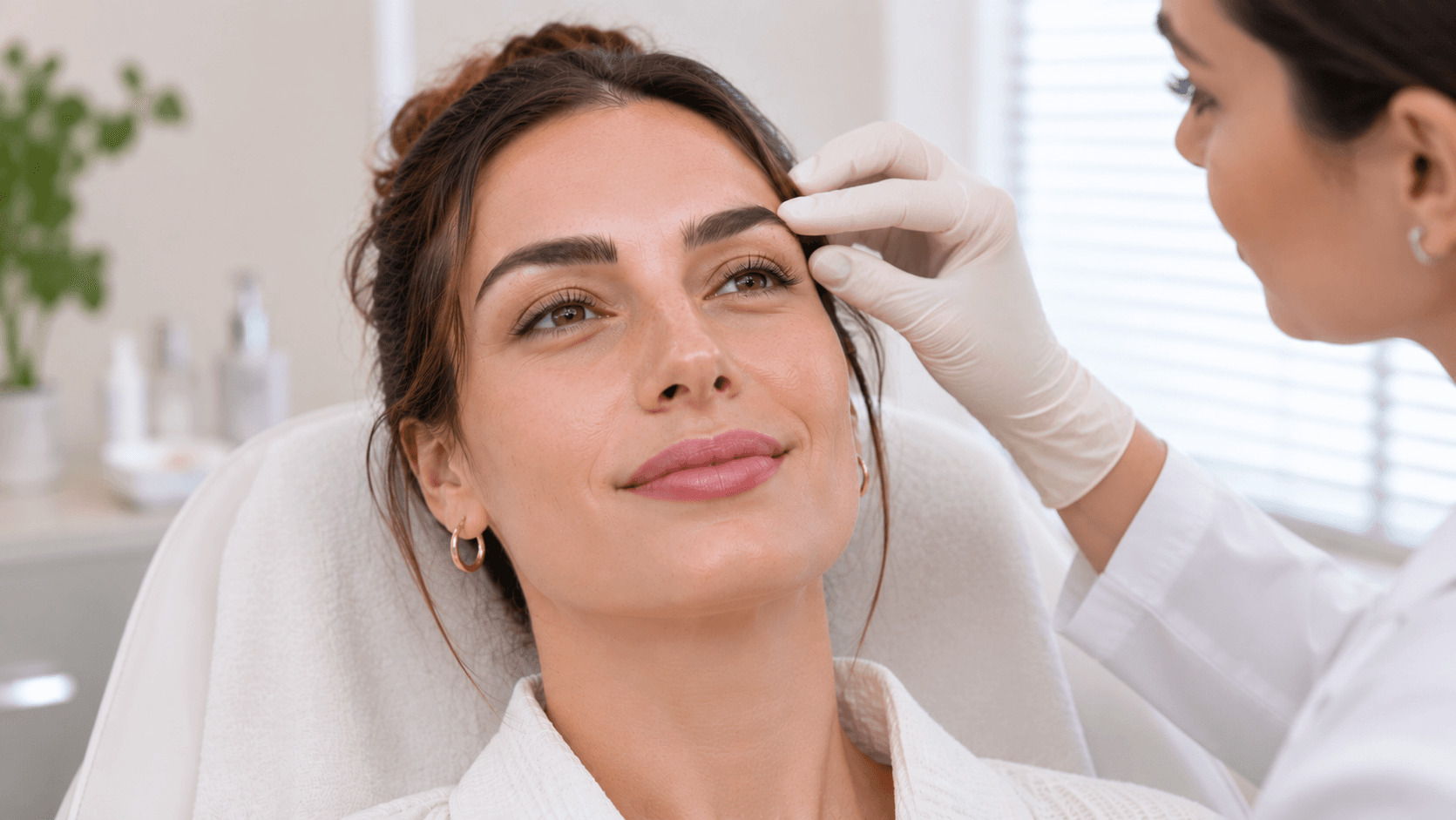
Pre-treatment safety is ensured through a comprehensive consultation and individualized risk assessment. This consultation is as important as the treatment itself. The physician evaluates the skin type, skin thickness, degree of elasticity, and severity of eyebrow drooping together.
This assessment has two technical aspects. The first is whether the laser device to be used is suitable for the individual’s skin. Not every device offers the same safety margin for every skin type. The second is the practitioner’s experience. Knowledge of laser physics and mastery of facial anatomy help keep the parameters within a safe range. When these two elements come together, the safety of laser brow lifting is maximized.
What Health Information Should Be Shared with the Physician Before the Procedure?
Providing the physician with complete health information before the procedure is the most effective step in preventing complications. The following information must be shared during the consultation:
Chronic diseases and previous conditions
Regularly used prescription medications, vitamins, and herbal supplements
Previous aesthetic procedures and laser treatments
History of allergic reactions
History of cold sores and abnormal wound healing
Each of these details helps shape part of the treatment plan. Incomplete or inaccurate information can lead to inappropriate parameter selection. Accurate information forms the foundation of a personalized and safe protocol.
How Are Skin Type and Laser Energy Evaluated?
The internationally recognized standard for skin type assessment is the Fitzpatrick classification. This system categorizes the skin on a scale from one to six according to its response to sunlight (Fitzpatrick 1988). Fair skin is classified as type one, while dark skin falls into the type six group.
The importance of this classification lies in the interaction between melanin and laser energy. As the amount of melanin in the skin increases, the likelihood that the laser beam will be absorbed at the surface also rises. In darker skin types, this requires the energy level to be adjusted more carefully. With the selection of an appropriate wavelength, safe treatment is also possible for darker skin types (Alexiades-Armenakas et al. 2008).
As a result of the assessment, three parameters are adjusted according to the individual. The laser wavelength, energy density, and pulse duration are determined based on the skin type and the targeted depth. This personalization establishes a balance between efficacy and safety.
What Should Be Considered When Choosing a Specialist and Laser Clinic?
A safe laser brow lift experience begins with choosing the right specialist and the right clinic. Four criteria provide guidance for making an informed choice.
The practitioner’s training and experience in laser treatments should be carefully reviewed.
The technological features of the device used and its international safety certifications should be examined.
It should be confirmed that eye protection and hygiene protocols are implemented during the procedure.
It should be determined whether the clinic has the infrastructure to provide medical support in the event of a possible complication.
All of these criteria are based on the fact that the procedure is not merely aesthetic but also a medical intervention. A medical intervention requires a framework of medical responsibility. The presence of this framework is the tangible basis for the patient’s sense of security.
What Should Be Considered During the Recovery Period After a Laser Brow Lift?
During the post-procedure period, the skin enters a natural renewal process. This process generally progresses smoothly, and the individual returns to normal life within a few days. Ensuring a comfortable recovery period after laser brow lifting depends on following a few basic care guidelines.
Following the care instructions provided by the physician significantly reduces the risk of complications. These instructions are prepared to support the skin’s repair and prevent irritation. Since everyone’s skin is different, general recommendations cannot replace the physician’s personalized advice.
Sun protection is the most critical aspect of the recovery period. Renewed skin is temporarily more vulnerable to ultraviolet rays. High-SPF sunscreen and physical protection provide the strongest defense against the risk of discoloration.
What Skincare Should Be Applied After the Procedure?
The fundamental principle of post-procedure care is simplicity. The skin should be cleansed gently without causing irritation. Fragrance-free, mild cleansers are suitable during this period. Hot water, rough sponges, and rubbing motions should be avoided.
Moisturizing supports the repair process. The moisturizer recommended by the physician helps restore the skin barrier. Sunscreen should also be used regularly every day. These two products are the indispensable duo of the recovery period.
Irritating ingredients should be avoided until the skin has fully healed. Products containing acids, alcohol-based toners, and creams with exfoliating effects should be suspended during this period. This short-term simplification allows the skin to direct its energy exclusively toward repair.
For Which Symptoms Should Medical Help Be Sought?
After the procedure, certain symptoms require contacting a physician rather than waiting. Medical evaluation should not be delayed in the following cases:
Severe or progressively worsening pain
Blistering or a burned appearance of the skin
Widespread redness, discharge, or suspected infection
Unexpected darkening or lightening of the skin
Any vision-related complaint
Reporting these symptoms early helps resolve potential problems before they worsen. The principle of early intervention lies at the center of the general safety approach to laser treatments (Graber et al. 2008). No symptom should be dismissed as insignificant.
Is Laser Brow Lifting Effective for Every Degree of Brow Ptosis?
No, laser brow lifting does not produce the same effect at every level of ptosis. The method delivers successful results particularly in cases of mild to moderate brow ptosis. This classification is important for establishing realistic treatment expectations.
The situation is different in cases of advanced brow ptosis. Significant tissue sagging requires a correction that skin tightening alone cannot provide. In this group, laser treatment offers only limited improvement and is not sufficient on its own.
It is also natural for results to vary from person to person. Age, skin elasticity, the quality of collagen structure, and the anatomical characteristics of the face collectively determine the response that will be achieved. The same procedure may have a different level of effect in a person in their forties than in someone in their sixties. This variability once again demonstrates why individualized assessment is indispensable.
Which Methods Are Suitable for People with Advanced Brow Ptosis?
For advanced brow ptosis, surgical brow lift is the method that provides lasting and significant correction. The surgical option allows excess tissue to be removed and the brow to be secured in a new position.
Endoscopic brow lift is the modern representative of this group. The technique involves releasing the tissues under camera guidance through small incisions and repositioning them upward. Anatomical studies show that the attachment points in the forehead and temple regions have been mapped in detail to ensure the safe application of this technique (Knize 1998).
Treatment selection should be based on the individual's anatomical needs. The degree of brow ptosis, skin quality, and the person's approach to surgery are evaluated together. Based on this assessment, the physician recommends a plan involving laser treatment, surgery, or a combination of both.
Can Upper Eyelid Sagging Be Corrected with Laser Brow Lift?
No, significant excess skin on the upper eyelid cannot be eliminated with a laser brow lift. These two issues have different anatomical origins and require different solutions.
Brow ptosis is the downward descent of the brow relative to the upper rim of the eye socket. Upper eyelid sagging, on the other hand, is caused by excess skin on the eyelid itself. Even when the brow is in the correct position, excess eyelid skin may remain. This distinction is critically important for selecting the appropriate treatment.
Laser brow lift indirectly improves the position of the brow but does not eliminate excess eyelid skin. When excess eyelid skin is present, blepharoplasty, or eyelid surgery, is considered. Some people have both issues simultaneously. In such cases, the physician plans the sequence and necessity of the two treatments separately.
What Are the Safe Aesthetic Alternatives to Laser Brow Lift?
There are several safe alternatives to laser brow lift. Radiofrequency, focused ultrasound, thread lifting, and Botox treatments are among the leading options. Each method has a different mechanism of action and patient selection criteria.
When choosing among brow lift treatment alternatives, aesthetic expectations are not the only consideration. The individual's health status, skin structure, and anatomy also shape the decision. The fact that a method produces excellent results for one person does not mean it is the right option for everyone.
The comparative overview of the alternatives can be summarized as follows:
Method | Mechanism of Action | Procedure Type | Duration of Effect | Suitable For |
Laser brow lift | Skin tightening through collagen stimulation | Non-surgical | 1 to 2 years | Mild to moderate drooping |
Radiofrequency | Tightening through heat within the tissue | Non-surgical | Around 1 year | Mild drooping |
Focused ultrasound | Thermal effect in the deeper layers | Non-surgical | 1 to 1.5 years | Mild to moderate drooping |
Botox | Modifying muscle balance | Injection | 3 to 6 months | Muscle-related drooping |
Thread brow lift | Mechanical suspension | Minimally invasive | 1 to 1.5 years | Moderate drooping |
Surgical brow lift | Repositioning of tissues | Surgical | 5 to 10 years | Advanced drooping |
How Do Radiofrequency and Focused Ultrasound Affect the Brow Area?
Radiofrequency and focused ultrasound are two methods that provide heat-based tightening while using technologies different from laser. Both are among the non-surgical brow lift options.
Radiofrequency works on the principle that electrical current is converted into heat through tissue resistance. Since the energy is delivered through current rather than light, it does not interact with melanin. This feature makes the method suitable for use across a wide range of skin types. Histological studies have documented collagen remodeling in the dermis following radiofrequency treatment (Zelickson et al. 2004).
Focused ultrasound concentrates sound waves at a specific depth beneath the skin. The energy passes through the skin surface and creates pinpoint heat in the deeper supportive layers. This mechanism tightens deeper tissues. Clinical studies have shown that this method reduces laxity in the face and neck area (Alster and Tanzi 2012).
When Are Thread Brow Lifts and Botox Preferred?
Thread brow lifts are preferred for moderate drooping requiring mechanical support, while Botox is preferred for brow drooping caused by muscle activity. Both methods differ from laser treatment in terms of results, longevity, and risks.
In a thread brow lift, special threads placed beneath the skin lift the tissue upward. The method provides mechanical suspension, and its effect is visible immediately. However, its long-term results are limited. Long-term evaluations have shown that the effect diminishes over time and that the method can be repeated (Abraham et al. 2009). Series on barbed suture techniques have reported high satisfaction with appropriate patient selection (Kaminer et al. 2008).
Botox, on the other hand, uses a completely different mechanism. The injection temporarily reduces the activity of the muscles that pull the brow downward. The muscles that lift the brow thus gain relative strength, causing the brow to rise slightly. This effect lasts three to six months and requires regular repetition (Huilgol et al. 1999). In both methods, appropriate indication is the main factor determining the quality of the result.
Frequently Asked Questions About Laser Brow Lift Procedures
Is laser brow lifting completely risk-free?
No, no laser treatment is completely risk-free. The risk is minimized through proper patient selection and appropriate device parameters. Scientific series show that the rate of permanent complications is extremely low (Graber et al. 2008).
Does laser brow lifting damage the eyes?
When proper eye protection is used, the procedure is not expected to damage the eyes. Throughout the treatment, the patient's eyes are covered with protective equipment suitable for the wavelength. The device manufacturer's safety protocols clearly define the energy limits around the eyes.
Will laser brow lifting leave scars?
Since the procedure does not involve incisions, it does not leave surgical scars. The integrity of the skin is preserved. Expected temporary reactions are limited to redness and mild swelling. With appropriate parameters, the risk of permanent scarring is practically nonexistent.
How many sessions does laser brow lifting require?
The number of sessions varies depending on the technology used, skin structure, and treatment goal. Most protocols are planned for one to three sessions. The exact number is determined during the pre-procedure assessment.
When are the results of laser brow lifting visible?
The initial tightening effect may be noticeable immediately as the collagen fibers contract. The primary long-lasting result develops gradually over three to six months as new collagen is formed.
Is laser brow lifting suitable for everyone?
No, the procedure is not suitable for everyone. Appropriate candidate selection depends on the individual's health status, skin characteristics, and degree of brow drooping. Pregnancy, active skin infections, and certain systemic diseases may require postponement or an alternative method.
Is laser brow lifting or surgical brow lifting safer?
There is no single superior answer, as the two methods are intended for different patient groups. Safety should be assessed based on the individual's needs and risk factors rather than solely on the invasiveness of the procedure. Laser treatment may be the right choice for mild drooping, while surgery may be more appropriate for advanced drooping.
References
Abraham, Robert F., Robert J. DeFatta and Edwin F. Williams III. "Thread-Lift for Facial Rejuvenation: Assessment of Long-Term Results." Archives of Facial Plastic Surgery, vol. 11, no. 3, 2009, pp. 178-183.
Alexiades-Armenakas, Macrene R., Jeffrey S. Dover and Kenneth A. Arndt. "The Spectrum of Laser Skin Resurfacing: Nonablative, Fractional, and Ablative Laser Resurfacing." Journal of the American Academy of , vol. 58, no. 5, 2008, pp. 719-737.
Alster, Tina S. and Elizabeth L. Tanzi. "Noninvasive Lifting of Arm, Thigh, and Knee Skin with Transcutaneous Intense Focused Ultrasound." Surgery, vol. 38, no. 5, 2012, pp. 754-759.
Anderson, R. Rox and John A. Parrish. "Selective Photothermolysis: Precise Microsurgery by Selective Absorption of Pulsed Radiation." Science, volume 220, issue 4596, 1983, pp. 524-527.
Bozzo, Pina, Angela Chua-Gocheco and Adrienne Einarson. "Safety of Skin Care Products During Pregnancy." Canadian Family Physician, volume 57, issue 6, 2011, pp. 665-667.
Fisher, Gary H. and Roy G. Geronemus. "Short-Term Side Effects of Fractional Photothermolysis." Surgery, volume 31, issue 9, 2005, pp. 1245-1249.
Fitzpatrick, Thomas B. "The Validity and Practicality of Sun-Reactive Skin Types I Through VI." Archives of , volume 124, issue 6, 1988, pp. 869-871.
Gauglitz, Gerd G., Hans C. Korting, Tatjana Pavicic, Thomas Ruzicka and Marc G. Jeschke. "Hypertrophic Scarring and Keloids: Pathomechanisms and Current and Emerging Treatment Strategies." Molecular Medicine, volume 17, issues 1-2, 2011, pp. 113-125.
Graber, Emmy M., Elizabeth L. Tanzi and Tina S. Alster. "Side Effects and Complications of Fractional Laser Photothermolysis: Experience with 961 Treatments." Surgery, volume 34, issue 3, 2008, pp. 301-305.
Huilgol, Shailendra C., Alastair Carruthers and Jean D. A. Carruthers. "Raising Eyebrows with Botulinum Toxin." Surgery, volume 25, issue 5, 1999, pp. 373-376.
Kaminer, Michael S., Marc Bogart, Christine Choi and Stephanie A. Wee. "Long-Term Efficacy of Anchored Barbed Sutures in the Face and Neck." Surgery, volume 34, issue 8, 2008, pp. 1041-1047.
Knize, David M. "Reassessment of the Coronal Incision and Subgaleal Dissection for Foreheadplasty." Plastic and Reconstructive Surgery, volume 102, issue 2, 1998, pp. 478-489.
Manstein, Dieter, G. Scott Herron, R. K. Sink, Heidi Tanner and R. Rox Anderson. "Fractional Photothermolysis: A New Concept for Cutaneous Remodeling Using Microscopic Patterns of Thermal Injury." Lasers in Surgery and Medicine, volume 34, issue 5, 2004, pp. 426-438.
Spring, Lisa K., Andrew C. Krakowski, Murad Alam et al. "Isotretinoin and Timing of Procedural Interventions: A Systematic Review with Consensus Recommendations." JAMA , volume 153, issue 8, 2017, pp. 802-809.
Zelickson, Brian D., David Kist, Eric Bernstein et al. "Histological and Ultrastructural Evaluation of the Effects of a Radiofrequency-Based Nonablative Dermal Remodeling Device: A Pilot Study." Archives of , volume 140, issue 2, 2004, pp. 204-209.
Get in touch with our expert team
Related Posts