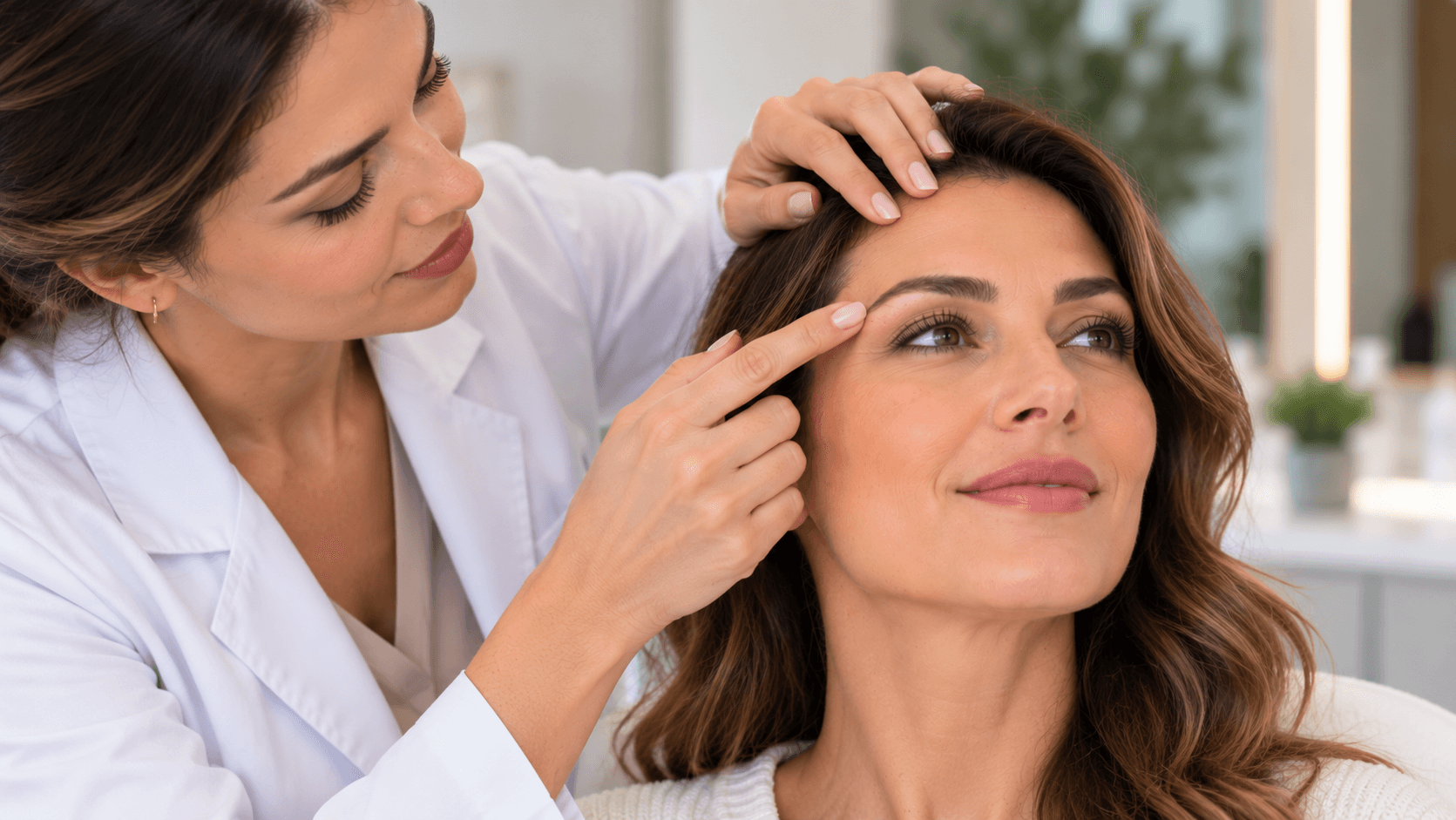
At What Age Should Laser Brow Lift Treatment Be Performed?
Laser brow lift does not have one ideal age that applies to everyone. The right time is determined by evaluating age together with the current position of the eyebrows, skin elasticity, the depth of wrinkles in the forehead area, and the individual’s aesthetic expectations. Generally, ages 30 to 60, when noticeable brow drooping typically begins, are the period of most intensive evaluation; however, people over 60 may also be candidates if their health is suitable.
To clarify the scope of this article, we discuss the age-related suitability of laser brow lifting, the medical criteria used to select candidates, the differences between laser treatments and surgical brow lift techniques, and alternatives that may be considered for younger age groups. Our aim is to provide a clear, scientific answer to the following question: “At what age, for whom, and which method makes sense?”
What Is a Laser Brow Lift and Which Concerns Does It Address?
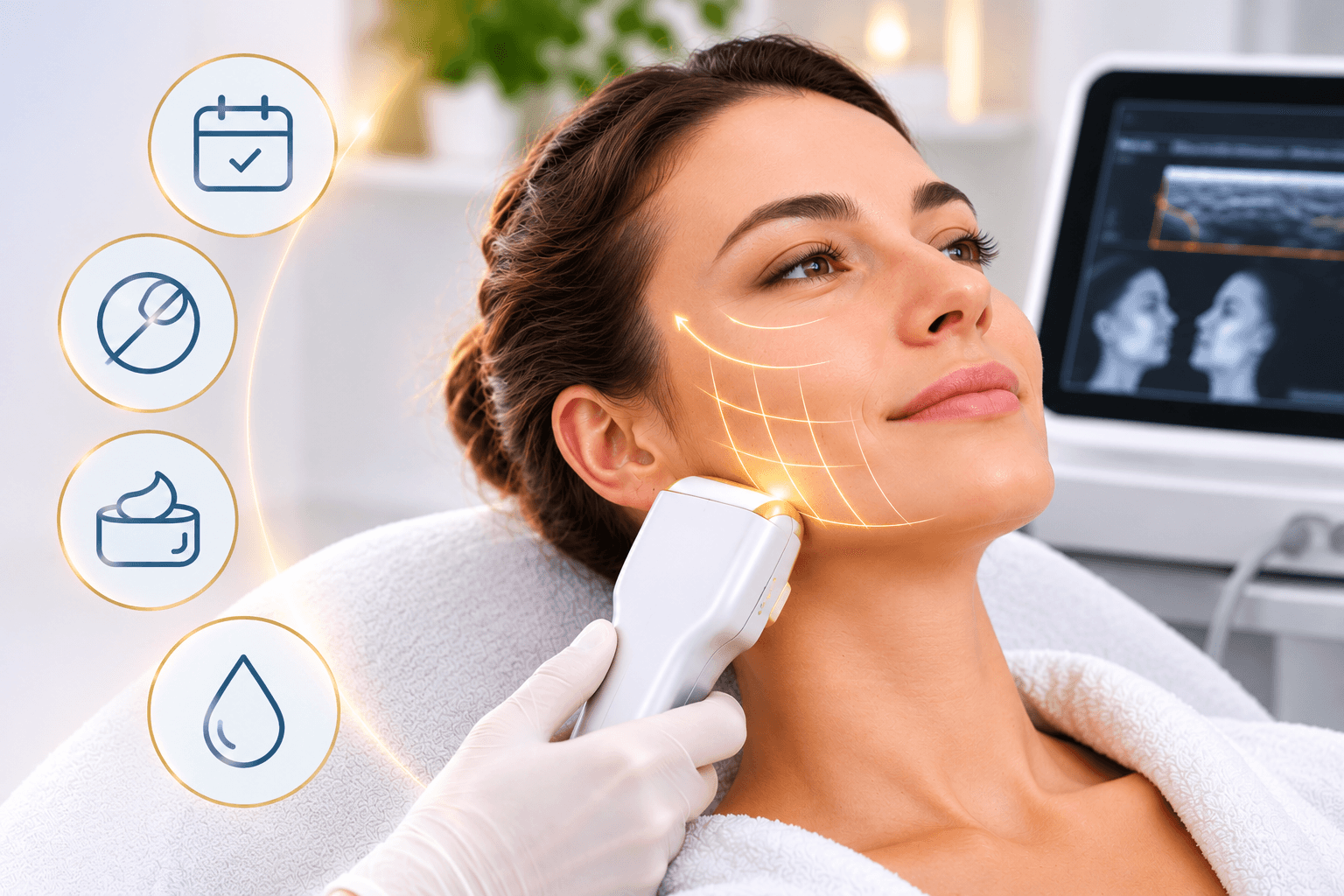
Laser brow lifting is a term encompassing laser-based skin rejuvenation and tightening treatments designed to improve the appearance of the area around the eyebrows and reduce signs of aging in the upper face. The goal is to improve skin quality around the eyebrows and lessen the visual effect of excess skin over the upper eyelid.
The main objectives of the procedure can be grouped into three categories: reducing the visual effect of brow drooping, softening forehead lines, and diminishing wrinkles between the eyebrows. These three concerns are addressed together during treatment planning because even a small change in brow position can alter the perceived severity of excess skin on the upper eyelid. Non-ablative lasers stimulate collagen production in the dermis, providing gradual skin tightening (Alster and Tanzi 2003). Therefore, rather than “actually lifting the eyebrow,” laser treatments work by “tightening the area around the eyebrow so that the brow appears higher.”
An important distinction is necessary: laser-based treatments are not the same as surgical brow lift techniques. Surgical methods physically lift the eyebrow by cutting and repositioning tissue, whereas laser methods renew the skin and improve the quality of the supporting tissue. Clinical evaluation determines which approach is appropriate based on the nature of the technology used and the individual’s anatomy. At this point, an examination by a specialist is not merely a recommendation but an essential step.
How Are Age Ranges Evaluated for Brow Lifting?
Age ranges are not definitive eligibility limits but rather a general framework for evaluation. People in their 20s are generally at an age when the need for treatment should be carefully questioned; the 30s are when individual assessment begins; ages 40 to 50 are the period in which the need for treatment is most frequently observed; and being 60 or older is not a contraindication if the person’s health is suitable.
20s: In people without noticeable signs of aging during this period, the need for the procedure should be carefully assessed. Individuals who experience early-onset brow drooping due to genetic factors are an exception, and an individual examination determines the appropriate approach.
30s: Individual evaluation is appropriate for people with a genetic predisposition, early-onset brow drooping, or pronounced forehead lines. The first signs of photoaging may appear during this period (Yaar and Gilchrest 2007).
40s and 50s: Decreased skin elasticity and changes in brow position significantly increase the need for treatment. Slowing collagen production and weakening of the dermal matrix are the primary biological causes during this period (Alster and Tanzi 2003).
60 and older: Age alone is not an obstacle. Overall health, skin characteristics, healing capacity, and expectations are evaluated together. In this age group, pre-procedure risk analysis should be more comprehensive.
What Personal Factors Determine the Right Time for the Procedure?

There are five key personal factors that determine the right time: skin elasticity, genetic characteristics, sun exposure and lifestyle, brow and eyelid anatomy, and aesthetic expectations.
Skin elasticity: The firmness of the skin and the current condition of the supporting tissues determine the upper limit of the achievable result. Skin with preserved elasticity provides a stronger collagen response to laser stimulation (Alster and Tanzi 2003).
Genetic characteristics: Inherited brow structure and brow drooping that develops at an early age determine the need for treatment regardless of age. Genetic factors influence many variables, from the age at which brow drooping begins to the rate of skin aging (Krutmann et al. 2017).
Sun exposure and lifestyle: Factors such as sun damage, smoking, and stress accelerate skin aging. Ultraviolet exposure is the strongest environmental factor increasing collagen breakdown (Yaar and Gilchrest 2007).
Brow and eyelid anatomy: Brow position is directly related to excess skin on the upper eyelid. Even a millimetric descent of the brow can make the fold of skin over the eyelid more pronounced.
Aesthetic expectations: A desire for a natural appearance and an expectation of a noticeable change require different treatment plans. Alignment between expectations and the achievable outcome is the most important determinant of satisfaction.
Factor | Effect on the Procedure | Evaluation Method |
Skin elasticity | Determines the quality of the results | Skin laxity test during examination |
Genetic predisposition | Determines the age at which treatment may be needed | Family history assessment |
Sun damage | Accelerates the rate of skin aging | Skin analysis |
Anatomical structure | Influences the choice of method | Eyebrow and eyelid examination |
Level of expectations | Determines the scope of the plan | Goal setting through consultation |
Who Are Suitable Candidates for Laser Brow Lift?
Suitable candidates are individuals experiencing mild brow drooping or a change in appearance, who are in generally good health, have realistic expectations, and have completed a pre-procedure evaluation.
Suitability is assessed in four stages. First, the skin’s structure, color, and sensitivity are examined. Second, the position and symmetry of the eyebrows and their relationship with the upper eyelids are evaluated. Third, the extent and duration of existing aesthetic concerns are assessed. Finally, the individual’s general health, medications, and expectations regarding the procedure are reviewed.
A special consideration arises when brow drooping narrows the field of vision. In this case, an aesthetic assessment alone is not sufficient; a functional examination is also required. Brow drooping that restricts the field of vision is a medical issue that may be covered by insurance for some patients. It is important to remember that not every patient will benefit equally from the same method; suitability is an individual decision.
What Are the Differences Between Laser Brow Lift and Surgical Brow Lift?
While laser treatments aim to renew and tighten the skin, surgical methods physically reposition the eyebrows upward by cutting the tissue. Surgical intervention may be necessary in cases of significant brow drooping; the choice of method depends not only on age but also on the degree of drooping and the treatment goals.
Comparison Criterion | Laser Brow Lift | Surgical Brow Lift |
Mechanism of action | Stimulates collagen production | Lifts the brow by excising tissue |
Anesthesia | Local or topical | Usually general anesthesia or deep sedation |
Recovery time | Several days to several weeks | Several weeks to several months |
Result | Gradual and natural | Pronounced and long-lasting |
Ideal candidate | Mild drooping, good skin quality | Advanced drooping, excess skin |
Surgical options are divided into three groups. Endoscopic brow lifting is performed with the assistance of a camera through small incisions and carries a low risk of visible scarring. A temporal brow lift enters through the temple area to elevate the outer brow. The traditional open technique lifts the forehead skin, providing direct access to the brow muscles and the most comprehensive result. Eyelid complications are among the well-known risks of surgical procedures; therefore, the decision to undergo surgery should be made under the care of experienced professionals (Lelli and Lisman 2010).
What Are the Earlier-Age Alternatives to Laser Brow Lift?
For mild wrinkles and changes in the appearance of the brow area, nonsurgical options such as botulinum toxin, dermal fillers, skin care, and photoprotection may be considered. However, these methods do not provide the same effect as a laser brow lift.
Botulinum toxin can provide a limited elevation in brow position by altering the balance of the muscles that lift the eyebrows; it is particularly effective in the outer brow area (Carruthers and Carruthers 2003). Dermal fillers, on the other hand, support the brow area by compensating for volume loss. The purpose and duration of effect of the two methods differ, and both require an assessment of suitability.
The role of skin care should not be overlooked. Photoprotection, regular moisturizing, and treatments that support the skin barrier help preserve skin quality and extend the longevity of all interventions (Krutmann et al. 2017). Light-based methods such as intense pulsed light may also provide gradual improvement in early photoaging (Bitter 2000).
What Risks Should Be Evaluated Before a Laser Brow Lift?
The risk of side effects associated with the laser technology used, skin type, tendency toward pigmentation, skin sensitivity, existing conditions, and medical history must all be evaluated before the procedure.
Temporary redness, edema, and sensitivity are common after laser treatments; pigmentation changes require particularly careful planning in darker skin types (Tanzi and Alster 2003). Appropriate wavelength and energy settings should be selected to reduce the risk of hyperpigmentation. Before the procedure, it is essential to inform the specialist about your medical history, medications, particularly photosensitizing medications, and any previous aesthetic treatments. The experience of the practitioner performing the treatment and the suitability of the device used are two critical variables that directly determine the risk profile.
When Do the Results Become Visible and How Long Do They Last?
The time required for results to appear varies depending on the method used and the individual’s skin characteristics; while gradual improvement in laser tightening treatments may take several months, the results of a surgical brow lift are visible immediately. A specific duration of effect cannot be guaranteed for everyone.
With laser skin resurfacing, an initial glow becomes noticeable in the first few weeks, while the main collagen-based tightening becomes more apparent over three to six months (Alster and Tanzi 2003). With a surgical brow lift, the result is visible immediately after the operation, although the final result settles over several months as the edema subsides. The speed of the aging process, skin structure, sun exposure, and type of treatment determine the longevity of the results. Photoprotection and a consistent skin care routine are necessary to maintain the results.
What Should Be Discussed During the Specialist Consultation Before a Laser Brow Lift?
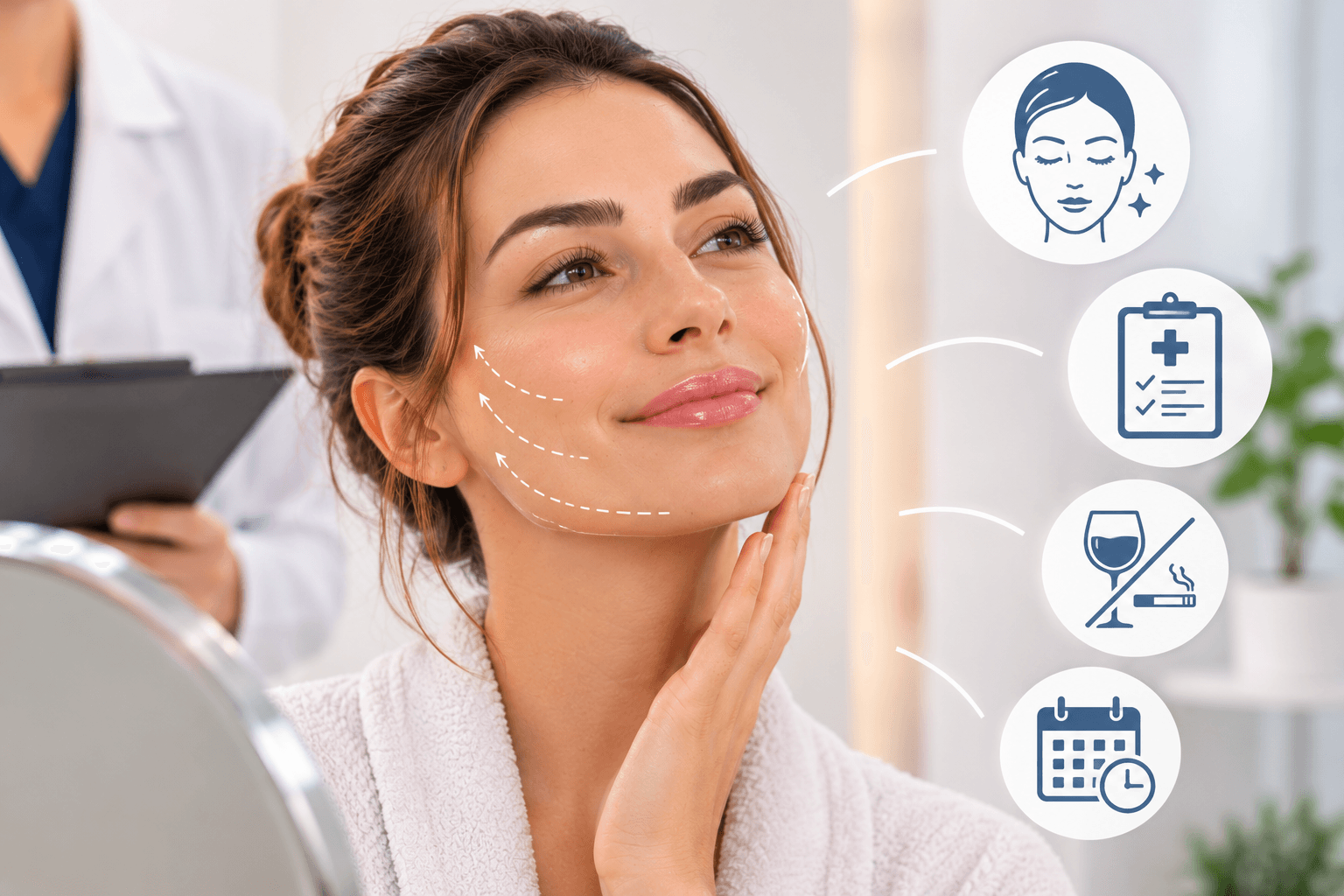
During the consultation, expectations, primary concerns, examination of the eyebrows and upper eyelids, the suitability of the method, alternative options, risks, the recovery process, and whether the procedure is aesthetic or functional must all be clarified.
The following five topics should be addressed comprehensively during the consultation: the patient’s expectations and definition of their primary concerns regarding the eyebrow area; physical examination of eyebrow position, the upper eyelid, and skin structure; determination of the suitability of laser treatment and, where necessary, alternative methods; explanation of the expected results, potential risks, recovery process, and aftercare requirements; and clarification of whether the procedure is an aesthetic preference or an intervention for a problem affecting the visual field. This final point is decisive both for managing expectations and, when necessary, directing the patient for functional assessment.
Frequently Asked Questions About Laser Brow Lift
Is laser brow lift appropriate at the age of 30?
Yes, conditionally. If a 30-year-old has genetically low-set eyebrows, early forehead lines, or a noticeable decline in skin quality, the procedure may be considered following an individual assessment. For individuals without significant signs of aging, preventive approaches and skincare are recommended first.
Can a brow lift be performed before the age of 40?
Yes, it can. For individuals under 40, the decision is based on anatomy and the nature of the concern, not age. For mild concerns at an early stage, less invasive options such as botulinum toxin or skin rejuvenation may be considered first.
Is there an upper age limit for laser brow lift?
No, there is no strict upper age limit. At age 60 and above, the procedure may be performed if overall health, skin-healing capacity, and expectations are appropriate. In this age group, risk assessment is conducted more comprehensively.
Can laser brow lift be performed without eyebrow drooping?
Yes, it can. The procedure may be performed not only to address drooping, but also to improve skin quality, soften forehead lines, and rejuvenate the area around the eyebrows. If the goal is skin rejuvenation, eyebrow position is not a critical criterion.
Does laser brow lift correct drooping eyelids?
No, not on its own. Laser treatments may reduce the excess skin over the eyelid by tightening the skin, but surgical assessment is required when excess skin and muscle tissue need to be removed. An examination is essential for an accurate diagnosis.
What is the main difference between laser brow lift and Botox?
Laser rejuvenates the skin, stimulates collagen production, and produces long-lasting effects; botulinum toxin temporarily reduces muscle activity, changes eyebrow position to a limited extent, and its effects last for several months (Carruthers and Carruthers 2003). One targets skin quality, while the other targets muscle balance.
Can laser brow lift replace surgical brow lift?
No, not in cases of advanced eyebrow drooping. Laser techniques provide gradual improvement for mild to moderate concerns; when significant drooping and excess skin are present, surgical methods offer more pronounced and lasting results. The decision is based on the severity of the drooping and the treatment goal.
References
Alster, Tina S., and Elizabeth L. Tanzi. "Nonablative Laser Skin Rejuvenation." Journal of Cosmetic and Laser Therapy, vol. 5, no. 3-4, 2003, pp. 154-161.
Bitter, Patrick H. "Noninvasive Rejuvenation of Photodamaged Skin Using Serial, Full-Face Intense Pulsed Light Treatments." Surgery, vol. 26, no. 9, 2000, pp. 835-842.
Carruthers, Alastair, and Jean Carruthers. "Botulinum Toxin Type A." Journal of the American Academy of , vol. 48, no. 3, 2003, pp. 346-351.
Krutmann, Jean, et al. "The Skin Aging Exposome." Journal of Science, vol. 85, no. 3, 2017, pp. 152-161.
Lelli, Grant J., and Richard D. Lisman. "Blepharoplasty Complications." Plastic and Reconstructive Surgery, vol. 125, no. 3, 2010, pp. 1007-1017.
Tanzi, Elizabeth L., and Tina S. Alster. "Single-Pass Carbon Dioxide versus Multiple-Pass Er:YAG Laser Skin Resurfacing." Surgery, vol. 29, no. 8, 2003, pp. 795-798.
Yaar, Mina, and Barbara A. Gilchrest. "Photoageing: Mechanism, Prevention and Therapy." British Journal of , vol. 157, no. 5, 2007, pp. 874-887.
Get in touch with our expert team
Related Posts