What Are the Differences Between Laser Brow Lift and Ultherapy?
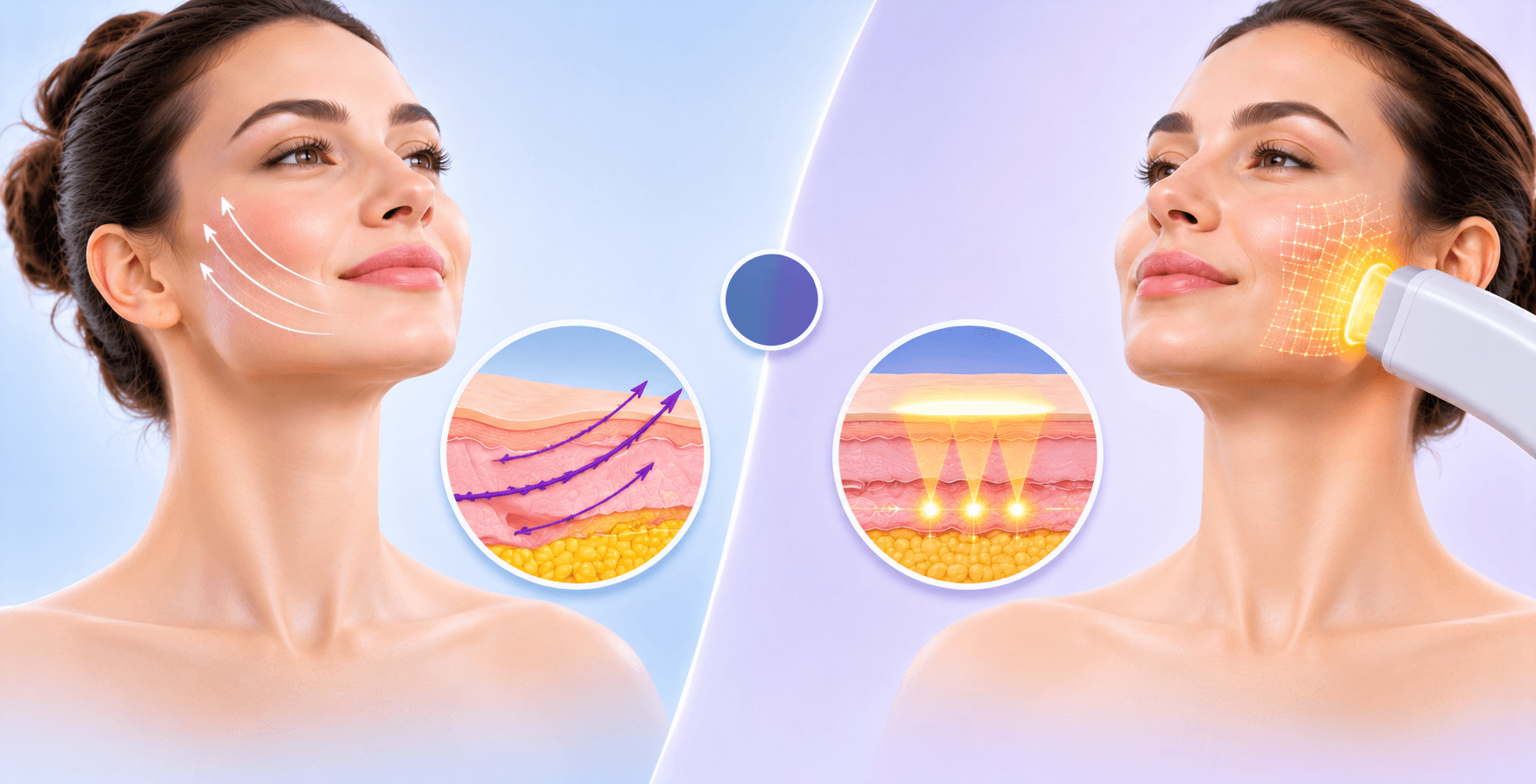
Laser Brow Lift creates a thermal effect in the layers close to the skin’s surface and stimulates collagen production. Ultherapy, on the other hand, delivers microfocused ultrasound energy beneath the dermis, reaching the SMAS layer. Both methods are non-surgical, but they differ in terms of their energy sources, the tissue depths they target, and their clinical applications.
The aging process directly affects brow position, the forehead, and the eye area. The skin becomes thinner with age. The connective tissue supporting the brow loosens. Gravity pulls this laxity downward. As a result, the tail of the brow descends, sagging develops over the upper eyelid, and the face takes on a tired appearance.
Collagen loss lies at the root of this change. Scientific research shows that skin thickness and collagen density steadily decrease with age (Shuster 1975). Quan and Fisher demonstrated that collagen fibers break down in aging dermis and that fibroblast cells have a reduced capacity to produce new collagen (Quan and Fisher 2015). As the collagen network deteriorates, the skin loses elasticity and the structural support that holds up the brow area diminishes.
This biological process has increased interest in non-surgical brow lift methods. Patients turn to energy-based treatments because they do not want incisions, general anesthesia, or a prolonged recovery period. Two prominent approaches in this field are laser-based skin tightening and microfocused ultrasound.
Laser Brow Lift uses light energy to create a controlled thermal effect on the epidermis and dermis. Ultherapy, meanwhile, focuses sound waves on deeper layers after passing through the skin’s surface. In the sections below, we compare the two methods in terms of energy source, target tissue, treatment process, timing of results, pain level, and patient selection.
What Is a Laser Brow Lift and How Is It Performed?
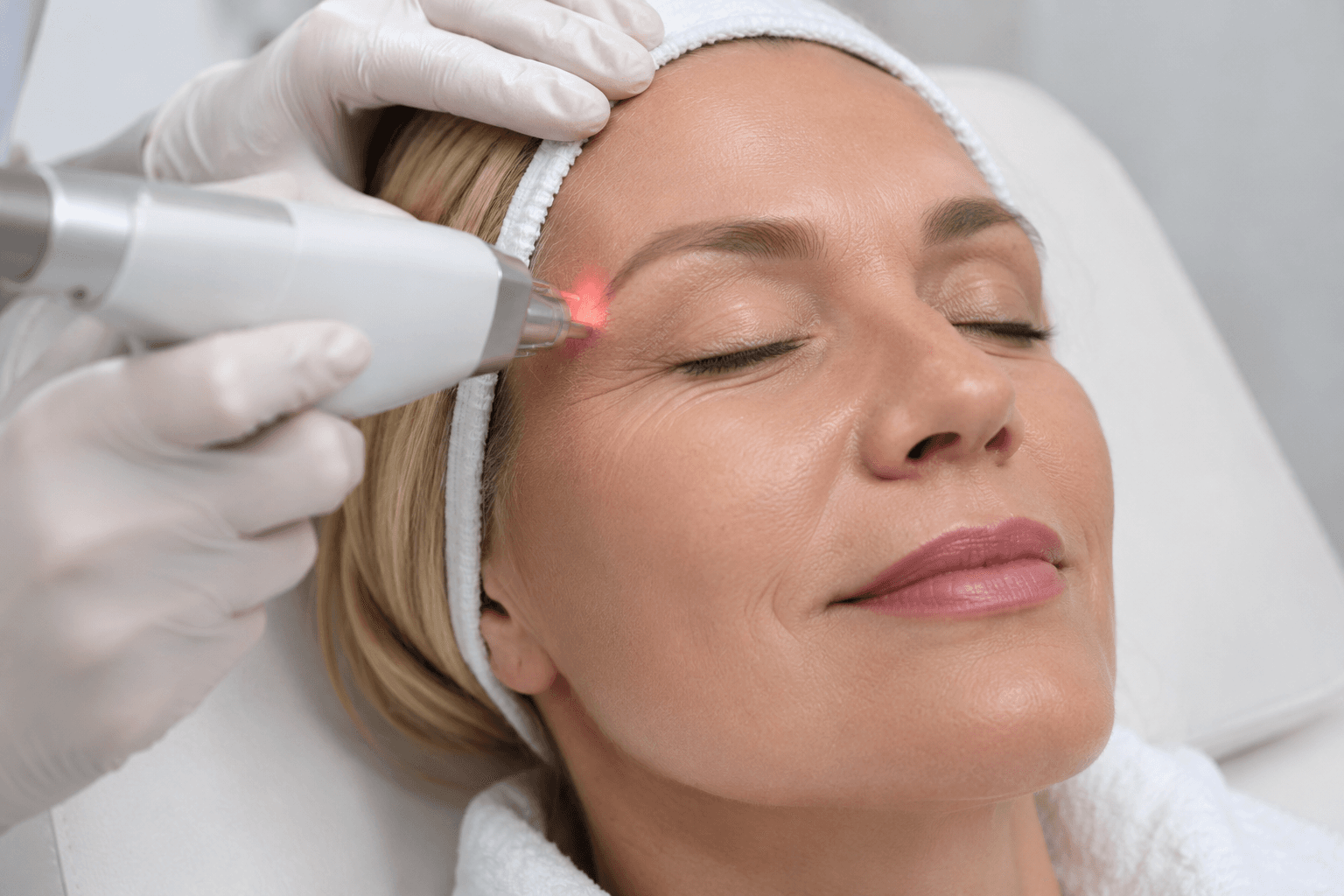
A Laser Brow Lift is a non-surgical treatment that creates controlled thermal injury in the skin using laser energy, thereby stimulating collagen production. The method aims to improve skin quality and superficial laxity around the brow.
To understand this method correctly, the concept must first be clarified. A Laser Brow Lift does not refer to a single standardized device or protocol. Fractional lasers, carbon dioxide lasers, and infrared skin-tightening systems use different wavelengths and target different depths. Therefore, the mechanism of action and results are not the same for every laser treatment.
The common principle, however, is clear. Laser energy creates selective photothermolysis in the skin tissue. The controlled thermal effect initiates the wound-healing process in the treated area. Fibroblasts synthesize new collagen and elastin. The pioneering study by Manstein and colleagues on fractional photothermolysis showed that microscopic zones of thermal injury produced significant improvements in tissue contraction and wrinkle scores within three months (Manstein 2004).
Laser treatments act on the epidermis and dermis. Their effect on the epidermis renews the skin tone and texture. Their effect on the dermis supports collagen remodeling. Fine lines around the eyebrows, superficial skin laxity, and textural irregularities are among the concerns targeted by this mechanism.
At this point, an important distinction is necessary. Laser Brow Lift is not a surgical brow lift procedure. In the surgical method, tissues are incised, repositioned, and secured. With laser treatment, tissue integrity is largely preserved, and the effect results from the skin’s own repair capacity. This difference also defines the limitations of the results.
What Is Ultherapy and How Does It Work for Brow Lifting?
Ultherapy is a non-surgical skin-tightening treatment that uses microfocused ultrasound energy to create controlled thermal points in the layers beneath the dermis without damaging the skin’s surface. It is approved for use on the brow, submental area, neck, and décolleté.
Ultherapy’s mechanism of action is based on the physical properties of ultrasound energy. Sound waves pass through the skin’s surface without affecting it and focus at the targeted depth. At the focal point, the temperature rises to approximately 60 to 70 degrees. This temperature creates small, controlled points of thermal coagulation. Laubach and colleagues demonstrated histologically that focused ultrasound creates microcoagulation zones within the skin with millimetric precision (Laubach 2008).
These thermal points target the dermis and the SMAS layer. The SMAS is the layer that connects the muscles and connective tissue of the face and is also the primary target of surgical facelifts. A cadaver study by White and colleagues showed that focused ultrasound can create selective areas of thermal damage within the SMAS while preserving the epidermis (White 2007). This finding provides the scientific basis for Ultherapy’s claim of lifting the tissue beneath the skin’s surface.
A critical feature that distinguishes Ultherapy from other ultrasound devices is real-time imaging. Through the ultrasound imaging capability in the treatment handpiece, the system displays the target layer on the screen. The practitioner can deliver the energy precisely to the desired depth. Not every high-intensity focused ultrasound device has this imaging capability; therefore, it is incorrect to consider Ultherapy and general HIFU treatments equivalent.
What Are the Technological Differences Between Laser Brow Lift and Ultherapy?
Laser uses light energy and acts on the epidermis and dermis. Ultherapy uses sound waves and delivers its effect beneath the dermis, down to the SMAS layer. This fundamental difference also determines the aesthetic concerns targeted by the two methods.
The mechanisms of action of the two technologies differ physically. Laser produces electromagnetic radiation, and this energy is absorbed by the skin. Absorption depends on the wavelength, the chromophores in the skin, and the device settings. Ultrasound, by contrast, is mechanical vibrational energy. The energy passes through the tissue and is converted into heat only at the focal point. Therefore, ultrasound can bypass the surface and target deeper tissue.
The pattern of the thermal effect also differs. In laser treatments, heat forms a gradient from the surface toward the deeper layers. In fractional systems, this effect is distributed in microscopic columns (Manstein 2004). With Ultherapy, however, heat is concentrated at specific depths while the intervening tissues are preserved (White 2007).
These two mechanisms clearly distinguish the targeted tissue layers. Lasers support skin surface renewal and dermal collagen stimulation. Ultherapy targets tightening in the deeper tissues and strengthening structural support. The technology of the device used, energy level, and depth selection of the applicator tip directly affect the results. The table below summarizes the key technical differences.
Feature | Laser Brow Lift | Ultherapy |
Energy source | Light energy | Microfocused ultrasound |
Primary target layer | Epidermis and dermis | Deep dermis and SMAS |
Type of thermal effect | Surface-to-deep heat gradient | Focused pinpoint heat |
Imaging support | Generally unavailable | Real-time ultrasound imaging |
Primary effect | Skin renewal, superficial tightening | Deep tissue tightening, lifting |
Skin surface | Peeling may occur depending on the type of resurfacing | Preserved |
Which Method Is More Effective for Brow Ptosis?
Effectiveness depends on the degree of eyebrow drooping. In cases of mild superficial laxity, laser treatments improve skin quality. When there is a noticeable loss of eyebrow position, Ultherapy’s deep-tissue effect plays a more decisive role.
Eyebrow drooping should be assessed at three levels. With mild drooping, the eyebrow position decreases slightly and skin laxity is just beginning. At a moderate level, sagging at the tail of the eyebrow becomes more pronounced, and hooding of the upper eyelid increases. In advanced cases, laxity in the forehead combines with signs of aging around the eyes, causing the eyebrows to sit noticeably lower anatomically.
Laser treatments affect skin quality and superficial laxity in this condition. Collagen stimulation thickens the skin and tightens mild sagging. However, laser treatment cannot reposition deep connective tissue. Ultherapy goes beyond this limitation. In the prospective clinical study by Alam and colleagues, clinically significant eyebrow lifting was achieved in 86% of patients after a single session of focused ultrasound, with an average increase in eyebrow height of 1.7 millimeters (Alam 2010).
These findings highlight the importance of individual factors in the decision-making process. Age, skin elasticity, anatomical structure, and the degree of sagging determine the outcome. Laser treatment may be sufficient for younger skin with preserved elasticity. For a patient with pronounced deep-tissue laxity, a method that affects the SMAS layer may be a more suitable option.
When Do the Results of Laser Brow Lifting and Ultherapy Become Visible?

Results develop gradually with both methods. With laser treatments, the first changes become apparent within a few weeks. With Ultherapy, a visible lifting effect usually emerges between two and three months.
Understanding the timeline of results requires looking at collagen biology. After laser treatment, controlled damage triggers the wound-healing response. New collagen synthesis begins in the first weeks, and the remodeling process continues for several months (Manstein 2004). Initial improvement in skin texture can be noticed early, but the main tightening develops over time.
A similar biological process occurs after Ultherapy. Thermal coagulation points initiate the production of new collagen, a process known as neocollagenesis. This production increases gradually. Clinical evaluations are generally performed on the 90th day, as significant changes become measurable during this period (Alam 2010). Long-term follow-up studies show that the effect can be maintained for up to one year.
For both methods, it is necessary to wait approximately three to six months to assess the final result. Longevity depends on the individual. Age, smoking, sun exposure, skincare routine, and the natural rate of aging affect how long the results last. Treatment does not stop the aging process; it only improves the existing condition.
How Do Treatment Duration, Number of Sessions, and Recovery Time Differ?
A Laser Brow Lifting session is completed within a timeframe that varies according to the system used and the treatment area, and most protocols require several sessions. Ultherapy is generally planned as a single session. While the recovery period varies depending on the type of laser, a return to daily activities with Ultherapy is usually possible the same day.
The duration of a laser treatment varies depending on the technology selected. Gentle systems that provide superficial resurfacing take less time, while deep fractional treatments take longer. The number of sessions also depends on the desired outcome. For superficial textural irregularities, sessions repeated at intervals of several weeks are generally planned. The need for repetition is determined by the skin type, the depth of the concern, and the skin’s healing response.
With Ultherapy, the situation is different. For most patients, the treatment is designed as a single session. A clinical study of 103 individuals by Oni and colleagues showed that a single session of microfocused ultrasound treatment provided measurable tightening in the lower face and neck area (Oni 2014). In some patients, an additional session may be considered within one year, depending on the degree of sagging.
The recovery process practically distinguishes the two methods. After laser treatment, redness, sensitivity, swelling, and peeling may occur depending on the skin type. These effects subside within a few days to one week. After Ultherapy, temporary sensitivity, mild swelling, and increased tenderness to touch may occur. Hitchcock and Dobke’s safety review reported that these effects were largely mild and self-limiting (Hitchcock and Dobke 2014). After both procedures, patients generally return to their daily activities on the same day or the following day.
Are Laser Brow Lift and Ultherapy Painful Procedures?
Both procedures may cause some discomfort, but this sensation is generally tolerable. The perception of pain varies according to individual sensitivity, the treatment area, and the energy level used.
During laser treatment, the patient may feel warmth, stinging, and a burning sensation. This sensation is the natural result of the heat generated as light energy is absorbed by the skin. Cooling systems and topical anesthetic creams significantly reduce this sensation.
With Ultherapy, the source of discomfort is different. Because the ultrasound energy is focused in the deeper tissue, the sensation is more noticeable near bony areas than on the skin’s surface. In the study by Oni and colleagues, patients rated their pain between an average of 5.7 and 6.5 on a ten-point scale (Oni 2014). These values indicate that the procedure requires comfort management.
Several methods are used to improve comfort. Topical anesthetic creams, oral pain relievers, and gradual adjustment of the energy level are the most common approaches. Assessing the patient’s expectations and pain threshold before the procedure improves both patient satisfaction and the quality of treatment completion.
Who Is a Suitable Candidate for Laser Brow Lift and Ultherapy?
People with mild to moderate brow drooping, partially preserved skin elasticity, and a preference to avoid surgery are suitable candidates for both methods. In patients with advanced sagging, surgical options should be considered.
Three factors stand out when selecting candidates. The first is the degree of sagging. While superficial resurfacing may be sufficient for mild drooping, deep tissue tightening is required for moderate sagging. The second is skin quality. Younger skin with high collagen reserves responds more strongly to energy-based stimulation. The third is overall health.
Skin type and existing conditions affect the treatment plan. In darker skin tones, the risk of pigmentation may increase with certain laser systems, and parameter selection requires careful consideration. The procedure is postponed in cases of active skin infection, open wounds, inflammatory acne in the treatment area, or systemic diseases that impair healing. In individuals with significant brow ptosis, non-surgical methods may not provide sufficient results; in such cases, surgical brow lifting may be considered. Therefore, the most appropriate decision is made after an expert examination evaluating the facial anatomy.
Can Laser Brow Lifting and Ultherapy Be Performed Together?
Yes, the two methods can be performed together with appropriate planning. Since they use different energy sources and target different tissues, they can complement each other. However, combining them is not necessary or suitable for every patient.
The concept of complementarity arises from the treatment depth of the two technologies. While Ultherapy targets the deep dermis and SMAS layer, laser treatment promotes renewal in the epidermis and superficial dermis. The combination approach integrates deep-tissue tightening and improved surface texture into the same treatment program. In this way, both brow position and skin appearance can be addressed together.
The treatment sequence is determined according to the devices used and the skin’s healing capacity. In some protocols, both procedures are performed on different areas during the same session. In other cases, several weeks are allowed between sessions to give the skin time to recover. When ablative laser systems are used, planning the ultrasound treatment after the skin barrier has been restored is a safer approach. The decision to combine treatments should be personalized according to the examination findings and the patient’s goals.
What Other Brow-Lifting Methods Are Available Besides Laser Brow Lifting and Ultherapy?
Radiofrequency, Morpheus8, Botox, thread lifting, and surgical brow lifting are other options across the non-surgical and surgical spectrum. Each method differs in its mechanism of action, longevity, and suitable patient profile.
Radiofrequency stimulates collagen production through controlled heat generated in the tissue by electrical current. The study by Hantash and colleagues histologically demonstrated that fractional radiofrequency treatment triggers the synthesis of new collagen and elastin (Hantash 2009). The method is used for superficial and moderate skin laxity.
Morpheus8 combines microneedling with radiofrequency. The needles deliver energy directly into the dermis, creating both mechanical stimulation and a thermal effect. This combination supports the thickening and tightening of the skin tissue.
Botox works through a different principle. It selectively relaxes the muscles that pull the brow downward and enhances the effect of the muscles that lift the brow. Results become visible within a few days but gradually diminish over several months. In thread lifting, biocompatible threads are placed beneath the tissue to create a mechanical lifting effect.
Surgical brow lifting provides the most pronounced and long-lasting results in cases of significant drooping. The surgeon removes excess tissue and repositions the brow anatomically. None of these methods is a direct equivalent of another; suitability criteria must be evaluated separately for each patient.
What Should Be Considered When Choosing a Specialist and Clinic Before Treatment?
The specialist’s training and experience, the technological features of the device used, the personalized planning approach, and the post-procedure follow-up process are the four key criteria that should be evaluated when making a choice.
The choice of specialist directly affects treatment safety. A practitioner trained in or plastic surgery and experienced with energy-based devices can accurately assess tissue layers and reduce the risk of complications. Device selection is equally important. With Ultherapy, real-time imaging ensures that energy is delivered to the correct layer; without this feature, targeting is based on estimation.
The planning process is also an indicator of quality. A thorough assessment includes a pre-procedure examination, clear communication of potential risks, and post-treatment follow-up appointments. Realistic expectations should be maintained when reviewing before-and-after photos. Differences in lighting, angle, and makeup can create a misleading impression. Scientific data shows that non-surgical methods provide limited but measurable improvement; the fact that the average increase in eyebrow height is measured at less than two millimeters is an example of this reality (Alam 2010).
Should Laser Brow Lift or Ultherapy Be Preferred?
If skin rejuvenation and reducing superficial laxity are the priorities, laser treatment is more suitable; if tightening deeper tissues and lifting the eyebrow position are the priorities, Ultherapy is a more appropriate option. The final decision should be made following an examination by a specialist.
Expectations determine the decision-making process. If fine lines, a dull appearance, and textural irregularities are the main concerns, the skin-renewing capacity of laser treatment addresses these goals. If drooping at the tail of the eyebrow and deep tissue laxity are the primary concerns, the ultrasound approach, which acts at the SMAS level, is a more precise choice.
Practical considerations also influence the decision. Recovery time, the number of sessions required, cost, and expectations regarding the results should be evaluated together. The table below summarizes these criteria.
Decision criterion | Laser Brow Lift | Ultherapy |
Primary goal | Skin quality and superficial laxity | Deep tissue tightening and lifting |
Typical session plan | Usually several sessions | Usually a single session |
Recovery period | Several days to one week | Usually the same day |
Onset of results | Several weeks | Two to three months |
Final result | Three to six months | Three to six months |
Most suitable degree of laxity | Mild | Mild to moderate |
One final point is critically important. Neither method is a direct alternative to a surgical brow lift. Non-surgical techniques provide gradual and moderate improvement. For a patient expecting to address advanced sagging, the most honest recommendation is to consider surgical options as well.
Frequently Asked Questions About Laser Brow Lift and Ultherapy
In this section, we address the questions readers ask most frequently with concise and clear answers. Each answer is based on the scientific findings presented in the sections above.
Does Ultherapy Really Lift the Brows?
Yes, clinical studies show that Ultherapy provides measurable lifting in the brow area. However, the result is measured in millimetres and depends on the individual’s anatomical characteristics.
In the study by Alam and colleagues, clinically significant brow lifting was observed in 86% of patients, with an average increase in height of 1.7 millimetres (Alam 2010). This effect may be more limited in individuals with advanced skin laxity.
Does Laser Brow Lift Reduce Wrinkles Around the Eyes?
Yes, the appropriate laser technology can reduce fine lines around the eyes. The effectiveness of fractional treatments in this area has been demonstrated clinically.
In the study by Manstein and colleagues, an 18% improvement in the wrinkle score was measured after fractional treatment applied around the eyes (Manstein 2004). The eye area has thin and delicate anatomy; therefore, energy settings and eye protection require specialist expertise.
Which Provides Longer-Lasting Results: Ultherapy or Laser Brow Lift?
Ultherapy results are generally maintained for one year or longer. The longevity of laser results varies depending on the number of sessions and skincare.
Two factors determine longevity. Biological factors include age and the natural rate of collagen breakdown. Technological factors include the energy dose applied and the targeted tissue layer. In studies of microfocused ultrasound, the majority of patients reported that they maintained their improvement one year later (Oni 2014). Since the aging process continues, no result is permanent.
Can You Return to Daily Life Immediately After Ultherapy?
Yes, most patients can return to their daily routines immediately after the procedure. Ultherapy does not require an extensive recovery period.
Safety reviews report that the most common effects are temporary tenderness, mild swelling, and redness (Hitchcock and Dobke 2014). These findings generally resolve on their own within a few days and do not prevent patients from returning to work.
Is Laser Brow Lift Sufficient for Non-Surgical Brow Lifting?
Yes for mild skin laxity, but no for advanced brow ptosis. Suitability depends on the degree of sagging.
Laser improves superficial tissue quality and tightens mild sagging. However, it cannot reposition deep connective tissue. In cases of advanced sagging, Ultherapy, combination treatment, or surgical options may provide a more suitable solution.
Can Ultherapy Be Performed on All Skin Types?
Yes, Ultherapy can be performed on all skin tones because ultrasound energy works independently of skin color. Nevertheless, patient selection requires an individual assessment.
Unlike light energy, ultrasound is not sensitive to melanin. This characteristic reduces the risk of pigmentation in darker skin tones. Nevertheless, each patient’s skin characteristics, health status, and the structure of the treatment area should be evaluated individually.
Do the Results of Laser Brow Lift and Ultherapy Look Natural?
Yes, with proper planning and appropriate energy settings, both methods produce natural-looking results. Since the change develops gradually, facial expressions do not change abruptly.
Three elements determine a natural appearance: accurate analysis of facial anatomy, treatment planning tailored to the patient, and a controlled application technique. Excessive energy or incorrect targeting can lead to unnatural results. Therefore, realistic aesthetic expectations and choosing an experienced specialist determine the quality of the outcome.
References
Alam, Murad, et al. "Ultrasound Tightening of Facial and Neck Skin: A Rater-Blinded Prospective Cohort Study." Journal of the American Academy of , vol. 62, no. 2, 2010, pp. 262-269.
Hantash, Basil M., and colleagues. "Bipolar Fractional Radiofrequency Treatment Induces Neoelastogenesis and Neocollagenesis." Lasers in Surgery and Medicine, volume 41, issue 1, 2009, pp. 1-9.
Hitchcock, Teresa M., and Marek K. Dobke. "Review of the Safety Profile for Microfocused Ultrasound with Visualization." Journal of Cosmetic , volume 13, issue 4, 2014, pp. 329-335.
Laubach, Hans-Joachim, and colleagues. "Intense Focused Ultrasound: Evaluation of a New Treatment Modality for Precise Microcoagulation within the Skin." Surgery, volume 34, issue 5, 2008, pp. 727-734.
Manstein, Dieter, and colleagues. "Fractional Photothermolysis: A New Concept for Cutaneous Remodeling Using Microscopic Patterns of Thermal Injury." Lasers in Surgery and Medicine, volume 34, issue 5, 2004, pp. 426-438.
Oni, Georgette, and colleagues. "Evaluation of a Microfocused Ultrasound System for Improving Skin Laxity and Tightening in the Lower Face." Aesthetic Surgery Journal, volume 34, issue 7, 2014, pp. 1099-1110.
Quan, Taihao, and Gary J. Fisher. "Role of Age-Associated Alterations of the Dermal Extracellular Matrix Microenvironment in Human Skin Aging: A Mini-Review." Gerontology, volume 61, issue 5, 2015, pp. 427-434.
Shuster, Sam, and colleagues. "The Influence of Age and Sex on Skin Thickness, Skin Collagen and Density." British Journal of , volume 93, issue 6, 1975, pp. 639-643.
White, W. Matthew, and colleagues. "Selective Creation of Thermal Injury Zones in the Superficial Musculoaponeurotic System Using Intense Ultrasound Therapy: A New Target for Noninvasive Facial Rejuvenation." Archives of Facial Plastic Surgery, volume 9, issue 1, 2007, pp. 22-29.
Get in touch with our expert team
Related Posts