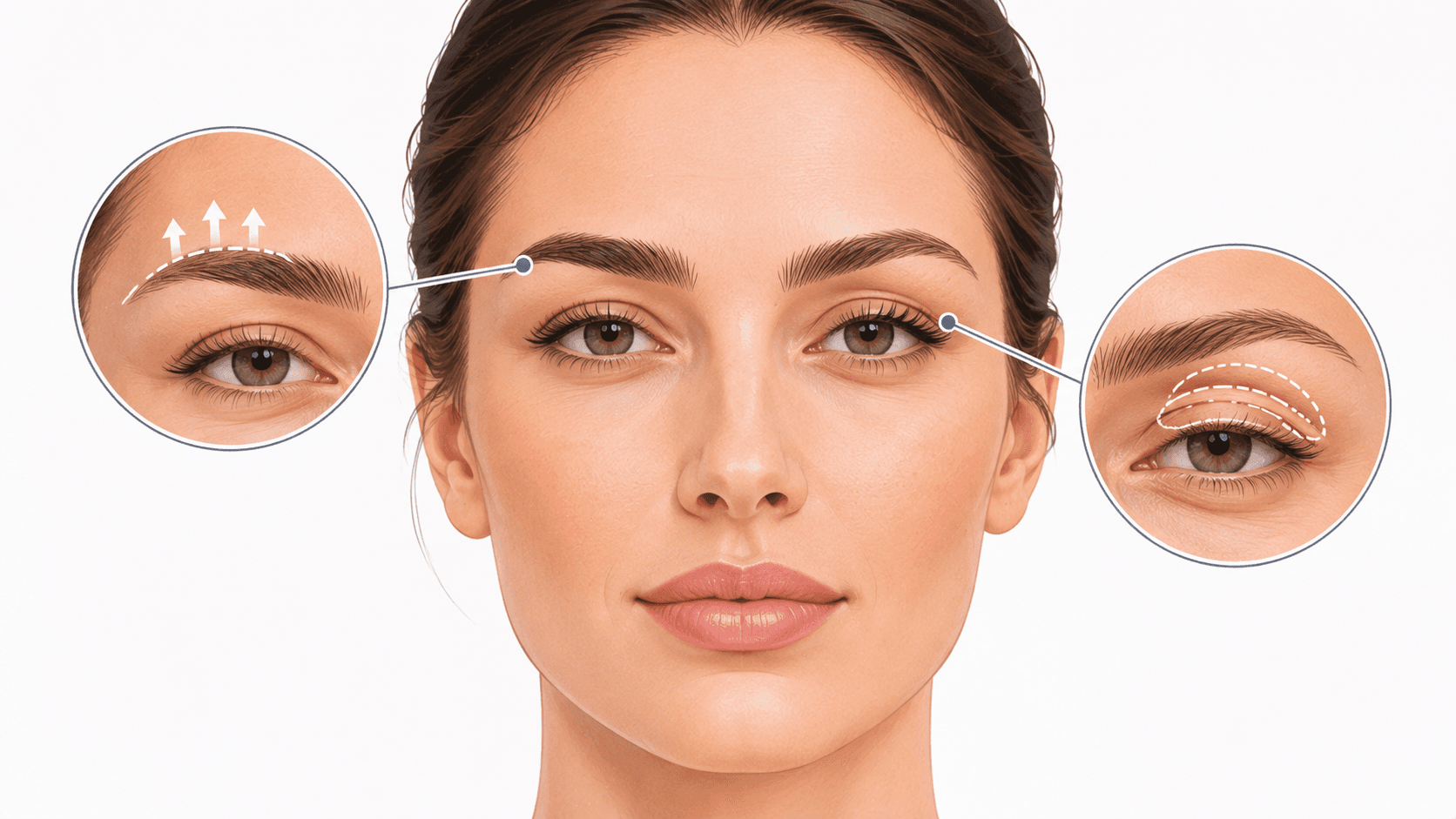
What Are the Differences Between Laser Brow Lift and Plexr?
The main difference between laser brow lifting and Plexr is the energy source used. Laser systems work with light energy, while Plexr uses plasma energy. This difference directly affects the way the two methods influence the tissue, the concerns they target, and the results they achieve.
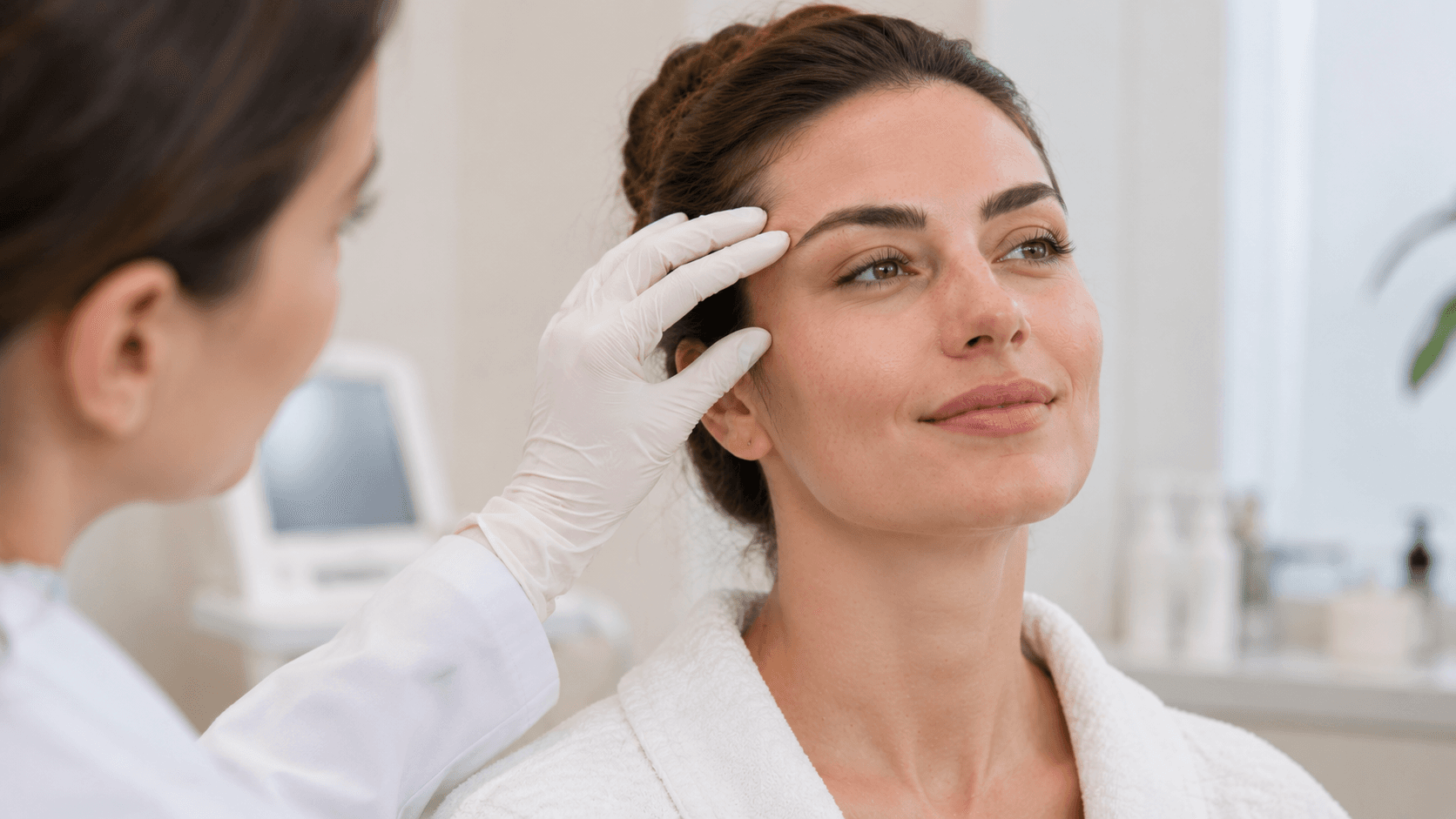
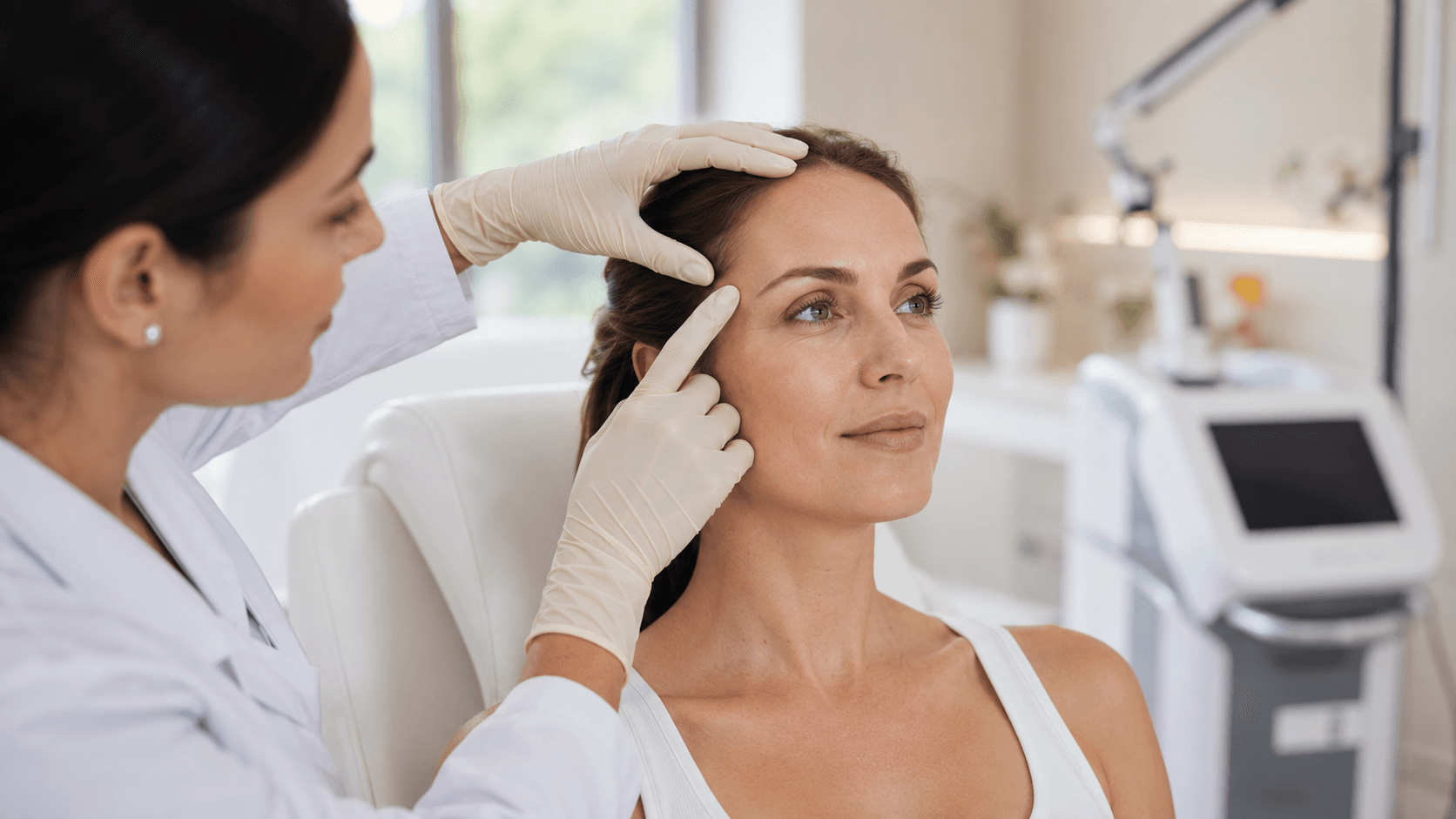
Both treatments are among non-surgical aesthetic options. However, they do not serve the same purpose. Laser brow lifting aims to tighten and rejuvenate the skin around the eyebrows. Plexr, on the other hand, focuses on reducing excess skin on and around the upper eyelid. In other words, one improves skin quality, while the other tightens lax skin.
Three distinct anatomical targets must be differentiated here. Raising the position of the eyebrow is one goal. Reducing excess skin on the upper eyelid is a second goal. Rejuvenating the skin around the eyes is the third. These three concerns often occur together, but each requires a different solution.
The right method is determined by three factors: your skin’s elasticity, the current position of your eyebrows, and the structure of your eyelids. Therefore, there is no single answer to the question, “Which one is better?” The answer depends on your specific anatomical needs.
What Is Laser Brow Lifting and How Does It Work?
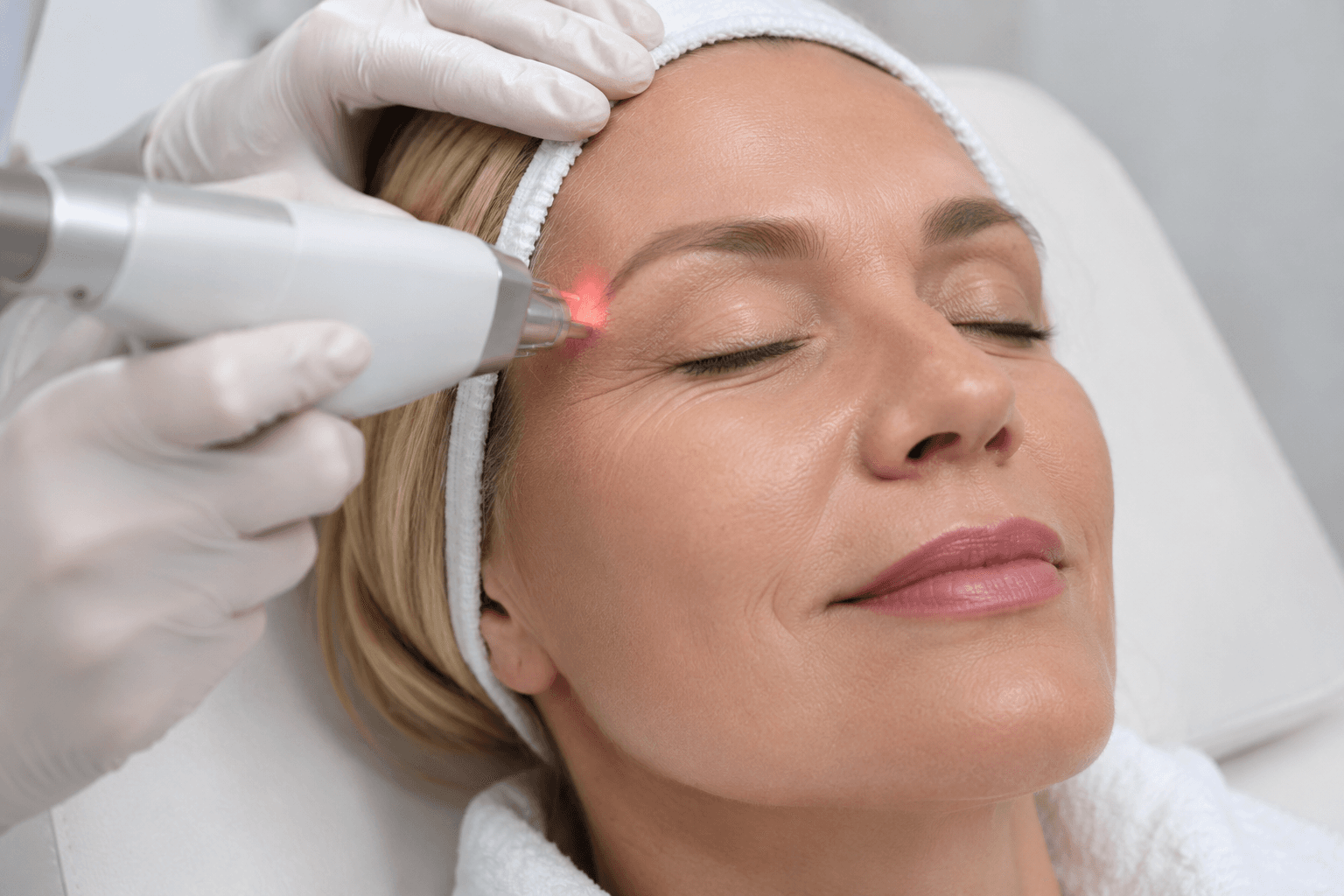
Laser brow lifting works by creating a controlled thermal effect in the skin around the eyebrows and eyes. This effect activates the skin’s natural repair mechanism and supports the production of new collagen.
Laser devices produce light at specific wavelengths. This light is absorbed by target structures in the skin, such as water and pigment, and is converted into heat. The resulting controlled heat stimulates fibroblast cells in the dermal layer. Fibroblasts begin producing new collagen and elastin fibers. Studies involving carbon dioxide lasers have shown that this process creates measurable connective tissue remodeling in the skin (Orringer et al. 2004).
The controlled thermal effect has another consequence. Heated collagen fibers contract, giving the skin a certain degree of immediate firmness. This is followed by a remodeling phase that continues for several months. For this reason, the effects of laser treatments can be seen both early and later on.
A critical point comes into play here. Laser skin tightening and direct brow lifting are not the same procedure. Laser treatment does not anatomically move the eyebrows upward. It tightens the skin around the eyebrows, making the brow area appear more lifted. Aligning your expectations with this fact will help ensure satisfaction with the results.
The laser technologies used around the eyebrows vary according to the treatment goal. In the next section, we will examine these technologies individually.
Which Technologies Are Used for Laser Brow Lifting?
Three main laser groups are used in this area: fractional carbon dioxide lasers, erbium lasers, and non-ablative lasers. Each group produces an effect at a different depth and intensity in the skin.
Fractional carbon dioxide laser treats the skin in microscopic columns while preserving the healthy tissue between them. This method is highly effective for superficial tissue resurfacing. Histological studies have demonstrated that carbon dioxide laser treatment produces significant tightening of collagen fibers (Fitzpatrick et al. 2000).
Erbium lasers use a wavelength that is absorbed more readily by water. This results in less heat spreading to the surrounding tissue and allows for more controlled resurfacing. The recovery period is generally shorter than with carbon dioxide laser treatment.
Nonablative lasers, on the other hand, work without damaging the skin’s surface. The light penetrates the surface and reaches the dermis, where it creates a thermal effect. Electron microscopy evaluations have demonstrated new collagen formation in the papillary dermis following nonablative laser treatment (Schmults et al. 2004).
The choice of laser depends on three criteria: your skin type, the area to be treated, and the desired outcome. Because the risk of pigmentation is higher in darker skin types, laser selection is made more carefully (Alexiades-Armenakas et al. 2008).
What Is the Plexr Eyebrow and Periocular Lifting Procedure?
Plexr is a non-surgical aesthetic treatment that uses plasma energy. Unlike lasers, it does not work with light but through ionized gas, treating the skin point by point.
The device’s operating principle is known as plasma exeresis. When the tip of the device approaches the skin, the air between the tip and the skin becomes ionized. This ionization creates a microscopic plasma arc. The arc converts the superficial tissue at the point of contact directly from a solid state into a gas. This process is called sublimation.
As a result of sublimation, the targeted skin points contract and the tissue tightens. The healing process then begins. The controlled micro-injury created during this process stimulates new collagen production. A pilot study conducted using confocal microscopy demonstrated promising remodeling of upper-eyelid collagen following plasma exeresis (Rossi et al. 2018).
Plexr is most commonly used for upper-eyelid sagging and loose skin around the eyes. A clinical study involving forty patients found a statistically significant reduction in eyelid laxity following treatment (Hassan et al. 2022).
How Does the Plexr Procedure Differ from an Eyebrow Lift?
Plexr does not directly lift the eyebrow; it makes the eyebrow area appear more open by tightening excess skin on the eyelid. This distinction is essential for establishing realistic expectations.
The primary function of Plexr is to create skin contraction in the targeted area. When excess skin on the upper eyelid is reduced, the eye appears more open and the area around the eyebrow looks optically more lifted. However, the anatomical position of the eyebrow does not change.
Surgical eyebrow lift procedures, on the other hand, reposition the tissues that support the eyebrow. This is an entirely different approach. Plexr does not replace this procedure; it offers an alternative to surgery for mild to moderate excess skin.
The result depends on your current brow position and eyelid anatomy. If you have true brow ptosis, skin tightening alone may not be sufficient.
What Are the Technical Differences Between Laser Brow Lift and Plexr?
The technical differences between the two methods can be grouped under four headings: energy source, mechanism of action, treatment area, and tissue response. Understanding these differences is the first step toward choosing the right treatment.
Laser uses light energy at specific wavelengths. The light is converted into heat in the tissue, creating a photothermal effect. Plexr, on the other hand, generates a plasma arc through ionized gas and reduces the tissue through sublimation.
The method of application also differs. Depending on the handpiece used, laser systems can treat broad areas or work in fractional patterns. Plexr, however, focuses on small, specific points and is applied with millimetric precision.
Tissue regeneration in both methods relies on a collagen response, but the mechanism that triggers this response differs. With laser, the response results from the controlled thermal effect created by heat. With Plexr, the healing process following pinpoint superficial tissue loss stimulates collagen production.
Laser and Plexr Comparison Table
The table below compares the two methods according to eight key criteria. The information in the table provides a quick overview to help guide your decision-making process.
Comparison criterion | Laser brow lift | Plexr |
Energy source | Light energy | Plasma energy |
Basic mechanism | Wavelength-dependent photothermal effect | Ionization and sublimation |
Treatment area | Varies depending on the system used | Small, targeted areas |
Effect on the tissue | Controlled thermal effect | Targeted superficial tissue reduction |
Primary goal | Skin tightening and rejuvenation | Reducing skin laxity |
Collagen response | Supported by tissue healing | Supported following controlled micro-injury |
Recovery process | Varies depending on the type of laser | Spot scabbing and redness may occur |
Number of treatments | Depends on the technology and indication | Multiple sessions may be required depending on individual needs |
An important note should be added. Laser eyebrow lifting does not refer to a single device or a single protocol. Therefore, it is essential to know which type of laser is used when evaluating the recovery period and results.
Which Method Is More Effective for Which Concerns Around the Eyebrows and Eyes?
The right method depends on the nature of your anatomical concern before your aesthetic expectations. Eyebrow drooping and excess upper eyelid skin are different issues and require different solutions.
Skin quality, loss of elasticity, and wrinkles also shape the treatment plan. The same procedure is not recommended for someone with thin, wrinkled skin and someone with thick but lax skin. In the subheadings below, we will address three common scenarios separately.
Which Method Is Preferred for Excess Skin on the Upper Eyelid?
Plexr stands out in cases of limited to moderate excess upper eyelid skin. This is because Plexr’s primary function is precisely that: reducing the targeted skin.
Clinical studies support this use. In an observational study involving sixteen patients, most patients reported high satisfaction after upper eyelid treatment using plasma technology (Ferreira et al. 2021).
Laser plays a secondary role in this picture. It can be added to the treatment plan to rejuvenate the skin and improve superficial wrinkles.
The situation is different when there is significant excess skin. At this point, surgical blepharoplasty offers the most lasting and effective solution. It would not be realistic to expect the same result from non-surgical methods.
Which Is More Advantageous for Fine Lines and Wrinkles Around the Eyes?
Laser skin resurfacing is more advantageous for fine lines and textural irregularities. This is because laser treatment improves both the skin’s surface quality and the structure of the dermis.
Fractional laser treatments provide simultaneous rejuvenation over a broad area. This is one of the laser’s key strengths when treating widespread fine lines around the eyes.
Plexr has a more limited role in treating wrinkles. It may be considered for mild skin laxity in the crow’s-feet area and for tightening in specific areas.
Two criteria stand out when making a decision: the depth of the wrinkles and your skin type. Both methods may provide benefits for superficial lines, while expectations should be managed more carefully for deep wrinkles.
Are Drooping Eyebrows and Sagging Eyelids Treated in the Same Way?
No, these two concerns are not treated in the same way. Drooping eyebrows are an anatomical positioning issue, whereas sagging eyelids are primarily a problem of excess skin.
Drooping eyebrows result from the gradual loosening of the muscles and connective tissues that support the eyebrows. The effects of gravity on the forehead also accelerate this process.
Excess skin on the upper eyelid presents a different situation. The excess skin droops over the eye, giving the eye area a tired appearance and, in advanced cases, narrowing the upper field of vision.
The limitations of skin-tightening treatments become clear in this context. These treatments do not always change the actual position of the eyebrows. For pronounced eyebrow drooping, discussing surgical brow lift options with a specialist is the most appropriate approach.
How Soon Are the Results of Laser Brow Lifting and Plexr Visible?

With both methods, the initial changes appear early, but the final result takes shape over several months. This is because collagen remodeling is a biological process that requires time.
The tightness observed during the first few days after treatment is primarily caused by tissue contraction and edema. The true lasting change becomes more apparent as tissue healing progresses. Studies on laser treatment have shown that dermal remodeling may continue for up to twelve months (Orringer et al. 2004).
The results are influenced by four individual factors: age, skin elasticity, the extent of sun damage, and lifestyle. Smoking and intense sun exposure suppress collagen production and shorten the longevity of the results.
Therefore, the same procedure may produce different results in two different people. Person-to-person variability is inherent to these treatments.
What Changes Occur in the Skin After Plexr Treatment?
Small scabs form at the treatment sites after Plexr, which is an expected sign of healing. The scabs usually fall off on their own within a week.
Redness and temporary sensitivity may occur during the first few days. Observational studies have shown that eyelid swelling and itching are the most frequently reported symptoms during the first week (Ferreira et al. 2021).
The true assessment begins after the scabs fall off. Changes in skin tightness become clearer as healing is completed, and the final appearance settles over the course of several months.
How Long Does the Effect of Laser Brow Lifting Last?
The duration of the laser’s effects varies according to the type of technology used. Ablative lasers provide more noticeable results in a single session, while results with non-ablative lasers develop cumulatively over several sessions.
Two processes determine the long-term result. The first is the new collagen production triggered by the treatment. The second is the ongoing process of skin aging. In other words, the treatment turns back the clock, but it does not stop it.
Extending the longevity of the results is in your hands. Regular sun protection and appropriate skincare are the most effective ways to preserve the benefits achieved. Long-term follow-up studies of fractional laser treatments have shown that most of the improvement continues even years later in patients who follow preventive skincare practices (Orringer et al. 2004).
How Do the Recovery Periods and Aftercare Differ Between the Two Treatments?
The skin undergoes different healing processes after laser and Plexr treatments because the type of tissue damage caused by the two methods differs. This difference also changes the aftercare plan.
With Plexr, pinpoint scabbing is the main feature. With laser treatment, superficial peeling or only redness may occur, depending on whether the system used is ablative or non-ablative.
In both cases, the anatomy of the eye area requires special attention. The skin in this area is among the thinnest on the body. Therefore, the aftercare plan should be tailored to the sensitivity of the area.
How Long Do Scabbing and Redness Last After Plexr?
Scabbing usually lasts five to seven days, and redness subsides within a few weeks. These timeframes vary depending on the individual’s skin structure and the extent of the treatment.
The scabs at the microplasma points are a natural part of the healing process. Picking at the scabs or irritating the skin increases the risk of scarring and changes in skin color.
During the recovery period, follow the wound-care instructions recommended by your doctor and do not neglect sun protection. These two steps are the most practical way to reduce the risk of complications.
What Should Be Considered After Laser Treatment?
Post-laser care varies depending on whether the laser used is ablative or non-ablative. Since skin resurfacing is more intensive with ablative lasers, the need for aftercare is also greater.
Three basic rules apply to every laser treatment. First, use products that protect the skin barrier. Second, avoid sun exposure and apply an appropriate sunscreen. Third, avoid irritating cosmetic products during the healing period.
The purpose of these rules is clear. Newly resurfaced skin is temporarily vulnerable to external factors. Proper care both accelerates healing and reduces the risk of pigmentation.
What Are the Risks of Laser Brow Lifting and Plexr Treatments?
Both methods are considered safe, but they involve controlled energy application and carry certain risks. Most risks result from incorrect energy settings and insufficient practitioner experience.
The proximity of the treatment area to the eyes increases its anatomical sensitivity. Therefore, treatments around the eyes require more careful planning than treatments performed on other areas of the face.
In the following subheadings, we will examine the specific risks of both methods and the safety precautions that should be taken.
What Complications May Occur After Plexr Treatment?
The most frequently reported complications are prolonged redness, inflammation, and post-inflammatory hyperpigmentation. These effects are usually temporary, but the risk of discoloration is higher in darker skin types.
Cases of hyperpigmentation following non-surgical eyelid treatment with plasma technology have been reported in the scientific literature; this risk is particularly evident in Fitzpatrick III and IV skin phototypes (Ziade and Desiree 2020). The Fitzpatrick phototype is a classification based on how the skin responds to sunlight.
Incorrect application can lead to more serious consequences. Excessive energy may cause burns and scarring. Incorrect positioning of the treatment points may result in micro-scarring and tissue irregularities.
The thin skin of the eyelids increases these risks. Therefore, it is important that the treatment in this area be performed by a physician experienced in treating the region.
Is There a Risk of Pigmentation and Burns with Laser Brow Lifting?
Yes, laser treatments carry a risk of pigmentation changes and burns. The extent of the risk depends on the wavelength and energy level of the laser used.
The situation is more sensitive in darker skin phototypes. Melanin in the skin absorbs laser light, which may lead to unwanted pigment changes. Therefore, laser selection and parameter adjustment in darker skin require specialized expertise (Alexiades-Armenakas et al. 2008).
Thermal damage and scarring may develop when treatments are performed improperly. This risk is more pronounced with high-energy ablative treatments; studies in the literature have reported permanent scarring following aggressive laser treatments (Fitzpatrick et al. 2000).
Appropriate eye protection must be used when treating the area around the eyes. Metallic protective eye shields prevent laser light from reaching the eyes.
What Safety Precautions Should Be Taken When Treating the Area Around the Eyes?
Four fundamental safety measures apply to every treatment in this area: anatomical assessment, appropriate device selection, a qualified practitioner, and informed consent.
Before the procedure, the eyelid anatomy and eye health should be evaluated. Dry eye, eyelid disorders, and previous eye surgery can affect the treatment plan.
The second step is the selection of the device and protective equipment. A device suitable for the treatment and the correct protective eyewear or shields must be used.
The third step is the practitioner's competence. The procedure should be performed by trained healthcare professionals. The final step concerns you: potential complications must be explained to you before the procedure. This information helps you establish realistic expectations.
Who Is a Suitable Candidate for Laser Brow Lift or Plexr?
A suitable candidate is someone with mild to moderate skin laxity, realistic expectations, and an overall state of health conducive to healing. Each of these three criteria is assessed individually.
The initial assessment focuses on skin elasticity and excess skin. When the skin is mildly lax, nonsurgical methods can produce good results. Studies on plasma exeresis have shown that the best results are achieved in mild to moderate cases (Hassan et al. 2022).
The second step is expectation management. Your physician should clearly explain the achievable outcome to you. Someone expecting a surgical-level change may not be satisfied with a nonsurgical method.
The third step is a health assessment. Eyelid disorders, active skin problems, and conditions that affect wound healing may delay or prevent treatment.
What Conditions Are Unsuitable for Plexr?
The main conditions unsuitable for Plexr are advanced eyelid drooping, active skin infection, healing problems, and skin characteristics associated with a high risk of hyperpigmentation.
In cases of advanced drooping, the amount of excess skin exceeds what can be reduced with plasma. Functional eyelid problems, meaning conditions that narrow the field of vision, require surgical evaluation.
If there is an active infection or a healing problem in the treatment area, the procedure should be postponed. In skin with a high risk of pigmentation changes and scarring, the balance between risks and benefits should be carefully considered (Ziade and Desiree 2020).
In addition, there may be other contraindications related to your individual health status. Therefore, always make the final decision together with your physician after an examination.
Who May Be More Suitable for a Laser Brow Lift?
Laser brow lifting is more suitable for people seeking a non-surgical option for skin laxity and fine lines. Candidates who particularly want to improve their skin quality can benefit from this method.
The second group consists of people whose skin characteristics are suitable for the type of laser to be used. Laser options are more extensive for light and medium skin tones.
The third and important criterion is expectations. People who do not expect a direct change in brow position and whose goal is skin tightening and rejuvenation report the highest satisfaction. Non-ablative laser studies have confirmed significant tissue improvement in patients with suitable skin characteristics (Schmults et al. 2004).
Can Laser Brow Lifting and Plexr Be Combined in the Same Treatment Plan?
Yes, the two technologies can be combined in the same treatment plan. This is because they target different tissues and can complement each other’s limitations.
In a combination plan, the laser is responsible for skin rejuvenation, while Plexr provides targeted skin tightening. This allows both skin quality and excess skin to be addressed within the same plan.
Whether the procedure is performed in the same session or in separate sessions is a separate decision. This decision depends on the skin’s healing capacity and the safety assessment. Applying intense energy consecutively may increase the healing burden.
It is also important to note that combination treatment is not necessary or suitable for every patient. For people with a single concern, one method is often sufficient.
Does Laser Brow Lifting or Plexr Deliver Better Results?
There is no single correct answer to this question because the two methods address different concerns. Better results are achieved when the treatment’s target corresponds to your specific concern.
If you need skin rejuvenation across a broad area, laser treatment is a logical choice. Laser treatment improves both surface quality and dermal structure simultaneously.
If you have limited excess skin on the upper eyelid, Plexr may be considered. Clinical studies have shown that plasma exeresis provides significant improvement in mild to moderate eyelid laxity (Rossi et al. 2018).
The situation is different in cases of pronounced brow ptosis. In this case, surgical methods may be a more suitable option. In summary, the best treatment is the one determined according to your anatomical needs.
Frequently Asked Questions About Laser Brow Lifting and Plexr
Is Plexr the Same Technology as Laser?
No, Plexr is not the same technology as laser. Plexr uses plasma energy, whereas laser systems use light energy. This difference completely changes the mechanism of action on the tissue.
Does Plexr Really Lift the Brows?
Plexr does not directly lift the brow; it tightens the skin around the eyelid, helping the brow area appear more lifted. It should not be considered to change the actual position of the brow.
Does Plexr or Laser Tighten Eyelid Skin More Effectively?
The answer depends on the degree of excess skin, the type of laser used, and your anatomy. Plexr is preferred for limited excess skin, while laser treatment is more suitable for widespread skin quality concerns.
Can Plexr Treatment Replace Surgical Blepharoplasty?
No, Plexr cannot replace surgical blepharoplasty. For individuals with significant excess skin, surgical blepharoplasty offers a more appropriate and longer-lasting solution.
Will Plexr Leave Scars?
When performed using the appropriate technique and with proper patient selection, permanent scarring is not expected. However, unsuitable treatment or healing problems may cause permanent scarring and pigmentation changes.
How Many Sessions Are Required for Laser Brow Lifting?
The number of sessions varies depending on the laser technology used and the desired outcome. While a single session may be sufficient with ablative lasers, non-ablative lasers generally require multiple sessions.
Are the Results of Plexr Treatment Permanent?
The results are long-lasting but cannot be considered permanent. Since skin aging continues, the results may change over time, and their longevity depends on individual factors.
Can People with Darker Skin Tones Undergo Plexr or Laser Treatment?
Yes, but the risk of pigmentation should be assessed in advance for both methods. Skin phototype and device characteristics play a decisive role in treatment selection, and the parameters are adjusted more carefully for darker skin.
References
Alexiades-Armenakas, Macrene R., Jeffrey S. Dover and Kenneth A. Arndt. "The Spectrum of Laser Skin Resurfacing: Nonablative, Fractional, and Ablative Laser Resurfacing." Journal of the American Academy of , volume 58, issue 5, 2008, pp. 719-737.
Ferreira, Flávio Calice et al. "Upper Eyelid Blepharoplasty Using Plasma Exeresis: Evaluation of Outcomes, Satisfaction, and Symptoms after Procedure." Journal of Cosmetic , volume 20, issue 9, 2021, pp. 2758-2764.
Fitzpatrick, Richard E., Elizabeth F. Rostan and Nancy Marchell. "Collagen Tightening Induced by Carbon Dioxide Laser versus Erbium:YAG Laser." Lasers in Surgery and Medicine, volume 27, issue 5, 2000, pp. 395-403.
Hassan, Ayman M. et al. "Evaluation of Plasma Exeresis as a New Technique for Non Surgical Treatment of Dermatochalasis." Journal of Treatment, volume 33, issue 2, 2022, pp. 1017-1022.
Orringer, Jeffrey S. et al. "Connective Tissue Remodeling Induced by Carbon Dioxide Laser Resurfacing of Photodamaged Human Skin." Archives of , volume 140, issue 11, 2004, pp. 1326-1332.
Rossi, Elena et al. "Clinical and Confocal Microscopy Study of Plasma Exeresis for Nonsurgical Blepharoplasty of the Upper Eyelid: A Pilot Study." Surgery, volume 44, issue 2, 2018, pp. 283-290.
Schmults, Chrysalyne D. et al. "Nonablative Facial Remodeling: Erythema Reduction and Histologic Evidence of New Collagen Formation Using a 300-Microsecond 1064-nm Nd:YAG Laser." Archives of , volume 140, issue 11, 2004, pp. 1373-1376.
Ziade, Georges and Keserwan Desiree. "Hyperpigmentation after Nonsurgical Blepharoplasty Using Plasma Technology." Therapy, volume 33, issue 6, 2020, e13493.
Get in touch with our expert team
Related Posts