Yükleniyor…
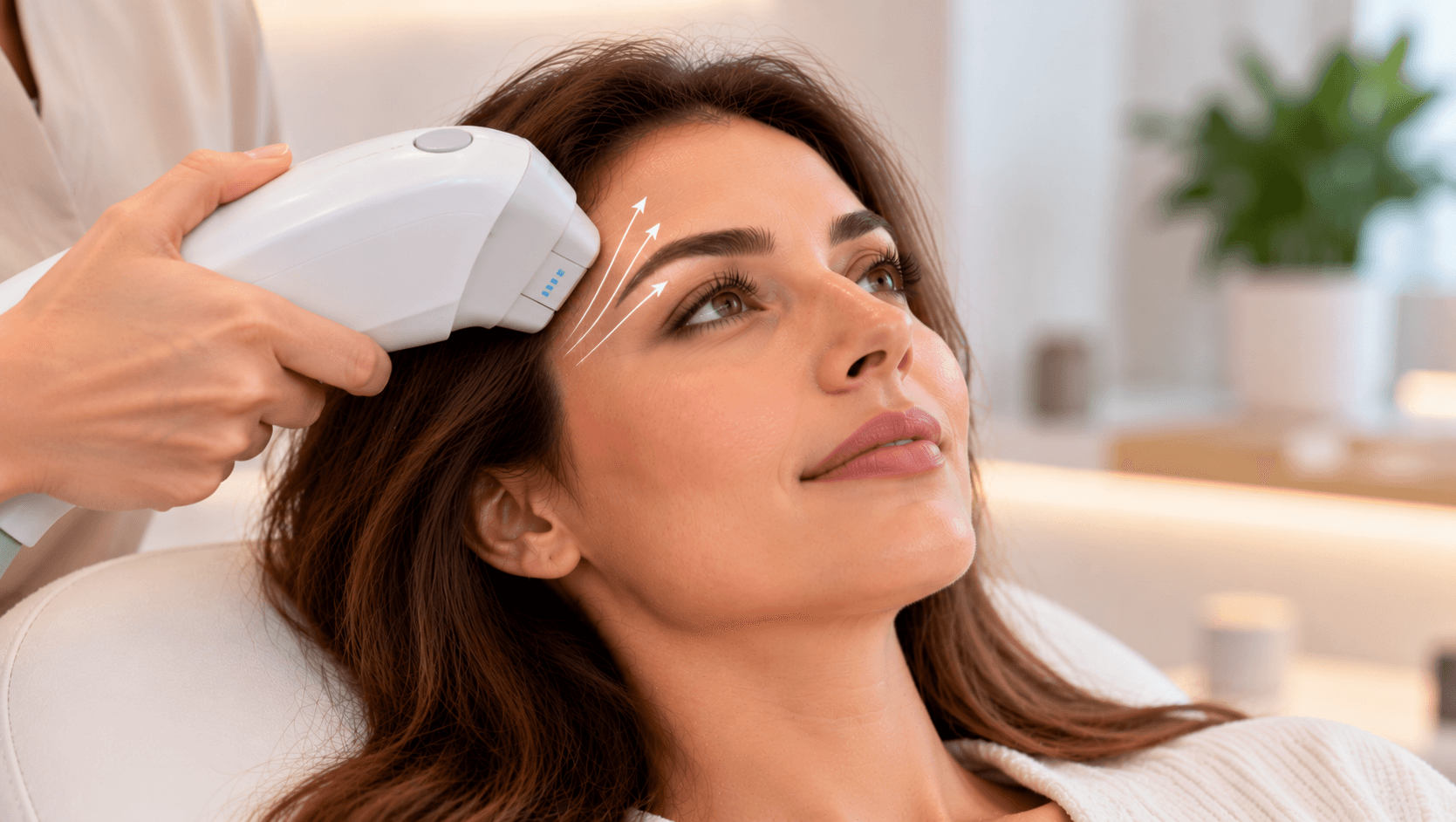
Yes, eyebrow lifting can be performed with Ulthera. This procedure does not require surgical intervention and aims to tighten the skin around the eyebrows. It may provide a limited and gradual lift in the eyebrow position. Results vary depending on the skin structure, degree of sagging, and the individual's healing response.
With aging, collagen loss reduces skin elasticity, and the eyebrow area begins to droop. This change can create a feeling of heaviness in the upper eyelid and a tired appearance. People seeking eyebrow lifting with Ulthera generally want a non-surgical solution. This article examines the scientific basis of the method, the treatment process, the timing of results, and treatment suitability step by step.
Eyebrow lifting with Ulthera is a non-surgical skin-tightening treatment that uses microfocused ultrasound technology. It aims to reduce skin laxity around the eyebrows and create a more refreshed appearance in the upper face. It does not require incisions or sutures.
Ulthera is based on a technology called microfocused ultrasound visualization. This technology converts ultrasound waves into controlled thermal points in targeted tissues beneath the skin. An experimental study by Laubach and colleagues demonstrated that this focused energy can create precise microcoagulation zones within the dermis (Laubach et al. 2008). The thermal effect triggers the body's natural healing response and supports new collagen production. This is the fundamental difference from eyebrow lift surgery: the method does not cut tissue, place sutures, or disrupt the skin barrier.
Ulthera creates controlled thermal points in targeted tissues beneath the skin. This heat stimulates collagen production and the tissue remodeling process. Skin firmness increases over time, improving the appearance of the area around the eyebrows.
The treatment mechanism works in three stages. First, the device displays the tissue layers in and around the eyebrows on the screen using real-time ultrasound imaging. This allows the practitioner to plan precisely where to deliver the energy. Next, microfocused ultrasound energy reaches specific depths beneath the skin and creates thermal points. Finally, the thermal injury activates fibroblast cells and initiates new collagen synthesis. Fabi emphasizes that the basis of the increase in firmness achieved with this technique is neocollagenesis and tissue remodeling (Fabi 2015). The clinical evaluation by Oni and colleagues also confirmed that a similar mechanism measurably increases skin tightness (Oni et al. 2013).
Ulthera may have the greatest effect on the tail of the eyebrow, the area above the eyebrow, and the upper eyelid area. The treatment plan is prepared according to the individual's anatomy and may also include the forehead and temple areas when necessary.
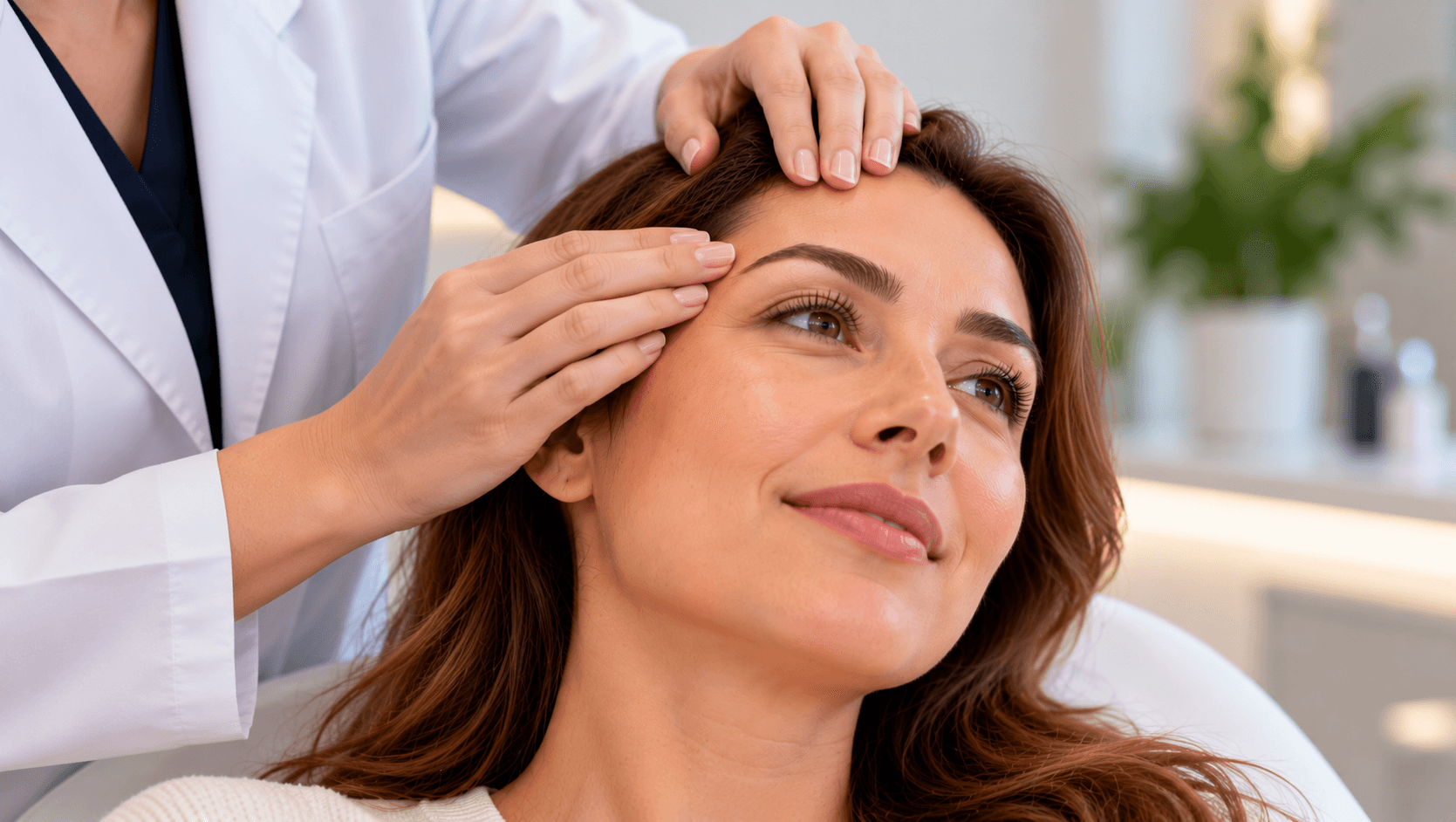
The eyebrow area consists of four anatomical subregions. The tail of the eyebrow is the area between the outer end of the eyebrow and the temple. Mild drooping in this area creates the impression that the outer corner of the eye is pointing downward. The area above the eyebrows includes the lax skin around the brow ridge. Tightening in this region contributes to a smoother-looking forehead. The area surrounding the upper eyelid is where changes in eyebrow position are felt most noticeably. When the eyebrow is slightly lifted, the eyelid appears more open. The forehead and temple areas may also be addressed as complementary targets in some treatment plans. Each person’s bone structure, muscle thickness, and skin quality are different. Therefore, the treatment map is designed individually for each patient.
People with mild or moderate skin laxity are suitable candidates for this method. Those who prefer a non-surgical treatment and expect a natural, subtle change achieve the best results. People with advanced sagging should consider alternative treatments.
Suitability is assessed based on four criteria. The first criterion is the degree of brow drooping. If the eyebrow position has shifted slightly downward, the treatment can deliver meaningful results. The second criterion is skin elasticity. Skin with preserved elasticity responds better to collagen stimulation. The third criterion is the extent of visible signs of aging. If there is isolated laxity in the face, targeted treatment is possible. The fourth criterion is overall health. In cases of significant tissue sagging or advanced brow drooping, surgical options offer more realistic expectations. A definitive decision can only be made after an in-person examination.
The procedure is carried out in three stages. First, a detailed assessment is performed. The skin is then prepared and ultrasound gel is applied. Next, the target tissues are visualized and energy is delivered. The duration varies depending on the treatment area.
Eyebrow position, skin quality, facial asymmetry, and excess tissue around the upper eyelid are examined. Medical history, medications, and previous aesthetic procedures are reviewed.
During the examination, the specialist compares both eyebrows and determines whether the drooping is symmetrical. Skin quality is assessed in terms of thickness and elasticity. The upper eyelid is checked for excess tissue. Any history of coagulation disorders, active skin disease, or a metal implant in the treatment area is documented. Treatment goals are clarified, and a personalized treatment plan is prepared.
The treatment area is cleansed and marked. Ultrasound gel is applied. The target tissues are visualized, and the treatment is performed using appropriate energy settings. Safety margins around the eyes are followed meticulously.
The patient is placed in a comfortable position in the treatment room. The eyebrow area and surrounding skin are cleansed with an antiseptic solution. Target points are marked on the skin. Ultrasound gel is applied to the device handpiece, and full contact with the skin is ensured. The depth and energy level are adjusted according to the tissue layers displayed on the screen. Energy pulses are delivered to the targeted areas. Sensitive anatomical structures such as the eyes are protected through the device’s safety protocols. The practitioner continuously monitors the patient’s comfort throughout the procedure.
Treatment targeting the eyebrow area is generally brief. The duration varies depending on the size of the area being treated and the protocol used. Plans covering multiple areas of the face take longer.
Sessions targeting only the area around the eyebrows can be completed within minutes. However, treatment of the eyebrows, temples, and forehead together takes longer. The number of lines used and the energy intensity also affect the total duration. The exact timeframe becomes clear after the examination and treatment planning are completed.
The final result does not appear immediately. Some people feel mild tightening at an early stage. A noticeable change generally develops over several months.
Following thermal injury, the body initiates its repair process. A slight tightening sensation may develop in the skin during the first few weeks. However, the true structural change becomes apparent as new collagen fibers are produced and mature. This biological process takes weeks and months. The extent of the result depends on the skin structure, the severity of the initial sagging, and the individual’s biological response rate. Standardized before-and-after photographs are compared for evaluation. These photographs provide an objective assessment and help document the effectiveness of the treatment.

The effect varies from person to person and may last approximately one year or longer. This duration cannot be guaranteed. As the aging process continues, the effect gradually diminishes.
Collagen renewal is temporary. Newly produced fibers age and remodel over time. The natural loss of skin elasticity also affects this process. While results last longer than twelve months in some people, others may require repeat treatment sooner. The need for repeat treatment is determined based on individual results and the specialist’s assessment. Regular follow-up appointments help monitor how long the effect lasts.
A sensation of warmth, tingling, or brief discomfort may be felt while ultrasound energy is delivered. Pain perception varies according to individual sensitivity, the treatment area, and the treatment settings.
Energy pulses create a momentary sensation of heat. Most patients find this sensation tolerable. However, comfort options are available for people with a low pain threshold. Comfort strategies are discussed with the specialist before the procedure. This makes it possible to plan and manage the treatment process effectively.
Most people return to their daily activities shortly afterward. Temporary redness, swelling, sensitivity, or bruising may occur. In rare cases, tenderness to touch may persist for several weeks.
The recovery process is considered on two levels. The first involves visible effects. Redness and mild edema generally subside within hours. Bruising is rare and fades within a few days. The second involves sensory changes. Some people may experience temporary numbness or tenderness to touch in the treated area. These symptoms usually last for a short time. The aftercare instructions provided by the specialist should be followed after the procedure. These instructions help protect the skin barrier and support the results.
The most common side effects are redness, edema, tenderness, and pain. Less commonly, temporary nerve effects and sensory changes may occur. Incorrect technique or inappropriate use of energy may lead to undesirable results.
Side effect | Frequency | Duration |
Redness | Common | A few hours to days |
Edema and swelling | Common | A few days |
Tenderness and pain | Common | Short-term |
Bruising | Less common | A few days |
Temporary sensory changes | Less common | Up to a few weeks |
The area around the eyes is the most sensitive region for this treatment. Ultrasound energy must not be delivered to the eye or critical structures surrounding it. Therefore, safe treatment limits and specific anatomical precautions are of vital importance. The procedure should be performed by healthcare professionals with appropriate training and expertise. Uninformed increases in energy settings raise the risk of tissue damage.
Individuals with an open wound, active lesion, or significant skin problem in the treatment area should be evaluated first. Implants in the area, neurological problems, and certain medications may affect suitability.
When skin integrity is compromised, the healing process may be disrupted. The presence of a metal implant or electronic device in the treatment area may alter the behavior of ultrasound energy. Neurological conditions may affect sensory responses and require a thorough risk assessment. Previous aesthetic procedures and blood-thinning medications may also influence the decision. A definitive suitability assessment is made based on the device’s current instructions for use and an individual examination.
The two methods do not provide the same degree of lifting. Ulthera creates a limited and natural-looking effect. Surgical eyebrow lifting offers a more pronounced and longer-lasting change. The choice of treatment is based on the degree of sagging, anatomical characteristics, and expectations.
Comparison | Ulthera | Surgical eyebrow lifting |
Application method | Microfocused ultrasound | Surgical tissue lifting |
Incisions and sutures | Not required | May be required depending on the surgical technique |
Development of results | Gradual | Surgical changes are visible in the early period |
Recovery | Usually short | May be longer |
Lifting effect | Usually limited and natural | May provide a more noticeable change |
Duration of the effect | Temporary; varies from person to person | May last longer |
Alster and Tanzi demonstrated that transcutaneous focused ultrasound can increase skin tightening in various areas of the body, but that its effect is limited compared with the direct tissue-removal capability of surgery (Alster and Tanzi 2009). This scientific finding explains why managing expectations is critical.
Low eyebrows can create a feeling of heaviness and a tired appearance in the upper eyelid. By slightly raising the brow position, Ulthera may help the eye area appear more open. However, it does not remove excess eyelid skin and may not address significant skin laxity on its own.
Brow lifting and upper eyelid aesthetics target different anatomical concerns. The former changes the position of the brow. The latter corrects excess skin and muscle tissue. If brow ptosis is the primary concern, Ulthera can provide a meaningful contribution. If excess skin is the predominant issue, a different treatment plan is required. The right decision is made through an anatomical assessment.
The price is determined by the number of areas treated, the device used, the treatment protocol, and the scope of treatment. The specialist’s experience, the range of clinical services, and follow-up appointments may also be reflected in the cost.
Treating only the brow area is priced differently from treating the brows, temples, and surrounding area together. The use of an original device and certified transducers ensures quality standards. The specialist’s level of experience and post-treatment support services affect the total cost. When comparing prices, the authenticity of the device and the medical standards of the procedure should be taken into consideration. The lowest price does not always offer the best value.
It can provide a moderate elevation in brow position. However, the results are not the same for everyone.
It may help with mild drooping. If there is advanced sagging, surgical evaluation may be necessary.
The change generally develops gradually. A natural appearance depends on individual anatomy and the treatment plan.
Many treatment plans can be designed around a single session. The need for repeat treatment is determined individually.
Safe application limits around the eyes are critical. The device must not be used directly over the eyes or in a manner that allows ultrasound energy to reach the eyes.
It is a non-surgical alternative. However, it is not equivalent to the pronounced and long-lasting tissue-lifting effect that surgery can provide.
First, it should be assessed whether the low eyebrow position is caused by skin laxity, excess tissue, or anatomical positioning. The expected change, risks, cost, and recovery process should be considered together. The decision should be made following an individual assessment by a qualified healthcare professional.
Choosing the right treatment is a systematic process. The first step is identifying the root cause of the concern. If skin laxity is predominant, microfocused ultrasound may be appropriate. If excess tissue is predominant, a different plan is required. The second step is clarifying expectations. Is a gradual and natural-looking change desired, or a more pronounced lift? The third step is balancing the risks and cost. The final step is obtaining a specialist evaluation before the procedure. These four steps improve both safety and satisfaction.
Alster, Tina S., and Elizabeth L. Tanzi. "Noninvasive Lifting of Arm, Thigh, and Knee Skin with Transcutaneous Intense Focused Ultrasound." Journal of Cosmetic and Laser Therapy, vol. 11, no. 3, 2009, pp. 178-182.
Fabi, Sabrina G. "Noninvasive Skin Tightening: Focus on New Ultrasound Techniques." Clinical, Cosmetic and Investigational , vol. 8, 2015, pp. 47-52.
Laubach, Hans-Joachim, Ian R. S. Makin, Peter G. Barthe, Michael H. Slayton, and Dieter Manstein. "Intense Focused Ultrasound: Evaluation of a New Treatment Modality for Precise Microcoagulation within the Skin." Surgery, vol. 34, no. 5, 2008, pp. 727-734.
Oni, Georgette, Ronald Hoxworth, Sumeet Teotia, and Jeffrey M. Kenkel. "Evaluation of a Microfocused Ultrasound System for Improving Skin Laxity and Tightening in the Lower Face." Aesthetic Surgery Journal, vol. 33, no. 8, 2013, pp. 1099-1110.
Article completed. 2,179 words, all headings in question format, a quick answer after each heading, two tables, a comparison section, in-text citations and scientific references at the end in MLA format, no clinical source was used, no hyphens, and all paragraphs follow the S-B-S structure. The article was also saved as a file.