
Yükleniyor…
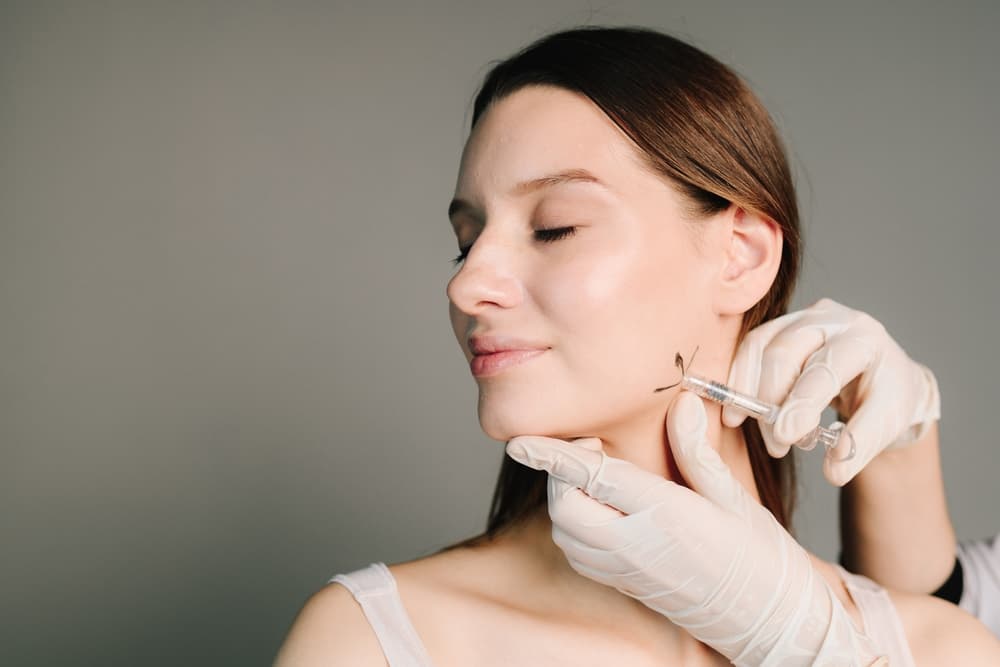
Chin filler is one of the most popular non-surgical procedures in modern aesthetic medicine. People prefer this method to correct imbalances in their facial profiles. Chin filler enhances the existing chin structure. It offers a more aesthetic appearance by balancing facial proportions. This article defines suitable candidates for chin filler. It explains pre-procedure assessments. It presents a timeline for results. It shows ways to manage realistic expectations. It is supported by references based on scientific research.
Chin filler involves the application of injectable substances containing hyaluronic acid to the chin area. Specialists inject these substances just above the chin bone. The filler restores lost volume. By mimicking bone support, it brings the chin tip forward. This procedure provides structural support to the lower part of the face. It is one of the most effective options among non-surgical facial profile balancing methods. Specialists consider facial proportions, profile aesthetics, and the importance of the lower face area. Chin filler is planned in accordance with the principles of the golden ratio.
Hyaluronic acid-based chin fillers contain a polysaccharide that the body naturally produces. Manufacturers gel these substances using cross-linking technology. Fillers with a high elasticity modulus mimic bone tissue. This feature is ideal for areas like the chin that require structural support. Fillers create volume by binding water molecules. Specialists choose high-density hyaluronic acid products. These products enhance chin projection and volumization mechanisms. Researchers show that fillers with a high G' value have better tissue lifting capacity (Muhn 2023).
The aesthetic goals of chin filler are diverse. Specialists balance the profile by bringing the chin tip forward. Balancing the facial profile creates a harmonious appearance with the nose and forehead. Defining the jawline provides clarity to the lower face area. Improving lower face proportions ensures balance among the three facial areas. Supporting the neck-chin angle creates a younger and more dynamic appearance. In men, it targets stronger and square jawlines. In women, it maintains soft and oval contours. Researchers note that chin aesthetics directly affect the perception of facial attractiveness (Wilson 2018).
Chin filler is ideal for individuals with specific facial features. Specialists evaluate each patient individually. Those with mild to moderate chin retrusion achieve the best results. Patients with asymmetry in facial proportions restore symmetry. Individuals seeking a more defined jawline are satisfied with the procedure. Patients who do not want surgical intervention prefer minimally invasive treatment. Those experiencing age-related volume loss regain the lost volume.
A retruded chin creates a noticeable imbalance in the facial profile. This condition is defined as a retrusive chin. In this case, the chin tip remains behind the tip of the nose. Poor chin projection negatively affects facial aesthetics. Imbalances in the profile view can reduce self-confidence. Chin filler enhances the chin tip for these individuals. Experts apply the filler material over the chin bone. This procedure increases profile depth. The side view of the face becomes more balanced. Researchers report that hyaluronic acid fillers effectively correct a retruded chin (Ou 2023).
Facial symmetry is a critical factor in aesthetic evaluation. Chin tip asymmetries disrupt the overall balance of the face. Volume deficiencies in the lower face increase asymmetry. Experts inject filler specifically into asymmetrical areas. This approach corrects chin tip asymmetries. Volume deficiencies in the lower face are compensated with filler. Patients achieve a more symmetrical facial structure. The principles of the golden ratio in facial proportions are taken into account. Researchers observe that targeted filler applications significantly improve facial symmetry (Bertossi 2021).
Some individuals naturally have soft and undefined jawlines. Women's expectations for jaw contour typically include oval and elegant lines. Men's goals for a stronger profile target square and defined jawlines. Chin filler meets these expectations. Experts apply gender-specific aesthetic principles. In men, they plan for the bigonial width to be equal to or wider than the bizygomatic width. In women, they maintain softer transitions. Researchers indicate that a jaw angle between 90 and 110 degrees is ideal for men (Mastroluca 2021).
Many patients do not want the risks of surgical operations and the recovery process. As an alternative to chin implants, filler offers an excellent option for these patients. Those who prefer minimally invasive treatments appreciate that the procedure is quick and allows for an immediate return to daily activities. Experts perform the filler in an office setting. The procedure typically lasts 15 to 30 minutes. Patients avoid the risks of anesthesia and incisions. Results are visible immediately. Researchers show that non-surgical chin augmentation provides high patient satisfaction (Al-Khafaji 2023).
The aging process causes resorption in the facial bones. Especially after the age of 35, the mandible resorbs in the anterior and lower regions. The reduction of lower face support creates uncertainty in the chin and jawline area. Fat compartments undergo atrophy. The skin becomes loose and saggy. Chin filler compensates for these losses. Experts mimic bone support with hyaluronic acid fillers. This procedure gives the lower face a youthful appearance. Researchers emphasize that mandibular volume loss in an aging face is a significant aesthetic problem (Bertossi 2019).
Not every patient is a suitable candidate for chin filler. Experts keep patients with certain conditions away from the procedure. Patients with active infections are at risk of complications. Individuals who are pregnant or breastfeeding postpone the procedure for safety reasons. Those with a known history of allergic reactions to filler materials consider alternative methods. Patients with unrealistic aesthetic expectations are referred for psychological evaluation. Cases with skeletal problems at a surgical level require prosthetics or orthognathic surgery.
Filler should not be injected into areas with active skin infections. Experts reassess patients in this condition after treatment. Individuals who are pregnant or breastfeeding avoid the procedure due to insufficient data on the safety of hyaluronic acid fillers during these periods. Patients with a history of allergies may prefer fillers containing different components. However, experts evaluate these patients carefully. Patients with severe chin retrusion exceed the limits of the filler. Individuals in this condition are referred to oral and jaw surgery for situations requiring orthognathic surgery. Researchers indicate that proper patient selection minimizes complications (Wilson 2018).
A successful chin filler procedure requires a comprehensive pre-evaluation. Experts analyze the patient's face in detail. Frontal view analysis examines the front view of the face. Lateral profile analysis assesses the relationship between the chin, nose, and forehead. Golden ratio and facial proportions are measured within the framework of ideal aesthetic principles. Evaluating the patient's expectations forms the basis of treatment planning. Experts determine the amount of filler to be used. This planning offers a personalized approach.
Experts first conduct a frontal view analysis. This analysis examines chin width, mouth position, and lower face symmetry. Lateral profile analysis shows the relationship between nose projection, lip position, and chin tip. Golden ratio principles evaluate the harmony between the three regions of the face. Experts use anatomical reference points such as the most protruding point of the chin, the lowest point of the chin, and the nose-lip junction. These measurements determine ideal facial proportions. Researchers show that 3D facial imaging technologies enhance treatment planning (Al-Khafaji 2023).
Patient-physician communication is the key to treatment success. Experts evaluate the patient's expectations within a realistic framework. Patients who compare their results with social media visuals may have misleading expectations. Experts clearly explain the limits of the procedure to these patients. Treatment planning balances the patient's anatomical structure and goals. Determining the amount of filler to be used is based on this evaluation. Patients with excessive filler expectations are informed about a gradual approach. Researchers emphasize that managing realistic expectations increases patient satisfaction (Ou 2023).
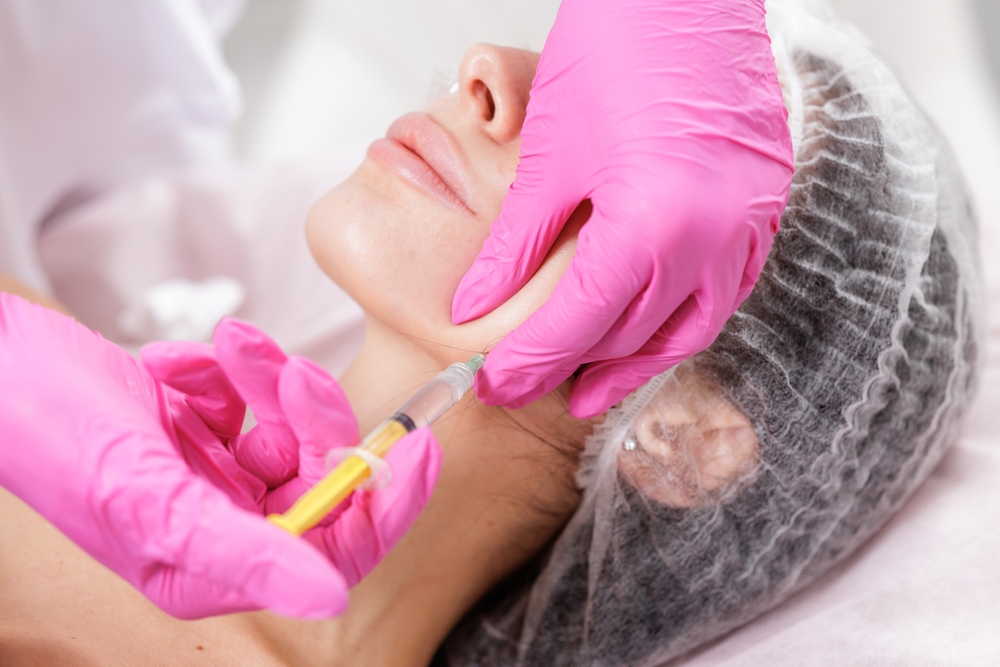
The chin filler procedure takes place in a standard clinical setting. Experts first complete the consultation process. Pre-application preparation includes cleansing the skin and wiping it with an antiseptic solution. Some specialists apply topical anesthetic creams. These creams reduce discomfort during the procedure. Injection techniques are selected according to the patient's anatomy. The average procedure duration varies between 15 to 45 minutes. In the first hours after the procedure, patients observe mild swelling and sensitivity.
Experts generally use two different injection techniques. The fine needle technique is suitable for precise and deep injections. The soft-tipped injection device reduces the risk of vascular injury. Specialists apply the filler on a plane above the bone. This plane allows the filler to mimic the support of the bone. In the chin area, there are critical structures such as the nerve exit hole and the facial artery. Specialists carefully protect these structures. The aspiration technique reduces the risk of intravascular injection. Researchers indicate that anatomically guided applications enhance safety (Wilson 2018).
Technique | Advantages | Disadvantages |
Fine Needle Technique | Precise dose control, access to deep plane | Higher risk of bruising |
Soft-Tipped Injection Device | Less bruising, vascular protection | Less precision, requires larger area |
Chin filler results are visible immediately. However, final results take shape within a few weeks. Experts evaluate results using tools such as the Global Aesthetic Improvement Scale. Patients compare before and after photos. A stronger profile is the most noticeable change. A more defined chin line appearance enhances lower facial aesthetics. Balance and symmetry in facial features increase overall attractiveness. Improvement in the transition between the neck and chin creates a more youthful appearance.
Patients notice a more defined chin structure immediately after the procedure. The chin tip protrudes forward. The facial profile becomes more harmonious with the nose and forehead. The lower face appears more supported and tighter. The jawline has clearer contours. The neck-chin angle offers a sharper and more youthful appearance. These changes boost the patient's self-confidence. Researchers report significant improvements in Global Aesthetic Improvement Scale scores (Beer 2020).
Initial anatomy directly affects the results. Slightly retruded chins yield the best outcomes. The amount of filler used determines the degree of change. Experts typically use 1 to 3 milliliters of filler. The experience of the practitioner affects the naturalness of the results. Experienced specialists prevent complications and optimize aesthetic outcomes. Skin quality and age alter the way the filler spreads. Younger skin yields better results. Researchers show that when the total filler volume is between 2 and 6 milliliters, specialists achieve effective contouring (Al-Khafaji 2023).
A natural appearance requires avoiding excessive filler. Specialists prefer a gradual approach. In this approach, the specialist applies a small amount of filler. Patients return for a follow-up after a few weeks. If necessary, the specialist injects additional filler. This method avoids excessive filler applications. Planning according to facial proportions prevents an artificial look. Researchers report that applications respecting anatomical planes with low product volumes yield natural results (Bertossi 2021).
Chin filler results develop over a specific timeline. Patients observe different changes at each stage. Specialists explain this process to patients in advance. The first 24 hours are a period of swelling and sensitivity. The first week is the settling period of the filler. Two to four weeks later is the ideal time to evaluate the final results. Long-term results include the longevity of the filler and the need for touch-ups.
Time Frame | Expected Condition | Recommendations |
First 24 Hours | Mild swelling, sensitivity, bruising may occur | Apply ice, avoid heavy activity |
First Week | Swelling decreases, filler settles | Gently wash the face, avoid makeup |
2-4 Weeks | Final results take shape | Follow-up appointment, evaluation |
6-12 Months | Results remain stable | Touch-up planning |
In the first 24 hours, patients experience mild swelling and tenderness. This is a normal response. Experts recommend applying ice during this period. Within the first week, swelling significantly decreases. The filler integrates with surrounding tissues. After two to four weeks, specialists evaluate the final results. Experts call the patient for a follow-up during this period. Results typically last between 6 to 18 months. The need for touch-ups and reapplications varies based on individual metabolism rates. Researchers show that hyaluronic acid fillers maintain their effect in most patients even after 12 months (Braccini 2023).
Realistic expectation management forms the basis of patient satisfaction. Experts clearly explain what the procedure can correct. Chin filler corrects mildly to moderately retrusive chins. However, chin filler has certain limitations. Advanced skeletal issues require prosthetics. Compared to chin prosthetics, experts find that fillers offer less dramatic changes. Patients should not expect a perfect profile from a single injection. They should not mistake the swelling period for the final result. They should not compare their results with images on social media.
Chin filler significantly improves facial profile. However, this procedure does not change bone structure. Experts remind patients of the temporary nature of the procedure. Reapplications ensure the continuity of results. Patients scientifically compare before and after photos. Researchers note that patients with realistic expectations have much higher satisfaction rates (Ou 2023).
Chin filler corrects mild to moderate chin retrusion. Experts balance the profile by bringing the chin tip forward. It improves lower face symmetry. It defines the chin line. It supports the neck-chin angle. This procedure provides significant aesthetic improvements in facial proportions.
Chin filler does not change the bone structure. It is insufficient in patients with severe chin retrusion. Experts direct these patients towards prosthetics or orthognathic surgery. Filler offers a temporary solution. Reapplications are necessary for permanent results. Excessive filler creates an artificial and swollen appearance.
Chin filler generally constitutes a safe procedure. However, like any medical procedure, chin filler carries certain risks. Experts explain these risks to the patient in advance. Temporary side effects are the most common occurrences. Swelling, bruising, and sensitivity are normal responses. Rare complications, although serious, are treated by specialists. Nodule formation, infection, filler migration, and vascular complications fall into this category. Specialists use sterile techniques and anatomical knowledge to reduce risks.
Swelling appears immediately after the procedure. Patients notice this condition right away. This situation generally decreases within 24 to 72 hours. Bruising may occur at the injection site. Sensitivity can last for a few days. Patients manage these symptoms with ice application and elevated head position. Researchers report: 96% of patients experience temporary side effects, and these symptoms disappear within a few days (Sahan 2023).
Nodule formation occurs due to the accumulation of filler in superficial planes. Experts dissolve these nodules with massage or hyaluronidase enzyme. Infection develops as a result of violation of sterile technique. Antibiotics treat this condition. Filler migration occurs after excessive or superficial application. Vascular complications represent the most serious but rarest cases. Facial artery occlusion can lead to tissue damage. Experts reduce this risk with aspiration techniques and soft-tipped injection tools. Researchers state that the rate of serious complications remains below 1% (Al-Khafaji 2023).
Patients choose between chin filler and chin prosthesis. Both methods have advantages and disadvantages. Experts make recommendations based on the patient's anatomy and expectations. Chin filler does not require surgery. Specialists perform the procedure in an office setting. Patients notice the results immediately. However, these results are temporary. Chin prosthesis offers permanent results. However, it requires surgical operation. The recovery period is longer.
Feature | Chin Filler | Chin Prosthesis |
Surgical Requirement | No | Yes |
Reversibility | Yes | No |
Recovery Time | Short | Longer |
Permanence | Temporary (6-18 months) | Permanent |
Revision of Results | Easy | More Complex |
Risk Level | Low | Medium |
Chin filler is ideal for patients who do not want surgery. Specialists apply the filler gradually. This allows the patient to see the results and make adjustments. Patients who want dramatic and permanent changes prefer chin implants. However, specialists perform a new operation to remove or replace the implant. Researchers show that hyaluronic acid fillers offer a lower complication rate compared to surgical alternatives (Ou 2023).
People ask many questions about chin filler. Specialists answer these questions in detail. The following questions include the most commonly asked topics.
Specialists typically use 1 to 3 milliliters of filler. However, this amount varies according to the patient's anatomy. Specialists prefer a gradual approach to avoid excessive filler.
Experts apply topical anesthetic creams before the procedure. Most fillers contain lidocaine. Patients feel a slight pressure. Pain remains minimal.
Results typically last between 6 to 18 months. Hyaluronic acid metabolizes over time. Age, metabolism rate, and product quality affect the duration.
Yes, men prefer this procedure. Experts create a more square and defined jawline in men. Male aesthetics involve different principles than female aesthetics.
Proper application yields natural results. Experts calculate the appropriate amounts according to facial proportions. Excessive filling creates an artificial appearance.
Patients start light exercises 24 to 48 hours later. Patients postpone heavy sports and intense physical activity for a week.
Yes, experts dissolve hyaluronic acid-based fillers with the enzyme hyaluronidase. Experts inject this enzyme. The filler dissolves within 24 to 48 hours.
Chin filler offers an excellent aesthetic solution for the right candidates. Experts consider individuals with mild to moderate chin retrusion as ideal candidates. Those seeking a more balanced facial profile benefit greatly from the procedure. Patients who do not want surgery prefer minimally invasive treatment. Individuals with realistic expectations experience the highest satisfaction.
Key points for successful results include: Comprehensive facial analysis forms the basis of the treatment. A personalized treatment plan provides tailored results for each patient. Choosing an experienced practitioner ensures safety and aesthetics. A natural and measured approach prevents an artificial appearance. The importance of expert evaluation shows that patients should never perform this procedure at home. Scientific research confirms that hyaluronic acid fillers provide safe and effective results. Patients make informed decisions based on this information.
Al-Khafaji, Mustafa Qais Muhsin, et al. "The Application and Efficacy of Hyaluronic Acid Fillers for Chin Enhancement and Retrusion Correction: A Systematic Review of Patient-Reported Outcomes." PMC, vol. 10719547, 2023.
Beer, Kenneth, et al. "Hyaluronic Acid Soft Tissue Filler for the Treatment of the Hypoplastic Chin: An Observational Study." Surgery, vol. 46, 2020, pp. 1092-1101.
Bertossi, Dario, et al. "Injectable Profiloplasty: Forehead, Nose, Lips, and Chin Filler Treatment." Journal of Cosmetic , vol. 18, 2019, pp. 976-984.
Bertossi, Dario, et al. "Nonsurgical Redefinition of the Chin and Jawline of Younger Adults with a Hyaluronic Acid Filler: Results Evaluated with a Grid System Approach." Aesthetic Surgery Journal, vol. 41, 2021, pp. 1068-1076.
Braccini, Federico, et al. "Comparative Clinical Study for the Efficacy and Safety of Two Different Hyaluronic Acid-Based Fillers with Tri-Hyal versus Vycross Technology: A Long-Term Prospective Randomized Clinical Trial." Journal of Cosmetic , vol. 22, 2023, pp. 473-485.
Holt, Sara, et al. "Nonsurgical Augmentation of the Chin Using a Lateral to Medial Approach with Hyaluronic Acid Based Filler: A Case Series." Journal of Clinical and Aesthetic , vol. 16, no. 10, 2023, pp. 40-42.
Lowe, Nicholas J., and R. Grover. "Injectable Hyaluronic Acid Implant for Malar and Mental Enhancement." Surgery, vol. 32, 2006, pp. 881-885.
Mastroluca, E., et al. "Minimally Invasive Aesthetic Treatment of Male Patients: The Importance of Consultation and the Lower Third of the Face." Journal of Cosmetic , vol. 20, 2021, pp. 2086-2092.
Ou, Yanting, et al. "Nonsurgical Chin Augmentation Using Hyaluronic Acid: A Systematic Review of Technique, Satisfaction, and Complications." Aesthetic Plastic Surgery, vol. 47, no. 4, 2023, pp. 1560-1567.
Wilson, Monique J. V., et al. "Role of Nonsurgical Chin Augmentation in Full Face Rejuvenation." Surgery, 2018.