Yükleniyor…
The facial oval is one of the most important aesthetic elements that shape the external contours of the human face. The aging process gradually reduces the prominence of this oval over time. Skin laxity, soft tissue sagging, and volume changes significantly affect the clarity of the facial contour.French Lift has become a frequently preferred method in recent years for reshaping the facial oval. So, does this method really make the facial oval more defined? In suitable patients, the French Lift can improve the appearance of the jawline and facial oval by lifting sagging facial tissues upwards and backwards. However, this result varies depending on the degree of sagging and the technique used.
The facial oval refers to an imaginary line that starts from the upper part of the cheekbones, continues along the jawline, and merges with the neck. In a young face, this oval structure is quite pronounced.
Aging reduces skin elasticity, shifts fat compartments downwards, and leads to changes in bone structure. When these processes come together, the facial oval becomes indistinct.
The pronounced oval structure of a young face emerges from the harmonious functioning of several anatomical elements. The cheekbones give youthful fullness to the upper part of the face. Cheek volume ensures that the midface appears full and vibrant. The mandibular contour, which is the line formed by the lower jawbone, defines the boundaries of the lower part of the face. The jawline creates the transition area between the lower face and the neck. The neck-face transition merges at a sharp and clear angle in youth.
The effect of aging on the facial oval occurs through the interplay of multiple factors. The reduction of skin elasticity is one of the most evident signs of this process. The production of collagen and elastin fibers slows down. The skin loses its ability to bounce back as it once did. Tissue sagging due to gravity becomes even more pronounced when combined with this loss of elasticity. Sagging in the lower cheek area, known as jowl formation, disrupts the clarity of the mandibular line. The volume of the lower face shifts downwards. Laxity in the neck area causes the loss of the face-neck boundary.
The displacement of facial fat compartments also plays a critical role in this process. The medial facial fat compartments, which are the fat tissues close to the midline of the face, lose volume with aging. The fat tissues in the cheek area sag downwards. The lower cheek fat tissue shifts upwards over the mandibular line. The nasolabial fold, which is the line between the nose and lips, appears deeper due to these fat shifts. Rohrich and colleagues demonstrated that facial fat compartments selectively lose volume with aging, leading to sagging of the upper fat tissues (Rohrich and Pessa). Alghoul and associates noted that the facial retaining ligaments hold these fat compartments in place and that these ligaments loosen with aging (Alghoul et al.).
French Lift is a facelift method developed to treat facial sagging. This term can encompass different techniques. Therefore, it is necessary to clearly distinguish between the terms.
The French Lift is a procedure that lifts sagging facial tissues upwards and defines the jawline. However, surgical French Lift and thread French Lift are different techniques.
No, these two procedures are not the same. The terminological difference can be a significant source of confusion in communication between the patient and the physician. The thread French Lift involves placing special threads under the skin to pull sagging tissues upwards. Surgical French Lift, as defined in the comprehensive study published by Bellity and colleagues in 2025, is a more invasive surgical technique that treats sagging in the anterior column of the face (Bellity et al.). The term used in this article will generally refer to French Lift to encompass both surgical and thread techniques. However, it will be clearly stated which technique is being referred to in each section.
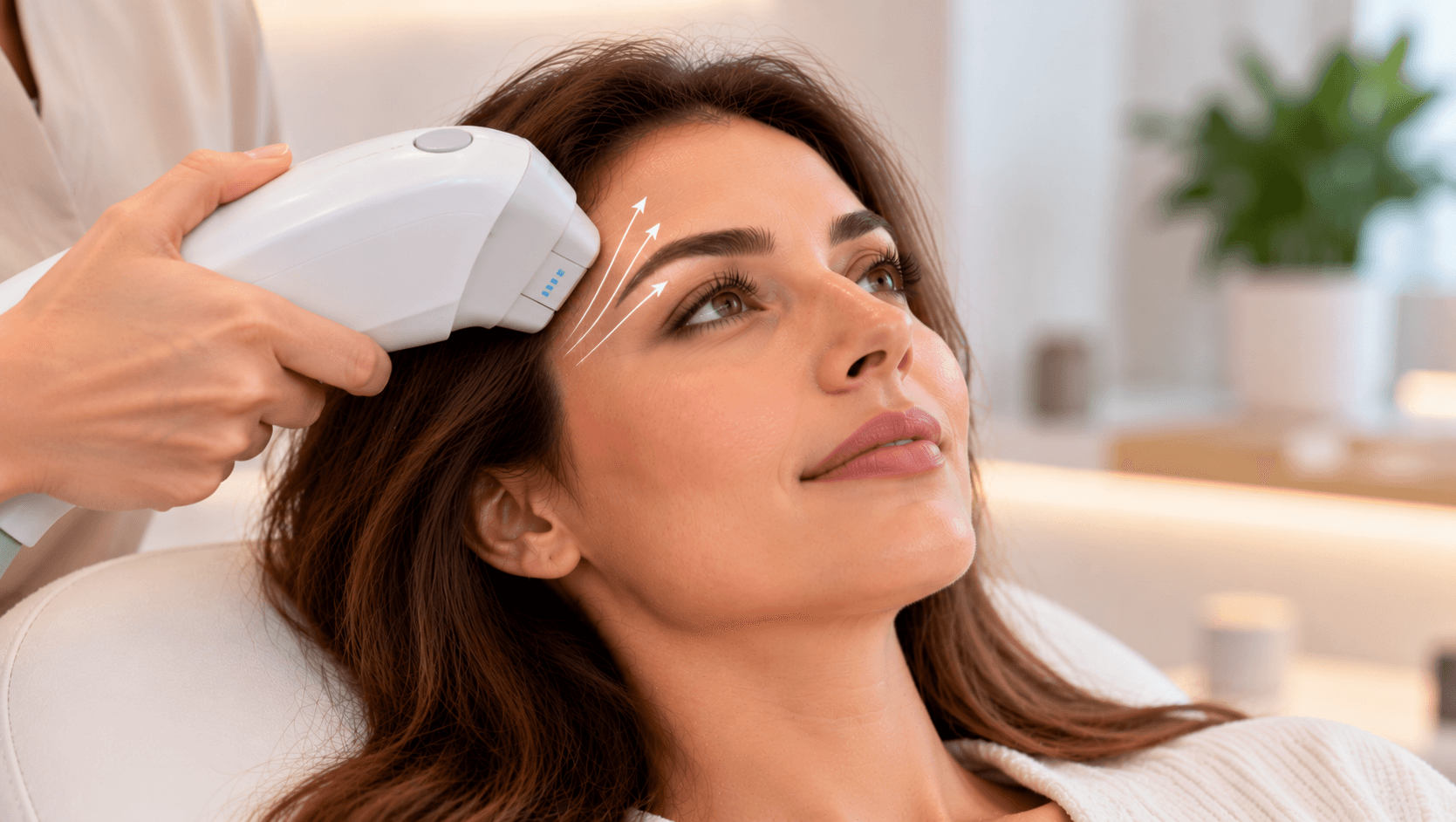
The French Lift serves four main purposes. It lifts sagging tissues. It improves the lower facial contour. It makes the jawline more visible. It reshapes the facial oval. The thread French Lift aims to lift the tissues under the skin in specific vectors. This technique can be applied particularly in the cheek, jawline, lower cheek, and some suitable neck areas. Surgical French Lift, as noted in the study by Bellity and colleagues, focuses on jowl sagging and the repositioning of medial facial tissues (Bellity et al.).
The French Lift employs multiple mechanisms to define the facial oval. These mechanisms work differently in various areas of the face.
The French Lift lifts sagging cheek tissues, tightens the lower cheek area, reveals the jawline, and improves the transition between the face and neck.
The tightening of the cheek contour is one of the most noticeable effects of the French Lift. When sagging cheek fat tissue is pulled upwards, the visual width of the lower face decreases. This creates more balanced facial proportions. The fullness of the midface is revitalized. In a study of 1100 patients by Bellity and colleagues, it was shown that the repositioning of medial facial tissues in upward and diagonal vectors significantly improved the transition between the midface and lower face (Bellity et al.).
The lower cheek, or jowl area, is one of the most significant issues that disrupt the facial oval. Sagging fat tissue and loose skin slide over the mandibular line. The French Lift repositions these tissues. A clearer appearance of the mandibular line is the most important indicator of this tightening. In thread techniques, threads containing polydioxanone or poly-L-lactic acid/polycaprolactone create fibrous tissue under the skin to hold the tissues in place. In a study of 193 patients by Rezaee Khiabanloo and colleagues, the jawline was recorded as the most commonly treated area, and 99% of patients reported increased satisfaction by the sixth month (Rezaee Khiabanloo et al.).
The boundary between the jawline and the neck is sharp in youth. With aging, this boundary becomes blurred. Reducing lower face sagging clarifies this boundary again. A sharper facial contour is one of the most sought-after results of the French Lift. In a pilot study related to jawline lifting techniques, it was shown that the linear distances measured along the jawline improved statistically significantly after the procedure using three-dimensional photo analysis (Thread Lifting of the Jawline).
Neck laxity is another factor that reduces the prominence of the facial oval. The appearance of a double chin increases the weight of the lower face. Visually correcting the face-neck angle is one of the side effects of the French Lift. However, in cases of advanced neck sagging, the French Lift alone may not be sufficient.
This question is one of the most important in the minds of many patients. Does the French Lift change the face shape? The answer depends on what change means.
The French Lift can correct contour issues caused by soft tissue. However, it does not change the bone structure. It does not completely change the face shape, but it can enhance the contours.
Visually reducing the width of the lower face can make the face look more oval. Lifting sagging tissues reduces the weight in the lower part of the face. A more organized appearance of the facial contour is a result of this effect. However, since this change does not alter the bone structure, it is limited.
Tightening the lower cheek area makes the jawline more visible. A clearer appearance of the neck line enhances this sharpness. However, the actual projection of the jawbone does not change. If the jawbone is already set back, the French Lift alone cannot bring the jaw projection forward.
No, the French Lift cannot completely change a round face. The anatomical bone structure does not change. It is necessary to differentiate between contour issues caused by soft tissue and the effects of bone structure. The volume of the masseter muscle, cheek fat tissue, or jaw projection can contribute to different face shapes. The French Lift targets only soft tissue sagging. Therefore, realistic expectations are very important.
The French Lift shows more pronounced effects in certain areas of the face. These effects vary depending on the technique applied and the patient's anatomy.
The French Lift primarily affects the cheek, lower cheek, jawline, chin, and neck area. Some improvements can also be observed in the nasolabial area.
The table below summarizes the effects of the French Lift on the face oval by regions:
Area | Expected Contour Effect |
Cheek | Lifting of sagging, increased midface fullness |
Lower Cheek | Recontouring of the lower face, definition of the mandibular line |
Jawline | More defined appearance of the jawline |
Chin | Improvement of lower face proportions |
Neck | Clearer appearance of the face-neck transition |
Nasolabial Area | Reduction in the appearance of the groove in some surgical techniques |
In the surgical French Lift study by Bellity and colleagues, changes in the lower cheek, nasolabial groove, and under-eye arch areas were specifically evaluated. This study demonstrated that the surgical French Lift could provide significant improvements in these areas (Bellity et al.).

Not every patient is equally suitable for the French Lift. Patient selection directly affects the success of the outcome.
The French Lift yields more pronounced results in individuals with mild to moderate facial sagging, adequate skin elasticity, and realistic expectations.
Mild to moderate sagging is the most ideal indication for the French Lift. The sagging tissues have sufficient elasticity to be pulled upwards. The skin can adapt to its new position. However, in patients with advanced skin excess, the French Lift alone may not be sufficient.
The formation of jowls is one of the issues that can be best treated by the French Lift. Sagging fat tissue can be lifted upwards. The mandibular line can be redefined. However, in patients with advanced fat accumulation, additional procedures may be necessary.
Individuals who lose definition in their jawline can benefit significantly from the French Lift. Sagging skin and fat tissue are lifted from the jawline. The bone structure does not change, but the contour of the soft tissue becomes more pronounced.
Yes, skin elasticity directly affects the results of the French Lift. Skin with high elasticity adapts better to its new position. The integrity of elastin fibers determines the skin's ability to bounce back. With aging, elastin production comes to a halt, and existing fibers break down. Therefore, results are generally better in younger and middle-aged patients (Clinical Relevance of Elastin).
Yes, the French Lift is particularly suitable for those seeking non-surgical options. Thread techniques are minimally invasive. The recovery process is much shorter compared to surgical facelifts. However, the durability of the results is also more limited as a result.
Patient selection criteria include: the degree of sagging, skin quality, facial anatomy, volume loss, jaw projection, and expectations. The study by Rezaee Khiabanloo and colleagues highlighted that mild to moderate sagging and realistic expectations are important criteria for the thread French Lift (Rezaee Khiabanloo et al.).
The results of the French Lift do not depend on a single factor. Many variables affect the quality and duration of the outcome.
Age, skin elasticity, degree of sagging, facial anatomy, soft tissue volume, lifting vectors used, technique applied, and the experience of the physician all influence the results.
Age determines the skin's healing capacity and elasticity. In younger patients, collagen synthesis is more active. Skin elasticity indicates how well the tissues will adapt to their new position. The degree of sagging determines how much lifting is needed. Advanced sagging may require more aggressive techniques. The natural anatomy of the face results in different outcomes for each patient. A wide face and a narrow face will be affected differently by the same procedure.
Soft tissue volume determines the fullness of the face. In patients with volume loss, the French Lift alone may be insufficient. The lifting vectors used determine the direction in which the tissues will be pulled. Incorrect vector selection can lead to unnatural results. The technique applied for the French Lift varies depending on whether it is surgical or thread-based. Surgical techniques provide more permanent results. Thread techniques are less invasive but have a shorter duration of effect. The experience of the physician directly affects the risk of complications and the aesthetic outcome.
Understanding the difference between French lifting and surgical facelift is critical for making the right treatment choice.
French lifting is less invasive, offers a shorter recovery time, but may not provide results as comprehensive as surgical facelift.
Thread French lifting is performed by placing threads under the skin. Surgical facelift requires cutting and repositioning the skin and underlying tissues. French lifting can be performed under local anesthesia. Surgical facelift usually requires general anesthesia.
French lifting involves minimal intervention to the skin and soft tissue. Surgical facelift includes extensive opening of subcutaneous tissues, releasing ligaments, and removing excess skin. In the study by Bellity et al., it was noted that surgical French lifting involves extended subcutaneous dissection and the anterior facial column is lifted as a monoblock (Bellity et al.).
Surgical facelift can shape the facial oval more comprehensively. Excess skin can be removed. Deep fat compartments can be repositioned. French lifting primarily targets soft tissue sagging. Surgical facelift is more effective in patients with significant excess skin.
The recovery process after French lifting typically ranges from a few days to a week. Swelling and bruising may occur. Recovery after surgical facelift can take weeks or even months. In the study by Tarallo et al. on minimal incision facelift, it was shown that 89% of patients were very satisfied with the results at the 24-month follow-up (Tarallo et al.).
The results of thread French lifting typically last between 6 to 18 months. The results of surgical French lifting are longer-lasting. Surgical facelift results can last for years. However, since the aging process continues, no procedure is completely permanent.
French lifting may be suitable for mild to moderate sagging. Surgical facelift is a more appropriate choice for advanced sagging and excess skin. The important scientific distinction is this: Surgical French lifting is a more comprehensive surgical tissue repositioning technique compared to thread lifting. The study of 1100 patients by Bellity et al. on PubMed has retrospectively evaluated the results of this surgical approach (Bellity et al.).
French lifting can be performed alone or in combination with other procedures. Combination therapies can offer more comprehensive results.
Yes, the French Lift can be combined with dermal fillers, chin fillers, neck treatments, and fat injection.
Restoring volume loss is a separate goal from the French Lift. The French Lift pulls the tissues upward. However, it does not restore lost volume. Fillers for cheekbone and chin support complete the missing volume. Lifting and volume restoration complement each other. The French Lift and filler application target different issues. The threads lift the tissue. Fillers support the lost volume.
Improving chin projection enhances the perception of the jawline. The French Lift lifts the soft tissue. Chin fillers support the bone structure. Together, these two procedures can create a more defined jawline.
Evaluating the double chin area is part of lower face aesthetics. Treating neck laxity clarifies the face-neck transition. The French Lift can help with mild neck sagging. However, additional procedures may be required for advanced neck sagging.
In patients with volume loss, a combination approach with fat injection is offered. Fat injection provides permanent volume restoration. The French Lift lifts sagging tissues. Together, these two procedures provide both lifting and fullness.
The results of the French Lift gradually become apparent over time.
There may be swelling and edema in the first few days. Contour changes are observed in the early period. The final result is usually assessed within a few months.
Swelling in the first days after the procedure is normal. Bruising may occur. The skin begins to adjust to its new position. During this period, the face oval may temporarily appear irregular. Patients should be aware that this temporary situation is normal.
Swelling begins to decrease within the first week. The tissues continue to adapt to their new position. In thread techniques, fibrous tissue begins to form around the threads. This tissue holds the tissues in place. In three-dimensional imaging studies, significant improvements in skin quality and contour were observed after 30 days (Effect of PDO Facelift Threads).
It may take several weeks to a few months for the tissues to fully settle into their new position. Collagen renewal is an important part of this process. Polydioxanone threads maintain their shape for 12 weeks. They begin to break down within 24 weeks. However, collagen production can continue for up to 48 weeks.
The final result for the surgical French lift is evaluated over months. There is also a process for the thread French lift. Typically, final results emerge after 3 to 6 months. In the study by Bellity and colleagues, it was noted that the healing of the surgical French lift progresses gradually and the final result is evaluated in the long term (Bellity et al.).
The French lift is not a procedure that provides perfect results in every case. There are some limitations.
Excess skin, significant volume loss, poor skin elasticity, inadequate chin projection, and excessive expectations are limiting factors for the French lift.
In patients with advanced skin excess, the French lift alone is insufficient. Excess skin needs to be removed. Significant volume loss is a problem beyond sagging. In this case, volume restoration procedures are necessary. Poor skin elasticity makes it difficult for the skin to adapt to its new position. Results may be less pronounced. Inadequate chin projection is a bone-related issue. The French lift does not change the bone structure. Significant bone structure issues should be corrected with orthognathic surgery or implants.
Excessive expectations are the most important reason for patient dissatisfaction. The French lift can reshape the facial contour. However, it does not change the bone structure of the face. The fact that the shape of the face is not solely dependent on soft tissue sagging is the anatomical basis of this limitation.
Like any medical procedure, the French lift has its risks and side effects. These risks vary depending on the technique used.
In thread applications, swelling, bruising, sensitivity, and temporary asymmetry may occur. In the surgical French lift, there is a risk of hematoma, infection, nerve damage, and skin necrosis.
Swelling is the most common side effect. It decreases within a few days. Bruising may be seen at the needle entry sites. Sensitivity is a normal response. Temporary asymmetry or irregularity may occur due to swelling. Feeling the thread may be experienced by some patients. The risk of infection is low but not zero. Thread-related complications may manifest as displacement or removal of the threads.
Hematoma is the most common surgical complication. The risk of infection exists in every surgical procedure. Nerve damage or neuropraxia can be temporary or permanent. Skin necrosis can occur due to impaired blood flow to the skin. In the study by Bellity and colleagues involving 1100 patients, the overall complication rate was reported as 7%. This study included complications such as hematoma, temporary nerve involvement, infection, and skin necrosis (Bellity et al.). Therefore, definitive statements such as risk-free or complication-free should not be used when conveying results.
This section is the main part that directly answers the fundamental question of the article. Let's evaluate the effect of the French Lift on the face oval in light of scientific evidence.
Yes, the French Lift can define the face oval in suitable patients. However, the effect varies from person to person, and there are limitations to the evidence.
In patients with mild to moderate soft tissue sagging, the French Lift provides effective results. In patients where lower cheek formation begins, the mandibular line may become clearer. In cases where the lower face contour is disrupted, the contour is corrected. In patients with sufficient skin elasticity, the skin adapts better to its new position.
Anatomical differences lead to different results in each patient. Age affects the skin's healing capacity. Skin quality determines the prominence of the result. Fat distribution alters the face shape. The technique used, whether surgical or thread-based, yields different results. The physician's planning, vector selection, and application experience directly affect the outcome.
The study by Bellity and colleagues has a retrospective structure. This study is based on the experience of a single surgeon. Additionally, this study pertains to surgical French Lift. Results for thread-based French Lift cannot be directly generalized in the same way. This final point makes the article more scientific and reliable than ordinary clinical blog content. Although the study by Rezaee Khiabanloo and colleagues shows that thread techniques are safe and effective, the fact that this study is also a prospective review is a limiting factor (Rezaee Khiabanloo et al.).
Yes, it can define the face oval in suitable patients. However, it does not change the bone structure. It targets soft tissue sagging.
Yes, it can make the jawline more prominent by tightening the lower cheek area. However, it does not change the bone projection.
Partially. It can make the face look more oval by reducing the width of the lower face. However, the bone structure does not change.
Yes, it is one of the most effective areas for treating lower cheek sagging.
It may help with a mild double chin appearance. However, additional procedures may be required for advanced double chin.
The French Lift is less invasive and offers a shorter recovery time. Surgical facelift provides more comprehensive and lasting results.
In thread techniques, it varies between 6-18 months. In surgical techniques, the results last longer.
No. It may not be suitable for individuals with advanced sagging, poor skin elasticity, and unrealistic expectations.
Yes, it is often performed together. The French Lift provides lifting. Fillers provide volume restoration.
No. Surgical French Lift is a more comprehensive tissue repositioning technique. Thread French Lift is a minimally invasive procedure.
The French Lift can help make the facial contour more defined by repositioning sagging facial tissues in suitable patients. The most noticeable visual changes occur in the lower face, lower cheeks, and jawline area. The result depends not only on the application but also on the patient's anatomy and the degree of sagging.
Thread French Lift and surgical French Lift are not the same procedure. These two techniques cater to different patient groups. They offer different results and different complication profiles. Although the existing studies, especially for surgical French Lift, are promising, they are retrospective and based on a single surgeon's experience. There are also studies for thread techniques, but long-term, large-sample randomized studies are needed.
Therefore, it is more accurate to say that it can enhance the appearance of the facial contour and jawline in suitable patients rather than definitively changing the facial contour. Patient selection, realistic expectations, and physician experience are three key elements for successful outcomes.
Bellity, Philippe, et al. "The Facial Rejuvenation Enhancing Cheek Lift (FRENCH LIFT), a Facelift Technique that Treats Sagging of the Anterior Column of the Face: A Single Surgeon's 10-year Experience with 1100 Operated Patients." Aesthetic Plastic Surgery, vol. 49, no. 10, 2025, pp. 2685-94.
Tarallo, M., et al. "New Lift: The Art of Facial Rejuvenation with Minimal Incisions Rhytidectomy." European Review for Medical and Pharmacological Sciences, vol. 20, no. 21, 2016, pp. 4416-25.
Rezaee Khiabanloo, Samad, et al. "Outcomes in Thread Lift for Face and Neck: A Study Performed with Silhouette Soft and Promo Happy Lift Double Needle, Innovative and Classic Techniques." Journal of Cosmetic , vol. 18, no. 1, 2019, pp. 84-93.
Alghoul, Mohammed, et al. "Retaining Ligaments of the Face: Review of Anatomy and Clinical Applications." Aesthetic Surgery Journal, vol. 33, no. 6, 2013, pp. 769-82.
"Thread Lifting of the Jawline: A Pilot Study for Quantitative Evaluation." Plastic and Reconstructive Surgery – Global Open, PMC8149973.
"Clinical Relevance of Elastin in the Structure and Function of Skin." Journal of Cosmetic , PMC8239663.
"Facial Bone Aging: An Update and Literature Review." Journal of Clinical Medicine, PMC12914125.
"Effect of PDO Facelift Threads on Facial Skin Tissues: An Ultrasonographic Analysis." Journal of Cosmetic , 2023, doi:10.1111/jocd.15761.