Is the French Thread Lift Procedure Safe?
French Thread Lift is generally considered a safe procedure when performed with appropriate patient selection, the right materials, and an experienced practitioner. However, no medical procedure is entirely risk-free, and because the French Thread Lift involves intervention beneath the skin, it carries the possibility of certain side effects and complications. Scientific literature indicates that serious complications are rare with thread-lifting techniques, while temporary side effects are relatively common (Niu et al. 2021).
This article examines the safety profile of the French Thread Lift in light of scientific research. It covers how the procedure works, expected side effects, possible complications, data on complication rates, risk factors, and a comparison with surgical facelift surgery. The aim is to help patients make informed decisions based on realistic, evidence-based information before undergoing the procedure.
What Is a French Thread Lift and How Is It Performed?
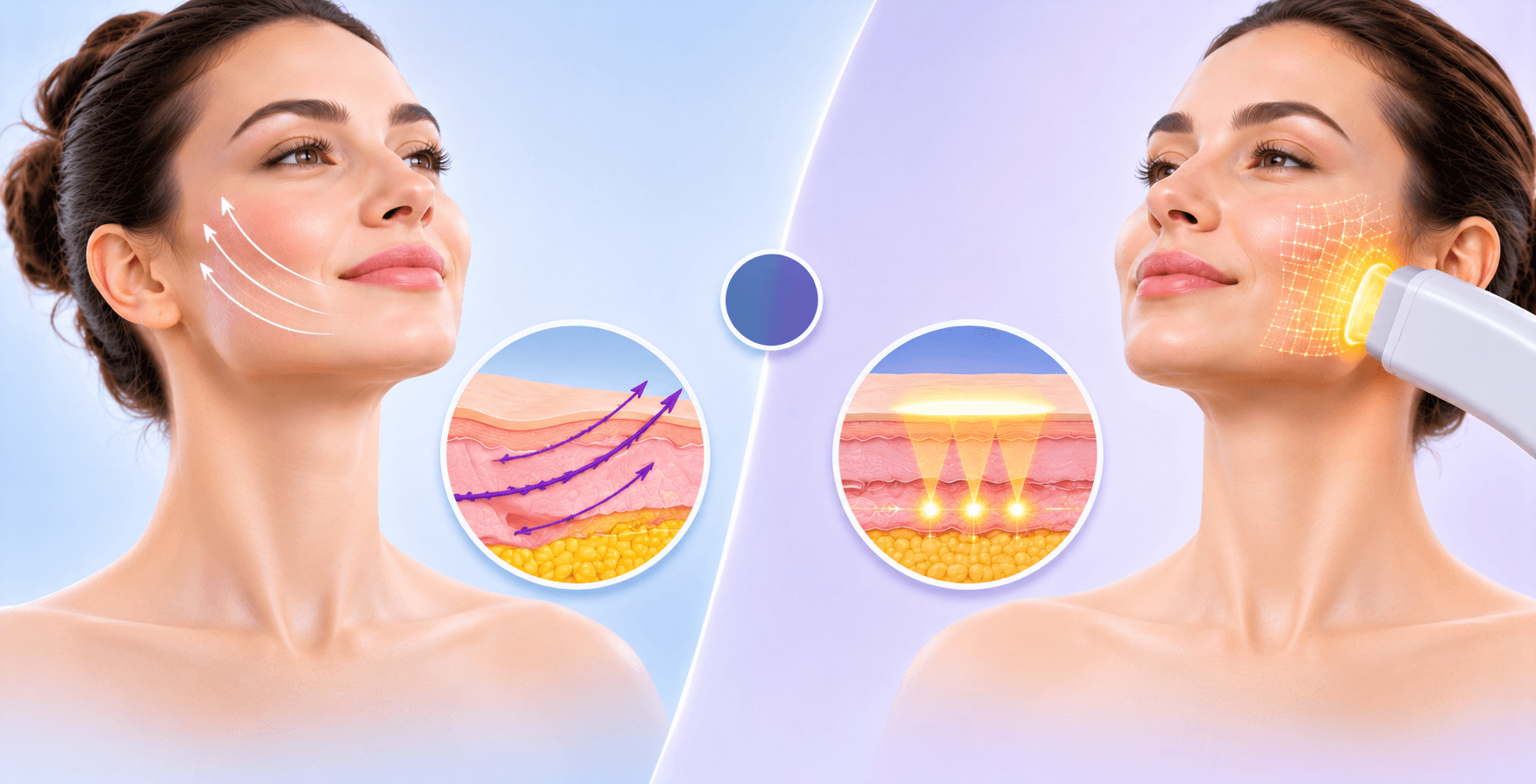
A French Thread Lift is a non-surgical aesthetic procedure that supports facial tissues using specialized threads placed beneath the skin. During the procedure, the physician inserts the threads with a needle or cannula into specific anatomical planes beneath the skin. The threads lift and secure sagging soft tissue upward. This aims to create a more lifted appearance in the cheek area, greater definition along the jawline, and a more contoured facial oval.
This method differs from surgical facelift procedures in one fundamental respect. During a French Thread Lift, no tissue is removed, no extensive skin incisions are made, and no comprehensive intervention is performed on the deeper surgical layers. Depending on the model, the threads used may be flexible, feature specialized surface characteristics that enable them to grip the tissue, and be either absorbable or permanent. Absorbable threads are gradually broken down by the body, whereas permanent threads remain in the tissue for a long time. The basis of thread-lifting techniques lies in addressing soft-tissue sagging with specialized threads described in the early 2000s (Sulamanidze et al. 2002).
What Is the Safety Profile of the French Thread Lift Procedure?
The French Thread Lift is a minimally invasive aesthetic procedure, but it should not be considered risk-free. The safety of the procedure depends on three key variables: the patient’s anatomical characteristics, the quality of the thread material used, and the accuracy of the application technique. When these three factors are appropriately combined, the likelihood of serious complications remains low.
Like any procedure involving intervention beneath the skin, a French Thread Lift carries risks such as infection, bleeding, tissue damage, and inflammation. The fact that the procedure is less extensive than a surgical facelift does not automatically make it safer or more suitable for every patient. In addition, long-term safety data specific to the French Thread Lift are limited in the scientific literature. Most existing studies evaluate different thread systems together. Therefore, general thread-lifting data cannot be applied directly to the French Thread Lift.
What Side Effects May Occur After a French Thread Lift?
The most common symptoms after the procedure are swelling, bruising, tenderness, and a feeling of tightness in the skin. These symptoms are a natural part of the healing process and generally subside on their own within a few days to two weeks.
These side effects occur as a result of the biological response created by the procedure in the tissue. Passing the threads beneath the skin causes minor tissue trauma. Fluid leakage from blood vessel walls leads to edema, while injury to small blood vessels causes bruising. As the threads lift the tissue upward, they may cause a feeling of tightness and temporary asymmetry. Tenderness lasting for a few days at the needle or cannula entry points is also an expected finding. The duration of side effects varies depending on the individual’s tissue structure and the extent of the procedure. The important distinction is that expected symptoms gradually improve over time. Findings such as worsening pain, increasing redness, or fever require a different assessment.
What Complications Can a French Thread Lift Cause?
Serious complications of a French Thread Lift are rare, but they may occur if the thread is placed in the wrong tissue plane, at an inappropriate depth, under excessive tension, or without adequate evaluation of the anatomical structures. Some of these complications may require additional medical intervention or removal of the threads.
The main reported complications are as follows:
Visible or palpable threads: If the thread is placed too superficially, it may be visible from the outside or detectable by touch.
Thread displacement: Threads with inadequate fixation may shift from their intended position over time and cause contour irregularities.
Skin dimpling and irregularities: Attachment of the thread to the superficial layer or concentration of the pulling force at a single point may cause dimpling of the skin.
Infection and inflammation: Inadequate sterilization or bacterial adherence to the thread may trigger an inflammatory reaction.
Granuloma formation: The body may develop inflammatory tissue around the thread, perceiving it as a foreign material.
Threads emerging through the skin surface: Superficially placed or displaced threads may pierce the skin and protrude externally.
Nerve or surrounding tissue damage: Threads placed near branches of the facial nerve or blood vessels may cause sensory loss or movement disorders.
Injury around the salivary gland: In procedures performed in the cheek area, the parotid gland and duct may rarely be affected.
The common factor underlying these complications is technical. Case reports in the literature indicate that most problems are associated with incorrect placement and inadequate anatomical assessment (Gülbitti et al. 2018).
What Does Scientific Research Say About the Incidence of Complications?
Scientific data show that swelling is the most common issue observed in thread lift procedures, while serious complications remain at a few percent. A meta-analysis published by Niu et al. in 2021, which included 26 studies, reported complication rates for facial thread lift procedures as follows (Niu et al. 2021):
Complication | Incidence |
Swelling | %35 |
Skin dimpling | %10 |
Sensory changes (paresthesia) | %6 |
Visible or palpable threads | %4 |
Infection | %2 |
Thread extrusion | %2 |
Two points are critically important when interpreting this table. First, these rates represent general thread lift data covering different thread systems and techniques. They cannot be directly interpreted as complication rates specific to the French Thread Lift. Second, the same meta-analysis identified significant differences between thread types. The rate of sensory changes is 3.1% with absorbable threads, while it rises to 11.7% with permanent threads. The rate of thread extrusion is 1.6% with absorbable threads and 7.6% with permanent threads (Niu et al. 2021).
These data form the basis of pre-procedure patient counseling. When patients are informed of the probabilities in numerical terms, they develop realistic expectations and the informed consent process becomes meaningful.
Who May Consider the French Thread Lift a Safer Option?
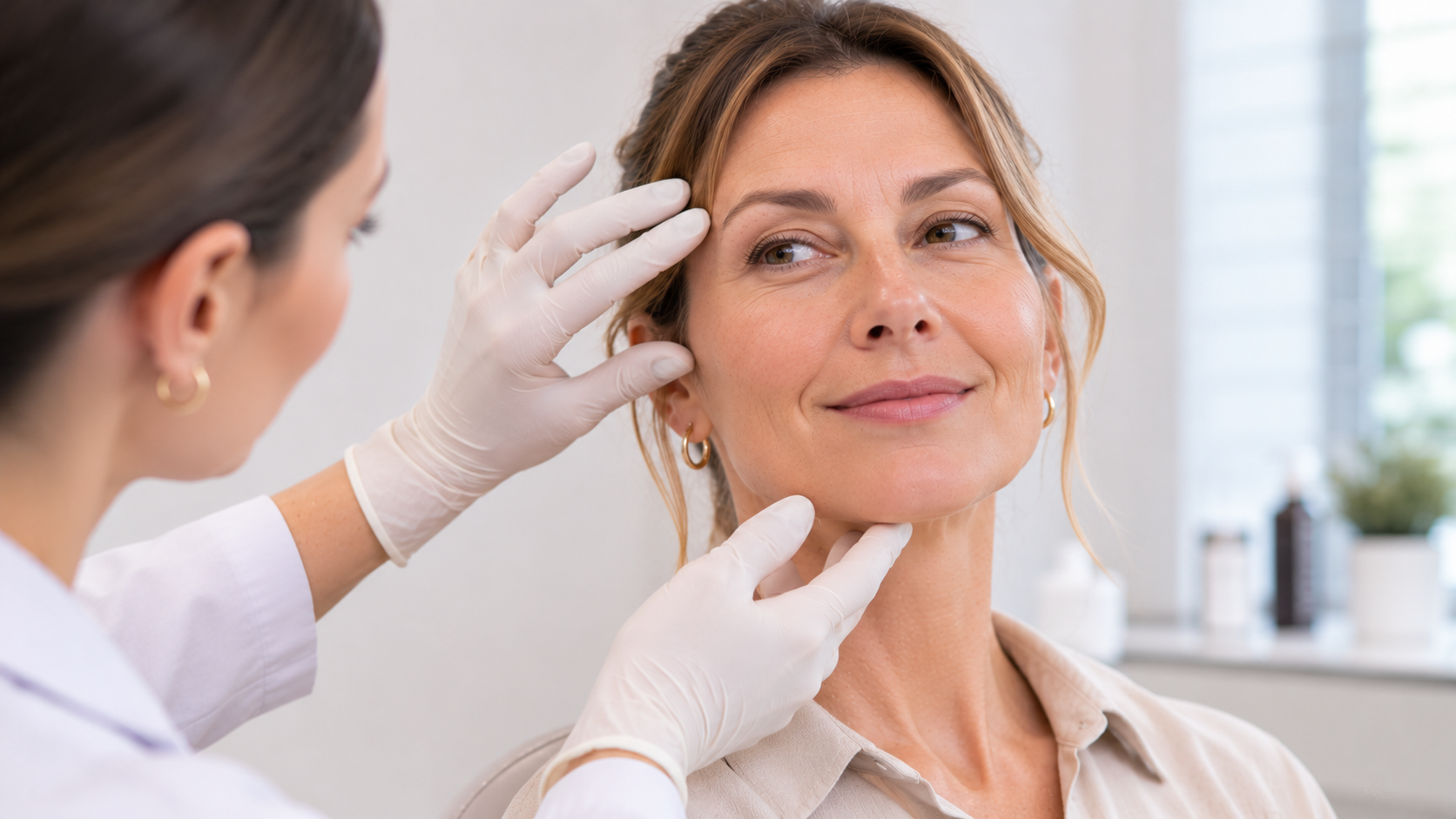
The most suitable candidates for the French Thread Lift are individuals with mild to moderate facial sagging, partially preserved skin elasticity, and good overall health. In this patient group, the tissue load that the threads must support is lower, making the result more predictable in terms of both aesthetics and safety.
Among the anatomical criteria determining suitability, skin elasticity and tissue thickness are particularly important. Skin with sufficient elasticity adapts to the tension created by the thread, reducing the risk of dimpling. In excessively thin skin, the threads may become visible, while in excessively thick and heavy tissue, the lifting effect may remain limited. The French thread lift may not provide adequate results for individuals with advanced skin laxity and significant excess skin; in these patients, it is more appropriate to consider surgical options.
Managing expectations is also part of the suitability assessment. Facial anatomy and the patient’s expectations should be evaluated together. Appropriate patient selection is the single most effective step in reducing the risk of complications.
Which Health Conditions May Increase the Risks of a French Thread Lift?
Bleeding and clotting disorders, diseases affecting the immune system, active skin infections, and uncontrolled diabetes are the main health conditions that increase the risks of a French thread lift. These conditions directly affect both procedural safety and the body’s healing capacity.
Patients with bleeding or clotting disorders have an increased risk of post-procedural hematoma. Diseases that suppress the immune system create an environment conducive to infection and weaken the tissue’s healing response to the thread. An active skin infection or inflammation in the treatment area may cause microorganisms to be carried into the deeper tissue along the threads. Diabetes can slow wound healing because it affects blood vessels and collagen repair.
Medication use is also part of the planning process. Blood thinners, immunosuppressive medications, and all other regularly used medications should be disclosed to the doctor before the procedure. Smoking reduces tissue blood flow and lowers the quality of healing. For these reasons, a comprehensive health evaluation is as important as the procedure itself.
Is Age a Risk Factor for a French Thread Lift?
No, chronological age alone is not a risk factor. Suitability for the procedure is determined by skin quality, tissue elasticity, overall health, and anatomical characteristics. Two patients of the same age may have entirely different risk profiles.
One of the most comprehensive sources of data on this subject is a study by Yezhelyev and colleagues, which examined the records of more than 129,000 patients in the CosmetAssure database. The study found a serious complication rate of 1.94 percent in carefully selected patients aged 65 and older, compared with 1.84 percent in younger patients; the difference was not statistically significant (Yezhelyev et al. 2015). This result shows that advanced age alone does not constitute an obstacle to cosmetic procedures. However, it should be kept in mind that the study evaluated overall cosmetic surgery safety and was not specific to French thread lifts.
Data on thread lifting presents a more nuanced picture. In a meta-analysis by Niu and colleagues, the rate of skin dimpling was reported as 16 percent in patients over 50 and 5.6 percent in those under 50; infection rates were 5.9 percent and 0.7 percent, respectively (Niu et al. 2021). When these two studies are considered together, the conclusion is clear: age itself is not the key factor; rather, age-related tissue changes and accompanying medical conditions are what matter. Therefore, every older patient should undergo an individualized health assessment.
How Is the Safety of a French Thread Lift Related to the Practitioner’s Experience?
The safety of the procedure depends largely on the practitioner’s mastery of facial anatomy. The nerves, blood vessels, fat compartments, and supporting connective tissues of the face form a map that requires millimetric precision. A physician who knows this map places the threads in the correct anatomical plane and avoids danger zones.
Selecting the correct plane prevents most complications. A thread placed too superficially may become visible or extrude. A thread that advances too deeply or in the wrong direction may endanger nerves, blood vessels, and salivary gland structures. An experienced practitioner selects the type of thread suited to the patient’s tissue structure, plans the direction of application correctly, and distributes the tension across multiple fixation points.
Environmental conditions are as important as technical expertise. Sterilization and infection control protocols must be followed completely. Finally, choosing a specialist with the medical equipment and expertise to diagnose and manage complications when they arise is the final link in the safety chain.
What Assessments Should Be Performed for Safety Before a French Thread Lift?
A safe procedure begins with a detailed pre-procedure assessment. This assessment considers the patient’s anatomy, medical history, and expectations within the same framework, and the treatment plan is built on these three pillars.
A comprehensive pre-procedure assessment includes the following steps:
Evaluating the anatomical structure of the face and the degree of sagging
Assessing skin elasticity and tissue thickness
Reviewing the patient’s medical history, ongoing conditions, and medications
Learning about previous aesthetic procedures and any history of thread lifting
Explaining the material, properties, and duration of the threads to be used in the body
Clearly discussing the expected results and possible complications with the patient
Comparing alternative methods such as fillers, energy-based devices, or surgery
Each of these steps also helps ensure that the recovery process discussed in the following sections progresses smoothly.
What Should Be Considered During the Recovery Process?
Swelling, bruising, and tenderness are normal during the first few days of recovery and can be managed with simple measures. Cold compresses recommended by the physician, keeping the head elevated, and taking prescribed pain relievers if necessary can make this period more comfortable.
The quality of recovery is closely related to the patient’s adherence to aftercare instructions. Excessive pressure should not be applied to the face, and sleeping face down or rubbing the tissues unnecessarily should be avoided. The time limits determined by the physician should be followed regarding intense physical activity, wide mouth movements, and practices such as facial massage. These restrictions are intended to protect the process of the threads attaching to the tissue.
Follow-up appointments are an integral part of the process. Most early complications can be detected during a follow-up examination before symptoms have even appeared. If the patient notices a finding that deviates from the expected course, they should contact their physician without waiting for the scheduled follow-up.
Which Symptoms Require Urgent Medical Evaluation?
Expected signs of healing gradually become less pronounced each day. In contrast, worsening, spreading, or newly occurring symptoms require urgent medical evaluation, and the doctor should be contacted without delay.
The following symptoms are outside the normal healing process:
Increasing or severe pain
Fever, chills, and general signs of infection
Rapidly increasing swelling or pronounced redness
Unusual changes in skin color, paleness, or color changes other than bruising
Threads emerging through the skin surface
Newly developing, pronounced abnormalities in facial movements, such as sudden asymmetry when raising the eyebrows or smiling
These symptoms may indicate conditions with the potential to progress, such as infection, vascular complications, or nerve involvement. Early intervention prevents the problem from reaching a more serious stage in most cases. In particular, a thread that emerges through the skin surface should never be pulled or cut at home; this intervention may carry the infection into deeper tissue.
What Are the Safety Differences Between a French Thread Lift and a Surgical Facelift?
The two methods have different risk profiles, and neither is superior for every patient. A French Thread Lift provides limited tissue support using threads beneath the skin. A surgical facelift, on the other hand, involves comprehensive intervention involving the skin and deeper tissues. One point that should be emphasized is that a mini facelift is a surgical procedure and is not the same treatment as a French Thread Lift. The risks of the two methods should not be confused.
Comparison Criterion | French Thread Lift | Surgical Facelift |
Anesthesia | Usually local anesthesia | General anesthesia or deep sedation |
Incision | Only needle or cannula entry points | Surgical incisions |
Risk of bleeding and hematoma | Low | Higher |
Risk of infection | Low | Different risk profile due to the extensive wound |
Risk of nerve damage | Rare and mostly temporary | Risk associated with more extensive nerve dissection |
Recovery time | Several days to two weeks | Several weeks to months |
Longevity of results | Limited and temporary | Longer-lasting |
Suitable patient profile | Mild to moderate sagging | Moderate to advanced sagging, excess skin |
In surgical procedures, hematoma, nerve damage, impaired skin circulation, and wound-healing problems are more prominent concerns. On the other hand, surgery provides results in cases of advanced sagging that a French Thread Lift cannot achieve. The appropriate approach is to choose a less invasive method or surgical intervention according to the patient’s needs. Being less invasive does not make a method safer in every situation; suitability is the determining factor.
How Does the Longevity of Results Affect Long-Term Safety?
The longevity of results and safety are two interrelated concepts. Whether the threads used are absorbable or permanent is the first step in long-term evaluation. Absorbable threads are broken down by the body over the course of several months, whereas permanent threads remain in the tissue for years. A critical distinction must be made here: the thread remaining in the tissue is not the same as preserving the aesthetic result. A permanent thread cannot maintain the lifting effect it had on the first day because tissue aging continues.
The meta-analysis by Niu et al. demonstrates this fact with numbers. While the early post-procedure satisfaction rate was 98%, long-term satisfaction declined to 88% (Niu et al. 2021). The aging process gradually diminishes the results over time due to the loss of skin elasticity and changes in the volume of facial tissues.
Regular follow-up is important for long-term safety. Findings such as late tissue reactions and granulomas may appear months later. The necessity and suitability of repeat treatments should be planned individually by evaluating the existing threads in the tissue and the condition of the newly formed tissue.
Frequently Asked Questions About French Thread Lift Safety
This section addresses the questions patients most frequently ask before the procedure with concise, evidence-based answers. Each answer is intended for general information; physician evaluation is required for individual cases.
Can a French Thread Lift cause permanent nerve damage?
Permanent nerve damage is very rare. Most reported sensory changes are temporary and resolve within a few weeks. The risk of permanent damage is associated with placing the threads too close to nerve branches, and this risk is significantly reduced when the procedure is performed by an experienced practitioner.
Is it normal for the threads to be visible under the skin after a French Thread Lift?
No, the threads are not expected to be visible from the outside. Feeling the threads may occur during the early period and generally decreases as the tissue adapts. Persistent visibility indicates that the threads have been placed too superficially and requires physician evaluation.
Can a French Thread Lift cause an infection?
Yes, as with any procedure performed under the skin, there is a risk of infection. Meta-analysis data reported an infection rate of 2% (Niu et al. 2021). Sterile conditions and proper aftercare reduce this risk.
Can facial asymmetry develop after a French Thread Lift?
Mild asymmetry caused by swelling during the early period is normal and improves as the swelling subsides. Pronounced asymmetry that persists for weeks may be associated with the position of the threads or uneven tension and requires a follow-up examination.
Do French Thread Lift threads remain permanently in the body?
This depends on the type of thread. Absorbable threads break down over several months. Permanent threads remain in the body for a long time. The characteristics of the thread to be used should be clearly explained to the patient before the procedure.
Can the threads be removed if a French Thread Lift is unsuccessful?
In most cases, yes. Absorbable threads generally disappear on their own without requiring intervention. If permanent threads shift, protrude, or cause a reaction, a physician can remove them through a minor procedure.
Is it safe to undergo a repeat procedure after a French Thread Lift?
A repeat procedure can be safely planned after assessing the condition of the tissue. The physician determines the appropriate timing by examining the position of the existing threads and the tissue’s response.
Can a French Thread Lift be performed on every skin type?
It can be performed on most skin types, but the technical planning varies according to the skin structure. In very thin skin, the threads may be visible, while in very thick and heavy tissue, there is a risk of insufficient lifting. Suitability is determined through an examination.
Which carries greater risk: a French Thread Lift or a surgical facelift?
A surgical facelift carries a higher overall risk due to its scope; however, it provides more lasting results in cases of advanced sagging. A French Thread Lift involves lower risk, but its effect is limited. The comparison should be made in the context of the patient’s needs.
What Is the Key Conclusion Regarding French Thread Lift Safety?
A French Thread Lift is a minimally invasive procedure with an acceptable overall safety profile based on scientific evidence. Serious complications are rare and are mostly related to technical factors, meaning they are preventable. The formula for a safe outcome is clear: appropriate patient selection, the correct thread material, an experienced practitioner with thorough knowledge of facial anatomy, a detailed pre-procedure assessment, and regular follow-up. When patients make informed decisions based on numerical data regarding the potential outcomes, both satisfaction and safety increase. This article is intended for general informational purposes; individualized decisions must always be based on a physician’s examination.
References
Gülbitti, Haydar Aslan, et al. “Thread-Lift Sutures: Still in the Lift? A Systematic Review of the Literature.” Plastic and Reconstructive Surgery, vol. 141, no. 3, 2018, pp. 341e-351e.
Niu, Ziye, et al. “A Meta-Analysis and Systematic Review of the Incidences of Complications Following Facial Thread-Lifting.” Aesthetic Plastic Surgery, vol. 45, no. 5, 2021, pp. 2148-2158.
Sulamanidze, Marlen A., et al. “Removal of Facial Soft Tissue Ptosis with Special Threads.” Surgery, vol. 28, no. 5, 2002, pp. 367-371.
Yezhelyev, Max, et al. “Safety of Cosmetic Procedures in Elderly and Octogenarian Patients.” Aesthetic Surgery Journal, vol. 35, no. 7, 2015, pp. 864-873.
Treatments Mentioned in This Article
Get in touch with our expert team
Related Posts