Yükleniyor…
French thread lift is safely applied to the cheeks, jawline, double chin area, neck, eyebrows, around the eyes, and the facial oval. Each area is addressed with different techniques. Mild to moderate sagging can be corrected non-surgically.
Non-surgical methods in facial rejuvenation are gaining more interest every day. People are looking for alternatives to surgical interventions. At this point, the French thread lift stands out. So what exactly is this method? Which areas can it be applied to? Who is it suitable for? In this article, we answer all these questions with scientific data. Our aim is to provide accurate information and facilitate the decision-making process.
French thread lift is a treatment method that lifts tissues using special barbed and dissolvable threads placed under the skin, triggering skin support proteins and providing non-surgical facial rejuvenation.
The French thread lift has gained significant prominence in the aesthetic world in recent years. This method reshapes facial contours without using a surgical knife. Doctors place fine threads under the skin. These threads support the skin from within. The method is quick, safe, and effective. Many patients return to their daily lives immediately after the procedure. The French thread lift offers an ideal starting point for those seeking treatment for facial sagging.
The threads mechanically pull up the loose tissues beneath the skin. At the same time, they stimulate the skin's natural support tissue. Thus, both immediate and long-term tightening is achieved.
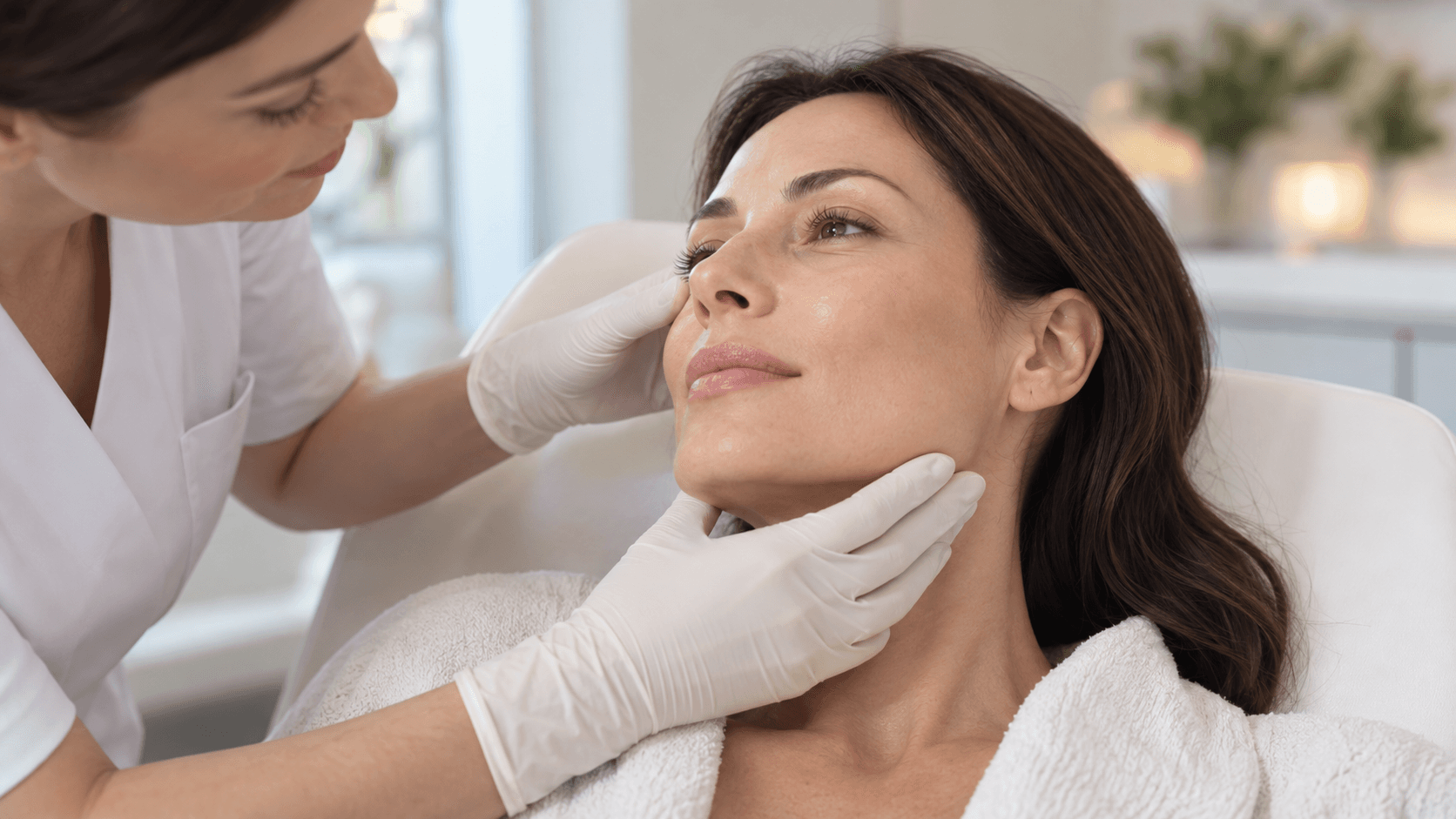
Doctors first carefully examine the facial area. Then, they place the special threads under the skin using fine cannulas. These threads have tiny barbs on them. The barbs hold and stabilize the tissues upwards. The threads wrap the skin like a net from within. The mechanical lifting effect is immediately visible. Facial contours become more defined instantly.
The threads also initiate the skin's repair process. The body reacts to these threads. This reaction leads to an increase in skin support protein. Skin support protein is the essential building block that maintains the skin's firmness and elasticity. Even after the threads dissolve, this protein tissue remains. Therefore, the effect continues to increase both immediately and in the following weeks.
Sulamanidze and colleagues demonstrated in their 2002 study how special threads lift facial tissues. Researchers proved that this method provides mechanical support (Sulamanidze 2002).
The French thread lift uses more flexible threads. Classic methods have stiffer tissues. The French thread lift preserves natural mobility. This flexibility is less in classic methods.
There are significant differences between the two methods. The table below clearly shows these differences.
Feature | French Thread Lift | Classic Thread Lift |
Material Used | Flexible, absorbable threads | Stiffer, permanent threads |
Mobility | Facial muscles function naturally | May have restricted movement |
Application Principle | Multi-directional support | Unidirectional pull |
Recovery Time | 2-5 days | 5-10 days |
Durability | 12-18 months | 6-12 months |
Naturalness | Very natural | Sometimes appears artificial |
The threads used in the French thread lift are made from body-compatible materials. These threads dissolve completely over time. In classic methods, some threads can be permanent. Permanent threads carry a risk of complications in the future. The absorbable threads in the French thread lift eliminate this risk.
Cobo demonstrated in his 2020 study how safe absorbable threads are in facial rejuvenation. The researcher reported that these threads could be used as a surgical alternative (Cobo 2020).
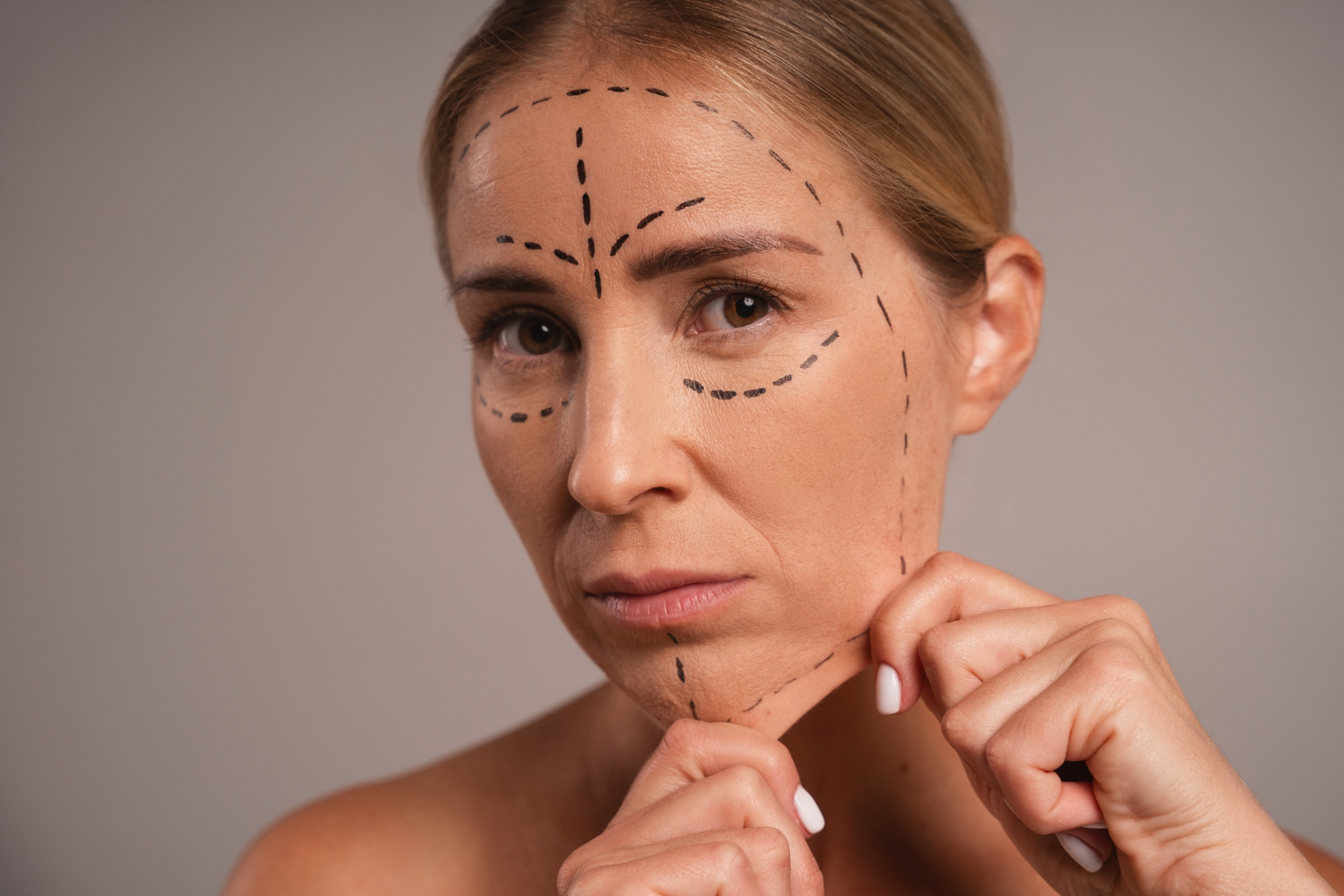
It can be applied to the cheeks, jawline, double chin, neck, eyebrows, around the eyes, and the facial oval. Specific techniques are used for each area.
French lifting can be applied to almost every area of the face. However, each area has different needs. Doctors plan according to the patient's facial structure. In some areas, a single session is sufficient. In others, multiple sessions may be required. In the following sections, we examine each area in detail.
Yes. The cheeks are one of the most commonly treated areas with French lifting. Mid-facial sagging is successfully corrected with this method.
The cheek area is one of the most noticeable areas of aging. Over time, the cheeks sag downwards. This makes the face look tired and older. French lifting provides very effective results in this area.
Can Mid-Facial Sagging Be Corrected with French Lifting?
Yes. The threads lift the cheek tissue upwards. The mid-facial area appears instantly younger.
Doctors typically place the threads in a crisscross pattern in the cheek area. This network supports the tissue from all directions. The cheeks return to their original position. The facial expression becomes more vibrant.
Do Cheekbones Become More Pronounced with French Lifting?
Yes. When the cheek tissue is lifted, the cheekbones become more pronounced.
Cheekbones are a symbol of youth. As the cheeks sag, these bones remain hidden. When French lifting elevates the cheeks, the cheekbones re-emerge. The face looks more aesthetic and younger.
Do Smile Lines Lighten with French Lifting?
Yes. When the cheeks are lifted, the lines extending from the sides of the nose to the mouth significantly lighten.
As smile lines deepen, the face appears older. French lifting tightens the tissue around these lines. The lines lose their depth. The skin looks smoother.
Suh and colleagues demonstrated in their 2015 study how absorbable threads applied to the cheek area can lift the mid-facial region. The researchers reported that patient satisfaction was very high (Suh 2015).
Yes. The jawline is reshaped with French lifting. The facial oval appears clearer and younger.
The jawline frames the face. Over time, this line becomes blurred. Deposits form in the lower jaw area. French lifting yields excellent results in this area.
How is the jawline defined with the French lift?
The threads enter from the jawline and lift the tissue upwards. The jawline becomes instantly clearer.
Doctors typically use longer threads for the jawline. These threads extend from the neck to the jawline. This allows the tissues to be lifted strongly. The jawline becomes sharper.
How is the facial oval lifted with the French lift?
When the jawline is lifted, the face shape becomes more oval and aesthetically pleasing.
In a youthful face, the jawline is clear. With aging, this line becomes rounder. The French lift removes excess tissue under the jaw. The face shape is redefined.
How is the sagging of the lower face reduced with the French lift?
The threads push the lower facial tissue upwards. Sagging significantly decreases.
Lower face sagging disturbs many people. The threads applied to this area mechanically support the tissue. The sagging appearance disappears. The face looks more dynamic.
Hong and colleagues studied in 2024 how the jawline and lower face contour improved with thread lifting methods. The researchers proved that the tightening in this area is long-lasting (Hong 2024).
Yes. Mild and moderate double chin sagging can be successfully treated with the French lift.
The double chin area is known for fat accumulation and skin laxity. This area can be corrected with non-surgical methods. The French lift tightens this area with threads placed under the chin.
Can mild and moderate double chin sagging be improved with the French lift?
Yes. The threads tighten and lift the tissue under the chin. Sagging significantly decreases.
Doctors typically use short and medium-length threads for the double chin area. These threads lift the fat tissue. The subcutaneous connective tissue tightens. The double chin profile improves.
How is the neck-jaw transition clarified with the French lift?
The threads extend from the neck to the jaw. This transition area becomes more defined.
The angle between the neck and jaw is lost with aging. The French lift recreates this angle. The facial profile becomes more aesthetic.
Yes. The laxity of the neck skin decreases with the French lift. The neck contour tightens.
The neck ages as quickly as the face. However, many people neglect their neck. The French lift also provides effective results in the neck area.
Does the laxity of the neck skin decrease with the French lift?
Yes. The threads support the neck skin from the inside. The laxity significantly lessens.
The skin on the neck is thin and sensitive. Special threads applied to this area tighten the skin. The production of skin support proteins increases. Over time, the neck skin becomes firmer.
How Does the Neck Contour Tighten with the French Lift?
The threads lift the neck muscles and skin upwards. The neck line appears clearer and more youthful.
Doctors typically place threads parallel to the neck lines in the neck area. This technique preserves the neck contours while also providing tightening.
Pham and colleagues studied the safety profile of thread lifting methods applied to the face and neck area in 2021. Researchers reported that neck applications are as safe as facial applications (Pham 2021).
Yes. The French lift raises low brows. The gaze becomes more open and dynamic.
Brows are the most important part of facial expression. Low brows create a tired and sad expression. The French lift corrects this condition non-surgically.
How is the Low Brow Appearance Corrected with the French Lift?
The threads enter from under the brow and secure it upwards. The brows immediately rise to a higher position.
Doctors typically use threads that extend from the temple area to the brow for brow lifting. These threads gently lift the brow. The facial expression changes instantly.
Does the French Lift Provide a Brighter Gaze?
Yes. When the brows are lifted, the area around the eyes expands. The gaze appears more vibrant and youthful.
Raised brows reduce pressure on the eyelid. The eyes become more defined. The face overall appears more energetic.
Yes. The outer corner of the eye is slightly lifted. The tired facial expression decreases.
The eye area is one of the most sensitive regions of the face. The threads applied to this area must be very thin and short. The French lift is applied carefully in this area.
How is the Outer Eye Corner Lifted with the French Lift?
The threads extend from the temple to the outer corner of the eye. This allows the eye corner to be lifted slightly.
Doctors use very gentle techniques in this area. The threads are carefully placed under the skin. The droopiness at the outer corner of the eye is corrected.
How is the Tired Facial Expression Reduced with the French Lift?
When the eye area is lifted, signs of fatigue significantly diminish. The face looks more rested.
Under-eye bags and wrinkles at the corners of the eyes are signs of aging. The French lift supports the tissue in this area. The tired expression gives way to a vibrant appearance.
Yes. The French thread supports a V-shaped facial appearance. Facial symmetry significantly improves.
The oval shape of the face is one of the most important indicators of youth. The French thread intervenes in this oval and restores the aesthetic appearance.
Is the V-Shaped Facial Appearance Supported by the French Thread?
Yes. When the jawline and cheeks are lifted, the face automatically takes on a V shape.
A V-shaped face is considered ideal in aesthetic standards. The French thread mechanically creates this shape. Facial features appear more elegant.
Does Facial Symmetry Improve with the French Thread?
Yes. If the threads are applied equally on both sides, facial symmetry improves.
Many people have slight asymmetries in their faces. The French thread can be used to correct these asymmetries. Doctors plan the threads according to symmetry.
Lee and colleagues studied the results of facial rejuvenation with absorbable threads in Asian patients in 2018. The researchers demonstrated how this method improved facial symmetry and contour (Lee 2018).
Yes. It can be applied to the inner arm, décolletage area, abdomen, and in some patients, to the hips and thighs. However, there is not as much scientific evidence for these applications as there is for facial applications.
The French thread can be applied not only to the face but also to certain areas of the body. However, its use in these areas is more limited compared to the face. Doctors choose these applications carefully.
Yes. The looseness in the upper inner arm can be reduced with threads. However, the results are more limited compared to facial applications.
The skin on the inner arm is thin and sensitive. The threads applied to this area slightly tighten the skin. However, due to the high movement of the arm, the durability of the threads may be challenged. Patient selection is very important in this area.
Yes. Wrinkles and looseness above the chest can be alleviated with threads.
The décolletage area is one of the areas most exposed to sun damage. The French thread supports the skin in this area from within. However, skin thickness varies here. Doctors consider skin quality when evaluating this area.
Yes. Mild looseness in the abdominal skin can be tightened with threads. However, excess skin after pregnancy cannot be corrected with this method.
The abdominal area is large. The threads applied to this area are only effective for mild looseness. This method is insufficient for patients with excess skin and fat tissue.
In some patients, yes. However, applications in these areas must be chosen very carefully. Scientific evidence is more limited compared to facial applications.
The hips and thighs contain large muscle groups. Movement in these areas is very high. It is difficult for the threads to remain permanent here. Doctors perform these applications only with appropriate case selection.
The best results are obtained in areas with mild to moderate sagging, in patients who do not want surgery, in individuals with preserved facial volume, and in those with realistic expectations.
Successful results depend not only on the technique but also on patient selection. The French thread lift applied to the right area in the right candidate yields excellent results.
The results in these patients are excellent. The threads easily lift the tissue because the skin is sufficiently elastic.
The elasticity of the skin determines the success of the treatment. Elastic skin responds well to the threads. The skin rejuvenates itself. The results are natural and long-lasting.
The satisfaction rate in these patients is very high. Non-surgical methods meet expectations.
Many patients do not want surgical incisions. For these patients, the French thread lift is an ideal solution. The patient rejuvenates without taking the risk of surgery.
The effect in these individuals is very pronounced. When there is no volume loss, only sagging is corrected. The results appear very natural.
Aging can manifest itself through volume loss or sagging. In faces with preserved volume, sagging is the only issue. The French thread lift directly addresses this problem.
These patients understand the limitations of the method. They realize that the French thread lift is not surgery. Therefore, they evaluate the results accurately.
Realistic expectations are the key to treatment success. Doctors explain to the patient what is possible. The patient makes a decision with this information. Thus, the satisfaction rate increases.
Tamura and colleagues conducted a multicenter study in 2025 examining over 110,000 cases of facial thread lifting. Researchers proved that proper patient selection is the most important factor for success (Tamura 2025).
Yes. The cheeks with the jawline, the jawline with the double chin, the cheeks with the eyebrows, or the neck with the jawline can be treated in the same session.
Combined applications are preferred by many patients. This approach provides a more comprehensive rejuvenation. However, planning must be done correctly.
The cheeks and jawline can be treated together, the jawline and double chin together, the cheeks and eyebrows together, or the neck and jawline together.
The table below shows the most common combinations.
Combination | Target | Expected Effect |
Cheeks + Jawline | Mid and lower face | Complete facial rejuvenation |
Jawline + Double Chin | Lower face profile | Defined jawline and flat double chin |
Cheeks + Eyebrows | Mid and upper face | Youthful and vibrant expression |
Neck + Jawline | Lower face and neck | Clear contour and tight neck |
The doctor first analyzes the patient's face. Then, they determine which areas need attention. A personalized plan is created for each patient.
Personalized planning is the foundation of treatment. The needs of two patients are never the same. Doctors carefully examine facial anatomy. Then, they mark the points where the threads will be placed. This planning ensures that the results are natural and balanced.
In areas with advanced skin sagging, in patients with excess skin, in faces with significant volume loss, and in cases requiring surgical lifting, the French lift may be inadequate.
Every method has its limits. The French lift may not be sufficient on its own in some cases. In these situations, doctors suggest alternative methods.
The threads cannot lift too much skin. In severe sagging, mechanical support is inadequate.
In advanced sagging, there is an excess of skin. The threads cannot completely lift this skin. The patient expects results without surgery, but the method cannot meet this expectation.
For these patients, surgical facelift or mini facelift may be more appropriate. Sometimes, radiofrequency or ultrasound skin tightening can be added.
The issue of excess skin can only be solved surgically. However, some patients do not want surgery. In these cases, doctors recommend device-assisted tightening methods.
The French lift lifts sagging but does not create volume. In faces with volume loss, filler or fat injection is necessary.
Aging can sometimes involve not only sagging but also volume loss. The threads lift the tissue but do not fill in the sunken areas. Therefore, volume support should be added.
If there is a significant excess of skin, if the muscles are loose, or if the fat tissue has shifted excessively, surgery is required.
Surgical facelift also tightens the underlying muscles. The French lift only affects the skin and subcutaneous tissue. Deep structural issues require surgery.
Each area shows a different healing process. Results are immediately visible in the cheeks. Final results in the neck appear a bit later.
Results vary from area to area. In some areas, the effect is instantaneous. In others, the skin's repair process is awaited.
The first results in the cheeks are seen immediately. Final results appear within 4-6 weeks.
Cheeks respond very well to the threads. As the swelling subsides after the procedure, the results become clearer. The production of skin support proteins increases. Cheeks become firmer over time.
The tightening on the jawline is felt immediately. Final shaping takes 6-8 weeks.
The threads on the jawline provide strong support. However, there are many movements for eating and speaking in this area. The threads adapt to these movements. Results mature over time.
Final results in the neck are seen within 8-12 weeks. Since the skin on the neck is thin, healing may be a bit slower.
The skin on the neck is thinner than that of the face. Therefore, the skin's healing process takes longer. However, the results are permanent and noticeable.
The effect on the brows is immediately visible and lasts for 12-18 months. Brow movements remain natural.
Brow lifting results look very natural. The patient continues to move their brows. The threads stabilize the brow but do not freeze the expression.
Results around the eyes emerge gently. The initial effect is seen immediately. Final results become evident within 4 weeks.
The eye area is a sensitive region. Swelling and bruising in this area are mild. Results are natural and can be easily supported with makeup.
Clinical research strongly supports its effectiveness in the midface, jawline, and lower face. The safety profile is also quite positive.
Scientific studies prove the effectiveness of the French thread lift. Many studies show that this method is safe and effective.
Current studies show that absorbable threads are effective in facial rejuvenation. Patient satisfaction is high. Complication rates are low.
Research conducted in recent years is rapidly increasing in this field. Scientists are comparing different types of threads. Results favor absorbable threads.
Studies show that sagging in the midface is significantly reduced with thread lifting. The lines around the mouth become less pronounced.
The midface is the area where aging is most pronounced. Scientific data supports the tightening in this region. Threads safely lift the tissue here.
Research proves that the jawline is defined with thread lifting. Sagging in the lower face is significantly reduced.
The jawline is the cornerstone of aesthetics. Scientific studies confirm success in this area. Patient satisfaction is very high in this region.
Studies report a swelling rate of 34% and a bruising rate of 26%. However, these early effects are temporary. Serious complications are very rare.
Scientific research shows that the French thread lift is a safe method. Early swelling and bruising are normal. Late complications occur at a low rate.
In a meta-analysis conducted in 2025, 26 studies were examined. In this study, the rates of late complications were determined as follows: visible threads 10%, skin indentation 7%, numbness 6%, thread extrusion 5%. Researchers emphasized that these rates are at an acceptable level (Zhang 2025).
Individuals aged 30-55 with good overall health, elastic skin, and mild to moderate sagging, who have realistic expectations, are ideal candidates.
Choosing the right candidate directly affects the success of the treatment. Not everyone is suitable for this method. Doctors carefully evaluate candidates.
The ideal age range is between 30-55 years. Skin elasticity is sufficiently good in this age group.
In younger patients, sagging has not yet begun. In much older patients, there is often excessive skin. The method yields the most effective results during the 30-55 age period.
The skin should be flexible and vibrant. Very loose or very tight skin is not ideal.
The elasticity test is performed by doctors. The skin is gently pulled and released. Skin that quickly returns to its place is good. Skin that returns slowly is not sufficiently elastic.
There should be mild or moderate sagging. In cases of advanced sagging, the method may be insufficient.
Doctors measure the degree of sagging. A few threads are sufficient for mild sagging. More threads are used for moderate sagging. In cases of advanced sagging, the doctor recommends other methods.
Individuals who do not use blood thinners, do not have serious chronic illnesses, and are not pregnant or breastfeeding are suitable candidates.
Health assessment is very important. There is a risk of additional bruising in patients with blood clotting issues. Healing may be delayed in those with diabetes. The doctor reviews all these factors.
Yes. However, the same technique is not applied to every area. Doctors create specific plans for each area.
Threads can be placed separately in the upper, middle, and lower sections of the face. However, it is not recommended to intervene in too many areas in the same session. Doctors typically address 2-3 areas together.
Yes. It is effective for mild to moderate neck sagging. However, for very advanced neck sagging, surgery may be more appropriate.
The skin on the neck is different from the facial skin. It is thinner and more sensitive. Therefore, special techniques are used on the neck. Results are generally as pronounced as on the face.
Yes. The application around the eyes is safe in expert hands. However, this area requires great care.
The skin around the eyes is the thinnest skin we have. The threads applied here should be very thin and short. An experienced doctor treats this area safely.
Yes. Neighboring areas such as the cheeks and jawline can be treated in the same session. However, it is not recommended to use too many threads.
Multiple areas can be treated in the same session. However, as the number of threads increases, the risk of swelling also rises. Doctors usually limit to 10-15 threads.
Results typically last for 12-18 months. Skin care and lifestyle can extend this duration.
Even after the threads dissolve, supportive tissue remains in the skin. However, aging continues. Regular maintenance and follow-up sessions prolong the effect.
The procedure causes mild discomfort. However, it is not painful. Anesthetic creams make the procedure comfortable.
Doctors numb the area before the procedure. There may be a slight pulling sensation when the threads are placed. Mild sensitivity on the first day after the procedure is normal.
Yes. This combination is very common. The lifting addresses sagging. The filler compensates for volume loss.
Many patients experience both sagging and volume loss. French lifting resolves sagging. The filler fills in hollow areas. The two methods complement each other.
Surgery may be more appropriate for the jawline with excessive skin, advanced neck sagging, and deep muscle relaxation.
Surgical facelift also tightens the underlying muscles. French lifting cannot do this. Therefore, surgery is preferred in advanced cases.
Bertossi, Diego, et al. "Effectiveness, Longevity, and Complications of Facelift by Barbed Suture Insertion." Aesthetic Surgery Journal, vol. 39, no. 3, 2019, pp. 241-247.
Cobo, Rubén. "Use of Polydioxanone Threads as an Alternative in Nonsurgical Procedures in Facial Rejuvenation." Facial Plastic Surgery, vol. 36, no. 4, 2020, pp. 447-452.
Contreras, Catalina, et al. "Using PDO Threads: A Scarcely Studied Rejuvenation Technique. Case Report and Systematic Review." Journal of Cosmetic , vol. 22, no. 8, 2023, pp. 2158-2165.
Hong, Gyeong-Won, et al. "Revolutionizing Thread Lifting: Evolution and Techniques in Facial Rejuvenation." Journal of Cosmetic , vol. 23, 2024, pp. 2537-2542.
Lee, Hyun-Jung, et al. "Outcome of Facial Rejuvenation with Polydioxanone Thread for Asians." Journal of Cosmetic and Laser Therapy, vol. 20, no. 3, 2018, pp. 189-192.
Pham, Christine T., et al. "Safety Profile of Thread Lifts on the Face and Neck: An Evidence-Based Systematic Review." Surgery, vol. 47, no. 11, 2021, pp. 1460-1465.
Suh, Dong-Hye, et al. "Outcomes of Polydioxanone Knotless Thread Lifting for Facial Rejuvenation." Surgery, vol. 41, no. 6, 2015, pp. 720-725.
Sulamanidze, Marlen A., et al. "Removal of Facial Soft Tissue Ptosis with Special Threads." Surgery, vol. 28, no. 5, 2002, pp. 367-371.
Tamura, Tatsuya, et al. "Multicenter Review of More Than 110,000 Facial Thread Lifting Cases from a Cosmetic Surgery Group." Plastic and Reconstructive Surgery Global Open, vol. 13, no. 12, 2025, e7335.
Zhang, X., and S. Zhang. "A Meta-Analysis of Complications of Thread Lifting." Frontiers in Surgery, 2025.